Rottweiler Growth Plates and Why They Close So Late
Bringing home a Rottweiler puppy is an exciting time, but many new owners quickly realize that the typical "puppy rules" often don't quite apply to these magnificent, rapidly growing giants. The sheer size and power they gain so quickly mean that seemingly innocent activities can actually cause lasting damage to their still-developing bones, particularly their vulnerable growth plates. This guide will walk you through exactly what growth plates are, why they stay open so long in Rottweilers, and how you can protect your pup during this critical developmental period.
Understanding Growth Plates in Puppies
When you look at a young Rottweiler, you see a sturdy, powerful dog in the making. But beneath that impressive exterior, their bones are far from fully formed. Understanding what's happening at a microscopic level is key to ensuring their long-term health.
What Are Growth Plates Exactly
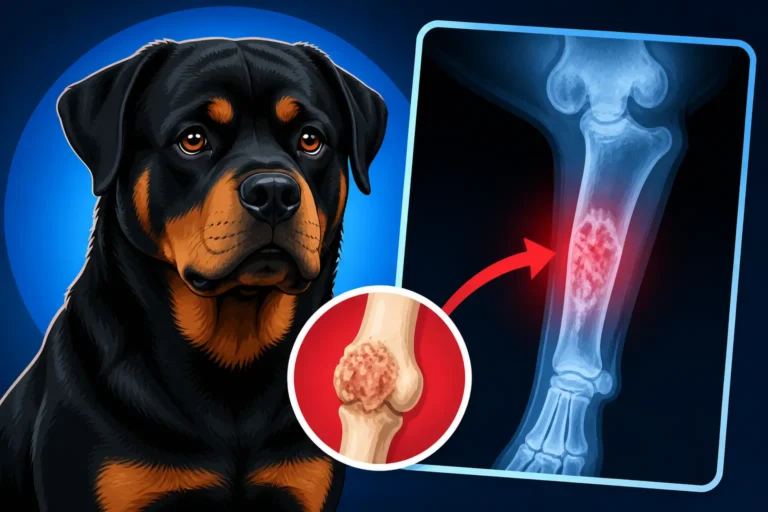
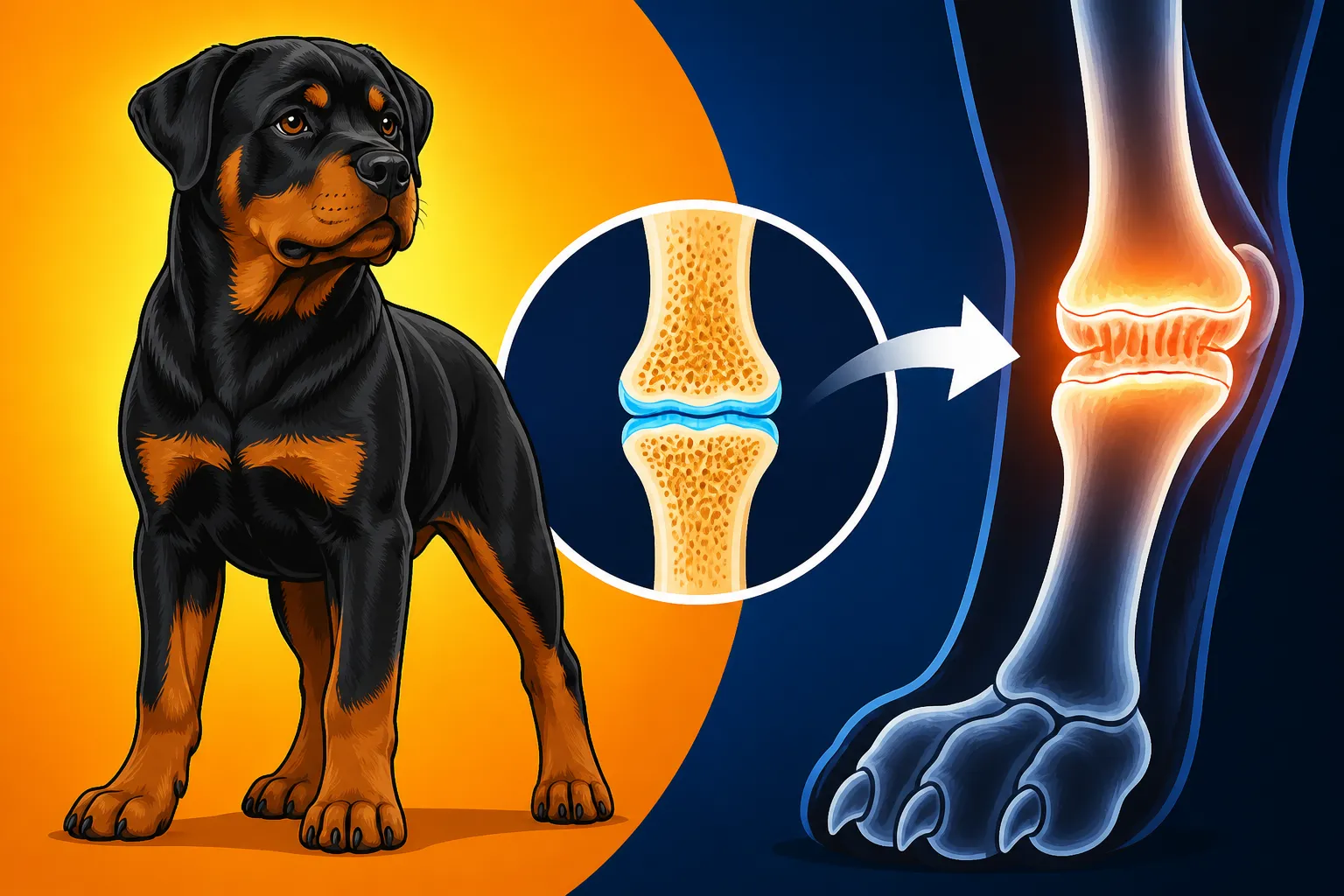
Think of growth plates, scientifically known as epiphyseal plates, as the "construction zones" at the ends of a puppy's long bones. Unlike the hard, mature bone in an adult, these areas are made of cartilage. This specialized cartilage is where new bone cells are constantly being produced, pushing existing bone longer and wider, allowing your tiny puppy to eventually become the massive, impressive adult Rottweiler you envision. They're found in crucial areas like the legs, shoulders, and hips – essentially, wherever significant lengthening of a bone occurs.
These plates are rich in blood vessels and rapidly dividing cells, which makes them incredibly efficient at creating new bone tissue. It’s a marvel of nature, allowing for the incredible growth spurt that puppies, especially large breeds, experience. Without these cartilaginous plates, the bones simply wouldn't have a mechanism to extend in length, leaving your Rottweiler forever stuck in puppy size.
Why They Matter for Large Breeds Like Rottweilers
For a breed like the Rottweiler, these growth plates are under immense pressure, both literally and figuratively. They are responsible for building the framework of a dog that can easily weigh over 100 pounds. This rapid and substantial growth means the growth plates are active for a longer period and bear more stress than in a smaller breed. Imagine a scaffolding that's constantly being built higher while simultaneously supporting more and more weight – that's essentially what's happening in your Rottweiler's limbs.
Because they are cartilage, growth plates are inherently softer and more fragile than mature bone. This vulnerability makes them susceptible to injury from excessive force, repetitive impact, or even incorrect nutrition. A small twist or an awkward jump that might result in a minor sprain for an adult dog can lead to a serious growth plate fracture in a growing Rottweiler. The consequences aren't just immediate pain; damage to a growth plate can affect how the bone grows, potentially leading to permanent lameness or deformity.
The Process of Closure: From Cartilage to Bone
The journey from soft cartilage to solid bone is called ossification. As your Rottweiler puppy matures, hormonal signals trigger the slowing down of cartilage production within the growth plates. Gradually, the cartilage cells are replaced by bone cells, and the plate itself thins out and eventually fuses, becoming indistinguishable from the rest of the bone. Once a growth plate has "closed," that particular bone can no longer lengthen. This is a one-way process; once fused, it's done.
The timing of this closure is crucial. If a growth plate is injured before it closes, the bone may stop growing unevenly, or grow at an altered angle, leading to angular limb deformities. This is why vigilance during the puppy and adolescent stages is so important for Rottweiler owners. You're literally protecting the architecture of their adult body.
The Unique Development Timeline of a Rottweiler
Rottweilers aren't like smaller dogs that reach their full skeletal maturity in less than a year. Their developmental curve is drawn out, meaning their vulnerable growth plates are open for an extended period.
Why Rottweiler Growth Plates Close Later Than Smaller Breeds
The primary reason Rottweiler growth plates close later is simply their size. It takes a tremendous amount of bone growth to go from a small puppy to a dog weighing well over 100 pounds. This extensive growth phase requires the growth plates to remain active longer. While a Chihuahua might have closed growth plates by 6-8 months, a Rottweiler's bones are still actively lengthening and maturing for much longer. This prolonged growth phase makes them inherently more susceptible to injury during their formative months.
Consider the sheer volume of bone tissue that needs to be produced and ossified. This isn't just about length; it's about density and strength. Their bones need to be robust enough to support their eventual powerful musculature. This process simply cannot be rushed without risking severe developmental issues. It’s one of the key factors that contribute to why Rottweilers typically live shorter lives than small breeds, as their rapid growth puts a strain on their systems.
Typical Age Ranges for Closure
Generally, you can expect a Rottweiler's growth plates to begin closing around 12-14 months of age, with full closure and fusion typically occurring between 18 and 24 months. However, it's not uncommon for some plates, especially those in the long bones of the legs like the femur and humerus, to remain open even a bit longer. In fact, many veterinarians advise against heavy impact activities or certain surgeries until a Rottweiler is at least 24 months old, precisely because of this delayed closure.
This protracted timeline means that a Rottweiler isn't just a puppy for a few months; they are in a critical developmental stage throughout their entire first and often second year of life. This is why understanding "Rottweiler Growth Plates Closing at Eighteen to Twenty-Four Months" is so important for owners to manage expectations and adjust activities accordingly.
Factors Influencing Individual Closure Rates
While genetics play a significant role in determining the general timeline for growth plate closure, other factors can also influence how quickly an individual Rottweiler's plates fuse. Nutrition is paramount; improper feeding, particularly diets too high in calories or calcium, can accelerate growth, but not necessarily healthy bone maturation. This can lead to a condition where the bones grow too fast for the supporting structures, creating problems.
Another factor is exercise level. While proper exercise is vital for muscle development and overall health, excessive or inappropriate exercise can stress growth plates, potentially causing microscopic damage that either delays or distorts normal closure. Lastly, hormones, particularly those related to reproductive development, also influence closure. This is a common discussion point when considering "Whether Neuter Age Changes Rottweiler Cancer Risk" or other health concerns, as early spaying or neutering can subtly delay growth plate closure, leading to slightly longer bones and potentially altered joint angles, though the exact long-term impact is still debated.
Risks and Concerns While Growth Plates Are Open
The period when growth plates are open is a double-edged sword: it's a time of incredible development, but also one of heightened vulnerability. Any misstep during this phase can have lifelong repercussions for your Rottweiler.
The Vulnerability of Open Growth Plates to Injury
Because growth plates are composed of softer, cartilaginous tissue, they are significantly weaker than the surrounding bone. This means they are the "weak link" in the skeletal chain. When a Rottweiler puppy experiences trauma, such as a fall, a hard landing from a jump, or a forceful twist, the growth plate is far more likely to fracture or be crushed than the more mature bone next to it. Imagine trying to bend a green stick versus a dried one – the green stick (the growth plate) is more pliable but also more easily damaged by sudden, unnatural forces.
This vulnerability extends beyond obvious accidents. Repetitive strain from activities like prolonged running on hard surfaces, excessive stair climbing, or even rough play that involves awkward landings can cause micro-traumas to the growth plates. These small injuries might not manifest as an immediate limp but can contribute to improper development or premature closure, setting the stage for future orthopedic problems.
Common Types of Growth Plate Injuries in Rottweilers
Rottweilers, due to their size and activity levels, are prone to several types of growth plate injuries. Salter-Harris fractures are a classification system used by veterinarians to describe fractures involving the growth plate. These range from simple separations of the growth plate from the bone end to more complex fractures that extend into the joint or crush the plate itself. Common sites for these injuries in Rottweilers include the distal radius and ulna (forelimb), the distal femur (thigh bone near the knee), and the tibia (shin bone).
Another concern is osteochondritis dissecans (OCD), a condition where the cartilage in the joint doesn't properly ossify, leading to a flap of cartilage separating from the underlying bone. While not a direct growth plate fracture, it's a developmental orthopedic disease often linked to rapid growth and genetics, and it occurs in areas where growth plates are active. These conditions often present as limping or lameness, which can be subtle at first, becoming more pronounced over time.
| Growth Plate Injury Type | Description | Common Locations in Rottweilers | Potential Long-Term Outcome |
|---|---|---|---|
| Salter-Harris I | Growth plate separates from bone | Forelimbs, Tibia | Good prognosis if treated, uneven growth possible if undetected |
| Salter-Harris II | Growth plate separates, with a piece of bone attached | Femur, Humerus | Good prognosis, but careful monitoring for growth is needed |
| Salter-Harris III | Fracture through growth plate and into joint surface | Tibia, Femur | Requires precise repair, high risk of arthritis |
| Salter-Harris IV | Fracture through bone, growth plate, and into joint | Elbow, Knee | Complex repair, high risk of arthritis and deformity |
| Salter-Harris V | Crush injury to growth plate (least common, hardest to diagnose early) | Any active growth plate | Poor prognosis, premature fusion and severe deformity likely |
Long-Term Consequences of Untreated Damage
The repercussions of an untreated or improperly managed growth plate injury can be severe and lifelong. If a growth plate is damaged and closes prematurely or unevenly, it can lead to angular limb deformities, where one bone grows shorter or at a different angle than its pair. This can result in significant lameness, chronic pain, and an altered gait that places unnatural stress on other joints. For a powerful breed like a Rottweiler, even a slight deformity can have a major impact on their mobility and quality of life.
Furthermore, any damage that affects the joint surface, such as in Salter-Harris type III or IV fractures, significantly increases the risk of developing early-onset arthritis. The smooth cartilage that normally allows for frictionless movement becomes damaged, leading to inflammation, pain, and degenerative changes within the joint. This can necessitate long-term pain management, physical therapy, and even future surgeries, all of which are costly and reduce the dog's comfort. This is where investing in pet insurance from providers like Healthy Paws early on can provide immense peace of mind.
Safe Exercise Practices for a Growing Rottweiler
Given the extended period that Rottweiler growth plates remain open, responsible exercise management is not just important – it’s absolutely critical. It’s a delicate balance between providing enough activity for mental and physical health and avoiding damage to their developing skeletal structure.
The "Five Minute Rule" and Controlled Activity
One of the most valuable guidelines for exercising a growing Rottweiler puppy is the "five minute rule." This suggests that for every month of your puppy's age, they get five minutes of structured, low-impact exercise, twice a day. So, a four-month-old puppy would get 20 minutes of walking twice a day, a six-month-old gets 30 minutes, and so on. This isn't a hard and fast rule for every single activity, but it’s an excellent benchmark for formal leash walks. For more detailed guidance, consider consulting resources on "The Five Minute Rule for Rottweiler Puppy Walks".
The key here is "controlled activity." This means walks on a leash, in your control, on softer surfaces like grass or dirt trails, not pounding pavement. It allows for gentle muscle development and socialization without overstressing vulnerable joints. Free play in a secure, flat yard is also great, but avoid letting them self-exercise for extended periods, especially if they are running wildly or jumping excessively. The goal is consistent, moderate activity, not sporadic bursts of high intensity.
Avoiding High-Impact and Repetitive Stress
While your Rottweiler might seem invincible as a puppy, high-impact activities are a major no-no until their growth plates are fully closed. This includes things like long-distance running, jogging on hard surfaces, intense agility training, prolonged fetching sessions with hard stops and turns, and especially repetitive jumping. Allowing a puppy to jump on and off furniture, or in and out of cars repeatedly, can put undue stress on their developing joints and growth plates. Understanding "Stairs and a Rottweiler Puppy's Joints" is another common area where owners can inadvertently cause harm. A few stairs are fine, but making a young puppy go up and down multiple flights daily is best avoided.
The problem with high-impact activities is that they generate powerful forces that are absorbed by the skeletal system. When growth plates are open, they act as shock absorbers, but they are not designed to withstand these forces repetitively without potential damage. It’s frustrating to have an energetic puppy and not be able to unleash all that energy, but patience now will pay off with a healthier adult dog. Redirect that energy into mental stimulation, short training sessions, and controlled sniffing walks.
Appropriate Play and Socialization
Socialization is incredibly important for a Rottweiler puppy, but even play needs to be managed carefully. When introducing your puppy to other dogs, ensure they are well-matched in size, temperament, and play style. Avoid pairing a rambunctious Rottweiler puppy with an adult dog that plays too rough or body slams. Supervise play closely, and interrupt if it becomes too intense, if one dog is constantly being chased, or if there's excessive jumping and wrestling.
Play with people should also be mindful. Avoid games that encourage jumping up or tugging aggressively on toys in a way that twists their body. Instead, focus on games that involve sniffing, gentle retrieving on soft ground, or short bursts of controlled running followed by rest. Puppy classes are fantastic for structured socialization, providing a controlled environment and knowledgeable instructors to guide appropriate interactions. Remember, a well-socialized Rottweiler is a confident Rottweiler, but it doesn't mean allowing them to engage in reckless play that could injure their developing body.
Nutrition's Role in Healthy Growth Plate Development
Beyond exercise, what you feed your Rottweiler puppy plays an absolutely monumental role in how their growth plates develop. It's not just about getting enough food, but getting the right kind of food in the right amounts.
The Critical Balance of Calcium and Phosphorus
For large breed puppies like Rottweilers, the balance of calcium and phosphorus is perhaps the most critical nutritional factor affecting skeletal development. Too much calcium, or an improper ratio, can be just as damaging as too little. Commercial large breed puppy formulas are specifically formulated to have lower calcium levels and a carefully controlled calcium-to-phosphorus ratio (typically between 1.1:1 and 1.5:1). This is because excess calcium can interfere with the normal development of cartilage and bone, leading to conditions like osteochondrosis (OCD) and hypertrophic osteodystrophy (HOD), which directly impact growth plates and joints.
Many owners, thinking they're doing good, supplement their puppy's diet with extra calcium or other minerals, but this is a dangerous mistake for a growing Rottweiler. Reputable large breed puppy foods are nutritionally complete and balanced. Adding supplements on top of this can throw off the delicate balance and cause more harm than good. You can find more specific information on "Rottweiler Calcium Limits and Why Supplements Hurt".
Avoiding Overfeeding and Rapid Growth
One of the biggest mistakes well-meaning Rottweiler owners make is overfeeding, aiming for a "bigger" puppy faster. While it might seem impressive to have a huge, chunky puppy, rapid growth is actually detrimental to their long-term skeletal health. When a Rottweiler puppy grows too quickly, their bones, including the growth plates, simply can't keep up with the rate of weight gain. This puts immense stress on their immature joints and can lead to developmental orthopedic diseases.
Instead of focusing on maximum size, aim for a lean, healthy growth curve. Your puppy should always look slightly lean, and you should be able to easily feel their ribs without them being visibly protruding. A tucked waist is also a good indicator of appropriate weight. Follow the feeding guidelines on a high-quality large breed puppy food, such as those recommended by brands like Eukanuba or Royal Canin, but always adjust based on your individual puppy's body condition score. Remember that a slow, steady growth rate is far healthier than an accelerated one for a Rottweiler. This is also covered in "Why a Rottweiler Puppy Needs Large Breed Formula".
The Danger of Unnecessary Supplements
Beyond calcium, many owners are tempted to add other supplements, like glucosamine or chondroitin, to their growing puppy's diet, assuming it will protect their joints. While these supplements can be beneficial for older dogs with arthritis, their efficacy for preventing developmental orthopedic diseases in young, healthy puppies is not fully established, and giving them unnecessarily can be problematic.
Some studies even suggest that introducing certain supplements during critical growth phases can interfere with natural bone development. Always consult with your veterinarian before adding any supplements to your Rottweiler puppy's diet. A well-balanced large breed puppy food already provides all the necessary nutrients, and sometimes, less is truly more when it comes to supporting healthy growth. Focus on diet and appropriate exercise first and foremost.
Recognizing Signs of Growth Plate Injury
Despite your best efforts, accidents can happen, or subtle developmental issues might arise. Knowing what to look for can make all the difference in getting timely treatment and preventing long-term problems.
Subtle Limping or Gait Changes
One of the earliest and most common signs of a growth plate injury or other orthopedic issue is a change in your Rottweiler puppy's gait. This might start as a very subtle limp that comes and goes, especially after exercise or first waking up. You might notice them favoring one leg slightly, or taking shorter strides with a particular limb. They might also shift their weight differently when standing or sitting. Don't dismiss these as simply "growing pains," especially in a large breed. Growing pains, or panosteitis, do occur in Rottweilers, but any persistent limp warrants a veterinary visit to rule out something more serious.
Keep a close eye on their activity levels. Are they suddenly reluctant to play, or do they tire more quickly? Do they hesitate before jumping onto the couch (if allowed) or going up a single stair? Even a slight stiffness or an odd way of carrying a leg can be an indicator. Many orthopedic issues in large breeds, including those affecting growth plates or conditions like hip and elbow dysplasia, often begin with these subtle signs. This can be critical to catching issues like "Rottweiler Hip Dysplasia Symptoms Before Age Two".
Swelling, Pain, or Reluctance to Bear Weight
More acute growth plate injuries will often present with more obvious symptoms. You might notice visible swelling around a joint, particularly near the ends of the long bones. The affected area might feel warm to the touch, and your puppy might vocalize or flinch if you gently try to palpate it. There will likely be an obvious lameness, with the puppy unwilling or unable to put full weight on the injured limb.
This type of acute injury is often the result of a specific trauma, like a bad fall or getting a leg caught awkwardly. If you witness a clear incident followed by immediate lameness, pain, and swelling, it's an emergency. Even if you didn't see an accident, if these signs appear suddenly, don't wait. Early intervention is key to a better prognosis.
When to Seek Veterinary Attention Immediately
Any persistent limp (lasting more than 24 hours), sudden and severe lameness, visible swelling, or signs of pain (whimpering, biting when touched, reluctance to move) in a growing Rottweiler puppy should prompt an immediate visit to your veterinarian. Do not try to "wait and see" with a potential growth plate injury. The longer an injury goes undiagnosed and untreated, the higher the risk of long-term complications, including uneven bone growth, deformity, and chronic arthritis.
Your vet will likely perform a thorough physical examination, checking for pain, swelling, and range of motion. X-rays are usually necessary to confirm a growth plate injury and determine its severity and type. Since growth plates are cartilaginous, they don't show up as clearly on X-rays as bone, but the gap where the plate should be, or any displacement, will be evident. Early diagnosis allows for proper stabilization (splinting or casting) or, if needed, surgical intervention to align the bone fragments and minimize future growth disturbances.
Post-Closure Care and Long-Term Joint Health
The closure of growth plates marks a significant milestone in your Rottweiler's development, but it's by no means the end of joint health considerations. In fact, it's just the beginning of a lifetime commitment to keeping those powerful joints healthy and mobile.
Transitioning to Adult Exercise Regimens
Once your veterinarian confirms that all of your Rottweiler's growth plates have fully closed, typically around 18-24 months of age, you can gradually begin to introduce more strenuous and varied exercise. This doesn't mean jumping straight into marathon runs, but you can slowly increase the duration and intensity of walks, introduce short periods of jogging, and explore activities like hiking on varied terrain. Swimming is an excellent low-impact exercise for Rottweilers of any age, perfect for building muscle and cardiovascular fitness without joint strain.
The key word here is "gradually." Even with closed growth plates, sudden, intense bursts of activity without proper conditioning can lead to muscle strains, ligament tears (like "Cruciate Tears in a Heavy Rottweiler"), or exacerbate any underlying joint issues. Listen to your dog, watch for signs of fatigue or soreness, and always ensure they have proper warm-up and cool-down periods.
Continued Focus on Joint Health Throughout Life
Even after growth plates have closed and your Rottweiler is fully mature, maintaining optimal joint health remains a lifelong endeavor. Weight management is paramount; "Rottweiler Obesity and the Load It Adds" cannot be overstated. Every extra pound your Rottweiler carries puts exponentially more stress on their hips, elbows, and knees, accelerating the wear and tear on joint cartilage and increasing the risk of arthritis. Maintain a lean body condition through appropriate feeding and regular exercise.
Many owners opt to include joint supplements like glucosamine, chondroitin, and Omega-3 fatty acids in their adult Rottweiler's diet. While not a cure-all, these can help support cartilage health, reduce inflammation, and improve joint lubrication. Discuss with your vet which supplements might be most beneficial for your individual dog, especially if they are very active or have any pre-existing orthopedic concerns. Starting these around two years old, as mentioned in "Joint Supplements Started Before a Rottweiler Turns Two", is a common preventative measure for large breeds.
Monitoring for Arthritis and Other Age-Related Issues
As your Rottweiler ages, especially past seven or eight years, the natural wear and tear on their joints will inevitably lead to some degree of arthritis. The goal of lifelong care is to delay its onset and manage its severity. Continue to monitor for subtle signs of stiffness, difficulty getting up, reluctance to climb stairs, or a decrease in activity level. These can all be early indicators of arthritic pain.
Regular veterinary check-ups, especially for senior Rottweilers, are essential for early detection and management. Your vet might recommend regular X-rays to monitor joint changes, prescribe anti-inflammatory medications, or suggest physical therapy, hydrotherapy, or laser treatments to maintain mobility and comfort. Proactive management of arthritis ensures your senior Rottweiler can enjoy their golden years with as much comfort and mobility as possible. Keeping an eye on things proactively can make a huge difference in "Managing Arthritis in an Older Rottweiler".
When to Consult Your Veterinarian About Growth Plate Concerns
It's easy to second-guess yourself when you have a growing puppy. Is that limp serious, or just a temporary stumble? Is that slight swelling normal? When in doubt, it’s always better to be safe than sorry, especially with a Rottweiler.
Persistent Limping or Unexplained Pain
If your Rottweiler puppy exhibits any kind of limping that lasts more than a day, or if you notice them showing signs of pain without an obvious cause, it's time to call the vet. This isn't just about growth plates; it could be anything from a soft tissue injury to a developing orthopedic condition like hip or elbow dysplasia. Rottweilers are known for their stoicism, so if they are showing clear signs of pain, it often means something significant is going on.
Don't assume it will just "go away" or attribute it to normal puppy exuberance. A veterinarian can perform a thorough examination, assess the specific limb or joint, and determine if imaging (X-rays) is necessary. Early diagnosis and intervention can prevent minor issues from becoming major, debilitating problems later in life.
Visible Deformities or Swelling
Any visible swelling around a joint, particularly at the ends of long bones, or any noticeable deformity in a limb should be considered an emergency and requires immediate veterinary attention. Swelling can indicate inflammation, fluid accumulation, or a fracture. A visible deformity could mean a bone has been improperly growing due to growth plate damage or a fracture that has displaced.
These signs are typically indicative of a more serious injury, such as a growth plate fracture or a severe developmental bone issue. Prompt treatment is crucial to ensure the best possible outcome and minimize the risk of permanent lameness or surgical complications down the line. Remember, while pet insurance like Healthy Paws can help manage the financial burden of these emergencies, early detection is still the most valuable tool you have.
Pre-Surgical Considerations and Growth Plates
When planning elective surgeries like spaying or neutering, the timing relative to growth plate closure is a point of discussion for large breed dogs. As noted earlier, reproductive hormones play a role in signaling growth plate closure. Some research suggests that early spaying or neutering, before growth plates have fully closed, can slightly delay closure, potentially leading to dogs with slightly longer limbs and altered joint angles. While the clinical significance of this for every dog is debated, it's certainly a conversation worth having with your vet.
Many veterinarians and Rottweiler breeders recommend waiting until a Rottweiler is at least 18-24 months old before spaying or neutering, allowing for full skeletal maturity. This consideration is part of the larger discussion about overall skeletal health and reducing the risk of conditions like hip and elbow dysplasia, which can be impacted by joint angles. Your vet can provide guidance tailored to your specific dog's development and lifestyle. This often relates to the "24-month rule" discussed for "Rottweiler Hips and Elbows and the 24-Month Rule".
Disclaimer
This article is intended for informational purposes only and does not constitute veterinary advice. Always consult with a qualified veterinarian for any health concerns or before making any decisions about your Rottweiler's care, diet, or exercise regimen.