Health Papers to Ask a Rottweiler Breeder For
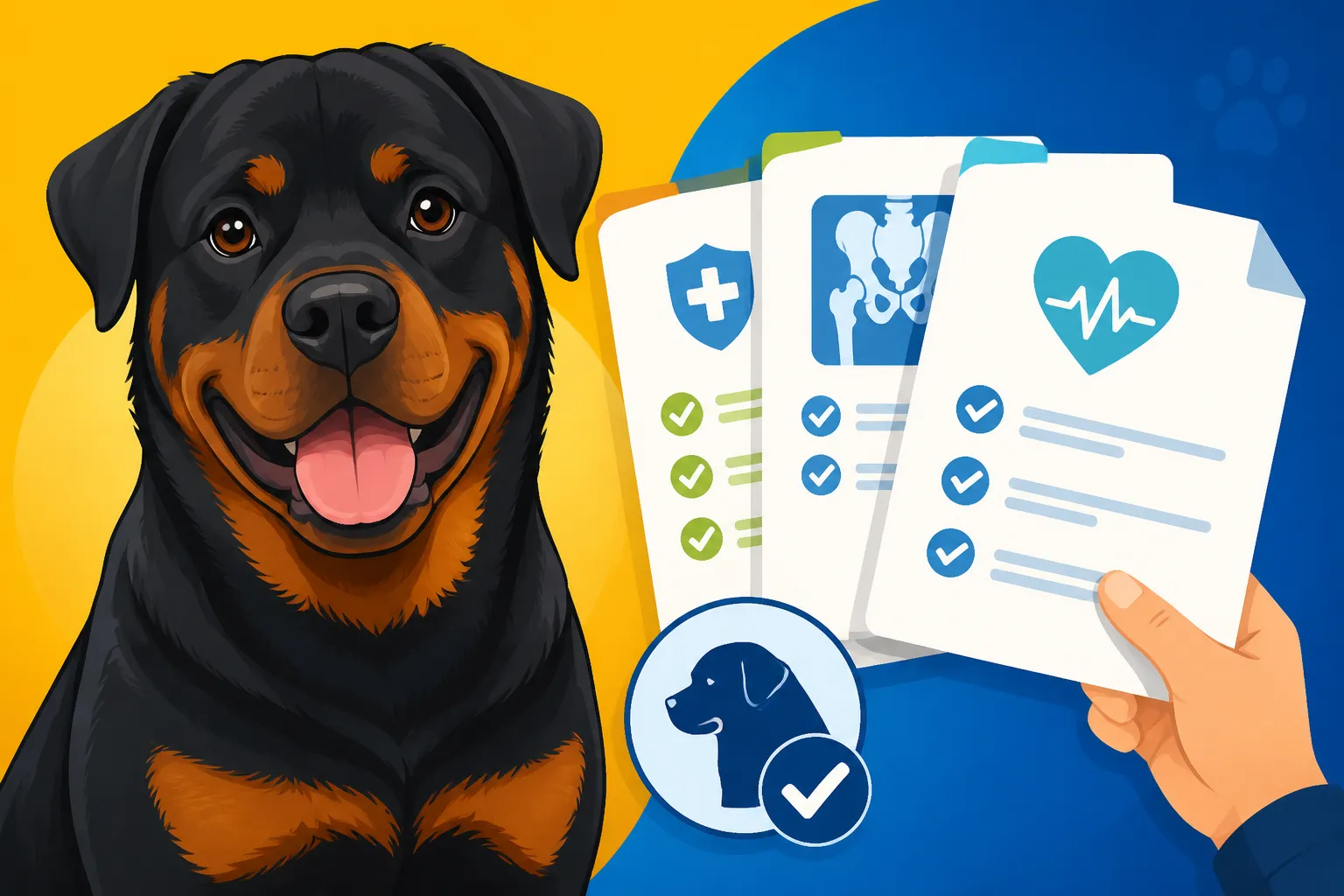
Bringing home a Rottweiler puppy is an exciting time, but the joy can quickly turn to heartbreak and financial strain if you haven't done your due diligence. Many prospective owners don't realize that a simple "vet check" for a puppy isn't enough, leaving them vulnerable to severe genetic health conditions down the line. This comprehensive guide will walk you through the essential health papers and clearances you must ask a reputable Rottweiler breeder for, ensuring you make the most informed decision for a healthy future together.
Understanding the Importance of Health Clearances
It’s easy to get swept up in the adorable puppy cuteness, but behind those wagging tails and clumsy paws, there could be serious genetic predispositions lurking. Rottweilers, like many purebred dogs, are prone to certain inherited health conditions. These aren't minor sniffles; we're talking about debilitating diseases that can significantly impact their quality of life, lead to immense pain, and rack up eye-watering veterinary bills. As a responsible future Rottweiler parent, it’s absolutely critical to understand that a breeder’s commitment to health testing isn't just a suggestion—it's a non-negotiable part of ethical breeding.
Why Health Papers Matter for Rottweilers
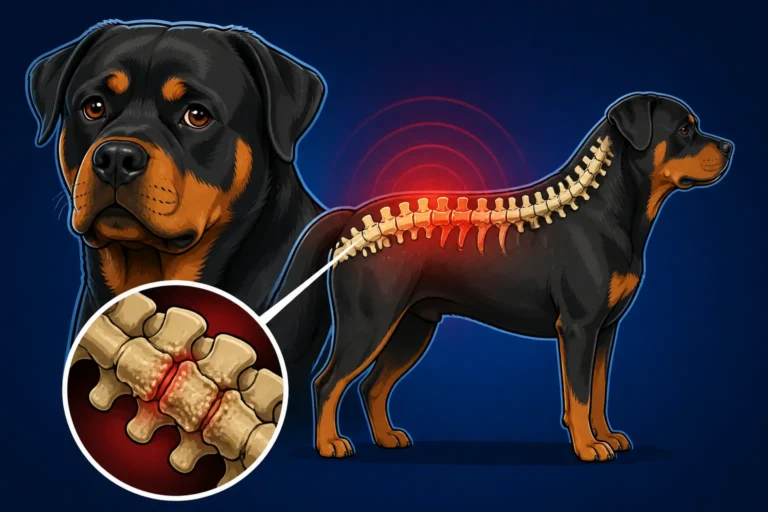
Imagine falling in love with a bouncy Rottweiler puppy, only to discover before its second birthday that it's struggling with severe hip dysplasia, barely able to walk without pain. Or perhaps a heartbreaking diagnosis of a fatal genetic neurological condition. These are not exaggerated scenarios; they are real possibilities when breeders cut corners on health testing. Rottweilers are specifically predisposed to conditions like hip and elbow dysplasia, various heart diseases (especially subaortic stenosis), certain eye conditions, and a devastating neurological disorder called Juvenile Laryngeal Paralysis & Polyneuropathy (JLPP). A reputable breeder doesn't just breed two Rottweilers together because they like them; they meticulously research pedigrees and perform extensive health screenings on their breeding stock. These health papers provide a transparent, objective look at the parents' genetic health, offering you the best possible assurance that your puppy has inherited sound genetics. While no guarantee is absolute, these clearances drastically reduce the risk of inheriting these painful and costly conditions.
Responsible breeders understand that every puppy they produce carries a piece of their legacy. They invest thousands of dollars and countless hours into health testing because they care deeply about the welfare of the breed and the families who will welcome their puppies. They see it as their ethical responsibility to minimize suffering and maximize the chances of a long, healthy life for their dogs. When you ask to see health papers, you're not being intrusive; you're demonstrating your commitment to responsible ownership, and a good breeder will appreciate it.
The Difference Between Health Testing and a Vet Check
This is a point of confusion for many first-time puppy buyers. A breeder might confidently tell you, "My puppies all come with a clean bill of health from our vet!" While a general veterinary check-up is certainly important for assessing a puppy's immediate condition—checking for parasites, heart murmurs, hernias, and overall vigor—it is not the same as comprehensive health clearances on the parents. Think of it this way: your doctor can tell if you are healthy today, but they can't tell you about your parents' genetic predispositions to conditions like heart disease or certain cancers without specialized tests.
Health clearances, particularly those from organizations like the Orthopedic Foundation for Animals (OFA) or the Canine Eye Registry Foundation (CERF), involve specialized evaluations by board-certified veterinary specialists. These are objective assessments of the breeding dogs' joints, hearts, and eyes, often involving X-rays, echocardiograms, and eye exams. Furthermore, DNA tests for specific genetic diseases like JLPP delve into the dog's genetic code to identify carriers or affected individuals. A puppy vet check simply confirms the puppy appears healthy at that moment; it tells you nothing about the underlying genetic health of its lineage, which is paramount for a breed like the Rottweiler. Always remember, a good breeder will offer both—a recent vet check for the puppy and documented health clearances for the parents.
Key Health Clearances You Must See
When you're sifting through breeder websites or speaking with them on the phone, the sheer volume of acronyms and official-sounding terms can feel overwhelming. Don't worry, we're going to break down the most critical health clearances specific to Rottweilers. These are the absolute bare minimum you should expect to see documented for both parent dogs before considering a puppy from that litter.
Hip and Elbow Dysplasia Clearances
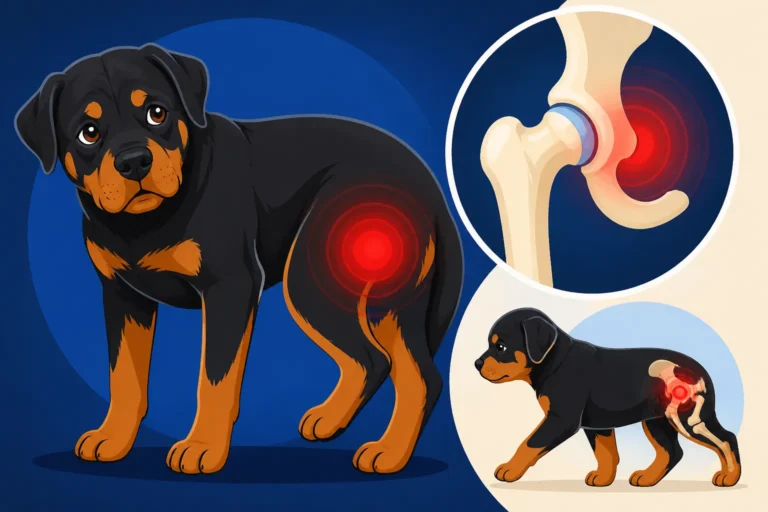
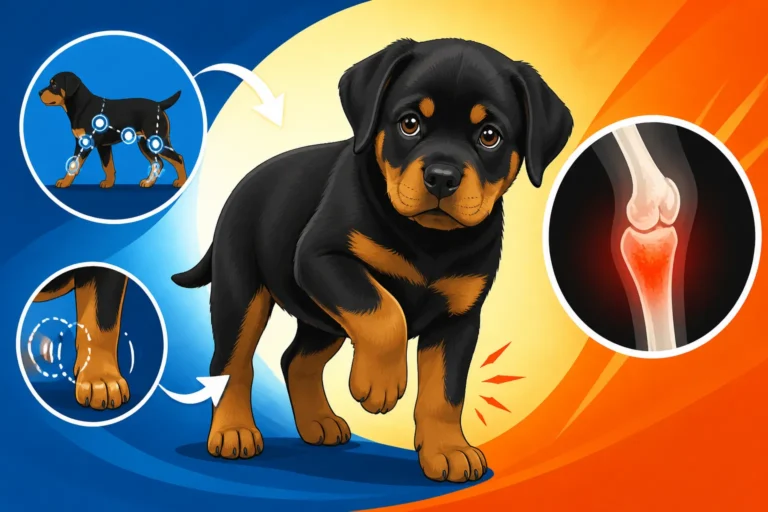
Hip and elbow dysplasia are devastating, painful, and unfortunately, common orthopedic conditions in large breeds like Rottweilers. Hip dysplasia occurs when the hip joint doesn't form correctly, leading to a loose joint that grinds down over time, causing arthritis and pain. Elbow dysplasia is a similar condition affecting the elbow joint. For a dog that can weigh over 100 pounds, these conditions can severely limit mobility and cause chronic suffering. This is why official hip and elbow clearances are absolutely paramount.
The gold standard for these clearances in the United States is typically through the Orthopedic Foundation for Animals (OFA). For hips, dogs are rated as Excellent, Good, Fair, Borderline, or Dysplastic (Mild, Moderate, Severe). Only dogs rated Excellent, Good, or Fair are considered acceptable for breeding. For elbows, the ratings are Normal (Grade 0), Grade I, Grade II, or Grade III. Only dogs with Normal (Grade 0) elbows should be bred. It's important to understand that these X-rays and evaluations can only be performed once the dog is 24 months old, as their bones are still developing before that age. A breeder who tells you their 12-month-old dog has "clear hips" is not being honest, as the final, official clearances cannot be done until they are fully mature. This is critical for understanding Rottweiler Hips and Elbows and the 24-Month Rule. Always ask for the official OFA certificates and check the OFA public database using the dog’s registered name or registration number. You’ll want to see specific grades like "OFA Good" or "OFA Fair" for the hips, which are considered passing grades for breeding purposes. To learn more about how these grades are determined, you can read about Rottweiler Hip Dysplasia and the OFA Grade. Similarly, ensure you see a "Normal" grade for the elbows on the official OFA certificate. Understanding Rottweiler Elbow X-Rays Taken at Twenty-Four Months can further clarify why this age requirement is so important.
Cardiac Clearance
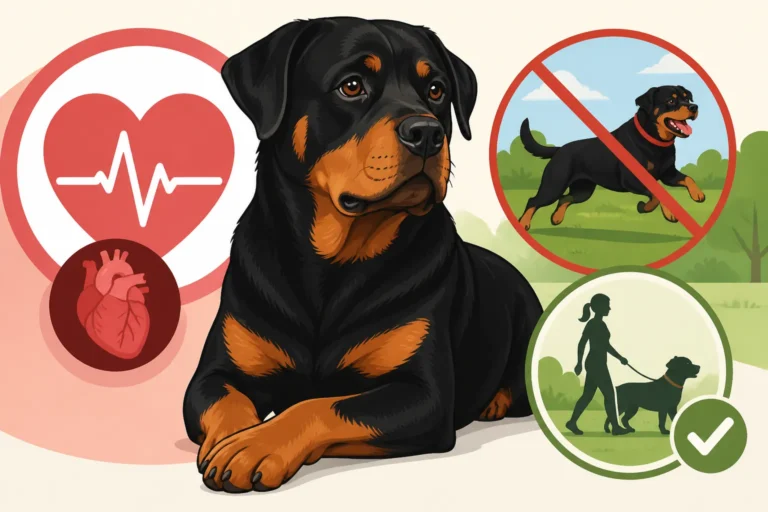
Heart disease, particularly a condition called Subaortic Stenosis (SAS), is another serious concern in the Rottweiler breed. SAS is a congenital heart defect where a fibrous ring or ridge forms just below the aortic valve, obstructing blood flow out of the heart. This makes the heart work harder, often leading to heart failure or even sudden death. While a regular vet can listen for a heart murmur, a murmur is only a symptom, not a definitive diagnosis of SAS. A healthy heart without a murmur can still sometimes carry the genetic predisposition.
For truly reliable cardiac clearance, you need to see an evaluation performed by a board-certified veterinary cardiologist. This specialist will use an echocardiogram, which is an ultrasound of the heart, to visually assess the heart's structure and function. They will look for the presence and severity of any subaortic stenosis or other cardiac abnormalities. The OFA also provides a public database for these cardiac clearances. If a breeder simply says their vet "listened to the heart and said it was fine," that's not enough. You need proof of a cardiologist's evaluation, typically performed at two years of age or older. This specific test helps to identify affected animals and ideally remove them from the breeding pool. Understanding Rottweiler Heart Disease and Subaortic Stenosis will give you more context on this critical issue. The thoroughness of The Rottweiler Echocardiogram at Two Years Old provides further insight into what this examination entails and why it's so vital for prospective breeding dogs.
Eye Certification
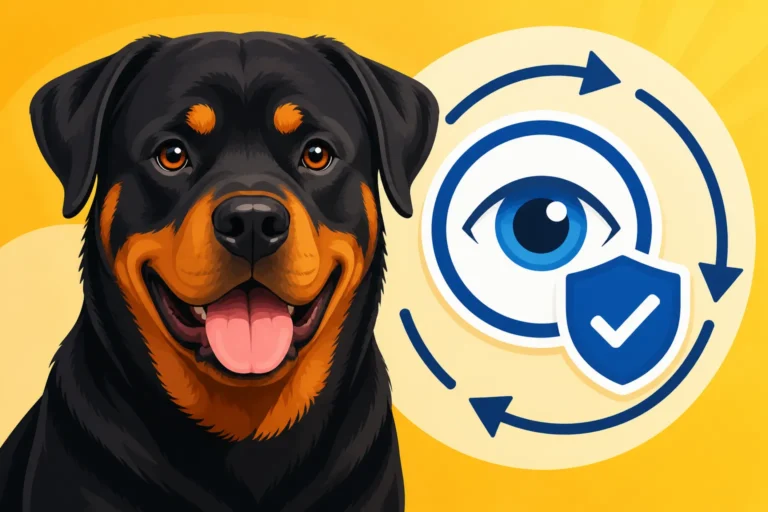
While not as widely publicized as hip or heart issues, eye conditions can also affect Rottweilers and lead to discomfort, impaired vision, or even blindness. Common issues include entropion (eyelids roll inward, causing eyelashes to rub on the eye) and ectropion (eyelids roll outward, exposing the eye). These conditions can cause chronic irritation, infections, and may require costly surgical correction.
Reputable breeders will have their breeding dogs' eyes examined by a board-certified veterinary ophthalmologist. These exams are certified by organizations like the OFA Eye Certification Registry (previously CERF). Unlike hip and elbow clearances which are typically done once at 24 months, eye certifications need to be updated periodically, usually every year or two, because some conditions can develop later in life. If you're looking at a dog for breeding, you'd want to see a very recent certificate. A breeder should be able to provide documentation that their breeding dogs are "clear" of inheritable eye diseases. This practice is crucial for the breed's long-term health. For a detailed look into the requirements, you can check out Rottweiler Eye Certification and the Three Year Rule. It's a testament to responsible breeding that these eye exams are Rottweiler Eye Exams Recertified Every Three Years, showing ongoing vigilance against potential issues.
Juvenile Laryngeal Paralysis & Polyneuropathy (JLPP) DNA Test
JLPP is a heartbreaking, inherited neurological disorder specific to Rottweilers. It typically manifests in puppies between 3 and 18 months of age, causing progressive paralysis of the larynx (leading to difficulty breathing and swallowing) and eventually generalized polyneuropathy affecting the limbs. It is invariably fatal, and there is no cure. Because it's a recessive genetic condition, a dog can be a "carrier" without showing any symptoms itself. If two carriers are bred together, 25% of their puppies will be affected. If an affected puppy is born, it's a devastating outcome for both the dog and its family.
Thankfully, there is a DNA test available that can definitively identify whether a dog is Clear (does not carry the gene), a Carrier (carries one copy of the gene but is not affected), or Affected (carries two copies of the gene and will develop the disease). For ethical breeding, at least one parent of a litter must be "Clear." This ensures that no affected puppies will be produced, even if the other parent is a carrier. If both parents are Clear, all puppies will be Clear. If one parent is Clear and the other is a Carrier, all puppies will either be Clear or Carriers, but none will be Affected. Never purchase a Rottweiler puppy without seeing proof of JLPP DNA testing for both parents, with at least one parent being clear. This is truly non-negotiable for the health and welfare of your future companion. To understand the specifics, read JLPP and the Rottweiler DNA Test, which explains the importance of this screening. Further insight can be gained from Why One Rottweiler Parent Must Test Clear, highlighting the critical role this plays in preventing affected puppies.
Understanding CHIC and Beyond
Beyond the individual clearances for hips, elbows, heart, eyes, and JLPP, there's a broader program that helps synthesize this information for breeders and prospective owners. The Canine Health Information Center (CHIC) offers a centralized database for health information, providing an excellent tool for verifying a breeder’s commitment to comprehensive health testing.
The CHIC Program and What It Means
The Canine Health Information Center (CHIC) is a program sponsored by the Orthopedic Foundation for Animals (OFA) and the AKC Canine Health Foundation. For each breed, CHIC works with the parent club (in this case, the American Rottweiler Club) to establish a recommended set of health screenings that are relevant to that breed. Once a dog has completed all of the recommended health tests for its breed, and those results are publicly available in the OFA database, it is issued a CHIC number. This number is not an endorsement of "perfect health," but rather an indication that a breeder has been thorough and transparent in performing all the recommended health screenings.
For Rottweilers, the CHIC requirements typically include:
- Hip Dysplasia (OFA Evaluation)
- Elbow Dysplasia (OFA Evaluation)
- Cardiac Evaluation (OFA – Cardiologist Echo)
- Eye Examination (OFA Eye Certification)
- JLPP DNA Test (OFA accepts results from approved labs)
The key takeaway here is that a CHIC number means the tests were done and the results are publicly available, whether they were passing or failing. A truly reputable breeder, however, will only breed dogs that have passed these tests with good results (e.g., OFA Good/Fair hips, Normal elbows, Clear cardiac and eye exams, and at least one JLPP Clear parent). So, while the CHIC number is a great starting point, always dig deeper into the individual results. A breeder who has taken the steps to get a CHIC number for their dogs is demonstrating a higher level of commitment to health. You can delve into The Five Evaluations a Rottweiler Needs for CHIC for a more comprehensive list and understanding of the program's requirements.
Beyond the Basics: Other Considerations
While the core CHIC requirements are essential, some breeders go above and beyond, which is a fantastic sign of their dedication. You might encounter additional clearances or discussions about other health considerations. For instance, thyroid function can sometimes be an issue in Rottweilers, so a breeder might also have OFA Thyroid clearances. This test checks for hypothyroidism, which can cause skin problems, weight gain, and lethargy.
It's also a good idea to inquire about the general longevity of the dogs in the pedigree. While not a "clearance" in the traditional sense, a breeder who can speak to generations of dogs living long, healthy lives, often into their senior years (8-10 years and beyond, which is a good Rottweiler Lifespan and the Eight to Ten Year Average), is often a sign of sound breeding practices. Don't be shy about asking about the health history of grandparents, great-grandparents, and siblings of the breeding pair. Furthermore, ask to see the puppy’s individual health records, including vaccination history (which vaccines were given, when, and by whom), and deworming schedule. This demonstrates good basic veterinary care for the puppies themselves, beyond the genetic health of the parents. While these additional considerations are not as critical as the core clearances, they speak volumes about a breeder's comprehensive approach to canine health and welfare.
When considering a puppy, even one from health-tested parents, it's always wise to anticipate potential health needs down the line. That's where looking into pet insurance, perhaps from a provider like Healthy Paws, can offer a crucial safety net for unexpected vet bills. While it doesn't replace the need for clearances, it provides peace of mind.
How to Verify Health Papers and Talk to Breeders
Navigating the world of breeders and health certifications can feel daunting, but being prepared with the right questions and knowing how to verify information will empower you. This isn't about being confrontational; it's about being an informed, responsible buyer who prioritizes the long-term health of your future Rottweiler.
Asking the Right Questions
When you contact a breeder, make it clear from the outset that health testing is a top priority for you. Start by asking directly for proof of health clearances for both parents of the litter. Don't just ask if they "do health testing" – ask for the specific certifications. Here are some key questions to pose:
- "Can you provide the OFA or PennHIP numbers for the sire and dam for hips and elbows, along with their dates of birth?"
- "Do you have a current (within the last 12-18 months) OFA Eye Certification (or CERF) for both parents?"
- "What are the results of the JLPP DNA tests for both the sire and dam (Clear, Carrier, or Affected), and from which laboratory?"
- "Can I see the cardiologist's OFA cardiac certification for both parents, noting the date of the echocardiogram?"
- "Are your breeding dogs CHIC certified? If so, what are their CHIC numbers?"
A good breeder will not only readily share this information but will also be happy to explain what the results mean. They should be proud of their health testing efforts. Be prepared to independently verify the information on the OFA website (www.ofa.org) by inputting the dog's registered name or OFA/CHIC number. This public database allows you to confirm the accuracy of the documents you're shown. Responsible breeders understand your desire for transparency and will be patient and helpful in guiding you through this process. Remember, you're not just buying a puppy; you're investing in a family member for the next eight to ten years, and ensuring their health from the start is paramount.
Spotting Red Flags
Unfortunately, not all breeders are created equal, and some will try to cut corners. Knowing the red flags can save you immense heartache and expense down the road. Be extremely wary of any breeder who:
- Claims their vet checked the parents and they're "fine": As discussed, a general vet check isn't specialized health clearance. This is a huge red flag for critical conditions like hip dysplasia or SAS.
- Says the puppies are "too young" for health tests: While puppies are too young for their own hip/elbow clearances, the parents should be fully mature and have all their clearances completed before breeding.
- Doesn't believe in formal health testing: This is an immediate deal-breaker. A breeder who dismisses these scientifically backed tests is prioritizing profit over the health and welfare of their dogs.
- Cannot produce official certificates or public database entries: They might show you a random piece of paper, but if it's not verifiable through OFA, PennHIP, or a reputable DNA lab, it's suspect.
- Offers a puppy at a suspiciously low price: While you shouldn't just buy the most expensive puppy, an exceptionally cheap Rottweiler puppy often means corners were cut, particularly on the costly health tests. That "bargain" puppy could easily cost you tens of thousands in vet bills later. This is often the case with a puppy from a backyard breeder, and you should understand Why an $800 Rottweiler Puppy Costs More Later as those initial savings are often dwarfed by future health expenditures.
- Is evasive or gets defensive when asked about health papers: A confident, ethical breeder has nothing to hide.
Any of these signs should give you serious pause. It’s crucial to be vigilant, as these initial compromises can lead to devastating consequences. Even if you consider pet insurance from a company like Healthy Paws, remember that pre-existing conditions (which genetic issues often are) are typically not covered, emphasizing the importance of getting clear parents.
What to Do If Papers Are Missing or Incomplete
If, after asking the right questions, a breeder cannot provide verifiable health clearances for both parents—especially for hips, elbows, cardiac, eyes, and JLPP—the strongest advice is to walk away. It’s a tough decision, especially if you've already fallen for a cute puppy picture, but it's essential for the well-being of the dog and your own peace of mind. Taking on a Rottweiler from untested lines is a gamble with incredibly high stakes, both emotionally and financially.
The potential financial burden of a genetically unhealthy Rottweiler is immense. Hip or elbow surgeries can cost thousands of dollars per joint. Treating severe cardiac issues can involve ongoing medication and specialist visits. JLPP, as mentioned, is fatal. If you acquire a dog without proper clearances and it develops these issues, you could be looking at tens of thousands of dollars in veterinary care, and even then, your dog might still live a life of chronic pain or reduced quality. This is where the true cost of a cheap puppy becomes brutally apparent. Instead, consider waiting for a litter from a reputable breeder who prioritizes health, even if it means a higher initial cost and a longer waiting list. Alternatively, explore reputable Rottweiler rescues; many adult rescue dogs will have some known health history, or at least you’ll be aware of existing conditions upfront. While even the best health clearances can't guarantee a lifetime free of illness, they are your best defense against predictable genetic conditions and a hallmark of responsible, ethical breeding.
Here's a quick summary of key health checks and what to look for:
| Health Clearance | What It Tests For | OFA/Certification Level | Recommended Age of Test (for breeding dog) | What to Look For (Passing) |
|---|---|---|---|---|
| Hip Dysplasia | Integrity of the hip joints | OFA Evaluation / PennHIP | 24 months or older | OFA: Excellent, Good, Fair / PennHIP: Score better than breed average |
| Elbow Dysplasia | Integrity of the elbow joints | OFA Evaluation | 24 months or older | OFA: Normal (Grade 0) |
| Cardiac | Presence of Subaortic Stenosis (SAS) & other heart defects | OFA – Board-Certified Cardiologist (Echo) | 12 months or older (re-evaluate periodically if needed) | OFA: Normal / Clear |
| Eye Examination | Inheritable eye diseases (e.g., entropion, cataracts) | OFA Eye Certification (OFA-EYE) | 12 months or older (re-certified periodically) | OFA: Normal / Clear (no observable inheritable disease) |
| JLPP DNA Test | Genetic marker for Juvenile Laryngeal Paralysis & Polyneuropathy | OFA-accepted lab (e.g., Laboklin, GenSol) | Any age (one-time test) | At least one parent: CLEAR (ideally both) |
Disclaimer
The information provided in this article is for general informational purposes only and does not constitute veterinary advice. Always consult with a qualified veterinarian for any health concerns or before making any decisions about your pet's care. Health clearances reduce the risk of genetic diseases but do not guarantee a dog will never develop health issues.