Whether a Rottweiler Should Sleep in Your Bedroom
Rottweiler sleeping arrangements involve weighing protective guarding instincts, pack dynamics, and the pros and cons of shared bedrooms.
Work with the temperament you have.
House-training and crate work, recall, leash manners, separation anxiety, and the behaviors this breed is wired for.
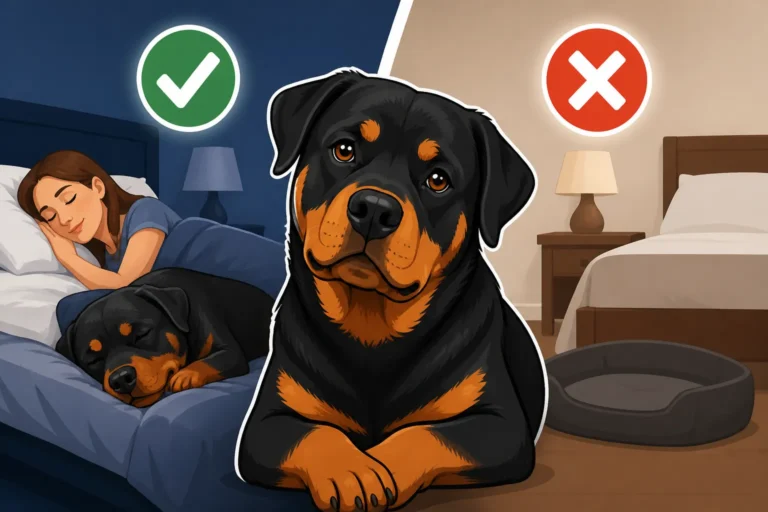
Rottweiler sleeping arrangements involve weighing protective guarding instincts, pack dynamics, and the pros and cons of shared bedrooms.

New Rottweiler owners often make critical mistakes by underestimating adult size and ignoring early socialization and training.

Rottweiler mental stimulation strategies help keep high energy dogs engaged and prevent destructive indoor behavior during rainy days.

Teaching a Rottweiler to settle indoors requires managing working drive and ensuring adequate mental and physical stimulation.

Rottweiler impulse control games teach a 110-pound dog to wait at food bowls and doorways to prevent dangerous lunges.

Puzzle feeders for Rottweilers slow down rapid eating to prevent bloat and provide mental stimulation for intelligent dogs.

Rottweiler mental enrichment requires scent work and problem-solving tasks because physical exercise alone fails to satisfy their intelligence.

Muzzle training a Rottweiler proactively prevents accidental bites and ensures faster, safer care during veterinary emergencies.

Rottweiler grooming challenges, including big dog size and reserved temperament, and how to manage the stressful process calmly.

Rottweiler car travel difficulties and physical loading challenges have practical solutions using ramps, harnesses, and positive reinforcement.