Cruciate Tears in a Heavy Rottweiler
There are few things more alarming than seeing your usually robust Rottweiler suddenly lame, holding up a leg, or struggling to bear weight. For many Rottweiler owners, this painful scenario points to a cruciate ligament tear, a common and often debilitating injury that can turn an active, powerful dog into one limping and in discomfort. This comprehensive guide will delve into what cruciate tears entail, why our heavy Rottweilers are particularly susceptible, how to spot the warning signs, and the critical steps for diagnosis, treatment, and recovery to help your beloved companion regain their stride.
Understanding the Canine Cruciate Ligament
To really grasp what's happening when your Rottweiler tears a cruciate ligament, it helps to understand a bit about the knee itself. This isn't just a simple hinge joint; it's a complex piece of engineering designed for incredible stability and range of motion, but also prone to specific weaknesses, especially in large, active breeds.
Anatomy and Function of the CCL
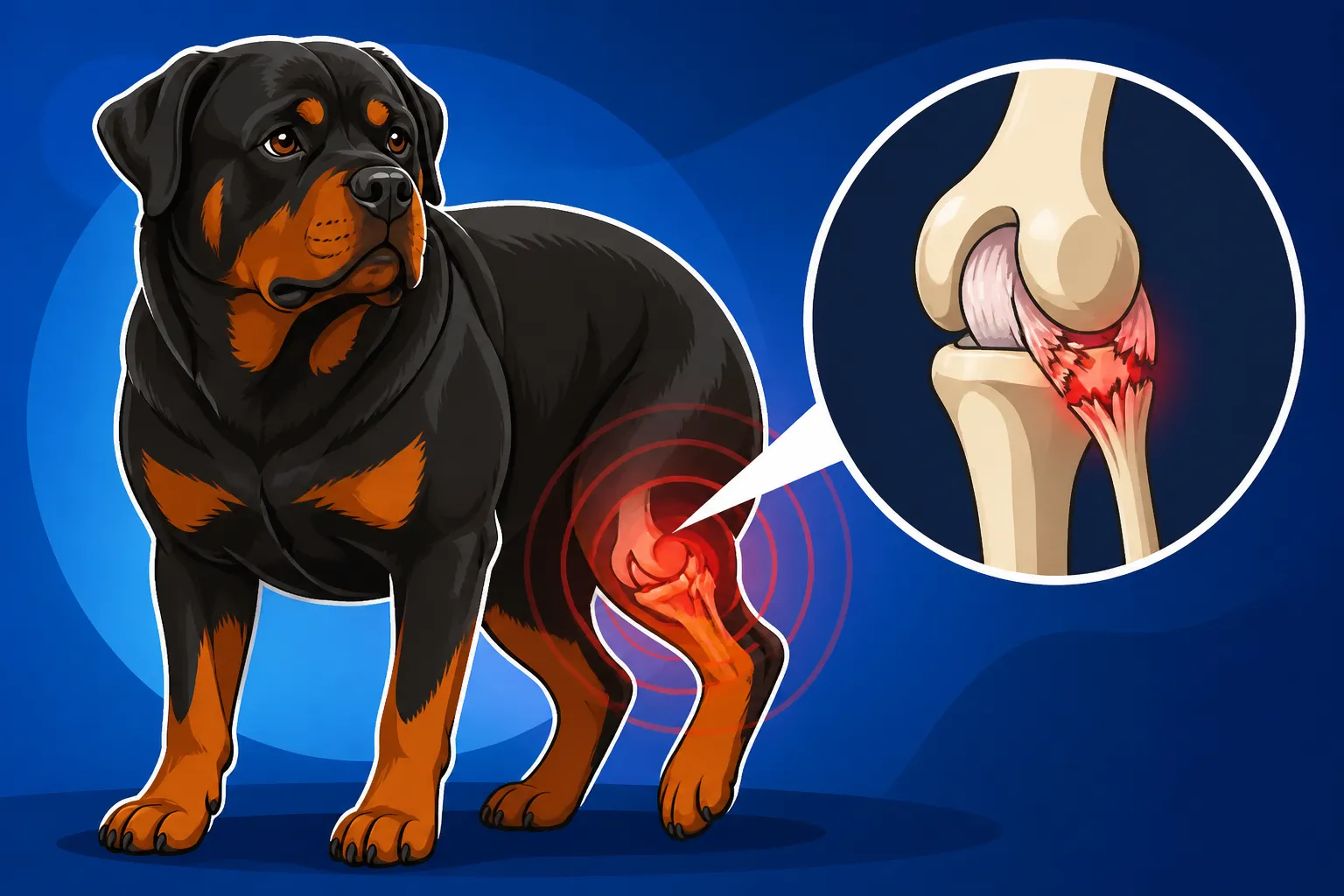
The canine knee joint, or stifle, is incredibly complex, connecting the femur (thigh bone) to the tibia (shin bone). Within this joint, you'll find two crucial ligaments crossing inside, much like an "X," which is why they're called cruciate ligaments. There's an anterior (or cranial) cruciate ligament (ACL or CCL in veterinary terms) and a posterior (caudal) cruciate ligament. In dogs, the cranial cruciate ligament is the one that most commonly tears.
Think of the CCL as the primary stabilizer of the knee. Its job is twofold: it prevents the tibia from sliding forward relative to the femur (the cranial drawer sign that vets look for), and it limits internal rotation of the tibia. Without a fully intact CCL, the knee becomes unstable, allowing the bones to move abnormally against each other. This instability causes pain, inflammation, and can rapidly lead to debilitating arthritis if not addressed. It's a bit like trying to stand on a wobbly stool – your dog's leg just can't bear weight effectively or without significant discomfort.
How Tears Happen in Dogs
Unlike humans, who often tear their ACLs with a sudden, forceful twist or impact during sports, most cruciate tears in dogs are not the result of a single traumatic event. While acute, dramatic tears can happen, especially if a Rottweiler twists their knee awkwardly during vigorous play or a misstep, the more common scenario is a gradual, degenerative process. This means the ligament slowly weakens and frays over time, often due to chronic stress, poor conformation, or genetic predispositions.
Imagine a rope that's constantly under tension, with a few strands snapping one by one, rather than a clean cut. Eventually, even a minor wrong move can cause the remaining weakened fibers to give way completely, resulting in a sudden lameness that appears out of nowhere. This is why you might hear owners say their dog just "stepped funny" or "jumped off the couch" and suddenly couldn't put weight on their leg. What appeared to be a minor incident was merely the final straw for an already compromised ligament. This underlying degenerative process is a key factor in why we see so many cruciate tears in breeds like the Rottweiler.
Why Rottweilers Are Prone to Cruciate Tears
It's a harsh reality that some breeds are just more predisposed to certain health issues, and cruciate tears sadly fall into that category for our beloved Rottweilers. Their unique combination of size, build, and sometimes their genetic makeup can set them up for this challenging injury.
The Role of Weight and Breed Conformation
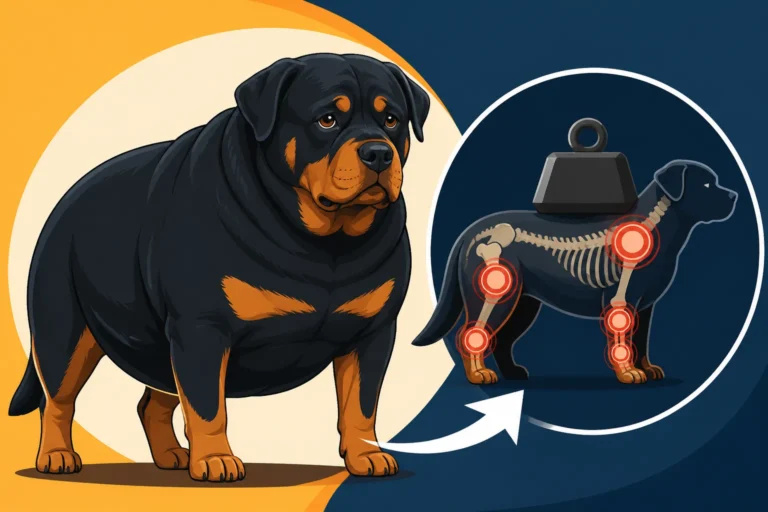
First and foremost, a Rottweiler's sheer size and weight play a significant role. Imagine carrying an extra 20 to 30 pounds on your own body – the strain on your joints would be immense. For a hundred-plus-pound Rottweiler, every extra pound dramatically increases the stress on their joints, especially the knees. This is why maintaining a lean body condition is absolutely critical for their long-term joint health. You can read more about How Rottweiler Weight Multiplies the Load on Its Hips and other joints.
Beyond just the scale, their specific conformation can contribute. Rottweilers are powerful, athletic dogs, often with strong musculature. However, some individuals may have certain angles in their hind limbs, such as a steeper tibial plateau angle, which naturally places more strain on the cranial cruciate ligament even during normal movement. This constant, repetitive stress over months and years can lead to the gradual fraying and weakening of the ligament mentioned earlier, making it more susceptible to tearing. When you combine a powerful, heavy dog with these biomechanical factors, the risk dramatically escalates.
Chronic Degeneration Versus Acute Injury
As we touched upon, most cruciate tears in Rottweilers aren't a single, dramatic snap like an athlete tearing an ACL on the field. Instead, it's often a process of chronic degeneration. The ligament slowly weakens, frays, and partially tears over time due to continuous micro-traumas and the inherent strain of supporting a large, active body. This is why you might notice subtle signs before a full tear, like a slight stiffness after rest, a reluctance to jump, or a decreased enthusiasm for their usual activities.
When the final tear occurs, it often feels sudden to the owner, but the groundwork for the injury has been laid over months or even years. This degenerative nature also means that when one CCL tears, the other knee is often already undergoing similar degenerative changes. Statistics show that 40-60% of dogs who tear one CCL will tear the other within 1-2 years. It’s a somber thought, but one that responsible Rottweiler owners need to prepare for, both emotionally and financially. This tendency makes it even more important to consider comprehensive pet insurance, like plans offered by Healthy Paws, early in your dog's life.
Genetic Predisposition and Bilateral Risk
While exact genetic markers are still being researched, there's clear evidence that certain breeds, including Rottweilers, have a genetic predisposition to cruciate ligament disease. This means that some Rottweilers are simply born with ligaments that are structurally weaker or with joint conformations that put them at higher risk, regardless of their weight or activity level. It’s a silent, inherited factor that can make them more vulnerable.
This genetic component also contributes significantly to the high incidence of bilateral tears—meaning both knees eventually suffer a torn cruciate. If your Rottweiler experiences a tear in one knee, your veterinarian will almost certainly caution you about the likelihood of the other knee developing the same issue down the line. This isn't just bad luck; it's often the unfolding of an underlying, systemic ligament weakness. Because of this, proper breeding practices, which include screening parents for any history of joint issues, are crucial for trying to reduce the incidence of this painful condition in future generations. Unfortunately, even with the best breeding, the risk remains a significant concern for the breed.
Recognizing the Signs of a Cruciate Tear
Spotting a cruciate tear early can make a difference in your Rottweiler's comfort and the eventual outcome of treatment. While some signs are dramatic, others can be subtle, especially in the early stages of a degenerative tear. Knowing what to look for is vital for any Rottweiler owner.
Sudden Lameness and Non-Weight Bearing
The most unmistakable sign of a complete cruciate ligament tear is sudden, acute lameness. Your Rottweiler might be playing fetch one moment, then suddenly yelp, pull up their hind leg, and refuse to put any weight on it at all. It might look like a severely sprained ankle, but the pain is coming from their knee. They'll often hop on three legs, keeping the injured limb completely off the ground.
If they do try to put some weight down, it will likely be a toe-touching gait, where just the very tips of their toes barely graze the ground, minimizing pressure on the painful joint. This isn't just discomfort; it's often searing pain from the instability within the knee. You might also notice swelling around the knee joint, though this can be subtle due to their thick musculature and fur. Any sudden, unexplained lameness in a hind leg, especially after activity, should prompt an immediate veterinary visit. Even if they briefly seem better, the underlying instability is still there and will likely worsen.
Chronic Instability and Stiffness
While a complete tear often presents with sudden, severe lameness, partial tears or long-standing degenerative issues can manifest differently. In these cases, your Rottweiler might exhibit chronic instability, which presents as a more intermittent or subtle lameness. Perhaps they limp after a long walk or run, but seem fine after rest. You might observe a "toe-touching" gait or a tendency for them to sit with the injured leg extended out to the side rather than tucked underneath them, known as a "Rottweiler sit."
They may also show stiffness, particularly after lying down for a while or upon waking up in the morning. Getting up from a lying position might be slow and hesitant. They might be reluctant to jump into the car, climb stairs, or engage in their usual energetic play. Over time, as arthritis sets in due to the knee's instability, this stiffness and mild lameness can become more persistent. Don't dismiss these subtle cues; they are often early warnings that the ligament is weakening and could be a precursor to a full tear. Catching these early signs means you can discuss options for Managing Arthritis in an Older Rottweiler or intervene before the situation becomes more severe.
Secondary Issues to Watch For
Beyond the immediate lameness, a torn cruciate ligament can lead to several secondary problems due to the altered biomechanics of the joint. One common complication is meniscal injury. The meniscus is a C-shaped cartilage pad that acts as a shock absorber and stabilizer within the knee. When the CCL tears, the abnormal movement of the bones can pinch and damage the meniscus, often resulting in a "bucket handle tear." If this happens, you might hear a clicking sound when your dog walks, and the pain can intensify significantly.
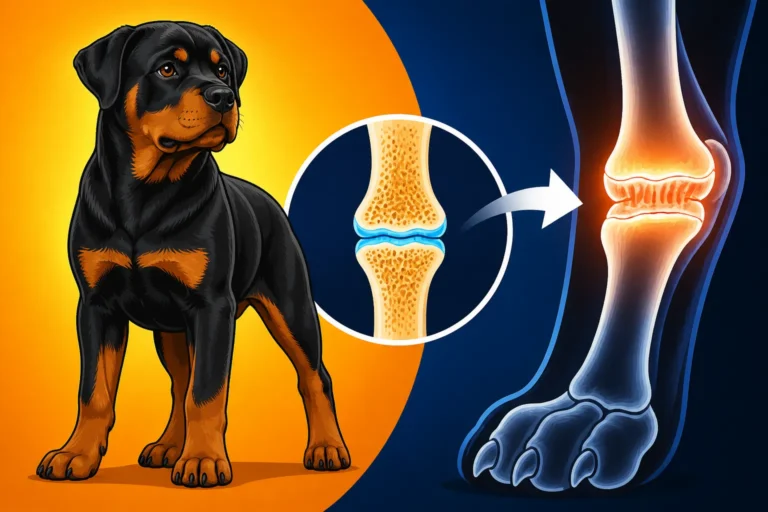
Over time, if the knee remains unstable, the constant friction and inflammation will inevitably lead to osteoarthritis. You might notice the joint feels warmer to the touch, becomes swollen, and appears thicker. The muscles in the affected limb may also start to atrophy, or waste away, because your dog is not using the leg properly. This muscle loss can make the lameness appear even more pronounced. Being aware of these potential secondary issues can help you provide your vet with a more complete picture of your Rottweiler's condition.
Diagnosing a Cruciate Tear
When you bring your Rottweiler to the vet with signs of lameness, the diagnostic process aims to confirm a cruciate tear and rule out other potential causes of pain or instability in the hind leg. This typically involves a thorough physical examination, specialized tests, and often imaging.
Clinical Examination and Drawer Test
The first step in diagnosing a cruciate tear is a comprehensive orthopedic examination. Your veterinarian will observe your Rottweiler's gait, look for muscle atrophy, and gently palpate the knee joint for swelling, warmth, and pain response. The hallmark diagnostic test for a cranial cruciate ligament tear is the "cranial drawer test."
During this test, your vet will attempt to manually slide the tibia forward relative to the femur. If the CCL is torn, there will be an abnormal forward movement, much like a drawer opening, indicating instability. A similar test is the "tibial compression test," where the vet flexes the ankle joint while extending the knee, which also demonstrates instability if the ligament is compromised. For a large, muscular Rottweiler, especially one in pain, performing these tests accurately might require a strong handler or even light sedation to get the muscles to relax enough for an accurate assessment. Sometimes, a partial tear might not show a clear "drawer" sign, making diagnosis a bit more challenging and potentially requiring further investigation.
Sedation and Imaging
Even if the cranial drawer test is positive, your vet might recommend sedation to perform a more thorough examination and to take X-rays. Sedation helps relax the powerful muscles around a Rottweiler's knee, allowing for a more definitive drawer test that might have been difficult to elicit in an awake, tense dog.
X-rays, while not directly showing the ligament (which is soft tissue), are invaluable for several reasons. They can reveal signs of chronic inflammation and early osteoarthritis, which are common with cruciate disease. They can also help rule out other causes of lameness, such as fractures, bone tumors (a concern in Rottweilers, see Osteosarcoma, the Cancer That Takes Most Rottweilers), or other joint abnormalities. Additionally, X-rays are crucial for surgical planning, as they allow the surgeon to measure specific angles of the bones in the knee, such as the tibial plateau angle, which informs the choice of surgical technique. In some complex cases, or if a definitive diagnosis remains elusive, advanced imaging like an MRI might be recommended by an orthopedic specialist, but this is less common for routine cruciate tear diagnoses.
Surgical Options for Repair
Once a cruciate tear is confirmed, especially in a heavy, active Rottweiler, surgery is almost always the recommended course of action. Unlike smaller dogs, Rottweilers rarely recover well with conservative management due to their weight and the high forces placed on their knee joints. There are several surgical techniques, each with its own advantages and considerations.
Tibial Plateau Leveling Osteotomy TPLO
The Tibial Plateau Leveling Osteotomy, or TPLO, is one of the most commonly performed and highly successful surgeries for cruciate tears in large breed dogs. Instead of attempting to repair the torn ligament itself (which often fails due to the high forces in the knee), the TPLO procedure changes the biomechanics of the knee. The surgeon makes a curved cut in the top of the tibia (the tibial plateau), rotates it to a more level angle, and then secures it in place with a bone plate and screws.
The goal is to eliminate the abnormal forward thrust of the tibia, effectively making the torn cranial cruciate ligament redundant. By neutralizing this force, the knee becomes stable without the need for an intact ligament. This allows for a quicker return to weight-bearing and generally excellent long-term outcomes, even for very large and active Rottweilers. Recovery still involves strict rest and rehabilitation, but the TPLO is often favored for its ability to create a very stable joint under heavy loads. This is a common solution for TPLO Surgery on a Rottweiler Knee.
Tibial Tuberosity Advancement TTA
Another popular biomechanical surgical option is the Tibial Tuberosity Advancement, or TTA. Similar to TPLO, TTA aims to change the forces acting on the knee rather than repairing the ligament directly. In this procedure, a cut is made in the front part of the tibia (the tibial tuberosity), which is then advanced forward and secured with a titanium cage and bone plate.
This advancement alters the angle of the patellar tendon, which then helps to counteract the forward thrust of the tibia during weight-bearing. Like TPLO, the TTA aims to stabilize the knee by eliminating the need for the CCL, allowing the dog to use the leg without the problematic "drawer" motion. While also highly effective, the choice between TPLO and TTA often comes down to the individual dog's specific knee anatomy, the surgeon's preference and experience, and occasionally, the cost and recovery profile. Both are considered advanced orthopedic procedures with good success rates for large breeds.
Lateral Suture Extracapsular Repair
The Lateral Suture Extracapsular Repair, often referred to as an "extra-cap" or "fishing line" surgery, is a more traditional approach that aims to replace the function of the torn CCL with a strong synthetic suture placed outside the joint capsule. This suture is typically made of a heavy-gauge nylon or other medical-grade material, anchored to specific points on the femur and tibia to mimic the direction and function of the original cruciate ligament.
This method essentially creates an artificial ligament to stabilize the knee. While it can be effective, particularly in smaller, less active dogs, its success rate in very large and heavy breeds like Rottweilers can be more variable compared to TPLO or TTA. The external suture can sometimes stretch or break under the immense forces exerted by a heavy dog, potentially leading to a recurrence of instability. However, it can be a more cost-effective option and may be considered for older, less active Rottweilers or those with other significant health concerns that make the more invasive TPLO/TTA less suitable. The decision often weighs the dog's size, activity level, and the surgeon's experience with the technique.
Choosing the Right Surgery for Your Rottweiler
Deciding on the best surgical approach for your Rottweiler's cruciate tear is a critical discussion to have with your veterinary orthopedic surgeon. There isn't a one-size-fits-all answer, and the choice will depend on several factors unique to your dog.
Firstly, your Rottweiler's size, weight, and activity level are paramount. As discussed, the high forces at play in a heavy, energetic dog often make biomechanical procedures like TPLO or TTA the preferred choice due to their superior long-term stability. The presence and extent of existing arthritis or meniscal damage will also influence the decision. Furthermore, your surgeon's experience and comfort level with specific techniques are crucial. A board-certified veterinary orthopedic surgeon will be able to assess your dog's individual knee anatomy, including the tibial plateau angle, to recommend the most appropriate procedure.
Finally, while cost is always a factor, it's essential to consider the potential for complications and the long-term success rate. Investing in a more robust solution upfront, even if it's more expensive, often leads to better outcomes and fewer revision surgeries down the road. Remember to inquire about potential financing options or how your pet insurance, like Healthy Paws, might cover the extensive costs associated with these major orthopedic procedures.
Here's a quick comparison of the common surgical options:
| Feature | TPLO (Tibial Plateau Leveling Osteotomy) | TTA (Tibial Tuberosity Advancement) | Lateral Suture Extracapsular Repair |
|---|---|---|---|
| Mechanism | Changes knee angle to neutralize thrust | Advances bone to alter patellar tendon angle | Creates artificial external ligament |
| Target Angle | Tibial plateau angle | Patellar tendon angle | None (ligament replacement) |
| Invasiveness | High (bone cut, plate/screws) | High (bone cut, cage/plate) | Moderate (suture outside joint) |
| Success in Large Dogs | Excellent | Excellent | Good to Fair (variable) |
| Return to Function | Often quicker return to full weight bearing | Good, similar to TPLO | Slower, more guarded |
| Cost | Higher | Higher | Lower |
| Complications | Infection, fracture, implant issues | Infection, implant issues | Suture breakage, infection |
| Indications | Most large, active dogs, steep plateau angles | Large, active dogs | Smaller, less active, or specific cases |
Post-Operative Recovery and Rehabilitation
Undergoing surgery for a cruciate tear is a significant event for any Rottweiler, and the journey doesn't end when they leave the operating room. The post-operative recovery and rehabilitation period are just as critical, if not more so, than the surgery itself for ensuring a successful outcome and helping your dog regain full function. This is a long-term commitment that requires patience, discipline, and close adherence to your veterinary team's instructions.
Immediate Post-Operative Care
The first few weeks after surgery are crucial for healing and protecting the surgical site. Your Rottweiler will come home with pain medication, anti-inflammatory drugs, and possibly antibiotics. It's imperative to administer these exactly as prescribed to manage pain, reduce swelling, and prevent infection. You'll also need to keep the incision site clean and dry, preventing your dog from licking or chewing it, which often means an E-collar (cone of shame) will be a temporary but necessary accessory.
The most challenging aspect for many Rottweiler owners is strict confinement and restricted activity. For the first 6-8 weeks, your dog will need to be limited to short, leashed potty breaks only. No running, jumping, playing, or stairs. This means crating, or a small, confined space in your home, will be essential. This stage is paramount for the bone to heal adequately after TPLO or TTA, or for the lateral suture to stabilize effectively. Too much activity too soon can lead to severe complications, including implant failure, infection, or re-injury. You'll need to be extra diligent, even if your Rottweiler seems to feel better sooner than expected, because the internal healing is still very delicate.
The Long Road of Rehabilitation
After the initial healing phase, typically around 6-8 weeks, your veterinarian or a certified canine rehabilitation specialist will guide you through a structured physical therapy program. This phase is absolutely vital for restoring strength, range of motion, and proprioception (awareness of body position) in the injured limb. Rehabilitation isn't just a suggestion; it's a cornerstone of successful recovery, especially for a heavy Rottweiler needing to support its significant body weight.
Rehab exercises often start gently and gradually progress. This might include passive range of motion exercises, controlled walks on a leash, underwater treadmill therapy (which reduces weight-bearing stress while building muscle), therapeutic exercises like "sit-to-stands," balance board work, and eventually, controlled incline walking. The goal is to rebuild muscle mass, improve joint flexibility, and retrain the limb to function normally. Skipping or rushing rehab can lead to muscle atrophy, joint stiffness, and a suboptimal long-term outcome. Many owners find working with a certified professional invaluable, as they can tailor exercises to your dog's specific needs and monitor progress effectively. Physical Therapy After Rottweiler Joint Surgery is a topic that requires dedication and consistency.
Managing Pain and Expectations
Throughout the entire recovery process, pain management is ongoing. Beyond the initial post-surgical medications, your vet may recommend long-term pain control strategies, especially if arthritis is present or developing. This could include continued anti-inflammatory medications, joint supplements (like glucosamine and chondroitin sulfate), or alternative therapies such as acupuncture or laser therapy. Being attentive to your Rottweiler's comfort level is key; signs of increased pain might indicate they've overdone it or that the medication needs adjustment.
It's also crucial to manage your own expectations. Full recovery from cruciate surgery, particularly for a large Rottweiler, can take 4-6 months, sometimes longer, to achieve maximal strength and function. Your dog may never return to exactly the same level of athletic activity as before, but with dedicated care, most Rottweilers can resume a happy, pain-free life with good mobility. Be patient, celebrate small victories, and remember that consistent, careful management is the best way to ensure your beloved companion has the best possible quality of life moving forward. Don't hesitate to reach out to your vet or rehab specialist with any questions or concerns; they are your best resource during this challenging time.
Prevention and Long-Term Management
While a cruciate tear can feel like an unavoidable stroke of bad luck, especially given the breed's predisposition, there are significant steps you can take to mitigate the risk and manage the long-term health of your Rottweiler's joints. Proactive care is truly the best defense.
Weight Management is Key
This cannot be emphasized enough: maintaining your Rottweiler at a healthy, lean body weight is perhaps the single most impactful thing you can do to prevent cruciate tears and manage joint disease. Every extra pound your Rottweiler carries adds exponential stress to their knee joints, accelerating the degenerative process of the cruciate ligament and worsening the impact of any existing arthritis.
Work closely with your veterinarian to determine your Rottweiler's ideal weight. You should be able to easily feel their ribs without seeing them, and they should have a visible waist tuck when viewed from above. If your Rottweiler is overweight, implement a controlled diet plan, reducing caloric intake and focusing on appropriate exercise. This might mean measuring food precisely, using puzzle feeders, and offering low-calorie treats. Even a few pounds of weight loss can significantly reduce the strain on their knees, potentially delaying or even preventing a tear, and certainly improving the outcome if surgery becomes necessary. Over time, obesity contributes to a host of health issues, and Rottweiler Obesity and the Load It Adds is a common problem in the breed.
Controlled Exercise and Joint Support
Regular, controlled exercise is vital for maintaining muscle strength and joint health, but it's crucial to avoid activities that put excessive strain on the knees, particularly in a growing Rottweiler. High-impact activities like jumping off tall objects, abrupt stops and starts, or intense, uncontrolled play with other dogs can be risky. For A Growing Rottweiler's Joints and Overexercise, it's even more critical to limit strenuous activities until their growth plates have closed, usually around 18-24 months of age.
Instead, focus on low-impact activities such as leash walking, swimming, or controlled trotting. These help build muscle support around the joints without the jarring impact. Additionally, many owners opt for joint supplements containing ingredients like glucosamine, chondroitin, and Omega-3 fatty acids. While scientific evidence for their preventative power can be mixed, they are generally considered safe and may support joint cartilage health and reduce inflammation. Starting Joint Supplements Started Before a Rottweiler Turns Two can be a proactive measure. Discuss with your vet which supplements might be beneficial for your Rottweiler's individual needs and age.
Addressing the Uninjured Knee
As mentioned earlier, the unfortunate reality for Rottweilers is that if one cruciate ligament tears, there's a significant chance the other knee will experience a similar issue. This bilateral risk means that prevention and careful monitoring of the "good" knee are ongoing priorities.
Continue with strict weight management and controlled exercise for both legs. Your veterinarian might also recommend proactive physical therapy exercises designed to strengthen the musculature around the healthy knee. If you have pet insurance, like Healthy Paws, understanding what they cover for pre-existing conditions and future issues is important. While pet insurance typically doesn't cover conditions present before enrollment, a plan can still be incredibly valuable for covering a subsequent contralateral tear if it occurs after the waiting period. Regular veterinary check-ups are essential to monitor both knees for any signs of discomfort or instability, allowing for early intervention if the "good" knee starts showing signs of trouble. Being prepared for the potential of a second surgery, both emotionally and financially, can make a challenging situation a bit more manageable.
Disclaimer
The information provided in this article is for general informational purposes only and does not constitute veterinary advice. Always consult with a qualified veterinarian or veterinary specialist for any health concerns or before making any decisions about your Rottweiler's medical care.