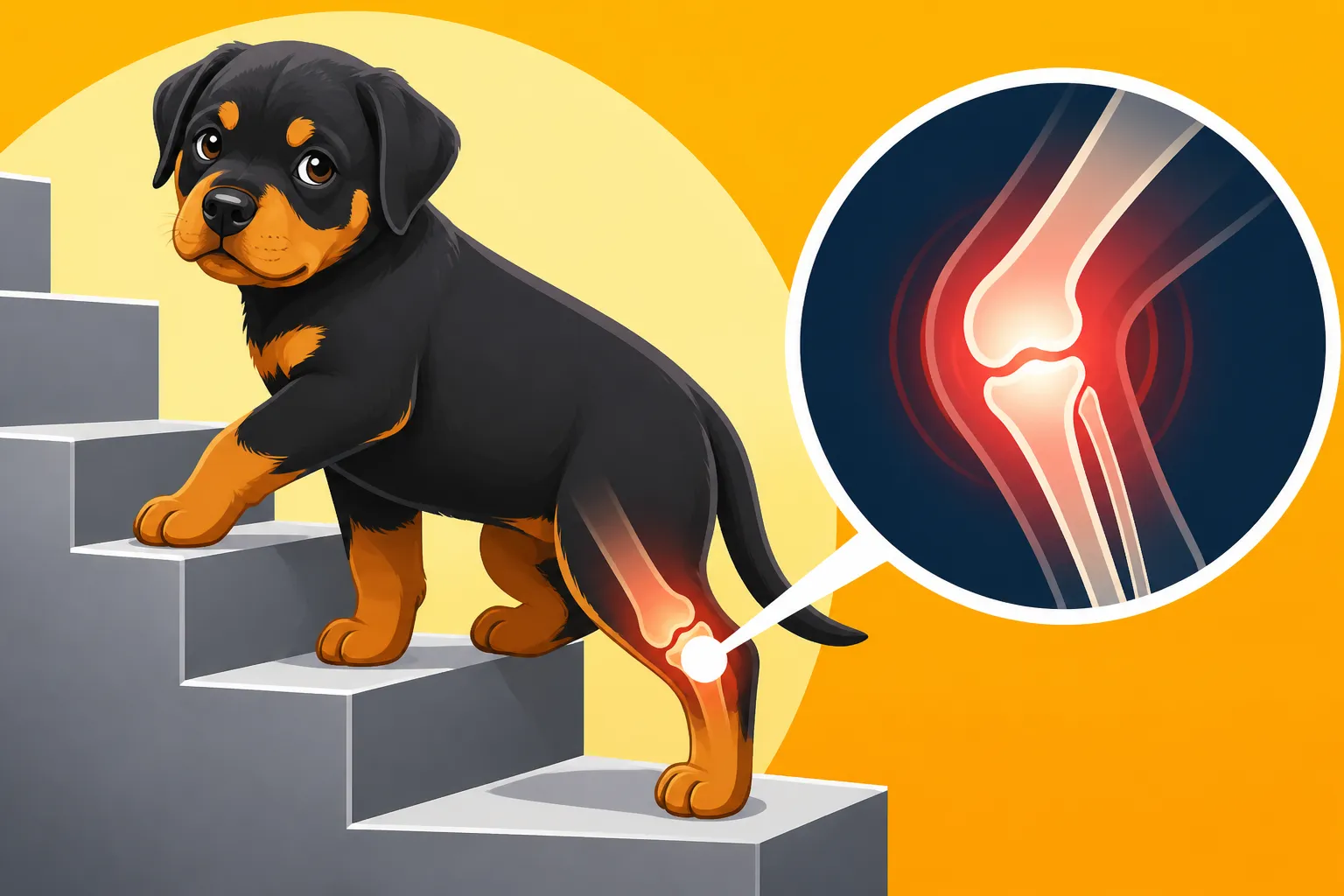
Stairs and a Rottweiler Puppy’s Joints
Bringing home a Rottweiler puppy is an absolute joy, filled with boundless energy, adorable clumsiness, and the promise of a loyal companion. But let's be honest, those gangly legs and rapidly growing bodies also come with a unique set of worries, especially when it comes to something as common as stairs. Many new Rottweiler owners find themselves constantly monitoring their puppy's movements, concerned that every jump or tumble could be setting the stage for future joint problems. This guide will walk you through exactly why stairs can be so detrimental to your growing Rottweiler, and more importantly, how you can protect their precious joints for a healthier, happier life.
The Unique Vulnerability of a Rottweiler Puppy's Growing Joints
It's easy to look at a Rottweiler puppy and see a robust, powerful animal in the making, but beneath that adorable exterior lies a skeletal system that's surprisingly delicate during its formative months. Unlike smaller breeds, Rottweilers experience an incredible growth spurt in a relatively short period, often reaching much of their adult height and weight before their bones are fully mature. This rapid development makes their joints particularly susceptible to injury and long-term issues, setting the stage for concerns like hip and elbow dysplasia down the line.
Understanding Growth Plates and Their Vulnerability
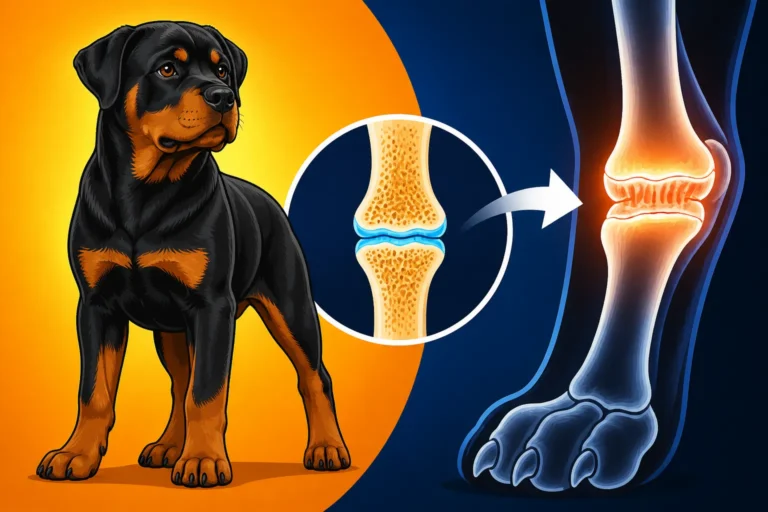
Imagine your puppy's bones as not yet solid, but with "soft spots" at the ends, called growth plates. These are areas of cartilage where bone growth occurs, and in a large breed like a Rottweiler, these plates remain open and vulnerable for much longer than in a smaller dog. While a Chihuahua's growth plates might close by 6-8 months, a Rottweiler's can remain open until they are 18-24 months old, sometimes even later. This extended period of vulnerability means that any excessive stress or impact during these critical months can damage the growth plates. A seemingly minor injury, like a twisted ankle from an awkward jump, could potentially lead to uneven growth or permanent structural damage if a growth plate is involved. This is why careful management of their environment and activity is absolutely crucial. You can learn more about this crucial developmental phase in our article, "Rottweiler Growth Plates and Why They Close So Late".
The Impact of Rapid Weight Gain on Developing Joints
Adding to the growth plate conundrum is the sheer speed at which a Rottweiler puppy packs on weight. They can go from a fluffy 10-pound furball to a substantial 80-pound adolescent in less than a year. This rapid increase in body mass puts immense pressure on those still-developing joints and open growth plates. Every pound added means more force exerted on their hips, elbows, and shoulders during normal movement, let alone high-impact activities like running, jumping, or navigating stairs.
When a puppy carries too much weight, or gains it too quickly, the cartilage and soft tissues in their joints are simply not ready to bear that load. This can exacerbate existing genetic predispositions to conditions like hip dysplasia or elbow dysplasia, even if the puppy came from health-tested parents. It's a fine line to walk: you want your puppy to grow, but you want that growth to be slow and steady, not a race. This is why veterinarians often emphasize keeping large breed puppies lean, and why understanding proper nutrition, as outlined in guides like "Rottweiler Puppy Calories From Fourteen Hundred Up", is so vital. A chubby Rottweiler puppy might look cute, but it's a significant risk factor for their long-term orthopedic health.
Why Stairs are a Minefield for Puppy Joints
Given their unique growth patterns, stairs present a particular challenge for Rottweiler puppies. It's not just about the occasional trip; it's the repetitive motion and the potential for missteps that make them such a significant risk factor for developing joint issues. Many owners don't realize the specific biomechanical stresses involved until they're faced with a limping puppy or, worse, a diagnosis later in life.
Repetitive Stress from Ascending and Descending
Think about the mechanics of climbing and descending stairs. When a Rottweiler puppy goes up stairs, they exert a powerful pushing motion with their hind legs, which puts significant strain on their hips and stifle (knee) joints. Each step requires a forceful extension, and if done repeatedly, this can contribute to wear and tear on developing cartilage and ligaments, potentially aggravating or initiating symptoms of conditions like Rottweiler Hip Dysplasia and the OFA Grade.
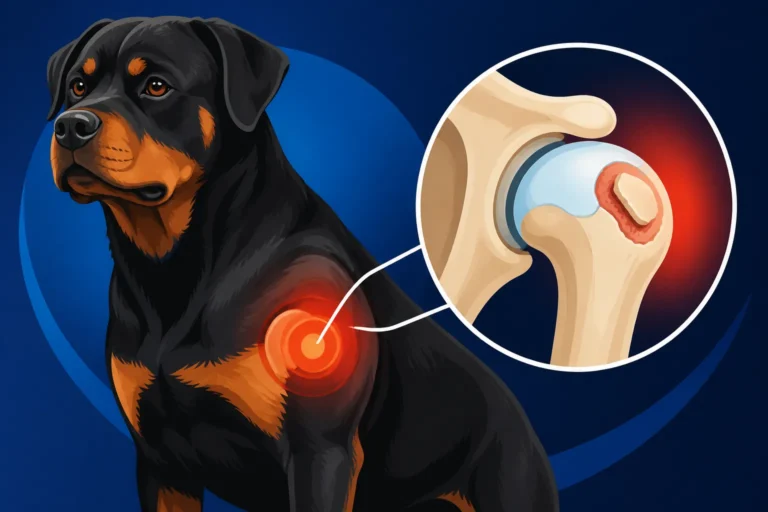
Descending stairs, however, can be even more detrimental. Gravity pulls the puppy downwards, and they have to absorb this impact primarily through their front legs. This leads to a heavy load on their elbows, shoulders, and wrists. The repeated jarring motion as they land on each step can be incredibly damaging to still-forming joints. This continuous, high-impact stress on the front assembly can contribute to conditions like Rottweiler Elbow Dysplasia and Front Leg Lameness, which can manifest as a persistent limp and discomfort. It's not just a single bad fall that's the problem; it's the cumulative effect of hundreds of trips up and down stairs during those crucial first two years of life.
The Danger of Slips, Falls, and Awkward Landings
Beyond the repetitive stress, stairs present an immediate danger: the risk of slips, falls, and awkward landings. A Rottweiler puppy, with its often clumsy, gangly gait and uncoordinated movements, is naturally prone to missteps. Their paw pads might not get enough grip on slick wooden or tiled stairs, leading to a sudden slip. Even carpeted stairs can be tricky if they miss a step or rush.
An uncontrolled tumble down a flight of stairs can result in acute injuries, such as sprains, fractures, or, most concerning for a growing Rottweiler, direct trauma to those vulnerable growth plates. Even an awkward jump from a few steps up, or a clumsy landing after trying to skip a step, can cause sudden stress that a still-developing joint simply isn't equipped to handle. These sudden impacts can cause immediate pain and long-term damage, potentially altering the way the bone grows. This is why many experienced Rottweiler owners treat stairs as forbidden territory for puppies, or at the very least, a highly supervised and limited activity.
Proactive Steps to Protect Your Rottweiler Puppy from Stair-Related Injury
The good news is that you, as a responsible Rottweiler owner, have a lot of power to mitigate the risks associated with stairs. It requires vigilance and sometimes a little bit of creativity, but the effort is well worth it for your puppy's long-term health and comfort. Preventing injury now is far easier, and less costly, than treating orthopedic problems later.
Physical Barriers and Controlled Access
The simplest and most effective way to prevent your Rottweiler puppy from using stairs unsupervised is to block access. Think of it just like baby-proofing a house. Sturdy baby gates or pet gates are your best friend here. These gates should be tall and strong enough to withstand a determined, growing Rottweiler. A flimsy pressure-mounted gate might work for a small terrier, but a motivated Rottweiler can easily push through or even jump over it. Look for gates that are pressure-mounted with reinforced sections or, ideally, hardware-mounted for maximum security, especially at the top of a staircase.
If you live in a multi-story home, consider keeping your puppy primarily on one level during their most vulnerable growth phases. This might mean having their crate, food, and playpen set up on the main floor. If they absolutely must go upstairs, always carry them. This might sound challenging as they grow heavier, and it certainly will be! But if you can't comfortably carry them, then they definitely shouldn't be navigating the stairs on their own. This controlled approach greatly reduces the cumulative stress and immediate injury risk.
Safe Alternatives and Assisted Stair Navigation
When completely avoiding stairs isn't an option, or when your puppy is getting too large to carry, you'll need to implement strategies for safe, assisted stair navigation. One excellent option, especially for just a few steps or a very wide staircase, is a ramp. A sturdy, non-slip dog ramp can allow your Rottweiler puppy to move between levels without the high-impact stress of stairs. Look for ramps designed for large breeds, with good traction and a gentle incline.
If a ramp isn't feasible, you'll need to teach your puppy to navigate stairs slowly and deliberately, always under your direct supervision. This means no galloping, no jumping, and no rushing. Start by carrying them up and down, then gradually introduce them to a single step, rewarding them for slow, controlled movements. Use a leash and harness to guide them, ensuring they take one step at a time. It can also be helpful to place non-slip treads on hard stairs to provide better footing. Remember, the goal is to minimize impact, so teaching them to descend slowly, using their muscles to control the movement rather than letting gravity take over, is key. This approach is much like the advice given for activities outlined in "A Growing Rottweiler's Joints and Overexercise"—controlled and gradual.
Stair Safety Checklist for Rottweiler Puppies
To help you manage stair access, here’s a quick checklist to keep in mind:
| Feature/Action | Recommended for Rottweiler Puppies | Why It Matters |
|---|---|---|
| Physical Barriers | Essential | Prevents unsupervised access and accidental falls, protecting growth plates. |
| Carrying Puppy | Until too heavy to do so safely | Eliminates all stair impact during critical growth stages. |
| Dog Ramps | Highly Recommended | Provides low-impact alternative for ascending/descending. |
| Non-Slip Treads | Recommended for hard stairs | Improves traction, reduces risk of slips and falls. |
| Supervised, Slow Use | Only if absolutely necessary | Ensures controlled movement, minimizes high-impact stress. |
| Jumping/Running | Strictly Prohibited | High impact and uncontrolled movements are extremely damaging to developing joints. |
| Early Training | Essential | Teach "slow," "wait," and "up/down" commands for controlled movement. |
Beyond Stairs: Nurturing Lifelong Joint Health for Your Rottweiler
Protecting your Rottweiler puppy from stair-related injury is just one piece of the puzzle when it comes to long-term joint health. The choices you make throughout their life, from what they eat to how they exercise, will all play a significant role in preventing conditions like arthritis and ensuring they remain mobile and comfortable into their senior years.
Responsible Exercise and Weight Management
Perhaps the single most critical factor in your Rottweiler's joint health, alongside genetic predispositions, is maintaining an appropriate weight. Obesity or even being consistently overweight puts immense, unnecessary strain on all their joints, accelerating wear and tear and making them more prone to developing conditions like Cruciate Tears in a Heavy Rottweiler. Rottweilers are powerful dogs, but they are not meant to be overweight. You should be able to easily feel, but not necessarily see, their ribs, and they should have a discernible waist when viewed from above. Regularly assess your Rottweiler's body condition score with your vet and adjust their diet and exercise accordingly.
Beyond weight, responsible exercise is key. During puppyhood, avoid forced, high-impact activities such as long runs on pavement, extensive jumping, or overly intense fetch sessions. While it's tempting to exhaust a rambunctious puppy, over-exercising a growing Rottweiler can lead to developmental orthopedic diseases. Instead, focus on controlled, moderate exercise like short, frequent walks on soft surfaces, gentle play in the yard, and mental stimulation. Once their growth plates have closed, typically around 18-24 months of age, you can gradually increase the intensity and duration of exercise, but always prioritize low-impact activities like swimming or hiking on natural trails over hard-surface running. Remember the mantra: "a tired Rottweiler is a good Rottweiler," but that tiredness should come from mental work and appropriate physical activity, not joint-damaging exertion.
Early Detection and Veterinary Consultations
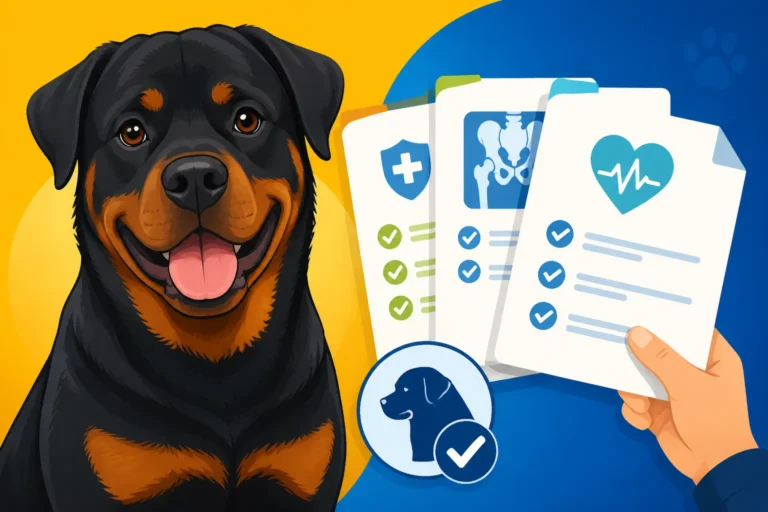
Being proactive with veterinary care is paramount for Rottweiler joint health. Regular check-ups allow your veterinarian to monitor your puppy's growth and gait, identifying any subtle signs of lameness or discomfort that you might miss. Early detection of issues like hip or elbow dysplasia can sometimes lead to more effective management strategies and better outcomes. Don't hesitate to mention any limping, stiffness, or changes in gait to your vet, even if they seem minor. They might recommend specific diagnostic imaging, such as X-rays, to get a clear picture of your Rottweiler's joint development.
Furthermore, discuss preventative measures with your vet. This might include appropriate joint supplements, though it's crucial to understand that not all supplements are created equal, and some, particularly calcium supplements, can actually harm a growing Rottweiler. Your vet can advise on suitable options, such as glucosamine and chondroitin, or omega-3 fatty acids, which can support joint health. Investing in your Rottweiler's long-term health also means planning for potential veterinary costs. Providers like Healthy Paws offer pet insurance plans that can help manage the financial burden of unexpected joint surgeries or long-term arthritis management, giving you peace of mind that you can provide the best care without breaking the bank. Discussing a plan for "Joint Supplements Started Before a Rottweiler Turns Two" with your vet is a great proactive step.
Ultimately, your Rottweiler's joints are an investment. By understanding the risks associated with rapid growth and activities like stair climbing, and by taking proactive steps in their exercise, diet, and veterinary care, you are setting them up for a lifetime of comfortable movement. It’s a lot of responsibility, but for these magnificent dogs, it's absolutely worth it.
Disclaimer
This article is intended for informational purposes only and does not constitute veterinary advice. Always consult with a qualified veterinarian for any health concerns or before making any decisions about your Rottweiler's care, diet, or exercise regimen.