Rottweiler Calcium Limits and Why Supplements Hurt
One of the most concerning mistakes new Rottweiler owners can make is believing that a bigger, faster-growing puppy is a healthier puppy, especially when it comes to bone development. It's an understandable impulse; we want our magnificent companions to thrive and reach their full potential. However, adding extra calcium to a Rottweiler puppy's diet, or feeding formulas not specifically designed for large breeds, can lead to serious, painful, and often irreversible orthopedic problems. This guide will delve deep into why calcium supplementation is detrimental, how a Rottweiler's bones truly develop, and how to properly nourish your growing giant.
The Misconception: More Calcium Equals Stronger Bones
It's a belief deeply rooted in human health and often mistakenly applied to our canine companions: if bones need calcium, then more calcium must mean stronger bones. For a fast-growing, heavy-boned breed like the Rottweiler, this seems to make intuitive sense. People see their puppies growing at an incredible rate and worry they aren't getting enough building blocks for that massive frame.
Why Owners Think They Need to Add Calcium
The desire to give a Rottweiler puppy the "best start" is admirable, but it can sometimes lead to misguided efforts. Owners might look at their rapidly expanding puppy and think, "Wow, he's growing so fast, he must need extra calcium for all that bone growth!" They might remember recommendations for human children or even anecdotes from smaller dog breeds, where a little calcium might not have such drastic consequences. Some might even see a puppy with a slight limp or perceived weakness and conclude that calcium is the missing link, unaware that these early signs could actually be caused by too much calcium. There's a powerful emotional drive to intervene and "help" when we see our puppies growing, and it's easy to fall prey to the notion that more of a good thing is always better.
The Dangers of Oversimplifying Bone Development
The reality of bone development in a large breed puppy like a Rottweiler is far more complex than simply "more calcium equals stronger bones." It's not about quantity, but precise balance and controlled growth. Imagine building a skyscraper: you don't just dump all the concrete and steel on the site at once. You carefully plan the stages, use the right materials in the right proportions, and allow each section to solidify before moving on. Rottweiler puppies have specific Rottweiler Growth Plates and Why They Close So Late that are soft and vulnerable during their extended growth period. Overloading their system with calcium disrupts the delicate hormonal signals that control how these growth plates develop and ossify. This isn't just about making bones denser; it's about the intricate process of cartilage turning into bone, and if that process is rushed or imbalanced, it leads to structural flaws, not strength.
How Rottweiler Bones Actually Grow
Understanding the unique way a Rottweiler's skeletal system matures is crucial for providing proper nutrition. These aren't small dogs that hit their adult size in a few months; Rottweilers continue to grow for a long time, and that growth needs to be gradual and steady.
The Role of Growth Plates and Controlled Development
Rottweilers, being a large and heavy breed, have growth plates (epiphyseal plates) at the ends of their long bones that remain open and active much longer than in smaller breeds. These plates are made of cartilage and are the sites where new bone tissue is generated, allowing the bones to lengthen. They are particularly vulnerable to injury and nutritional imbalances because they haven't yet hardened into solid bone. When a Rottweiler puppy is growing too quickly, often fueled by excess calories or, crucially, imbalanced calcium, these growth plates can become stressed or damaged. The goal isn't to make them close faster or build bone quicker, but to support a slow, steady, and healthy rate of growth that allows these crucial structures to mature correctly. Rushing this process inevitably leads to problems. Rottweiler Growth Plates Closing at Eighteen to Twenty-Four Months highlights just how extended this period is, emphasizing the need for sustained, careful management.
The Delicate Calcium-Phosphorus Balance
In a Rottweiler puppy's diet, it's not just the absolute amount of calcium that matters, but its ratio to phosphorus. These two minerals work hand-in-hand in bone development and many other bodily functions. The ideal calcium-to-phosphorus ratio for a growing large breed puppy is generally between 1.1:1 and 1.5:1. If you start adding calcium supplements without carefully calculating the phosphorus content of the rest of the diet, you throw this vital ratio completely out of whack. Too much calcium, relative to phosphorus, can interfere with the absorption of other essential nutrients and lead to a host of skeletal issues. It's a precise biological dance, and upsetting the balance can have cascading negative effects on everything from cartilage formation to kidney function.
Why Rapid Growth Is Detrimental
While a big, sturdy puppy might look impressive, rapid growth in a Rottweiler is a red flag. It puts immense stress on their still-developing joints and bones. Imagine pushing a building project to finish months ahead of schedule; corners would be cut, and the structure would likely be compromised. For a Rottweiler puppy, an accelerated growth rate often correlates directly with an increased risk of developmental orthopedic diseases. Their skeletal framework simply isn't ready to support excessive weight or growth spurts. Instead of aiming for the largest puppy, responsible owners and breeders focus on a lean, moderate growth curve. This allows the bone and joint structures to mature at a biologically appropriate pace, forming strong, healthy foundations that can support their adult size without succumbing to early wear and tear or deformities.
The Calcium Trap: Risks of Supplementation
Diving headfirst into calcium supplementation for a Rottweiler puppy, however well-intentioned, is like playing with fire. The consequences can be severe and lifelong, leading to painful conditions that undermine the very health you're trying to protect.
Osteochondrosis OCD and Its Debilitating Effects
One of the most common and devastating orthopedic conditions linked to excess calcium and rapid growth in large breed puppies is Osteochondrosis (OCD). This condition occurs when the cartilage that is supposed to mature into bone within the growth plates fails to properly ossify. Instead, thick, abnormal cartilage persists, which can then crack, peel away, and form painful flaps within the joint. Think of it as a paving problem: the foundation isn't laid correctly, and instead of smooth, strong concrete, you get unstable, cracked sections. This typically affects joints like the shoulder, elbow, stifle (knee), and hock. A Rottweiler with OCD will experience lameness, pain, and reduced mobility. It's a heartbreaking diagnosis, often requiring complex and costly surgery, with no guarantee of full recovery. The link between nutrition and OCD is so strong that avoiding over-supplementation and controlling growth rate are considered primary preventative measures. Osteochondrosis From Overfeeding a Rottweiler goes into more detail on this debilitating condition.
Hypertrophic Osteodystrophy HOD in Fast-Growing Puppies
Another painful and serious developmental orthopedic disease that can arise from nutritional imbalances, including excess calcium and too much protein, is Hypertrophic Osteodystrophy (HOD). This condition is characterized by inflammation and abnormal bone development near the growth plates, particularly in the long bones of the legs. Puppies suffering from HOD often present with extreme lameness, swelling and heat in the affected joints, fever, and a general reluctance to move. It's a systemic illness that can make them feel incredibly sick and miserable. Imagine your puppy suffering from intense bone pain, struggling to stand or walk, and running a fever. The exact cause is multifaceted, but rapid growth, often fueled by diets too rich in calories and imbalanced in minerals like calcium, plays a significant role. While some puppies recover with supportive care, severe cases can lead to permanent limb deformities or even be fatal. Hypertrophic Osteodystrophy in a Rottweiler Puppy explores this further.
Other Skeletal Deformities and Joint Issues
Beyond OCD and HOD, improper calcium intake can contribute to a cascade of other skeletal problems. Imagine the bones and joints as an intricately balanced scaffold. If one part is rushed or poorly formed, the entire structure suffers. For instance, too much calcium can exacerbate issues like elbow dysplasia and hip dysplasia. While genetics play a huge role in these conditions, nutritional factors, especially during critical growth phases, can significantly influence their severity and expression. Over-nutrition in general, and calcium excess in particular, can lead to uneven bone growth, joint laxity, and improper formation of joint surfaces, setting the stage for lifelong arthritis and debilitating pain. The goal is to optimize growth, not maximize it, allowing the bones and joints to form correctly and densely without being overstressed.
Understanding "Large Breed Puppy" Food Formulas
Thankfully, modern dog food science has extensively studied the nutritional needs of large and giant breed puppies. This research has led to the development of specialized "large breed puppy" formulas designed precisely to prevent the issues discussed above.
The Science Behind Controlled Growth Formulas
Large breed puppy formulas are not just larger kibble pieces; they are meticulously formulated to promote slow, steady, and controlled growth. The primary nutritional differences compared to regular puppy food lie in their calorie density, protein levels, and, most importantly, their mineral content – specifically calcium and phosphorus. These diets are designed to provide adequate but not excessive energy, preventing rapid weight gain which strains developing joints. They also feature carefully controlled calcium levels and an optimal calcium-to-phosphorus ratio to support proper bone mineralization without overstimulating growth plates. This scientific approach helps to reduce the incidence and severity of developmental orthopedic diseases like OCD and HOD, allowing your Rottweiler puppy's skeletal system to mature correctly. Why a Rottweiler Puppy Needs Large Breed Formula explains this in detail.
What to Look For on the Label: Key Calcium Percentages
When choosing a large breed puppy food for your Rottweiler, reading the Guaranteed Analysis on the label is non-negotiable. Don't just pick a bag that says "large breed" – verify the numbers. You're looking for a calcium percentage in the range of 1.0% to 1.5% on a dry matter basis. More critically, pay attention to the calcium-to-phosphorus ratio, which should ideally be between 1.1:1 and 1.5:1. Some high-quality brands will explicitly state "for large breed puppies" and provide these crucial mineral ranges. If a food doesn't list these details, or if the calcium content is significantly higher, it's not the right choice for your Rottweiler puppy. You can find excellent options on platforms like Chewy or even Amazon, but always double-check the nutritional information provided by the manufacturer. Calcium Percentages to Look For on a Rottweiler Bag provides further guidance.
Why Adult Food Can Sometimes Be a Better Choice for Giant Breeds
In some cases, especially for very large or giant breeds like Rottweilers, some veterinarians and breeders advocate for feeding a high-quality adult maintenance formula from an early age, rather than a large breed puppy food. The reasoning is that some large breed puppy foods, while better than regular puppy foods, might still contain slightly higher calorie or calcium levels than is truly ideal for the slowest possible growth in a giant breed. A good quality adult food often has even lower caloric density and a more conservative calcium profile, which can further reduce the risk of orthopedic problems. However, this approach requires careful monitoring to ensure the puppy is still getting adequate protein, fat, and other essential nutrients for healthy development. Always consult with your veterinarian before making such a decision, as individual puppies have varying needs.
Dietary Best Practices for Rottweiler Puppies
Navigating the world of puppy nutrition can feel overwhelming, but focusing on a few core best practices can make all the difference for your Rottweiler's long-term health.
Choosing the Right Commercial Large Breed Puppy Food
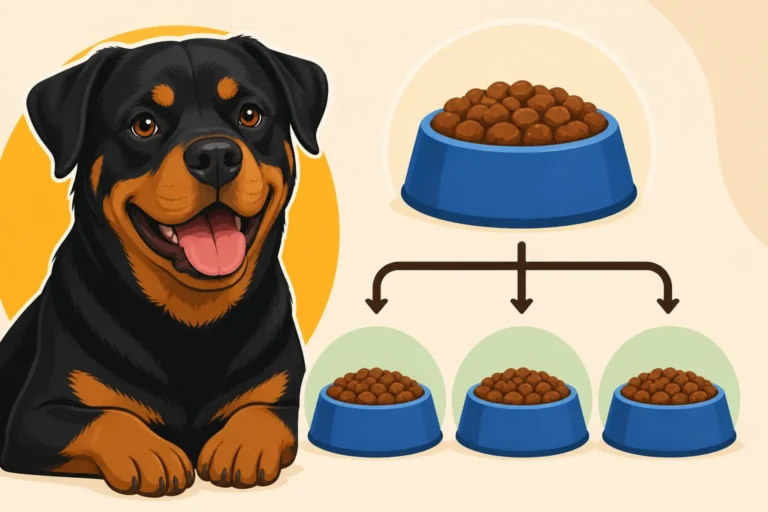
The easiest and safest way to ensure your Rottweiler puppy gets the correct balance of nutrients for healthy bone development is to choose a high-quality commercial large breed puppy food. Look for brands that have undergone feeding trials and meet the AAFCO (Association of American Feed Control Officials) nutritional adequacy statement for "growth of large size dogs." These formulas are specifically engineered to provide the right amount of calories, protein, and, crucially, controlled levels of calcium and phosphorus. Popular brands often offer these specialized diets, and you can usually find detailed nutritional information on their websites or through reputable retailers like Chewy. Don't be swayed by marketing jargon; focus on the AAFCO statement and the guaranteed analysis for mineral content. Keeping a Rottweiler Puppy Lean on Purpose is a great resource for understanding the importance of proper weight management from a young age.
The Dangers of Homemade Diets Without Expert Guidance
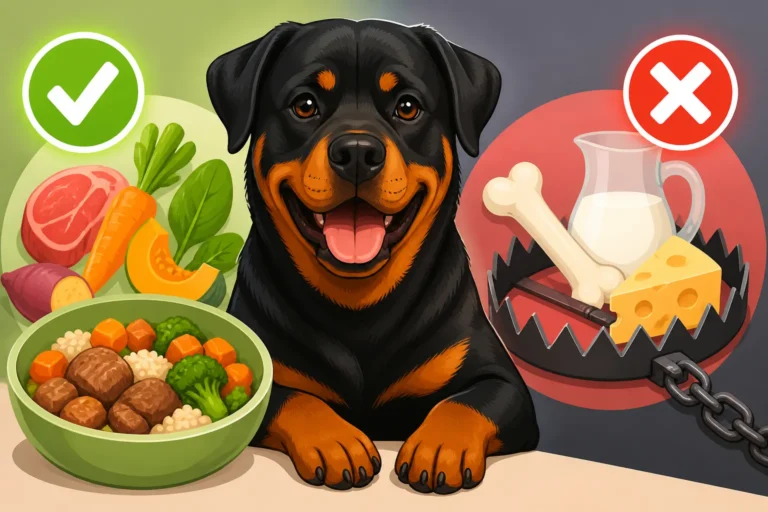
While homemade diets might seem appealing, they pose significant risks for a growing Rottweiler puppy if not formulated by a board-certified veterinary nutritionist. It is incredibly difficult to achieve the precise balance of calories, protein, vitamins, and minerals, particularly calcium and phosphorus, that a large breed puppy requires. Why Calcium Supplements Damage a Rottweiler Puppy is a stark reminder of how easily these balances can be thrown off. Even a slight miscalculation can lead to severe developmental orthopedic diseases. Without the expertise to ensure the correct calcium-to-phosphorus ratio, and adequate levels of other micronutrients, you risk causing more harm than good. Unless you are working directly with a specialist who can provide a truly balanced recipe, stick to commercially prepared large breed puppy foods.
Monitoring Growth and Body Condition
Beyond simply choosing the right food, actively monitoring your Rottweiler puppy's growth and body condition is paramount. You shouldn't aim for the chunkiest, heaviest puppy. Instead, you want a lean, athletic build where you can easily feel their ribs without seeing them, and they have a visible waist when viewed from above. Weigh your puppy regularly and track their growth against breed-specific growth charts, aiming for a steady rather than accelerated curve. If your puppy seems to be putting on weight too quickly or appears to be getting "chubby," it's a sign to cut back on calories, not to worry about calcium deficiency. A chubby Rottweiler puppy is a higher risk for orthopedic problems. Adjust portion sizes according as your puppy grows, and always consult your vet if you have concerns about their growth rate or body condition.
Recognizing Signs of Developmental Bone Disease
Despite the best intentions and careful feeding, developmental bone diseases can sometimes still occur due to genetic predispositions or other factors. Knowing what to look for can help you seek timely veterinary intervention.
Early Warning Signs: Lameness, Pain, Reluctance to Move
Be vigilant for any changes in your Rottweiler puppy's gait or activity levels. Early signs of developmental bone diseases can be subtle at first. Look for intermittent lameness, where your puppy might favor a leg one day and seem fine the next. They might appear stiff after rest or reluctant to engage in play that involves running or jumping. You might notice them shifting weight, holding a paw up, or having difficulty rising. Sometimes, the only sign is a general decrease in activity or a change in their usual playful demeanor. Pain can manifest as a yelp when touched in certain areas, or simply a quieter, more withdrawn puppy. Pay close attention during and after A Growing Rottweiler's Joints and Overexercise; sudden limping or fatigue can be critical indicators.
When to Consult Your Veterinarian
If you notice any of the warning signs described above, even if they seem minor or intermittent, it's imperative to consult your veterinarian immediately. Do not wait for the problem to worsen, and certainly do not attempt to self-diagnose or treat with supplements. Early diagnosis and intervention can significantly impact the prognosis and management of developmental orthopedic conditions. Your vet will conduct a thorough physical examination, checking for pain, swelling, and range of motion in the joints. Be prepared to provide a detailed history of your puppy's diet, exercise routine, and when you first observed symptoms. This information is vital for an accurate diagnosis.
Diagnostic Steps and Prognosis
When you bring your Rottweiler puppy to the vet with signs of lameness or pain, they will likely recommend diagnostic imaging, primarily X-rays. For suspected conditions like OCD, HOD, or early signs of hip or elbow dysplasia, clear, well-positioned radiographs are essential. In some cases, your vet might refer you to a veterinary orthopedic specialist for more advanced imaging like CT scans or MRI, especially if surgery is being considered. The prognosis for developmental bone diseases varies widely depending on the specific condition, its severity, and how early it's diagnosed and treated. Some conditions might respond well to conservative management (rest, pain medication, controlled exercise), while others may require complex surgical procedures. Unfortunately, even with treatment, many of these conditions predispose the dog to arthritis later in life. Developmental Bone Disease in a Fast-Grown Rottweiler outlines the range of conditions a vet might look for.
| Condition | Common Cause Factors | Symptoms | Treatment Approach | Long-Term Outlook |
|---|---|---|---|---|
| Osteochondrosis (OCD) | Rapid growth, genetics, joint trauma, high calcium/calorie diet | Lameness, joint pain, swelling, stiffness, reluctance to move | Conservative (rest, anti-inflammatories) or Surgical (arthroscopy to remove cartilage flaps) | Variable; often good with surgery, but increased risk of arthritis |
| Hypertrophic Osteodystrophy (HOD) | Rapid growth, high protein/calorie/calcium diet, genetics | Severe lameness, fever, swollen/hot joints, pain, lethargy | Supportive (pain meds, fluids, rest), sometimes antibiotics | Variable; can resolve with rest, but recurrence possible; severe cases may cause deformity |
| Hip Dysplasia | Genetics, rapid growth, joint laxity, over-exercise, diet | "Bunny hopping," difficulty rising, reluctance to run/jump, pain | Conservative (weight management, pain relief, physical therapy) or Surgical (FHO, THR) | Often leads to arthritis; quality of life can be managed with care |
| Elbow Dysplasia | Genetics, rapid growth, trauma, uncoordinated growth of bones | Forelimb lameness, stiffness, pain, decreased range of motion | Conservative (weight management, pain relief) or Surgical | Often leads to arthritis; quality of life can be managed with care |
| Panosteitis | Rapid growth in young dogs (cause unclear, not dietary in direct way) | Shifting lameness, pain in long bones, fever | Self-limiting; pain relief and rest until it resolves (usually by 2 years) | Good, resolves on its own, but can be very painful during episodes |
Transitioning to Adult Food and Beyond
The careful nutritional planning doesn't stop once your Rottweiler puppy is out of the initial high-growth phase. Maintaining proper nutrition throughout their life is key to supporting their large frame.
When to Make the Switch
The transition from large breed puppy food to an adult maintenance formula is another critical step. For most Rottweilers, this typically occurs between 12 to 18 months of age, though some may benefit from staying on large breed puppy food a bit longer, up to 24 months, if they are still showing significant growth and your vet approves. The key is to watch your dog, not just the calendar. Are their growth plates closed? Have they reached close to their adult height? Are they maintaining a lean body condition? Discuss the timing with your veterinarian, who can assess your individual dog's development and guide you on the best moment to switch. This transition helps to ensure they don't consume excess calories or nutrients that could contribute to obesity or continued stress on maturing joints.
Maintaining Proper Nutrition in Adolescence and Adulthood
Once your Rottweiler is on adult food, the focus shifts to maintaining an ideal body weight and providing balanced nutrition for their adult size and activity level. Obesity is a huge stressor on a Rottweiler's joints and can significantly shorten their lifespan. Continue to monitor their body condition closely, ensuring you can feel their ribs easily without them being visible, and that they maintain a discernible waist. Choose a high-quality adult dog food appropriate for large breeds, and measure portions carefully rather than free-feeding. While calcium supplementation is generally a no-go for puppies, maintaining a balanced diet with proper calcium levels is still important for adult bone health. Brands like Ollie, known for their fresh food options, can be a great way to ensure high-quality ingredients, but always verify the nutritional breakdown for large breeds. Remember, a Rottweiler's dietary needs evolve; for instance, Senior Rottweiler Feeding and Mobility will become important as they age.
Ongoing Joint Support Considerations
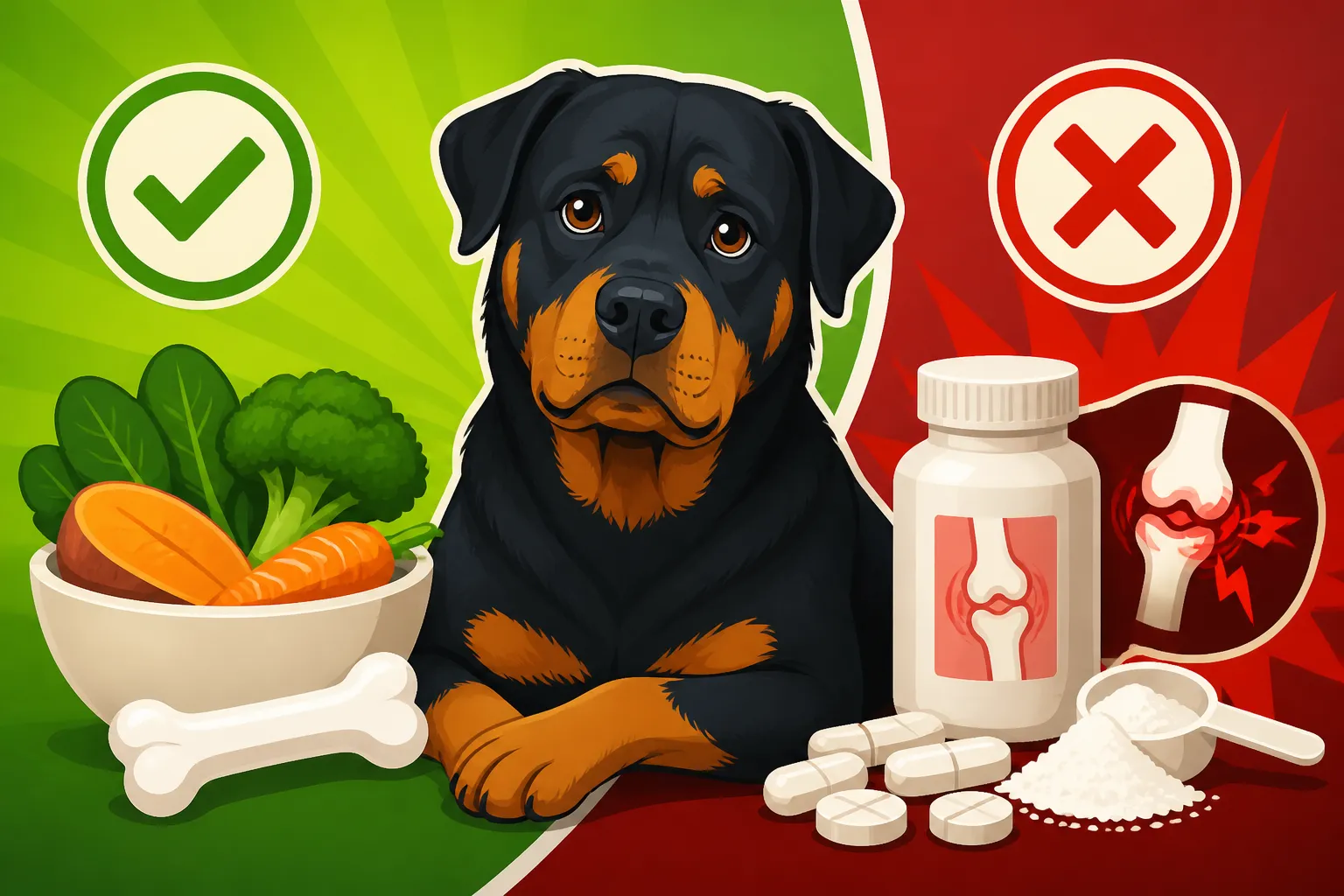
Even with the best puppy nutrition, Rottweilers are prone to joint issues due to their size and weight. As they mature, and especially as they reach their senior years, joint support becomes an important consideration. While calcium supplements are harmful for puppies, joint supplements containing ingredients like glucosamine, chondroitin, and MSM can be beneficial for adult and senior Rottweilers to help maintain cartilage health and reduce inflammation. These are very different from calcium supplements and target different aspects of joint health. Discuss with your veterinarian whether these supplements are appropriate for your adult Rottweiler, and which specific products they recommend. They can help you determine the right dosage for your dog's weight and individual needs. Proactive joint care, along with maintaining a healthy weight and appropriate Exercise Limits for a Rottweiler Under Six Months then transitioning to controlled adult exercise, can help your Rottweiler enjoy a longer, more comfortable life.
Disclaimer
This article is for general informational purposes only and does not constitute professional advice. Laws, prices and regulations vary by location and change over time. Consult a qualified professional for guidance on your specific situation.