Reading a Rottweiler DNA Panel Line by Line
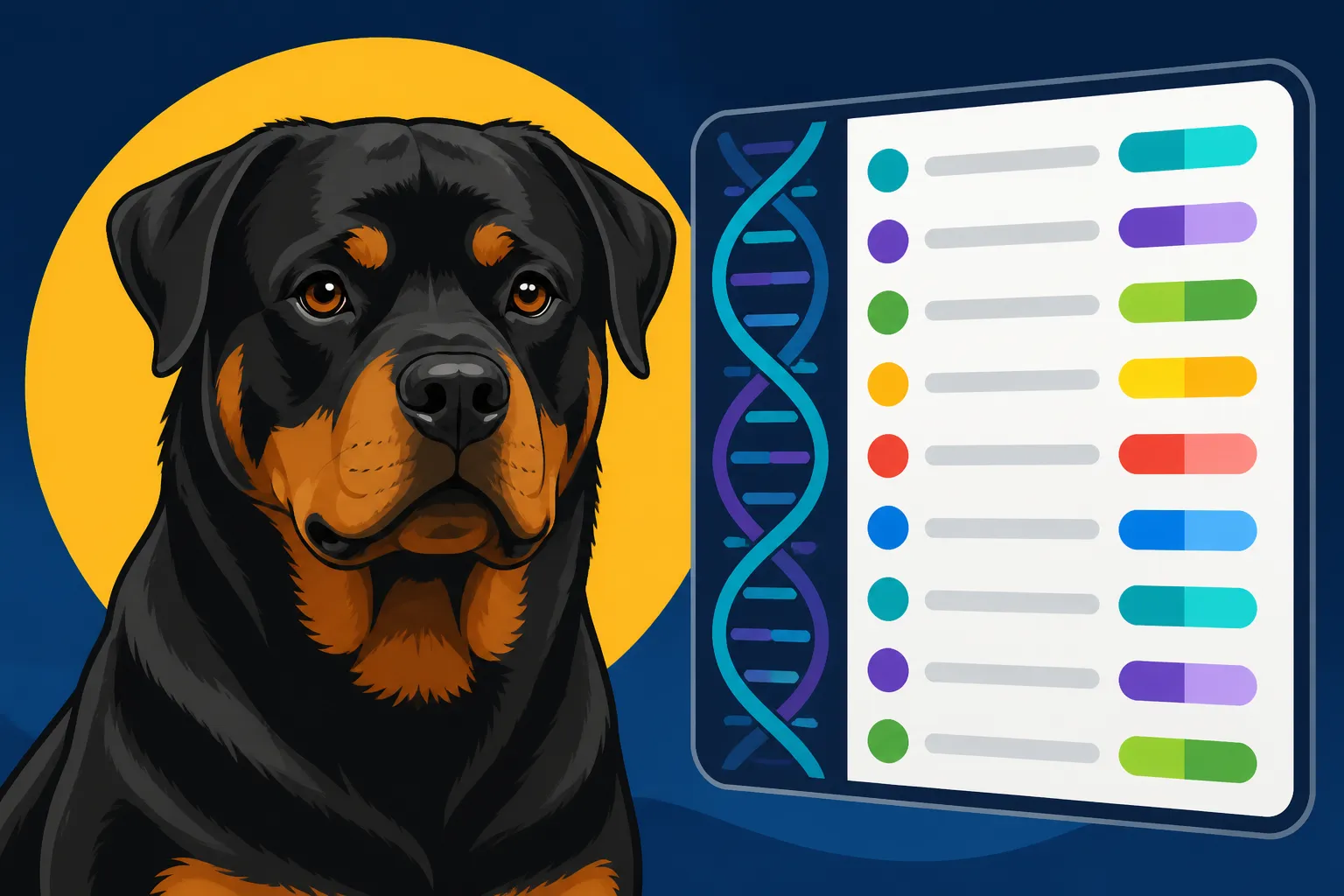
It can feel overwhelming to receive your Rottweiler's DNA test results, a seemingly endless string of acronyms and percentages that leave you wondering what it all means for your beloved companion. You’re not alone in feeling a bit lost when confronted with dense genetic reports, but understanding these panels is crucial for your dog's future health and wellbeing. This guide is here to demystify those complex reports, helping you understand each line of your Rottweiler's DNA panel.
Why a DNA Panel is Crucial for Your Rottweiler's Future
When you bring a Rottweiler into your life, you're signing up for years of companionship, loyalty, and, let's be honest, a fair amount of slobber. But you're also taking on the responsibility for their health. Genetic health screening isn't just for breeders anymore; it's a powerful tool for every Rottweiler owner, providing a roadmap to potential health challenges and giving you the power to act proactively.
Uncovering Hidden Genetic Risks
Imagine knowing that your Rottweiler has a predisposition for a certain condition years before symptoms might even show up. That's the power of a DNA panel. Many serious health issues common in Rottweilers are genetic, meaning they're inherited from their parents. Things like certain cancers, joint problems, or neurological disorders can lurk in a dog's genetic code, even if their parents appeared healthy. By screening for these markers, you gain invaluable insight. It’s not about predicting a guaranteed outcome, but rather about understanding risk factors. For instance, if your dog tests as a carrier for a specific disease, it doesn't mean they'll get sick, but it informs your discussions with your vet about monitoring and preventive care. This foresight can be a huge comfort, and it's something that proactive owners consider a vital part of their dog's care plan, much like considering a comprehensive insurance plan from providers like Healthy Paws.
Confirming Breed Purity and Ancestry
While many Rottweiler owners are certain of their dog's lineage, especially if they acquired their puppy from a reputable breeder with The Five Clearances a Rottweiler Breeder Must Have, sometimes there's a question. Perhaps you adopted a rescue dog that looks like a Rottweiler but has an unknown history, or you're curious about the precise percentages of their heritage. DNA panels can accurately confirm breed purity, identifying if your dog is 100% Rottweiler or if there are other breeds mixed in. This isn't just about curiosity; knowing a dog's full breed makeup can influence your understanding of their potential size, temperament, and health predispositions, even beyond the typical Rottweiler concerns. It helps you understand the full picture of your dog, which can be immensely helpful for training and anticipating behavioral traits.
Decoding the Common Health Markers on a Rottweiler DNA Panel
Now, let's dive into the nitty-gritty: those intimidating lines of text on your DNA report. For Rottweilers, there are several key genetic health markers that you'll likely see. Understanding what "clear," "carrier," and "affected" mean for each condition is paramount.
Understanding JLPP Results
One of the most critical genetic tests for Rottweilers is for Juvenile Laryngeal Paralysis & Polyneuropathy, often abbreviated as JLPP. This is a severe, inherited neurological disease unique to Rottweilers that can manifest early in life, typically between 2-4 months of age. The symptoms can be heartbreaking, affecting the larynx, leading to breathing difficulties, and progressing to weakness in the limbs. Understanding your Rottweiler’s JLPP status is absolutely non-negotiable.
Here’s how you'll usually see the results presented:
| Result | Interpretation | Meaning for Your Rottweiler | Implications for Breeding |
|---|---|---|---|
| Clear | N/N (Normal/Normal) | Your dog does not carry the gene mutation and will not develop JLPP due to genetics. | Can be bred to any dog, including carriers, without producing affected puppies. |
| Carrier | N/P (Normal/Positive) | Your dog carries one copy of the gene mutation but will not develop JLPP symptoms. | Can only be bred to a "Clear" dog (N/N) to avoid producing affected puppies. Approximately 50% of puppies will be carriers, 50% clear. |
| Affected | P/P (Positive/Positive) | Your dog has two copies of the gene mutation and will develop or has developed JLPP symptoms. | Should not be bred. |
If your Rottweiler tests as a carrier, it means they have one copy of the gene, but they will not show symptoms themselves. However, they can pass that gene on to their offspring. This is why Why One Rottweiler Parent Must Test Clear is such a critical concept for breeders. If two carriers are bred together, there's a 25% chance of producing an affected puppy. For pet owners, if your dog is a carrier, you have peace of mind that they won't suffer from the disease, but it underscores the importance of proper breeding practices if you ever considered it. For more detailed information on What JLPP Actually Does to a Rottweiler, it’s worth a deep dive.
Interpreting Other Health Clearances
Beyond JLPP, many comprehensive DNA panels will screen for other conditions that can affect Rottweilers, or dogs in general, especially those common in large breeds. While not all of these are specific Rottweiler-only issues, they are important for overall health insight.
- Degenerative Myelopathy (DM): While not as prevalent or specific to Rottweilers as JLPP, DM is a progressive disease of the spinal cord that eventually leads to paralysis, often seen in older dogs. It's an autosomal recessive condition, meaning a dog must inherit two copies of the mutated gene to be at risk. A "Clear" result means your dog won't be affected by DM due to genetics. A "Carrier" carries one copy and won't be affected but can pass it on. An "Affected" dog has two copies and is at risk of developing the disease.
- Lethal Acrodermatitis (LEMP): Though more commonly associated with Bull Terriers, some panels may include this or similar tests. Always check if the panel lists it as a concern for Rottweilers.
- Mucopolysaccharidosis VI (MPS VI): This is a lysosomal storage disease, affecting multiple systems, and can be debilitating. While it has been identified in Rottweilers, it's less common than JLPP. The interpretation is similar to JLPP and DM: Clear, Carrier, or Affected. An affected dog will typically show severe symptoms early in life.
- Coat Color and Traits: While not health clearances, some panels include genetic markers for physical traits like coat color (e.g., dilute gene for blue or Isabella coats) or even tail length (if applicable, though Rottweiler tails are often docked). These are interesting for breeders or simply for understanding your dog's unique genetic makeup. For pet owners, these simply provide fascinating insights into why your dog looks the way they do, like why those classic The Black and Rust Rottweiler Coat markings are so standard.
The main takeaway here is to pay close attention to the disease names and their genetic modes of inheritance (recessive, dominant, etc.). For most conditions, "Clear" is the ideal result for pet owners, meaning your dog doesn't carry the gene for that specific disease.
Navigating the Breed and Trait Information
Beyond the specific health conditions, your Rottweiler's DNA panel often provides a fascinating look into their ancestry and the genetic basis for their physical appearance and even some behavioral tendencies. This part of the report can be incredibly insightful, whether you have a purebred Rottweiler or a beloved mixed breed.
Confirming Rottweiler Ancestry
For many purebred Rottweilers, this section might seem redundant, but it's essential for verifying the purity of a dog's lineage, especially if you have doubts or if your dog came from unknown origins. The report will typically show a percentage breakdown of breeds found in your dog's DNA. For a purebred Rottweiler, you'd expect to see 100% Rottweiler. If you see other breeds listed, it means your dog is a mix!
For mixed-breed dogs, this section is often the most exciting. It can reveal a surprising array of breeds contributing to your dog's unique traits. Knowing the different breeds involved can help you understand certain behaviors, energy levels, or even physical quirks that might not fit the typical Rottweiler mold. For instance, if your Rottweiler mix has a strong prey drive, and the panel reveals a significant percentage of a sighthound breed, it starts to make more sense. This knowledge allows you to tailor your training and enrichment activities more effectively, providing a more fulfilling life for your unique companion. It can also help you anticipate common health issues associated with those other breeds, allowing for more comprehensive preventive care discussions with your vet.
Genetic Trait Markers
This section delves into the genes responsible for various physical characteristics of your dog. While some of these might seem purely cosmetic, they can still offer interesting insights.
- Coat Type: While Rottweilers famously have a short, dense double coat, some panels might test for genes related to long coats or wiry coats. If your dog carries a recessive gene for a long coat, it won't affect them, but it means they could produce long-coated puppies if bred with another carrier. For owners of purebred Rottweilers, finding a long coat gene might indicate a historical lineage detail or even a slight deviation from breed standards.
- Coat Color and Patterns: Beyond the classic black and tan, DNA panels can identify genes for other coat colors like dilute (which can lead to blue or Isabella colorations), merle, or even white spotting. These are often considered "faults" in purebred Rottweilers according to the AKC standard, but understanding their genetic basis is fascinating. For instance, a dog might carry a dilute gene but not express it, meaning their coat is black, but they could pass on the gene for a blue coat.
- Shedding: Some panels offer insights into a dog's genetic predisposition for shedding levels. While Rottweilers are known for their significant seasonal shedding, especially when blowing their undercoat, this can offer a deeper understanding.
- Other Physical Traits: Depending on the panel, you might see markers for ear set, muzzle length, or even dewclaw presence. These are usually just interesting tidbits for pet owners but can be valuable for breeders looking to maintain specific breed characteristics.
This part of the panel allows you to peer into the genetic blueprint that makes your Rottweiler physically unique. It's a testament to the incredible diversity and complexity encoded within every dog.
Actionable Steps After Receiving Your Rottweiler's DNA Results
Getting your Rottweiler's DNA results isn't the finish line; it's just the beginning. The real value comes from what you do with that information. It empowers you to be a more informed, proactive, and responsible dog owner.
Consulting Your Veterinarian
This is, without a doubt, the most important next step. Take your complete DNA panel results to your veterinarian. They are trained to interpret these reports in the context of your dog's overall health, age, lifestyle, and breed-specific risks. Don't try to go it alone. Your vet can explain what each "Clear," "Carrier," or "Affected" status truly means for your Rottweiler. For instance, if your dog is a carrier for DM, your vet might recommend specific exercise regimens or dietary considerations to support spinal health as they age, even though carriers aren't typically affected. They can also help you understand how these genetic predispositions might interact with environmental factors or other health issues. This expert guidance is invaluable, much like having a reliable pet insurance provider like Healthy Paws to cover unexpected health challenges. It’s also important for understanding potential risks associated with procedures, like Anesthesia Risk for a Dog a Rottweiler's Size, should any genetic issues require intervention.
Making Informed Breeding Decisions
For those involved in breeding Rottweilers, DNA panel results are non-negotiable. Reputable breeders use these panels to make responsible pairing decisions, striving to eliminate genetic diseases from their lines and produce the healthiest puppies possible. If your Rottweiler is a carrier for a recessive genetic disease like JLPP, they should only be bred to a dog that is "Clear" for that specific condition. This ensures that no affected puppies will be produced. Any breeder who is serious about the long-term health of the breed will insist on DNA testing for all breeding stock. Understanding the results allows breeders to carefully select mates, thereby reducing the incidence of inherited diseases and improving the overall genetic health of future generations of Rottweilers. This commitment to health screening is a hallmark of a responsible breeder and ensures the integrity of The RAB3GAP1 Test and What Clear Means for all puppies.
Proactive Health Management
Even if your Rottweiler is purely a beloved pet and not part of a breeding program, their DNA results can significantly impact their long-term health management. If your dog has a genetic predisposition for a certain condition, you and your vet can discuss preventative measures or early detection strategies. For example:
- Dietary Adjustments: If your dog has a known sensitivity or predisposition, your vet might recommend specific dietary changes to support their health.
- Exercise Regimen: For breeds prone to joint issues, understanding genetic predispositions can influence the type and intensity of exercise, especially during growth. This goes hand-in-hand with understanding Rottweiler Growth Plates and Why They Close So Late.
- Early Screening: For conditions with a genetic link, your vet might suggest starting specific screenings (like blood tests or imaging) earlier or more frequently than usual. This is especially true if a dog is "affected" by a condition, meaning they are likely to develop it.
- Lifestyle Choices: You might make choices about your dog's environment or daily routine to minimize risk factors associated with their genetic profile. For instance, if your dog has a genetic marker for a condition that might affect mobility later in life, you might be more proactive with joint supplements or modifying your home to reduce strain on their joints.
- Emergency Preparedness: Knowing about a predisposition, even a slight one, can make you more vigilant about subtle symptoms, helping you recognize The Emergency Signs That Send a Rottweiler In sooner rather than later.
Ultimately, a DNA panel isn't about fear; it's about empowerment. It gives you concrete information to work with, allowing you to partner with your veterinarian to give your Rottweiler the healthiest, happiest, and longest life possible. Being informed is the best way to care for your cherished companion, ensuring they get the tailored care they deserve throughout their Rottweiler Lifespan and the Eight to Ten Year Average.
Disclaimer
Please remember that this article provides general information and should not be considered a substitute for professional veterinary advice. Always consult with a qualified veterinarian regarding your Rottweiler's specific health concerns, DNA results, and treatment options. Genetic testing provides valuable insights, but it is one piece of a larger health puzzle that includes diet, environment, and overall care.