Why One Rottweiler Parent Must Test Clear
Bringing a Rottweiler puppy into your home is an incredibly exciting time, filled with dreams of adventures and loyal companionship. However, the joy can quickly turn to heartbreak, and your bank account can take a serious hit, if that precious puppy inherits a debilitating genetic condition. Many new owners, and even some experienced ones, struggle to understand the complex world of canine genetics and why it's absolutely non-negotiable for breeders to ensure that at least one parent of a litter tests clear for known inheritable diseases. This guide will walk you through the intricacies of genetic testing, what it means for your Rottweiler's long-term health, and why proper screening is the cornerstone of responsible breeding.
The Crucial Role of Genetic Testing in Rottweilers
It’s easy to get caught up in the cuteness of a Rottweiler puppy, but a truly responsible breeder looks far beyond adorable faces and impressive pedigrees. They delve deep into the genetic makeup of their breeding stock, understanding that what's hidden in the genes can profoundly impact a puppy's entire life, and yours. Genetic testing isn't just a suggestion; for a breed like the Rottweiler, it's an ethical imperative.
Beyond Just Physical Examinations
When you visit a breeder, you'll naturally observe the parent dogs – their physical condition, temperament, and how they interact. A vet check-up, while essential, only tells you about the current health of an animal. It doesn't reveal the silent carriers of genetic diseases lurking in their DNA, conditions that might not manifest in the parents themselves but could be passed on to their offspring. Think of it like a human carrying a gene for a condition that doesn't affect them directly but could appear in their children. Without specific genetic tests, these hidden risks remain completely unknown, leaving the future health of entire litters up to chance. This is why a simple physical exam, even by a good vet, isn't sufficient for breeding stock.
The Breeder's Ethical Responsibility
A conscientious Rottweiler breeder isn't just trying to make money; they are dedicated to preserving and improving the breed's health, temperament, and longevity. This dedication comes with a profound ethical responsibility to ensure that every puppy they produce has the best possible start in life, free from preventable genetic diseases. It means investing time and money into comprehensive health screenings, not just the basic ones. They understand the heartache and financial strain that can come with a severely ill dog, and they strive to prevent that burden for their puppy buyers. This commitment to genetic health is a hallmark of a reputable breeder, and it's something you, as a prospective owner, should absolutely demand.
Protecting the Future of the Breed
Genetic testing plays a vital role in safeguarding the entire Rottweiler breed. By identifying and strategically breeding around dogs that carry undesirable genes, breeders can slowly but surely reduce the prevalence of devastating conditions. Imagine if every breeder ignored genetic testing; the gene pool would become saturated with carriers, leading to more affected puppies, increased suffering, and a weakening of the breed's overall health over generations. This long-term vision is why leading breed clubs and health organizations emphasize these tests so strongly. It's not just about one litter; it's about the health of Rottweilers for decades to come.
Understanding Recessive Genetic Conditions in Rottweilers
Many of the most serious inheritable diseases in Rottweilers are "recessive." Understanding what this means is key to appreciating why genetic testing protocols are so important. It's not always as simple as seeing a sick parent.
What Does "Recessive" Mean for Your Puppy?
In basic terms, recessive genetic conditions mean that a puppy needs to inherit two copies of a specific faulty gene – one from its mother and one from its father – to actually develop the disease. If a puppy inherits only one copy, it becomes a "carrier." A carrier dog won't typically show any symptoms of the disease itself because the healthy dominant gene it also possesses overrides the recessive faulty one. However, the carrier still holds that faulty gene and can pass it on to its own offspring if bred. This is why carriers are healthy but still a concern for breeding, as they are silent contributors to the spread of the condition. For example, a condition like juvenile laryngeal paralysis & polyneuropathy (JLPP) in Rottweilers is a recessive disorder, meaning a puppy needs two copies of the affected gene to develop the tragic symptoms. You can learn more about JLPP and the RAB3GAP1 Gene in Rottweilers to understand its specific impact.
Common Recessive Conditions in Rottweilers
While JLPP is perhaps one of the most talked-about recessive conditions, Rottweilers can be susceptible to others. Responsible breeders will test for a panel of genetic diseases known to affect the breed. Beyond specific neurological or metabolic disorders, even conditions like certain forms of heart disease, such as Subaortic Stenosis in Rottweiler Puppies, can have a genetic component, though often with a more complex inheritance pattern. These conditions can lead to immense suffering for the dog and significant financial and emotional strain for the owner. Imagine the devastation of watching a vibrant puppy slowly succumb to a disease that could have been predicted and, with proper breeding, prevented.
The Risk of Two Carriers Being Bred
This is the absolute core of why at least one parent must test clear. If both parents are carriers of the same recessive genetic condition, there's a 25% chance each puppy in the litter will inherit two copies of the faulty gene and thus be affected by the disease. There's also a 50% chance each puppy will be a carrier, just like its parents, and a 25% chance it will be genetically clear. This 25% risk of producing affected puppies is completely unacceptable for an ethical breeder. It’s a game of Russian roulette with a puppy’s health and life. This is precisely why the breeding protocol dictates that if one parent is a known carrier, the other parent must be genetically clear for that specific condition to ensure no affected puppies are produced.
The Mechanics of Parentage and Genetic Inheritance
Understanding how genes are inherited is fundamental to grasping the importance of genetic testing. It’s a bit like a genetic puzzle, and each parent contributes a piece.
How Genes Are Passed Down
Every living creature inherits a set of genes from each parent. For each specific trait or condition, a puppy gets one copy of a gene from its mother and one from its father. These two copies determine whether the puppy is clear, a carrier, or affected by a recessive condition. If a dog is "clear," it means it has two healthy copies of the gene. If it's a "carrier," it has one healthy copy and one faulty copy. If it's "affected," it has two faulty copies. The beauty of modern DNA testing is that we can now accurately determine these genetic statuses, giving breeders the tools to make informed decisions. Knowing how to interpret these results, such as by learning how to read a Rottweiler DNA Panel Line by Line, empowers owners and breeders alike.
The "Clear by Parentage" Concept Explained
Sometimes, a breeder might tell you that a puppy or one of its parents is "clear by parentage." This means that the animal itself hasn't been directly tested for a specific genetic condition, but its parents were tested and found to be clear. If both parents are truly clear, then mathematically, all their offspring will also be clear, and thus, "clear by parentage" would hold true. It sounds logical, right? However, this concept has limitations and shouldn't be relied upon without careful consideration and verification.
When "Clear by Parentage" Falls Short
While "clear by parentage" can be a convenient shortcut, it's not foolproof and shouldn't be the sole basis for breeding decisions, especially for both parents. The primary issue arises if the original parentage testing was inaccurate, if there was a mix-up in samples, or, crucially, if the parents weren't actually the parents they were claimed to be (e.g., in cases of accidental breeding or misidentification). The accuracy of "clear by parentage" hinges entirely on the absolute certainty of the parent's genetic status and the correct identification of the dog in question. Any deviation, any doubt, renders the "clear by parentage" claim questionable. This is why for breeding stock, direct testing is always the gold standard, especially for at least one parent of a mating pair.
Why "Clear By Parentage" Isn't Enough for Both Parents
Relying solely on "clear by parentage" for both prospective breeding parents introduces an unnecessary and preventable risk. It's a calculated gamble that responsible breeders simply won't take, because the stakes are too high for the puppies and their future families.
The Unexpected Risks of Incomplete Testing
Imagine a scenario where a breeder assumes both parents are "clear by parentage" for JLPP because their grandparents were tested. What if, somewhere along the line, one of those supposed "clear" grandparents was actually a carrier, or a mistake was made in sample collection or lab analysis? Or what if a puppy was sired by an uncle instead of the designated male? These things, however rare, can happen. If both current parents are only "clear by parentage," and one or both actually carry the gene due to an unknown error in the pedigree or testing, then the risk of producing affected puppies skyrockets. The prudent approach, therefore, is to directly test at least one parent for every single genetic condition relevant to the breed. This guarantees a known, verified "clear" status for at least half of the genetic contribution to the litter.
When Mutations Can Occur
Another, albeit rarer, consideration is the possibility of spontaneous genetic mutations. While the vast majority of genetic conditions are inherited, new mutations can occur. If both parents are only "clear by parentage," and a new, spontaneous mutation occurs in one of them that was not present in their ancestors, then that mutation would go undetected. While this is less common for established recessive diseases, it highlights that direct testing provides the most up-to-date and accurate picture of an individual dog's genetic health. Relying solely on the genetics of previous generations, even if thoroughly tested, leaves a tiny window open for the unknown.
Ensuring True Genetic Clearance
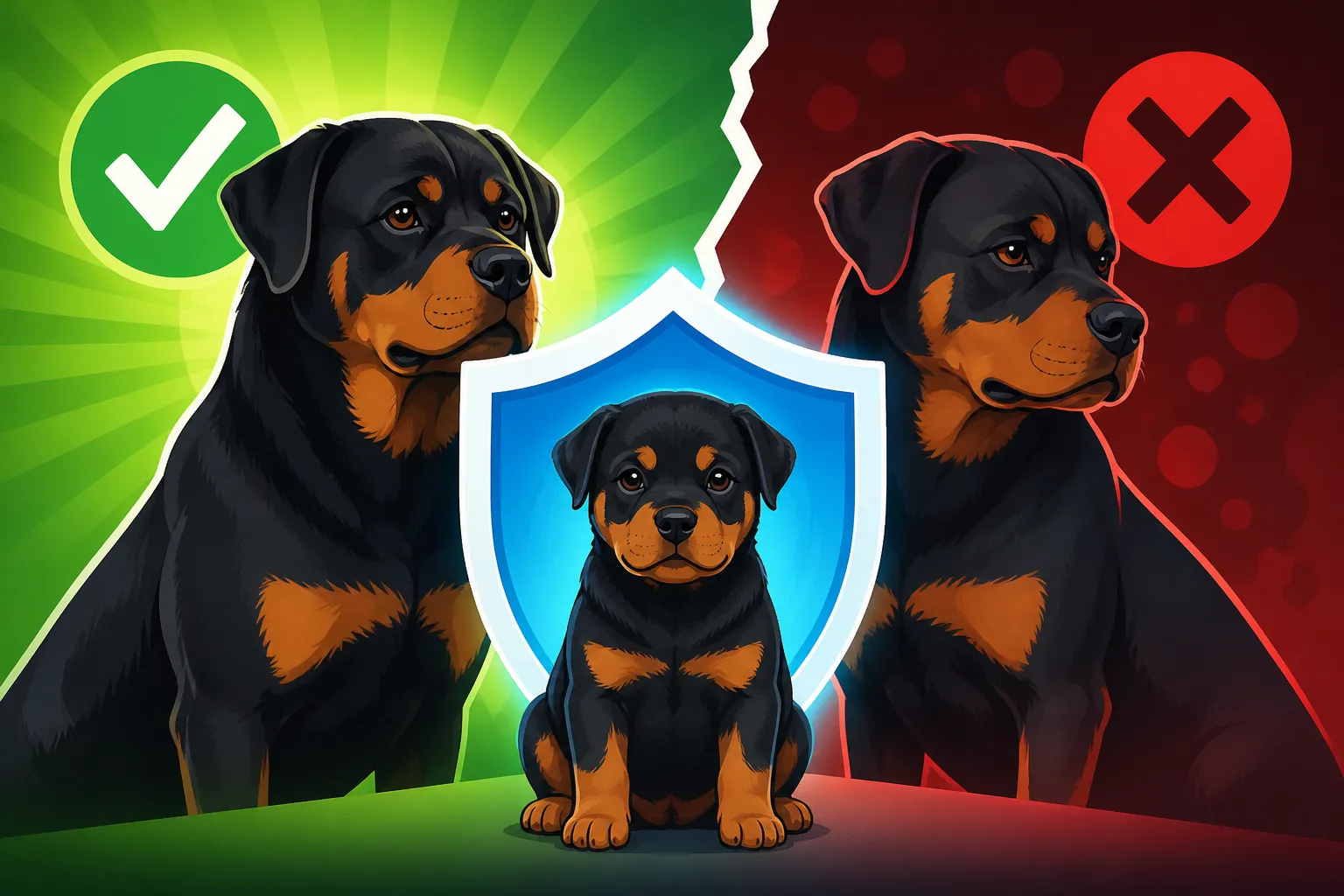
To ensure true genetic clearance for a litter, the standard practice for responsible Rottweiler breeders is that for any known recessive genetic condition, at least one parent in a breeding pair must be directly tested and found to be "clear." This means having two healthy copies of the gene. If one parent is a carrier (meaning they have one healthy and one faulty copy), then the other parent absolutely must be clear. This pairing guarantees that no puppy in the litter will inherit two faulty copies and therefore will not be affected by the disease. They might be carriers themselves (if they inherit the faulty gene from the carrier parent and the healthy gene from the clear parent), but they will not develop the condition. This safeguard is critical to breeding healthy dogs. This is a fundamental principle enshrined in the requirements for certifications like the Orthopedic Foundation for Animals (OFA) CHIC program, which outlines The Five Clearances a Rottweiler Breeder Must Have, including genetic testing.
Choosing a Breeder Who Prioritizes Clear Testing
When you're searching for a Rottweiler puppy, the breeder's commitment to genetic testing should be one of your top considerations. It’s more than just a piece of paper; it’s an assurance of health and a testament to their ethical breeding practices.
Questions to Ask About Parent Health
Don't be shy about asking direct, pointed questions about the health testing of the puppy's parents. A good breeder will welcome your questions and be eager to share information. You should specifically ask:
- "What genetic tests have been performed on the sire and dam of this litter?"
- "Can I see the official documentation for these tests?"
- "For recessive conditions, is at least one parent always tested clear?"
- "What are the OFA or similar health clearances for hips, elbows, heart, and eyes?" (Beyond genetic tests, these physical clearances are also vital, as detailed in articles like Rottweiler Hips and Elbows and the 24-Month Rule and Rottweiler Eye Certification and the Three Year Rule.)
A breeder who hesitates, gets defensive, or can't produce clear documentation is a red flag. This isn't just about avoiding a sick puppy; it’s about choosing a breeder who stands behind the health of their lines.
Verifying Test Results Independently
Don't just take a breeder's word for it, or even a photocopy. Responsible breeders will register their dogs' health clearances with public databases like the Orthopedic Foundation for Animals (OFA) or similar breed-specific registries. These databases allow you to look up the sire and dam by their registered names or registration numbers and verify their results independently. This transparency is crucial. If a breeder tells you the parents are "clear" but their results aren't publicly verifiable, proceed with extreme caution. The ability to verify these results offers peace of mind and proves the breeder's integrity. It's one of the most important things on the list of Health Papers to Ask a Rottweiler Breeder For.
The Value of Third-Party Registries
Third-party registries like OFA, and specific DNA testing labs such as Embark or Canine HealthCheck, provide unbiased, verifiable results. They are not affiliated with the breeder, ensuring objectivity. These organizations maintain databases of tested dogs, creating a transparent record of health clearances for various conditions, including genetic diseases like JLPP. When a breeder participates in these programs, it demonstrates their commitment to scientific rigor and openness. For JLPP, for example, the RAB3GAP1 gene test results are usually clear-cut: Clear, Carrier, or Affected. Understanding The RAB3GAP1 Test and What Clear Means for a Rottweiler is critical when evaluating a pedigree. A breeder who actively participates in these programs is investing in the future health of the breed, and that investment translates directly to healthier puppies for you.
The Long-Term Impact of Inherited Disease
Bringing home a puppy with an inherited genetic disease is a devastating blow, impacting not just the dog's life but also the emotional and financial well-being of the family. This is why prevention through rigorous testing is so vital.
The Emotional and Financial Toll on Owners
Imagine falling completely in love with your Rottweiler puppy, only to discover a few months down the line that they are developing symptoms of a severe, incurable genetic disease. The emotional pain of watching your beloved companion suffer is immense. Beyond the heartbreak, the financial burden can be staggering. Treatments, specialized diets, palliative care, and frequent veterinary visits can quickly add up to thousands, even tens of thousands, of dollars. This is where having pet insurance from providers like Healthy Paws can be an absolute lifesaver, but even with coverage, the stress and out-of-pocket expenses for certain conditions can be substantial. Many owners find themselves in the unenviable position of having to make difficult quality-of-life decisions far too early, something no one ever wants to face with their cherished pet.
Lifespan and Quality of Life Implications
Many inherited genetic diseases significantly shorten a Rottweiler's lifespan and drastically reduce their quality of life. Conditions that affect mobility, neurological function, or organ systems can lead to chronic pain, disability, and a life spent struggling instead of thriving. For a breed already known for a relatively shorter lifespan, such as the Rottweiler Lifespan and the Eight to Ten Year Average, adding an inheritable disease into the mix can cut those precious years even shorter and make the remaining ones challenging. A puppy born with a genetic predisposition to certain joint issues, for instance, might experience pain and reduced mobility even before their Rottweiler Growth Plates and Why They Close So Late are fully fused. The goal of responsible breeding is to maximize the chances of a long, healthy, and happy life, free from these preventable genetic burdens.
Supporting Your Rottweiler with an Inherited Condition
If, despite all precautions, you find yourself with a Rottweiler affected by an inherited condition, your commitment will be tested. Supporting such a dog requires immense dedication, patience, and resources. This can involve extensive veterinary care, specialized rehabilitation, medication, and significant lifestyle adjustments to accommodate their needs. While some conditions are manageable for a time, others progress relentlessly. Understanding that these situations are largely preventable through responsible breeding and proper genetic testing makes the breeder's role even more critical. While a pet insurance policy from a company like Healthy Paws can provide crucial financial support for unexpected illnesses or accidents, it's always better to prevent these conditions from occurring in the first place through careful breeding choices.
| Genetic Status of Parent 1 | Genetic Status of Parent 2 | Outcome Probability for Puppies (for a single recessive gene) |
|---|---|---|
| Clear | Clear | 100% Clear |
| Clear | Carrier | 50% Clear, 50% Carrier |
| Clear | Affected | 100% Carrier |
| Carrier | Carrier | 25% Clear, 50% Carrier, 25% Affected |
| Carrier | Affected | 50% Carrier, 50% Affected |
| Affected | Affected | 100% Affected |
This table clearly illustrates why at least one parent must be tested as "Clear" if the other parent's status is unknown or a "Carrier." By ensuring one parent is clear, you completely eliminate the possibility of producing "Affected" puppies.
Disclaimer
This article is intended for informational purposes only and does not constitute veterinary advice. Always consult with a qualified veterinarian or veterinary specialist for any health concerns regarding your Rottweiler. Breed health information and testing recommendations can evolve, so staying informed and working with reputable professionals is key.