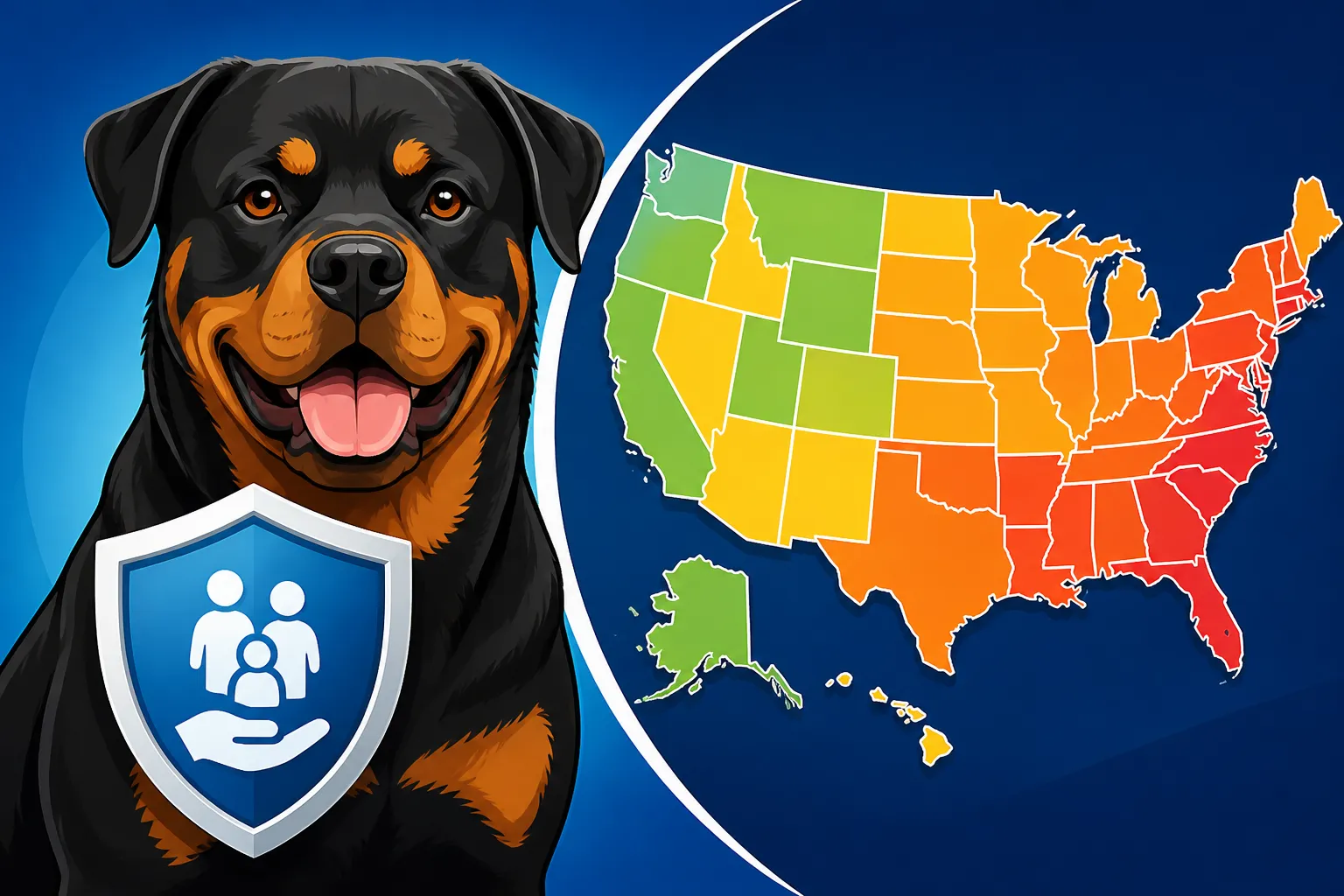
Rottweiler Insurance Rates State by State
Bringing a Rottweiler into your life is an incredible joy, but it also comes with a real and unavoidable reality: these magnificent dogs, for all their strength and loyalty, are unfortunately prone to certain health issues that can lead to some truly heartbreaking and financially draining veterinary bills. Understanding the nuances of pet insurance for a breed like the Rottweiler, and how those costs fluctuate wildly depending on where you live, can feel like navigating a dense fog. This guide is here to shed light on those state-by-state variations, help you grasp why premiums differ, and equip you to make the smartest decisions for your Rottweiler's health and your wallet.
Why Pet Insurance Is Not Just an Option for Rottweiler Owners
Let's be brutally honest right from the start: owning a Rottweiler means you're signing up for a potentially expensive journey when it comes to their health. It's not a question of if something will happen, but often when. These dogs, while robust in spirit, carry genetic predispositions that can lead to significant medical costs. Ignoring this reality is like hoping you'll never need car insurance—it's just not a responsible gamble with a living, breathing family member.
The Unexpected Vet Bills You Face
Imagine this scenario: your Rottweiler, usually a powerhouse of energy, suddenly starts limping. It's a subtle thing at first, maybe just after a long walk, but then it becomes more persistent. You take them to the vet, and after X-rays and perhaps an MRI, you get the devastating news: osteosarcoma, a type of bone cancer that is tragically common in Rottweilers and other large, deep-chested breeds. The initial diagnosis, the specialist consultation, the follow-up tests, and then the treatment options—whether it's amputation, chemotherapy, or palliative care—can easily run into the tens of thousands of dollars. Without insurance, that kind of financial hit can force families to make impossible choices.
It's not just cancer. Think about bloat in a Rottweiler, a condition where their stomach twists. This is a life-threatening emergency that requires immediate, expensive surgery. The clock is literally ticking, and the bill for such a procedure, including the overnight critical care, can easily exceed $5,000 to $10,000. These aren't minor expenses you can just pull from your emergency fund on a whim; they are major financial events. Having a plan, like a good pet insurance policy, can literally be the difference between life and death for your beloved companion.
Breed-Specific Challenges That Drive Costs
Rottweilers, genetically speaking, come with a predisposition to several conditions that are costly to treat. Beyond the aforementioned osteosarcoma and bloat, we frequently see issues with their joints. Conditions like Rottweiler Hip Dysplasia and the OFA Grade and Rottweiler Elbow Dysplasia and Front Leg Lameness are not uncommon. These often require expensive diagnostic imaging, specialist consultations, and potentially surgeries like total hip replacement, which can cost upwards of $6,000-$8,000 per hip. Even managing the arthritis that often accompanies these conditions as they age can be a continuous drain on resources, with medications, supplements, and physical therapy.
Then there's heart disease. While not as universally prevalent as joint issues, Rottweiler Heart Disease and Subaortic Stenosis can lead to a lifetime of medication and regular cardiology check-ups, which are specialists who charge specialist rates. And let's not forget the possibility of JLPP and the Rottweiler DNA Test, a neurological condition that, while less common thanks to responsible breeding, still highlights the importance of understanding the breed's genetic vulnerabilities. These are the kinds of health concerns that good pet insurance is designed to cover, providing a safety net against the high costs of specialized veterinary care that a large breed like a Rottweiler often needs.
Understanding How Pet Insurance Premiums Are Calculated
So, you're convinced pet insurance is a wise investment for your Rottweiler. Great! But then you start looking at quotes, and they're all over the place. Why does your neighbor in a different state pay less for seemingly the same coverage? It's not arbitrary; a complex web of factors goes into calculating those monthly premiums. Understanding these can help you anticipate costs and choose a policy that makes sense.
Your Location Matters More Than You Think
This is often the biggest shocker for new pet owners. Just like human health insurance, where you live plays a massive role in your pet insurance premiums. Why? Because the cost of veterinary care varies dramatically from one region to another, and insurance companies base their rates on the actual costs they expect to reimburse.
In densely populated urban areas or states with a high cost of living, you'll generally find vet clinics, emergency hospitals, and specialists charging more for their services. For example, a routine check-up in a major city like New York or Los Angeles will inherently be more expensive than the same check-up in a rural town in Iowa. Similarly, emergency surgeries, advanced diagnostics like MRIs, and specialized treatments for conditions like Osteosarcoma Signs in a Rottweiler Leg or Bloat in a Rottweiler and the Hours That Matter will carry a higher price tag in these expensive areas. Insurance providers factor this into their risk assessment, meaning if you live in a state where vet care is more expensive, your monthly premium will likely be higher to offset those potential payouts. This is why you'll see such significant differences in Rottweiler Insurance Rates State by State.
Age, Breed, and Health History
Beyond location, your Rottweiler's individual characteristics are huge determinants of premium cost. The younger your Rottweiler is when you enroll, the cheaper your premiums will generally be. Why? Because younger pets have fewer pre-existing conditions and are less likely to develop serious illnesses in the immediate future. Many savvy owners opt to enroll their Rottweiler puppies as early as eight weeks old, which helps lock in lower rates and ensures that conditions that might develop later aren't excluded as pre-existing.
And, of course, the breed itself. Rottweilers are wonderful, but as we've discussed, they are prone to certain health issues, particularly orthopedic problems, specific cancers, and bloat. Insurance companies recognize these breed-specific risks and adjust premiums accordingly. You'll often find Rottweilers, German Shepherds, and other large breeds in a higher premium bracket than, say, a Chihuahua. If your Rottweiler has any known health issues or conditions diagnosed before you enroll, those will almost certainly be considered "pre-existing" and excluded from coverage, or they might make your premium significantly higher. This is a critical point when considering What a Health-Tested Rottweiler Puppy Costs—a healthy start can pay dividends in lower insurance costs down the line.
Coverage Levels and Deductibles
Finally, the specifics of the policy you choose will directly impact your monthly premium. Pet insurance isn't a one-size-fits-all product. You'll typically have choices regarding:
- Deductible: This is the amount you pay out of pocket before your insurance starts to reimburse you. Common deductibles range from $100 to $1,000. A higher deductible will result in a lower monthly premium, but you'll pay more upfront if your pet needs care.
- Reimbursement Rate: This is the percentage of eligible vet bills the insurance company will pay after your deductible is met. Common rates are 70%, 80%, or 90%. A higher reimbursement rate means more money back but a higher premium.
- Annual Limit: This is the maximum amount the insurance company will pay out in a policy year. Limits can range from $5,000 to unlimited. A higher or unlimited annual limit naturally leads to a higher premium, but offers more peace of mind for catastrophic illnesses like Amputation and Chemotherapy Bills for a Rottweiler.
Choosing between these options allows you to customize a policy that fits both your budget and your risk tolerance. For a large breed like a Rottweiler, with potentially high-cost issues, many owners opt for lower deductibles and higher reimbursement rates, even if it means a slightly higher monthly payment.
Rottweiler Insurance Rates Across the United States
As mentioned, the geography of your home plays a significant role in how much you'll pay to insure your Rottweiler. Vet costs are not uniform, and neither are insurance premiums. While precise, real-time quotes require entering your specific zip code, age of dog, and desired coverage, we can look at general trends and provide examples of states that typically fall into higher, moderate, and lower premium categories. It's truly amazing how a state line can impact your yearly budget for pet care.
States with Higher Premiums
Generally, you'll find the highest Rottweiler insurance premiums in states with a higher cost of living, dense urban populations, and often, more access to advanced, specialized veterinary care, which naturally comes with a higher price tag. In these areas, veterinary clinics and emergency hospitals face higher overheads, which are then passed on to consumers.
- California: Consistently ranks among the most expensive states for pet insurance. From Los Angeles to San Francisco, the cost of veterinary care—be it a routine check-up or a complex surgery—is substantially higher than the national average. You might see average monthly premiums for a young Rottweiler ranging from $70-$100 or even more, depending on the specific city and coverage chosen. Providers like Healthy Paws and Fetch often quote higher here because of the sheer volume and cost of claims.
- New York: Especially in and around New York City, premiums can be exceptionally high. The access to cutting-edge veterinary medicine and specialist care, while fantastic for your pet, comes at a premium. Expect similar, if not slightly higher, rates to California.
- Florida: While not always as high as California or New York, Florida often sits in the higher bracket. This can be due to a combination of factors, including population density, particularly in coastal areas, and a higher incidence of certain health issues related to climate or lifestyle.
- Washington: States like Washington, particularly around Seattle, also see elevated premiums mirroring their high cost of living and advanced veterinary services.
In these states, anticipating higher costs for Emergency Vet Bills a Rottweiler Owner Should Expect is crucial, and comprehensive insurance becomes an even more vital safety net.
States with Moderate Premiums
Many states fall into a moderate range, where premiums are noticeable but not as eye-watering as those in the highest-cost areas. These states might have a mix of urban and rural areas, with vet costs that are closer to the national average.
- Texas: While cities like Dallas, Houston, and Austin have growing veterinary costs, the vastness of Texas and its varied economic landscape often place it in the moderate category overall. You might find monthly premiums in the $50-$80 range for a young Rottweiler.
- Illinois: Chicago is a major metropolitan area, but the rest of Illinois helps balance the average. Premiums here tend to be respectable, often in the $45-$75 range.
- Pennsylvania: Another state with a mix of urban centers and more rural areas, Pennsylvania usually offers moderate rates, often comparable to Illinois.
- Ohio: While not as consistently moderate as some, Ohio generally provides more affordable pet insurance rates than the coastal giants, with premiums often in the $40-$65 range.
- North Carolina / Georgia: These southeastern states can also offer mid-range premiums, though rates might climb in metropolitan hubs like Atlanta or Charlotte.
For owners in these states, securing a policy that includes coverage for potential issues like Rottweiler Heart Disease and Subaortic Stenosis without breaking the bank is quite achievable.
States with Lower Premiums
The most affordable pet insurance rates for a Rottweiler are typically found in states with a lower cost of living, less population density, and generally lower veterinary service costs. These are often states in the Midwest or more rural regions.
- Idaho / Montana / Wyoming: Many states in the mountain west and plains regions tend to have lower overall costs, including vet care. Premiums here could start as low as $30-$50 per month for a young, healthy Rottweiler.
- Iowa / Nebraska / Kansas: States in the heartland often offer some of the most budget-friendly pet insurance options. This is largely due to lower average vet bills and a less competitive, perhaps, veterinary market in some areas.
- Arkansas / Mississippi: States in the lower cost-of-living areas of the South also frequently show up with lower pet insurance premiums.
Even in these states, it's always wise to remember that while premiums are lower, a major medical event for your Rottweiler, such as Total Hip Replacement in a Rottweiler or extensive cancer treatment, will still carry a hefty price tag. Insurance remains a smart investment.
Here's a simplified look at how rates might stack up, keeping in mind these are averages for a young, healthy Rottweiler and can vary greatly by provider and specific policy choices.
| State | Average Monthly Premium Range (Young Rottweiler) | Typical Cost of Living Impact on Vet Bills |
|---|---|---|
| California | $70 – $100+ | Very High |
| New York | $75 – $110+ | Very High |
| Florida | $60 – $90 | High |
| Texas | $50 – $80 | Moderate to High |
| Illinois | $45 – $75 | Moderate |
| Ohio | $40 – $65 | Moderate to Low |
| Iowa | $30 – $55 | Low |
| Montana | $35 – $60 | Low |
Note: These ranges are estimates for accident and illness plans, based on general market data for a young adult Rottweiler, and are subject to change. Specific quotes require personal information.
Navigating the Policy Maze: What to Look For
So, you've got a handle on why prices differ and what states might charge more. Now, let's talk about the nitty-gritty of choosing an actual policy. It's not just about the cheapest premium; it's about getting the right coverage for a Rottweiler, which means digging into the details. Just picking the first quote can leave you with significant gaps when you need help the most.
Understanding What a Rottweiler Policy Will Not Cover
This is where many owners get tripped up. No pet insurance policy covers absolutely everything, and understanding the exclusions before you need to file a claim is paramount.
The most common exclusion is pre-existing conditions. This means any illness or injury your Rottweiler showed signs of before your policy's waiting period ended will not be covered. This is why getting your Rottweiler insured when they are a young puppy is so critical. If your Rottweiler had a limp that was diagnosed as elbow dysplasia before you bought insurance, any future treatments for that elbow dysplasia would likely be excluded. Even if you didn't get a formal diagnosis, if your vet notes symptoms in their records, it can be considered pre-existing. This also applies to conditions that develop during the waiting period. For example, some plans have longer waiting periods for orthopedic conditions, often 6 to 12 months. So, if your young Rottweiler develops a noticeable limp at 7 months old, and your waiting period for orthopedic issues hasn't passed, that condition won't be covered.
Most policies also do not cover:
- Wellness or routine care (unless you purchase a specific add-on wellness plan). This includes things like annual exams, vaccinations, and routine parasite prevention. Brands like Ollie or Chewy, which offer food and supplies, might also offer wellness plans, but these are distinct from accident/illness insurance.
- Grooming and boarding.
- Cosmetic procedures.
- Breeding, pregnancy, and whelping expenses.
- Experimental treatments (though this definition can sometimes be flexible).
- Certain elective procedures like tail docking or dewclaw removal if not medically necessary.
It's essential to read the fine print and understand these exclusions. A common frustration is expecting a policy to cover a condition that was clearly pre-existing according to the terms. Always ask your potential provider for clarification on specific scenarios.
Deductibles, Reimbursement Rates, and Annual Limits
We touched on these earlier, but let's dive a bit deeper, specifically for a Rottweiler. Because Rottweilers are prone to high-cost conditions, these policy components become incredibly important.
- Deductibles: For a Rottweiler, especially one with a predisposition to orthopedic issues or cancer, a lower deductible (e.g., $250 or $500) can save you a lot in the long run, even if it means a slightly higher monthly premium. If your dog needs several costly treatments over a year for something like Managing Arthritis in an Older Rottweiler or cancer, reaching a lower deductible quickly means the insurance company starts paying out sooner. Consider if you prefer to pay more monthly or a larger sum if a claim arises.
- Reimbursement Rates: Aim for 80% or 90% reimbursement if your budget allows. For a $6,000 bloat surgery, a 90% reimbursement means you get $5,400 back (after your deductible), while 70% means only $4,200. That $1,200 difference can be significant when you're already stressed about your dog's health. Providers like Healthy Paws are known for straightforward accident and illness plans with good reimbursement rates.
- Annual Limits: This is perhaps the most critical for a Rottweiler. With conditions like osteosarcoma or multiple joint surgeries, total costs can quickly soar past $10,000, $15,000, or even $20,000 in a single year. An unlimited annual limit, while carrying a higher premium, offers the ultimate peace of mind. If that's not feasible, opt for the highest annual limit you can afford (e.g., $15,000 or $20,000). You don't want to hit your limit mid-treatment for a life-threatening illness. Imagine being covered for the first round of chemotherapy but then hitting your limit before the second or third.
When comparing policies, create hypothetical scenarios based on known Rottweiler health issues. How would a policy handle a Rottweiler Hip Replacement Costs or Amputation Recovery Week by Week for a Rottweiler including ongoing pain management? This kind of detailed planning can save you from future regret.
The Importance of Enrolling a Rottweiler at Eight Weeks Old
Seriously, if you're getting a Rottweiler puppy, one of the first things you should do (after getting them settled and a vet check-up) is enroll them in pet insurance. This is not hyperbole; it's a financial imperative for this breed.
Rottweilers grow rapidly, and their Rottweiler Growth Plates and Why They Close So Late make them vulnerable to developmental orthopedic diseases. Issues like hip or elbow dysplasia can begin to manifest even before two years of age. If you wait until your Rottweiler is a year or two old, and your vet notes a slight stiffness or performs an X-ray that reveals early signs of a joint condition, that condition might be deemed pre-existing. Once it's pre-existing, treatments for it are typically excluded.
By enrolling at eight weeks old, before any symptoms of these common conditions appear, you ensure that future diagnoses are covered, provided you respect the initial waiting periods. This early enrollment also typically grants you the lowest possible premium rates, which will slowly increase with age but will generally be lower than if you started later in life. It's truly one of the most proactive steps you can take to protect your Rottweiler and your finances against the unpredictable challenges of a large breed's health.
Tips for Lowering Your Rottweiler's Insurance Costs
While you can't control your state's average vet costs or your Rottweiler's genetics, there are definitely actionable steps you can take to potentially lower your premiums or maximize the value of your policy. It's about being a smart, proactive, and responsible Rottweiler owner.
Preventative Care and Wellness Plans
This might sound counterintuitive—paying more for a wellness plan to lower costs—but hear me out. A wellness plan, often an add-on to a standard accident and illness policy, covers routine care like annual exams, vaccinations, deworming, and sometimes even dental cleanings. While these plans don't typically lower your insurance premium directly, they offset your out-of-pocket expenses for preventative care.
Why is this important for a Rottweiler? Regular vet visits, consistent vaccinations, and good parasite prevention can help catch issues early, before they become major, costly problems. For example, regular check-ups can monitor for Rottweiler Obesity and the Load It Adds to their joints, or detect early signs of Rottweiler Thyroid Disease Behind a Rottweiler's Dull Coat. Wellness plans effectively budget these predictable costs, freeing up your emergency savings or covering your deductible more easily if a major accident or illness occurs. When considering The Yearly Cost of Feeding and Keeping a Rottweiler, factoring in wellness care can be a smart move to keep your dog healthy and prevent more expensive treatments down the road. Some providers, like Healthy Paws, focus purely on accident and illness, while others might offer integrated wellness options.
Multi-Pet Discounts and Customizing Coverage
If you're lucky enough to have more than one pet, many insurance companies offer multi-pet discounts. This can be a significant saving, especially if you're insuring a Rottweiler alongside another furry family member. Always ask providers if they offer such discounts.
Beyond that, customize your coverage to strike the right balance between premium cost and peace of mind. As discussed, you can adjust:
- Deductible: Opt for a higher deductible if you have a robust emergency fund and are comfortable paying more out-of-pocket for initial claims. This will lower your monthly premium.
- Reimbursement Rate: If you choose a lower reimbursement rate (e.g., 70% instead of 90%), your premium will decrease. Just be aware of the larger percentage you'll be responsible for on bigger bills.
- Annual Limit: Choosing a lower annual limit will also reduce your premium. However, for a Rottweiler, with conditions like bone cancer or multiple joint issues, it's wise to choose the highest annual limit you can comfortably afford, or even unlimited coverage, to protect against catastrophic costs.
Think about your lifestyle and financial situation. If you're a diligent saver with a hefty emergency fund, a higher deductible might be acceptable. If you prefer predictable, lower monthly costs, but don't want to skimp on coverage for major events, you might prioritize a high reimbursement rate with a mid-range annual limit. Brands like Chewy, through their pet health insurance offerings, or even Ollie (if they expand into insurance), might allow for this kind of customization.
Documenting Training and Responsible Ownership
While this doesn't directly lower your insurance premium with most pet insurance companies, it's incredibly important for other aspects of Rottweiler ownership costs, particularly when it comes to Homeowners Insurance When You Own a Rottweiler and liability. Some homeowners insurance carriers view Rottweilers as a "high-risk" breed, potentially leading to higher premiums, breed exclusions, or even policy denials.
Being a responsible owner, diligently training your Rottweiler, and keeping meticulous records of their achievements can sometimes influence these other insurance types. For example, obtaining a Canine Good Citizen (CGC) certification, participating in obedience classes, or even working with a professional trainer can demonstrate that your Rottweiler is well-socialized and well-behaved. While a pet insurance provider itself might not offer a discount for a CGC title, these records can be invaluable if you ever face questions about your dog's temperament from a landlord or homeowners insurer. Documenting your commitment to your Rottweiler's health through regular vet visits and preventative care, in conjunction with pet insurance, paints a picture of a responsible owner and a well-cared-for dog, which ultimately contributes to a safer and more affordable ownership experience. This proactive approach supports the overall health and longevity of your beloved companion, potentially extending their Rottweiler Lifespan and the Eight to Ten Year Average.
Disclaimer
This article is for general informational purposes only and does not constitute professional advice. Laws, prices and regulations vary by location and change over time. Consult a qualified professional for guidance on your specific situation.