Homeowners Insurance When You Own a Rottweiler
Owning a magnificent Rottweiler brings immense joy and a deep sense of loyalty, but it can also land you in a frustrating maze when it comes to securing or maintaining homeowners insurance. Many devoted Rottweiler parents find themselves battling unfair stereotypes, facing steep premiums, or even outright policy denials simply because of their dog's breed. This comprehensive guide is here to equip you with the knowledge and strategies to navigate the complexities of homeowners insurance with your beloved Rottweiler, helping you protect your home and your peace of mind.
The Frustration of Breed Restrictions
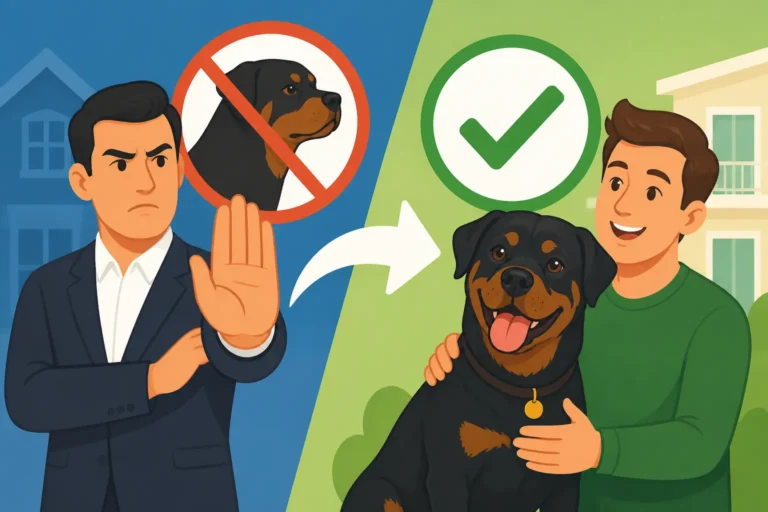
It's a disheartening reality for many Rottweiler owners: the breed you love and trust implicitly is often labeled "dangerous" by insurance companies. This isn't a judgment on your individual dog, but rather a reflection of broader industry practices and historical biases that can feel incredibly personal and unfair.
Why Rottweilers Are Often on "Dangerous Dog" Lists
For decades, certain dog breeds, including Rottweilers, have been stereotyped and unfairly categorized as inherently dangerous. This perception often stems from a combination of factors: sensationalized media reports, outdated bite statistics that fail to account for population size or specific circumstances, and the sheer power and imposing presence of a well-built Rottweiler. Insurers, at their core, are in the business of assessing and mitigating risk. When they look at breeds commonly associated with more severe bite incidents or higher claims payouts, they often lump them into a "dangerous dog" category. It's a blanket approach that doesn't consider your dog's gentle nature, extensive training, or a lifetime of responsible ownership. They're looking at actuarial tables and past payouts, not the wagging tail greeting you at the door.
These lists, often referred to as "restricted breed lists" or "prohibited breed lists," are not standardized across the insurance industry. What one company deems high-risk, another might tolerate with certain caveats, and a third might not list at all. This inconsistency is precisely what makes the process so frustrating for owners. It's not about whether your Rottweiler has ever shown aggression; it's about the breed's statistical representation in past liability claims, however flawed those statistics might be in fully capturing the nuances of dog bites. The reality is, a strong, powerful dog, regardless of breed, has the potential to inflict more damage if it bites, and that potential alone is often enough for an insurer to raise a red flag.
The Impact on Your Homeowners Insurance Policy
The moment you mention "Rottweiler" to a potential insurer, you might notice a shift in their tone or a sudden decline in available options. The impact on your homeowners insurance policy can be significant and multifaceted. First and foremost, you might face significantly higher premiums. Insurance companies will often impose surcharges on policies that include a restricted breed, viewing it as an elevated liability risk that requires more financial backing to cover potential claims. This increase can range from a few hundred dollars a year to well over a thousand, adding a substantial, often unexpected, cost to your annual budget.
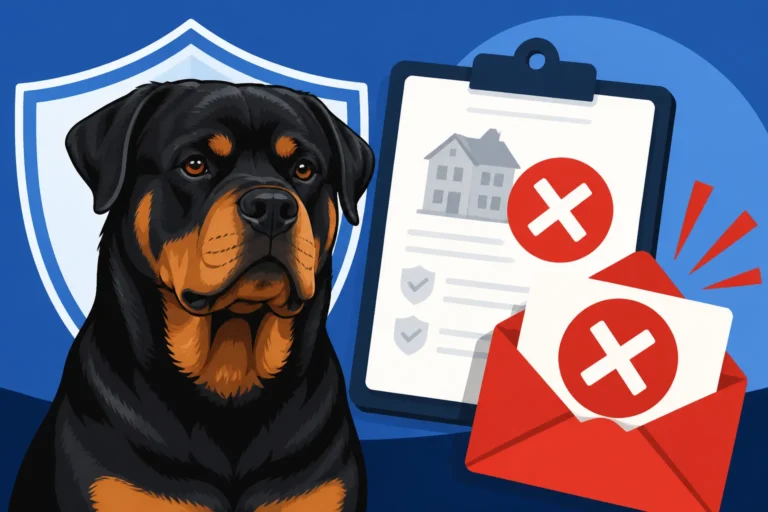
Beyond higher costs, many insurers will outright deny coverage to homes with Rottweilers. This means you might spend hours shopping around, only to be turned away repeatedly. For those who already have a policy, the presence of a Rottweiler could lead to non-renewal. Your insurer might decide at your next renewal period that they no longer wish to cover the risk, leaving you scrambling to find new coverage. Even if they don't deny or cancel, they might implement specific breed clauses that exclude any liability coverage for incidents involving your Rottweiler. This means if your dog were ever to cause an injury, your homeowners policy would offer absolutely no protection, leaving you personally responsible for all legal fees, medical bills, and potential settlements. This is a critical point to understand because it essentially negates one of the primary reasons for having homeowners insurance in the first place: liability protection.
Understanding Your Insurance Policy and Breed Clauses
Navigating the world of homeowners insurance when you own a Rottweiler requires a deep dive into the fine print. Generic insurance policies often contain hidden clauses that can have a profound impact on your coverage. Knowing what to look for and how to interpret these clauses is your first line of defense.
Decoding "Dangerous Dog" Clauses
Most standard homeowners insurance policies include a liability section designed to protect you financially if someone is injured on your property or by your property, including by your dog. However, within this section, many policies contain "dangerous dog" or "restricted breed" clauses. These clauses specifically name certain breeds and state that any incident involving these breeds will not be covered under the policy's liability section. For example, a clause might explicitly state, "This policy does not provide coverage for bodily injury or property damage arising out of the ownership, keeping, or harboring of any dog of the following breeds: Pit Bull Terrier, Rottweiler, German Shepherd, Doberman Pinscher, Akita, Chow Chow, or any mix thereof."
It’s crucial to read your policy documents thoroughly, especially the declarations page and the liability section. Don't rely solely on what an agent tells you verbally; get it in writing. Some policies might not explicitly list breeds but use broader language, such as "any dog with a history of aggression" or "any dog deemed dangerous by local ordinance." This vague wording can be a trap, as an insurer might interpret any past growl or incident, however minor, as a reason to deny a claim. Understanding these nuances before an incident occurs is paramount. If you're unsure, ask your agent for clarification in writing, specifically addressing how your Rottweiler affects your liability coverage. Remember, breed clauses are not just about denying new policies; they can also be added or amended upon renewal, so staying vigilant with your policy reviews is essential. You might be surprised to find your existing policy quietly amended to exclude your beloved family member.
How Insurers Determine Risk for Rottweiler Owners
Insurance companies don't just pull breed lists out of thin air. Their risk assessment is based on a complex web of data, primarily focusing on past claims history, which is largely influenced by actuarial data. This data aggregates information on bite incidents, severity of injuries, and the breeds involved in claims across the country. Unfortunately, Rottweilers often appear higher on these lists due to their size, strength, and past negative publicity. It's a numbers game for them, often without regard for individual temperament.
Beyond breed, insurers may also look at other factors. Your location can play a role, as some states or municipalities have breed-specific legislation (BSL) that influences an insurer's willingness to provide coverage. If your dog has any documented bite history, regardless of how minor, this will almost certainly trigger an exclusion or denial. Some insurers might even inquire about your dog's training and socialization, although this is less common for standard policies. The perceived risk is also tied to the overall claims history of the company itself; if they've paid out substantial sums for Rottweiler-related incidents in the past, their appetite for future risk will decrease. Therefore, even if your Rottweiler is a perfect angel, the sheer collective data can work against you. It's an uphill battle to convince an insurer that your dog is an exception to their statistical rule, which is why a proactive and informed approach is so important.
Strategies for Securing Homeowners Insurance with a Rottweiler
It might feel like an impossible task, but securing homeowners insurance with a Rottweiler is absolutely achievable. It just requires more diligence, transparency, and often, a willingness to prove your responsible ownership.
Shopping Around and Comparing Carriers
The most critical step you can take is to become an expert shopper. Do not assume all insurance companies operate under the same rules regarding dog breeds. While many national carriers might have blanket restrictions, others, or even regional subsidiaries, may be more flexible. Carriers like State Farm and Amica are often cited as being more lenient with breed restrictions, sometimes assessing individual dogs rather than simply banning an entire breed. However, even these policies can vary by state and individual agent, so always confirm directly.
Start by contacting independent insurance agents. Unlike captive agents who only sell policies for one company, independent agents work with multiple carriers and can shop around on your behalf. They often have insights into which companies in your area are more amenable to insuring homes with Rottweilers. When you call, be completely transparent about your Rottweiler upfront. It's tempting to omit this detail, hoping to get a quote, but this is a serious mistake. Misrepresenting information on an insurance application can lead to your policy being voided if a claim arises, leaving you completely unprotected. Ask direct questions: "Do you have breed restrictions, and if so, what are they?" "How does owning a Rottweiler impact my liability coverage?" "Are there any conditions under which you would cover a Rottweiler?" Gather quotes from at least three to five different carriers, comparing not just the premium but also the liability limits and any specific breed exclusions. It's a tedious process, but it's essential for finding the right coverage.
Leveraging Training and Certification
One of the most powerful tools you have to demonstrate your Rottweiler's excellent temperament and your responsible ownership is through formal training and certification. A well-trained dog is less likely to be involved in incidents, and showing proof of this training can sometimes sway an insurer's decision. The gold standard for this is the American Kennel Club's (AKC) Canine Good Citizen (CGC) program. A CGC title demonstrates that your dog has mastered basic obedience commands and exhibits good manners in public settings. Many progressive insurance companies are beginning to recognize the value of such certifications.
Beyond CGC, consider advanced obedience classes or even therapy dog certification. Any certification that attests to your Rottweiler's stable temperament and good behavior can be a valuable asset. When discussing insurance, present these certificates as proof of your dog's training. Ask if providing such documentation could lead to a lower premium or the waiving of a breed restriction. While it's not a guarantee, it shows proactive responsibility and can sometimes move your dog from a "high-risk breed" to an "individually assessed" animal. Don't underestimate the power of documentation when it comes to demonstrating your commitment to a well-behaved companion. Completing Rottweiler Obedience Class Fees is an investment that pays off in many ways, including potentially with your insurance carrier.
Providing Veterinary and Behavioral Records
Along with training certifications, a detailed record of your Rottweiler's veterinary visits and a clean behavioral history can strengthen your case. Request a letter from your veterinarian stating that your dog is up-to-date on vaccinations, has a clean bill of health, and has never exhibited aggressive behavior during visits. Your vet can attest to your dog's temperament based on their professional interactions. Similarly, if you've worked with a professional trainer or behaviorist, obtain a letter from them confirming your dog's good temperament and lack of aggression.
It's also beneficial to document that your Rottweiler is spayed or neutered, as some insurers perceive intact animals as having a higher potential for hormonal-driven aggression (though this is a generalization and not always true for individual dogs). Keep meticulous records of all your dog's care, including routine check-ups, emergency visits, and any training achievements. This kind of comprehensive documentation helps paint a picture of a well-cared-for, stable pet. Some insurers may even ask for a home visit or for you to sign an affidavit stating your dog has no bite history. Be prepared to provide this information accurately and completely. The more data you can provide that contradicts the "dangerous dog" stereotype, the better your chances of securing favorable terms. Remember, a healthy, well-socialized Rottweiler, perhaps supported by quality nutrition from brands like Ollie, is often a happier dog, and that can contribute to a more stable temperament.
Exploring Alternative Insurance Solutions
Sometimes, even with extensive training records and diligent shopping, a traditional homeowners policy might not offer the full liability coverage you need for your Rottweiler. In such cases, exploring alternative insurance solutions becomes essential. These options can provide a crucial safety net.
Umbrella Liability Policies
An umbrella liability policy is an excellent safeguard for any homeowner, but it becomes particularly vital when you own a restricted breed like a Rottweiler. This type of policy provides additional liability coverage that extends beyond the limits of your primary homeowners and auto insurance policies. Think of it as an extra layer of protection that kicks in when your underlying policy limits are exhausted.
For example, if your homeowners insurance has a liability limit of $300,000, and a dog-related incident results in a judgment of $1 million, your umbrella policy would cover the remaining $700,000, after your homeowners policy pays its maximum. Without it, you would be personally responsible for that substantial difference. Umbrella policies typically offer coverage in increments of $1 million or more and are surprisingly affordable for the amount of protection they provide, often costing a few hundred dollars per year. It's crucial to confirm that your umbrella policy explicitly covers dog-related liability, especially if your primary homeowners policy has a breed exclusion. While it doesn't replace your homeowners policy, it significantly enhances your overall liability protection, which is invaluable given the potential costs of a serious incident. Many experts recommend Umbrella Liability Cover for a Rottweiler Owner as a foundational piece of their insurance strategy.
Standalone Animal Liability Policies
If you find that your homeowners insurance utterly refuses to cover any liability related to your Rottweiler, or if it has a strict breed exclusion clause, a standalone animal liability policy can be a lifesaver. These policies are specifically designed to cover liability for dog bites and other pet-related incidents, operating independently of your homeowners insurance. They are often offered by specialty insurance companies that understand the challenges faced by owners of restricted breeds.
These policies can cover medical expenses, legal fees, and settlement costs if your Rottweiler causes injury or property damage. The coverage amounts can vary, so it's important to choose a policy that offers sufficient protection, ideally at least $100,000 to $500,000. Companies like Xolo (formerly known as Einhorn Insurance) specialize in high-risk dog liability and are worth exploring. While a standalone policy adds another monthly or annual expense, it fills a critical gap in coverage that traditional homeowners policies might leave open. It allows you to maintain your primary homeowners insurance with its breed exclusion, knowing that you still have financial protection specifically for your dog. This ensures that even if your main policy denies a dog-related claim, you aren't left completely exposed.
Understanding Fair Access to Insurance Requirements FAIR Plans
For some Rottweiler owners, especially those who have exhausted all other avenues due to breed restrictions, location-specific issues, or a previous claim, a Fair Access to Insurance Requirements (FAIR) Plan might be the only option. FAIR Plans are state-mandated insurance programs designed to provide basic property insurance coverage to homeowners who cannot obtain it through the voluntary market. These plans are essentially a "last resort" for homeowners deemed high-risk by traditional insurers.
While FAIR Plans ensure you have coverage for perils like fire and theft, they typically offer very limited liability coverage, and often, dog-related liability is either completely excluded or severely restricted. The coverage is usually basic, and the premiums tend to be higher than conventional policies. Furthermore, if liability for a dog bite is included, the limits are often much lower than what you would typically want, making an umbrella policy or standalone animal liability coverage still necessary to augment it. Before resorting to a FAIR Plan, ensure you have thoroughly explored all other options, including specialty carriers for animal liability. While they provide a safety net for property damage, they are generally not ideal for comprehensive liability protection, especially for a large breed like a Rottweiler. They are a temporary solution, not a long-term strategy for optimal coverage.
What to Do if Your Policy is Denied or Cancelled
Receiving a letter stating your homeowners insurance policy has been denied or will not be renewed because of your Rottweiler can be incredibly stressful and frustrating. It’s important to remember that you have rights and steps you can take to address the situation.
The Steps to Take After Denial
First, don't panic. If your policy application is denied, immediately request a written explanation for the denial. This documentation is crucial for understanding the specific reasons and for any potential appeal. Sometimes, denials are due to clerical errors or misunderstandings rather than strict breed bans. Once you have the written explanation, review it carefully.
Next, consider appealing the decision. Contact the insurer directly to speak with a supervisor or underwriter who has more authority than a basic customer service representative. Present your case clearly, providing all the documentation you've gathered: your Rottweiler's training certificates, a letter from your vet affirming good temperament, proof of spay/neuter, and secure containment measures on your property. Emphasize your responsible ownership. If the appeal is unsuccessful, your next step is to contact your state's Department of Insurance or equivalent regulatory body. They can often mediate disputes, clarify your rights, and sometimes even push insurers to reconsider their decisions, particularly if you believe the denial was unfair or discriminatory. They can also provide a list of carriers in your state that might be more lenient. Persistence and a well-documented case are your best allies.
Preventing Non-Renewal and Policy Cancellation
The fear of non-renewal or cancellation hangs over many Rottweiler owners. The best defense is a good offense: proactive communication and a spotless claims history. Firstly, maintain open and honest communication with your current insurer. If you acquire a Rottweiler, inform your insurance company immediately, even if they didn't ask directly. While this might lead to changes in your policy, withholding information can be far worse, as it could lead to a claim denial for misrepresentation.
Secondly, and perhaps most importantly, do everything in your power to prevent any incidents involving your Rottweiler. This means rigorous training, thorough socialization, secure fencing, and always supervising interactions, especially with strangers or children. A single bite incident, no matter how minor, can trigger a policy review, lead to cancellation, or make it virtually impossible to find affordable coverage in the future. If you have any concerns about your Rottweiler's behavior, address them immediately with a professional trainer or behaviorist. Proactively managing your dog's behavior and ensuring their well-being is not just about being a responsible pet owner; it's also a critical step in protecting your insurance coverage. Having Rottweiler Socialization Before Sixteen Weeks can make a world of difference. Furthermore, investing in high-quality products from retailers like Chewy, such as durable crates and secure leashes, helps in managing your Rottweiler safely and responsibly.
Legal Considerations and Your Rights
Beyond insurance policies, there are legal considerations and rights that Rottweiler owners should be aware of. In some jurisdictions, breed-specific legislation (BSL) may ban or heavily regulate Rottweiler ownership. While BSL directly affects ownership, it can also indirectly influence insurance availability and cost. It's crucial to understand your local laws.
Additionally, if your Rottweiler is a legitimate service animal, it is protected under federal laws like the Americans with Disabilities Act (ADA) and the Fair Housing Act (FHA). These laws generally prohibit landlords and insurance companies from discriminating against service animals based on breed. However, proving service animal status requires proper documentation and training, and it's essential to understand the distinction between a service animal and an emotional support animal, as protections can differ. For a regular pet Rottweiler, your rights are more limited, but knowing that you've been upfront, provided all requested documentation, and diligently sought coverage across multiple carriers is key. In extreme cases, if you believe you're being unfairly targeted, consulting with an attorney specializing in animal law or insurance law might be a viable option, though this is usually a last resort. Always research your state and local ordinances thoroughly to understand the full scope of your rights and responsibilities.
The True Cost and Long-Term Implications
The financial implications of owning a Rottweiler extend beyond food and vet bills, especially when it comes to homeowners insurance. It's not just about an increased monthly premium; there are broader, often hidden, costs and long-term considerations that deserve your attention.
How a Rottweiler Raises a Homeowners Premium
As discussed, a Rottweiler's presence can significantly increase your homeowners insurance premium. This isn't just a slight bump; it can be substantial, sometimes adding hundreds or even over a thousand dollars to your annual cost. Insurers base these increases on the perceived higher risk of liability claims, and unfortunately, Rottweilers are frequently cited in bite statistics, regardless of individual temperament. This higher premium is essentially your contribution to a larger risk pool, covering the potential for a payout in case of an incident.
The actual amount of the increase will depend on several factors: your location, the specific insurer's policies, your claims history (for other types of claims), and the coverage limits you choose. Some insurers might offer a policy but with a higher deductible specifically for dog-related claims. This means you'd pay more out-of-pocket before your insurance kicks in if your Rottweiler were involved in an incident. These increases can accumulate significantly over the lifespan of your Rottweiler, which, on average, can be Rottweiler Lifespan and the Eight to Ten Year Average. It's a continuous financial commitment that needs to be factored into your overall budget when considering owning this wonderful breed. Don't let the initial puppy cuteness distract you from the full financial picture.
Hidden Costs and Administrative Hassles
Beyond the direct premium hike, there are numerous hidden costs and administrative hassles associated with insuring a Rottweiler. The sheer amount of time you'll spend researching, calling different agents, filling out applications, and providing documentation can be considerable. Each phone call and denied application adds to a mental and emotional toll. You might find yourself having to switch carriers every few years if their policies change or if they decide to non-renew you, restarting the entire tedious process.
There's also the potential for increased deductibles, as mentioned, or even limits on the amount of liability coverage you can obtain. This means you might not get the same level of comprehensive protection as someone with a "non-restricted" breed, leaving you more exposed to significant financial risk. Furthermore, should an incident occur, the process of filing a claim with a breed exclusion can be exceptionally complex and stressful, often requiring extensive legal consultation. The hidden costs also include the emotional burden of constantly feeling scrutinized or having to defend your beloved pet's reputation to strangers and institutions. This ongoing administrative burden and potential for limited coverage are real, tangible costs that many prospective Rottweiler owners don't fully anticipate.
Beyond the Policy: Building a Responsible Rottweiler Life
While securing appropriate insurance is crucial, the most effective long-term strategy for managing the "Rottweiler insurance problem" goes beyond paperwork: it's about building a truly responsible Rottweiler life. This means making comprehensive training a priority from day one. A well-trained Rottweiler, one that understands and consistently responds to commands, is less likely to find itself in problematic situations. Think beyond basic obedience; consider advanced training and Rottweiler Bite Inhibition and the Adult Mouth.
Proper socialization is equally vital. Exposing your Rottweiler puppy to a wide variety of people, places, sounds, and other dogs in a positive and controlled manner helps them grow into confident, well-adjusted adults. Secure fencing, both physically and visually, is also non-negotiable to prevent escapes and minimize interactions with strangers that could lead to incidents. Ultimately, demonstrating impeccable, proactive, and responsible ownership is the strongest statement you can make. This commitment not only keeps your community safe but also reinforces your position as a credible, trustworthy homeowner, which can indirectly influence an insurer's perception over time. A Rottweiler Puppy Training Through the First Year journey is an investment in both your dog's future and your peace of mind regarding insurance.
Common Misconceptions and Realities
There are many myths and misunderstandings circulating about Rottweilers and insurance. It’s important to separate fact from fiction to make informed decisions and avoid potential pitfalls.
"My Rottweiler is a sweetheart, so it won't be an issue."
This is perhaps the most common and heartbreaking misconception Rottweiler owners hold. Of course, your Rottweiler is a sweetheart! You know their goofy quirks, their gentle leans, and their deep devotion. You see the individual, not the breed stereotype. However, insurance companies do not operate on individual anecdotes or personal testimonies of your dog's lovely disposition. They operate on collective statistical data and breed designations.
For an insurer, a Rottweiler is a Rottweiler, regardless of its individual temperament or how much you adore it. Their risk assessment is based on the breed as a whole, its bite force, its size, and its statistical representation in liability claims. This means even the most perfectly behaved, certified therapy Rottweiler can still trigger breed restrictions, higher premiums, or policy denials. It feels incredibly unfair, and it is, but understanding this reality is key to navigating the insurance landscape effectively. You're not battling your dog's actual personality; you're battling an industry-wide risk assessment model that often paints with a very broad, non-individualized brush.
"I can just say it's a 'mix' or a different breed."
This is a dangerous misconception that can lead to severe consequences. While it might be tempting to misrepresent your dog's breed to secure a policy or avoid higher premiums, this constitutes insurance fraud. If an incident involving your Rottweiler occurs and the insurer discovers you misrepresented the breed, they have every right to deny the claim and even retroactively void your policy.
This means you would be left entirely responsible for all legal fees, medical expenses, and potential settlements, which could easily amount to hundreds of thousands of dollars. The financial fallout from such a situation could be catastrophic, potentially leading to bankruptcy. Furthermore, depending on the severity of the misrepresentation and the state laws, you could face legal penalties for fraud. It's simply not worth the risk. Transparency, while challenging, is always the best policy when dealing with insurance. It ensures that if something unfortunate does happen, your policy will actually provide the protection you've paid for. Always disclose the truth, even if it means a harder search for coverage or a higher premium.
"Breed-specific legislation doesn't apply to my insurance."
While breed-specific legislation (BSL) directly impacts where you can live with your Rottweiler, it absolutely can have an indirect, yet significant, influence on your insurance. BSL refers to laws that ban or restrict certain dog breeds within a city, county, or state. If your local municipality has BSL against Rottweilers, even if you are allowed to keep yours under a "grandfather clause" or special permit, insurers will likely be aware of these local ordinances.
An insurer's risk assessment often takes into account the legal landscape of your area. If a breed is considered "dangerous" enough by local government to warrant restrictions, an insurance company will view that as a heightened risk factor. This can make it even more difficult to find coverage, lead to higher premiums, or result in more stringent breed exclusions in your policy. The presence of BSL in your area serves as a strong signal to insurers that your dog is in a higher-risk category from a community and legal perspective, which then translates into how they underwrite your policy. Always check both state and local laws, as they can significantly impact your insurance options. The costs related to Rottweiler Puppy Prices From $1,000 to $2,500 often reflect the investment a responsible breeder makes in health and temperament, which can indirectly help with insurance perception by promoting stable dogs.
| Proactive Steps to Secure Homeowners Insurance with a Rottweiler | Why It Helps | Potential Impact |
|---|---|---|
| Shop Around & Be Transparent | Not all insurers have the same rules. Being upfront prevents policy voiding. | May find carriers with more lenient policies; avoids fraud charges. |
| Obtain Canine Good Citizen (CGC) Certification | Demonstrates basic obedience and good manners. | Some insurers may offer reduced premiums or waive breed exclusions if combined with other factors. |
| Document Training & Socialization | Shows proactive effort in managing your dog's behavior. | Provides evidence of responsible ownership, especially if you need to appeal a denial. |
| Provide Vet & Behavioral Records | A vet can attest to a healthy, non-aggressive temperament; spay/neuter status can be a factor. | Supports claims of good temperament; addresses insurer concerns about health and behavioral risks. |
| Install Secure Fencing/Containment | Mitigates risk of escapes or unsupervised interactions. | Reduces perceived risk of liability claims, as it shows you're taking steps to prevent incidents. |
| Consider an Umbrella Liability Policy | Adds an extra layer of liability protection beyond your primary homeowners. | Crucial for financial protection if your homeowners policy has a breed exclusion or its limits are exhausted. |
| Explore Standalone Animal Liability Insurance | Provides specific liability coverage for pet-related incidents if homeowners insurance won't. | Fills critical coverage gaps where homeowners policies refuse or exclude dog liability entirely. |
| Maintain a Clean Claims History | Avoiding any dog-related claims is paramount. | Prevents policy non-renewal or cancellation; makes finding future coverage significantly easier. |
Disclaimer
This article is for general informational purposes only and does not constitute professional advice. Laws, prices and regulations vary by location and change over time. Consult a qualified professional for guidance on your specific situation.