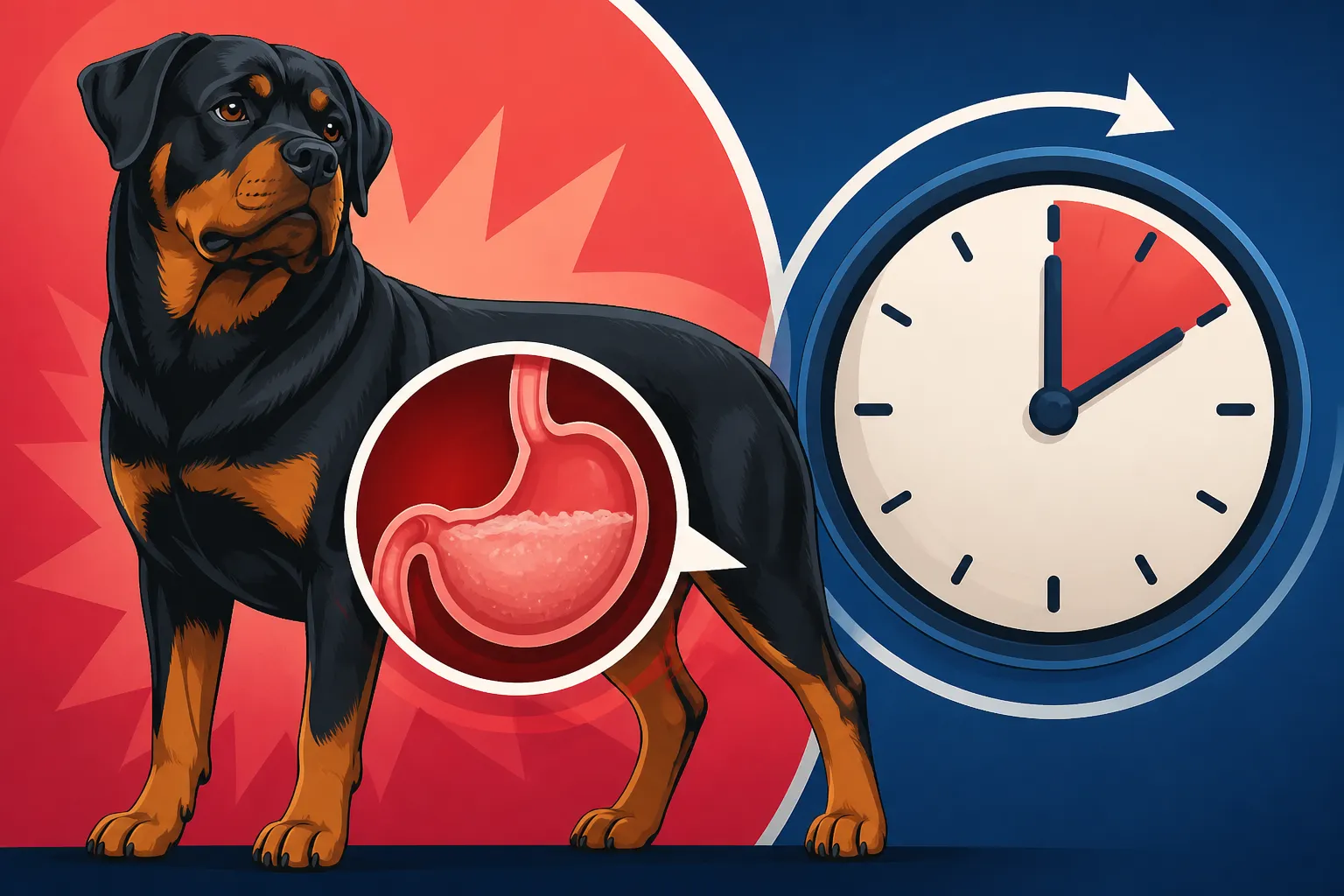
Bloat in a Rottweiler and the Hours That Matter
Few things strike as much fear into the heart of a Rottweiler owner as the word "bloat." It's a sudden, terrifying condition that can turn a perfectly normal evening into a frantic race against time, often with life-or-death consequences. This guide aims to demystify gastric dilatation-volvulus (GDV), commonly known as bloat, equipping you with the knowledge to recognize its subtle onset, understand why it's so dangerous for your Rottweiler, and, most importantly, know exactly what to do when every single hour matters.
Understanding What Bloat Actually Is in a Rottweiler
Bloat isn't just an upset stomach; it's a critical medical emergency where your Rottweiler's stomach first fills with gas and then, terrifyingly, twists upon itself. This condition, known as gastric dilatation-volvulus (GDV), is incredibly painful and rapidly life-threatening. For a large, deep-chested breed like the Rottweiler, it's a risk factor that every owner needs to be intimately familiar with.
The Two Phases: Dilatation and Volvulus
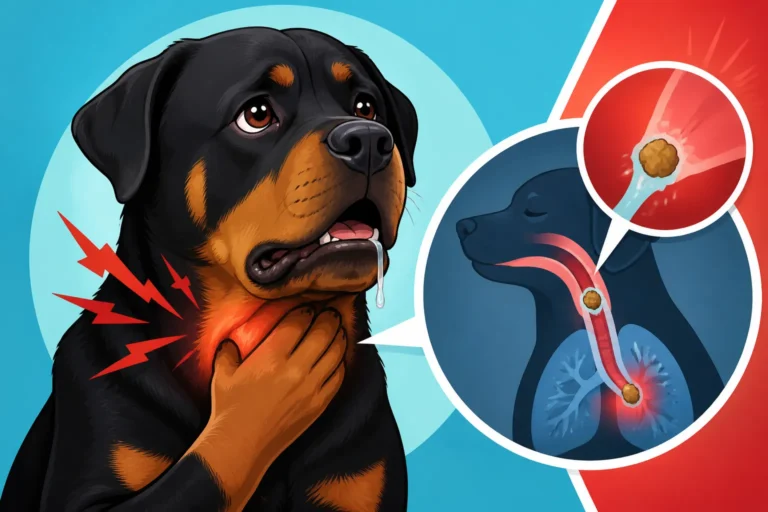
The condition typically begins with gastric dilatation, which simply means the stomach distends or fills with gas. Imagine your dog's stomach inflating like a balloon. This initial stretching is uncomfortable, but it's the second phase, the volvulus, that makes it truly deadly. This is when the distended stomach rotates or twists, pinching off both the entry (esophagus) and exit (duodenum) points. Once twisted, gas and fluid become trapped, and blood supply to the stomach is cut off.
The speed at which this can happen is what makes bloat so insidious. A dog can go from looking slightly uncomfortable to being in critical condition within an hour or two. The pressure from the distended stomach can also compress major blood vessels, impairing blood flow back to the heart, leading to shock and even organ failure. It's a cascade of events that, without immediate intervention, is almost always fatal. The sheer size and depth of a Rottweiler's chest contribute to this risk, allowing more room for the stomach to distend and twist.
Why It's a Medical Emergency
When the stomach twists, it's not just about discomfort; it’s a total systemic shutdown in progress. The blockage prevents gas from escaping through burping or vomiting, and it stops food from moving into the intestines. More critically, the twisted stomach begins to die because its blood supply is cut off, releasing toxins into the bloodstream. This can quickly lead to widespread infection, organ damage, and a severe form of shock that the body cannot recover from without veterinary intervention.
The consequences extend beyond the stomach itself. The spleen, which sits near the stomach, can also twist or become damaged, adding another layer of complexity to the emergency. The immense pressure inside the abdomen makes it difficult for the dog to breathe properly, further compromising its already struggling system. Every minute counts when bloat strikes, and understanding the urgency is the first step in being prepared. It's not a wait-and-see situation; it's a grab-your-keys-and-go emergency.
Recognizing the Early Signs of Bloat in Your Rottweiler
Spotting the signs of bloat in a Rottweiler can be tricky because the initial symptoms can be subtle and easily mistaken for general discomfort. However, knowing what to look for, especially in a breed so predisposed, can dramatically improve the chances of a positive outcome. The key is vigilance and immediate action.
Subtle Versus Obvious Indicators
Initially, your Rottweiler might just seem a little restless or uncomfortable. They might pace, appear anxious, or stretch more than usual. You might notice them looking at their abdomen, almost as if something is bothering them there. This is the stage where many owners might think it's just a minor stomach upset. They might stand with their legs wide apart, trying to relieve pressure, or simply refuse to settle down.
As the condition progresses, the signs become more alarming. The abdomen will often start to swell, especially on the left side, though it can become generally distended. This swelling can sometimes be hard to spot in a heavily muscled dog, but you should still check carefully. Your dog might also drool excessively, a sign of nausea or discomfort. They might attempt to vomit but bring nothing up, or just a little foamy fluid. This non-productive retching is a classic and very concerning sign of bloat. You can learn more about how to spot this by reading about A Rottweiler Retching Without Bringing Anything Up.
The Critical Emergency Signs
Once the stomach has twisted, your Rottweiler will likely enter a state of severe distress. They might start panting heavily, even if they haven't been exercising, and their breathing could become shallow and rapid due to the pressure on their diaphragm. Their gums might turn pale, or even bluish, indicating poor circulation and oxygenation. Their heart rate will likely be elevated, and their pulse weak, signs of shock. They may become lethargic and weak, collapsing or having difficulty standing.
It’s crucial to understand that these severe signs mean the condition has progressed significantly, and the dog is in dire straits. You need to act immediately, without hesitation. Don't wait to see if it gets better or if they pass gas. This is not a situation where home remedies or waiting for your regular vet's office to open are appropriate. If you see any combination of these symptoms, especially the non-productive retching and abdominal distention, it’s an absolute emergency. Understanding What Rottweiler Bloat Looks Like in the First Hour can be life-saving.
Here’s a quick reference table for recognizing bloat symptoms:
| Symptom Category | Early / Subtle Signs | Critical / Obvious Signs | Urgency |
|---|---|---|---|
| Behavior | Restlessness, anxiety, pacing, looking at abdomen, inability to settle. | Lethargy, weakness, collapse, inability to stand, hiding. | High |
| Abdomen | Mild abdominal discomfort, slight hardness. | Swelling/distention (especially left side), tense/drum-like to touch. | Immediate |
| Oral/Digestive | Excessive drooling. | Non-productive retching (gagging without vomiting), foamy saliva, unproductive attempts to defecate. | Immediate |
| Breathing | Rapid shallow breaths, increased panting. | Severe difficulty breathing, labored breathing. | Immediate |
| Gums/Pulse | Normal to slightly pale gums. | Pale, white, or bluish gums; weak and rapid pulse. | Immediate |
| Pain | Mild discomfort. | Obvious signs of severe pain, vocalization. | Immediate |
Why Rottweilers Are So Prone to Bloat
It's a frustrating reality that some breeds carry a higher risk for certain conditions, and for Rottweilers, bloat is unfortunately at the top of that list. Understanding the underlying factors that contribute to this predisposition can help owners implement effective preventive strategies.
Breed-Specific Anatomy and Risk Factors
Rottweilers, being a large breed, possess a deep and narrow chest cavity. This particular body conformation is a significant anatomical risk factor for GDV. Imagine their stomach as a sack suspended within this spacious chest. When it fills with gas, it has more room to swing and twist, much like a pendulum. Breeds with shallow, wide chests simply don't have the same internal architecture that allows for such a drastic rotation.
Beyond anatomy, genetics also play a role. While the exact genetic markers aren't fully understood, bloat does tend to run in families and certain lines within the Rottweiler breed. This suggests a hereditary component that predisposes some individuals more than others. Age is another factor; while bloat can occur at any age, the risk generally increases as a Rottweiler gets older, especially after the age of seven. You can read more about Rottweiler Bloat Risk Rising With Age. Male Rottweilers also appear to have a slightly higher incidence compared to females.
Environmental and Lifestyle Triggers
While anatomy and genetics set the stage, environmental and lifestyle factors often act as triggers. Fast eating is a major culprit. When a Rottweiler gulps down their food, they often ingest a significant amount of air along with it. This swallowed air can contribute to the initial gastric dilatation. Stress and anxiety can also play a role, altering digestive function and potentially increasing the likelihood of gas build-up. A particularly anxious or nervous Rottweiler might be at higher risk during stressful events.
Exercise too close to meal times is another commonly cited trigger. A vigorous play session or a long walk immediately after eating can cause the food-filled stomach to jostle around, increasing the chance of it twisting. Large, single meals, especially dry kibble that expands once wet, are also believed to increase risk. Switching food suddenly, or feeding from a raised bowl, has been a topic of debate for years regarding its link to bloat. While the raised bowl argument is nuanced, minimizing any sudden changes or rapid intake of food is generally good practice. This also relates to Feeding Rules That Lower Rottweiler Bloat Risk.
The Immediate Steps to Take When You Suspect Bloat
When you suspect bloat in your Rottweiler, panic is a natural reaction, but it’s crucial to channel that energy into swift, decisive action. Time is absolutely of the essence, and your immediate response can be the difference between life and death.
Emergency Protocols: Call Ahead
The very first thing you need to do is call your veterinarian or the nearest emergency veterinary clinic. Do not waste a single second debating whether it's truly bloat or just an upset stomach. Explain your Rottweiler's symptoms clearly and state directly that you suspect bloat (GDV). This preemptive call allows the veterinary team to prepare for your arrival, ensuring that essential equipment and personnel are ready. They can advise you on the quickest route and what to do on the way.
Often, they will tell you to come in immediately, without further questions. This preparation can shave precious minutes off the diagnostic and treatment process once you arrive, minutes that your Rottweiler simply cannot afford to lose. Knowing The Emergency Signs That Send a Rottweiler In is paramount here. Ensure you have the number for your emergency vet programmed into your phone, or visible on your fridge, because when urgency strikes, fumbling for numbers isn't an option.
Transporting Your Rottweiler Safely
Once you've made the call, get your Rottweiler into the car as quickly and safely as possible. If your dog is in severe pain or already weakened, they might need assistance getting into the vehicle. Consider having a plan for this beforehand, especially if your Rottweiler is large and heavy. A sturdy sling or a second person might be invaluable. Avoid allowing your dog to jump in or out of the car, which could exacerbate their condition.
During the drive, try to keep your Rottweiler as calm and comfortable as possible. Minimize sudden stops or turns, which could cause further jostling of the stomach. Keep communication with your dog reassuring. While you're on your way, the veterinary team will be preparing, which often includes having an IV catheter ready, anesthetic drugs, and surgical instruments laid out. This preparation is a testament to how seriously vets take GDV – they know the clock is ticking just as much as you do.
What Happens at the Vet Clinic: Diagnosing and Treating Bloat
Once you arrive at the emergency clinic with a suspected bloat case, the veterinary team will jump into action immediately. The process is fast-paced and focuses on stabilization, accurate diagnosis, and rapid intervention. This is where those precious hours, and even minutes, truly come into play.
Rapid Diagnosis and Stabilization
Upon arrival, your Rottweiler will be whisked into the treatment area. The first priority is to stabilize them, especially if they are in shock. This typically involves placing an intravenous (IV) catheter to administer fluids rapidly, which helps to counteract shock and improve blood pressure. Pain medication will also be given, as bloat is an incredibly painful condition. The veterinary team will assess your dog's vital signs – heart rate, breathing, gum color, and capillary refill time – to gauge the severity of the shock.
The definitive diagnostic tool for bloat is an X-ray of the abdomen. A specific appearance of the stomach, often described as a "double bubble" or "Popeye arm" sign, confirms that the stomach has twisted. This X-ray is usually taken very quickly. If the stomach has only dilated (filled with gas) but not yet twisted, the vet may attempt to decompress it by passing a tube down the esophagus into the stomach. This allows gas and fluid to escape, providing immediate relief. However, if the stomach has twisted, this tube often cannot be passed, confirming the need for surgery.
Surgical Intervention and Prognosis
If GDV is confirmed, surgery is the only definitive treatment. This procedure, known as a gastrectomy and gastropexy, is complex and carries risks, but it's essential for survival. During the surgery, the veterinary surgeon will carefully de-rotate the stomach, returning it to its normal position. They will then assess the stomach and surrounding organs for damage. Areas of the stomach wall that have lost blood supply and become necrotic (dead tissue) may need to be removed.
A crucial part of the surgery is the gastropexy. This involves suturing the stomach wall to the abdominal wall, typically near the last rib. This procedure permanently anchors the stomach in place, preventing it from twisting again in the future. While it doesn't prevent the stomach from dilating (filling with gas), it drastically reduces the risk of recurrence of the dangerous volvulus. You can learn more about Rottweiler Bloat Surgery and the Odds of Survival. The prognosis post-surgery depends heavily on how quickly the dog received treatment, the extent of tissue damage, and whether complications like heart arrhythmias develop.
Preventive Measures to Reduce Bloat Risk in Your Rottweiler
While you can't eliminate the risk of bloat entirely in a breed like the Rottweiler, there are numerous proactive steps you can take to significantly reduce the likelihood of this life-threatening condition occurring. These measures focus on managing diet, exercise, and sometimes, even prophylactic surgery.
Dietary Management and Feeding Practices
One of the most impactful changes you can make is to how and what you feed your Rottweiler. Instead of one large meal a day, divide their daily food ration into two or three smaller meals. This reduces the amount of food and gas in the stomach at any one time, making it less likely to distend excessively. Feeding smaller, more frequent meals is a cornerstone of prevention.
Encourage slower eating. There are many options available, from slow-feeder bowls with obstacles that make gulping difficult, to placing large, clean rocks (too big to swallow) in their regular bowl. Even spreading food across a large baking sheet can force a dog to eat more slowly. Avoid exercise for at least one hour before and two hours after meals. This allows time for digestion to begin and for any swallowed air to dissipate, reducing the risk of a full stomach jostling and twisting during activity. The debate around raised bowls continues, with some studies suggesting they may increase risk, while others find no significant effect or even suggest a benefit for some conditions like arthritis. Given the conflicting information, most vets lean towards feeding from the floor unless there's a specific medical reason otherwise.
Consider the type of food as well. While there's no magic "anti-bloat" food, some anecdotal evidence and older studies suggested that dry kibble with certain ingredients (like soybean meal) or very small particle sizes might be associated with higher risk. However, current research is less conclusive on specific ingredients. The most important factor seems to be ensuring a high-quality, balanced diet. Brands like Healthy Paws, for example, often emphasize balanced nutrition, which is crucial for overall health and indirectly supports digestive wellness.
Prophylactic Gastropexy
Perhaps the most definitive preventive measure available is a prophylactic gastropexy. This is the same surgical procedure performed during an emergency bloat surgery, but it's done electively on a healthy, non-bloated dog. The stomach is permanently tacked to the abdominal wall, preventing it from twisting. It's important to remember that this procedure prevents the volvulus (the twisting) but not the dilatation (the gassing up). However, it's the twisting that turns bloat into a deadly emergency.
Many Rottweiler owners choose to have a prophylactic gastropexy performed when their dog is already undergoing another abdominal surgery, such as spaying or neutering. This combines two procedures into one anesthetic event. The procedure can also be performed laparoscopically, which is a minimally invasive technique, often resulting in quicker recovery times. Discussing Whether Preventive Gastropexy Is Worth It with your vet is highly recommended for all Rottweiler owners. It's a significant decision, but one that can offer immense peace of mind, knowing you've drastically reduced the risk of the most dangerous aspect of bloat.
Life After Bloat: Recovery and Long-Term Management
If your Rottweiler survives a bloat episode and undergoes successful surgery, the immediate aftermath involves intensive recovery and careful management. But beyond that, there are long-term considerations to ensure their continued health and to prevent recurrence of even the dilatation aspect of bloat.
Post-Operative Care and Potential Complications
The first few days after bloat surgery are critical. Your Rottweiler will likely remain hospitalized for several days, receiving IV fluids, pain medication, and antibiotics. Monitoring for complications is paramount. One of the most common and serious post-operative complications is cardiac arrhythmias (irregular heartbeats), which can sometimes develop as a result of the shock and re-perfusion injury the body experienced during bloat. The veterinary team will continuously monitor their heart function.
Other potential complications include infection at the surgical site, continued stomach pain, or issues with appetite. Your dog might be lethargic and hesitant to eat initially. Your vet will guide you on a gradual reintroduction of food, often starting with small, bland meals. Rest is essential; restrict activity and jumping for several weeks to allow the surgical incision to heal properly and prevent strain on the gastropexy. Follow all post-operative instructions meticulously, including medication schedules and wound care. Remember, the recovery from Rottweiler Bloat Surgery and the Odds of Survival is a marathon, not a sprint.
Preventing Future Episodes of Dilatation
Even with a gastropexy in place, the stomach can still distend with gas. While it won't twist, the discomfort and potential for other issues remain. Therefore, the dietary and lifestyle modifications discussed earlier become even more critical lifelong practices. Continuing to feed smaller, more frequent meals, using slow-feeder bowls, and maintaining strict exercise restrictions around meal times are non-negotiable.
Your vet might also recommend specific dietary changes, such as a highly digestible diet or a prescription formula designed to reduce gas production. Some dogs might benefit from probiotics or other digestive aids, always under veterinary guidance. Close monitoring of your Rottweiler's eating habits, stool quality, and general demeanor for any signs of discomfort or excessive gas is important. While a gastropexy offers tremendous protection against volvulus, diligent management of other risk factors for dilatation is key to maintaining your Rottweiler's long-term health and comfort. Regular check-ups with your vet will also be important to assess overall recovery and adjust management plans as needed. Insurance providers like Healthy Paws can often alleviate some of the financial burden of such critical care and follow-up, allowing you to focus on your pet's recovery.
Making the Tough Decisions: When Treatment Isn't an Option
Bloat is an incredibly severe and expensive condition to treat. While immediate veterinary care offers the best chance of survival, there are unfortunate circumstances where treatment, especially surgery, might not be a viable option. This is a heartbreaking reality for many owners.
Assessing Quality of Life and Prognosis
In cases where a Rottweiler arrives at the clinic in extremely advanced stages of bloat – perhaps with severe shock, irreversible organ damage, or extensive necrosis of the stomach tissue – the prognosis for survival, even with surgery, can be very poor. The veterinary team will conduct a thorough assessment, including blood work to check organ function and overall systemic health. They will discuss the findings openly and honestly with you, outlining the chances of survival and the potential for a painful, prolonged recovery with a low success rate.
It’s an agonizing conversation, but it's essential to understand the full picture. Sometimes, a dog's existing health conditions, such as severe heart disease or kidney failure, may also make them a poor candidate for major surgery and extended recovery. The veterinarian will help you understand if the potential for prolonged suffering outweighs the slim chances of a positive outcome. This is about prioritizing your beloved Rottweiler's comfort and dignity, even when your heart screams for every possible intervention.
The Weight of Financial Strain
The cost of bloat surgery and the extensive post-operative care can be substantial, often running into several thousands of dollars, easily reaching $5,000 to $10,000 or more depending on the severity of the case, complications, and geographic location. For some families, this financial burden might be insurmountable, leading to the devastating realization that they cannot afford the life-saving treatment their Rottweiler needs.
This is an incredibly difficult position, and it's important to know that veterinary staff understand these challenges. They can often provide estimates and discuss options, but ultimately, the decision rests with the owner. It highlights the importance of pet insurance, as many policies from providers like Healthy Paws can cover a significant portion of emergency surgery costs, or having an emergency fund specifically for your pet's health. Without such provisions, the financial strain can force an impossible choice between a beloved pet's life and financial devastation. It's a stark reminder of the unexpected bills a Rottweiler owner should expect when dealing with a serious medical emergency.
Disclaimer
This article is intended for informational purposes only and does not constitute veterinary advice. Always consult with a qualified veterinarian for any health concerns or before making any decisions about your Rottweiler's care. Bloat is a medical emergency requiring immediate professional attention.