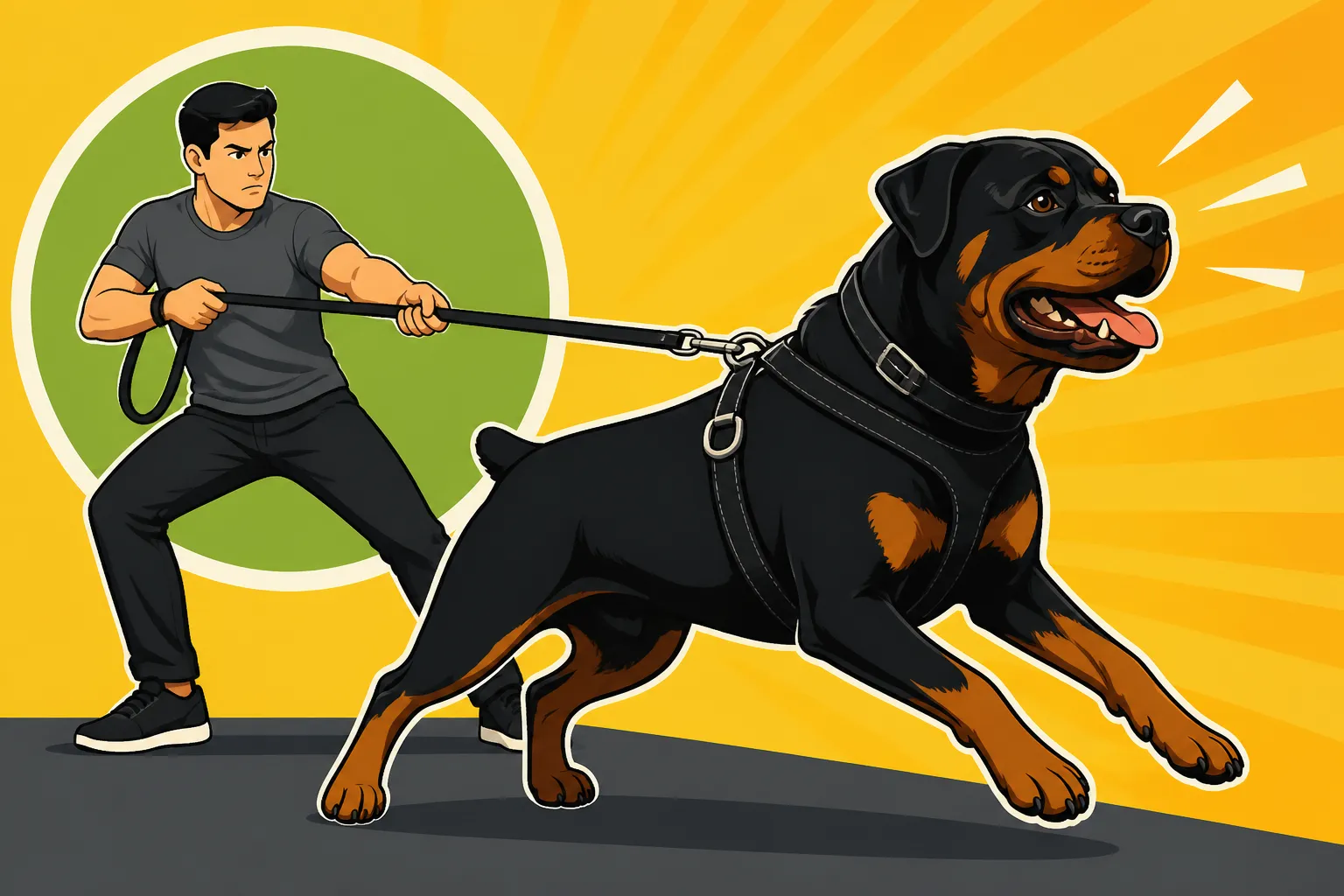
Teaching a Rottweiler Not to Pull at 110 Pounds
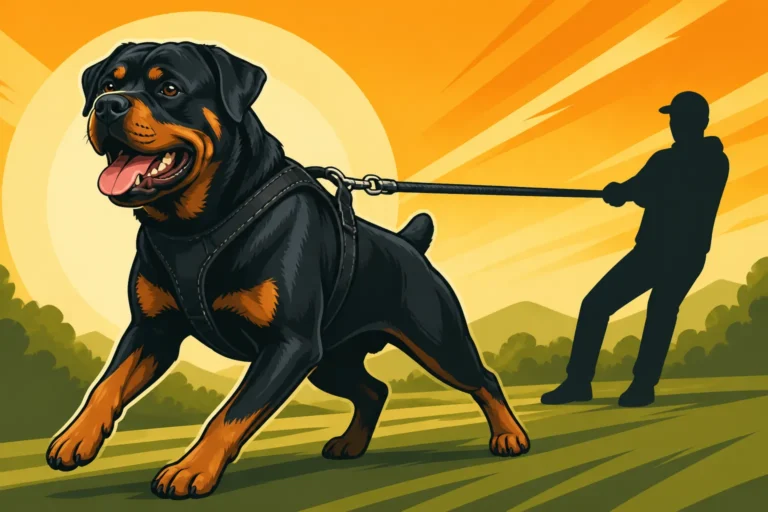
Walking a Rottweiler that weighs as much as or more than you do can quickly turn from a pleasant stroll into a wrestling match, leaving you with aching shoulders, a frayed leash, and a sense of utter frustration. It’s disheartening when your loyal companion, a dog you adore, pulls so hard they practically drag you down the block, making you dread every outing. This comprehensive guide is here to walk you through practical strategies, appropriate gear, and consistent training methods to help you teach your magnificent 110-pound Rottweiler to walk politely on a loose leash, transforming your walks into enjoyable experiences for both of you.
Understanding Why Your 110-Pound Rottweiler Pulls
It’s easy to feel like your Rottweiler is deliberately trying to defy you when they pull, but often, their motivations are much simpler – and entirely canine. Understanding the "why" behind the pull can help you approach the training with more empathy and less frustration.
The World is an Exciting Place
For a Rottweiler, especially a young or undersocialized one, every walk is a sensory explosion. Think about it from their perspective: a symphony of smells from other dogs, squirrels, and discarded food; the sight of cars, people, and other moving objects; the sounds of children playing or distant sirens. All of this can be incredibly stimulating.
Imagine you’re out for a peaceful walk, and suddenly your Rottweiler catches a whiff of something utterly fascinating – perhaps a rabbit trail from last night or a fresh mark left by another dog. Their powerful nose is pulling them towards that scent, and their strong body follows. They’re not trying to be disobedient; they’re simply following their instincts and experiencing the world in a way we humans can barely comprehend. The sheer excitement of these discoveries can make them forget all their manners and pull with the full force of their substantial weight. It’s a classic case of instinct overriding learned behavior, especially if that learned behavior hasn't been solidified through consistent practice in varying environments.
Lack of Early Leash Training Foundations
Many pulling habits start small, often when the dog is still a cute, manageable puppy. A 20-pound Rottweiler puppy pulling on the leash might seem like a minor annoyance, easily corrected with a gentle tug. However, as that puppy grows, its strength multiplies. What was a gentle tug at 20 pounds becomes an unstoppable force at 110 pounds.
If a Rottweiler puppy isn't consistently taught what loose-leash walking means from day one, they quickly learn that pulling gets them where they want to go. Every time they pull and you continue moving forward, even if you’re grumbling about it, you’re inadvertently rewarding the pulling behavior. They learn that tension on the leash is a signal to keep forging ahead, not to slow down. This is why addressing Rottweiler Leash Pulling at Adult Weight requires revisiting the fundamentals, often as if they were a puppy again, but with the added challenge of their impressive size and ingrained habits. Consistency from the very beginning, even with a tiny puppy, is crucial to prevent these habits from becoming deeply rooted.
Essential Gear for Managing a Strong Puller
When you're dealing with a dog as powerful as a 110-pound Rottweiler, having the right equipment isn't just about comfort; it's about safety and control. A standard flat collar often isn't enough to manage a strong puller effectively and can even cause harm to their neck and throat.
Front-Clip Harnesses and Head Halters
For many Rottweiler owners, a front-clip harness is a game-changer. Unlike traditional back-clip harnesses, which often encourage pulling by allowing the dog to lean into their chest, a front-clip harness has the leash attachment point on the dog's chest. When your Rottweiler pulls, the leash redirects their momentum to the side, gently turning them back towards you. This makes it difficult for them to pull forward with their full body weight and naturally encourages them to stay by your side. You can find a wide range of durable, large-breed appropriate front-clip harnesses on Amazon, ensuring you get one that can withstand the strength of your dog. Look for ones with sturdy D-rings and reinforced stitching.
Another effective tool is a head halter (sometimes called a gentle leader). This device fits over your dog's nose and around the back of their head, similar to a halter for a horse. The leash attaches under the chin. When your Rottweiler pulls, the head halter gently directs their head, and therefore their body, back towards you. This gives you a surprising amount of control with very little physical force, as where the head goes, the body follows. It's often recommended for Walking a Rottweiler Safely as a Smaller Person because it leverages leverage, not strength. However, it's crucial to introduce a head halter slowly and positively, as some dogs initially resist the feeling of something on their muzzle. Desensitization with treats and praise is key to making it a comfortable tool for your Rottweiler.
Let's look at a quick comparison of popular tools for managing a pulling Rottweiler:
| Tool Type | Pros | Cons | Best For |
|---|---|---|---|
| Flat Collar | Simple, common, good for ID tags | No pulling control, can cause neck strain/choking | Well-trained, loose-leash walkers |
| Back-Clip Harness | Comfortable, good for dogs with neck issues | Can encourage pulling, less control over strong dogs | Dogs with good leash manners, smaller dogs |
| Front-Clip Harness | Redirects pulling, good control, chest attachment | Can chafe if ill-fitting, dog might try to chew straps | Strong pullers, dogs needing steering guidance |
| Head Halter | Excellent control with minimal force, redirects head | Initial resistance from some dogs, requires desensitization | Very strong pullers, owners needing maximum control |
For a more detailed discussion on gear, you might find articles like Harness Hardware That Holds a Pulling Rottweiler or Whether a Head Halter Suits a Rottweiler very helpful in deciding what's best for your dog.
The Case for Training Collars (And Caution)
When discussing leash tools, it's impossible to ignore training collars like prong collars. These tools are designed to provide a quick, clear correction that mimics a mother dog's nip. Proponents argue they offer precise communication and can be highly effective for very strong, persistent pullers, especially when used correctly by an experienced handler. They can certainly get a Rottweiler's attention when other tools have failed, as discussed in Prong Collars and Why Trainers Argue About Rottweilers.
However, prong collars are controversial. If used incorrectly, with harsh jerks or constant tension, they can cause physical discomfort, fear, and even damage to a dog's neck. They should never be used as a substitute for actual training. For many owners, the potential for misuse and the negative associations outweigh the benefits. If you are considering a prong collar, it is absolutely vital to seek guidance from a professional trainer who is experienced and ethical in their use, and who can teach you how to use it safely and humanely. The goal should always be to transition to a less restrictive tool as quickly as possible.
Foundation Training: Teaching Loose-Leash Walking
No matter how strong your Rottweiler is or how long they've been pulling, teaching loose-leash walking is achievable with patience, consistency, and the right approach. It’s about building a new habit, one step at a time.
Starting in a Low-Distraction Environment
Before you tackle the bustling park or busy street, start your loose-leash training in a quiet, familiar environment like your living room or a fenced backyard. The fewer distractions, the easier it will be for your Rottweiler to focus on you and understand what you're asking.
Begin with your dog on a leash and collar (or harness/head halter, whichever you've chosen). Hold a treat near your dog's nose, luring them into position by your side. As they take a step or two with slack in the leash, immediately mark the behavior with a verbal cue like "Yes!" or a clicker, and give them the treat. Take another step, keeping the leash loose. If the leash tightens even slightly, stop immediately. Become a "tree." Your Rottweiler will likely glance back at you, wondering why you stopped. The moment the leash goes slack again, even for a second, say "Yes!" and reward them, then start walking. This method teaches them that a tight leash means "stop," and a loose leash means "go and get rewarded." This foundational work, as touched upon in Rottweiler Puppy Training Through the First Year, is critical for dogs of all ages.
Gradually Introducing Distractions
Once your Rottweiler understands the concept of loose-leash walking in a quiet space, it's time to slowly increase the difficulty. Move your training sessions to areas with slightly more distractions – perhaps your front yard, a quiet neighborhood street, or during off-peak hours at a local park.
The key here is gradual exposure. If you notice your Rottweiler starting to pull towards a new distraction, don't let them succeed. Use your chosen tool (front-clip harness or head halter) to gently redirect them back towards you. Engage their attention with high-value treats and praise. The moment they choose to look at you instead of the distraction, even for a split second, reward them generously. This helps them learn that you are the most rewarding thing on the walk, not the squirrel or the barking dog across the street. Remember that early Socializing a Rottweiler Puppy Properly can help them become less reactive to novel stimuli later on, making these distraction-filled walks easier.
Consistency is Absolutely Key
This is where many owners falter, not because they don't love their dogs, but because consistency can be hard, especially when you're tired or in a hurry. However, for a 110-pound Rottweiler, inconsistency sends mixed signals that will undermine all your efforts.
Every single walk, every time the leash is on, should be a training opportunity. If you allow your Rottweiler to pull "just this once" because you're running late, you've just reinforced the pulling behavior. It’s like telling them "sometimes pulling works, sometimes it doesn't, so keep trying!" You need to commit to the "stop when the leash tightens" rule every single time. If you can't commit to a proper training walk, keep the walk short, or use a head halter for maximum control to prevent any pulling from occurring. Think of every step as a chance to reinforce the loose leash. This level of dedication is crucial for success, especially as your Rottweiler enters Rottweiler Adolescence and Sudden Testing where they might try to push boundaries.
Troubleshooting Common Pulling Scenarios
Even with the right gear and foundation training, you'll encounter specific situations that test your Rottweiler's loose-leash manners. These are often the moments that lead to the most frustration, but with a strategy, you can overcome them.
Managing High Excitement and Reactivity
There are moments when your Rottweiler becomes over-the-moon excited or reactive – spotting another dog, a squirrel darting across the path, or even just leaving the house for a walk. In these instances, their arousal levels are high, making it difficult for them to think clearly and respond to your cues.
Before you even step out the door, manage the pre-walk excitement. Don't let your Rottweiler charge out; ask for a sit or a moment of calm before attaching the leash and opening the door. During the walk, if you anticipate an exciting trigger (like seeing another dog in the distance), create distance. Cross the street, step behind a car, or find a natural barrier. The goal is to keep your dog "under threshold," meaning they are aware of the distraction but not so overstimulated that they can't focus on you. Use high-value treats to reward calm behavior as the trigger passes. For instance, if you see another dog, turn your Rottweiler's attention to you, ask for a "watch me," and reward them heavily for maintaining eye contact until the other dog is gone. This counter-conditioning helps them associate the trigger with positive things (treats from you) rather than pulling to get to the trigger. This is a critical aspect, especially if you're dealing with Rottweiler Reactivity Toward Other Dogs.
Dealing with Stubborn Pullers and "Checking Out"
Some Rottweilers, especially those who have pulled for years, can be incredibly stubborn. They might "check out" – ignoring your cues, becoming deaf to your voice, and simply leaning into the leash with their full 110 pounds of determination. It feels like they've decided the walk is their solo adventure.
In these situations, it's vital to regain their attention and break their focus on pulling. One effective technique is to change direction frequently and unpredictably. Every time your Rottweiler starts to pull, without a word, abruptly change direction. Turn right, turn left, make a U-turn, or even stop and walk backward a few steps. This constant redirection prevents them from building momentum and forces them to pay attention to where you're going. They learn that they need to watch you to know which way to go, rather than just pulling forward. Combine this with rewarding them whenever they instinctively re-engage with you after a direction change. This teaches them that staying attentive and keeping a loose leash is the path of least resistance and greatest reward. This constant engagement also provides mental stimulation, which can be as tiring as physical exercise, something to consider for Rottweiler Mental Work on a Rainy Day.
Reinforcing Recall and Engagement on Walks
Loose-leash walking isn't just about stopping the pull; it's about maintaining engagement with you throughout the walk. A dog that is engaged with its handler is less likely to pull and more likely to respond to cues.
Practice Rottweiler Recall Training That Holds even on a long leash or in a low-distraction environment during your walks. Randomly call your Rottweiler's name or give your "come" cue, and when they respond, reward them enthusiastically. This keeps them connected to you. Incorporate short bursts of training games during your walks, such as "find it" with scattered treats, or quick sits and downs. These small interactions break up the monotony of walking and reinforce your bond.
Another powerful technique is the "Premack Principle," also known as "grandma's rule": First you do what I want, then you get what you want. If your Rottweiler wants to sniff that interesting bush ahead, stop walking. Ask for a polite sit, then give them permission to "go sniff!" on a loose leash. This teaches them that engaging with you and offering desired behaviors (like sitting politely) is the way to earn access to the rewards the world offers. It shifts their mindset from "I pull to get what I want" to "I cooperate with my human to get what I want." Providing Rottweiler Enrichment Beyond Walks can also help reduce pent-up energy that might otherwise lead to pulling.
Disclaimer
This article is for general informational purposes only and does not constitute professional advice. Laws, prices and regulations vary by location and change over time. Consult a qualified professional for guidance on your specific situation.