Prong Collars and Why Trainers Argue About Rottweilers
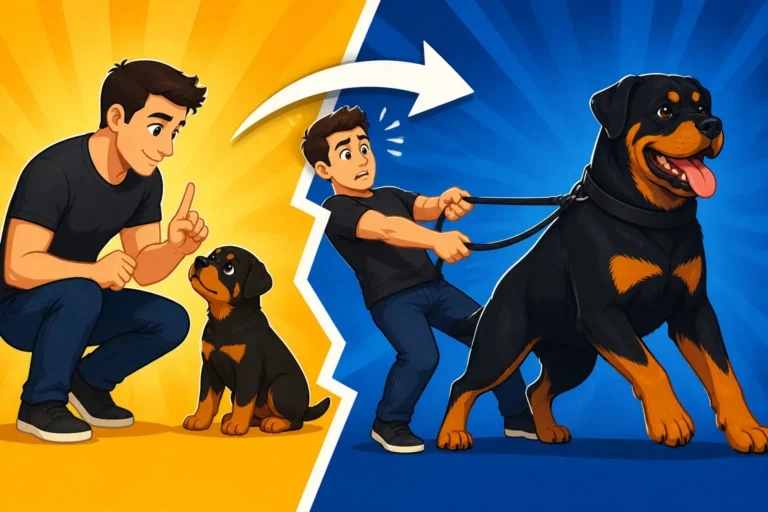
The struggle of walking a strong, enthusiastic Rottweiler can feel like a daily wrestling match, especially when they decide to pull. You've probably heard all sorts of advice, some of it conflicting, about how to manage a big dog on a leash, and the topic of prong collars often comes up with a storm of opinions. This guide is going to walk you through what prong collars are, why they generate so much debate among dog owners and trainers, and help you understand the different perspectives so you can make an informed decision for your own beloved Rottweiler.
Understanding the Prong Collar: What It Is and Why It Sparks Debate
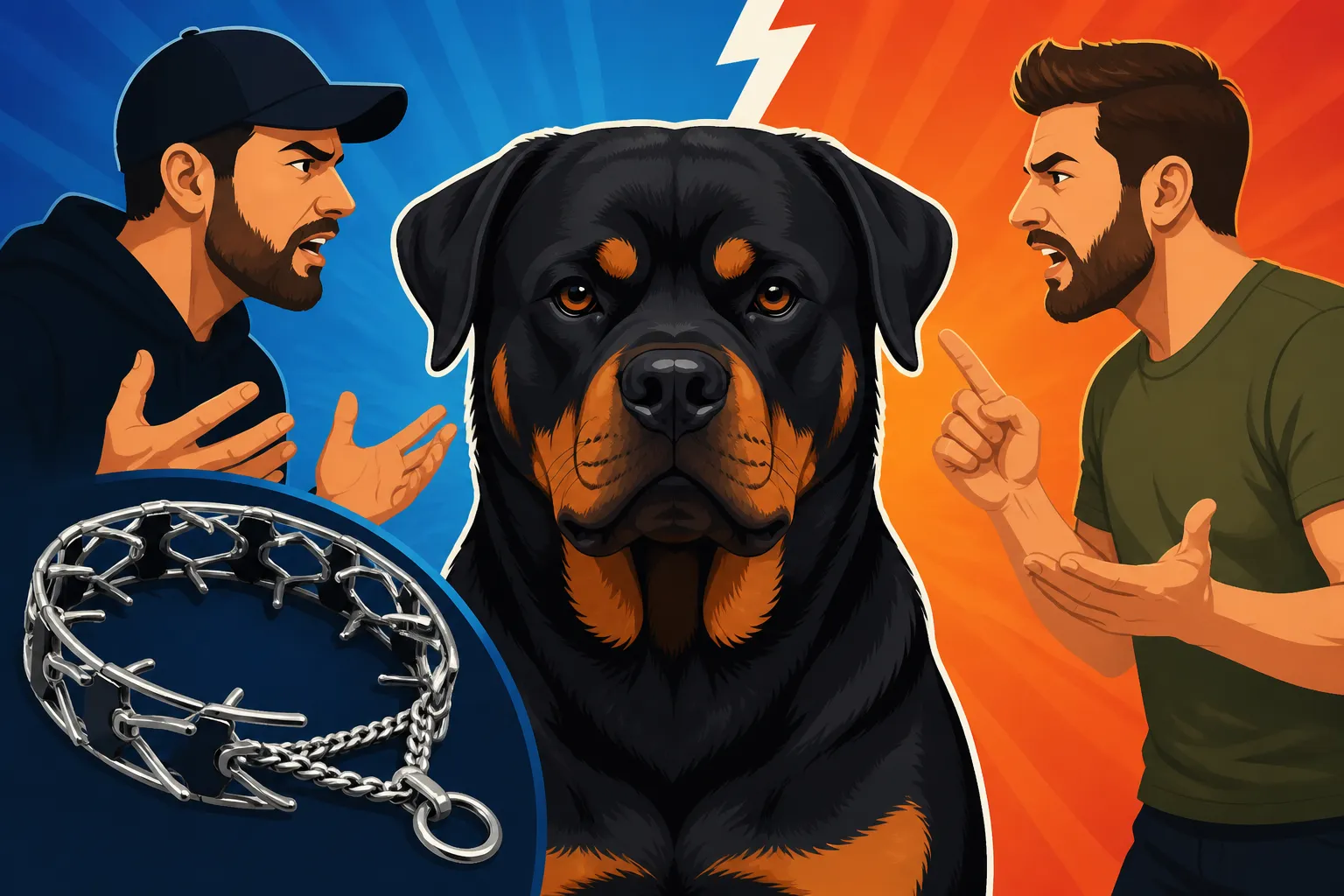
The moment you mention a prong collar, you can almost hear the collective gasp from one side and the fervent defense from the other. It's truly one of the most polarizing pieces of dog training equipment out there. For many, the sight of the metal prongs is enough to label it cruel, while for others, it's seen as a vital tool for safely managing a powerful breed like a Rottweiler. This isn't a simple black-and-white issue, and understanding why it causes such strong reactions is the first step.
A prong collar, sometimes called a "pinch collar," is a type of training collar made of metal links, each with a set of blunt, inward-facing prongs. These prongs are designed to "pinch" the skin around the dog's neck when tension is applied to the leash. Unlike a choke chain which applies pressure all around the neck and can restrict airflow, a properly fitted prong collar is meant to distribute pressure more evenly around the neck, mimicking a mother dog's correction or the bite of another dog. The debate often centers on whether this "correction" is humane or necessary.
The Mechanics of a Prong Collar
When you first see a prong collar, the design can be quite intimidating. Those metal prongs look sharp, don't they? But in reality, they're typically blunt-tipped, and when the collar is properly fitted, they don't actually puncture the skin. Instead, when the leash is tightened, the prongs create a uniform pressure around the neck. Think of it less like a single point of pain and more like a distributed squeeze. The goal, according to its proponents, is to create an unpleasant sensation that interrupts unwanted behaviors, particularly pulling on the leash.
The collar is designed to sit high on the dog's neck, right behind the ears and jawline, which is a more sensitive area. This placement allows for precise communication. A quick, sharp tug from the handler is meant to deliver a brief, clear correction, which then immediately releases when the pressure is gone. This instant on-and-off feedback is what trainers who use them argue makes them effective for teaching Rottweiler Leash Pulling at Adult Weight to walk politely. They believe it gives the dog a very clear understanding of what action (pulling) causes the unpleasant sensation and what action (loose leash) makes it stop.
The "Pinch" Versus "Pressure" Argument
Here's where a lot of the argument gets heated. Critics often describe the action of a prong collar as a "pinch" that causes pain, evoking images of a torture device. And yes, if used incorrectly or fitted improperly, it certainly can cause pain, discomfort, and even injury. If it's too loose, the collar can slide down, losing its intended function and potentially causing uneven pressure or the prongs to dig in. If it's too tight, it can cause constant pressure, leading to fear or aggression rather than learning.
On the other hand, proponents argue that a properly used prong collar applies pressure, not a cruel pinch. They compare it to the momentary pressure a dominant dog might apply with its mouth to correct a subordinate, or how a mother dog might nip a unruly puppy's neck. The idea is to create a discomfort that acts as a strong deterrent, a clear signal that the dog needs to change its behavior. They emphasize that the handler's skill is paramount – it's not about constant tension, but about swift, precise, and immediate corrections followed by release. The dog learns that they control the pressure through their actions. However, whether this distinction truly removes the element of pain or fear is a central point of disagreement.
Arguments for Using a Prong Collar with a Rottweiler
Let's be real: Rottweilers are big, strong dogs. A fully grown male can easily weigh over 100 pounds, and a female isn't far behind. When a dog of that size decides to pull, it's not just annoying; it can be dangerous for both the handler and the dog. This is often where the argument for prong collars comes in.
Many Rottweiler owners find themselves desperate for a solution to their dog's pulling, especially if they're not a particularly large or strong person themselves. Imagine trying to walk a 120-pound Rottweiler who suddenly lunges at a squirrel or another dog. It's a recipe for a pulled shoulder, a fall, or losing control completely. For these situations, some trainers and owners advocate for prong collars as a safety and communication tool that, when used correctly, can transform a chaotic walk into a controlled and enjoyable experience.
Managing a Powerful Breed Safely
The primary argument for using a prong collar with a Rottweiler often boils down to control and safety. A Rottweiler’s sheer strength can be overwhelming. Even if you're a strong individual, a sudden lunge or pull can throw you off balance. For smaller or elderly handlers, or those with physical limitations, managing a powerful Rottweiler on a standard flat collar or even some harnesses can be incredibly challenging, even impossible. Walking a Rottweiler Safely as a Smaller Person is a legitimate concern.
Proponents of prong collars suggest that they provide a level of control that allows handlers to safely manage their dogs, preventing dangerous situations like pulling into traffic, knocking over children, or engaging in unwanted interactions with other dogs. The collar's design means that even a relatively light correction can be clearly felt by the dog, allowing the handler to guide them effectively without having to use excessive physical force or be dragged down the street. It’s seen as a way to "level the playing field" between a strong dog and a human, ensuring the human remains in control.
Clearer Communication for Strong-Willed Dogs
Another common argument is that prong collars offer clearer and more immediate communication than other tools, especially for dogs who seem "stubborn" or easily distracted. Rottweilers are known for their strong will and intelligence, and sometimes, a verbal correction or a gentle tug on a flat collar simply doesn't register with them amidst high distractions. This can lead to frustration for both dog and owner.
Trainers who favor prong collars believe that the distinct pressure provides a clearer, undeniable signal to the dog that their current behavior is not desired. Because the pressure is immediately released when the dog responds correctly (e.g., stops pulling), the dog quickly learns to associate a loose leash with comfort and the absence of pressure. This clear consequence-and-reward system, they argue, can accelerate the learning process for behaviors like loose-leash walking, heel, and even emergency recall. They see it not as punishment, but as a teaching aid that helps the dog understand boundaries and expectations more quickly, leading to a more harmonious relationship in the long run. The idea is to establish consistent communication and control, which is essential for Training a Rottweiler Before It Outweighs You.
The Counterarguments: Risks and Ethical Concerns
While some see prong collars as a necessary tool, many others view them as unethical, potentially harmful, and counterproductive to building a strong, trust-based relationship with a dog. The concerns aren't just about immediate pain, but also about the long-term psychological and behavioral impact on the dog.
For many owners, the very idea of inflicting discomfort on their beloved companion goes against their philosophy of dog ownership. They believe that training should always be positive, trust-building, and free from fear or pain. When you consider the deep bond we share with our Rottweilers, introducing a tool that causes discomfort can feel like a betrayal of that trust. The debate often centers on whether the perceived benefits of control outweigh the potential for physical and emotional harm.
Potential for Physical and Psychological Harm
One of the most significant concerns with prong collars is the potential for physical injury. While the prongs are blunt, improper fit, prolonged tension, or harsh corrections can cause damage. This includes skin abrasions, bruising, tracheal damage (though less likely than with a choke chain if fitted correctly), esophageal damage, and even thyroid issues due to pressure on the neck. Imagine a Rottweiler lunging suddenly with a prong collar on – the abrupt jolt could cause whiplash or other neck injuries, especially in a dog with a robust build.
Beyond physical harm, there's the psychological impact. Critics argue that using pain or discomfort as a primary training method can instill fear and anxiety in dogs. A dog that is constantly anticipating a correction might become stressed, withdrawn, or even reactive. Instead of learning what to do, they might only learn what not to do out of fear of punishment. This can lead to a dog that performs behaviors out of compulsion rather than understanding or willingness. Moreover, if the dog associates the correction with something in its environment (another dog, a child, a loud noise), it could develop negative associations and become aggressive or fearful towards those stimuli. This can lead to Rottweiler Behavior Problems That Start Small and escalate.
The Impact on Trust and the Human-Dog Bond
For many, the most compelling argument against prong collars is their potential to erode the trusting relationship between a dog and its owner. Training based on physical correction or aversive tools can damage the very bond you're trying to build. When a dog associates you with discomfort, it can make them less likely to engage, less confident, and less willing to offer behaviors voluntarily. Instead of seeing you as a safe, guiding presence, they might see you as a source of unpredictable discomfort.
Positive reinforcement trainers argue that a dog learns best when it feels safe, motivated, and engaged. If a dog is constantly worried about a "correction," its ability to learn and problem-solve can be stifled. Building a strong bond with your Rottweiler relies on clear, positive communication and mutual respect. Introducing a tool that relies on aversive pressure can create a wedge in that relationship, making your dog less likely to trust your guidance, particularly in stressful situations. This can make activities like Rottweiler Recall Training That Holds much harder to achieve reliably, as the dog might be less inclined to return to a handler associated with discomfort. Many trainers advocate for Balanced Versus Positive Training for Rottweilers, emphasizing the trust component.
Beyond the Prong: Effective Alternatives and Training Approaches
Given the strong feelings and potential risks associated with prong collars, it's natural to wonder if there are other, more positive ways to achieve the same level of control and good leash manners with a powerful Rottweiler. The good news is, absolutely there are! Many trainers and owners successfully navigate the challenges of a strong dog without ever resorting to aversive tools. The key lies in understanding canine behavior, consistent positive training, and choosing the right equipment for your individual dog.
The goal should always be to teach your Rottweiler what you want them to do, rather than punishing them for what they shouldn't. This approach builds confidence, strengthens your bond, and often leads to more reliable and enthusiastic cooperation from your dog. Remember, a well-trained Rottweiler is a joy to be around, and that training doesn't have to involve fear.
Harnesses and Head Halters as Alternatives
There are several effective tools designed to give you more control over a pulling Rottweiler without using aversive pressure on their neck.
- Front-Clip Harnesses: These harnesses have a leash attachment point on the dog's chest, rather than on their back. When your Rottweiler pulls, the leash redirects them gently to the side, turning their body back towards you. This makes it very difficult for them to pull effectively and encourages them to walk by your side. Brands like Easy Walk or Freedom Harness are popular and can be found on platforms like Amazon in sizes appropriate for a large Rottweiler. They distribute pressure safely across the chest and shoulders, without putting strain on the neck. You can learn more about finding the right fit in Harnesses and Head Halters Sized for a Rottweiler.
- Head Halters (Haltis or Gentle Leaders): These devices fit over your dog's muzzle and around the back of their head, much like a horse halter. The leash attaches under the chin. When your Rottweiler pulls, the head halter gently turns their head to the side, which naturally stops them from pulling forward. Since "where the head goes, the body follows," this gives you excellent steering control. Many dogs initially resist them, but with patient, positive introduction (associating it with treats and walks), most adapt well. They are especially useful for very strong pullers or for handlers who need maximum control.
Both these options provide a physical advantage in managing a strong dog without resorting to corrections that cause pain or fear. They allow you to maintain control while still teaching your dog to walk nicely through positive reinforcement.
Positive Reinforcement and Relationship-Based Training
The most effective and humane approach to training a Rottweiler, or any dog, is through positive reinforcement and building a strong, trust-based relationship. This means rewarding desired behaviors rather than punishing unwanted ones.
Here's how it works in practice for leash manners:
- Reward the Loose Leash: Every single time your Rottweiler walks with a loose leash, even for a step, mark that moment with a verbal cue like "Yes!" or a clicker, and immediately reward them with a high-value treat. This teaches them that walking calmly by your side is incredibly rewarding.
- Stop When They Pull: If your Rottweiler pulls, simply stop walking. Stand still, like a tree. Don't move forward again until the leash goes slack. The moment it slackens, even a little, reward them and start walking again. Your dog quickly learns that pulling gets them nowhere, but a loose leash keeps the walk going and earns treats. This is a powerful, non-aversive way to teach Teaching a Rottweiler Not to Pull at 110 Pounds.
- Practice in Low-Distraction Environments: Start training in a quiet area, like your backyard, before moving to more stimulating places. Gradually increase distractions as your dog masters the skill.
- Engage and Interact: Make yourself more interesting than the environment! Carry tasty treats, play short training games, and vary your pace. Keep your Rottweiler focused on you. Companies like BAXTER & Bella offer online training programs that lean heavily on positive, relationship-based methods, which can be invaluable for Rottweiler owners.
- Seek Professional Help: If you're struggling, don't hesitate to find a certified professional dog trainer who uses positive reinforcement methods. A good trainer can assess your specific situation and provide tailored guidance. Look for trainers who are certified by organizations emphasizing humane, science-based methods. Finding a Rottweiler-Experienced Trainer Near You is crucial for effective progress. Investing in good training early can prevent many Rottweiler Behavior Problems That Start Small and negate the perceived need for aversive tools. You might be surprised at What a Private Rottweiler Trainer Charges but the investment in a trusting, well-behaved companion is priceless.
| Collar Type | How it Works | Pros | Cons | Suitable for Rottweilers? |
|---|---|---|---|---|
| Flat Collar | Leash attaches to a ring on a standard neck collar | Comfortable, everyday wear, holds ID tags | No control over pulling for strong dogs, can injure trachea if pulled | Yes, for ID/tags, but poor for pulling control |
| Martingale Collar | Tightens slightly when pulled, prevents slipping | Prevents escape, gentle correction without choking | Still applies neck pressure, not ideal for heavy pulling | Good for escape artists, better than flat for some control |
| Front-Clip Harness | Leash clips at the chest, redirects pulling | Reduces pulling, comfortable, no neck pressure, encourages focus | Some dogs might dislike the fit, can tangle legs if too loose | Highly Recommended for humane pulling control |
| Head Halter | Fits over muzzle and head, turns head to redirect | Excellent control over head and body, very effective for strong pullers | Requires positive introduction, some dogs resist the muzzle fit | Highly Recommended for maximum control, needs patient intro |
| Prong Collar | Inward-facing prongs apply pressure evenly | Provides strong, clear correction, can be effective for severe pulling | Potential for physical/psychological harm, trust erosion, controversial | Use with extreme caution, only by experienced handlers/trainers |
Ultimately, the choice of training tools is a personal one. However, understanding the full scope of their mechanics, potential benefits, and very real drawbacks, especially for a sensitive and intelligent breed like the Rottweiler, is paramount. My hope is that this deep dive has given you a clearer picture to weigh those arguments for yourself and your furry family member.
Disclaimer
This article is for general informational purposes only and does not constitute professional advice. Laws, prices and regulations vary by location and change over time. Consult a qualified professional for guidance on your specific situation.