Rottweiler Recall Training That Holds
There's nothing quite like the heart-stopping panic of calling your magnificent Rottweiler, only to watch them bolt in the opposite direction, nose glued to an irresistible scent or chasing after a squirrel they've just spotted. It's not just embarrassing; it's genuinely terrifying, as you imagine all the worst-case scenarios from traffic to confrontation. Building a rock-solid recall isn't just a convenience for Rottweiler owners; it's a non-negotiable safety measure that allows your powerful companion the freedom they deserve while keeping them out of harm's way. This comprehensive guide will walk you through the nuances of training a Rottweiler to come when called, transforming those moments of dread into confident, joyful interactions.
Understanding the Rottweiler Mindset for Recall
Before we dive into the "how-to," it's crucial to understand the "why" behind your Rottweiler's sometimes selective hearing. These aren't your typical golden retrievers who live to please their human; Rottweilers have a rich history that has shaped their unique approach to the world.
The Rottweiler's Instincts and Independence
Rottweilers were originally bred for serious work – herding cattle, pulling carts, and guarding their butcher masters' money. This lineage means they are inherently intelligent, confident, and possess a strong sense of independence. They're thinkers, not just followers. When you call your Rottweiler, they aren't always asking, "How can I make my human happy?" Instead, they might be weighing, "What's in it for me?" or, "Is what my human wants more important than this fascinating smell/sight/sound?" This isn't stubbornness, but rather a strong, self-assured nature rooted in their historical purpose.
Consider their ancestors, the drover dogs behind the Rottweiler, who were responsible for driving herds of powerful livestock. These dogs needed to make decisions and act independently to control animals far larger than themselves. That deeply ingrained instinct for self-reliance means your Rottweiler isn't always looking for your immediate direction; sometimes, they're assessing the situation and deciding the best course of action for themselves. This doesn't mean they're untrainable, but it does mean you need to make coming to you the most compelling option available.
Why a Rottweiler Might Ignore Your Call
The world is full of incredible distractions for a Rottweiler. That faint scent of a rabbit across the field? Absolutely intoxicating. The rustle of leaves that might be a squirrel? Irresistible. The distant bark of another dog? A conversation waiting to happen. For a dog with powerful senses and a strong prey drive, these external stimuli can be far more rewarding than a simple "Come!" from you, especially if your recall hasn't been consistently reinforced as the most fantastic thing ever.
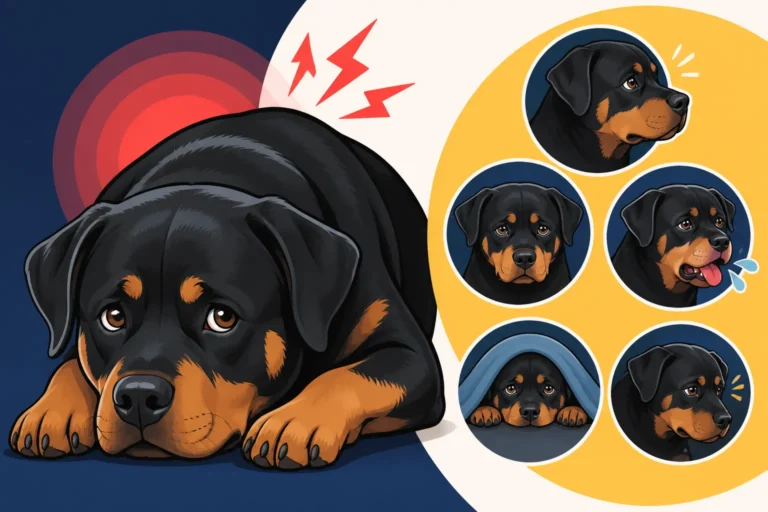
Furthermore, Rottweilers, especially during their adolescent phases, can develop what we lovingly refer to as "selective hearing." Just like human teenagers, a Rottweiler puppy can hit a point, typically between 8 and 18 months, where they start pushing boundaries and testing limits. This can manifest as suddenly "forgetting" commands they once knew perfectly. You might find yourself grappling with Rottweiler Adolescence and Sudden Testing, where your once-eager pup suddenly decides that exploring the far reaches of the park is more appealing than returning to your side. Their size and strength at this stage mean that when they do decide to ignore you, there's little you can do physically to stop them, making reliable recall even more critical.
Building the Foundation: Early Training and Trust
Reliable recall isn't a quick fix; it's a relationship built on trust, consistency, and making yourself the most exciting thing in your dog's universe. It starts small, in controlled environments, and builds up gradually.
Starting Recall Indoors, Distraction-Free
The very first steps to recall mastery happen in the quietest, most predictable place imaginable: your living room. Eliminate all distractions – turn off the TV, put away your phone, and make sure no other pets or people are vying for attention. The goal here is to establish a strong, positive association with your recall cue. Choose a word or phrase (e.g., "Come!", "Here!", "Touch!") and stick to it religiously.
Start by having your Rottweiler just a few feet away. Say your recall cue enthusiastically and immediately reward them with a pea-sized piece of their absolute favorite, high-value treat (think cooked chicken, cheese, or hot dogs) the moment they reach you. Make it a party! Praise them lavishly, get excited, and perhaps even offer a quick game of tug or a belly rub. Repeat this many, many times, varying the distance and location slightly within your home. The key is to make coming to you the most rewarding and fun thing they can possibly do. Resources like BAXTER & Bella offer fantastic online puppy programs that delve into these foundational recall games, guiding you through making this early training truly engaging. Remember, every successful recall builds confidence and reinforces the positive habit.
The Importance of a Long Line
Once your Rottweiler is reliably coming to you indoors, it's time to take the training outside. However, immediately letting a Rottweiler off-leash in an unfenced area is a recipe for disaster. This is where a long line becomes your best friend and an indispensable safety tool. A long line is essentially a very long leash, typically 15 to 30 feet, that allows your dog to explore and feel "off-leash" freedom while you still maintain control and the ability to gently guide them back to you if they hesitate or get distracted.
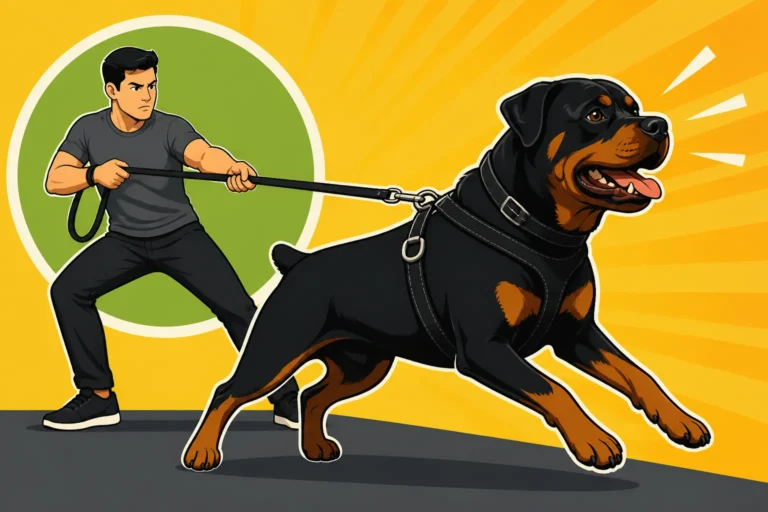
For a powerful breed like a Rottweiler, you'll need The Long Line Strength a Rottweiler Needs. Look for durable, robust materials like nylon or biothane, with strong hardware that won't snap under sudden pressure. Attach it to a well-fitting harness, not their collar, to prevent neck injury if they hit the end of the line. Start in a securely fenced area like your backyard, or a very quiet park with minimal distractions. Let your Rottweiler roam the length of the line, and then randomly call them. If they ignore you, gently reel them in, praising and rewarding them as they approach. This teaches them that "Come!" means returning to you, even when they'd rather be sniffing that interesting bush. You can easily find a good selection of durable long lines suitable for a Rottweiler's size on Amazon, often with various lengths and materials to choose from.
Making Recall a Party, Not a Punishment
This point cannot be stressed enough: never punish your Rottweiler for coming to you. Even if it took three calls, five minutes, and you're steaming mad, the moment their paws hit your side, the party must begin. If your dog associates coming to you with being scolded, having their fun ended (e.g., immediately being put back on leash and leaving the park), or anything negative, they will quickly learn to avoid your call.
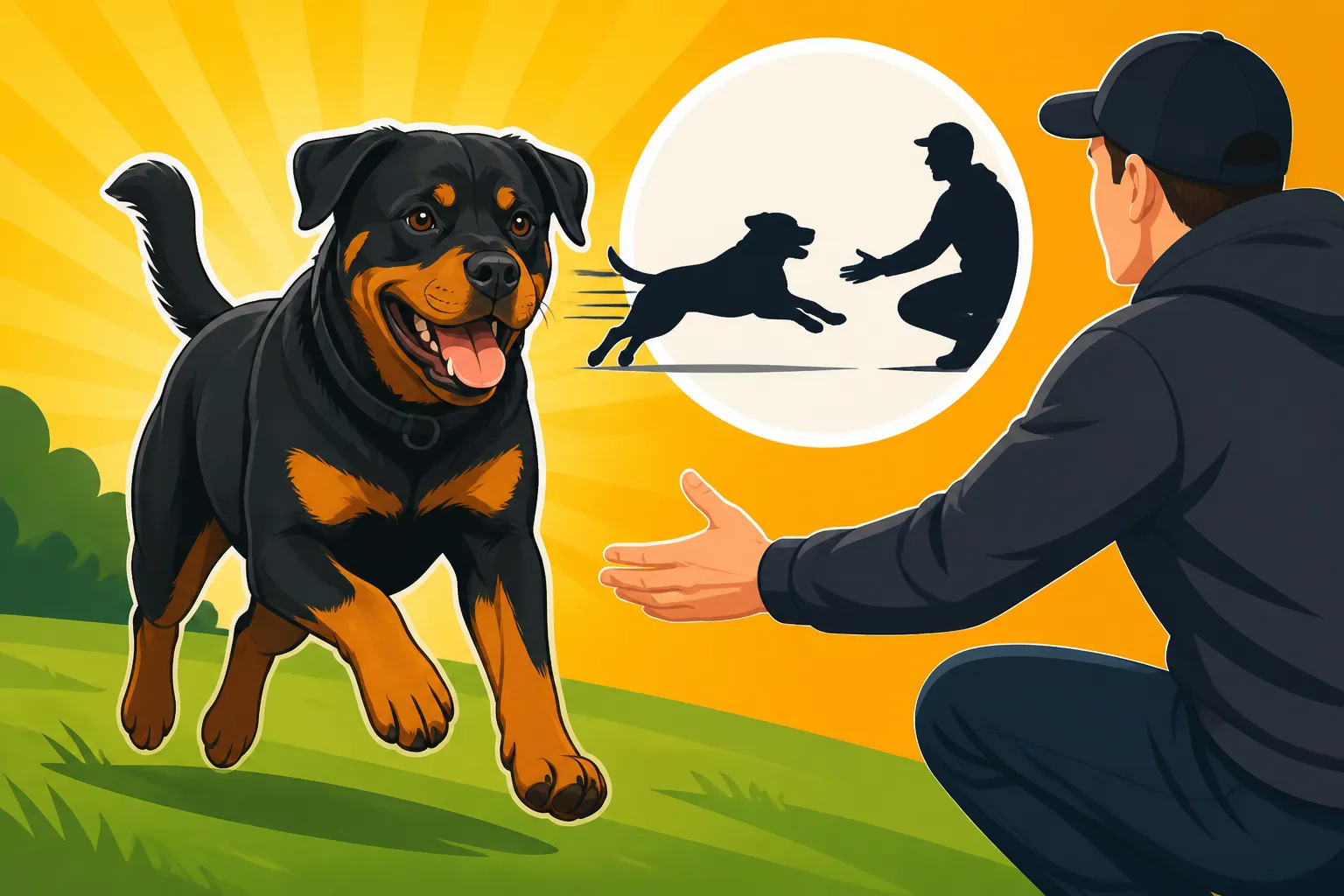
Instead, when they come, make it the most joyful experience possible. Use a happy, high-pitched voice, give them those super-special treats, and engage in a quick game. Then, let them go explore again if appropriate. This teaches them that coming to you doesn't mean the end of fun; it means a brief, incredibly rewarding interlude before more fun. Avoid chasing your Rottweiler if they don't come. Chasing almost always turns into a fun game for the dog and reinforces the idea that running away from you is exciting. Instead, turn and run away from them, often squatting down, making happy noises, and pretending to have the best time ever. This often triggers their natural instinct to follow and investigate.
Progressing to Real-World Scenarios
Once your Rottweiler has a solid recall on the long line in low-distraction environments, it's time to slowly increase the challenge. This is where your consistency and patience truly pay off.
Gradually Increasing Distractions
The goal is to proof your recall command, meaning your Rottweiler will respond reliably no matter the environment or distractions. This happens in stages:
- Fenced Area with Mild Distractions: Start in a large, secure, fenced area where you can still use your long line. Introduce mild distractions, like another person quietly walking by at a distance, or a few toys scattered around. Call your Rottweiler, reward success, and if they hesitate, use the long line to guide them.
- Quiet Public Park: Move to a quiet public park during off-peak hours. Keep the long line on. Here, you'll encounter new smells, sounds, and possibly distant dogs or people. Work at a distance where your dog can still succeed. If they fail, reduce the level of distraction.
- Busy Park or Trail: As their recall strengthens, gradually move to busier environments. Always be aware of your surroundings and only give the "off-leash" freedom (even on a long line) that your dog can handle. The key is to set your Rottweiler up for success, not failure. If they're too distracted to respond, you've moved too fast.
Remember the rule of three D's: Distance, Duration, and Distraction. Increase only one of these at a time. For example, if you increase the distance your dog is from you, keep the distractions low. If you're introducing a new, higher level of distraction, keep the distance short.
Emergency Recall: The Life-Saving Cue
Beyond your everyday "Come!", it's wise to establish an "emergency recall" cue. This is a special, ultra-high-value command that you only use in truly critical situations and never for routine practice. The emergency cue should be unique, perhaps a whistle, a double-clap, or a specific word like "Quick!" or "Crisis!".
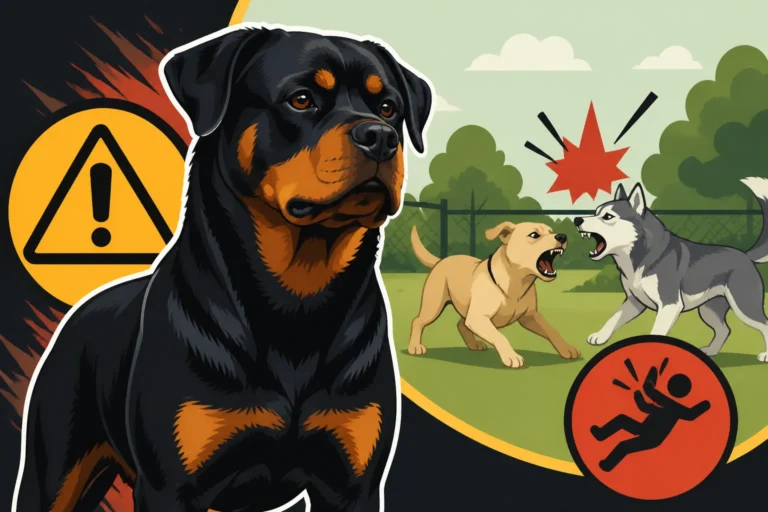
To train it, find the absolute highest-value treat your Rottweiler has ever encountered – perhaps an entire piece of grilled steak, a whole hot dog, or an incredibly enticing stuffed Kong. Practice this cue a few times a week, when there are no distractions, giving the treat of a lifetime every single time they respond instantly. The idea is that this cue becomes so strongly associated with an enormous payoff that it overrides all other distractions in a genuine emergency. Think of scenarios like your Rottweiler heading towards a busy road, running towards a potentially aggressive dog, or seeing a child fall down. In these moments, you need an instant, no-fail response. An emergency recall can literally save your Rottweiler's life if they are prone to issues like Rottweiler Lunging at Dogs Across the Street or are about to dash into an unsafe situation.
Understanding Environmental Lures
Rottweilers, with their working dog heritage and strong prey drive, are acutely aware of their environment. They might notice an open gate before you do, catch the scent of deer long before you see them, or be drawn to a dog barking exuberantly in the distance. These are "environmental lures," and they can make recall incredibly challenging.
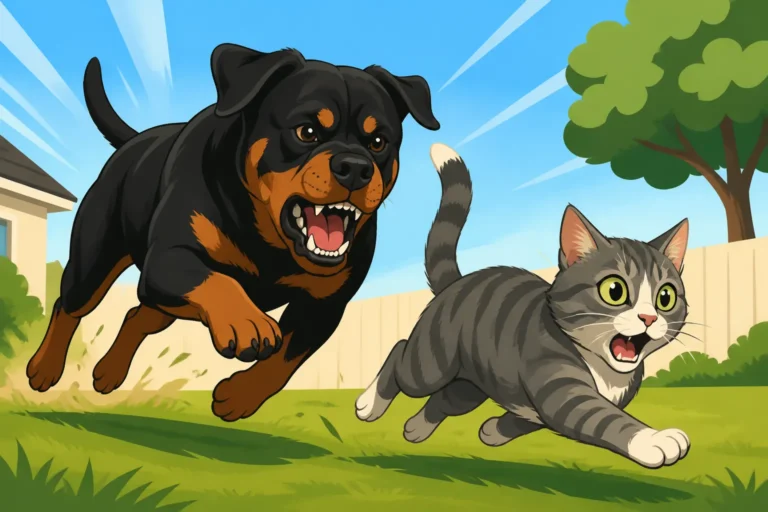
It's vital for you to be proactive. Scan your surroundings constantly. If you see a potential lure (a jogger approaching, a squirrel on a tree, an interesting dog entering the park), pre-emptively call your Rottweiler before they've become fully fixated. This allows you to reward them for choosing you over the distraction. Also, understand their natural instincts. Their herding background can sometimes lead to a desire to chase anything that moves quickly. Even small, quick animals can trigger their Rottweiler Prey Drive Around Cats or other wildlife, so constant vigilance and a reliable recall are paramount to keeping them safe and respectful of their surroundings.
Common Recall Challenges and Troubleshooting
Even with the best intentions and consistent training, you're bound to hit some snags. Rottweilers are smart, and they'll test your limits. Understanding common problems and how to troubleshoot them is key to long-term success.
When Your Rottweiler Pretends Not to Hear You
Ah, the infamous "selective hearing." Your Rottweiler is looking right at you, ears twitching, and then turns their head as if a sudden gust of wind carried your voice away. This usually happens when the perceived reward of staying away (e.g., sniffing something amazing) outweighs the perceived reward of coming to you.
Troubleshooting steps:
- Elevate the Reward: Are your treats truly high-value enough? If you're using kibble when they're in a highly distracting environment, they might literally not "hear" you over the call of the wild. Pull out the cheese or hot dogs.
- Increase Enthusiasm: Your tone of voice matters. Make your recall cue sound like the most exciting invitation ever. Get low, clap your hands, use an excited, high-pitched voice.
- Go Back a Step: If your Rottweiler is pretending not to hear you in a specific environment, it means that environment is too distracting for their current level of training. Go back to a less distracting area where they can succeed, and build up again more slowly.
- Add Hand Signals: Many dogs respond well to visual cues. Teach a hand signal alongside your verbal cue. A hand clap, a sweeping motion towards you, or tapping your leg can be very effective, especially if their ears are tuned out to other sounds.
The Rottweiler That Runs Away When Called
This is incredibly frustrating and often stems from a negative association with the recall command. If "Come!" consistently means the end of fun (leashing up and going home), a trip to the vet, or a scolding, your Rottweiler will quickly learn to avoid it.
How to fix it:
- Random Recalls: Integrate random, pointless recalls into your play. Call your Rottweiler, reward them lavishly, and then immediately tell them "Okay!" or "Go play!" and release them. Do this several times during an outing. This teaches them that coming to you doesn't always mean the end of their freedom; sometimes, it just means a quick, fun pit stop for treats and praise.
- Never Call to Punish: This is absolute. If your dog has done something wrong, walk over to them and address the issue. Never call them to you and then punish them.
- Make Coming Back a Jackpot: When they do come, especially if they were hesitant, make it the biggest party ever. Lots of treats, praise, petting, and maybe even a quick game. You want them to feel like they've hit the jackpot.
- Avoid the Chase: As mentioned, chasing reinforces the game. If your Rottweiler runs away, turn your back, drop to one knee, and get excited. Use funny noises, pat your legs, and see if curiosity (and the lure of a party) draws them back.
Maintaining Recall Over Time
Recall isn't a skill you train once and then forget. It's a perishable skill that needs regular maintenance, just like any other advanced training.
- Consistent Reinforcement: Continue to reward successful recalls, even after your Rottweiler is "reliable." You can transition from food rewards to praise or a quick game of tug, but always make it positive. Intermittent reinforcement (not knowing when the jackpot treat will come) can actually keep the behavior strong.
- Practice in Varied Environments: Don't just practice in the same park every time. Visit new locations, introducing different smells, sights, and sounds. This keeps the recall proofed in a wide range of situations.
- Short, Fun Sessions: Integrate short recall games into your daily walks or play sessions. A few recalls here and there keep the skill sharp and your dog engaged. Remember, a Rottweiler needs continuous mental stimulation, and recall exercises can be a fantastic way to provide it.
- Be a Consistent Leader: A Rottweiler thrives on clear, consistent leadership. If your dog respects your rules and boundaries in other areas of life, they are more likely to listen to your recall command.
Tools and Resources for Reliable Recall
Having the right equipment and knowing when to seek professional guidance can make all the difference in your recall training journey.
The Right Gear for Recall Training
Beyond high-value treats and your enthusiastic voice, a few key pieces of equipment can significantly aid your Rottweiler's recall training:
- Long Lines: We've already discussed these, but it bears repeating. A good quality, strong long line is non-negotiable for practicing recall safely in open areas. Ensure it's the appropriate length for your training space and your dog's size. For a Rottweiler, you'll need The Long Line Strength a Rottweiler Needs – something that can withstand their power and won't fray or break easily. Look for options on Amazon, which offers a wide range of lengths (15ft, 20ft, 30ft, 50ft) and materials like nylon or biothane, which is fantastic for wet conditions as it doesn't absorb water or get muddy.
- Harness: Always attach your long line to a well-fitting, comfortable harness, not a collar. This prevents potential neck injuries if your Rottweiler suddenly runs to the end of the line. A front-clip harness can also offer a bit more control if your dog tends to pull. You'll want to ensure you have Harness Hardware That Holds a Pulling Rottweiler, as their sheer power can easily break weaker clasps.
- Treat Pouch: A convenient treat pouch that clips to your waist is invaluable. It keeps your high-value rewards easily accessible, allowing for immediate reinforcement the moment your Rottweiler reaches you. Delayed rewards lose their impact.
- Whistle: For some dogs, a whistle can be a highly effective recall cue, especially over long distances or in noisy environments. The sound carries well and is consistent, unlike a human voice which can vary.
Professional Help and Advanced Training
Sometimes, despite your best efforts, you might feel stuck or face challenges that are beyond your current expertise. This is perfectly normal, especially with a powerful and intelligent breed like a Rottweiler. Don't hesitate to seek professional help.
- Certified Professional Dog Trainer (CPDT-KA): A qualified trainer can assess your Rottweiler's individual temperament, identify any specific challenges, and tailor a training plan for you. They can teach you proper timing, handling techniques, and how to effectively manage distractions. Look for trainers who have experience with large, strong working breeds. Finding a skilled professional can greatly accelerate your progress. If you're struggling, seeking out Finding a Rottweiler-Experienced Trainer Near You is a wise decision.
- Online Training Platforms: Many reputable online platforms offer structured courses and even personalized coaching. Companies like BAXTER & Bella, for example, provide comprehensive training programs that cover everything from basic obedience to advanced recall, offering flexibility and support from experienced trainers. These can be a great resource for learning new techniques or getting troubleshooting advice from experts.
Games That Reinforce Recall
Training doesn't have to be all serious work. Incorporating fun games into your routine can strengthen your Rottweiler's recall while building a stronger bond between you.
- "Hide and Seek": This is a fantastic game, especially in a fenced yard or even indoors. Have a family member hold your Rottweiler while you go hide. Then, call your dog excitedly. When they find you, it's a huge jackpot party! This game teaches them to actively seek you out and makes coming to you incredibly rewarding. This directly reinforces Rottweiler Impulse Control Games as they have to wait for the release.
- "Round Robin" Recall: If you have multiple family members, this is a great way to practice. Stand in a triangle or circle, and take turns calling your Rottweiler. Each person rewards lavishly when the dog comes. This helps generalize the recall command so your Rottweiler responds to anyone in the family.
- "Ping Pong": With two people, stand some distance apart (start short, then increase). One person calls the dog, rewards, and then the other person immediately calls them. It's a fast-paced, high-energy way to practice multiple recalls in a short amount of time, making it incredibly fun for the dog.
- Treat Scatters: While your dog is sniffing or mildly distracted, toss a handful of high-value treats a short distance away. As they're busy sniffing, call them and then reward them for coming to you, away from the scatter. This teaches them that coming to you is even better than finding treats on the ground.
By understanding your Rottweiler's unique temperament, building a strong foundation of trust and positive reinforcement, gradually introducing real-world distractions, and utilizing the right tools and resources, you can achieve that coveted, reliable recall. It takes time, patience, and consistency, but the freedom and safety it offers both you and your magnificent companion are immeasurable.
Disclaimer
This article is for general informational purposes only and does not constitute professional advice. Laws, prices and regulations vary by location and change over time. Consult a qualified professional for guidance on your specific situation.