Rottweilers on Modern Detection Teams
Many people have a very specific image of a Rottweiler in their minds – a powerful, imposing guard dog, watchful and dedicated to its family. While that image certainly holds a lot of truth, it often overlooks the incredible intelligence, trainability, and nuanced working capabilities of this magnificent breed. This guide is here to shatter some misconceptions and reveal how Rottweilers are not just excelling, but truly thriving, as valuable members of modern detection teams, using their extraordinary noses and unwavering focus for critical tasks.
The Unseen Talents of a Rottweiler for Scent Work
When we think of detection dogs, certain breeds often come to mind first – perhaps a sleek German Shepherd or a happy-go-lucky Labrador. But the Rottweiler, with its quiet confidence and deep connection to its handler, possesses a unique blend of attributes that make it exceptionally well-suited for a variety of scent-based detection roles. It's not just about brute strength; it's about a highly refined set of instincts and a powerful intellect that can be channeled into intricate tasks.
Drive, Focus, and That Powerful Nose
At the heart of a successful detection dog is immense drive, and Rottweilers have it in spades. This isn't always the frantic, high-energy drive seen in some sporting breeds; often, it's a deep, sustained motivation, whether it's for a favorite tug toy, a specific food reward, or simply the satisfaction of completing a task with their beloved human. This intrinsic desire to 'work' and 'find' is absolutely essential. Couple this with their intense focus, a trait sometimes misread as Rottweiler Aloofness and Why It Reads as Cold, and you have a dog that can concentrate on a scent puzzle for extended periods, tuning out distractions that would derail other breeds.
Their noses, of course, are nothing short of remarkable. While we often laud breeds specifically bred for scent, the Rottweiler's olfactory capabilities are incredibly strong, stemming from their heritage as drover dogs, tracking cattle across vast distances and guarding their owners' livelihoods. They needed to be aware of their surroundings, pick up subtle cues, and remain alert. This inherent ability translates beautifully into detection work, where identifying minute traces of an odor is the entire objective. A Rottweiler won't typically 'give up' on a scent puzzle; if the motivation is there, they will persistently work the problem until they find the source, demonstrating a profound problem-solving capacity unique to their nature.
Steadiness Under Pressure and Resilience
Detection work isn't always conducted in pristine, quiet training halls. Often, it involves high-stress, chaotic environments – think disaster zones, busy public spaces, or loud industrial settings. Here, a Rottweiler's natural steadiness and self-assured temperament truly shine. They are not prone to frantic panic or overreaction; instead, they tend to assess situations calmly, relying on their handler's cues and their own inherent stability. This calm confidence allows them to maintain focus on their scenting task even when surrounded by novel sights, sounds, and textures.
Their physical resilience and robust constitution are also massive assets. A detection dog might need to traverse uneven terrain, navigate debris in a collapsed structure, or work for long shifts in varying weather conditions. Rottweilers, being powerful and well-muscled, are built for such demands. They possess the stamina to sustain searches and the physical fortitude to handle the rigors without quickly fatiguing. This combination of mental toughness and physical endurance means they can be deployed in challenging situations where other dogs might struggle, making them highly valuable team members in critical scenarios. Building Adult Rottweiler Fitness Safely is key to ensuring they can meet these physical demands without injury.
Diverse Roles in Modern Detection
The scope of detection work extends far beyond what many people imagine. While their strength and guarding instincts might suggest specific roles, Rottweilers are proving their versatility across an impressive array of scent-based disciplines, often surprising those who hold outdated stereotypes about the breed. They are not just brawn; they are precision instruments when properly trained and motivated.
Explosives and Narcotics Detection
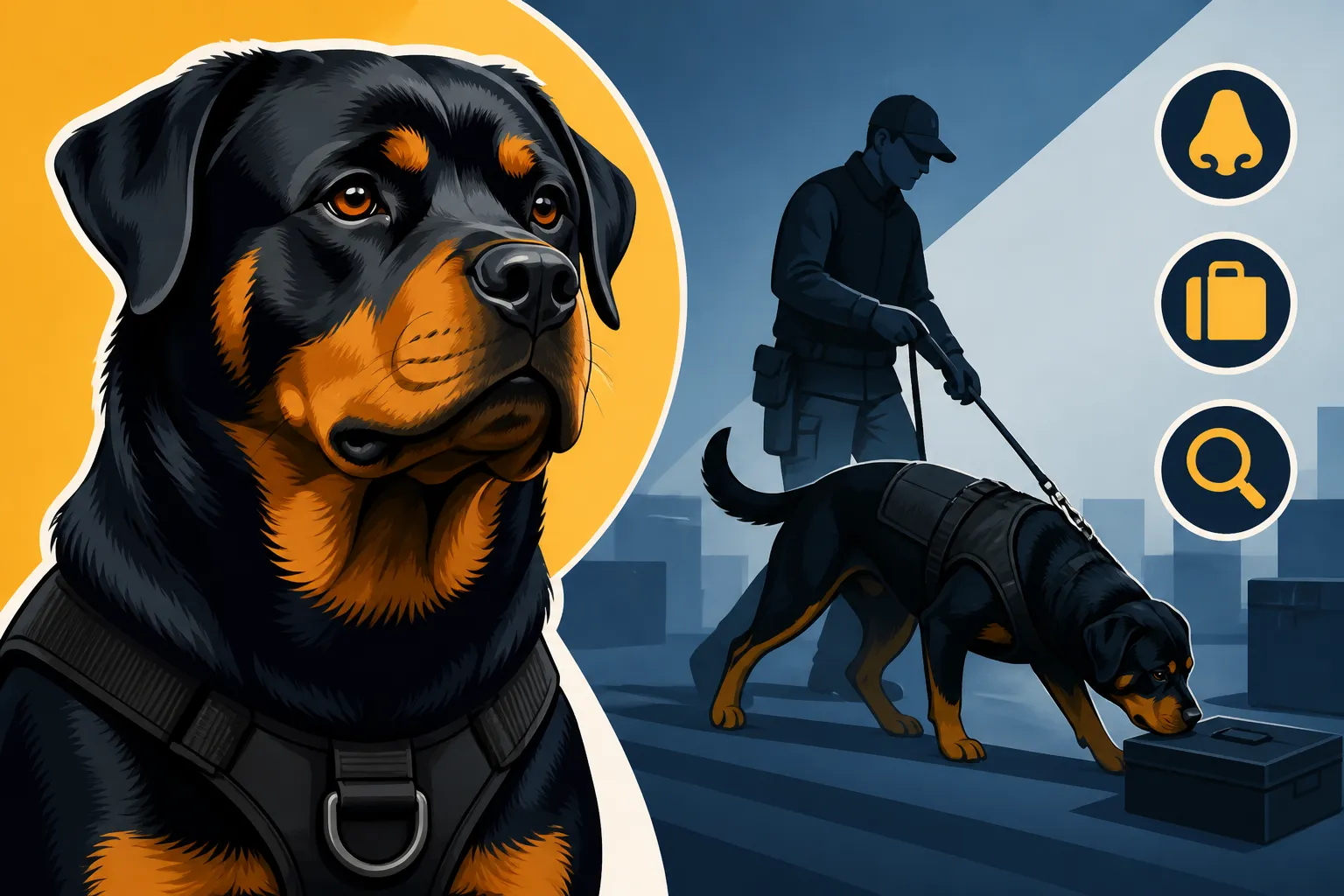
When it comes to sniffing out illicit substances or dangerous materials, precision and an unyielding work ethic are paramount. Rottweilers excel here because their powerful play drive can be harnessed to treat the detection of target odors as the ultimate game. The dog isn't looking for drugs or bombs; it's looking for its favorite toy, which has been "paired" with the scent of the target. This transformation of work into play is a core principle of modern detection training. A skilled handler can teach a Rottweiler to methodically clear an area, indicating with a passive alert (sitting or lying down) when they pinpoint an odor, without disturbing it.
Their ability to maintain focus amidst chaotic environments, like a busy airport terminal or a crowded event space, makes them invaluable. They don't draw undue attention, but they are relentlessly thorough. The stereotype often points to Beagles or Labradors for these roles, but Rottweilers bring an added layer of presence and deterrence simply by their appearance, a secondary benefit often appreciated by security personnel. It's a testament to their adaptability that they perform tasks requiring such delicate discernment, proving that their intelligence is as sharp as their physical presence is commanding.
Search and Rescue and Human Remains Detection
In the grim reality of search and rescue operations, particularly after natural disasters or in cold cases, every second and every accurate find matters. Rottweilers bring several advantages to these profoundly important tasks. Their physical strength and endurance allow them to navigate difficult terrain, from rubble piles to dense wilderness, for extended periods. Their robust paws and sturdy build help them traverse areas that might be too harsh for less substantial breeds.
Furthermore, their calm demeanor is crucial in sensitive situations. When searching for human remains, a dog that is easily flustered or overly boisterous can be a hindrance. A Rottweiler's focused, methodical search pattern and quiet indication are invaluable. They possess an innate protective instinct, but in detection, this is beautifully channeled into finding and alerting, rather than guarding a person. They become the unwavering partner, relentlessly pursuing a scent trail until the job is done, embodying the very best of canine dedication. Rottweiler Jobs From Police Work to Therapy Visits highlights their versatility in public service roles, and search and rescue is a prime example of their dedication.
Newer Frontiers: Medical and Conservation Detection
The world of scent detection is constantly expanding, and Rottweilers are stepping up to meet the demands of truly cutting-edge roles. In medical detection, dogs are being trained to identify the subtle volatile organic compounds (VOCs) associated with various diseases, from different types of cancer to specific medical conditions like impending diabetic crises or even certain bacterial infections. A Rottweiler's keen nose, combined with its high trainability and motivation, makes it an excellent candidate for these highly specialized and life-saving tasks. They can be trained to detect these microscopic scent signatures with incredible accuracy, offering non-invasive early detection methods that are still in their infancy in human medicine.
Similarly, in conservation efforts, Rottweilers are now being used to locate invasive species (like certain plants or insects), detect wildlife scat for population monitoring, or even find poached animal products. Imagine a Rottweiler tracking the elusive scent of a specific endangered species' droppings across vast wilderness, providing vital data for conservationists. These roles require not only an exceptional nose but also resilience, endurance, and the ability to work independently in complex environments, all hallmarks of the Rottweiler breed. It's truly inspiring to see how their innate talents are being applied to protect both human and animal well-being in such innovative ways.
Training and Partnership: Building a Detection Team
The journey to becoming a detection team is a significant commitment, built on a foundation of trust, consistent training, and understanding your Rottweiler's unique drives. It's not a shortcut to an advanced skill; it’s a detailed, step-by-step process that transforms raw canine talent into a highly refined working partnership.
Foundations: Obedience and Motivation
Before any specialized scent work can even begin, a Rottweiler needs a rock-solid foundation in basic obedience. Commands like 'sit,' 'stay,' 'come,' and 'down' aren't just polite manners; they are critical safety controls, especially when a dog might be working off-leash in a potentially hazardous area or needs to be redirected quickly. A dog that is constantly distracted or doesn't reliably respond to its handler cannot perform effective detection work. Resources like online courses, such as those offered by BAXTER & Bella, can be invaluable for establishing these foundational skills, allowing you to work at your own pace from home.
Beyond obedience, understanding your Rottweiler's primary motivators is key. For many, it's a specific toy – a ball, a tug, a squeaky plush. For others, it might be a high-value food reward. This motivator isn't just a treat; it's the ultimate prize for a successful find, fueling their enthusiasm and persistence. Early and thorough Socializing a Rottweiler Puppy Properly is also paramount. A detection dog must be comfortable and confident in a myriad of environments, from quiet warehouses to bustling crowds, and not be easily startled by unexpected noises or unfamiliar people. The more exposure they get as puppies, the more stable and adaptable they will be as working adults. Rottweiler Puppy Training Through the First Year outlines many of these crucial early steps.
Specialized Scent Training Methodologies
Once the foundation is set, specialized scent training begins. This process typically involves "pairing" a target odor with the dog's favorite reward. Initially, the dog is presented with the odor and immediately rewarded. Over time, the dog learns that the presence of that specific scent predicts the arrival of their highly coveted reward. Trainers then introduce controlled search exercises, gradually increasing the difficulty by hiding the odor in different locations, at various heights, and in more complex environments.
There are different indication methods taught:
- Passive Alert: The dog sits, lies down, or points its nose at the source, allowing the handler to identify the location without disturbing the area. This is common for explosives and narcotics.
- Active Alert: The dog might dig or scratch at the source, often used in search and rescue to indicate live finds.
The handler's role is critical. They learn to read their dog's subtle body language – changes in breathing, tail movement, head carriage, and energy levels – that indicate they are "in odor" or close to a find. The partnership is a delicate dance of communication, where the dog provides information through its nose, and the handler interprets and guides. For those looking to explore scent work, specialized scent kits are available, often found on platforms like Amazon, providing controlled, safe samples of various odors (like birch, anise, or clove) for training purposes. These kits are vital for teaching a dog to differentiate target scents from everyday environmental odors.
Challenges and Rewards on the Journey
Make no mistake, becoming a certified detection team is a significant undertaking. It demands consistent time commitment for daily training sessions, often requiring travel to specialized facilities or participating in workshops. There's also a financial investment in professional trainers, equipment, and potentially certifications. Maintenance training is never-ending; a detection dog needs to keep its skills sharp through regular practice and exposure to new scenarios. You can't just train them once and expect them to be proficient for life.
However, the rewards are immense. The bond forged with your Rottweiler through such intense, shared work is profound and unlike any other. Witnessing your dog confidently and accurately perform a task that could save lives or make a critical difference is incredibly satisfying. Whether it's the quiet pride of passing a certification, the thrill of seeing them find a "hidden" target, or the genuine impact of their work, the journey of a detection team is deeply enriching for both dog and handler. It's a testament to the Rottweiler's intelligence and desire to please that they embrace this complex work with such enthusiasm.
Is Your Rottweiler Suited for Detection Work?
Not every Rottweiler, no matter how beloved, is destined for detection work. It requires a specific set of physical and mental attributes that, while common in the breed, are not universal. It's important to be honest about your dog's capabilities and temperament when considering this path.
Temperament, Health, and Drive Indicators
When assessing a Rottweiler for detection potential, several key traits stand out:
- Strong Play Drive: Does your Rottweiler absolutely live for a specific toy? Is retrieving or tugging a high-value reward for them? This inherent love for play is what fuels their search.
- Curiosity and Problem-Solving: Do they enjoy puzzles, figuring out how to get a treat from a dispenser, or exploring new environments with interest? This indicates a mind eager to engage.
- Stable Nerves: A detection dog must be confident and unflappable in various environments, handling new people, sounds, and surfaces without excessive fear or aggression. Rottweiler Temperament and That Self-Assured Aloofness means they are generally calm and observant, which is excellent, but outright shyness or reactivity is a red flag.
- Physical Health: Detection work can be physically demanding. Your Rottweiler should be in excellent health, with sound joints and good stamina. This means paying close attention to their breeding and ensuring all necessary health clearances are in place. The Five Clearances a Rottweiler Breeder Must Have for hips, elbows, heart, and eyes are foundational for any working Rottweiler, and genetic testing for conditions like JLPP and the RAB3GAP1 Gene in Rottweilers is also critical. An unhealthy dog cannot safely perform these strenuous tasks.
- Independence with Biddability: A good detection dog can work independently, following a scent trail, but also takes direction from its handler when needed. It’s a balance of initiative and cooperation.
These indicators are best observed early in puppyhood, but even adult Rottweilers can surprise you with their aptitude once given the opportunity to explore scent work.
Finding the Right Trainer and Community
If you believe your Rottweiler has the potential, the next step is finding the right guidance. Look for trainers who specialize in detection or nose work, not just general obedience. These individuals will have a deep understanding of scent theory, dog behavior, and the specific methodologies required for detection tasks. Ask about their experience, their training philosophy, and observe their classes if possible.
Joining a local working dog club or a dedicated scent work group can also be incredibly beneficial. These communities offer support, shared knowledge, and opportunities to train in diverse environments with experienced handlers. Many start with "nose work" or "scent work" as a recreational sport, which is a fantastic entry point to see if your dog enjoys the challenge without the immediate pressure of professional certification.
Be realistic about the commitment. Detection work is a partnership, and both you and your Rottweiler will be learning and growing together. It’s a challenging but incredibly rewarding journey that showcases the intelligence, drive, and remarkable capabilities of the Rottweiler breed in a truly impactful way. Rottweiler Enrichment Beyond Walks is a great way to start engaging their brains, and formal scent training builds upon that natural desire to use their noses.
| Trait Category | Ideal for Detection Work | Potential Red Flags |
|---|---|---|
| Temperament | Calm, confident, observant, stable nerves, self-assured | Overly shy, reactive, prone to panic, easily distracted |
| Drive | High play drive, persistent, high motivation for reward | Low play drive, quick to give up, easily bored |
| Physical | Excellent health, sound joints, good stamina, robust build | Any pre-existing orthopedic conditions, low endurance, overweight |
| Trainability | Biddable, enjoys problem-solving, focused, independent yet cooperative | Stubborn, unfocused, overly dependent, anxious |
| Socialization | Comfortable in varied environments and around strangers | Anxious or aggressive towards unfamiliar people or places |
Disclaimer
This article is for general informational purposes only and does not constitute professional advice. Laws, prices and regulations vary by location and change over time. Consult a qualified professional for guidance on your specific situation.