Rottweiler Meetings on Leash Versus Off
One of the biggest anxieties for any Rottweiler owner is navigating greetings, whether you're out for a stroll or letting your big lug romp at the dog park. It's a truth universally acknowledged that a dog's behavior on a leash can be a world apart from their free-roaming interactions, and for a powerful breed like the Rottweiler, understanding this distinction is absolutely crucial for safety and successful socialization. This guide will walk you through the nuances of on-leash versus off-leash meetings, giving you the tools to help your Rottweiler engage politely and confidently in any situation.
The Dynamics of On-Leash Greetings
Let's be real, leash walking is often a double-edged sword. It keeps our dogs safe and under control, which is vital for a strong, self-assured breed like the Rottweiler. But it also fundamentally alters how dogs interact, often creating tension and misunderstanding where there might otherwise be calm.
Why Leashes Change Everything
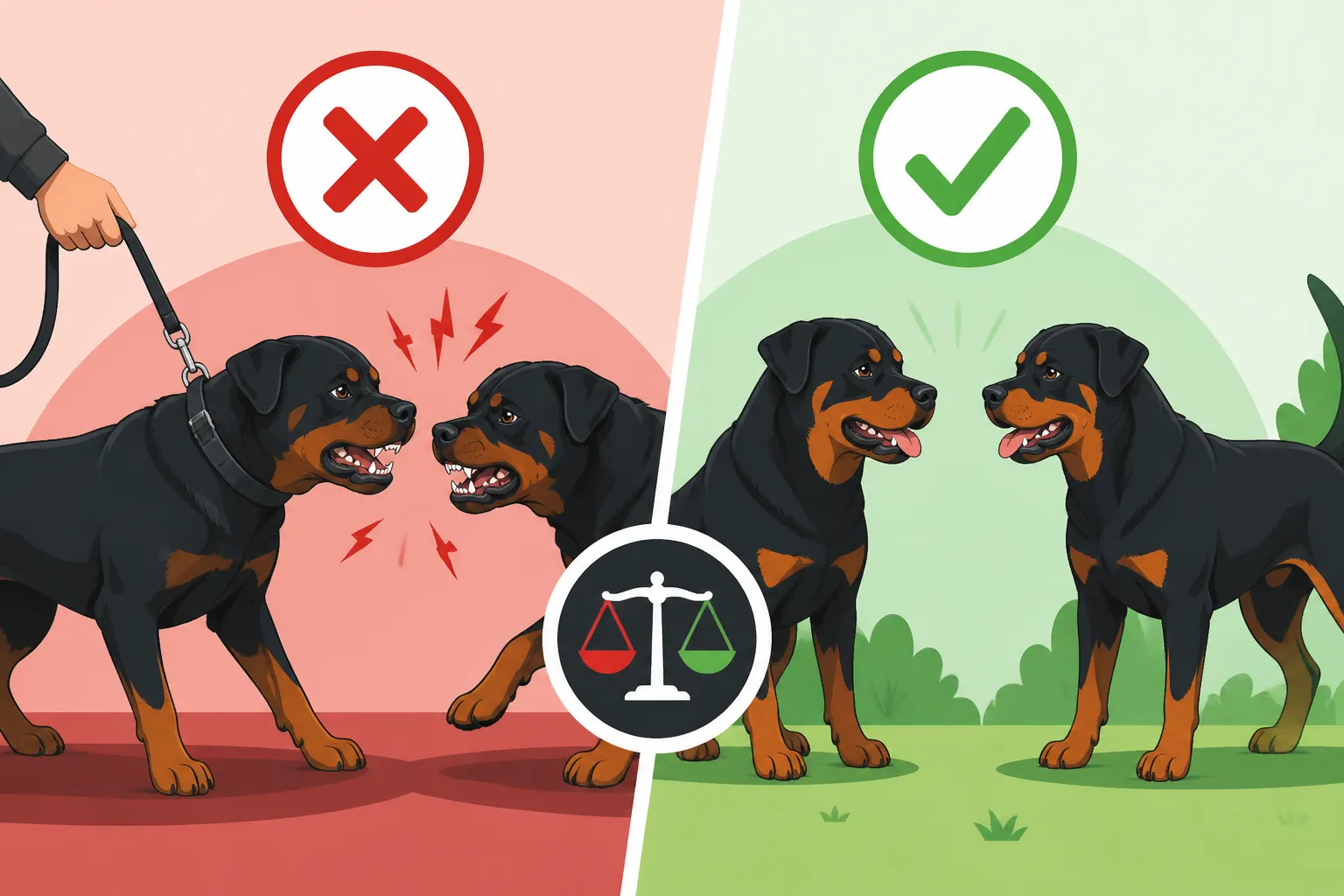
Think about it from your Rottweiler's perspective. When two dogs meet off-leash, they perform a whole dance of polite introductions: circling each other, sniffing from the rear, taking breaks, and offering subtle calming signals. The leash, however, often forces them into a direct, head-on approach, which can feel confrontational in the dog world. It restricts their ability to move away if they feel uncomfortable, or to engage in those crucial circling movements that are a cornerstone of canine etiquette. This forced proximity and lack of escape can quickly elevate a dog's stress levels, turning what might have been a neutral interaction into a tense or even reactive one.
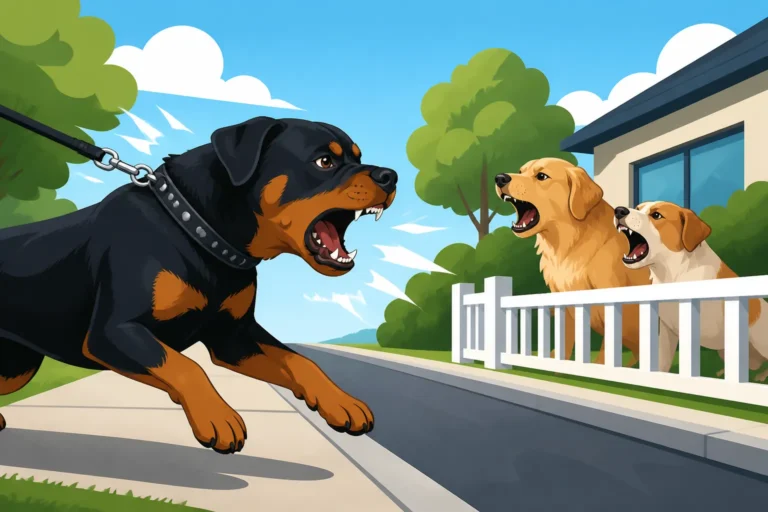
Moreover, the leash acts as a conduit for our own emotions. If you're feeling anxious about how your Rottweiler will react to an approaching dog, that tension travels right down the leash to your pup. They pick up on your elevated heart rate, your tightening grip, and your worried glances, translating it into a belief that there is something to be worried about. This can manifest as leash reactivity, where a dog barks, lunges, or growls while on leash, even if they'd be perfectly fine off-leash. It’s not necessarily aggression, but often frustration and fear stemming from a restricted, unnatural situation.
Reading Your Rottweiler's Cues on Leash
Because on-leash greetings are inherently more stressful, it's paramount to become a master at reading your Rottweiler's body language. They might not be able to offer a full play bow or a relaxed circle, but they will still be broadcasting their feelings. Look for a stiffening of their body, where their muscles become taut and their posture rigid. This is a huge red flag. You might also see "whale eye," where the whites of their eyes are visible as they turn their head but keep their gaze fixed. Lip licking, yawning (when not tired), or a slight lowering of the head can all be signs of stress or appeasement.
Sometimes, a Rottweiler's tail, even if docked, can give clues. A tail held stiffly high or tucked tight beneath the body, especially when combined with other stiff body language, indicates discomfort. A relaxed Rottweiler will often have a soft, neutral tail carriage, or a loose wag if truly happy. Don't mistake a fast, high wag for happiness if the rest of their body is tense – that can often indicate over-arousal or stress. Learning these subtle cues is key to intervening before a situation escalates. If you see these signs, it's time to create distance or redirect your dog's attention, rather than forcing an interaction.
Strategies for Successful On-Leash Encounters
The best on-leash encounters often involve not having a direct greeting at all. Instead of letting your Rottweiler meet every dog head-on, try implementing parallel walks. This involves walking in the same direction as the other dog, maintaining a comfortable distance where both dogs can observe each other calmly without direct interaction. As they get used to each other's presence, you can gradually decrease the distance. This method allows for passive socialization without the pressure of a direct sniff.
Another fantastic strategy is redirection with high-value treats. As another dog approaches, ask your Rottweiler for a "Watch Me" command, rewarding them lavishly for focusing on you instead of the other dog. This changes their emotional association with approaching dogs from "something to be stressed about" to "something that earns me tasty rewards." If a greeting is unavoidable or seems appropriate, keep it brief – a few seconds of sniffing and then move on. Short, positive interactions are far more valuable than long, tense ones. For powerful pullers, equipment like a front-clip harness or a head halter can give you better control, allowing you to manage encounters more effectively. You might want to explore options for Harness Hardware That Holds a Pulling Rottweiler or consider Whether a Head Halter Suits a Rottweiler for enhanced control. Remember, the goal is polite neutrality, not necessarily best friends with every dog they meet.
The Freedom and Nuance of Off-Leash Interactions
While leashes present their own challenges, off-leash environments allow dogs to truly be dogs, providing a rich landscape for natural communication and play. However, this freedom comes with its own set of responsibilities, especially with a Rottweiler.
The Benefits of Off-Leash Socialization
When your Rottweiler is off-leash in a safe, controlled environment, they have the freedom to engage in natural canine social rituals. They can approach another dog indirectly, circle to sniff their rear, offer play bows, and most importantly, they can disengage if they feel overwhelmed or uninterested. This ability to self-regulate and choose their interactions is incredibly important for building social confidence. It teaches them that they have control over their environment and don't have to be forced into uncomfortable situations.
These interactions are crucial for a Rottweiler's development, allowing them to hone their social skills and learn appropriate play behavior. Think of a well-run dog park or a private playdate in a securely fenced yard. Here, your Rottweiler can truly stretch their legs, burn off energy, and practice communicating in a way that leashes often prevent. They learn canine manners from other dogs, how to invite play, how to say "no thank you," and how to recover from minor misunderstandings. This type of nuanced interaction is a cornerstone of a well-adjusted dog.
Recognizing Appropriate Off-Leash Play
Just because dogs are off-leash doesn't mean every interaction is a good one. It's vital to be vigilant and understand the difference between healthy, reciprocal play and play that's escalating into something problematic. Good play is characterized by its fluidity and reciprocity. You'll see frequent play bows, bouncy movements, and dogs taking turns chasing and being chased. There should be brief pauses where dogs shake off tension, sniff the ground, or simply catch their breath, then re-engage. Mouths should be open and relaxed, often with happy "smiles," and any growling should sound loose and playful, not hard and low.
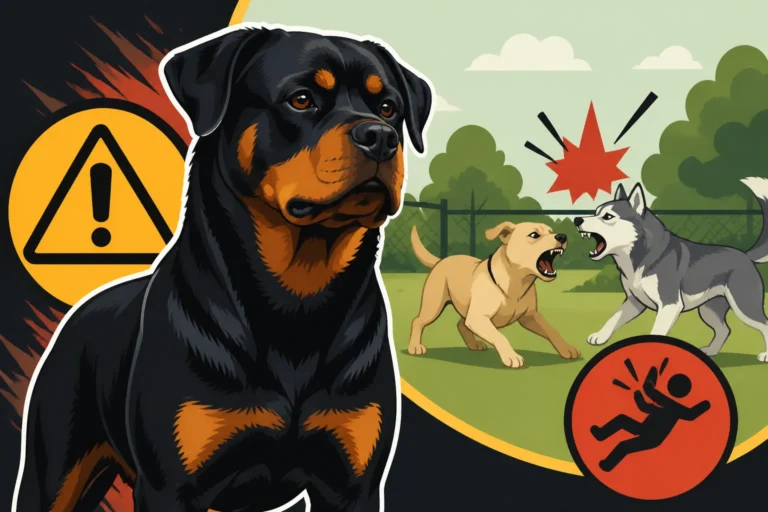
Conversely, look out for warning signs that play is becoming unbalanced. This includes one dog constantly trying to escape, or showing signs of stress like lip-licking or whale eye while being pursued. Stiffness, a fixed stare, or a prolonged period where one dog is relentlessly pinning or bullying another are clear indicators that you need to intervene. A Rottweiler, with their size and strength, can accidentally be too much for smaller or more sensitive dogs, even if their intentions are good. It's crucial to understand Rottweiler Play Style With Smaller Dogs and step in before anyone gets genuinely scared or hurt. Always prioritize safety and comfort for all dogs involved.
Preparing Your Rottweiler for Off-Leash Success
Setting your Rottweiler up for successful off-leash interactions starts long before they even step foot in a dog park. Foundational training is key. A rock-solid recall, meaning they will come back to you no matter the distraction, is non-negotiable. This is your safety net, your superpower in an off-leash environment. Practice your recall extensively in increasingly distracting environments, rewarding heavily when they respond. Strong recall cues, even emergency ones like Emergency Recall Cues for a Rottweiler, can save the day.
Beyond recall, impulse control is paramount. Commands like "Leave It" and "Stay" are incredibly useful. They teach your Rottweiler to think before acting and to defer to your guidance, even when tempting distractions are present. Start practicing these in quiet environments and gradually build up to more stimulating ones. Always ensure off-leash environments are securely fenced and you know the temperament of the other dogs present, especially when dealing with a powerful breed like a Rottweiler. Remember, not all Rottweilers enjoy the chaos of a busy dog park, and that's perfectly okay. Some prefer one-on-one playdates with a known canine friend. Understanding Rottweiler Dog Park Risks at Adult Size is important when making these choices.
Bridging the Gap: Training for Both Worlds
The ultimate goal for any Rottweiler owner is a dog that can navigate social situations, whether on a leash or off, with confidence and appropriate behavior. This requires a comprehensive approach to training that addresses the unique challenges of each scenario.
The Importance of Foundational Obedience
Every successful interaction, whether leashed or unleashed, is built upon a strong foundation of obedience. Commands like "Sit," "Stay," "Down," and "Come" aren't just parlor tricks; they are communication tools that empower you to guide your Rottweiler through potentially tricky situations. A reliable "Watch Me" command, for example, can be a lifesaver when you need to break your dog's focus on a stressful stimulus on a walk. A "Leave It" can prevent them from hoovering up questionable items or engaging inappropriately with another dog's toy.
These basic obedience skills give you, the handler, the ability to interrupt unwanted behaviors and redirect your Rottweiler's attention towards something positive. They build trust and a working relationship between you and your dog, which is the bedrock of good behavior. If you're looking for a structured way to build these skills from the ground up, many online training programs offer comprehensive courses. For instance, platforms like BAXTER & Bella provide step-by-step guidance on core obedience, impulse control, and socialization, all from the comfort of your home. They understand the specific needs of puppies and adult dogs, making it easier to instill these vital behaviors.
Controlled Exposure and Positive Reinforcement
Learning good social manners isn't about throwing your Rottweiler into the deep end and hoping for the best. It's about careful, controlled exposure coupled with positive reinforcement. Start by introducing your Rottweiler to known, calm, and well-socialized dogs one-on-one. Keep these initial meetings short and sweet, always ending on a positive note. Use high-value treats and praise generously when your Rottweiler exhibits calm, polite behavior around other dogs. You can find a fantastic selection of suitable training treats on Amazon.
Gradually, as your Rottweiler builds confidence, you can increase the level of distraction or the number of dogs in an environment. The key is to never push them beyond their comfort zone. If you notice signs of stress, retreat to a more comfortable distance or remove them from the situation entirely. This teaches them that you are their advocate and that you will keep them safe. For dogs struggling with reactivity on leash, counter-conditioning techniques, where you change their emotional response to a trigger, can be incredibly effective. Understanding Counter-Conditioning a Reactive Rottweiler can be a game-changer for these dogs, helping them learn to associate other dogs with positive outcomes, like tasty treats, rather than anxiety.
Understanding Breed Tendencies
It's also crucial to remember that Rottweilers, by nature, possess a certain level of aloofness and a strong guarding instinct. They were bred to be watchful protectors, not necessarily the life of every party. This means that while some Rottweilers absolutely adore playing with every dog they meet, many are perfectly content with a smaller circle of canine friends, or even prefer to observe from a distance. Their Rottweiler Aloofness and Why It Reads as Cold isn't a flaw; it's a characteristic of the breed. They might not rush up to greet every stranger or dog with unbridled enthusiasm, and that's completely normal.
The goal isn't to force your Rottweiler to be an extrovert if they're not naturally inclined. Instead, focus on polite neutrality. A Rottweiler that can calmly walk past another dog on a leash without reacting, or peacefully coexist in an off-leash setting without seeking out constant interaction, is a well-socialized dog. Respect their natural Why a Rottweiler Waits Before Deciding before engaging. Don't push them into situations where they feel overwhelmed or threatened, as this can backfire and erode their trust in you. Celebrate their ability to be calm and self-assured, even if they aren't initiating play with everyone.
When Things Go Wrong: Intervention and Prevention
Even with the best training and intentions, sometimes situations can escalate. Knowing how to intervene safely and prevent issues is just as important as knowing how to foster positive interactions.
Spotting Trouble Before It Escalates
As dog owners, we often miss the subtle cues our dogs give before a full-blown incident. With a Rottweiler, whose strength means any altercation can be serious, early detection is absolutely critical. Beyond the stiff body language and whale eye mentioned earlier, look for direct, unbroken stares between dogs, especially if one or both dogs are stiffening their posture. A low, rumbling growl that is not a play growl is a clear warning. Raised hackles, where the fur along the spine stands up, indicate arousal or fear. A sudden halt in play, followed by intense staring, often precedes a conflict.
The moment you see these early warning signs, you need to act. Don't wait until the dogs are physically engaged. Your goal is to de-escalate and create distance immediately. This might mean calling your dog away, physically interposing yourself (carefully, without putting yourself at risk), or using a loud, sudden noise to interrupt their focus. The faster you can recognize and act on these signals, the more likely you are to prevent a full-blown incident and reinforce your Rottweiler's trust in your leadership.
Safe Disengagement Techniques
If dogs are already engaged in a tense interaction, pulling directly on your Rottweiler's collar or leash can often make things worse. The sudden restraint can increase frustration or even elicit a "redirected" bite towards the handler. Instead, try to create a verbal interruption with a sharp, loud command like "Hey!" or clap your hands firmly. Sometimes, a sudden, startling noise can break their focus enough for you to calmly call them away.
If physical separation is necessary, approach carefully from behind and use your body to create a barrier, or if available, use a long line or leash to gently guide your Rottweiler away. In rare, serious instances, a "wheelbarrow" technique (lifting the back legs of one dog while the other dog is being led away) can be used by experienced handlers to separate fighting dogs, but this should only be done as a last resort and with extreme caution. The priority is always your safety and preventing further harm to the dogs. After any intense interaction, ensure both dogs are completely separated and given time to calm down before any attempt at reintroduction.
Seeking Professional Guidance
There will be times when despite your best efforts, you encounter persistent challenges with your Rottweiler's social behavior, whether it's significant leash reactivity, resource guarding, or outright aggression towards other dogs or people. This is not a failure on your part, but a sign that it's time to call in the cavalry. A certified professional dog trainer or a veterinary behaviorist experienced with large breeds like Rottweilers can offer invaluable support. They have the expertise to assess the root cause of the behavior, develop a tailored training plan, and teach you advanced techniques for managing and modifying it.
Don't wait until the problem becomes unmanageable or dangerous. Early intervention by a professional can often prevent minor issues from escalating. Look for trainers who use positive reinforcement methods and understand the breed-specific nuances of Rottweilers. They can help you understand your dog's motivations, implement effective strategies, and rebuild your confidence in managing your powerful companion. Finding a Rottweiler-Experienced Trainer Near You is a critical step if you're facing consistent challenges.
Here's a quick comparison of factors in on-leash versus off-leash greetings:
| Feature | On-Leash Greetings | Off-Leash Greetings |
|---|---|---|
| Movement Freedom | Restricted, often head-on approaches | Full range of motion, circling, disengagement possible |
| Body Language | Often stifled, harder to read, can appear confrontational | More natural, expressive, easier to read true intentions |
| Handler Influence | High, handler tension can transfer directly to dog | Lower direct influence, dog relies more on own social skills |
| Stress Level | Generally higher due to restriction and forced proximity | Can be lower if dogs are compatible and well-managed |
| Risk of Reactivity | Higher risk due to frustration and inability to escape | Lower if dog has good social skills and environment is safe |
| Best Practice | Parallel walks, brief greetings, redirection, distance | Supervised play, solid recall, careful introduction |
| Ideal Outcome | Polite neutrality, calm passing | Appropriate, reciprocal play or calm coexistence |
Ultimately, mastering both on-leash and off-leash meetings with your Rottweiler is about understanding canine communication, consistent training, and advocating for your dog's comfort and safety. It's a journey, not a destination, and every successful, calm interaction builds confidence for both you and your magnificent companion.
Disclaimer
This article is for general informational purposes only and does not constitute professional advice. Laws, prices and regulations vary by location and change over time. Consult a qualified professional for guidance on your specific situation.