The Long Line Strength a Rottweiler Needs
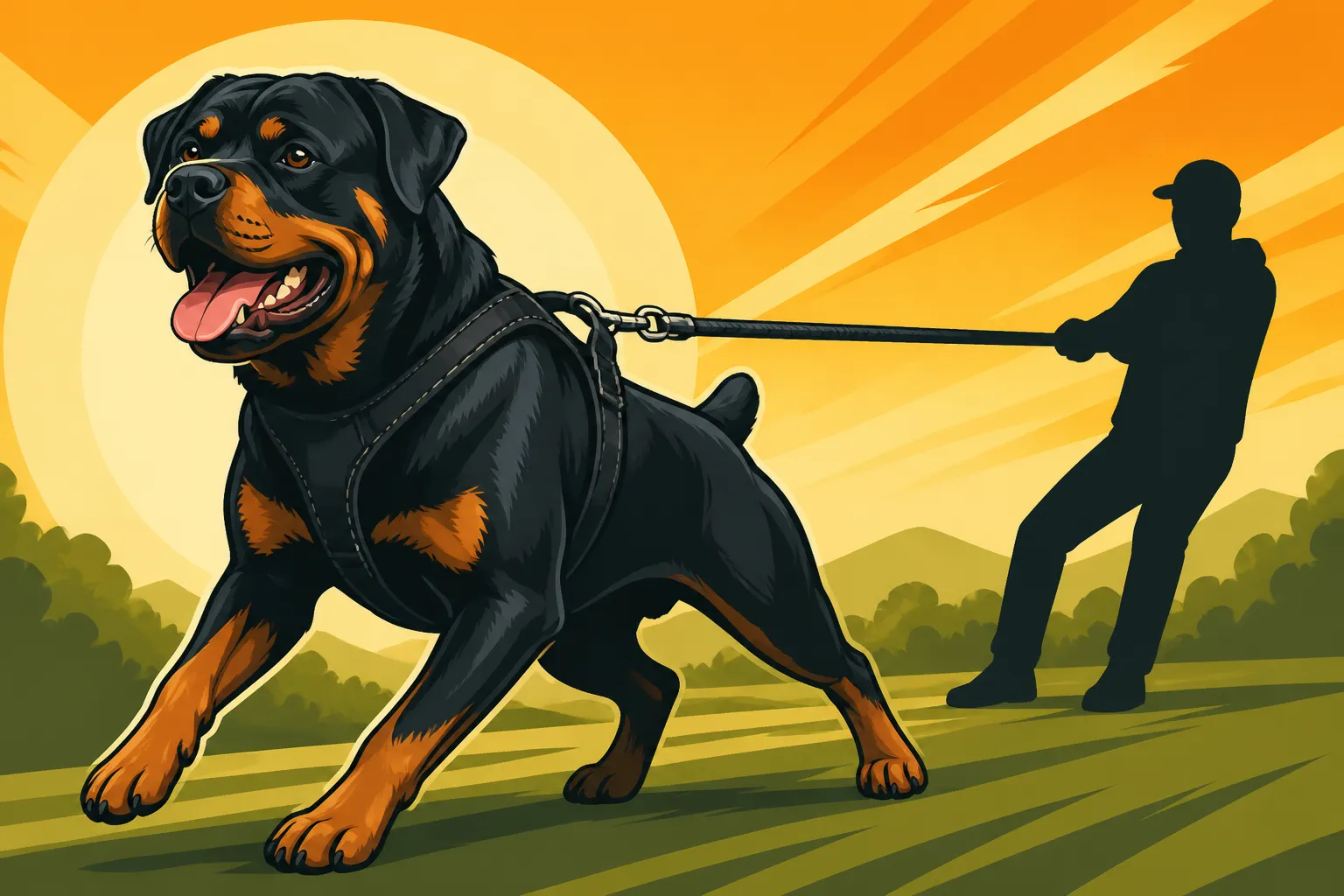
It’s a scenario many Rottweiler owners dread: you’re out in a wide-open space, giving your powerful dog a bit of freedom on a long line, when suddenly they bolt after a squirrel, a bird, or even just an interesting scent. In that split second, you feel a massive jolt, the line goes taut, and then – snap! – your strong, beloved Rottweiler is free and potentially in danger. This guide is all about preventing that heart-stopping moment by helping you choose the right long line, understand its limitations, and use it safely for your mighty companion.
The Unique Challenges of a Rottweiler on a Long Line
Let's face it, Rottweilers are not tiny lapdogs. They are substantial, powerful animals bred for hard work, and that inherent strength, combined with their intelligence and drive, means that standard dog equipment often isn't up to the task. When you're dealing with a dog that can easily outweigh an adult human and accelerate with surprising speed, a long line isn't just a training tool; it's a critical safety device that needs to be chosen with extreme care.
Unmatched Strength and Drive
A fully grown Rottweiler male can easily weigh upwards of 120 pounds, sometimes more, and females are not far behind. Imagine that much muscle, bone, and sheer will power launching into a full sprint. The kinetic energy generated is immense. This isn't about aggression; it's about their natural instincts taking over. They might be focused on a scent trail, a distant movement, or simply the pure joy of running. When that happens, a flimsy long line, or one with inadequate hardware, simply won't hold.
Many owners experience Rottweiler Leash Pulling at Adult Weight even on a standard six-foot leash. Now imagine that pulling force multiplied by the momentum of a run. It's not just the static weight you're holding back; it's the sudden, dynamic force of a dog hitting the end of a long line at speed. This force can injure you, your dog, or worse, allow them to escape into a dangerous situation like traffic or a confrontation with another animal.
Safety for Dog and Handler
The primary purpose of a long line is safety. It allows your Rottweiler more freedom to explore, sniff, and move without being completely off-leash, which is essential in areas where off-leash might not be permitted or safe, or during early recall training. However, if the line or its hardware fails, that safety net disappears.
For the dog, a broken line means potential exposure to cars, getting lost, or encountering unknown dogs or people without your immediate control. For the handler, a snapping line can whip back and cause injury, or the sudden loss of resistance can throw you off balance. Even a line that doesn't break, but allows too much stretch or slippage, can result in severe rope burns if it slides through your hands unexpectedly. It’s a serious piece of equipment that demands respect and a solid understanding of its limits and proper use.
Training Scenarios that Demand Strength
Long lines are indispensable for certain types of training, especially for a breed like the Rottweiler that benefits so much from clear communication and controlled freedom.
- Recall Training: This is arguably the most common use. You want to teach your Rottweiler to come when called from a distance. The long line gives you the backup to enforce the "come" command if they get distracted, ensuring they understand that "come" is non-negotiable. A strong line is crucial here because the distraction often involves something they really want to chase or investigate. Rottweiler Recall Training That Holds relies heavily on having equipment that you can trust.
- Distraction Training: In controlled environments, a long line helps you introduce new stimuli (other dogs, people, sounds) while maintaining a safe distance and the ability to intervene if your Rottweiler gets overstimulated or reactive. It bridges the gap between structured on-leash training and full off-leash freedom.
- Safe Exploration: Some areas, like large parks or open fields, might feel safe, but you still need to ensure your Rottweiler stays within bounds or doesn't bother wildlife. The long line provides that extended boundary. It also allows your dog to really stretch their legs and get some proper exercise, which is vital for their physical and mental well-being, especially when you're working on Building Adult Rottweiler Fitness Safely.
Understanding Long Line Materials and Construction
Not all long lines are created equal, and for a Rottweiler, material and construction quality are paramount. You can't just grab any old rope from the hardware store and expect it to hold up. The specific properties of the material, the design of the hardware, and the craftsmanship of the assembly all contribute to how reliable your long line will be.
Common Materials and Their Durability
When you're choosing a long line, you'll primarily encounter a few common materials, each with its own set of pros and cons for a powerful dog like a Rottweiler:
- Nylon: This is a very common material for leashes and long lines.
- Pros: Strong, relatively affordable, comes in many colors, and is resistant to rot and mildew. It has a bit of stretch, which can act as a shock absorber.
- Cons: Can absorb water, making it heavy and potentially prone to tangling when wet. If it slides through your hands, it can cause severe rope burn due to friction. It also tends to pick up burrs and dirt easily, requiring more cleaning. Over time, UV exposure can degrade its strength.
- Biothane (Coated Webbing): Often touted as the "gold standard" for long lines, especially for working dogs or those used in wet conditions.
- Pros: Extremely durable, waterproof, odor-proof, and easy to clean (just wipe it down). It doesn't absorb water, so it maintains its weight and doesn't get soggy. It has excellent grip even when wet and is less prone to tangling than nylon. It's also less likely to cause severe rope burn due to its smoother, coated surface.
- Cons: Generally more expensive than nylon. Can be a bit stiffer, especially in colder weather, which might make coiling slightly less flexible initially.
- Cotton Webbing: Less common for dedicated long lines for powerful breeds, but sometimes seen.
- Pros: Soft on the hands, natural fiber.
- Cons: Not very strong for a Rottweiler's power, absorbs water readily, prone to rot and mildew if not dried properly, and is very susceptible to chewing damage. Definitely not recommended for a Rottweiler.
- Polypropylene: Similar to nylon but generally lighter and floats, making it popular for water work.
- Pros: Lightweight, doesn't absorb water, relatively inexpensive.
- Cons: Can be less abrasion-resistant than nylon and generally not as strong. The texture can still cause rope burn.
For a Rottweiler, Biothane is often the superior choice due to its strength, durability, and ease of maintenance, especially if you plan to use the long line in various outdoor conditions.
Hardware Matters
The strongest line material in the world is useless if the hardware fails. This is often the weakest link in a long line, and it's where you absolutely cannot compromise.
- Snap Hooks: Look for heavy-duty, robust snap hooks. Many cheap long lines use flimsy, thin-gauge metal snaps that bend or break under sudden pressure. Swivel snaps are ideal, made from solid brass, stainless steel, or nickel-plated steel. Plastic or lightweight aluminum clips are completely inadequate for a Rottweiler. The snap should have a smooth, strong spring mechanism and close securely without any gaps.
- Swivels: The swivel mechanism on the snap hook is critical. It prevents the line from twisting and tangling as your dog moves, which can reduce wear on the line and prevent dangerous snags. A high-quality swivel will rotate freely without sticking, even when dirty.
- D-Rings/O-Rings: If the long line has any rings for attaching accessories or for specific training techniques, ensure they are welded and thick. Thin, unwelded rings can open up under pressure.
Remember, the hardware must be proportional to the size and strength of your dog. A tiny poodle snap on a heavy-duty line is a recipe for disaster.
Stitching and Reinforcement
Beyond the materials themselves, how the long line is constructed is key.
- Stitching: Look for heavy-duty, reinforced stitching, particularly at the points where the snap hook is attached to the webbing. Many manufacturers use box-X stitching or multiple lines of strong nylon thread to create a secure bond. Weak, single-line stitching can unravel or tear under stress.
- Rivets: Some lines also use rivets for added security, particularly with Biothane. Ensure these are securely fastened and made of a durable, rust-resistant metal.
- Loops and Handles: If the long line has a handle, make sure it's also reinforced and comfortable to hold. Some trainers prefer long lines without a handle to prevent it from getting snagged or for easier dragging, but if you do opt for one, it needs to be as sturdy as the rest of the line.
The longevity and reliability of your long line depend as much on these construction details as they do on the raw materials.
Choosing the Right Strength and Length for Your Rottweiler
Selecting the perfect long line for your Rottweiler isn't a one-size-fits-all decision. It involves carefully considering your dog's specific traits, the environment you'll be using it in, and the kind of training you're doing. A line that's too weak is dangerous, but one that's overly heavy or too long can be cumbersome and difficult to manage.
Matching Line Strength to Rottweiler Weight and Power
The rule of thumb is always to err on the side of over-strong rather than under-strong. For a Rottweiler, you should be looking for lines designed for large or extra-large breeds, often advertised for dogs 70-150+ pounds. Don't be fooled by the visual thickness alone; inspect the material and, critically, the hardware.
Consider the following factors:
- Tensile Strength: While not always explicitly listed for consumer products, professional-grade long lines will often have a stated tensile strength. Aim for a line that can withstand several hundred pounds of force, understanding that dynamic loads (a running dog hitting the end) are much higher than static weight.
- Webbing Width and Thickness: A wider and thicker webbing generally indicates greater strength. For a Rottweiler, aim for webbing that is at least 3/4 inch to 1 inch wide, and not too thin in cross-section.
- Hardware Material: As mentioned, solid brass or stainless steel snap hooks are essential. If you feel a snap hook is too light in your hand, it's probably too light for your Rottweiler.
Here's a quick comparison of material suitability:
| Material Type | Durability for Rottweiler | Rope Burn Risk | Maintenance | Cost | Best Use Cases |
|---|---|---|---|---|---|
| Nylon Webbing | Good, but can degrade | High | Absorbs water/dirt | Moderate | General training, dry conditions, if careful with handling |
| Biothane Webbing | Excellent | Low | Wipes clean | Higher | All-weather training, wet/muddy conditions, superior durability and safety |
| Cotton Webbing | Poor | Moderate | Absorbs water/dirt | Low | Not recommended for Rottweilers |
| Polypropylene | Fair-Good | Moderate | Water-resistant | Low-Moderate | Lighter use, water activities, but Biothane generally preferred for strength/grip |
When you're searching online for equipment, especially on platforms like Amazon, make sure to filter by "heavy duty" or "large dog" and meticulously read reviews specifically from other large dog owners. This will give you a real-world idea of how a line holds up.
The Importance of Appropriate Length
Long lines come in various lengths, and the right choice depends on your training goals and environment.
- 15-20 Feet: This length is great for closer work, teaching stays, practicing recalls in slightly distracting environments, or providing a little more sniffing room in a park where you still need a fair amount of control. It's easier to manage and less prone to tangling.
- 30-50 Feet: These longer lines are fantastic for advanced recall practice, allowing more extensive exploration in very open spaces, or for working on distance commands. The downside is they are much harder to manage. They tangle easily, especially in brush, and the added length means more weight to drag. The further your dog is from you, the more leverage they have, and the greater the force on the line if they suddenly hit the end.
For a Rottweiler, starting with a 15-20 foot line is often advisable until both you and your dog are proficient in its use. Once you master the basics, you can consider a longer line, understanding that management and strength requirements escalate with length.
Considerations for Different Environments
The environment also dictates your choice.
- Urban Parks: Shorter lines (15-20 ft) are usually best here to prevent tangling with other park-goers, trees, or benches. The risk of sudden bolting into traffic also means you want a line that's easy to manage and strong enough for quick stops.
- Open Fields/Nature Trails: Longer lines (30-50 ft) shine in these environments, offering your Rottweiler freedom to roam. However, consider the terrain. If it's very brushy, a flat Biothane line will be less prone to snagging and easier to clean than a round nylon rope. In areas with water, a Biothane line is definitely superior.
- Training Grounds: Specific training scenarios might call for specific lengths. Always prioritize a line that is clean and free of knots or damage, regardless of the length.
Safe Handling and Practical Tips
Having the strongest long line in the world won't do you any good if you don't know how to handle it properly. The techniques you use are just as important as the equipment itself, especially when managing a powerful breed like a Rottweiler.
Proper Grip and Body Mechanics
This is crucial for preventing injuries to yourself and maintaining control.
- No Wrapping: Never wrap the long line around your hand, wrist, or any part of your body. If your Rottweiler makes a sudden dash, it can cause severe rope burns, dislocate joints, or even drag you.
- Use Gloves: Many experienced long line users wear gloves, especially with nylon lines, to protect their hands from friction burns. Heavy-duty work gloves or training gloves are a smart investment.
- Open Hand Grip: Hold the line with an open hand, allowing it to slide if necessary, but with enough friction to control the speed of release. Your fingers should be able to release the line quickly if it starts to burn.
- Body Stance: Maintain a balanced stance, ready to brace yourself. If your dog is prone to bolting, keep the line short enough initially that you can absorb the impact with your legs and core, rather than relying solely on your arms.
Anchoring and Management
- Harness, Not Collar: Always attach a long line to a sturdy, well-fitting harness, never to a flat collar. A sudden stop on a long line with a collar can cause severe neck and tracheal injuries to your Rottweiler. A front-clip harness can also help redirect some of that pulling power. When choosing a harness, look for Harness Hardware That Holds a Pulling Rottweiler securely without chafing.
- Avoid Letting it Drag Free: While it's called a long line, you shouldn't just let the entire length drag behind your dog unattended. It can easily get snagged on obstacles, wrap around your dog's legs (causing injury), or get tangled with other dogs. Always maintain a manageable amount of slack, reeling in and paying out as needed.
- Coil Management: Learn to coil or gather the line efficiently. Some people prefer a figure-eight coil, others a simpler over-under method. The goal is to keep the unused portion of the line neat and ready to deploy, preventing tangles.
- Constant Awareness: Keep your eyes on your Rottweiler and your surroundings. Anticipate potential triggers for bolting (squirrels, other dogs, children) and be ready to shorten the line or brace yourself. Reading a Calm Rottweiler That Is Actually Alert is a skill that will serve you well here. If you see signs your dog is about to lunge, you can often intervene before they hit the end of the line at full speed.
Training with a Long Line
The long line is a bridge to off-leash reliability, not a permanent crutch.
- Start Short and Controlled: Begin in a low-distraction environment with a shorter line. Practice your recall and other commands, giving your dog just enough rope to feel some freedom but still be easily managed.
- Progress Gradually: As your Rottweiler's reliability improves, gradually increase the length of the line and the level of distraction in your training environment.
- Positive Reinforcement: Always pair the recall command with high-value treats and praise. The long line is there to prevent failure, not to punish. If your dog ignores the command, gently reel them in, praise them when they reach you, and reward them. The long line helps ensure that coming when called is always a positive experience.
- Practice Emergency Recall Cues: Even with a long line, it’s vital to have a strong emergency recall. Practice it often, with the long line as your safety net. Platforms like BAXTER & Bella offer structured online courses that can guide you through these training protocols, including how to effectively integrate long lines for various behaviors.
- Check for Wear and Tear: Before every use, inspect your long line, especially the snap hook and attachment points, for any signs of fraying, cracking, bending, or rust. Even the strongest line will eventually show wear, and it’s better to replace it proactively than to have it fail unexpectedly. On Amazon, you can often find replacement hardware if the webbing itself is still in good condition, but always ensure the new hardware is equally robust.
By understanding the unique needs of your powerful Rottweiler and investing in the right equipment and handling techniques, a long line can become an invaluable tool for safe training, exercise, and enrichment.
Disclaimer
This article is for general informational purposes only and does not constitute professional advice. Laws, prices and regulations vary by location and change over time. Consult a qualified professional for guidance on your specific situation.