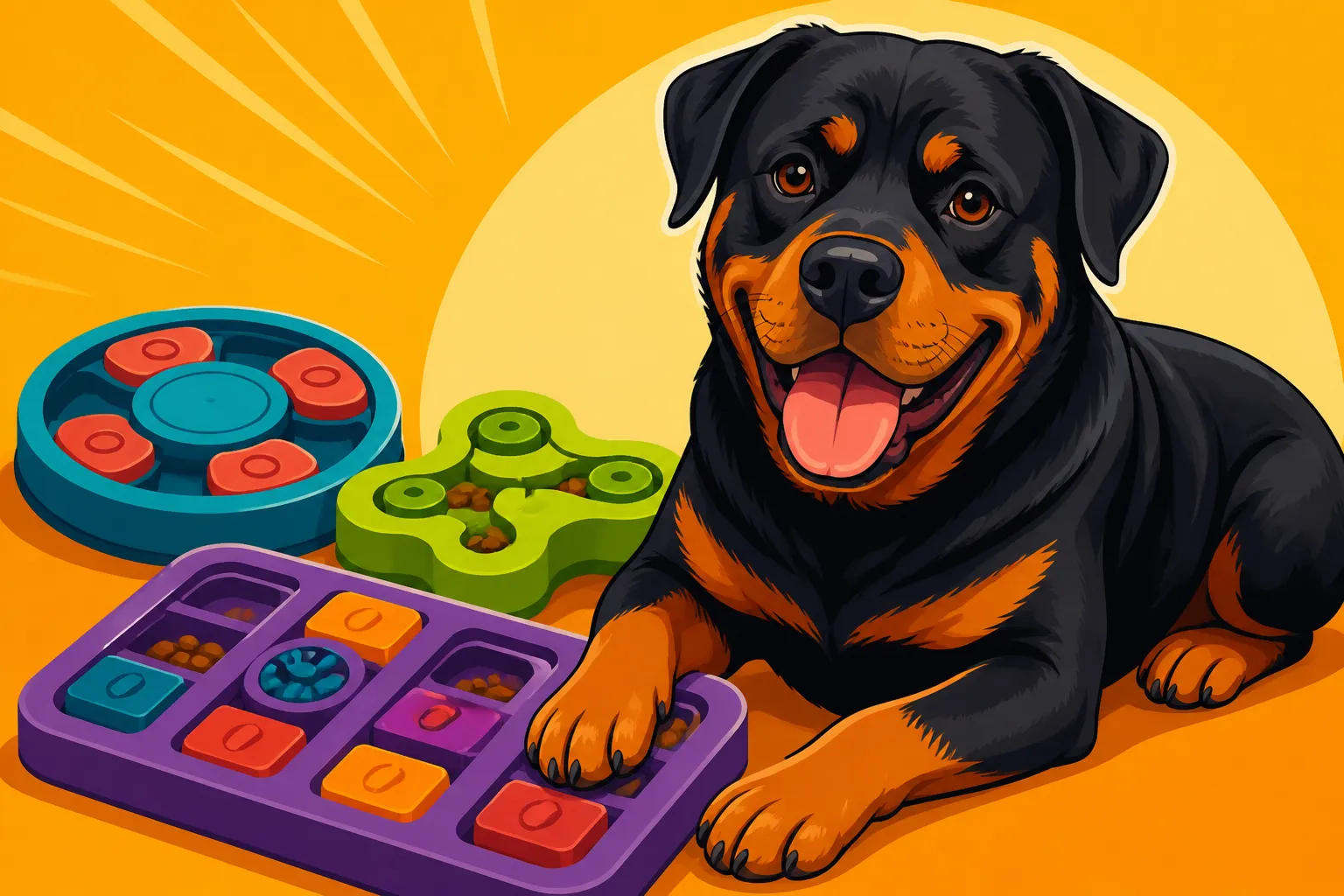
Puzzle Feeders Built for a Rottweiler
One common frustration for Rottweiler owners is the sheer speed at which these powerful dogs can inhale their meals. It's not just about a messy eating habit; fast eating can lead to serious health concerns and often signals a lack of mental engagement. This guide will delve into why puzzle feeders are an invaluable tool for your Rottweiler, helping to slow down mealtime, provide crucial mental stimulation, and enhance their overall well-being.
Why Traditional Bowls Fall Short for a Rottweiler
It’s easy to just scoop food into a regular bowl, set it down, and watch your Rottweiler devour it in mere seconds. Many of us do it, often without realizing the potential downsides. While convenient for us, it’s far from ideal for our dogs, especially a breed as substantial and intelligent as a Rottweiler.
The Speed-Eating Problem and Bloat Risk
The biggest, scariest risk associated with rapid eating in large, deep-chested breeds like Rottweilers is bloat, or Gastric Dilatation-Volvulus (GDV). When a dog eats too quickly, they tend to gulp down a lot of air along with their food. This excess air can cause the stomach to distend, and in severe cases, to twist upon itself. This twisting, known as volvulus, traps the air and can cut off blood flow to the stomach, becoming a life-threatening emergency that requires immediate veterinary intervention. You can learn more about Recognizing Bloat in a Rottweiler to be prepared.
Even if bloat isn't an immediate concern, eating too fast can lead to other uncomfortable digestive issues like indigestion, gas, and regurgitation. Imagine eating your own dinner in thirty seconds; you’d likely feel pretty awful afterward. Our Rottweilers experience similar discomfort, though they can't tell us in words. A traditional bowl, particularly a wide-open one, offers no impediment to this rapid consumption, practically encouraging a "scarf and barf" approach to mealtime.
Lack of Mental Engagement
Rottweilers are not just big, strong dogs; they are incredibly intelligent and were historically bred for demanding work like herding cattle and guarding property. Their brains need to be exercised just as much as their bodies. A meal served in a plain bowl offers absolutely no mental challenge. It’s a passive activity that does nothing to engage their problem-solving skills or satisfy their natural foraging instincts.
Think about it from your dog's perspective. Their wild ancestors spent a significant portion of their day searching, hunting, and working for their food. Modern domestic dogs still carry these innate drives. When food is simply handed to them without any effort, it's a missed opportunity for enrichment. This lack of engagement can lead to boredom, and a bored Rottweiler, especially a young one, is much more likely to invent their own "work" – which often translates into undesirable behaviors like chewing furniture, excessive barking, or digging up the yard. We want to prevent this by providing them with productive outlets, and mealtime is a perfect opportunity for this. Consider Rottweiler Enrichment Beyond Walks for other ideas.
What Makes a Puzzle Feeder "Rottweiler-Proof"?
When you're dealing with a dog the size and strength of a Rottweiler, not just any puzzle feeder will do. A flimsy plastic toy designed for a Chihuahua won't last five minutes with a determined Rottie. It's crucial to select feeders that can stand up to their power, accommodate their meal size, and genuinely challenge their intellect without causing frustration.
Durability and Material Matters
A Rottweiler's jaw strength is no joke, and their enthusiasm for food can turn a cheap puzzle feeder into confetti in moments. When choosing a feeder, durability is paramount. Look for materials that can withstand chewing, pushing, and general robust handling. Heavy-duty, food-grade plastic is a common choice, but ensure it's thick and solid, not brittle. Some excellent options are made from hard rubber or even stainless steel, which are virtually indestructible and easy to clean.
Avoid feeders with small, easily detachable parts or thin walls. A Rottweiler can quickly chew off pieces, posing a choking hazard or leading to ingestion of plastic fragments. Think of it like this: if you can easily bend or squeeze a part of the feeder, your Rottweiler can probably destroy it. Investing in a higher quality, more durable feeder upfront will save you money and potential vet bills in the long run.
Size and Capacity for a Big Appetite
Rottweilers are big dogs with big appetites. A puzzle feeder that only holds a cup of kibble isn't going to cut it when your adult Rottweiler eats several cups of food per meal. You need a feeder with a large enough capacity to hold their entire serving, otherwise you'll be refilling it constantly, defeating the purpose of prolonged engagement.
Check the product specifications for capacity. Many slow feeder bowls are specifically designed for large breeds, featuring wider bases and deeper compartments to accommodate substantial portions. For interactive toys, consider how much kibble can be loaded at once and how easily it dispenses. The goal is for your Rottweiler to spend a good 15-30 minutes working on their meal, not just a quick top-up. You'll find good options when looking for Slow Feeder Bowls That Hold a Rottweiler Ration.
Difficulty Level That Challenges, Not Frustrates
The perfect puzzle feeder strikes a balance between challenge and reward. If it's too easy, your Rottweiler will clear it too quickly, and you're back to square one with rapid eating. If it's too difficult, they'll get frustrated, give up, and potentially resort to destructive chewing out of annoyance.
Start with feeders that offer a relatively low difficulty level to build confidence and understanding. Once your Rottweiler masters the simpler puzzles, you can gradually introduce more complex designs. Many puzzle feeders offer adjustable difficulty settings, or you can buy a variety to rotate. Observe your dog's interaction: are they engaged and working, or are they getting increasingly agitated? A good puzzle will have them thinking, sniffing, nudging, and pawing, rather than resorting to brute force to get the food out.
Types of Puzzle Feeders for Your Rottweiler
The world of puzzle feeders is quite diverse, offering a range of challenges and designs to suit different preferences and skill levels. For a strong, intelligent breed like a Rottweiler, having a few different types on hand can keep things interesting and prevent them from getting bored with the same routine.
Slow Feeder Bowls
These are probably the most straightforward type of puzzle feeder and an excellent starting point for any Rottweiler who gulps their food. Slow feeder bowls look like regular dog bowls, but their interior is equipped with various ridges, mazes, or pillars. The design forces your dog to navigate around these obstacles to get to their kibble, preventing them from taking large mouthfuls at once.
The beauty of slow feeder bowls is their simplicity and effectiveness. They don't require any complex interaction from your dog beyond moving their nose and tongue, making them frustration-free even for beginners. You can find a vast array of these bowls on platforms like Amazon, with options made from sturdy plastic, ceramic, or even stainless steel. Many are designed with a non-slip base, which is a must for a Rottweiler, preventing them from pushing the bowl all over the kitchen. While they don't offer as much mental stimulation as some advanced puzzles, they are incredibly effective at addressing the speed-eating issue and significantly reducing the risk of bloat.
Interactive Treat Dispensing Toys
These feeders require a bit more active engagement from your Rottweiler. They typically involve a hollow toy that you fill with kibble, which then dispenses as your dog nudges, rolls, or paws at it. A classic example is the KONG Wobbler, which sits upright and wobbles around as your dog interacts with it, gradually releasing kibble through a hole. Another popular option is a snuffle mat, a fabric mat with numerous hiding spots and pockets where you can bury dry kibble or treats. Your Rottweiler uses their powerful sense of smell to 'snuffle' out the food, mimicking natural foraging behavior.
Ball-shaped treat dispensers are also great, as your dog has to roll them around to get the food out. These types of toys are fantastic for mental enrichment and can keep your Rottweiler occupied for a good stretch. They encourage movement, problem-solving, and satisfy that inherent desire to work for food. When selecting these, prioritize robust materials that can withstand being knocked around and chewed on, and ensure the dispenser opening is large enough for their kibble but small enough to require some effort. Many brands offer durable versions suitable for large breeds, and a quick search on Amazon will reveal numerous options.
Advanced Puzzle Toys
Once your Rottweiler has mastered the simpler slow feeder bowls and basic interactive toys, you might want to move on to more advanced puzzle toys. These are designed to challenge their cognitive abilities further, often involving multiple steps, sliding components, or lifting pieces to reveal hidden compartments. Think of games like "slide and seek" boards, where your dog has to slide panels to uncover food, or "flip boards" that require them to lift or pivot pieces.
These puzzles are fantastic for keeping a sharp Rottweiler mind engaged and preventing boredom. They can be incredibly rewarding for your dog as they figure out the sequence of actions needed to get their meal. However, it's essential to introduce them gradually and ensure the difficulty isn't so high that it leads to frustration. Some advanced puzzles can be quite intricate, and it's a good idea to supervise your Rottweiler during their first few attempts to make sure they understand the game and aren't trying to chew through it instead of solving it. Brands like Nina Ottosson (available through retailers like Amazon and specialized pet stores) offer a range of difficulty levels, from beginner to expert, allowing you to scale the challenge as your dog learns.
| Puzzle Feeder Type | Primary Benefit | Durability for Rottweiler (Typical) | Mental Challenge | Ease of Cleaning |
|---|---|---|---|---|
| Slow Feeder Bowl | Reduces eating speed | High (if chosen well) | Low | High |
| KONG Wobbler | Interactive, dispenses | High | Medium | Medium |
| Snuffle Mat | Foraging, scent work | Medium (fabric) | Medium | Low (machine wash) |
| Ball/Rolling Dispenser | Active play, dispenses | High (rubber/hard plastic) | Medium | Medium |
| Slide & Seek/Flip Board | Problem-solving, cognitive | Medium to High | High | Medium |
Introducing Your Rottweiler to a Puzzle Feeder
Bringing a new puzzle feeder home is exciting, but it's important to introduce it to your Rottweiler thoughtfully. You want to set them up for success, not frustration, so they learn to love their new mealtime challenge. Rushing the process can lead to your dog ignoring the feeder or, worse, deciding it’s just another chew toy.
Starting Simple and Building Success
When you first present a puzzle feeder, especially a more complex one, make it ridiculously easy. For a slow feeder bowl, simply put their regular meal in it. For an interactive toy like a KONG Wobbler, use high-value treats or a small portion of their meal, and ensure the dispensing hole is wide open or the toy is positioned to make getting food out almost effortless. The goal here is to establish a positive association: "This new thing gives me yummy food!" You can even use a training program like BAXTER & Bella to help guide you through positive reinforcement techniques for new activities.
As your Rottweiler starts to understand the concept and enjoys the interaction, you can gradually increase the difficulty. For a KONG Wobbler, you might adjust the opening slightly smaller or add larger pieces of kibble that require more effort. For slide-and-seek puzzles, start with just one or two covers to slide, then slowly add more. Celebrate their small victories with praise and enthusiasm. This builds their confidence and teaches them that persistence pays off. Remember, consistency is key, so make puzzle feeding a regular part of their routine.
Supervision and Encouragement
Especially in the beginning, supervising your Rottweiler with a new puzzle feeder is crucial. This isn't just to ensure they're using it correctly, but also to prevent them from becoming frustrated and deciding that chewing through the feeder is an easier solution than solving it. A Rottweiler’s powerful jaws can quickly demolish a feeder if they decide it's a nuisance rather than a game. If you see them getting frustrated, gently guide them. Point to the part they need to nudge, or even demonstrate how a piece slides (without giving away all the answers, of course!).
Your presence and encouragement make a huge difference. Use positive, upbeat language. "Good job, smart dog!" or "Get it, boy!" can motivate them. If they seem to be struggling too much, intervene and make it easier again. There's no shame in taking a step back in difficulty. The aim is for them to engage and enjoy the process, not to feel like they're failing a test. Once they're proficient and trustworthy, you can leave them to it, but those initial supervised sessions are invaluable.
Cleaning and Maintenance
Just like any food-related item, puzzle feeders need regular cleaning to prevent the buildup of bacteria and maintain hygiene. Bits of kibble, drool, and whatever else your Rottweiler has on their nose can get trapped in the nooks and crannies. If neglected, they can become smelly and unsanitary, making them less appealing to your dog and potentially a health risk.
Most puzzle feeders are designed to be easy to clean. Many plastic or rubber ones can be washed by hand with warm, soapy water, or even placed on the top rack of your dishwasher. For snuffle mats, a gentle cycle in the washing machine and air drying usually does the trick. Always check the manufacturer's instructions for specific cleaning guidelines. Regularly inspecting the feeder for any signs of wear and tear, such as cracks or broken pieces, is also important. A damaged feeder could pose a choking hazard or be less effective, so replace it if it's no longer sound.
Benefits Beyond Slower Eating
While preventing bloat and reducing mealtime speed are significant advantages of puzzle feeders for Rottweilers, the benefits extend far beyond the dinner bowl. Integrating these tools into your Rottweiler’s daily life contributes positively to their mental health, physical condition, and overall behavior, creating a more balanced and content companion.
Mental Stimulation and Boredom Busting
Rottweilers are working dogs at heart, and their keen intelligence thrives on having a job to do. When their minds aren't adequately stimulated, they can easily become bored, leading to an array of undesirable behaviors. A bored Rottweiler might decide that chewing on your sofa legs is a perfectly acceptable alternative to solving a puzzle, or that incessant barking at shadows is a great way to pass the time. Puzzle feeders offer a constructive outlet for their mental energy, turning mealtime into a problem-solving adventure.
By engaging their natural instincts to forage and work for food, puzzle feeders keep their brains active and satisfied. This mental workout is just as important as physical exercise in preventing behavioral issues. Imagine if you never had anything challenging to do; you'd probably get stir-crazy too! Providing regular mental challenges through puzzle feeders can significantly reduce destructive behaviors, alleviate anxiety, and promote a calmer, more focused demeanor around the house. It's a fantastic way to engage their minds, especially on days when physical exercise might be limited, like a Rottweiler Mental Work on a Rainy Day.
Weight Management
Obesity is a growing concern for dogs, and large breeds like Rottweilers are no exception. Excess weight puts immense strain on their joints, already prone to issues like hip and elbow dysplasia, and can shorten their lifespan. Fast eating often contributes to overconsumption because the brain doesn't register fullness as quickly when food is gulped down. By slowing down the eating process, puzzle feeders give your Rottweiler’s digestive system time to send satiety signals to the brain, helping them feel full on an appropriate portion.
Furthermore, the physical effort required to extract food from a puzzle feeder, even if minimal, adds a small caloric expenditure to their day. More importantly, the mental engagement helps curb boredom-related eating. A dog that is mentally stimulated is less likely to seek comfort or activity in constant snacking. Combined with a properly portioned diet and regular exercise, puzzle feeders can be a powerful tool in maintaining a healthy weight for your Rottweiler, ensuring they stay lean and active. This is particularly important for growing puppies, as Keeping a Rottweiler Puppy Lean on Purpose is crucial for healthy bone development.
Building Confidence
Solving a puzzle, no matter how simple, is a success. Each time your Rottweiler figures out how to get a piece of kibble from their feeder, they experience a small win. This repeated success, especially when you offer encouragement, helps to build their confidence and self-efficacy. They learn that they can overcome challenges and achieve rewards through their own efforts.
This boosted confidence can have positive ripple effects on other areas of their life. A confident dog is often less prone to anxiety, fear, and reactivity. They become more resilient in new situations and more eager to try new things. For a breed sometimes misunderstood, fostering confidence through positive experiences like puzzle feeding can reinforce their stable, self-assured nature and strengthen the bond of trust between you and your Rottweiler.
Disclaimer
This article is for general informational purposes only and does not constitute professional advice. Laws, prices and regulations vary by location and change over time. Consult a qualified professional for guidance on your specific situation.