Walking a Rottweiler Safely as a Smaller Person
It's a common, completely valid concern many prospective Rottweiler owners (and even experienced ones) grapple with: how do you confidently and safely walk a powerful, 100+ pound dog when you yourself might be significantly smaller? The thought of being pulled off your feet, or worse, having your beloved companion dart into traffic because you couldn't hold them, is enough to give anyone pause. But I promise you, with the right approach, equipment, and consistent training, walking your Rottweiler can be a joyous, controlled experience, no matter your stature. This guide will walk you through the practical steps and mindset shifts you need to achieve just that.
The Physical Reality of Walking a Powerful Rottweiler
Let's be real for a moment about what you're up against. A Rottweiler isn't just a big dog; they're built like tanks. They have a low center of gravity, immense muscle mass, and a powerful drive that comes from centuries of working with cattle. This isn't a fluffy little lap dog you can scoop up if they decide to chase a squirrel. A full-grown male Rottweiler can easily weigh well over 100 pounds, with females often in the 80-100 pound range. Their strength is formidable, and if they put their mind to pulling, you'll feel every single ounce of that weight and then some. It's not about being weak; it's about physics.
Understanding the Rottweiler's Natural Strength
Imagine trying to stop a small car with a rope – that's often what it feels like when a Rottweiler decides to go after something with enthusiasm. Their entire body is designed for power and endurance. When they brace against the leash, their strong neck and shoulder muscles engage, creating a force that can be incredibly difficult to counteract. They also possess an innate drive to move forward, a legacy from their drover dog ancestors who pushed cattle for miles. This means that a sudden lunge, perhaps at another dog, a passing car, or that irresistible scent, can create a sudden, jarring force that can easily pull a smaller person off balance. It’s not malicious; it’s simply their instinct and raw physical capability at play. This is why addressing Rottweiler Leash Pulling at Adult Weight is so crucial from day one.
Why Pure Strength Isn't the Answer
Many people, feeling overpowered, make the mistake of trying to out-muscle their Rottweiler. They pull harder, yank the leash, or hold on with a death grip. This approach is not only ineffective but can actually be detrimental. First, you're unlikely to win a strength contest against a determined Rottweiler, especially one that outweighs you significantly. Second, constantly pulling and yanking creates a battle of wills, fostering resentment and making the walk a stressful experience for both of you. It can damage your dog's neck, teach them to pull against pressure, and simply reinforce the idea that walks are a struggle. For the handler, it can lead to shoulder injuries, falls, and a general dread of walking the dog. The goal isn't to be stronger than your dog, but smarter.
Building Your Confidence and Leadership
Walking a big dog, especially one with a powerful reputation like a Rottweiler, isn't just a physical act; it's a mental one. Your dog picks up on your emotional state. If you're nervous or hesitant, they'll sense it and might become more anxious, or conversely, feel they need to take charge. True leadership with a Rottweiler comes from clear communication, consistency, and confidence, not brute force. When you feel confident in your ability to manage your dog, even anticipating potential challenges, your Rottweiler will respond in kind. They will look to you for direction and trust your guidance. This confidence is built through consistent training and using the right tools, which we’ll cover next.
Essential Gear for Safe Walking
Having the right equipment is like having the right tools for a job; it makes everything easier and safer. For a smaller person walking a Rottweiler, your gear choices are paramount in providing the leverage and control you need without relying solely on your physical strength.
Choosing the Right Collar or Harness
This is arguably the most important decision you'll make regarding walking equipment. A standard flat collar, while necessary for ID tags, offers very little control over a large, pulling dog and can even cause damage to their trachea.
- Front-Clip Harnesses: These are often a fantastic choice for strong pullers. Unlike back-clip harnesses that can actually encourage pulling (think sled dogs), a front-clip harness has the leash attachment point on the dog's chest. When your Rottweiler pulls, the leash redirects their forward momentum, turning them to the side instead. This instantly discourages pulling and gives you far more leverage. You can find a wide variety of well-made, sturdy front-clip harnesses on platforms like Amazon that are designed to stand up to the strength of a Rottweiler. Look for durable webbing and strong metal hardware.
- Head Halters (Gentle Leaders): Sometimes called a head collar, this device fits over your dog's muzzle and behind their ears, similar to a horse's halter. The leash attaches under the chin. When your dog pulls or tries to lunge, the head halter gently guides their head, which in turn directs their body. It's incredibly effective because where the head goes, the body follows. It offers immediate control and is often recommended for smaller handlers or dogs with strong pulling habits. However, it requires careful introduction and desensitization, as many dogs initially try to paw it off. Patience and positive reinforcement are key here. For more details, check out Harnesses and Head Halters Sized for a Rottweiler.
When choosing, always prioritize proper fit. A poorly fitting harness can chafe, escape, or be ineffective.
Leash Selection and Handling Techniques
Your leash is your direct line of communication with your Rottweiler, so its quality and your handling technique matter greatly.
- Leash Length and Material: A standard 6-foot leash is generally ideal. It provides enough slack for your dog to sniff and explore without getting too far away, and it's short enough to maintain control. Avoid retractable leashes with Rottweilers; they offer zero control, can cause serious rope burns, and condition your dog to pull constantly. For material, sturdy nylon, leather, or biothane are excellent choices. Look for thick, heavy-duty hardware that won't snap under pressure. A good, strong leash is your best friend when you have a powerful dog.
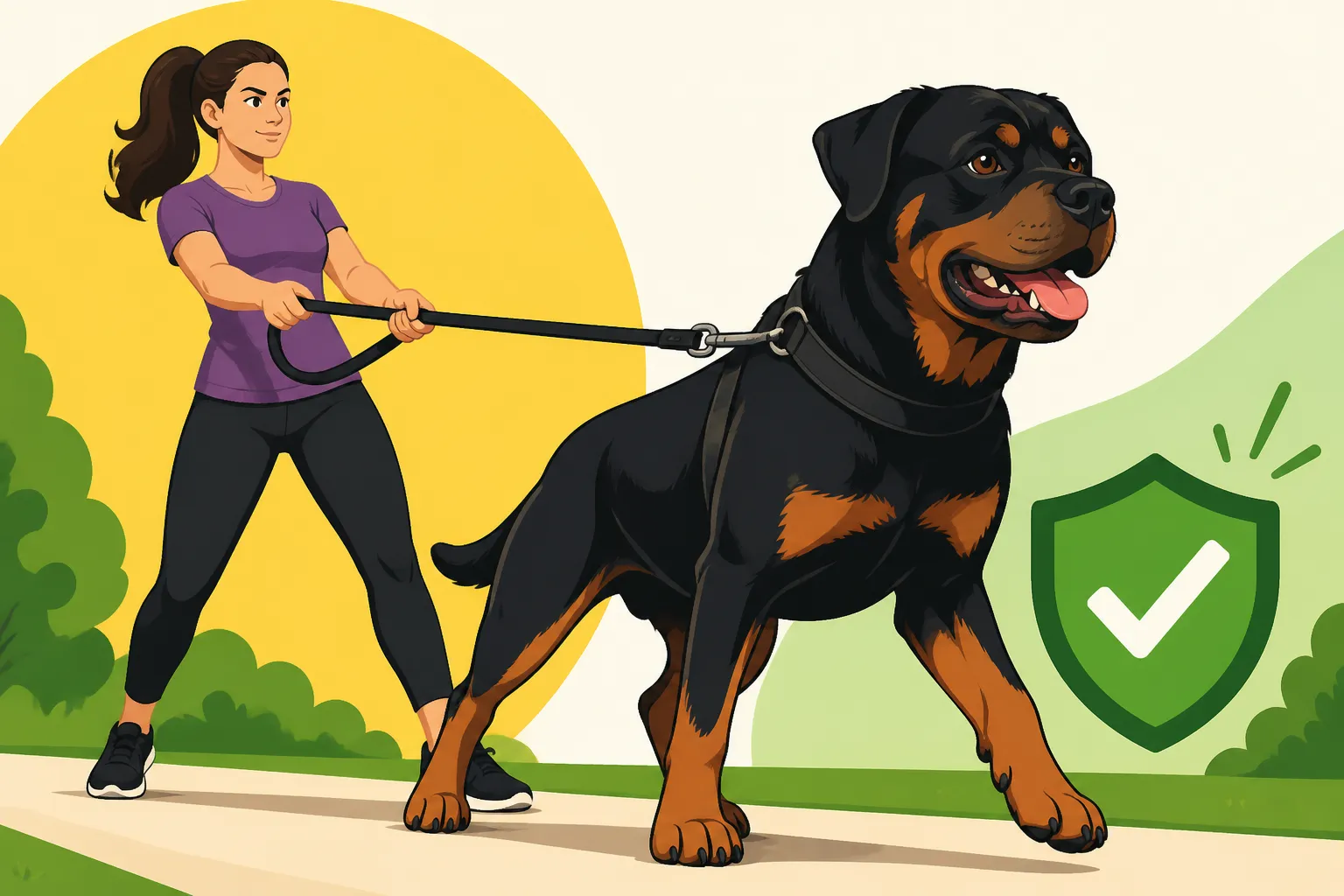
- Two-Handed Grip and Stance: This is critical for safety. Never wrap the leash around your wrist or hand. Instead, hold the end loop in one hand, and then use your other hand closer to the dog for more immediate control and to shorten the leash if needed. Keep your elbows tucked close to your body, and maintain a balanced stance with your feet shoulder-width apart. If your dog pulls suddenly, lean into your core strength rather than relying on just your arms. This gives you more stability and control. The concept of a strong, reliable connection also ties into the discussion of The Long Line Strength a Rottweiler Needs for safe training, even if off-leash.
Training Aids and Their Ethical Use
Beyond harnesses and standard leashes, there are other training tools that some handlers find effective, but these come with important caveats.
- Prong Collars (Correction Collars): These collars have blunt metal prongs that rest against your dog's neck. When the leash is pulled, the prongs apply even pressure around the neck, mimicking a mother dog's correction. Proponents argue they provide very clear, immediate feedback that can significantly reduce pulling with minimal force from the handler. However, they are highly controversial and must be used correctly and humanely by an educated handler. Improper use can cause physical harm and psychological distress. If you consider a prong collar, seek out a certified professional trainer who has extensive experience with them and can teach you how to use it safely and effectively. Never use one without professional guidance. This is a topic thoroughly explored in Prong Collars and Why Trainers Argue About Rottweilers.
- E-Collars (Electronic Collars): These collars deliver a static correction (often called a "stim" or "tap") via a remote. Like prong collars, they are contentious. When used correctly by a skilled professional, they can be valuable for reliable recall and off-leash control. However, like prong collars, incorrect use can be harmful, causing fear, anxiety, and aggression. Again, if you're even considering an e-collar, professional, hands-on instruction from a qualified, ethical trainer is absolutely non-negotiable.
The key takeaway for any training aid is this: the tool is only as good as the hand using it. Always prioritize humane, positive-reinforcement-based training methods first, and if you choose to explore more advanced tools, do so under the direct guidance of a reputable professional.
Training Strategies for a Well-Mannered Walker
No amount of gear can replace solid training. A well-trained Rottweiler, even a large one, is a joy to walk. The secret? Start early, be consistent, and make it a positive experience.
Foundation: Early Training and Socialization
The absolute best time to start teaching good leash manners is when your Rottweiler is a tiny puppy. They might be small and cute now, but they won't be for long! Waiting until they're 60 pounds and already have a pulling habit makes the job infinitely harder. Puppy classes are invaluable for teaching basic commands like "sit," "stay," and "heel" in a distracting environment. They also provide crucial socialization, helping your puppy become comfortable with new sights, sounds, people, and other dogs. This early exposure builds confidence and reduces reactivity later on, which can prevent sudden lunges or fear-based behaviors on walks. The online programs from BAXTER & Bella can be a great resource for getting a head start on this foundational training from the comfort of your home, setting up success before your puppy grows too large. Never underestimate Why Rottweiler Training Cannot Wait Until Six Months.
Teaching Loose Leash Walking
This is the holy grail of comfortable walks. The goal is for your Rottweiler to walk beside you with a loose leash, not pulling you down the street.
- Stop and Go Method: When your Rottweiler pulls ahead, immediately stop walking. Don't say anything, don't yank the leash. Just stand still. As soon as the leash slackens (even for a second) or your dog looks back at you, take a step forward. Repeat this every single time they pull. Your dog quickly learns that pulling makes the walk stop, and a loose leash makes it continue.
- Change Direction: Another effective technique is to change direction frequently. If your dog is pulling to the left, suddenly turn right. If they're pulling forward, turn around and walk the other way. This keeps them paying attention to you and prevents them from getting fixated on pulling in one direction.
- Reward Proximity: Lavishly praise and reward your Rottweiler whenever they are walking nicely beside you on a loose leash. Use high-value treats (small pieces of cooked chicken, cheese, or hot dogs work wonders) and enthusiastic verbal praise. You want them to associate a loose leash and walking by your side with good things. Consistency is the most important factor here; every walk is a training opportunity. More in-depth strategies are covered in Teaching a Rottweiler Not to Pull at 110 Pounds.
Practicing Crucial Commands on Leash
Beyond loose leash walking, several commands are essential for safety and control, especially for a smaller handler.
- "Heel" or "Let's Go": This command means your dog should walk right next to you, matching your pace. Practice this in quiet environments first, gradually introducing more distractions. Reward heavily for sustained heeling.
- "Leave It": This is a lifesaver. Teach your Rottweiler to ignore distractions like food on the ground, other dogs, or even that tempting squirrel. Start with low-level distractions indoors and gradually increase the challenge. A strong "leave it" can prevent a sudden lunge that might otherwise pull you off your feet. Explore strategies like Rottweiler Recall Away From a Squirrel to build this strong impulse control.
- "Sit" and "Stay": These commands are excellent for impulse control. Use them at street corners before crossing, when greeting (or choosing not to greet) other people or dogs, or when you need a moment to collect yourself. A calm "sit" helps reset your dog's focus on you.
Enlisting Professional Help
There's absolutely no shame in seeking professional guidance. In fact, for a powerful breed like a Rottweiler, it's often highly recommended, especially for smaller handlers.
- When to Call a Trainer: If you're struggling with consistent pulling, reactivity, or feel generally overwhelmed on walks, it's time to call in the cavalry. A good trainer can observe your interactions, identify specific challenges, and provide tailored strategies.
- Finding the Right Professional: Look for a certified professional dog trainer (CPDT-KA or similar) who has extensive experience with large, powerful breeds like Rottweilers. Ask about their methods and ensure they use humane, positive-reinforcement-based techniques. Group classes can be helpful, but one-on-one sessions might be more beneficial for specific leash-handling issues. The personalized feedback can make a huge difference in your confidence and your dog's behavior. Finding a truly good trainer can be a game-changer; for tips on this, read Finding a Rottweiler-Experienced Trainer Near You.
Situational Awareness and Safety on Walks
Beyond gear and training, your awareness of your surroundings and your dog's cues is crucial for a safe and enjoyable walk.
Reading Your Rottweiler and the Environment
Your Rottweiler is constantly communicating, and learning to understand their body language can help you prevent problems before they start.
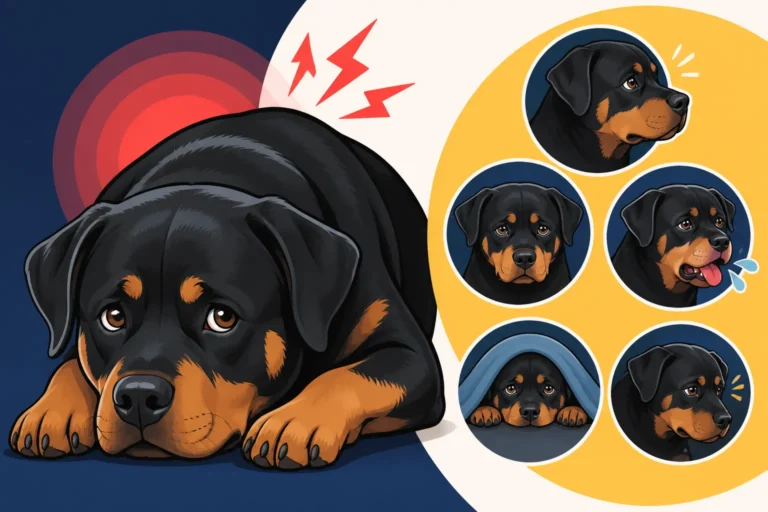
- Understanding Their Cues: Look for subtle signs that your dog is becoming alert or anxious: a stiffening of the body, staring intently, ears swiveling, or even a low growl or "whale eye" (showing the whites of their eyes). These are all signals that your dog is reacting to something in the environment. Being able to read a still but not relaxed Rottweiler is key, as discussed in Reading a Still Rottweiler That Is Not Relaxed.
- Environmental Triggers: Be aware of common triggers for your Rottweiler. Is it other dogs, children on bikes, loud trucks, or people approaching too quickly? Knowing what sets your dog off allows you to anticipate and proactively manage the situation by creating distance or redirecting their attention before they react. This also includes understanding The Rottweiler Guarding Instinct and How to Shape It so you know what they might react to when patrolling with you.
Managing Unexpected Encounters
No matter how well-trained your dog is, you'll inevitably encounter unpredictable situations. Having a plan can make all the difference.
- Creating Space: If you see a potential trigger approaching (e.g., an off-leash dog, a boisterous child), calmly change direction, cross the street, or step behind a parked car or bush to create distance. The goal is to avoid direct confrontation and keep your dog under their threshold. You're the leader, and sometimes leadership means avoiding conflict.
- Redirection and Engagement: If you can't avoid an encounter, try to redirect your Rottweiler's attention to you. Use a cheerful voice, offer a high-value treat, or ask for a simple command like "sit" or "watch me." The goal is to break their focus on the trigger and re-engage them with you. Sometimes, a well-placed body block or Rottweiler Leaning and Body Blocking can create physical space and signal to your dog that you have the situation under control.
- The "U-Turn" Maneuver: If a situation is escalating, a quick U-turn and walking in the opposite direction can be effective. It tells your dog, "We're leaving this situation," and gives you an immediate way to disengage. This is a common strategy when avoiding issues like Rottweiler Dog Park Risks at Adult Size in a public setting, even if not an actual dog park.
Self-Protection and Personal Safety
While the focus is on controlling your Rottweiler, it's also important to consider your own safety.
- Awareness of Your Surroundings: Always be mindful of your surroundings, especially if you're walking alone. Stay on well-lit paths, avoid isolated areas, and consider walking with a friend if you feel vulnerable.
- Personal Safety Devices: Carrying a personal alarm or pepper spray can provide an extra layer of security, not just from human threats but potentially from aggressive off-leash dogs. Your confidence in handling an emergency situation, whatever its source, is part of being a strong leader for your Rottweiler.
Walking a powerful Rottweiler as a smaller person is absolutely achievable and can be incredibly rewarding. It boils down to a blend of thoughtful equipment choices, consistent positive-reinforcement training, and a confident, proactive approach. Remember, you're not trying to overpower your dog; you're teaching them to be a polite, cooperative partner on the leash. With patience and dedication, those walks will become a highlight of your day.
Here's a quick comparison of popular leash attachments:
| Device Type | Primary Control Mechanism | Pros | Cons | Best For |
|---|---|---|---|---|
| Flat Collar | Neck pressure (when dog pulls) | Simple, comfortable for non-pullers, holds ID and tags | Little control over strong pullers, can cause neck strain and injury | Well-trained dogs, identification, light leash work |
| Front-Clip Harness | Redirects pulling force to the side/back of the dog | Significantly reduces pulling, kinder than neck pressure | Can tangle legs if ill-fitting, dog can still pull if very determined | Moderate to strong pullers, preventing neck and tracheal injury, smaller handlers |
| Head Halter (Halti) | Gentle pressure on muzzle and back of head, controls head | Excellent control over the entire dog, easily redirects | Requires desensitization and positive association, some dogs try to paw it off | Strong pullers, reactive dogs, handlers needing maximum leverage |
| Prong Collar | Applies even pressure around the neck via blunt prongs | Provides very clear communication, strong correction | Controversial, requires expert instruction for safe and humane use | Experienced handlers, specific training issues (under professional guidance) |
Disclaimer
This article is for general informational purposes only and does not constitute professional advice. Laws, prices and regulations vary by location and change over time. Consult a qualified professional for guidance on your specific situation.