The Five Rottweiler CHIC Evaluations Listed Out
Finding a responsible Rottweiler breeder can feel like navigating a minefield of paperwork, obscure acronyms, and conflicting advice, leaving many prospective owners feeling overwhelmed and unsure of what truly matters for their future companion's health. This guide is here to cut through the confusion, clearly laying out the five essential health evaluations that contribute to a Rottweiler earning its coveted Canine Health Information Center (CHIC) number, so you can confidently make informed decisions.
Understanding the CHIC Program's Purpose
When you're looking for a Rottweiler puppy, or even considering breeding your own Rottweiler, you'll inevitably encounter terms like "OFA certified" or "CHIC number." It's easy to dismiss these as mere breeder jargon, but they represent a critical framework designed to improve the health of purebred dogs. The Canine Health Information Center (CHIC) program, a joint venture between the Orthopedic Foundation for Animals (OFA) and the AKC Canine Health Foundation, isn't about guaranteeing a perfectly healthy dog – because let's face it, no living creature comes with such a promise. Instead, it's about providing a standardized, centralized database for breed-specific health testing results.
The program exists to encourage breeders to conduct specific, recommended health screenings for their dogs before breeding them, making those results publicly available. This transparency is key. For a breed like the Rottweiler, known for its strong genetic predispositions to certain conditions, having a transparent record of health clearances helps breeders make more informed decisions, aiming to reduce the incidence of hereditary diseases over generations. Think of it as a commitment to the future of the breed, a collective effort to breed healthier, more robust Rottweilers.
Why a CHIC Number is More Than Just a Certificate
A CHIC number isn't just another piece of paper to hang on the wall; it signifies that a Rottweiler has undergone all the health screenings recommended by the Rottweiler health community and the OFA, and that those results are publicly accessible. It doesn't mean the dog is "perfect" or that it will never develop any health issues. What it does mean is that the breeder has actively participated in a recognized program to screen for the most prevalent and impactful hereditary diseases in the breed.
For prospective puppy owners, seeing that both parents of a litter have CHIC numbers offers immense peace of mind. It tells you that the breeder is prioritizing health, investing time and money into proper screening, and is willing to be transparent about the results, whether they're excellent or just "passable." It’s an indicator of a breeder's commitment to ethical practices and to reducing the likelihood of you experiencing devastating conditions like debilitating joint issues or early-onset heart disease in your beloved companion. While even a CHIC-certified dog can develop unforeseen issues, it significantly tips the odds in your favor, and you’ll know the breeder did their utmost to start your puppy off on the right paw.
The Core Five: Mandatory Health Clearances for a CHIC Rottweiler
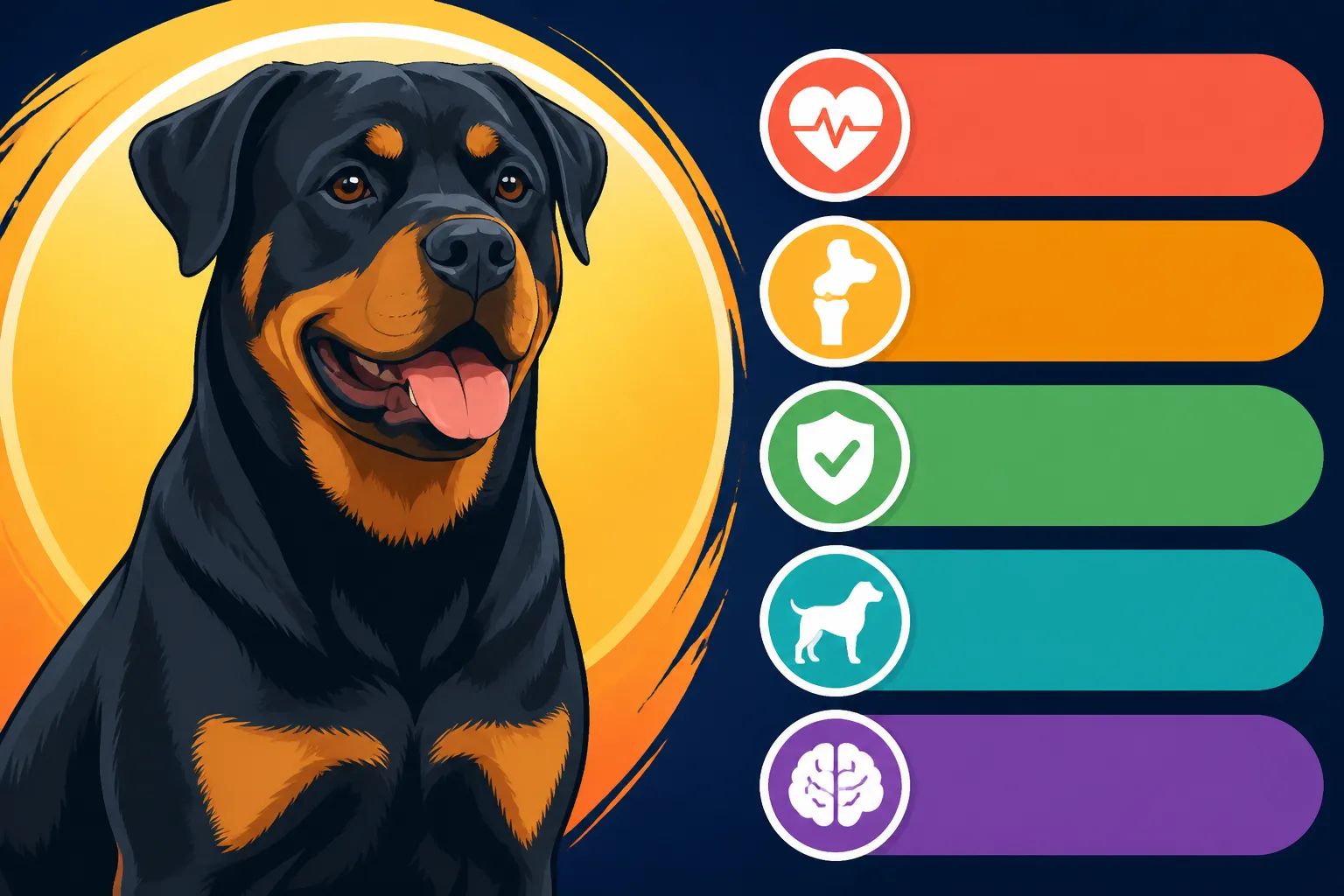
For a Rottweiler to earn its CHIC certification, it must undergo five specific health evaluations. These aren't arbitrary tests; they target the most common and serious hereditary conditions identified within the breed. Each evaluation plays a vital role in painting a comprehensive picture of a dog's genetic health, offering valuable insights for future breeding decisions and giving puppy buyers a clear standard to look for.
Let's break down each of these crucial screenings.
Hip Dysplasia Evaluation: The OFA's Role
Hip dysplasia is a heartbreaking reality for many large breed dog owners, and Rottweilers are unfortunately prone to this condition. It's a genetic malformation of the hip joint, where the ball and socket don't fit together properly, leading to pain, arthritis, and sometimes severe lameness. The gold standard for screening for this condition is an X-ray evaluation by the Orthopedic Foundation for Animals (OFA).
For a Rottweiler to receive an OFA hip certification, X-rays of their hips must be taken when the dog is at least 24 months old. This age is critical because it's when the dog's skeletal maturity is generally reached, allowing for a more accurate assessment of the hip joint's conformation. These X-rays are then submitted to the OFA, where a panel of three independent, board-certified veterinary radiologists evaluate them. They look for specific indicators of hip laxity, shallow sockets, and degenerative joint disease. The hips are then graded as Excellent, Good, Fair (all considered passing), Borderline, or Dysplastic (Mild, Moderate, or Severe).
A common frustration for owners can be the waiting period until 24 months. You get a puppy, you love them, and you might see them running around like a maniac, totally unaware of the potential issues lurking. That's why understanding Rottweiler Growth Plates and Why They Close So Late is so important, because strenuous exercise on immature joints can exacerbate issues. A breeder providing a copy of the parents' OFA hip certifications, preferably with a grade of Good or Excellent, is a strong indicator of their commitment to soundness. Even a "Fair" grade, while not ideal, still passes the OFA's criteria for a non-dysplastic hip and indicates a functional, healthy joint within acceptable limits. You can read more about Rottweiler Hip Dysplasia and the OFA Grade to understand the nuances of these results.
Elbow Dysplasia Assessment: Looking for Trouble Spots
Just like hips, elbows are another common trouble spot for Rottweilers. Elbow dysplasia is actually a complex condition encompassing several developmental abnormalities of the elbow joint, all leading to incongruity, pain, and arthritis. These conditions can include fragmented coronoid process (FCP), ununited anconeal process (UAP), osteochondritis dissecans (OCD), and elbow incongruity. Dogs affected by elbow dysplasia often show lameness in their front legs, especially after exercise.
Similar to hip evaluations, elbow X-rays are submitted to the OFA for evaluation after the dog reaches 24 months of age. The OFA radiologists examine these X-rays for signs of elbow incongruity or degenerative joint disease. The results are simpler than hips: they are either graded as Normal (clear) or Dysplastic (Grade I, II, or III, with Grade III being the most severe). Only "Normal" is considered passing for CHIC.
It’s not uncommon to see a Rottweiler with a "Grade I" elbow, which can be frustrating because it’s a failure for CHIC. However, it’s a minor degree of change. Still, the goal for responsible breeding is to strive for "Normal" clearances to minimize the risk of passing on this debilitating condition. Early detection through these screenings helps breeders make informed choices, potentially preventing future generations from suffering. You can delve deeper into Rottweiler Elbow X-Rays Taken at Twenty-Four Months to understand the specifics of this crucial evaluation.
Cardiac Health: Protecting That Big Heart
Rottweilers are a powerful, athletic breed, and a strong, healthy heart is paramount to their quality of life. Unfortunately, they are predisposed to certain cardiac conditions, most notably subaortic stenosis (SAS) and dilated cardiomyopathy (DCM). Subaortic stenosis is a congenital heart defect that involves a narrowing below the aortic valve, making the heart work harder to pump blood. Dilated cardiomyopathy is a disease of the heart muscle itself, causing it to become enlarged and weakened over time. Both can significantly impact a Rottweiler's lifespan and well-being.
For CHIC certification, Rottweilers must have a cardiac evaluation performed by a board-certified veterinary cardiologist. This typically involves an echocardiogram, which is an ultrasound of the heart, allowing the specialist to visualize the heart's structure and function in detail. They will assess the size of the heart chambers, the thickness of the heart walls, the function of the valves, and the blood flow, specifically looking for any evidence of SAS or DCM. A preliminary screening may be done with auscultation (listening with a stethoscope) by a general vet, but for CHIC, the cardiologist's full evaluation is required.
The results of the echocardiogram are then submitted to the OFA, and the dog is certified as "Normal" or "Affected." This is a pass/fail test for CHIC. While an annual auscultation by your regular vet is a good idea, a full cardiac workup with an echocardiogram by a specialist provides a much more definitive picture of your Rottweiler's heart health. If you hear about a murmur in a puppy, it's worth understanding Subaortic Stenosis in Rottweiler Puppies more deeply. For adult dogs, The Rottweiler Echocardiogram at Two Years Old is specifically required for CHIC and is a critical screening.
Eye Certification: Clear Vision for a Long Life
Healthy eyes are essential for any dog, especially an active, working breed like the Rottweiler. They can be prone to various hereditary eye conditions, including entropion (where the eyelid rolls inward, irritating the eye), ectropion (where the eyelid rolls outward), cataracts, and progressive retinal atrophy (PRA). These conditions can cause discomfort, impair vision, and in severe cases, lead to blindness.
To meet CHIC requirements, Rottweilers must undergo an eye examination performed by a board-certified veterinary ophthalmologist. This is often referred to as a "CERF" exam, though the OFA now administers the Companion Animal Eye Registry (CAER) program. During the exam, the ophthalmologist will thoroughly inspect the dog's eyes, looking for any signs of inherited eye disease. This typically involves dilating the pupils to get a better view of the retina and optic nerve. The results are then submitted to the OFA.
Unlike some other tests, eye certifications need to be renewed regularly – typically every three years for CHIC, to ensure the dog remains free of detectable hereditary eye disease throughout its breeding life. This ongoing evaluation is important because some conditions can develop later in life. A "Normal" result, meaning no observable hereditary eye disease, is required for CHIC. You can find more information about Rottweiler Eye Exams Recertified Every Three Years if you're interested in the details of the ongoing process.
Juvenile Laryngeal Paralysis & Polyneuropathy (JLPP): A Critical DNA Test
JLPP, or Juvenile Laryngeal Paralysis & Polyneuropathy, is a relatively new but extremely serious genetic condition that has gained significant attention in the Rottweiler community. It's a progressive neurological disease that typically manifests in puppies between 3 and 18 months of age. Affected puppies can experience paralysis of the larynx (the voice box), leading to difficulty breathing, changes in bark, and difficulty swallowing. It can also affect other nerves, causing weakness, incoordination, and muscle wasting. Sadly, it is a fatal disease, and affected puppies rarely live past two years of age.
Because JLPP is a recessive genetic disorder, both parents must be carriers for a puppy to be affected. This is why DNA testing is so vital. For CHIC certification, Rottweilers must undergo a specific DNA test to determine their JLPP status: clear, carrier, or affected. This test is typically done via a cheek swab or blood sample.
The results are straightforward and submitted to the OFA:
- Clear: The dog does not carry the gene and cannot pass it on to offspring.
- Carrier: The dog carries one copy of the gene and can pass it on, but will not be affected itself.
- Affected: The dog has two copies of the gene and will develop the disease.
For responsible breeding, at least one parent of any litter must be genetically clear of JLPP. This ensures that no puppies will be affected by the disease, even if the other parent is a carrier. Breeding two carriers together would result in 25% of the puppies being affected, 50% being carriers, and 25% being clear. This test is non-negotiable for CHIC and for the ethical breeding of Rottweilers today. Understanding JLPP and the RAB3GAP1 Gene in Rottweilers is crucial for any Rottweiler owner or prospective owner.
Here's a quick summary table of the five mandatory CHIC evaluations for Rottweilers:
| Evaluation | Minimum Age for Testing | Testing Method | CHIC Passing Result | Key Condition(s) Screened For |
|---|---|---|---|---|
| Hip Dysplasia (OFA) | 24 months | X-ray evaluation by OFA radiologists | Excellent, Good, Fair | Malformation of the hip joint, leading to arthritis and lameness |
| Elbow Dysplasia (OFA) | 24 months | X-ray evaluation by OFA radiologists | Normal | Developmental abnormalities of the elbow joint, causing pain/arthritis |
| Cardiac Evaluation (OFA) | 24 months | Echocardiogram by board-certified cardiologist | Normal | Subaortic Stenosis (SAS), Dilated Cardiomyopathy (DCM) |
| Eye Certification (OFA CAER) | 12 months (annual/triennial) | Exam by board-certified ophthalmologist | Normal | Entropion, ectropion, cataracts, PRA, other hereditary eye diseases |
| JLPP DNA Test (OFA) | No minimum age | DNA test (cheek swab/blood) | Clear or Carrier | Juvenile Laryngeal Paralysis & Polyneuropathy |
Note: For JLPP, while carriers are technically "passing" for CHIC, responsible breeding dictates that at least one parent must be clear to avoid affected offspring.
Navigating the CHIC Process and What to Ask Breeders
Understanding these five evaluations is the first big step, but then comes the practical application: how do you use this information when looking for a puppy, or even when planning for your own Rottweiler's health? It's not just about knowing what the tests are, but how to interpret the results and what questions to ask to ensure you're supporting ethical breeding.
This isn't just about avoiding problems; it's about setting your Rottweiler up for the best possible life. Knowing that a breeder has done their due diligence means you're investing in a puppy whose foundational health has been considered, potentially saving you immense heartache and significant veterinary bills down the line. Remember, even with diligent screening, no dog is guaranteed perfect health, but you can significantly stack the odds in your favor. And let's be realistic, when you're talking about conditions like hip dysplasia or heart disease, the costs of treatment and management can be staggering, making something like pet insurance from providers like Healthy Paws a wise consideration, even for a well-bred puppy.
Interpreting Results and What "Pass" Really Means
When reviewing health clearances, especially for something like hip or elbow dysplasia, you might see terms like "Fair" or "Grade 1." It's important to understand what these mean within the context of CHIC. For hips, OFA grades of Excellent, Good, or Fair are all considered passing for a CHIC number, indicating that the dog's hips are not dysplastic. A "Fair" hip is still a healthy, functional hip, just not as tightly conformed as an "Excellent" one.
For elbows, however, only a "Normal" grade passes CHIC. Any grade of dysplasia (Grade 1, 2, or 3) means the dog has not met the CHIC requirement for elbows. Similarly, for cardiac and eye exams, a "Normal" certification from the specialist is required. The JLPP DNA test is unique in that both "Clear" and "Carrier" statuses are acceptable for CHIC, provided that when two dogs are bred, at least one is "Clear" to prevent affected puppies.
Don't be afraid to ask for explanations. A good breeder will be happy to walk you through the paperwork and explain what each certification means. They understand that this is a significant investment for you, both emotionally and financially, and transparency builds trust. You should always expect to see The Five Clearances a Rottweiler Breeder Must Have if you’re looking at a responsibly bred litter.
Asking the Right Questions of a Rottweiler Breeder
When you're ready to speak with breeders, armed with your newfound knowledge of CHIC evaluations, you'll be able to ask targeted questions that distinguish responsible breeders from those cutting corners. Beyond asking if their dogs have CHIC numbers, you should inquire about:
- Copies of Certifications: Always ask to see the physical copies or links to the OFA database for both parents. Don't just take their word for it. The OFA website allows you to search for any dog's public health clearances by registered name or registration number. This is a vital step.
- Specific Grades: For hips, ask about the specific OFA grade (Excellent, Good, Fair). For elbows, ensure it's "Normal."
- JLPP Status: Confirm the JLPP status of both parents, and ensure at least one is "Clear."
- "Why" Behind the Tests: A good breeder will be able to articulate why they do these specific tests, showing an understanding of breed health concerns, not just ticking boxes.
- Longevity in Lines: While not a CHIC requirement, ask about the longevity of their dogs' ancestors. Do they know how long the grandparents and great-grandparents lived, and what they eventually passed from? This helps get a picture of overall health trends.
- Vaccination Reactions: While not health clearances, it's good to ask about any past Rottweiler Vaccination Reactions and When to Call. This shows a breeder's attentiveness to their dogs' overall health.
Remember, a health-tested puppy from reputable lines will cost more upfront. You might be looking at What a Health-Tested Rottweiler Puppy Costs and experiencing sticker shock. However, this initial investment is often dwarfed by the potential costs of managing a dog with severe, preventable hereditary conditions. This is where the wisdom of investing in a well-bred puppy truly shines, and why understanding Why Health-Tested Rottweiler Parents Raise the Price is so crucial.
Planning for Your Own Rottweiler's Health Journey
Even with the best breeding, owning a Rottweiler means being proactive about their health throughout their life. These large, powerful dogs have specific needs that extend beyond puppyhood. While CHIC tests screen for genetic predispositions, regular veterinary care, a high-quality diet, appropriate exercise, and continued vigilance are paramount.
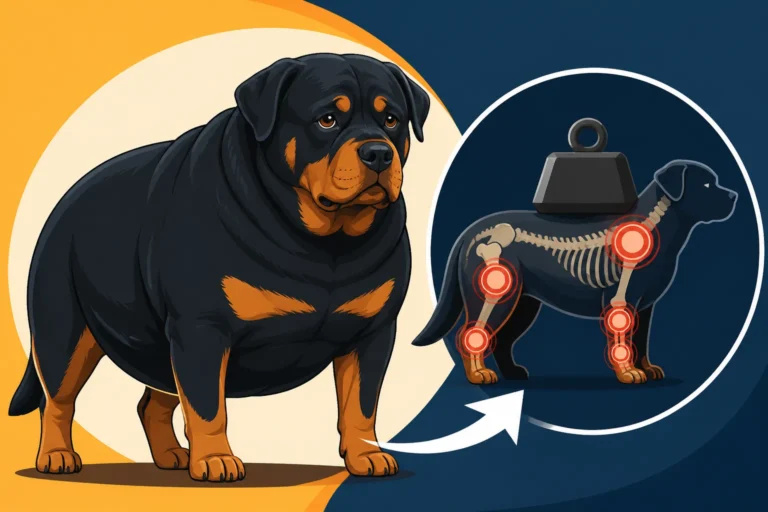
As your Rottweiler ages, for instance, discussing Cancer Screening for a Rottweiler Past Six with your vet becomes essential, as they are prone to certain cancers. Be mindful of their weight, as obesity places immense strain on joints, exacerbating any underlying orthopedic issues. Consider discussing joint supplements with your vet, especially if your Rottweiler is particularly active or has a family history of joint issues. And always, always keep up with routine check-ups and preventative care. Having a solid understanding of these foundational health clearances helps you, as an owner, advocate for your Rottweiler's health every step of the way, ensuring they live the longest, happiest, and healthiest life possible.
Disclaimer
This article is intended for informational purposes only and does not constitute veterinary advice. Always consult with a qualified veterinarian for any health concerns or before making any decisions about your Rottweiler's care or treatment.