Why Rottweiler Results Are Published Pass or Fail
It can be incredibly confusing and even frustrating when you’re looking into the health of your beloved Rottweiler, especially when you encounter official health clearance results that are simply categorized as "pass" or "fail." It feels so binary, so absolute, and sometimes, it doesn't quite seem to capture the full picture. This guide is here to unravel why these critical health evaluations are structured this way, focusing on the rigorous standards that protect the breed's future and help you understand what those black-and-white results truly mean for your Rottweiler.
Understanding Health Clearances for Rottweilers
When you commit to a Rottweiler, you're not just bringing a dog into your home; you're often investing in a lineage, a set of genetics, and a future that you hope will be long and healthy. This is where health clearances become absolutely paramount. They are specialized veterinary examinations and tests performed on breeding dogs to assess them for genetic conditions common in the breed. The goal is to identify and ideally remove affected animals, and sometimes even carriers, from the breeding pool to reduce the incidence of these diseases in future generations.
What "Clearances" Really Mean
"Clearances" isn't just a fancy term; it's a commitment to proactive health management. For Rottweilers, this typically involves a battery of tests for conditions that, unfortunately, can plague the breed. We're talking about things like hip and elbow dysplasia, certain heart conditions such as subaortic stenosis, various eye diseases, and even neurological disorders like Juvenile Laryngeal Paralysis & Polyneuropathy (JLPP). Each of these conditions can lead to significant pain, reduced quality of life, and substantial veterinary bills.
A responsible breeder doesn't just guess; they invest time, money, and effort to have their breeding stock evaluated by veterinary specialists. These specialists use standardized protocols to examine the dogs and provide an objective assessment. This isn't about giving a dog a clean bill of health for life – it's about determining its genetic suitability for breeding and giving prospective puppy owners the best possible chance at a healthy companion. Knowing that a puppy comes from parents with all their proper clearances, like those detailed in The Five Clearances a Rottweiler Breeder Must Have, provides immense peace of mind.
The Role of Registries and Health Databases
These aren't just informal assessments. There are well-established organizations dedicated to standardizing these health evaluations and maintaining public databases. The Orthopedic Foundation for Animals (OFA) is perhaps the most well-known in the United States, providing evaluations for hips, elbows, patellas, and even cardiac and thyroid issues. For eyes, the OFA now incorporates the former Canine Eye Registry Foundation (CERF) examinations into its Eye Certification Registry.
These organizations exist for several crucial reasons:
- Standardization: They ensure that evaluations are done consistently across different veterinary clinics and specialists, allowing for reliable comparisons. This means an "Excellent" hip rating from one vet should truly mean the same as an "Excellent" from another.
- Transparency: The results, whether passing or failing, are often publicly accessible. This allows prospective puppy buyers to verify the health claims of a breeder. You can actually look up a dog by its registered name or even microchip number and see its OFA or other health certifications. This transparency is a cornerstone of ethical breeding.
- Genetic Improvement: By tracking the health status of a vast number of dogs, these databases contribute to a broader understanding of breed health trends and help guide breeding decisions aimed at reducing genetic disease incidence. Without these records, breeders would be working in the dark, and we wouldn't see improvements in the overall health of the breed over time, which directly impacts the Rottweiler Lifespan and the Eight to Ten Year Average.
These registries also often issue a CHIC (Canine Health Information Center) number, indicating that a dog has had all the recommended health screenings for its breed and that the results are publicly available. This is a vital benchmark that helps streamline the process of verifying a dog's complete health history, starting with foundational steps like Why Rottweiler CHIC Starts With a Microchip.
The "Pass or Fail" Nature of Rottweiler Health Results
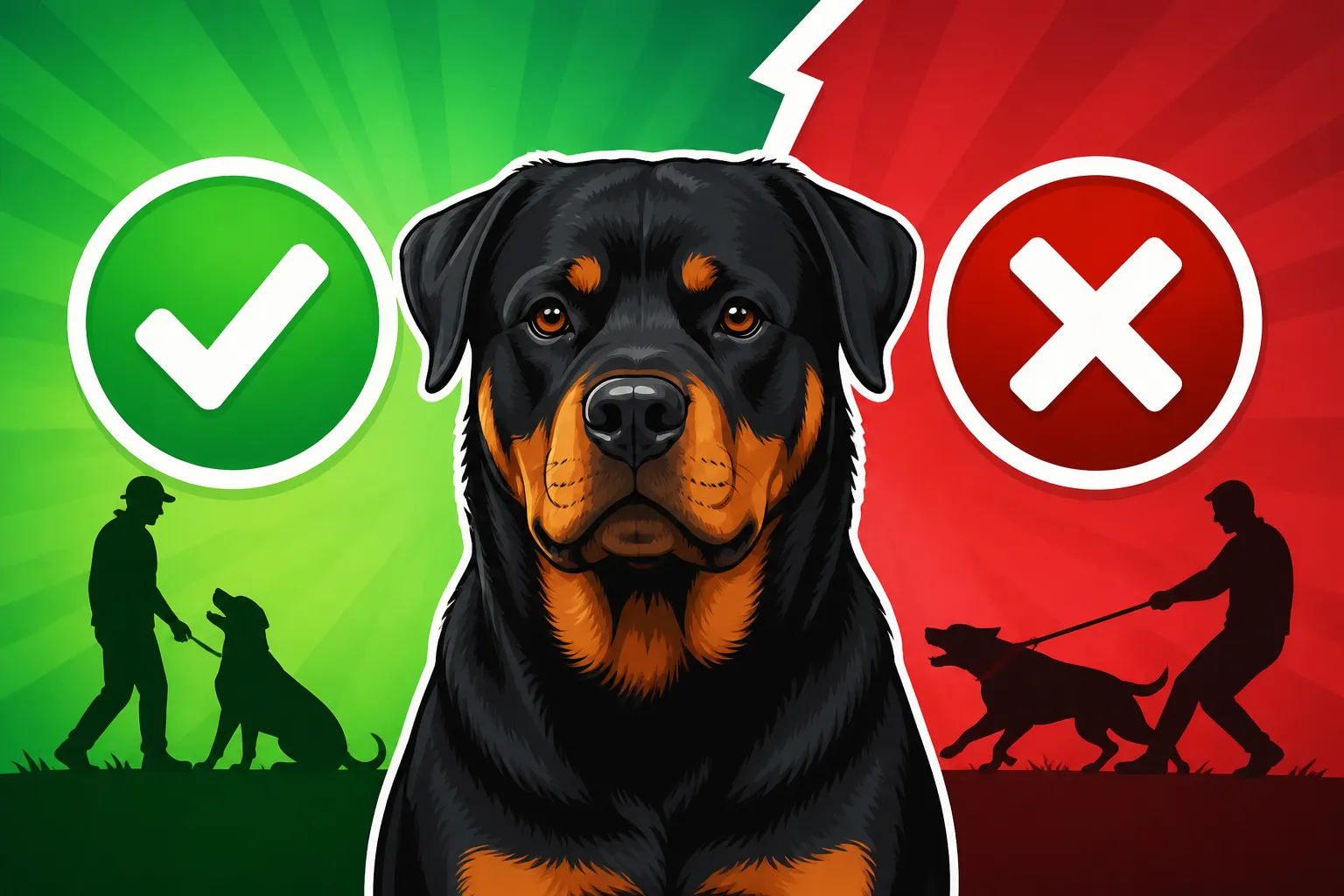
So, why the stark "pass or fail"? Why isn't there a "C-minus" or a "needs improvement" category for a dog's hips? The answer lies in the objective nature of the health conditions being screened and the clear-cut decisions breeders must make to protect the breed.
Objective Standards and Veterinary Assessment
Each health clearance involves a very specific, objective standard.
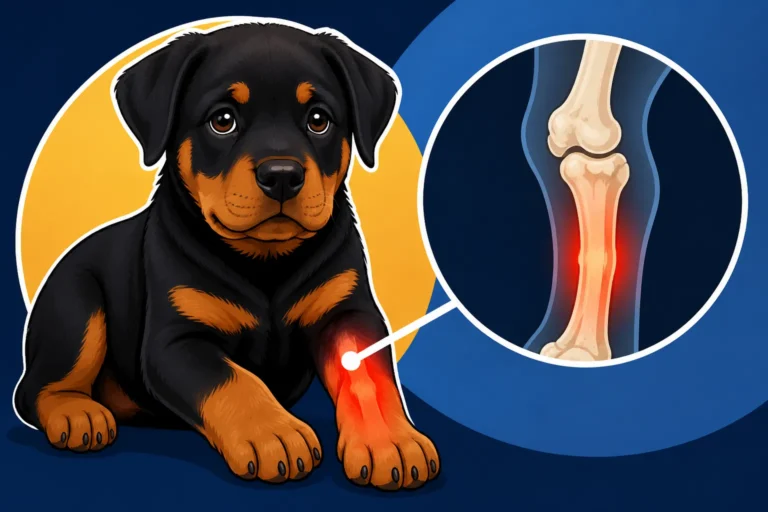
- For Hip and Elbow Dysplasia: A dog's radiographs are submitted to a panel of board-certified veterinary radiologists. They examine the anatomical structure, looking for specific indicators of joint laxity, bone malformation, or degenerative joint disease. They're not looking at a "pretty good" hip; they're looking for evidence of disease or structural predispositions that fall outside the acceptable range for breeding. These assessments are made against a stringent scale. For example, Rottweiler Hip Dysplasia and the OFA Grade goes into detail on what those grades mean.
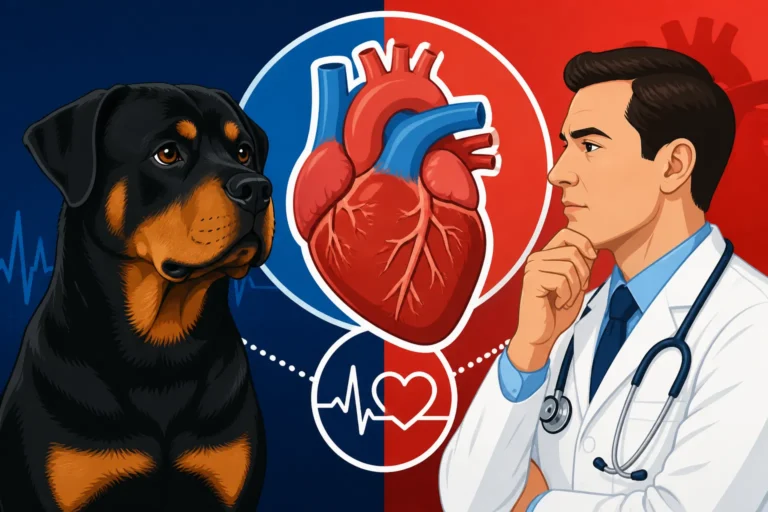
- For Cardiac Clearances: A board-certified veterinary cardiologist uses an echocardiogram (an ultrasound of the heart) to evaluate heart structure and function. They're specifically listening for murmurs and looking for conditions like Subaortic Stenosis. A heart either meets the healthy standard or it doesn't; there's little room for ambiguity when it comes to a genetic predisposition to a serious heart condition.
- For Eye Certifications: A board-certified veterinary ophthalmologist conducts a thorough eye exam. They're looking for inherited eye diseases that can lead to blindness or discomfort, requiring Rottweiler Eye Certification and the Three Year Rule for regular re-evaluation. Again, the presence or absence of these conditions is generally a yes/no answer from a breeding standpoint.
- For Genetic DNA Tests: Tests like those for JLPP and the Rottweiler DNA Test are even more clear-cut. A laboratory analyzes the dog's DNA for specific genetic markers. The result is typically "Clear" (meaning two healthy genes), "Carrier" (one healthy, one affected gene), or "Affected" (two affected genes). It’s purely scientific data.
These specialists are trained to identify very specific criteria, and the results are not subjective opinions. They are based on established medical definitions of disease or genetic predisposition.
Why There Isn't a "Partial Pass"
The reason for the binary "pass or fail" is rooted in the purpose of these clearances: to guide breeding decisions that improve the health of the breed.
- Protecting Future Generations: If a dog shows even mild signs of hip dysplasia, or carries a gene for a debilitating disease, breeding that dog responsibly requires a clear understanding of that risk. There's no "mildly dysplastic" that means "okay to breed with conditions." For a serious genetic health issue, a dog is either considered acceptable for breeding (a "pass") or it's not (a "fail"). The stakes are too high to allow for shades of grey that could put future puppies at risk. Imagine getting a puppy only to find out it has severe dysplasia at a young age, leading to immense pain and expensive surgeries, perhaps even with pet insurance like Healthy Paws. The upfront "pass or fail" aims to prevent that.
- Clarity for Breeders: Breeders need unambiguous guidance. If a dog's hips are "Borderline," "Mild," "Moderate," or "Severe" according to OFA, it's considered dysplastic and therefore "fails" for breeding purposes. Even if a "Borderline" dog might live a perfectly normal life, breeding it could still increase the risk of producing affected offspring. The goal is to move the breed away from these predispositions, not just to manage existing cases. This is why when you check a dog's public OFA records, you'll see a clear "Pass" (Excellent, Good, Fair) or "Fail" (Borderline, Mild, Moderate, Severe).
- Genetic Risk Management: In the case of DNA tests, a "Carrier" result isn't a "fail" for the individual dog in terms of its own health (it won't develop the disease), but it's crucial for breeding. A carrier can pass on the gene, so it must only be bred to a "Clear" dog to avoid producing "Affected" puppies. If bred to another carrier or an affected dog, it becomes a "breeding fail" as it risks producing affected offspring. So, while the dog itself is healthy, its breeding utility is strictly limited. Understanding this nuance is key to interpreting results like The RAB3GAP1 Test and What Clear Means.
The Impact on Breeding Decisions and Puppy Health
The "pass or fail" system directly dictates breeding choices. A breeder aims to pair dogs that both "pass" their respective health clearances, minimizing the risk of inherited diseases.
- Eliminating High-Risk Pairings: If a dog fails its hip clearance, it should not be bred. Period. Breeding it would knowingly perpetuate a serious, painful genetic condition. This is a fundamental ethical responsibility.
- Strategic Breeding with Carriers: For conditions like JLPP, a carrier is a "pass" in terms of its own health but needs careful consideration in breeding. An ethical breeder will only breed a carrier to a dog that is "Clear" of the condition. This ensures no puppies in that litter will be affected by the disease, though some might be carriers themselves. This careful planning helps manage genetic diversity while preventing disease, avoiding the devastating reality of What JLPP Actually Does to a Rottweiler.
- Informed Puppy Buyers: When you see "pass" results for a puppy's parents, it's your assurance that the breeder has taken significant steps to reduce the likelihood of those common, preventable genetic diseases. While no guarantee is absolute, it drastically improves the odds for your future Rottweiler's health and quality of life. This proactive approach saves heartache and potential financial strain in the long run, even if you have coverage from a provider like Healthy Paws.
Navigating and Interpreting Rottweiler Health Records
Understanding these pass/fail results involves a bit more than just a glance. Knowing the specifics of each test and how they're publicly presented is crucial for both breeders and prospective owners.
Decoding OFA Grades for Hips and Elbows
The OFA's grading system for hips is probably one of the most frequently discussed. When X-rays are submitted, three independent, board-certified radiologists review them and assign a grade. The final OFA hip grade is determined by the consensus of these three evaluations.
Here’s how it breaks down:
| OFA Hip Grade | Status for Breeding | Description |
|---|---|---|
| Excellent | PASS (Optimal) | Superior hip conformation, nearly perfect. Deep socket, tight joint. |
| Good | PASS (Acceptable) | Well-formed hips, good congruity, and joint integrity. |
| Fair | PASS (Acceptable) | Passable hip conformation, but with minor irregularities. Still considered within acceptable limits for breeding to improve the breed. |
| Borderline | FAIL (Questionable) | Some radiologists suspect mild dysplasia, others don't. OFA recommends re-evaluation at a later date. Not considered passing for breeding. |
| Mild Dysplasia | FAIL (Dysplastic) | Significant radiographic changes indicating hip dysplasia. Not suitable for breeding. |
| Moderate Dysplasia | FAIL (Dysplastic) | More pronounced signs of dysplasia, obvious subluxation. Not suitable for breeding. |
| Severe Dysplasia | FAIL (Dysplastic) | Marked dysplastic changes, severe subluxation, extensive secondary changes. Not suitable for breeding. |
It’s important to note that "Fair" is still considered a passing grade by OFA for breeding purposes, which sometimes surprises people. This is clearly explained in articles like Why a Fair Hip Grade Still Passes for Rottweiler CHIC. The goal is to improve the breed average, and breeding a "Fair" dog to an "Excellent" dog is still seen as a step towards that improvement, provided all other clearances are in order. However, many breeders strive for "Good" or "Excellent" as a personal standard.
For elbows, the OFA grades are simpler:
- Normal: PASS (No evidence of elbow dysplasia).
- Grade I Elbow Dysplasia: FAIL (Mild elbow dysplasia).
- Grade II Elbow Dysplasia: FAIL (Moderate elbow dysplasia).
- Grade III Elbow Dysplasia: FAIL (Severe elbow dysplasia).
The standard age for these evaluations is 24 months, as explained in Rottweiler Hips and Elbows and the 24-Month Rule and Rottweiler Elbow X-Rays Taken at Twenty-Four Months. This ensures that the dog's skeletal development is mature enough for an accurate assessment.
DNA Tests and Carrier Status
Genetic DNA tests, like those for JLPP, usually provide one of three results:
- Clear/Normal: The dog has two normal copies of the gene and will not develop the disease nor pass on an affected gene. This is a "pass" in every sense.
- Carrier: The dog has one normal copy and one affected copy of the gene. The dog will not develop the disease itself, but it can pass the affected gene to its offspring. This is a nuanced "pass" for the individual dog's health, but a "conditional pass" for breeding. A carrier Rottweiler can safely be bred to a "Clear" mate without producing affected puppies, but about half the litter will also be carriers.
- Affected: The dog has two copies of the affected gene and will develop the disease. This is a clear "fail" for the dog's health and breeding suitability.
For genetic conditions, knowing the carrier status is incredibly important. A responsible breeder will always disclose this and make sure that if they breed a carrier, the mate is always clear. This prevents affected puppies, which can suffer immensely. This is one of the crucial Health Papers to Ask a Rottweiler Breeder For when looking for a puppy.
Public Databases and Transparency
The beauty of the "pass or fail" system, particularly when coupled with organizations like OFA, is the transparency it offers. You don't have to just take a breeder's word for it. You can, and should, verify the health clearances of a potential puppy's parents through the OFA public database.
Simply go to the OFA website, enter the dog's registered name or registration number, and you can pull up all of its recorded health clearances. This allows you to see the actual results, the dates of the examinations, and the certifying organization. This level of transparency is essential for maintaining the integrity of breeding programs and for empowering prospective owners to make informed decisions. It helps ensure that breeders are truly working to improve the breed's health rather than just making claims.
The Lifelong Commitment to a Healthy Rottweiler
Ultimately, the "pass or fail" system for Rottweiler health clearances is a powerful tool designed to protect the breed and the families who love them. It provides clear, objective criteria for making crucial breeding decisions, reducing the incidence of debilitating genetic conditions.
While these clearances are primarily about breeding suitability, they also empower you as a dog owner. By understanding these results, you can appreciate the efforts of responsible breeders and make more informed choices when selecting a puppy. Even with the best genetics, no dog is immune to all health issues, and a lifetime of care, including proper nutrition, exercise, and regular vet check-ups, is paramount for your Rottweiler's well-being. Thinking ahead to senior years, understanding your dog's genetic predispositions can also help you prepare for challenges like Senior Rottweiler Mobility Decline or other age-related conditions. This comprehensive approach, starting with clear health records, is how we ensure our magnificent Rottweilers live the longest, happiest, and healthiest lives possible.
Disclaimer
Please remember that the information provided in this article is intended for general knowledge and informational purposes only, and does not constitute professional veterinary advice. Always consult with a qualified veterinarian for any health concerns or before making any decisions about your pet's health or medical care.