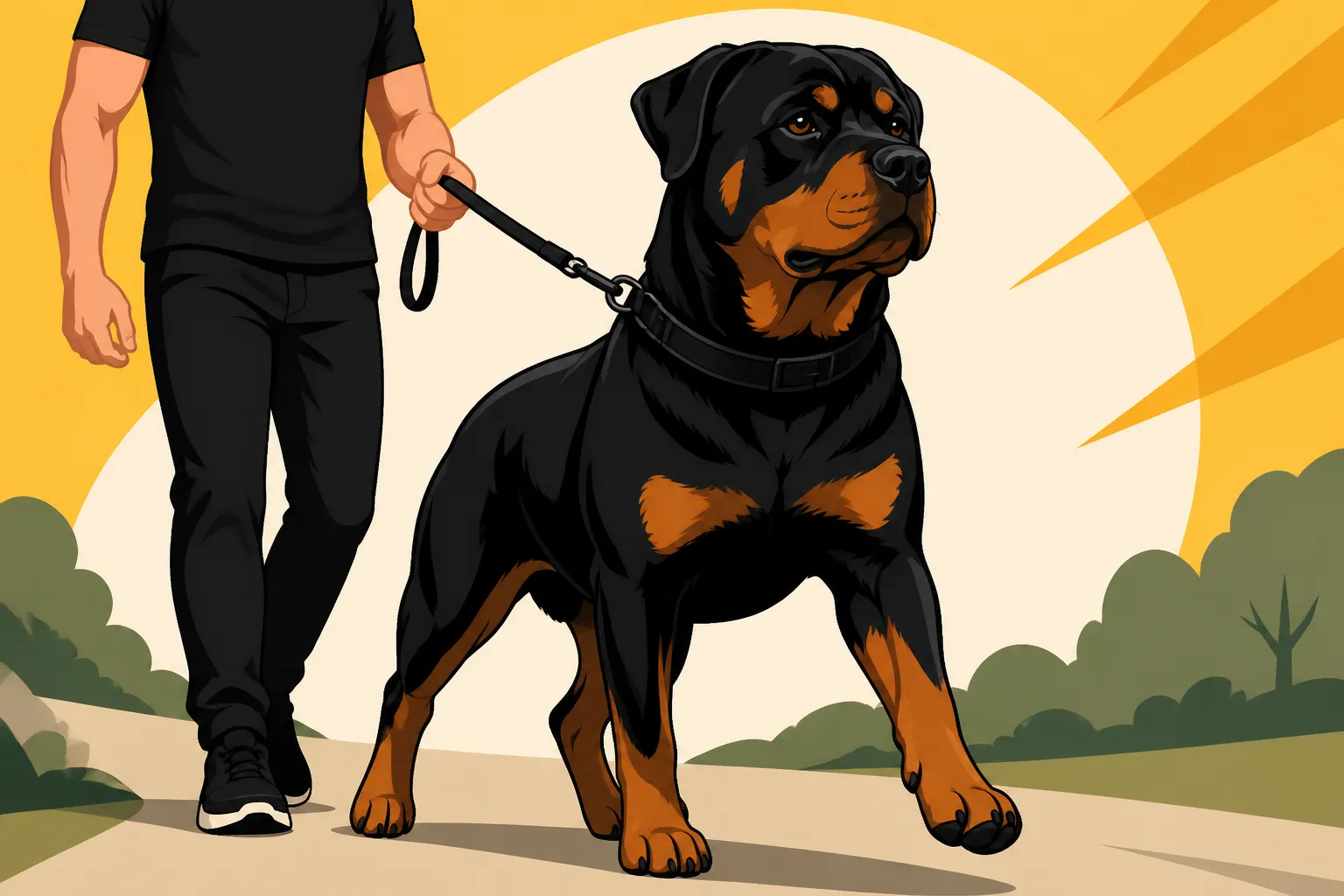
Rottweiler Leash Manners at a Hundred Pounds
One of the biggest anxieties for any Rottweiler owner is the moment you step out the front door with your powerful companion on the end of a leash. That initial surge, the sudden lunge towards a squirrel, or the relentless pull towards another dog can turn a simple walk into a wrestling match, leaving you with aching shoulders and a sense of dread for the next outing. This guide is here to equip you with the knowledge, strategies, and understanding you need to transform those stressful walks into enjoyable, calm strolls, even with a Rottweiler that weighs a hundred pounds or more.
Understanding the Challenge of a Big Dog on Leash
Let's be honest, walking a large, strong dog like a Rottweiler isn't the same as taking a chihuahua for a stroll. The sheer size and muscle power they possess mean that poor leash manners aren't just an annoyance; they can be a real safety concern for both you and your dog. It's crucial to understand the physics and instinct behind their pulling to effectively address it.
The Sheer Physics of a Hundred-Pound Pull
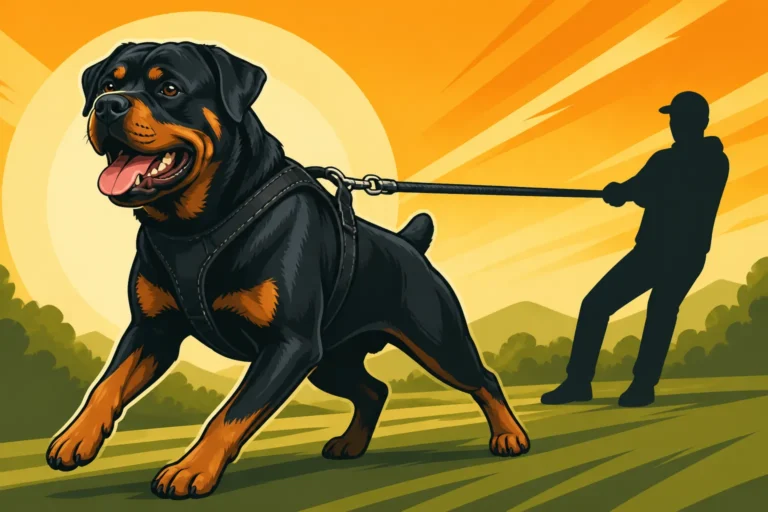
Imagine trying to hold back a freight train with a piece of string – it’s not quite that dramatic, but when a one-hundred-pound Rottweiler decides to put their full body weight and muscle into pulling, the force exerted on the leash can be substantial. Their low center of gravity, broad chest, and powerful hindquarters are all built for pulling and driving forward, harkening back to their ancient droving days. When they hit the end of a leash at a full trot, that force isn't just their static weight; it's multiplied by their momentum. A hundred-pound dog can feel like several hundred pounds of dead weight when they brace or surge forward. This isn't just uncomfortable; it can lead to injuries for the handler, like pulled shoulders, or worse, cause you to lose your grip entirely, putting your Rottweiler and the public at risk. We're not exaggerating when we talk about the physical demand; many owners find their wrists aching, their shoulders burning, and their confidence waning after just a few blocks.
Why Rottweilers Pull in the First Place
Rottweilers, by nature, are confident, driven, and often have a strong sense of purpose. When they pull on the leash, it's rarely out of malice or disobedience. More often, it's simply because they are eager to explore their environment, follow an interesting scent trail, greet another dog, or react to a perceived threat. Think of their ancestral role as cattle drovers – they were bred to move forward, to guide and control large animals, and to be highly observant of their surroundings. That innate drive to "go" and to investigate translates directly into pulling on the leash. They don't inherently understand that a tight leash is unpleasant for you; they just know it means they're getting closer to what they want to see, smell, or do. It's a self-reinforcing behavior: they pull, they get to sniff that bush, and so they learn that pulling works. Breaking this cycle requires teaching them that the opposite behavior – a loose leash – is what makes good things happen.
The Dangers of an Untrained Rottweiler on Leash
Beyond the discomfort, an untrained Rottweiler on a leash poses several significant dangers. First and foremost, there's the risk of injury to the handler. A sudden lunge can pull you off balance, especially if you're caught unawares or on uneven ground. Imagine being dragged across pavement or losing your footing and falling. Then there's the potential for escape; if the leash is yanked from your hand, a powerful, determined Rottweiler can be gone in a flash, potentially running into traffic or approaching another person or animal without proper introduction. The visual impact of a large, black-and-tan dog lunging and barking can also be intimidating to others, regardless of your dog's true intentions, leading to misunderstandings or fearful reactions. Furthermore, constant pulling puts strain on your dog's neck and throat, especially if they're wearing a flat collar. This can lead to tracheal damage, eye pressure, or simply make walks a miserable experience for them too, reducing their enjoyment and your desire to take them out. An untrained, reactive Rottweiler on leash severely limits where you can go and what you can do together, hindering their socialization and your bond.
Essential Gear for Leash Training a Rottweiler
Before you even start the training process, having the right equipment is non-negotiable. The wrong collar or leash can exacerbate pulling, cause discomfort, or simply not provide the control you need for a powerful breed. Think of it as choosing the right tools for a big job – you wouldn't use a toy hammer to build a house, right?
Choosing the Right Collar and Leash
For a Rottweiler, you need gear that is robust and reliable. A standard flat buckle collar is perfectly fine for ID tags, but for active training walks, you might need something more. Leather or sturdy nylon are the materials of choice, ensuring durability. The leash itself should also be strong – avoid flimsy retractable leashes entirely, as they offer no real control and can be dangerous. A fixed-length leash, typically 6 feet long, made of heavy-duty nylon or leather is ideal. The snap hook connecting the leash to the collar or harness should be substantial; a small, cheap clip can bend or break under the force of a Rottweiler's pull.
However, a flat collar on its own is often insufficient for a dog that pulls with all its might. Constant pulling on a flat collar can cause coughing, gagging, and put undue pressure on the dog's trachea. While we always aim for loose-leash walking, there will be moments when you need more control, especially during the learning phase. For these instances, many trainers recommend alternative collars that provide gentle feedback without causing harm, such as a martingale collar or a head halter. A martingale collar tightens slightly when the dog pulls, preventing them from backing out of it, but doesn't choke them. It's often favored by owners of breeds with narrower heads, but can still offer good control for a strong puller when used correctly. The key is to select high-quality gear that can withstand the strength of your Rottweiler. Harness Hardware That Holds a Pulling Rottweiler is a good resource for understanding what you need.
Harnesses and Head Halters: Pros and Cons
When it comes to managing a pulling Rottweiler, anti-pull harnesses and head halters are often considered. Both have their advantages and disadvantages:
Anti-Pull Harnesses (Front-Clip):
- Pros: These harnesses clip at the front of the dog's chest, rather than on their back. When the dog pulls, the leash redirects them to the side, turning their body back towards you. This physically discourages pulling without putting pressure on their neck. They are generally comfortable and do not cause any choking or discomfort to the throat. Many dogs adapt to them quickly. A quality harness designed for large breeds can be a game-changer.
- Cons: Some dogs can still pull, just at an angle. If not fitted properly, they can chafe in the armpit area. They might not offer the same level of immediate "steering" control as a head halter, especially with a highly determined puller. You'll want to find one with thick, comfortable straps that distribute pressure well.
Head Halters (e.g., Gentle Leader, Halti):
- Pros: Head halters work similarly to a horse's halter, giving you control over the dog's head, and where the head goes, the body often follows. They provide excellent leverage and can make even a strong Rottweiler feel much lighter on the leash. This is often the most effective tool for dogs that pull incessantly or are reactive, as it allows you to quickly redirect their gaze and attention away from triggers. They don't cause choking.
- Cons: Many dogs initially resist head halters, trying to rub them off or paw at them. This requires a careful, positive introduction over several days, associating it with treats and good things. Some people mistake them for muzzles, which can lead to misconceptions from the public. It's also critical that they are fitted correctly to prevent discomfort or injury. Whether a Head Halter Suits a Rottweiler provides more detail on how to introduce one positively.
It's worth noting that neither a harness nor a head halter is a "magic fix." They are tools to help manage pulling while you teach loose-leash walking, not a substitute for training. You can often find a good selection of both types on platforms like Amazon, but always prioritize quality and proper fit for your Rottweiler's robust build.
Training Aids and Their Ethical Use
Beyond collars and harnesses, there are other training aids sometimes discussed, but their use requires careful consideration and ethical understanding.
Prong Collars: These collars consist of metal links with blunted "prongs" that sit against the dog's neck. When the dog pulls, the prongs create an even pressure around the neck, mimicking a mother dog's bite.
- Ethical Use: In the hands of a highly experienced, knowledgeable trainer, a prong collar can provide very clear communication and immediate feedback for a dog that is extremely difficult to control with other methods. The goal is not to cause pain, but to provide a consistent, clear signal that pulling is unacceptable. It should be fitted high and snug on the neck, just behind the ears, and used with quick, gentle corrections, not constant tension.
- Potential for Misuse: However, in the wrong hands, a prong collar can easily be misused, causing pain, fear, and damage to the dog's trust and trachea. It should never be used for punishment, jerking, or leaving on for extended periods. For most pet owners, especially those new to large breeds, it's generally best to start with less aversive methods like front-clip harnesses or head halters and positive reinforcement. If considering a prong collar, always seek guidance from a certified professional trainer who has extensive experience using them humanely and effectively with powerful breeds.
E-Collars (Electronic Collars): These collars deliver a static correction (often referred to as a "stimulus") via remote control.
- Ethical Use: Modern e-collars often have very low settings and can be used for communication at a distance, particularly for off-leash recall or specific advanced training, again, with an expert trainer. The aim is often to create a "tap" sensation to get the dog's attention, not to punish or cause pain.
- Potential for Misuse: Like prong collars, e-collars have a high potential for misuse, leading to fear, anxiety, and aggression if used improperly or excessively. They are not a tool for beginners or a quick fix for leash pulling. Without precise timing and understanding of canine behavior, an owner can easily confuse their dog or create negative associations with corrections. For leash manners, direct physical tools and positive reinforcement are almost always preferable and safer.
The most ethical approach emphasizes positive reinforcement, clear communication, and tools that prevent discomfort while you teach. Regardless of the tool chosen, ensure you understand how to use it safely and effectively, or consult a professional.
Laying the Foundation: Puppy Leash Training
The absolute best time to instill good leash manners is when your Rottweiler is a small puppy. Don't wait until they're a hundred pounds of muscle and determination. Early training makes all the difference, setting them up for a lifetime of pleasant walks. Training a Rottweiler Before It Outweighs You truly cannot be stressed enough.
Early Introduction to the Collar and Leash
Start as soon as your Rottweiler puppy comes home, ideally around 8-10 weeks old. Begin by simply letting your puppy wear a lightweight, comfortable flat collar for short periods indoors. Make it a positive experience by immediately distracting them with play or delicious treats when the collar goes on. The goal is for them to associate the collar with good things, not discomfort. Do this for a few minutes at a time, several times a day, gradually increasing the duration. Don't leave it on unsupervised, especially if they try to chew it or scratch at it.
Once they are completely comfortable with the collar, introduce a lightweight leash. Again, keep it brief and positive. Clip the leash on while they're eating a meal or playing with a favorite toy. Let them drag the leash around indoors under supervision for a few minutes. This helps them get used to the feel and weight of the leash without the pressure of being guided by you. Avoid making it a tug-of-war. If they chew it, redirect them to a more appropriate chew toy. The whole process should feel natural and fun, not like a constraint. This initial phase, often overlooked, is critical for building a positive association with their walking gear.
Teaching Loose Leash Walking Indoors
After your puppy is comfortable with wearing the leash, start practicing loose leash walking in a low-distraction environment, like your living room or backyard. Hold the leash gently, letting it hang slack. When your puppy walks beside you with a loose leash, immediately mark the behavior (with a verbal marker like "yes!" or a clicker) and reward them with a high-value treat. Take a few steps, if they stay beside you and the leash is loose, reward again. If they start to pull, simply stop moving. Stand still like a tree. Don't yank or scold. Just wait. As soon as the leash goes slack (even if it's just for a second as they look back at you), immediately praise and continue walking. This "stop-start" method teaches them that pulling gets them nowhere, but a loose leash keeps the walk going.
Practice frequently in short, positive bursts – five minutes several times a day is more effective than one long, frustrating session. Keep treats easily accessible in a pouch. Remember, Rottweiler puppies are growing rapidly, and their joints are still developing, so keep indoor training gentle and fun. This early, consistent training in a controlled environment builds the muscle memory and understanding before they're faced with the sensory overload of the outside world. This is where programs like BAXTER & Bella, with their structured online puppy classes, can be incredibly helpful for guiding new owners through these crucial early stages.
The Importance of Socialization on Leash
Socialization is absolutely paramount for a Rottweiler, and it often happens while on leash. Exposing your puppy to a wide variety of sights, sounds, people, and appropriate dogs during their critical socialization window (roughly 8 to 16 weeks) is vital for developing a confident, well-adjusted adult. However, this socialization needs to be managed carefully, especially on leash.
The goal isn't to let your puppy greet every single person or dog they see while on leash. Instead, it's about teaching them to observe the world calmly. Take your puppy to places where they can safely observe things from a distance: a park bench, outside a busy store (while maintaining a safe distance), or a quiet nature trail. Let them see and hear new things, and reward them for calm attention towards you. If they see another dog and remain calm, reward. If they see a person jogging by and don't react, reward. This teaches them that exciting things happen, but their job is to pay attention to you. When you do allow greetings with other dogs or people, ensure they are positive, controlled, and brief. Don't let your puppy drag you towards them. Always demand a loose leash before any interaction. A well-socialized Rottweiler is less likely to react negatively or pull excessively out of fear or over-excitement later in life. Rottweiler Socialization Before Sixteen Weeks emphasizes just how important this early period is for setting future behavior.
Mastering Loose Leash Walking with an Adult Rottweiler
So, you've got a hundred-pound Rottweiler who still thinks they're leading the Iditarod. Don't despair! It's absolutely possible to teach an adult Rottweiler impeccable leash manners. It requires patience, consistency, and a clear communication system. The good news is that adult Rottweilers are intelligent and eager to please their owners once they understand the rules.
The "Stop-Start" Method for Leash Pressure
This is arguably one of the most effective and humane methods for teaching a powerful dog like a Rottweiler to walk nicely on a leash. It's simple, consistent, and your dog will quickly understand the consequences of their actions.
- Start Walking: Begin your walk. Keep the leash slack, ideally in a J-shape.
- Dog Pulls? Stop Immediately: The very instant your Rottweiler puts tension on the leash, stop moving. Plant your feet. Do not say anything, do not yank the leash, do not try to correct them. Just stop.
- Wait for Slack: Your dog will likely continue to pull for a moment, confused as to why you've stopped. They might look back at you, sniff the ground, or shift their weight. The moment – and we mean the instant – the leash goes slack, even for a second, silently (or with a verbal marker like "yes!"), take one step forward.
- Repeat, Repeat, Repeat: If they pull again, stop again. If they keep the leash loose, keep walking. This teaches them: "Tight leash means stop. Loose leash means go." They quickly learn that the fastest way to get to their desired destination (forward movement) is by not pulling.
This method requires consistency. Every time they pull, you stop. Every time the leash loosens, you move. It might mean your walks are very slow at first, with many stops, but the investment in patience will pay off dramatically. Over time, your Rottweiler will preemptively loosen the leash to keep the walk going. Rottweiler Leash Pulling at Adult Weight discusses this method further.
Rewarding Desired Behavior Consistently
Positive reinforcement is your best friend when training a Rottweiler. They thrive on praise, attention, and high-value treats. The "stop-start" method handles the stopping of undesired behavior (pulling), but you also need to actively reward the desired behavior (loose leash walking).
Carry an ample supply of highly motivating treats – think small pieces of cooked chicken, cheese, or high-quality training treats. As you walk, and your Rottweiler is maintaining a loose leash, mark and reward them frequently. Don't wait until they've walked a block perfectly. Reward every few steps, especially in the beginning. Randomize your rewards so they don't anticipate them, but are always hopeful. You can also vary the location of the reward: sometimes drop it by your side, sometimes toss it slightly forward, encouraging them to stay engaged.
Another powerful reward is verbal praise ("Good boy!" or "Good girl!"), a gentle scratch behind the ears, or even a moment of calm, focused attention from you. The key is that the reward immediately follows the desired behavior, so your Rottweiler clearly understands what they are being rewarded for. If you only correct when they pull, but never reward when they don't, the learning process will be much slower and less enjoyable for both of you. This consistent reinforcement builds a strong positive association with walking politely beside you.
Handling Distractions on Walks
The real world is full of distractions: squirrels darting across the path, other dogs barking, children playing, interesting smells, and loud noises. These are often the triggers that make even a well-behaved Rottweiler break their manners and pull. Handling distractions requires proactive management and continued training.
- Start Small: Don't expect your Rottweiler to ignore a pack of barking dogs if they can't even ignore a leaf blowing by. Begin practicing in quiet areas with minimal distractions. Gradually introduce more stimulating environments as your dog improves.
- Distance is Your Friend: If you know a certain distraction (like another dog) is going to cause a reaction, keep your distance. Stay far enough away that your Rottweiler notices the distraction but doesn't react negatively. This is called working "below threshold."
- Engage and Reward: As soon as your Rottweiler notices a distraction but chooses to look at you instead, or remains calm, immediately reward them. "Good look! Yes! Treat!" The goal is to make you more interesting than the distraction.
- Change Direction: If a distraction is too intense and your dog is about to pull or react, calmly change direction. Pivot and walk the other way. This avoids a confrontation and reinforces that you are in control of the walk's direction.
- Be Prepared: Always carry high-value treats. If you see a potential distraction approaching, be ready to engage your dog, ask for a "watch me" command, and reward them for focusing on you. Over time, your Rottweiler will learn that distractions are simply opportunities to earn treats by remaining calm and attentive to you. This also forms the foundation for Rottweiler Impulse Control Games, which can be practiced at home to build their ability to resist immediate urges.
Addressing Specific Leash Behavior Problems
While the "stop-start" method and consistent rewards are foundational, some Rottweilers develop more specific challenges on leash. These issues, often rooted in reactivity or guarding instincts, require targeted approaches to ensure enjoyable and safe walks.
Managing Leash Reactivity Towards Other Dogs
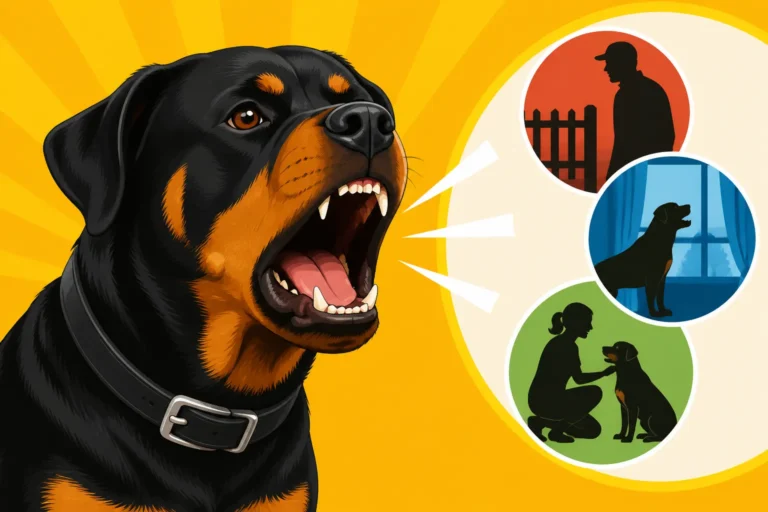
Leash reactivity, where a Rottweiler barks, lunges, and growls at other dogs while on leash, is a common and frustrating problem. It's often misunderstood as aggression, but it's more frequently rooted in fear, frustration, or over-excitement. The good news is that it can be managed and often significantly reduced with consistent training.
- Identify the Threshold: This refers to the distance at which your Rottweiler can see another dog without reacting negatively. Find this distance. It might be a block away, or even across the street.
- Counter-Conditioning and Desensitization: Work below your dog's threshold. When your Rottweiler sees another dog at a distance where they are calm, immediately give them a high-value treat. Repeat this. Dog appears, treat. Dog disappears, no treat. The goal is to change their emotional response from "Oh no, dog!" to "Oh, a dog! That means good treats are coming!" Over time, you can gradually decrease the distance as their positive association grows.
- Avoid Negative Interactions: Do not force your reactive Rottweiler into close proximity with other dogs. This only reinforces their negative associations. Avoid dog parks during this training phase.
- Keep Walks Predictable: Try to walk at times and in places where you can anticipate and manage encounters. If you know a particular street is always busy with dogs, choose a different route temporarily.
- Professional Help: For severe cases, a certified professional dog trainer or behaviorist experienced in reactivity is invaluable. They can help you implement a detailed behavior modification plan and teach you specific handling techniques. Rottweiler Reactivity Toward Other Dogs provides an in-depth look at this common issue, and Counter-Conditioning a Reactive Rottweiler dives into the specific techniques.
Dealing with Lunging and Barking at Strangers
Similar to dog reactivity, lunging and barking at strangers can stem from a variety of reasons, including fear, protective instincts, or simply a lack of appropriate social skills. Rottweilers are naturally reserved and aloof with strangers, so teaching them to calmly observe rather than react is key.
- Understanding the "Aloof" Nature: Rottweilers aren't typically "meet and greet" dogs. Their natural inclination is to assess and observe before engaging. Respect this. Don't force them into interactions they're uncomfortable with.
- Positive Exposure from a Distance: Just like with other dogs, expose your Rottweiler to strangers from a distance where they remain calm. As a person walks by, offer a high-value treat. If the stranger can toss a treat without looking directly at or engaging the dog, that can also build positive associations.
- Redirection and Engagement: When you see a stranger approaching, immediately engage your Rottweiler. Ask for a "watch me" or a "sit," and reward them heavily for focusing on you. This redirects their attention and gives them an alternative, desirable behavior to perform.
- Manage Space: If a stranger tries to approach too quickly or invade your dog's personal space, be your dog's advocate. Politely ask them to keep their distance. You can step between your dog and the approaching person, or calmly pivot and walk away. A Rottweiler That Ignores a Visitor Completely delves into their aloof nature.
- Avoid Punishment: Punishing barking or lunging can suppress the outward display of the behavior, but it doesn't address the underlying emotion. It can make your dog more fearful and potentially lead to a "silent bite" without warning. Focus on rewarding calm, alternative behaviors.
Stopping Prey Drive-Induced Pulling
Rottweilers often have a strong prey drive, a remnant of their droving and working heritage. This can manifest as an intense desire to chase squirrels, rabbits, cats, or even fast-moving objects like bicycles or joggers. This kind of pulling can be incredibly powerful and hard to break.
- Anticipation and Management: Learn your dog's "tells" – the subtle shifts in body language that indicate they've spotted prey (ears up, body stiffening, intense focus). The moment you see these signs, before they lunge, get their attention.
- High-Value Rewards and Engagement: Use your highest-value treats to lure their attention away from the prey item. Ask for a quick "sit" or "watch me," and reward heavily. You are effectively asking them to choose you over the squirrel.
- "Leave It" Command: This command is invaluable. Practice it at home with low-value items, then gradually increase the distraction. Teach your Rottweiler that "leave it" means to disengage from an interesting item on the ground or a moving object, and that doing so results in a reward from you.
- Change Direction Immediately: If your Rottweiler locks onto a prey item and is about to lunge, a swift change of direction can break their focus and prevent the full-blown chase. Make a sharp turn and walk briskly in the opposite direction.
- Long Line Practice: In a safe, enclosed area (like a large fenced field), practice recall on a long line. This allows them to experience the joy of running while still under your control. Work on their ability to disengage from distractions and return to you. Rottweiler Recall Away From a Squirrel highlights specific techniques for this. For safety in areas where prey drive is high, ensure your leash is extra secure, and consider a front-clip harness for added control.
Advanced Leash Skills and Public Etiquette
Once your Rottweiler is reliably walking on a loose leash in moderately distracting environments, it's time to refine those skills and teach them how to navigate more complex situations. These advanced skills build confidence in both you and your dog, opening up more opportunities for shared adventures.
Teaching a "Heel" Command for Precision
"Heel" is more than just loose-leash walking; it's a precise command where your dog walks directly beside your left (or right) leg, shoulder even with your knee, maintaining that position regardless of speed or turns. This is invaluable for navigating crowded spaces, entering buildings, or ensuring your dog is completely focused on you.
- Lure and Reward: Start in a quiet, low-distraction environment. Hold a high-value treat in your left hand (if you want them on your left side) and lure your Rottweiler into the heel position. As soon as they are in place, mark and reward.
- Short Bursts of Movement: Take one step forward, with your dog in position, mark, and reward. Gradually increase to two steps, then three, always rewarding precision.
- Add the Cue: Once your dog reliably takes a few steps in position, add the verbal cue "Heel!" just as you start moving. Reward them for maintaining the position.
- Practice Turns and Stops: Integrate turns (left, right, about-face) and stops into your heel practice. Reward heavily for staying in position through these changes.
- Duration and Distraction: Slowly increase the duration of the heel and introduce distractions. Remember to go back to easier steps if your dog struggles, then gradually increase the challenge.
- Fade the Lure: As your dog understands, begin to fade the lure, using your empty hand as a hand signal and eventually relying only on the verbal cue.
Heeling is a mental exercise for your Rottweiler, requiring focus and self-control. Keep sessions short, positive, and end on a high note.
Navigating Crowds and Busy Environments
Walking a large dog like a Rottweiler through a crowded farmer's market, a busy sidewalk, or a bustling outdoor event can be challenging. It requires trust, focus, and impeccable manners. The goal is for your Rottweiler to calmly accompany you, paying attention to your movements and cues, rather than reacting to the sensory overload.
- Build Foundational Skills: Ensure your "heel" and "watch me" commands are rock-solid in less distracting environments first.
- Start with "Drive-Bys": Initially, approach busy areas but stay at the periphery. Let your Rottweiler observe the crowd from a distance where they are still comfortable and can focus on you. Reward calm observation.
- Short Exposures: When ready, enter the crowded area for very short periods (a minute or two). Practice your "heel" command, keeping your dog close to your side. Reward frequently for staying close and ignoring people.
- Be an Advocate: People will inevitably want to pet your Rottweiler. Be prepared to politely decline if your dog is not comfortable or if you are actively training. "He's working right now, thank you!" is a perfectly acceptable response. A Rottweiler That Ignores a Visitor Completely illustrates how their natural tendencies can be respected.
- Focus on Your Body Language: Your calmness and confidence will transfer to your dog. Walk purposefully, keep your leash arm relaxed but ready, and avoid tensing up. If you're stressed, your Rottweiler will feel it.
- Designated "Breaks": Find quiet spots within a busy environment where your dog can decompress for a moment if needed.
Maintaining Manners Around Children and Bikes
Children's unpredictable movements and high-pitched voices, along with the sudden appearance of bikes or scooters, can be major triggers for even a well-trained Rottweiler. Teaching them to remain calm and respectful is crucial for safety and public acceptance.
- Controlled Exposure to Children: If you don't have children, arrange supervised, positive interactions with calm, dog-savvy children. Teach the children how to approach and interact appropriately (no screaming, no sudden movements). Reward your Rottweiler for polite interactions or calm observation. Teach your Rottweiler to maintain a polite "four on the floor" even if a child approaches. Rottweilers With Children in the Home offers more guidance.
- Bike Safety:
- Start Stationary: Introduce your Rottweiler to bicycles (or scooters, skateboards) that are standing still. Let them sniff and investigate calmly. Reward.
- Slow Movement: Have a helper slowly walk a bike past your dog from a distance. Reward your dog for staying calm and focused on you. Gradually increase speed and decrease distance.
- "Watch Me" and "Leave It": Use these commands proactively as bikes approach. Reward heavily for maintaining focus on you instead of the moving object.
- Body Blocking: If a bike or child is approaching quickly and your dog is showing signs of wanting to chase, position yourself between your dog and the object. Your body acts as a gentle barrier.
- "Go To Mat/Place" for Settling: Teach your Rottweiler a "go to mat" or "place" command at home. This skill can be generalized to public spaces, asking them to lie calmly beside you as distractions pass by.
- Emphasize "Be Gentle": If your dog will interact with children, practice the "be gentle" cue for taking treats or toys, reinforcing a soft mouth and calm demeanor.
The goal is to teach your Rottweiler to view these common public elements as neutral parts of the environment, not as things to chase, fear, or greet with over-excitement.
Consistency, Patience, and Professional Help
Training a Rottweiler, especially one of a hundred pounds, is a marathon, not a sprint. It requires dedication, consistency from every family member, and the wisdom to know when to ask for help. Remember, your Rottweiler wants to please you, but they need clear, consistent guidance.
The Role of Routine and Repetition
Dogs, especially intelligent breeds like Rottweilers, thrive on routine and predictability. Establishing a consistent daily schedule for walks, feeding, training sessions, and playtime will significantly aid in their understanding and adherence to leash manners. If walks are always at the same time, they'll learn what to expect.
Repetition is the bedrock of all dog training. You can't expect a behavior to be learned after just a few tries. Short, frequent training sessions (5-10 minutes, several times a day) are far more effective than one long, exhausting session once a week. Every walk, even if it's just to the mailbox, is an opportunity to practice. Every time you leave the house with them on a leash, you are either reinforcing good habits or bad ones.
Consistency among all family members is also paramount. If one person allows pulling and another doesn't, your Rottweiler will become confused and default to the behavior that sometimes works (pulling). Everyone in the household needs to be on the same page regarding leash rules, commands, and expectations. This united front makes learning much clearer for your dog. Consider creating a written "house rules" guide for everyone to follow.
When to Seek a Professional Trainer
While many owners can make significant progress with their Rottweiler's leash manners using the methods outlined here, there are times when seeking professional help is not just beneficial, but crucial.
You should consider contacting a certified professional dog trainer or a veterinary behaviorist if:
- Your Rottweiler's pulling is genuinely unmanageable, causing you physical strain or fear. If you're avoiding walks because your dog is too strong, it's time for expert intervention.
- You've tried various methods consistently for several weeks and see no improvement. A fresh, experienced perspective can identify nuances you might be missing.
- Your Rottweiler exhibits aggressive behaviors on leash (e.g., severe lunging, growling, snapping at people or dogs, or Rottweiler Reactivity Toward Other Dogs). These issues require specialized knowledge to address safely and effectively.
- You feel overwhelmed, frustrated, or fearful. Training should be a positive experience for both of you. If it's not, a professional can restore balance.
- You're dealing with multiple complex behavioral issues beyond just pulling.
Look for trainers who use positive reinforcement, force-free methods, and have experience with large, powerful breeds like Rottweilers. Don't be afraid to interview several trainers to find one whose philosophy aligns with yours. Sometimes, just a few sessions with an expert can provide the breakthrough you need. Finding a Rottweiler-Experienced Trainer Near You is a great starting point for your search.
Long-Term Management and Reinforcement
Training is never truly "done" with a Rottweiler. Loose-leash walking, like any skill, requires ongoing practice and reinforcement to maintain. As your Rottweiler ages, their habits can shift, and new challenges might arise.
- Keep Training Fun: Continue to incorporate short, positive training sessions into your daily routine. Use walks as opportunities to practice existing skills and even teach new ones. Keep your Rottweiler mentally engaged. Rottweiler Mental Work on a Rainy Day can inspire you.
- Vary Your Routes: Explore new parks, trails, and neighborhoods. This keeps walks interesting for your dog and exposes them to novel environments, reinforcing their ability to generalize their good manners in different settings.
- Stay Prepared: Always carry treats, even long after your dog has mastered loose-leash walking. Occasional, unexpected rewards for good behavior keep them motivated and remind them that you appreciate their efforts.
- Address Setbacks Gracefully: There will be days when your Rottweiler seems to "forget" everything you've taught them. Don't get discouraged. Revert to easier steps, practice in less distracting environments, and patiently reinforce the basics. Every dog has off days.
- Health Checks: Sometimes, a sudden change in behavior, including increased pulling or reactivity, can be a sign of underlying pain or discomfort. Regular veterinary check-ups are essential to rule out any physical causes.
By committing to consistent training, understanding your Rottweiler's nature, and seeking help when needed, you can transform your walks from a burden into a joyous experience for both you and your magnificent companion.
Collar, Harness, and Head Halter Comparison
Choosing the right equipment for your Rottweiler's leash training is crucial. Here's a quick comparison of common tools:
| Equipment Type | How It Works | Pros | Cons | Best Use Case |
|---|---|---|---|---|
| Flat Collar | Connects leash to the neck; direct pull. | Simple, common for ID tags; comfortable if dog doesn't pull. | Puts pressure on trachea/neck; offers minimal control for pullers. | ID tags, already well-trained loose-leash walkers, short potty breaks. |
| Martingale Collar | Tightens gently when dog pulls, preventing escape. | Prevents backing out; less pressure than a choke chain. | Still applies pressure to the neck if dog pulls hard. | Dogs who back out of flat collars, mild pullers. |
| Front-Clip Harness | Leash clips at chest; redirects dog when they pull. | Reduces pulling without neck pressure; comfortable. | Can chafe if ill-fitting; may still allow some pulling. | Most pullers, good for general training and preventing neck strain. |
| Head Halter | Fits over snout and behind ears; controls the head. | Excellent control and steering; minimal physical strength needed. | Requires positive introduction; some dogs dislike it; public perception. | Strong pullers, reactive dogs, handlers with limited strength. |
| Prong Collar | Metal prongs create even pressure around the neck. | Provides clear, immediate feedback for strong pullers. | High potential for misuse; requires expert guidance; can cause pain. | Only with a professional, experienced trainer for specific cases. |
Always remember that these are tools, and they are only as effective as the training method and consistency applied with them. Prioritize fitting the equipment correctly and introducing it positively to your Rottweiler.
Disclaimer
This article is for general informational purposes only and does not constitute professional advice. Laws, prices and regulations vary by location and change over time. Consult a qualified professional for guidance on your specific situation.