Counter-Conditioning a Reactive Rottweiler
It's incredibly frustrating, and often embarrassing, when your majestic Rottweiler, a dog you know to be loving and loyal at home, suddenly transforms into a barking, lunging powerhouse at the sight of another dog, a stranger, or even a leaf blowing by too fast. This behavior, often called reactivity, isn't just a nuisance; it's a clear sign that your Rottweiler is struggling with their emotions, feeling overwhelmed or threatened in certain situations. This guide is here to walk you through understanding why your Rottweiler reacts and, more importantly, how to use counter-conditioning to help them feel more comfortable and confident in the world.
Understanding What Reactivity Really Means in a Rottweiler
When we talk about a "reactive" Rottweiler, it's easy for people to jump to conclusions, especially given the breed's imposing presence. But reactivity is far more nuanced than simple aggression, and understanding that distinction is the first step toward helping your dog.
The Difference Between Reactivity and Aggression
Many folks see a Rottweiler bark and lunge on the leash and immediately label it "aggressive." While aggression can certainly be part of a reactive display, reactivity itself is typically an emotional response driven by fear, anxiety, frustration, or even over-excitement, rather than a deliberate intent to harm. Imagine walking down the street, and someone suddenly jumps out at you. Your immediate, instinctive reaction—yelling, jumping back, maybe even a surge of adrenaline—is similar to what your reactive Rottweiler might experience. They're often trying to create distance, communicate their discomfort, or simply can't regulate their overwhelming feelings.
For a large, powerful breed like a Rottweiler, these reactive displays can be incredibly intimidating to onlookers and difficult for owners to manage. A Rottweiler who barks intensely, pulls hard on the leash, or lunges forward might appear to be attacking, but they could very well be saying, "Please go away, I'm scared!" or "I'm so excited I don't know what to do with myself!" The key is to look beyond the dramatic outward behavior and try to understand the underlying emotion. Punishing these reactions often just suppresses the outward signs while increasing the internal fear, making things worse in the long run.
Common Triggers for a Reactive Rottweiler
Rottweilers, with their strong guarding instincts and often reserved nature, can have a unique set of triggers that lead to reactive behavior. For many, other dogs are a huge trigger. This might be because they had a bad experience with another dog as a puppy, or they simply aren't comfortable with the unpredictable nature of on-leash greetings. Some Rottweilers react to strangers, especially those who approach too quickly or try to pet them without permission. Their inherent aloofness means they often prefer to observe before engaging, and a sudden invasion of personal space can be alarming.
Beyond typical social triggers, some Rottweilers might react to less obvious things: children on scooters, loud noises like construction equipment, mail carriers, or even specific types of vehicles. A Rottweiler's natural tendency to be watchful and protective can easily tip into reactivity if they feel a threat (real or perceived) to their territory, their family, or themselves. It's crucial to identify your Rottweiler's specific triggers through careful observation. What makes them tense up? When do their ears perk forward and their body stiffen? Understanding these early warning signs is vital for managing and counter-conditioning their responses.
The Principles of Counter-Conditioning for a Reactive Dog
Once you understand that your Rottweiler's reactivity stems from an emotional place, you can start to address it in a way that truly helps them. Counter-conditioning is a powerful, humane method that doesn't just manage the behavior but actually changes the underlying feeling your dog has about their triggers.
What is Counter-Conditioning and How It Works
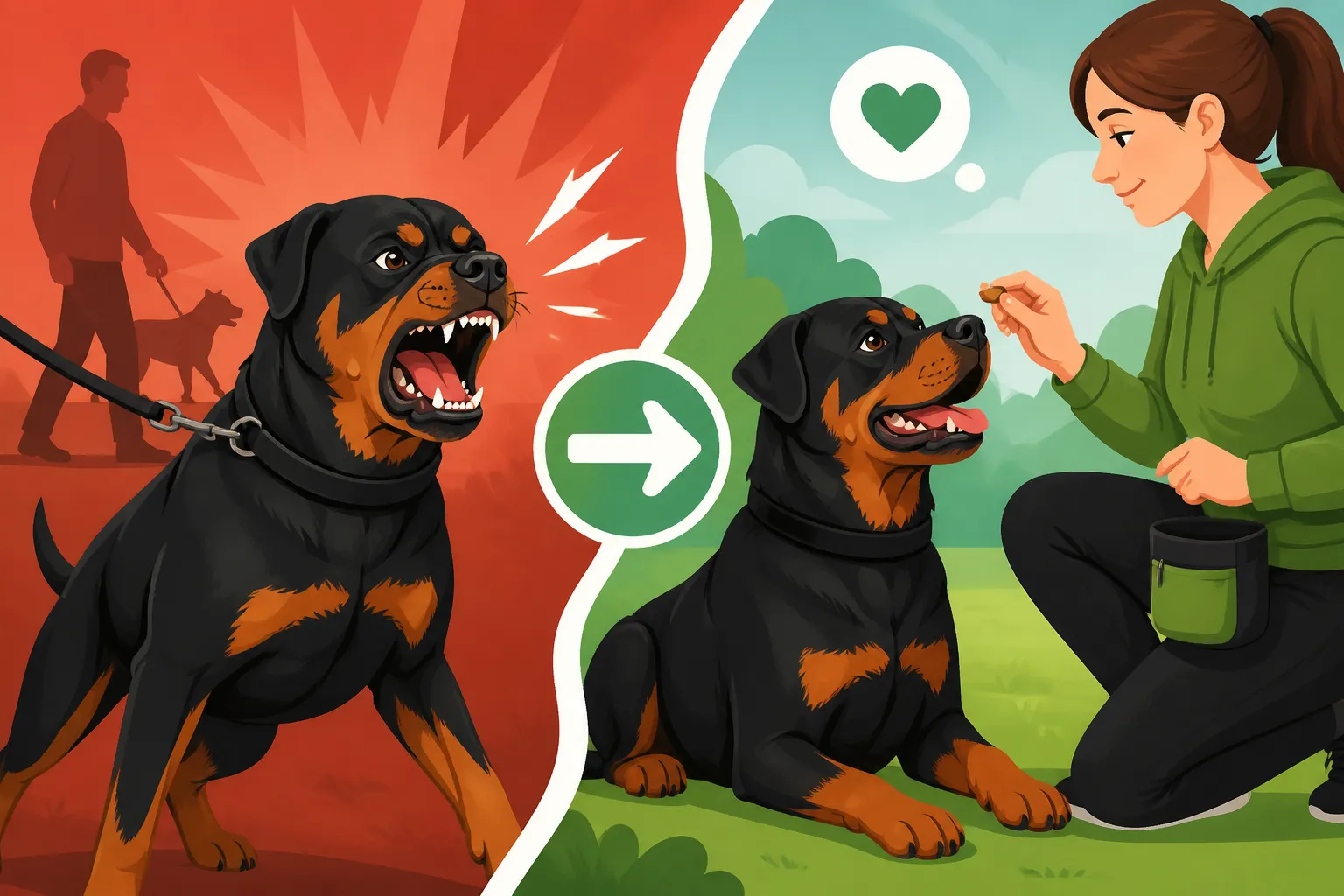
At its heart, counter-conditioning is about changing your dog's emotional response from negative to positive when they encounter something that usually upsets them. Instead of seeing another dog and feeling fear or frustration, we want them to associate that sight with something wonderful, like a high-value treat. Think of it like this: if every time you saw a spider, someone handed you a delicious slice of pizza, you'd probably start feeling a little less dread and a little more anticipation when a spider appears, right? That's the goal for your Rottweiler.
The process involves pairing the trigger (at a safe distance where your dog isn't reacting) with something your Rottweiler absolutely loves. This isn't about rewarding the reactive behavior; it's about associating the presence of the trigger with a positive experience. The key is that your dog must be under their threshold – meaning they're aware of the trigger but not yet reacting. If they're already barking and lunging, they're too far over their emotional limit to learn effectively. We're essentially reprogramming their brain: "Oh, look, another dog! That means good things are coming!" This transforms an anxious or fearful response into a calm, expectant one.
Desensitization and Threshold Management
Desensitization goes hand-in-hand with counter-conditioning. It means gradually exposing your Rottweiler to their triggers at levels they can comfortably handle, slowly increasing the intensity or proximity over time. This is where "threshold management" comes in. Your dog's threshold is the point at which they can observe a trigger without reacting negatively. For a reactive Rottweiler, this might mean seeing another dog across three football fields, or a stranger waving from a block away.
The art is to find that sweet spot – close enough for them to notice the trigger, but far enough away that they remain calm and attentive to you. If your Rottweiler starts to show even subtle signs of stress, like stiffening, staring, lip-licking, or a quick ear flick, you've gone too far, too fast. You need to increase the distance or decrease the intensity of the trigger. It's like turning down the volume on a scary movie; if it's too loud, you can't focus on anything else. We want the trigger to be just loud enough for your Rottweiler to hear it, but not so loud that it sends them into a panic. Patience is paramount here, and progress will rarely be linear. Don't push your dog; always err on the side of caution.
Step-by-Step Counter-Conditioning Techniques for Your Rottweiler
Now that we understand the 'why' and the 'how' behind counter-conditioning, let's dive into some practical steps you can take to help your Rottweiler navigate the world with greater ease. Remember, consistency and patience are your best friends here.
Setting Up for Success: Gear and Environment
Before you even step out the door, making sure you have the right gear is crucial for both safety and effective training with a powerful dog like a Rottweiler. A sturdy, well-fitting harness is essential, especially one that offers a front clip option. Front-clip harnesses like those you can find on Amazon can significantly reduce pulling, giving you more control without causing discomfort to your dog's neck. Combine this with a comfortable, non-retractable leash – preferably one that's 6 feet long, offering a good balance of control and freedom. For initial training in secure, open areas, a long line can also be incredibly useful, giving your Rottweiler more room to explore while you still maintain a safety connection.
Equally important is choosing the right environment. Start your counter-conditioning in quiet, low-distraction areas. A deserted park during off-peak hours, a wide-open field, or even your own backyard if you have enough space, are ideal. The goal is to set your Rottweiler up for success, minimizing unexpected triggers so you can control the training scenarios. As they get better, you can gradually introduce more challenging environments, but never rush this step. Remember, a confident Rottweiler is a safe Rottweiler, and building that confidence starts with careful, controlled exposures.
The "Look At That" (LAT) Game
The "Look At That" (LAT) game is a fantastic way to start changing your Rottweiler's association with a trigger. The basic premise is simple: your dog sees the trigger, then looks at you, then gets a treat. This teaches them that the trigger is a predictor of good things from you, rather than something to react to directly.
Here's how to play:
- Spot the Trigger: When you see your Rottweiler's trigger (e.g., another dog) appear in the distance, point it out casually if you need to, or just wait for your dog to notice it.
- Wait for the Look: As soon as your Rottweiler notices the trigger and before they start to react (remember, stay below threshold!), they might glance at it. The moment they glance back at you, even for a split second, mark that behavior with a verbal cue like "Yes!" or a clicker.
- Reward: Immediately follow up with a high-value treat.
- Repeat: Continue this pattern. The goal is for your Rottweiler to see the trigger, automatically look at you, and anticipate the treat. Over time, their internal state shifts from anxiety or excitement to "Oh, there's that thing! Time to look at Mom/Dad for a treat!" This transforms the trigger from a threat into a cue for a reward.
You might find Rottweiler Reactivity That Starts on Walks helpful for understanding how to pinpoint the exact moment reactivity begins.
Engage-Disengage Method
The engage-disengage method builds on the LAT game by further solidifying the idea that the trigger predicts good things and that disengaging from the trigger is rewarding.
- Engage: Your Rottweiler sees the trigger. As soon as they orient towards it (engage), but before any negative reaction, mark the behavior ("Yes!" or click) and give a high-value treat. This rewards them for simply noticing the trigger calmly.
- Disengage: Wait a moment. As soon as your Rottweiler looks away from the trigger (disengages) – even for a fleeting second – mark that behavior and immediately give another high-value treat. The timing here is key. You want to reward the shift in attention away from the trigger and back to a neutral state or to you.
- Distance is Key: Always work at a distance where your Rottweiler can comfortably perform this. If they're too close and fixated, they won't be able to disengage.
This method teaches your Rottweiler that the trigger signals treats, and that choosing not to react and instead focusing on you is the path to those delicious rewards. It empowers them to make a calm choice, rather than being swept away by their emotions. It’s also crucial to practice Rottweiler Impulse Control Games at home, as these can build the foundational skills needed for successful engage-disengage in public.
Practical Tips for Walks and Public Spaces
Taking your counter-conditioning efforts from a controlled training setup to the unpredictable real world can feel daunting, but with smart strategies, you can continue to help your Rottweiler thrive.
- Be a Scout: Always be scanning your environment. Spot potential triggers well in advance. This gives you time to react before your Rottweiler does. If you see another dog approaching, you can gracefully change direction, cross the street, or create distance by stepping behind a car or bush. The goal isn't to avoid triggers forever, but to manage encounters so your dog stays below threshold and can learn.
- Advocate for Your Dog: Don't be afraid to create space or politely ask people not to approach. A simple, "My dog is in training, please give us some space," works wonders. Many well-meaning strangers don't understand the challenges of a reactive dog. Remember, your Rottweiler relies on you to be their advocate. For resources on fundamental training and walking manners, online programs like BAXTER & Bella can offer guidance that complements your in-person efforts. They often provide structured lessons that can help you build confidence on walks.
- Celebrate Small Wins: It's easy to focus on the moments your Rottweiler reacts, but make sure to celebrate every small success. Did they notice a trigger and only give a soft growl instead of a full lunge? Did they glance at another dog and then immediately look at you? Those are huge wins! Acknowledge them with praise and treats. Helping a Rottweiler overcome reactivity is a marathon, not a sprint. Consistency in your leash handling, as discussed in posts like Teaching a Rottweiler Not to Pull at 110 Pounds, will also make a world of difference.
Common Pitfalls and When to Seek Professional Help
Even with the best intentions, it's easy to fall into certain traps when working with a reactive Rottweiler. Knowing what to avoid and when to bring in an expert can make all the difference in your progress and your dog's well-being.
Avoiding Common Mistakes
One of the biggest mistakes owners make is punishing reactivity. Jerking the leash, yelling "No!" or applying harsh corrections when your Rottweiler reacts might stop the outward behavior in the short term, but it deepens the underlying fear or anxiety. Your dog then associates the trigger (e.g., another dog) with both their own fear and your punishment, making them even more stressed and potentially suppressing warning signs until they feel they have no option but a more intense reaction. Remember, a growl is communication; as explored in Why You Should Never Punish a Rottweiler Growl, silencing it doesn't solve the problem, it just removes a vital piece of information.
Another common pitfall is rushing the process. Reactivity isn't fixed overnight. Trying to push your Rottweiler closer to a trigger before they are truly ready, or exposing them to too many triggers at once, will only overwhelm them and set you back. Each session should end with your dog feeling successful and calm. Also, using low-value treats for such high-stakes emotional work is often ineffective. Your Rottweiler needs something truly amazing – cooked chicken, cheese, hot dogs – to create a powerful positive association. Finally, inconsistency from household members can undo progress quickly. Everyone who interacts with the dog in trigger situations needs to be on the same page with the training protocol.
Recognizing When You Need a Certified Professional
While these techniques are effective, there are definitely times when the help of a professional is invaluable. If your Rottweiler's reactivity is escalating, if you feel unsafe or out of control, or if you're simply not seeing progress despite consistent effort, it's time to seek expert guidance. A certified professional dog trainer (CPDT-KA) with experience in reactivity or, for more severe cases, a veterinary behaviorist (DACVB) can provide tailored strategies, observe nuances in your dog's behavior that you might miss, and ensure your approach is safe and effective.
A professional can help if:
- Your Rottweiler's reactivity poses a danger to themselves or others.
- You consistently struggle to keep your dog below threshold.
- You're unable to identify the root cause or specific triggers.
- Your dog's behavior is impacting their quality of life, or yours, significantly.
- You're finding it difficult to implement the techniques consistently.
They can offer personalized coaching, set up controlled training scenarios, and even suggest medication if anxiety is a major contributing factor. Searching for trainers who explicitly mention experience with large breeds and reactivity is a good starting point. Online training platforms, like those offered by BAXTER & Bella, can also provide structured foundational training that might help you prepare for a behaviorist or supplement ongoing work. Additionally, exploring books on reactive dog training, available on platforms like Amazon, can deepen your understanding and provide extra strategies. When dealing with complex issues like guarding, as discussed in Rottweiler Guarding That Needs a Behaviorist, professional intervention is often the safest and most effective path.
Counter-conditioning a reactive Rottweiler is a journey that requires commitment, empathy, and a deep understanding of your dog. It's about building trust, confidence, and a more positive world view for your beloved companion. With patience, the right tools, and knowing when to ask for help, you can help your Rottweiler move past their reactivity and enjoy a calmer, happier life by your side. You might also want to look into Muzzle Training a Rottweiler Before You Need It for extra safety during the training process, not as a punishment, but as a responsible management tool.
Disclaimer
This article is for general informational purposes only and does not constitute professional advice. Laws, prices and regulations vary by location and change over time. Consult a qualified professional for guidance on your specific situation.