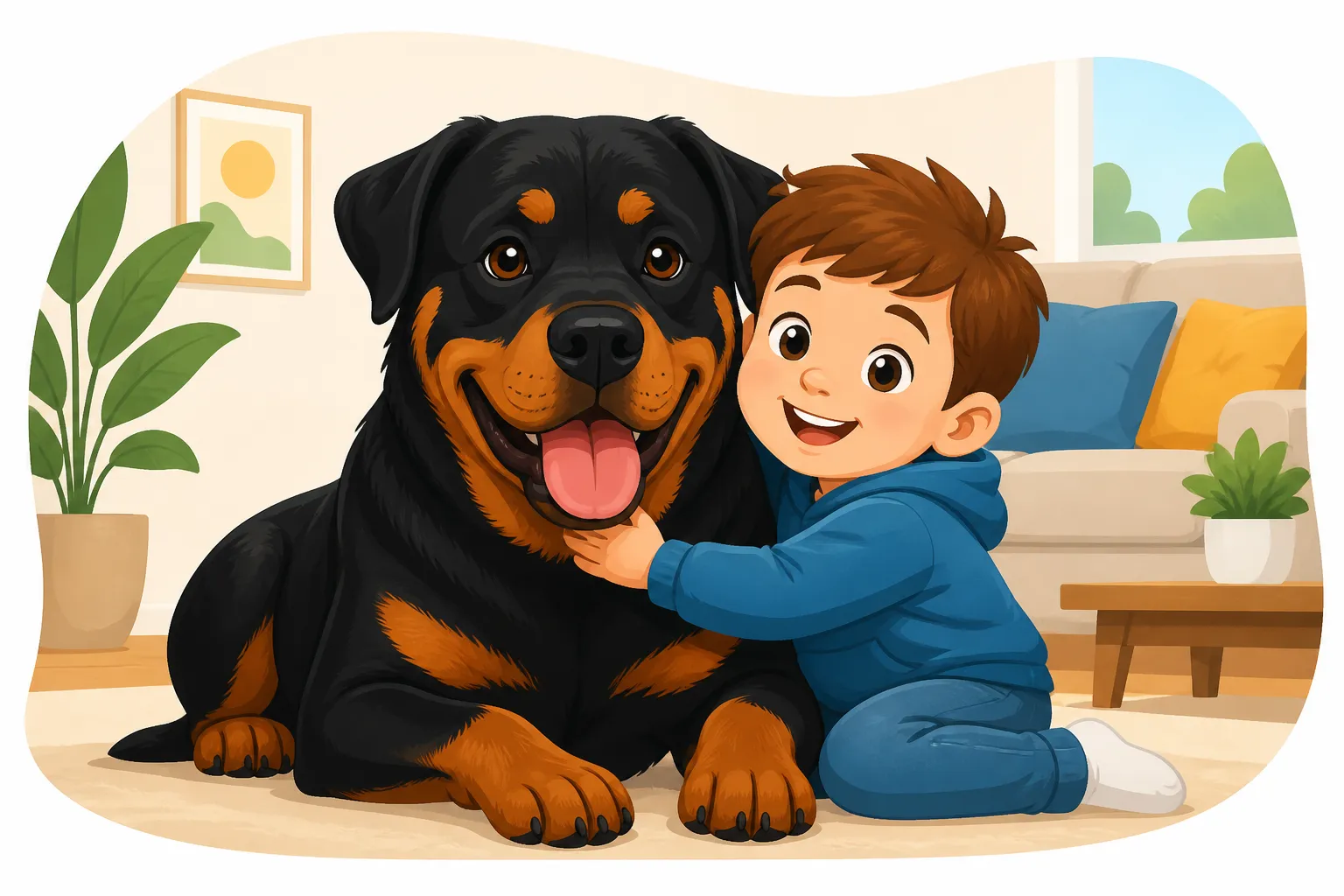
Rottweilers With Children in the Home
Bringing a Rottweiler into a home with children can feel like a daunting prospect for many families, often due to widespread misconceptions about the breed's temperament. The truth is, while Rottweilers are powerful and protective, they can absolutely be wonderful, devoted family members alongside children, provided you approach their integration with proper understanding, training, and unwavering commitment. This guide will walk you through building a safe, harmonious, and loving relationship between your Rottweiler and the little ones in your life.
Understanding the Rottweiler Temperament Around Children
Many people envision a Rottweiler as a stern, unfeeling guard dog, which isn't the full picture at all, especially when it comes to their family. They are deeply loyal, and that loyalty often extends to the smallest members of their pack. Understanding their natural inclinations is the first step toward successful integration.
Natural Protective Instincts and Their Nuances
Rottweilers were originally bred to herd cattle and guard their owners' earnings, so a protective instinct is hardwired into them. This can be a double-edged sword when it comes to children. On one hand, they often see children as part of their inner circle, deserving of their protection. You might find your Rottweiler calmly positioning themselves between your child and a perceived threat, or gently supervising playtime from a distance. They can be incredibly tolerant and patient with the antics of their "pack" children.
However, this protective instinct also means they are constantly assessing their environment. They can be wary of strangers, and what a child perceives as playful roughhousing with a friend, a Rottweiler might interpret as aggression towards their child. It's crucial for owners to understand that a Rottweiler's protective nature requires careful management, especially around unfamiliar children or boisterous play. You need to be the one to determine what is a real threat versus harmless fun, and teach your dog to defer to your judgment. This isn't about suppressing their instinct, but channeling it appropriately and teaching them to trust your leadership.
Why "Aloofness" Isn't Coldness with Kids
One common trait of Rottweilers is their characteristic aloofness, especially with people outside their immediate family. This isn't coldness or disinterest; it's a calm, self-assured approach to the world. When a Rottweiler meets a new person, they often take their time, observing before engaging. They're not usually the type to jump enthusiastically on every visitor. With children, this might mean they don't immediately rush over for pets and play. Instead, they might quietly watch from a corner of the room.
This "wait-and-see" attitude can actually be beneficial with children. It means they're less likely to bowl over a small child in excitement. It gives them time to assess the child's energy and movements. For a child, it’s important to understand that the dog isn't rejecting them, but simply processing. Teaching children to respect this initial distance and allow the Rottweiler to approach on their own terms fosters a more positive and trusting relationship. It reinforces that the dog has personal space and isn't just a giant stuffed animal for immediate cuddles. This inherent trait is part of Why a Rottweiler Waits Before Deciding how to interact.
Reading a Rottweiler's Subtle Cues
Rottweilers are masters of subtle communication. Because of their impressive size and power, it's vital that owners learn to read their body language long before it escalates to a clear warning sign like a growl. A stiff body, a direct stare, a head turn away, a yawn, lip licks, or even a subtle shift in weight can all indicate discomfort or stress. With children, recognizing these early signals is paramount. A Rottweiler might be incredibly patient, but if a child is inadvertently pushing their boundaries, the dog will give off signals.
For example, if a child is petting a Rottweiler roughly, the dog might first try to move away. If that doesn't work, they might give a quick lip lick or yawn – these are "displacement behaviors" indicating mild stress. Ignoring these can lead to the dog feeling trapped and escalating to a low growl, which no one wants. Teaching parents and older children to recognize these nuanced communications allows for intervention before any potential conflict arises, ensuring both child and dog feel safe and respected. Understanding Reading a Still Rottweiler That Is Not Relaxed is key to preventing problems.
Preparing for a Rottweiler and Children in Your Home
Integrating a Rottweiler and children, whether adding a puppy to an existing family or bringing a new baby into a Rottweiler's established home, requires foresight and deliberate action. It's not something you can just hope will work out.
Early Socialization and Exposure for Puppies
If you're bringing a Rottweiler puppy into a home with children, early and careful socialization is absolutely non-negotiable. From the moment your puppy comes home, expose them to a wide variety of sights, sounds, people, and experiences, always in a positive and controlled manner. This includes gentle interactions with children of different ages, under strict supervision. The goal isn't just exposure, but positive exposure. If the puppy learns that children mean good things – gentle pets, treats, calm play – they are far more likely to develop into a well-adjusted adult.
Puppy classes are invaluable, offering structured socialization and obedience training, though it's always wise to ensure the class is mindful of large breeds and their specific needs. A good puppy class will also help you address issues like Rottweiler Puppy Play Biting With Children before they become ingrained habits. Remember, your Rottweiler puppy will eventually be a dog weighing over a hundred pounds, so what's cute at eight weeks can be dangerous at eight months. Regular, positive exposure to children teaches the puppy to view them as a normal, non-threatening part of their world.
Introducing an Adult Rottweiler to Children
Introducing an adult Rottweiler to children requires a more cautious approach, especially if the dog has an unknown history or limited prior experience with kids. The first step is to assess the dog's temperament thoroughly. Does it show signs of anxiety, over-excitement, or aggression around new people? Always make initial introductions in a neutral, calm environment. Keep the dog on a leash, and ensure the children are calm and instructed on how to behave. Avoid direct eye contact or sudden movements from the children.
Allow the Rottweiler to observe the children from a distance first, rewarding calm behavior. Use high-value treats (like those from Chewy, which often has a great selection for training) to create positive associations. Gradually, allow for supervised, brief interactions, always with an adult between the dog and child. Never force interaction. If the dog shows any signs of stress or discomfort, gently remove them and try again another day. Patience is key; building trust takes time. If you have any doubts about an adult dog's temperament, seek guidance from a professional behaviorist or trainer with experience in large breeds.
Setting Up a Safe Environment for Both
A safe environment is crucial for preventing incidents and managing interactions. This means creating dedicated spaces for both your Rottweiler and your children. Your dog should have a "safe zone" – a crate, a bed in a quiet room, or a designated area accessible only to them – where they can retreat and be undisturbed. This is especially important for dogs who need to decompress after an exciting interaction or simply want a quiet nap away from toddler hands. Ensure children understand this space is off-limits to them.
Equally important are gates or barriers to restrict access. Baby gates are fantastic for separating areas of the house, allowing you to manage interactions without constant physical intervention. For example, a dog might be in the living room with an adult while children play in a gated area, or vice versa. This physical separation prevents accidental bumps, unwanted interactions, or guarding behaviors. For a big dog like a Rottweiler, invest in sturdy, tall gates that they can't easily push over or jump. A heavy-duty dog crate, like those found on Chewy, can also provide a secure den for your Rottweiler, especially during busy times.
Teaching Children Safe and Respectful Interaction
The responsibility for a safe interaction largely falls on the adults, but teaching children how to behave around a Rottweiler is equally vital. It's about empowering them with knowledge and respect, not fear.
The "Hands-Off" Rule and Gentle Petting
One of the most important rules to instill in children from a very young age is the "hands-off" rule. This means that they should not approach the dog uninvited, pull tails or ears, or climb on the dog, even if the dog seems tolerant. Emphasize that the dog is a living creature with feelings, not a toy. Teach them to always ask an adult if they can pet the dog, and then instruct them on how to pet gently. This means stroking the body, not the head, and avoiding sensitive areas like the face, tail, or paws.
Demonstrate what "gentle" looks and feels like. Use a stuffed animal to practice. Reward children when they interact appropriately and remind them gently when they forget. Make it clear that if the dog walks away, they must respect that boundary. This teaches children valuable lessons in consent and respecting animal autonomy, which carries over into other aspects of their lives. It helps protect the Rottweiler from feeling cornered or overwhelmed, which can lead to defensive behaviors.
Avoiding Triggers and Understanding Boundaries
Children need to understand what behaviors might make a dog uncomfortable or anxious. High-pitched squeals, running directly at the dog, sudden loud noises, or startling the dog when it's asleep can all be triggers. Explain these scenarios simply: "Running makes Fido want to chase, and we don't want to get knocked over," or "Fido needs quiet time when he's sleeping, just like you do." Teach them to avoid disturbing the dog while it's eating, chewing a toy (especially a high-value one), or sleeping. These are common situations where even the most tolerant dog might feel the need to guard its resources or space.
A simple rule like "no touching the dog's food bowl" or "no taking toys directly from Fido's mouth" can prevent serious issues. Practicing proper Rottweiler Puppy Play Biting With Children techniques early on can also help. Emphasize that the Rottweiler, despite its size, has boundaries that must be respected. This understanding helps children develop empathy and fosters a safer environment for everyone. It's about teaching them to be aware of the dog's perspective and to be proactive in preventing discomfort.
Engaging in Supervised, Positive Play
Play is a fantastic way for children and Rottweilers to bond, but it must always be supervised and structured. Teach children appropriate games, such as fetch with a soft toy or rolling a ball, rather than rough-housing or chase games that can escalate quickly. Use durable toys, perhaps some of the larger, tougher options available from Chewy, that can withstand a Rottweiler's powerful jaws. Encourage children to use a long toy or rope for tug-of-war, keeping hands away from the dog's mouth.
Teach children basic obedience cues like "sit," "stay," or "down," and have them ask the dog to perform these for a treat. This reinforces the child's positive role in the dog's life and helps the dog see the child as a source of good things. Always remember that due to their size, even unintentional bumps from a playing Rottweiler can knock over a small child. Therefore, close supervision is not just about preventing aggression, but also about preventing accidental injuries. Keeping play sessions short and positive prevents overstimulation and ensures both dog and child enjoy the interaction.
Managing Everyday Life and Preventing Issues
Living with a Rottweiler and children means constant vigilance and proactive management. It’s a full-time job, but one that is incredibly rewarding when done right.
Constant Supervision: The Golden Rule
This cannot be stressed enough: never leave a Rottweiler unsupervised with children, regardless of how well-behaved or trustworthy either seems. This is the single most important rule in ensuring safety. "Unsupervised" means even stepping out of the room for a moment to grab a drink. Incidents can happen in a flash, and even the most benign interaction can go awry if an adult isn't there to read the subtle cues, intervene, or redirect. This rule applies whether you're bringing home a brand new puppy or have an older, established dog.
Think of an adult Rottweiler weighing a hundred pounds or more, and a child who might only weigh twenty or thirty. The sheer size difference means even an accidental stumble or a misguided play bite can have serious consequences. Supervision means actively watching, listening, and being ready to step in. It’s not about being overprotective, but about being realistic and responsible. This rule applies to visitors too; educate guests about your household rules.
Addressing Resource Guarding Proactively
Resource guarding, where a dog protects its food, toys, sleeping spots, or even people, is a natural canine behavior that can become problematic, especially with children present. Rottweilers, with their guarding instincts, can be prone to this. It's crucial to address this proactively from puppyhood. Train your Rottweiler to happily give up high-value items by trading them for an even better treat. Practice having children walk by the dog's food bowl or resting place, always dropping a treat as they pass. This teaches the dog that a child approaching means good things, not threats to their resources.
Never allow children to take food or toys directly from the dog. Feed the dog in a quiet, separate area where children cannot easily disturb them. Ensure your dog has plenty of their own appropriate chew toys. If you see any signs of resource guarding – freezing over an item, stiffening, growling, or snapping – seek immediate professional help from a certified dog trainer or behaviorist. Do not try to punish the dog for growling, as this often suppresses the warning sign, making the dog more likely to bite without warning. Instead, focus on positive reinforcement and management, as discussed in Rottweiler Resource Guarding at Home.
When to Seek Professional Guidance
Sometimes, despite your best efforts, you might encounter behaviors that make you uneasy. This is when it's time to call in the professionals. If your Rottweiler shows any signs of aggression towards children – growling, snapping, baring teeth, lunging – or if you simply feel overwhelmed and unsure how to proceed, do not hesitate. Find a certified professional dog trainer or a veterinary behaviorist who has experience with large breeds like Rottweilers and who uses positive, force-free training methods. They can assess the situation, identify triggers, and develop a tailored training plan to help.
Remember, a professional isn't a sign of failure but a responsible choice. They can provide invaluable insight and techniques that you might not have considered. Early intervention is key, as behavioral issues tend to become more ingrained and harder to resolve the longer they persist. Never try to "fix" aggression on your own, especially when children are involved, as it can put everyone at risk. A good trainer can also help with Rottweiler Behavior Problems That Start Small and nip them in the bud.
Navigating Challenges and Ensuring Long-Term Harmony
Successfully integrating Rottweilers and children is an ongoing journey, not a one-time event. It requires continuous effort, adaptation, and a deep understanding of both your dog and your kids.
Dealing with Play Biting and Mouthing
Rottweiler puppies, like all puppies, explore the world with their mouths. Given their strong jaws and inherent drive, their play biting can be more intense than smaller breeds. It's crucial to teach bite inhibition early. When a puppy mouths too hard, yelp loudly, withdraw attention immediately, and leave the room for a few seconds. This teaches them that hard bites end the fun. Redirect nipping towards appropriate chew toys. Offer plenty of sturdy chew items, like those tough bones and ropes found at Chewy, to satisfy their natural urge to chew. Consistency is key from everyone in the household.
As they grow, mouthiness should transition into gentle mouthing, if any at all. If an adult Rottweiler is still mouthy or play biting too hard, it signals a need for more training and impulse control. This could also indicate over-excitement or stress. Revisit basic obedience, increase mental stimulation, and ensure they are getting adequate, appropriate exercise. Never allow children to engage in games that encourage biting or nipping, even if it seems playful. Understanding Teaching Bite Inhibition to a Rottweiler Puppy is paramount for preventing issues later.
Preventing Accidental Injuries from a Large Dog
The sheer size and power of a Rottweiler mean that accidental injuries are a real concern, even with the most docile dog. A happy wag of a docked tail (or even an undocked one), a playful jump, or a clumsy turn can easily knock over a small child. Teaching good leash manners is important, as Rottweiler Leash Pulling at Adult Weight can quickly become unmanageable if a child is nearby. Train your Rottweiler not to jump on people, especially children, from a very young age. This requires consistent practice of "four paws on the floor" behavior, rewarding them for greeting politely.
Consider using gates or keeping your dog on a leash inside the house during busy periods or when children are particularly active. Teach children to stay clear of the dog's path, especially when the dog is moving quickly or running up/down stairs. While we want our dogs to be part of the family, we also need to recognize the physical reality of their size and implement management strategies to mitigate risk. This isn't about blaming the dog; it's about responsible ownership and creating a safe living environment.
Fostering a Lasting, Respectful Bond
The ultimate goal is to foster a relationship built on mutual respect, trust, and understanding. Encourage children to participate safely in the Rottweiler's care, such as filling the water bowl (with supervision), helping to brush their coat, or being involved in training sessions where they can give simple commands for treats. This builds a sense of responsibility in the child and strengthens the bond between them and the dog, making the child a positive presence in the dog's life.
As children get older, they can learn more about canine body language and take on more active roles in training and exercise, always under adult supervision. Continue to educate yourself and your children about Rottweiler behavior and needs. By consistently reinforcing respectful interactions, providing a safe environment, and being proactive in addressing challenges, you can nurture a beautiful, loving, and lifelong companionship between your Rottweiler and your children. A well-integrated Rottweiler can be the most loyal and protective companion a child could ever ask for, a truly beloved family member.
Here's a quick guide to navigating typical interactions as children grow:
| Child's Age/Stage | Typical Child Behavior | Rottweiler Management Strategy | Key Considerations |
|---|---|---|---|
| Infant (0-1 year) | Crawling, grabbing, loud noises, unpredictable movements | Supervised distance, prevent grabbing, introduce smells; allow dog to observe from a distance. | Dog needs quiet space to retreat. Rottweiler Puppy Play Biting With Children risk for hands, even accidental. |
| Toddler (1-3 years) | Running, yelling, pulling tails/ears, clumsy walking | Strict, active supervision; never leave alone. Teach "gentle" touch on stuffed animals. | Accidental bumps are possible due to size difference. Teach children not to approach dog's food or toys. |
| Preschooler (3-5 years) | Asks questions, understands simple rules, still excitable | Reinforce rules like "ask first," teach consent for petting, structured playtime with adult guidance. | Begin teaching basic dog body language. Consistent rules for dog's space and resources. |
| School-Aged (5-10 years) | Understands complex rules, can participate in training; developing empathy. | Involve in training for simple commands, teach dog's needs (sleep, quiet time); supervised independent play. | Teach respect for dog's space and boundaries. Discuss Rottweiler Resource Guarding at Home if applicable. |
| Pre-Teen/Teen (10+ years) | More responsible, can assist with care; understands consequences. | Can take on responsible roles in care (feeding, walks), continued education on dog behavior and needs. | Reinforce dog's "off-duty" time. Emphasize ongoing mutual respect for dog's age and health changes. |
Disclaimer
This article is for general informational purposes only and does not constitute professional advice. Laws, prices and regulations vary by location and change over time. Consult a qualified professional for guidance on your specific situation.