Training a Rottweiler Before It Outweighs You
There’s a common misconception about Rottweilers: that they’re born knowing how to be calm, composed, and perfectly behaved. The reality, as any experienced Rottweiler owner will tell you, is that these magnificent dogs grow incredibly fast, and if you wait until they’re full-grown to start serious training, you’ll find yourself with a hundred-plus-pound powerhouse that’s difficult to manage. This guide is all about setting you and your Rottweiler up for success by focusing on comprehensive training before they literally outweigh you.
The Critical Window: Why Early Training is Non-Negotiable for Rottweilers
Welcoming a tiny Rottweiler puppy into your home is an absolute joy. They're clumsy, adorable, and you can scoop them up with one arm. It’s easy to be lulled into a false sense of security, thinking you have plenty of time before their training really needs to kick in. But a Rottweiler puppy isn't just a small dog; it's a rapidly growing canine athlete, a heavy-boned breed whose physical development outpaces many other breeds. The instincts that make them formidable guardians as adults are already present, albeit in a rudimentary form, in that fluffy little package. Ignoring this early stage means missing a crucial opportunity to mold behavior before it becomes ingrained and challenging to modify.
Understanding the Rottweiler Growth Trajectory
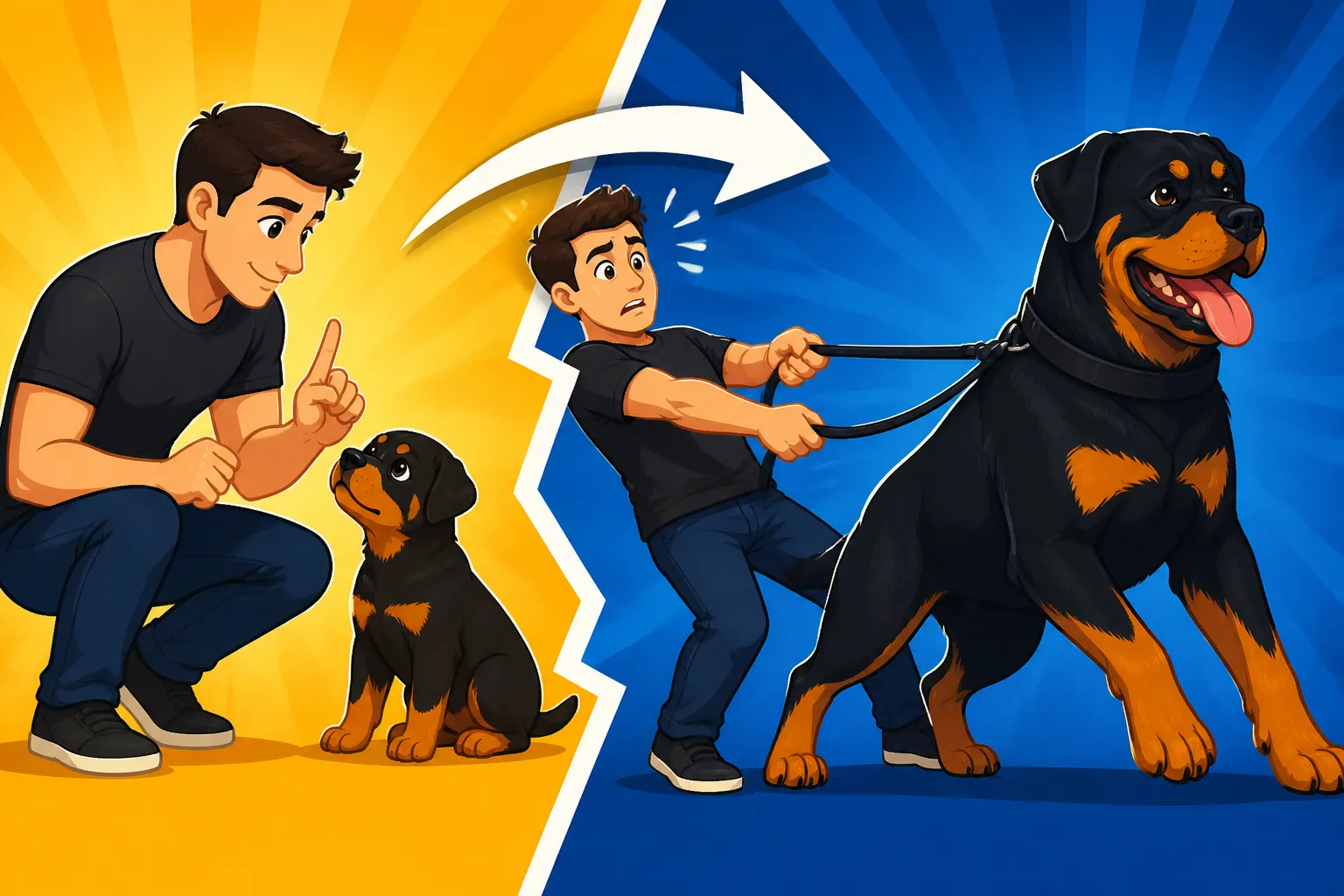
Rottweilers don't just grow; they explode. That cute, cuddly eight-week-old puppy weighing around 15-20 pounds can easily hit 50-60 pounds by four to six months old. By their first birthday, many are already close to their adult height and 80-90% of their adult weight. This isn't a breed that matures slowly; their skeletal and muscular systems develop at an astonishing rate. This rapid growth means that behaviors, good or bad, are also learned and reinforced quickly. A small tug on the leash from a 20-pound puppy is manageable, but that same tug from an 80-pound adolescent can send you sprawling. Understanding this trajectory is key to appreciating why every week counts in those first few months.
It's not just about physical size, though that's certainly a major factor. Their brains are also sponges during this time. They are constantly observing, experimenting, and learning what works and what doesn't in their environment. Every interaction, every boundary, every command (or lack thereof) contributes to their understanding of the world and their place in it. If you allow a small puppy to jump on guests, for instance, it won't magically stop when it's twice the size. In fact, it will likely be even more enthusiastic, and now you're dealing with a giant dog knocking people over. This is exactly Why Rottweiler Training Cannot Wait Until Six Months.
The "Too Late" Trap: When Weight Becomes a Hurdle
The "too late" trap is something I've seen countless well-meaning Rottweiler owners fall into. They think they'll "get serious" about training once the puppy is a bit older, perhaps six months or a year. But by then, their Rottweiler is a large, powerful dog with established habits. Imagine trying to teach a 100-pound dog not to pull on the leash when it's been doing it for months with no correction. It's not impossible, but it's significantly harder, more frustrating, and often requires more specialized equipment and professional intervention. The sheer physical strength of an adult Rottweiler means that if they don't respect boundaries and commands, they can literally drag you where they want to go.
This isn't just about walks. It's about every aspect of daily life. A Rottweiler that counter-surfs as a puppy will continue to do so, and with their adult height, they'll be able to reach even more surfaces. A Rottweiler that jumps up to greet you will continue that behavior, except now they can knock over a small child or an elderly relative. The weight and power become amplifiers for any unwanted behavior that wasn't addressed early. It also affects their perceived safety and how others react to them. A large, untrained Rottweiler, no matter how sweet its true nature, can be intimidating, leading to fear and restrictions in public spaces.
Building a Foundation: From Day One
The moment your Rottweiler puppy crosses the threshold of your home, training begins. Every interaction is a teaching moment. This doesn't mean you need to be a strict drill sergeant from day one, but it does mean being mindful and consistent. Think of it as building a house: you start with a strong foundation, not by putting up the roof first. Basic manners, understanding boundaries, and responding to their name are all crucial first steps. It's about establishing communication and trust.
Consistency is the absolute bedrock here. If one family member allows a behavior (like jumping up for attention) and another corrects it, the puppy becomes confused, and the behavior is reinforced intermittently, making it harder to extinguish. Everyone in the household needs to be on the same page with commands, expectations, and how to interact with the puppy. This early consistency will pay dividends as your Rottweiler matures, creating a dog that understands what is expected of it and respects your leadership. It's a journey, not a sprint, and every single day contributes to the dog they will become.
Laying the Groundwork: Essential Puppy Training for a Future Giant
The first few months of a Rottweiler puppy's life are incredibly impressionable. They're soaking up everything around them, forming their understanding of the world. This is the prime time to instill good habits and prevent common behavioral issues before they blossom into major problems with a larger, stronger dog. Think of it as your most important investment in their future manners and your peace of mind. Without this solid foundation, you'll be constantly playing catch-up, which is exhausting with a dog of this size and intelligence.
House Training and Crate Training from the Start
House training a Rottweiler puppy is paramount, not just for cleanliness, but for establishing a routine and teaching them bladder and bowel control. A good rule of thumb is that a puppy can hold it for roughly one hour per month of age, plus one hour. So, an 8-week-old puppy (2 months) can hold it for about 3 hours during the day. Nighttime is often a bit longer. Take them out frequently – after waking, after eating or drinking, after playing, and before bedtime. Reward lavishly with praise and a small, high-value treat when they go outside. Accidents will happen, of course. Don't punish; simply clean it thoroughly with an enzymatic cleaner to remove the odor and prevent them from returning to the same spot. Consistency is your best friend here.
Crate training goes hand-in-hand with house training and is one of the most valuable tools you can use for a Rottweiler. A crate becomes their safe den, a place to relax, sleep, and feel secure. It also prevents destructive chewing when you can't supervise and aids immensely in house training, as dogs are naturally reluctant to soil their sleeping area. For a Rottweiler, you'll need a generously sized crate, one that will accommodate them as an adult, giving them enough space to stand up, turn around, and lie down comfortably. Many people opt for a large wire crate with a divider that can be moved as the puppy grows. Ensure the crate is a positive experience: feed meals in it, offer safe chews, and never use it for punishment. For more detailed steps, check out House Training a Rottweiler Puppy by Week and consider getting a crate sized appropriately for their eventual adult weight, like those you can find on Amazon.
Teaching Bite Inhibition to a Rottweiler Puppy
Rottweiler puppies are notoriously mouthy. They use their mouths to explore the world, just like human babies use their hands. While this is normal puppy behavior, it's crucial to teach them bite inhibition – how to control the force of their bite – before their adult jaws and teeth come in. A puppy's bite should never break skin, and they need to learn that human skin is fragile. When your puppy bites too hard during play, let out a high-pitched "ouch!" or "yip!" and immediately withdraw your hand and attention. End playtime for a minute or two. This teaches them that hard bites make the fun stop.
Consistency is key here, too. Everyone in the family needs to react the same way. Once they learn to soften their bite, you can then move on to redirecting their mouthing onto appropriate chew toys. Always have plenty of tough, safe chew toys available for your Rottweiler, as they have powerful jaws and a natural urge to chew. If your puppy is still nipping aggressively even after consistent "ouch" and withdrawal, or if they seem overly focused on biting, it's time to seek guidance from a professional trainer. Learning Teaching Bite Inhibition to a Rottweiler Puppy is a foundational skill that can prevent serious issues down the line.
Early Socialization Beyond the Backyard
Socialization isn't just about letting your puppy meet other dogs; it's about exposing them to a wide variety of sights, sounds, smells, people, and experiences in a positive and controlled way during their critical development period (roughly 8-16 weeks). This helps them grow into confident, well-adjusted adults who aren't fearful or reactive. For a Rottweiler, this is especially important due to their natural guarding instincts and tendency towards aloofness with strangers. Positive early experiences can shape their future interactions with the world.
Start by safely introducing them to new people – friends, family members, different ages, sizes, and ethnicities – who will interact gently and offer treats. Expose them to different environments: quiet parks (after vaccinations are complete), pet-friendly stores (carrying them if necessary before they are fully vaccinated), and the sounds of everyday life, like traffic, sirens, and household appliances. Puppy classes are an excellent way to provide controlled socialization with other puppies and people in a supervised environment. For a detailed roadmap, consult The Rottweiler Socialization Checklist by Week and look for Puppy Classes That Accept Rottweilers in your area. Remember, quality over quantity: a few positive, short exposures are better than overwhelming them.
Mastering the Leash: Controlling a Hundred-Pound Powerhouse
Walking your Rottweiler should be an enjoyable experience for both of you, not a wrestling match. However, without proper training, a large, powerful dog like a Rottweiler can easily pull you off your feet, especially if they catch sight of a squirrel or another dog. This isn't just about convenience; it's about safety for you, your dog, and anyone you might encounter. Mastering leash manners before your Rottweiler reaches its full formidable size is paramount to ensuring safe and pleasant outings.
The Mechanics of Walking a Strong Rottweiler
Teaching a Rottweiler to walk nicely on a leash begins with consistency and patience. Start in a low-distraction environment, like your backyard or a quiet room. The goal is for your dog to walk beside you, not ahead or behind, with a loose leash. When your puppy pulls, stop immediately. Don't move forward until the leash loosens. The moment it loosens, even for a second, praise them and start walking again. This teaches them that pulling gets them nowhere, while a loose leash allows them to move forward. This technique, often called "stop-and-go," is incredibly effective but requires persistence.
As your puppy grows, the stakes get higher. A polite walk with a 20-pound puppy is one thing, but maintaining control of a 100-pound adolescent with a strong prey drive is another entirely. Introduce distractions gradually. Start with slight movements from pedestrians or distant sounds, and work your way up to busier environments. Always carry high-value treats to reward good behavior. If your Rottweiler gets excited and pulls, use your body to block them, redirect their attention, and wait for them to calm down before proceeding. This methodical approach is essential for Teaching a Rottweiler Not to Pull at 110 Pounds.
Choosing the Right Gear for Leash Control
The right equipment can make a world of difference when training a Rottweiler to walk on a leash. A simple flat collar might be fine for a small puppy, but it offers little control once your Rottweiler gains weight and strength. Avoid retractable leashes, as they teach dogs to pull and offer no real control in an emergency. Instead, opt for a sturdy, fixed-length leash (4-6 feet is ideal).
When it comes to collars and harnesses, you have a few options:
- Front-clip harnesses: These are excellent for discouraging pulling. When your dog pulls, the leash attachment on their chest gently redirects them to the side, making it uncomfortable to pull forward. Brands like Balance Harness or Easy Walk are popular choices and can be found on Amazon.
- Head halters (Halti, Gentle Leader): These fit over your dog's muzzle and behind their ears, similar to a halter on a horse. They give you a lot of control over the dog's head, and where the head goes, the body often follows. Many Rottweiler owners find these indispensable for managing strong pullers.
- Martingale collars: These are a good choice if you're using a standard collar, as they tighten slightly when pulled, preventing your dog from slipping out, but without putting constant pressure on their throat. They are designed to prevent escape and provide a gentle correction without being excessively harsh.
Whatever gear you choose, ensure it fits properly and is introduced positively. Don't just strap it on and expect your dog to love it. Let them wear it for short periods, associate it with treats and praise, and gradually increase the wear time before attaching the leash.
Consistent Leash Training for All Family Members
One of the biggest pitfalls in leash training, especially with a large breed like a Rottweiler, is inconsistency among family members. If one person allows the dog to pull and another tries to correct it, the dog receives mixed signals and won't understand the rules. Every person who walks the dog needs to use the same commands, the same techniques, and have the same expectations. This means having a family meeting to discuss and agree upon your walking strategy.
Practice is crucial. Have each family member take turns walking the Rottweiler, even if it's just for short periods in a low-distraction area. This builds muscle memory for both the human and the dog. For younger or smaller family members, consider using a head halter or a front-clip harness, as these provide more leverage and make it easier to control a strong Rottweiler without relying solely on brute force. A consistent approach ensures that your Rottweiler understands that polite leash walking is a non-negotiable expectation, no matter who is holding the leash.
Beyond Basic Commands: Cultivating a Well-Mannered Adult Rottweiler
While foundational training is crucial for survival, true mastery comes with moving beyond the basics. For a Rottweiler, whose intelligence and physical prowess can be intimidating if not properly channeled, cultivating advanced obedience and rock-solid impulse control is essential. This transforms your powerful companion into a truly reliable and pleasant member of society, capable of handling diverse situations with grace and confidence.
Solid Recall: Your Rottweiler's Most Important Command
If I could pick just one command for every dog owner to perfect, especially a Rottweiler owner, it would be a reliable recall. "Come!" or "Here!" means dropping everything and returning to you, no matter the distraction. This command is not just a party trick; it's a lifesaver. It can prevent your dog from running into traffic, chasing after wildlife, or getting into an unwanted altercation with another dog. Imagine a squirrel darting across the path – an untrained Rottweiler could easily drag you or bolt. A solid recall gives you peace of mind.
Start teaching recall in a low-distraction environment with your puppy on a long line. Call their name enthusiastically, followed by your recall word, and make yourself exciting (crouch down, clap your hands). When they come, reward them with high-value treats and praise. Never use recall as a punishment or to end something fun. If you call them to you, don't immediately put them on a leash and go home. Let them go back to playing sometimes. Gradually increase distractions and proof the command in different environments. It might take months, or even a year, to get a truly reliable recall. Consider resources like the BAXTER & Bella online puppy program, which often emphasizes crucial life skills like recall. For situations where a distraction might be too much, like when a squirrel is present, mastering Rottweiler Recall Away From a Squirrel becomes critical.
Impulse Control: The Key to Calmness
Rottweilers are powerful dogs, and their excitement can manifest in strong physical ways – jumping, pulling, or barging. Teaching impulse control is about teaching your Rottweiler to pause, think, and choose appropriate behavior, even when their instincts tell them to do otherwise. This translates to waiting patiently at the door, not grabbing food off the counter, and greeting people calmly. It's the foundation of a polite, respectful adult dog.
Simple exercises can build impulse control. "Leave It" teaches them to ignore tempting items on the ground. Start with a treat in your closed hand; when they stop nudging or pawing, say "Leave It," open your hand, and reward them with a different, even better treat. Gradually progress to leaving treats on the floor or having someone else present a distraction. "Stay" teaches patience and self-control. Start with short durations and small distances, rewarding frequently for success. Practice waiting for their food bowl, waiting to go out the door, and waiting for permission to greet guests. These seemingly small exercises build a powerful mental muscle that helps your Rottweiler manage their natural exuberance.
Managing Jumping and Counter Surfing
Rottweilers, being large and robust, can cause quite a commotion if they jump on guests or "surf" your kitchen counters. A jumping Rottweiler can easily knock over an elderly person or a child, and counter surfing can lead to ingesting dangerous foods or shattering expensive items. Addressing these behaviors early is much easier than trying to break a deeply ingrained habit in a fully grown dog.
For jumping, the rule is simple: four paws on the floor get attention; jumping gets ignored. When your Rottweiler jumps, turn your back, cross your arms, and completely disengage. Only when all four paws are on the ground do you turn around and calmly greet them, perhaps asking for a "sit" and rewarding that instead. Be consistent, and make sure guests are also on board with this rule. For counter surfing, prevention is key. Keep counters clear of food when your puppy is young. If they do attempt to put their paws on the counter, use a sharp "Off!" command and gently guide them away. Reward them for staying on the floor while you're in the kitchen. Remember, if they've successfully stolen a treat from the counter even once, they've been rewarded for the behavior, making it harder to stop.
Addressing Common Rottweiler Behavior Challenges Early On
Rottweilers are known for their strong personalities, loyalty, and protective instincts. While these traits are part of what makes them so appealing, they can also manifest as behavioral challenges if not properly understood and managed from a young age. Proactive intervention is always easier and more effective than reactive damage control with a large, powerful dog. Let's tackle some of the common ones.
Understanding and Preventing Resource Guarding
Resource guarding is when a dog becomes defensive over possessions like food, toys, sleeping spots, or even people. For a breed with a history of guarding, like the Rottweiler, this behavior can be particularly pronounced if not managed correctly. It might start subtly – a freeze, a hard stare, or a low growl when someone approaches their bowl or a favorite chew. Ignoring these early signs can lead to more serious aggression. It's vital to address Why a Rottweiler Freezes Over Its Bowl early and with a positive approach.
The key to preventing resource guarding is to teach your puppy that humans approaching their resources is a good thing, not a threat. Practice "trading up": when your puppy has a chew toy, approach and offer an even higher-value treat. As they take the treat, gently take the toy, and then give it back. This teaches them that you aren't there to take things away, but rather to add value. Do this regularly, with different items. Also, teach your puppy a "drop it" command, again, by trading for something better. Always supervise meal times, especially with multiple pets, and ensure each dog has their own space to eat undisturbed. Never punish a growl; a growl is a warning, and if you suppress it, you remove your dog's ability to communicate their discomfort before resorting to a bite. If you encounter significant guarding, seek professional help immediately.
Navigating Rottweiler Aloofness Towards Strangers
Rottweilers are often described as self-assured and aloof, especially with strangers. Unlike some other breeds that enthusiastically greet everyone, a Rottweiler might take a "wait and see" approach, observing new people with a calm, discerning gaze before deciding whether to engage. This isn't aggression; it's a characteristic trait of the breed, a natural caution that stems from their guarding heritage. Understanding Why a Rottweiler Does Not Make Friends Quickly is important.
While you don't want to force your Rottweiler to be a social butterfly, you do want them to be comfortable and relaxed around new people, without being fearful or reactive. Continue their positive socialization: expose them to a variety of calm, dog-savvy strangers who respect their space and offer treats. Encourage guests to ignore your Rottweiler initially, letting the dog approach them on their own terms. When they do approach, a gentle scratch under the chin or a treat offered casually can build positive associations. Never allow strangers to rush at your Rottweiler or force interaction. The goal isn't necessarily for them to be overtly friendly with everyone, but to be neutral and confident, knowing they don't have to be on guard.
Handling Adolescent Rebellion
Just like human teenagers, Rottweilers go through an adolescent phase, typically between 8 months and 2 years of age. This period can be frustrating for owners, as your previously well-behaved puppy might suddenly seem to "forget" everything they've learned. They might push boundaries, test your authority, become more easily distracted, or display new reactivity. This is a normal developmental stage, not a sign that you've failed as an owner. Knowing about Rottweiler Adolescence and Sudden Testing can help you prepare.
During adolescence, hormones are surging, and your Rottweiler is becoming more independent and confident. They're also physically mature enough to truly challenge you. The key to navigating this stage is patience, consistency, and a return to basics. Don't assume they've forgotten; assume they're testing. Revisit foundational commands in various environments, increasing your expectations slowly. Keep training sessions short, fun, and positive. Reinforce good behavior with high-value rewards. It’s also wise to continue with formal training classes, moving beyond puppy kindergarten to intermediate or advanced obedience. This not only reinforces good habits but also provides valuable mental stimulation for your increasingly intelligent dog. Remember, this phase will pass, and your continued dedication will solidify the strong bond and good manners you've been building.
Seeking Professional Help: When to Call in the Experts
Even the most dedicated Rottweiler owner can benefit from professional guidance. These are powerful, intelligent dogs with specific breed traits, and sometimes, navigating their training and behavior requires expertise beyond what a typical owner can provide. Recognizing when to call in the experts isn't a sign of failure; it's a sign of responsible pet ownership and a commitment to your Rottweiler's well-being.
Finding a Rottweiler-Experienced Trainer
Not all dog trainers are created equal, and not all trainers have experience with large, strong, working breeds like Rottweilers. When seeking a professional, it's crucial to find someone who understands the breed's temperament, drives, and potential challenges. A good trainer will use positive reinforcement methods, focusing on rewarding desired behaviors rather than punishing unwanted ones. They should be able to explain their methodology clearly and demonstrate it effectively. They should also be patient and willing to work with both you and your dog.
Look for trainers with certifications from reputable organizations, and ask for references. Interview several trainers to find one whose philosophy aligns with yours. Ask specific questions: "Have you worked with many Rottweilers?" "How do you handle leash reactivity in a powerful dog?" "What is your approach to resource guarding?" Don't be afraid to ask about their experience and success stories. An experienced trainer will provide invaluable guidance on everything from basic obedience to more complex behavioral issues, helping you understand your Rottweiler better and strengthening your bond. If you're wondering where to begin your search, looking for Finding a Rottweiler-Experienced Trainer Near You is a great first step.
Puppy Classes and Advanced Obedience
Formal training classes are an excellent investment for any Rottweiler owner. Puppy kindergarten provides a structured environment for early socialization, exposure to new sights and sounds, and a chance for puppies to learn appropriate play with their peers. Crucially, these classes teach owners how to communicate effectively with their puppies and start building foundational commands like "sit," "stay," and "come." The supervised setting helps ensure that both positive interactions and early problem behaviors are addressed.
As your Rottweiler matures, progressing to advanced obedience classes or even specialized dog sports can be incredibly beneficial. These classes challenge your dog mentally and physically, reinforcing good manners in increasingly distracting environments. They also provide an outlet for your Rottweiler's intelligence and desire to work. Think about Canine Good Citizen (CGC) classes, which prepare your dog for a certification that demonstrates good manners and reliability. Some programs, like BAXTER & Bella, offer comprehensive online guides that can complement in-person classes, giving you a structured curriculum and expert advice you can access anytime. These programs can be invaluable for working through specific commands or troubleshooting issues in your own home, often using positive, reward-based methods.
Recognizing When a Behaviorist is Needed
Sometimes, behavioral issues go beyond what a typical obedience trainer can address. If your Rottweiler displays persistent aggression, severe anxiety, excessive fear, or other deeply ingrained behavioral problems, it might be time to consult a veterinary behaviorist. These are veterinarians who have specialized training in animal behavior and can diagnose and treat behavioral disorders, often incorporating medication in conjunction with behavior modification techniques.
Signs that might warrant a behaviorist's input include:
- Aggression towards people or other animals that seems unprovoked or unpredictable.
- Severe separation anxiety resulting in destruction, self-harm, or constant vocalization when left alone.
- Extreme fear or phobias that prevent your dog from functioning normally (e.g., paralyzing fear of thunder, strangers, or specific environments).
- Obsessive-compulsive behaviors, such as excessive licking, tail chasing, or pacing.
A veterinary behaviorist can perform a thorough assessment, rule out any underlying medical conditions that might be contributing to the behavior, and develop a comprehensive treatment plan tailored to your Rottweiler's specific needs. While it might feel like a big step, addressing serious behavioral issues early and effectively can dramatically improve your Rottweiler's quality of life and strengthen your relationship.
Table: Rottweiler Training Milestones and Focus Areas
| Age of Rottweiler | Primary Focus Areas | Essential Commands/Behaviors | Recommended Gear/Resources | Potential Challenges if Untrained (at this stage) |
|---|---|---|---|---|
| 8-16 Weeks | Early Socialization, Foundation Building, House Habits | Name Recognition, Sit, Come (early), Leash Introduction, Bite Inhibition, Crate Training, Potty Training | Flat collar, 4-6 ft leash, Crate with divider (Amazon), Enzymatic cleaner, Puppy treats, BAXTER & Bella program, Puppy Classes | Excessive nipping, House soiling, Fear of new things, Difficulty handling |
| 4-8 Months | Impulse Control, Leash Manners, Continued Socialization | Stay, Leave It, Drop It, Polite Greetings (no jumping), Loose-leash walking, Handling distractions, Recall consistency | Front-clip harness or head halter (Amazon), Long line, Chew toys, High-value treats, Intermediate Obedience Classes | Leash pulling starts, Jumping on guests, Chewing inappropriate items, Adolescent testing |
| 8-18 Months | Adolescence, Proofing Commands, Independence | Reliable Recall, Advanced Stay/Leave It, Door Manners, Calmness around distractions, Advanced leash walking, Managing reactivity | Heavy-duty harness/collar, Varied training environments, Advanced Obedience/CGC Classes | Strong pulling, Resource guarding emerging, Reactivity towards dogs/people, "Forgetting" commands |
| 18 Months + | Consistency, Maintenance, Advanced Skills | All commands reliable in all environments, Public manners, Continued mental stimulation, Problem-solving, Loyalty | Maintain good gear, Continued enrichment, Advanced dog sports/activities, Regular practice | Inconsistent responses, Boredom-related destruction, Reactivity, Lack of focus, Weight/strength making issues harder to control |
Disclaimer
This article is for general informational purposes only and does not constitute professional advice. Laws, prices and regulations vary by location and change over time. Consult a qualified professional for guidance on your specific situation.