Rottweiler Recall Away From a Squirrel
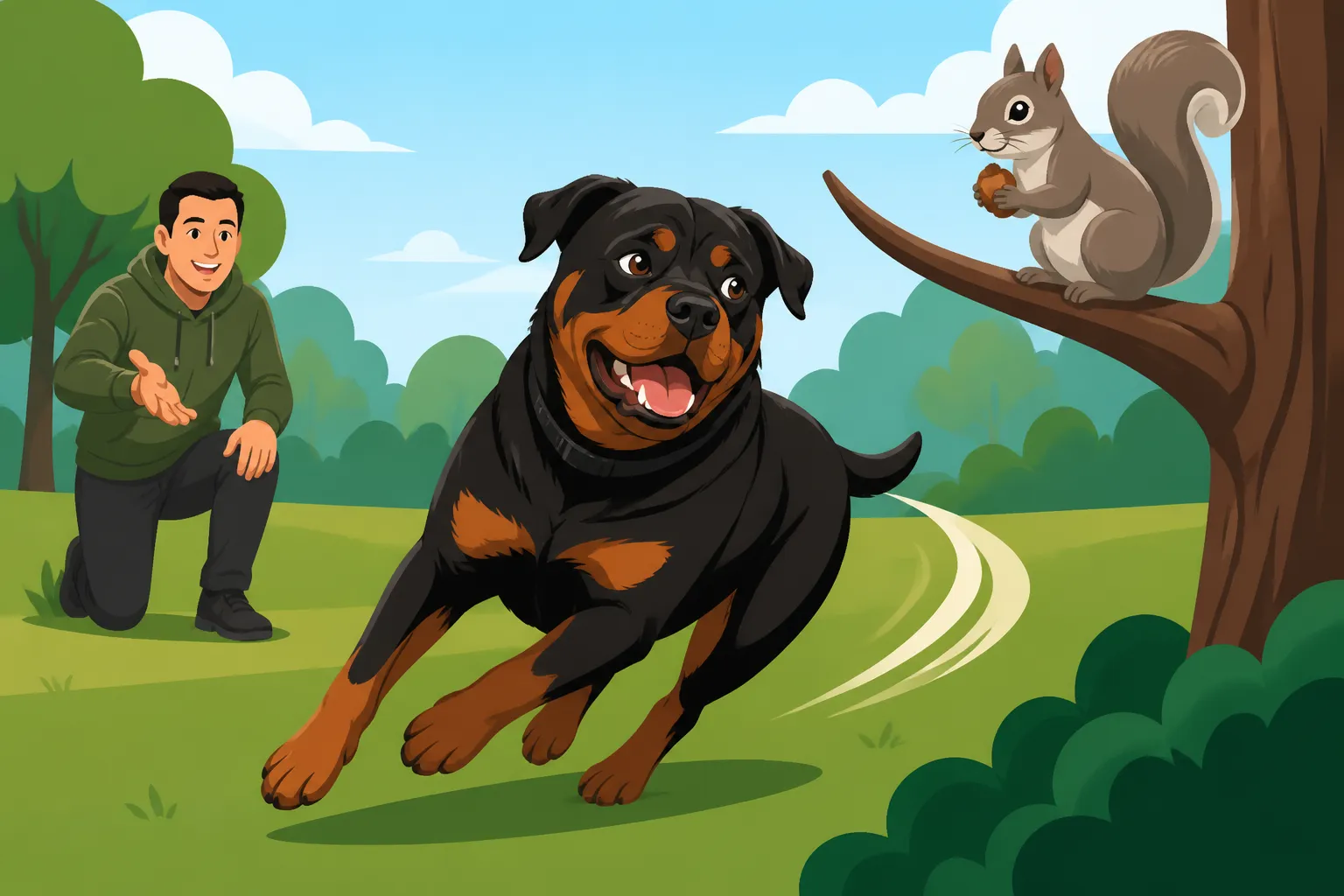
Oh, the infamous squirrel! If you've ever watched your magnificent Rottweiler transform from a calm, stately companion into a laser-focused, pulling machine at the mere sight of a twitching tail, you know the frustration. That primal urge to chase can feel like an invisible force field that makes all your training vanish in an instant, leaving you yelling "COME!" into the wind while your arm feels like it's about to be yanked from its socket. This guide is all about tackling that exact scenario, giving you actionable strategies to teach your Rottweiler to ignore the taunting fluff-balls and reliably return to you, even when their prey drive kicks into high gear.
Understanding Your Rottweiler's Instinct to Chase
Let's be real: your Rottweiler isn't doing this to spite you. They're wired for it. These powerful, intelligent dogs have a deep-seated history of working, from herding cattle in ancient Rome to guarding property, and that includes an innate prey drive. That little squirrel isn't just a squirrel; it's a fast-moving, high-value target that triggers a cascade of ancient instincts. Ignoring it goes against everything their DNA is whispering.
The Deep Roots of Prey Drive
Rottweilers, as descendants of Roman drover dogs, were originally bred to move and guard livestock. While that might not seem directly related to chasing squirrels, the underlying drive to react to sudden movement and to pursue is very much there. They needed to keep cattle together, to deter predators, and that meant being alert and responsive. A squirrel darting across the lawn is a perfect miniature example of something to be "managed" or "caught."
Think about it from your Rottweiler's perspective. They have incredible senses. They probably hear the squirrel long before you see it, the rustle of leaves, the tiny claws on bark. Then, they spot that quick, erratic movement – ping! – instinct takes over. It's a thrill, a challenge, and for many dogs, it's one of the most exciting things that can happen on a walk. This isn't just about a desire to hunt; it's also about a natural curiosity and an explosion of energy that needs an outlet. Trying to suppress this entirely is often a losing battle; instead, we need to channel it and teach them to override it when you call.
Why Squirrels Are the Ultimate Distraction
Squirrels are practically engineered to be the bane of a dog owner's existence. They're small enough to trigger that "prey" response, but agile enough to usually escape, making the chase endlessly rewarding (even if it's just the chase itself). They climb trees, leap fences, and chatter tauntingly, almost daring your dog to try and catch them. Other distractions, like another dog or a passing person, might get a sniff or a glance, but a squirrel often ignites a more primal, all-consuming focus.
This makes them a particularly tough challenge for recall. When your Rottweiler is locked onto a squirrel, their brain is flooded with dopamine, adrenaline, and pure chase-mode chemicals. Your voice, suddenly, becomes background noise. Their world narrows to that one furry target. This is why a regular "come" might work beautifully in the living room but completely fail at the park. We have to understand the immense power of this internal trigger to even begin to counter-condition it.
Building a Foundation for Bulletproof Recall
Before you can ask your Rottweiler to ignore a squirrel, you need to have a recall that's solid as a rock in low-distraction environments. This means your dog needs to understand what "come" means and associate it with incredibly positive outcomes, without the added pressure of a fluffy, darting menace.
Starting Strong in Low-Distraction Settings
The journey to reliable recall starts in the quietest, most boring place imaginable: your home. This is where you build the basic understanding and positive association.
- Choose a consistent cue: "Come," "Here," "Front," "To me"—whatever you pick, stick with it. Say it clearly and cheerfully.
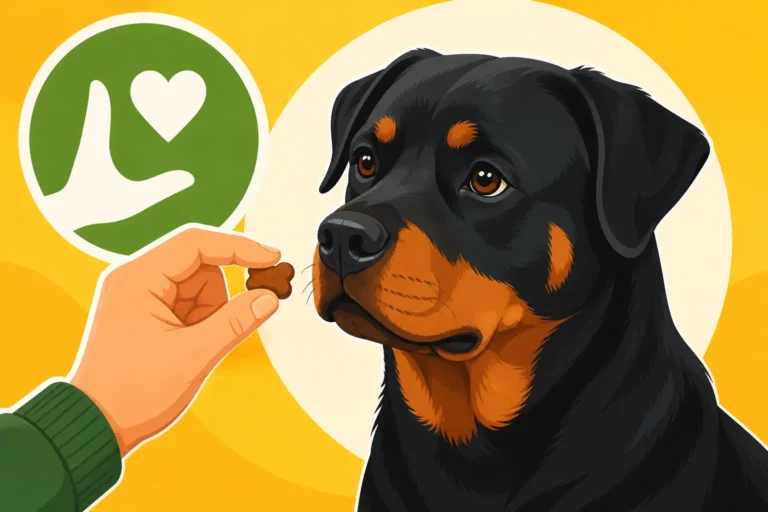
- Make it a party: When your Rottweiler comes to you, make it the best thing that's ever happened. Use high-value treats (think cooked chicken, cheese, hot dogs – not just dry kibble), enthusiastic praise, and maybe a quick, happy game of tug. You want them to think, "Wow, coming to Mom/Dad is amazing!" The goal is to always make coming to you more rewarding than whatever they might be doing.
- Practice frequently, but keep it short: Do many short recall sessions throughout the day. Call them from another room, when they're sniffing a toy, or just lounging. Don't overuse the cue when you know they won't respond, as this teaches them to ignore it. Every successful recall builds the habit. Many online training programs, like those offered by BAXTER & Bella, emphasize these foundational steps in a structured way, which can be incredibly helpful for new owners or those looking to refine their skills.
Once recall is great indoors, move to a fenced yard, still keeping distractions minimal. You're slowly expanding their world while reinforcing the "come" command.
The Indispensable Long Line
When you move outdoors, but aren't yet ready for off-leash, a long line is your best friend. Seriously, invest in a good quality one. A 20 to 30-foot line, easily found on Amazon, gives your Rottweiler the illusion of freedom while giving you control and the ability to prevent them from practicing ignoring your recall.
Here's how to use it effectively:
- Safety first: Attach the long line to a well-fitting harness, not directly to their collar, to prevent neck injury if they hit the end of the line.
- Practice "check-ins": Let your Rottweiler explore, sniff, and wander on the long line. Every now and then, call their name. When they look, praise them and reward them if they come to you. If they get too far or get distracted, gently reel them in while giving your recall cue, then reward them when they reach you. The key is to make coming to you always a choice they make, even if you’re guiding that choice with the line.
- Prevent failures: The long line is there to prevent your Rottweiler from dashing off. If you see them about to bolt for something (even a distant leaf blowing in the wind!), give your recall cue before they are fully engaged, and gently apply tension to the line to re-direct their attention. Success builds success. The Long Line Strength a Rottweiler Needs is a great resource if you want to dive deeper into selecting and using this essential tool.
Making Yourself the Most Exciting Thing Ever
This is where you really compete with that squirrel. Your Rottweiler needs to believe that coming to you is more thrilling, more rewarding, and more exciting than any chase.
- Variety is the spice of life: Don't always use the same treat. Rotate through different high-value items. Sometimes it's chicken, other times it's cheese, maybe a piece of steak. Keep them guessing!
- Surprise parties: Don't just reward coming. Sometimes, you run away from them, crouch down, and call them excitedly. Make it a game! Chase them for a few steps, then let them chase you.
- Toy play: If your Rottweiler loves toys, use them as a recall reward. A quick game of fetch or tug after they come to you can be incredibly motivating. This also taps into their natural prey drive in a controlled way.
- Unexpected rewards: Don't just reward every time. Sometimes, you give them a jackpot (multiple treats, extra praise). This keeps them engaged and hopeful for the next big score, similar to how a gambler keeps playing for that big win. For more ideas on how to keep your Rottweiler mentally engaged, check out Rottweiler Impulse Control Games.
Introducing Squirrel-Level Distractions Safely
Once your recall is solid in low-distraction environments, it's time to slowly, safely, introduce the nemesis: the squirrel. This isn't about throwing your Rottweiler into a squirrel-infested park and hoping for the best. It's about controlled, incremental exposure.
Controlled Exposure to the Foe
This stage requires patience and keen observation. You need to be able to identify your Rottweiler's "threshold"—the point at which they are aware of the squirrel but before they're completely overwhelmed by the urge to chase.
- Distance is your friend: Start with squirrels very far away. Go to a park known for squirrels, but stay on the perimeter, perhaps across a field or a street. Your Rottweiler should be on a long line.
- Observe and reward: The moment your Rottweiler notices a distant squirrel but chooses to look back at you, even for a split second, that's your jackpot moment. Mark it with a clicker or a verbal "Yes!" and give them a super high-value treat. Repeat this. You are essentially paying them for "checking in" with you instead of fixating.
- Gradual decrease in distance: Over days or weeks, as they consistently check in, slowly reduce the distance to the squirrels. If they start to get too focused, you've gone too close, too fast. Move back to a comfortable distance where they can still succeed.
- "Watch me" cue: Practice a "watch me" or "look" cue in these situations. This helps them learn to disengage from the distraction and refocus on you.
This is a marathon, not a sprint. Every successful choice your Rottweiler makes to look at you instead of the squirrel reinforces the desired behavior. You are literally reshaping their brain's response to this powerful trigger. You might also find some excellent guidance on building this kind of focus in articles like Rottweiler Recall Training That Holds.
Training in High-Distraction Environments
Once your Rottweiler can handle moderately close squirrels with success, you can move into more distracting environments. This means parks, busy walking trails, or even your own backyard if it's a popular squirrel hangout.
- Always on a long line initially: Seriously, do not risk off-leash freedom until their recall is flawless, even with squirrels practically under their nose. A single failure where they successfully chase a squirrel is a massive setback, reinforcing the wrong behavior.
- Practice with variety: Don't always go to the same park. Different locations present different challenges and keep your Rottweiler from anticipating the environment.
- Mix it up: Incorporate other distractions into your training sessions – other dogs, people, sounds. This helps generalize their recall skills. Socializing a Rottweiler Puppy Properly has some great advice on exposing your dog to various stimuli from a young age, which builds a strong foundation for handling distractions later.
- Proofing: This is the process of practicing a behavior in every conceivable situation until it is truly reliable. Call your Rottweiler from different positions, in different tones, when they're playing, when they're sniffing something interesting. The more varied your practice, the stronger the recall becomes.
Advanced Recall Drills: The Emergency Stop
Sometimes, despite all your training, that squirrel might pop out unexpectedly, or your Rottweiler might have a momentary lapse. This is where an "emergency recall" cue comes in. This should be a completely separate word or phrase, used only for urgent situations, and associated with the absolute highest reward your dog can imagine.
- Choose a unique word: Something like "NOW," "FRONT," or "SUPER COME."
- Build super value: Never use this cue casually. Practice it in very low-distraction environments, calling your Rottweiler and immediately giving them a massive jackpot of treats, a favorite toy, or a fun, quick game.
- Only for emergencies: Only deploy this cue when you desperately need them to come back, and be prepared to follow through with that phenomenal reward. If you use it and they ignore it, you've diluted its power.
- Practice with varied scenarios: You can practice this with a helper. Have your helper hold your Rottweiler, you run a distance away, call your emergency cue, and they release your dog. Immediately reward when they reach you. Emergency Recall Cues for a Rottweiler provides more in-depth strategies for this critical skill.
Troubleshooting Common Recall Challenges
Even with the best intentions and consistent training, there will be days when your Rottweiler seems to have forgotten everything. It's normal! Don't get discouraged. Instead, use these moments as opportunities to re-evaluate and adjust your approach.
When Your Rottweiler Pretends Not to Hear You
Ah, the "selective hearing" phase. We've all been there. Your Rottweiler is clearly within earshot, but their head is down, nose to the ground, or fixed on something else. This often happens because:
- Distraction is too high: You've asked for too much too soon. The distraction (squirrel, smell, other dog) is currently more rewarding than you are.
- Reward value is too low: Your treats aren't cutting it anymore. If you're using plain kibble when they're faced with a squirrel, it's like offering tap water to someone parched after a desert hike. Elevate those rewards!
- You've poisoned the cue: You've used "come" when you knew they wouldn't, or you've used "come" to do something unpleasant (like end playtime). Your dog learns that "come" can be a bummer.
What to do:
- Go back to basics: If recall is breaking down, immediately go back to low-distraction environments (inside the house, fenced yard) and rebuild that perfect recall.
- Increase reward value: Find what truly motivates your Rottweiler. Some dogs love food, others love toys, some love a vigorous scratch. Experiment.
- Manage the environment: If you know squirrels are going to be a problem, keep your Rottweiler on a long line or a regular leash. Prevent them from having the opportunity to ignore you. Every time they succeed in ignoring you and getting to chase, that behavior is reinforced.
- Avoid repeating the cue: Don't yell "Come! Come! Come!" if they're not responding. This just teaches them that your cue is optional. Instead, use the long line to gently guide them back, then reward once they reach you.
The "Come, But Slowly, Maybe" Problem
This is another common one: your Rottweiler eventually ambles over, but takes their sweet time, perhaps stopping to sniff one last patch of grass on the way. While they did eventually come, it's not the immediate, enthusiastic response you need for safety.
What to do:
- Reward speed: Don't just reward "coming." Reward "coming fast." When they bolt towards you, make it a huge celebration. If they dally, still reward, but with less fanfare or a lower-value treat. They'll quickly learn that speed equals jackpot.
- Practice "rocket recalls": In a safe, fenced area, hide from your dog, then pop out and call them enthusiastically. Run away from them as they approach. This ignites their chase drive and makes coming to you a thrilling game.
- Shorten distances: If they're coming slowly from 50 feet, reduce your practice distance to 20 feet. Build up speed and enthusiasm at closer ranges, then gradually extend the distance again.
- Body language matters: Crouch down, open your arms, use an excited voice. Make yourself inviting and easy to approach. Don't stand stiffly, staring down at them, which can feel intimidating.
| Recall Training Stage | Environment | Leash Status | Primary Goal | Reward Type |
|---|---|---|---|---|
| Foundation | Indoors, Quiet Yard | Off-leash/Short Lead | Understanding cue, building positive association | High-value treats, praise, play |
| Generalization | Fenced Park, Long Line | Long Line | Reliable recall with minor distractions, distance | High-value treats, varied play |
| Distraction Proofing | Squirrel-prone areas | Long Line | Overriding prey drive, maintaining focus on you | Jackpot treats, enthusiastic praise |
| Emergency | Any, High Risk | Varies (on- or off-leash) | Immediate, urgent return | Absolute highest value |
Maintaining Recall Over the Long Haul
Recall isn't a "one and done" training exercise. It's a perishable skill, especially with a breed as intelligent and driven as a Rottweiler. Just like an athlete needs to train constantly, your Rottweiler needs regular recall practice to keep it sharp.
- Continue unexpected rewards: Don't become predictable. Keep surprising your Rottweiler with amazing treats or sudden games during routine walks, even when they're not doing anything particularly special. This teaches them that good things can happen anytime they're near you, reinforcing proximity.
- Practice in new places: Every new park, trail, or neighborhood offers a fresh challenge. The more diverse your training locations, the more robust your Rottweiler's recall will become.
- Don't forget the basics: Periodically, go back to short, easy recall games in your living room. It keeps the "muscle memory" strong and reinforces the positive association without pressure.
- Incorporate into daily life: Call your Rottweiler to you for dinner, before going outside, or to get a cuddle. Every time they respond, it's another successful repetition.
Training a Rottweiler to ignore a squirrel is a significant accomplishment that builds trust and safety. It takes consistency, high-value rewards, and a deep understanding of your dog's natural instincts. With patience and persistence, you can teach your Rottweiler that while squirrels might be fun to watch, you are the ultimate source of all good things, and that coming to you is always the best choice. For more on managing their powerful impulses, consider reading The Rottweiler Guarding Instinct and How to Shape It or Teaching a Rottweiler to Take Treats Gently.
Disclaimer
This article is for general informational purposes only and does not constitute professional advice. Laws, prices and regulations vary by location and change over time. Consult a qualified professional for guidance on your specific situation.