Osteochondrosis From Overfeeding a Rottweiler
It's heartbreaking to watch your Rottweiler puppy, full of life and boundless energy, suddenly start limping, particularly when you've done everything you thought was right to help them grow big and strong. The truth is, sometimes, even with the best intentions, our efforts to nourish our growing giants can inadvertently lead to painful developmental issues, like osteochondrosis. This guide is here to shed light on how overfeeding, specifically, can contribute to this condition, what to look for, and how to create a care plan that fosters healthy, steady growth for your beloved Rottie.
Understanding Osteochondrosis (OCD) in Rottweilers
When we talk about a large, powerful breed like the Rottweiler, their rapid growth rate is both a marvel and a potential Achilles' heel. Their bones and joints are developing at an incredible pace, laying the foundation for a lifetime of strength and mobility. However, this rapid development also leaves them vulnerable to certain conditions if not managed carefully. One such condition is osteochondrosis, or OCD, which can be incredibly frustrating and painful for both you and your growing pup.
What is Osteochondrosis Exactly?
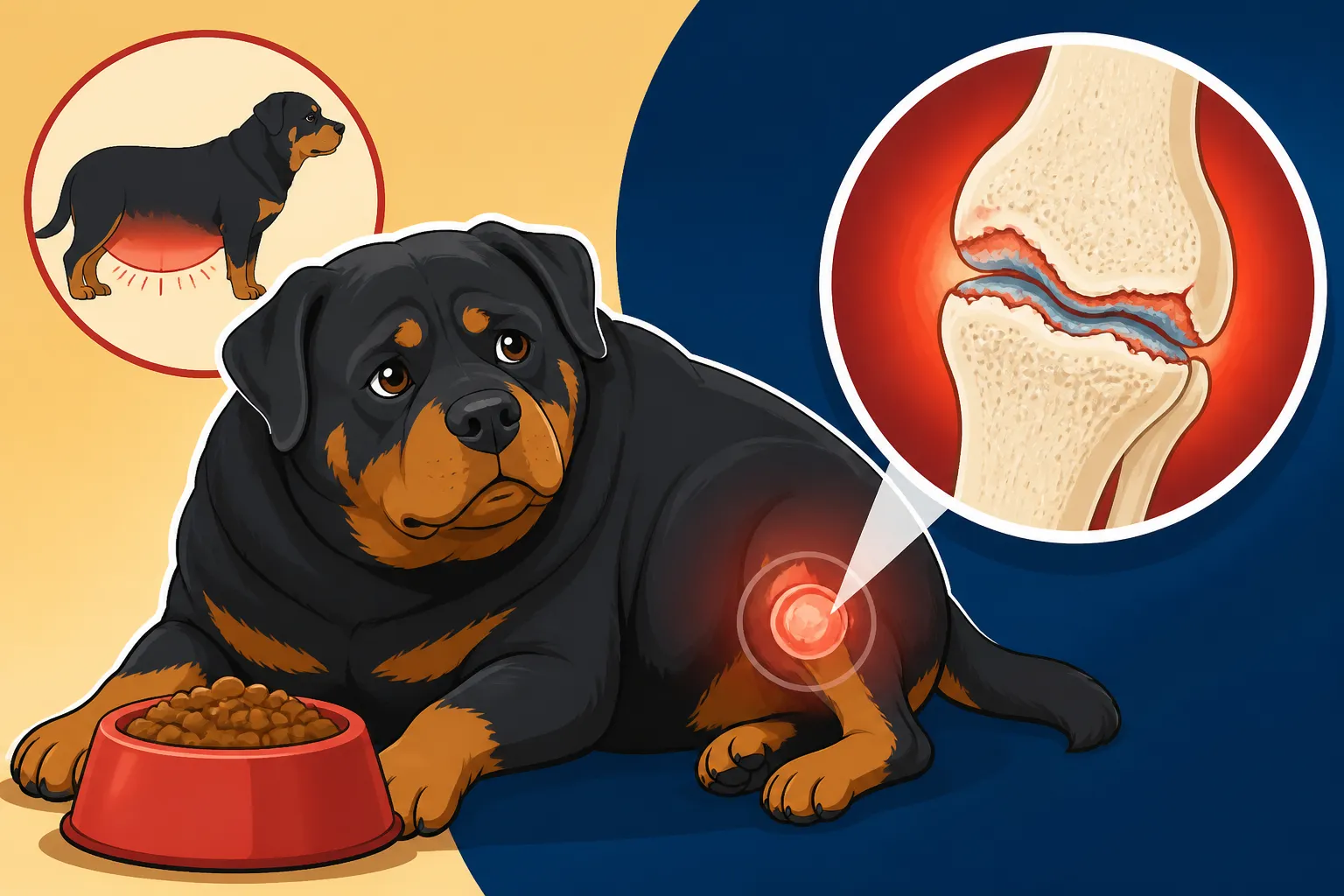
Osteochondrosis is essentially a developmental orthopedic disease that occurs when the cartilage in a joint fails to mature properly into bone. Instead of a smooth, healthy transformation, sections of this immature cartilage thicken and can even detach from the underlying bone, forming a "flap." Think of it like a paving stone coming loose on a busy path; it causes irritation, pain, and can get caught, leading to further damage.
This flawed process typically happens during a Rottweiler's rapid growth phase, usually between 4 to 12 months of age, though symptoms might not become obvious until they're a bit older. While it can occur in various joints, the shoulders, elbows, hocks (ankles), and stifles (knees) are the most common sites in Rottweilers. The weight and robust nature of a Rottweiler put immense pressure on these developing joints, making any defect in the cartilage particularly problematic. When these cartilage flaps detach, they can float freely in the joint space, causing inflammation, pain, and eventually leading to degenerative joint disease or arthritis if not addressed. It’s a silent, progressive issue that can steal comfort from their formative years.
The Role of Rapid Growth in Rottweiler Joint Problems
Rottweilers are designed to be substantial dogs, and their growth journey is nothing short of impressive. They pack on significant size and weight in a relatively short period compared to smaller breeds. This inherent rapid growth, while natural, is also a primary predisposing factor for conditions like OCD. Their skeletons are literally racing to catch up with their rapidly expanding bodies.
Imagine a construction project where the foundation is being laid, but the structure above it is being built at an accelerated, almost reckless, pace. If the foundation isn't given the proper time and resources to solidify, it's prone to cracking under pressure. That's essentially what happens with a Rottweiler's developing joints. The cartilage, which acts as a temporary framework, is under constant stress as the puppy gains weight and grows taller. When this natural rapid growth is then accelerated by external factors like an improper diet, the delicate balance is completely thrown off. The cells that form cartilage get confused, the blood supply can be disrupted, and instead of a smooth, even transition to strong bone, you get these patchy areas of unhealthy, thickened cartilage. It's a prime example of how even nature's marvels can be sensitive to environmental influences, and for a Rottweiler, managing that growth rate is absolutely critical.
The Direct Link Between Overfeeding and OCD
It's a common, well-meaning instinct to want to see our puppies grow big and strong as fast as possible. We heap extra food into their bowls, proud of their chubby bellies and rapid weight gain, thinking we're giving them the best start. But for large breeds like Rottweilers, this can actually be one of the most detrimental things we do, especially when it comes to their joint health and the risk of developing conditions like OCD.
Why Excess Calories Are a Major Culprit
The relationship between overfeeding and OCD in growing Rottweilers is very direct: excess calories lead to rapid weight gain, which then leads to abnormally fast growth. This accelerated growth rate places undue stress and pressure on the immature cartilage and bone plates (growth plates) that are still developing in their joints. Think of it like trying to force a plant to grow too quickly with too much fertilizer; it might get tall fast, but its internal structure might not be as strong or resilient.
A "chubby" Rottweiler puppy, while adorable, is a red flag for future orthopedic issues. When puppies carry extra weight, their developing joints bear a heavier load than they are designed to handle during this critical period. This constant, excessive mechanical stress, combined with the biochemical signaling from rapid growth, can disrupt the normal process of cartilage maturation. Instead of healthy cartilage transforming into bone, it can become diseased, thickened, and prone to flaking off, leading directly to OCD lesions. It's a frustrating situation because as loving owners, we often equate more food with better health, but for these giant breeds, less is often more when it comes to growth speed. This issue is so prevalent that many veterinarians and breeders will specifically warn new owners about the dangers of a heavy puppy. You can read more about this in Why a Chubby Rottweiler Puppy Is a Problem.
The Calcium and Phosphorus Imbalance Myth and Reality
For years, there was a strong belief that simply adding extra calcium to a large breed puppy's diet would prevent joint issues or make bones stronger. This idea often led well-meaning owners to supplement their Rottweiler puppies with calcium powders or milk products. However, we now understand that this approach is not only incorrect but actively harmful.
The reality is that excessive calcium intake, particularly when combined with an already high-calorie diet and rapid growth, can significantly increase the risk of developmental orthopedic diseases like OCD. Growing Rottweilers have a finely tuned mechanism for absorbing and utilizing calcium, and flooding their system with too much can disrupt this delicate balance. It can interfere with the normal process of bone mineralization and cartilage development, leading to problems rather than preventing them. Most high-quality commercial large breed puppy foods are formulated with precisely the right balance of calcium and phosphorus, typically within a narrow range of 1.0% to 1.5% calcium on a dry matter basis, and an appropriate calcium-to-phosphorus ratio. Deviating from this by adding supplements can throw everything out of whack. It’s a classic case where more is definitely not better, and in fact, can be quite damaging. To understand the specifics of calcium and phosphorus levels, you might find Calcium Percentages to Look For on a Rottweiler Bag helpful, and it’s also important to understand Why Calcium Supplements Damage a Rottweiler Puppy.
Identifying and Managing OCD in Your Rottweiler
Spotting the signs of OCD in a fast-growing, sometimes clumsy Rottweiler puppy can be tricky. They're often so full of energy that a subtle limp might be dismissed as a minor bump or bruise from roughhousing. However, knowing what to look for and acting quickly can make a significant difference in their long-term comfort and mobility.
Signs and Symptoms to Watch For
The clinical signs of OCD in a Rottweiler can vary depending on which joint is affected and the severity of the lesion, but there are some common indicators you should never ignore. Typically, the first thing you'll notice is lameness, often intermittent at first, meaning it comes and goes. Your puppy might be perfectly fine one day, then subtly limp after a strenuous play session the next. This lameness often worsens after exercise or after periods of rest, like waking up stiff in the morning.
You might observe a reluctance to bear weight on a particular limb, or they might shift their weight uncomfortably. If the shoulder is affected, they might hold that leg slightly out from their body. Elbow OCD can manifest as a short, choppy gait or outward rotation of the paw. Sometimes, you might even notice a subtle swelling around the affected joint, or if you gently touch the area, your Rottie might react with pain or pull away. Imagine your pup, usually eager to fetch a ball, hesitating, or sitting down more frequently during play. These subtle changes in gait or activity level are crucial clues. Don't dismiss a recurring limp as just "growing pains," especially in a large breed. Other conditions, like Shifting Lameness and Panosteitis in a Rottweiler Puppy, can have similar initial symptoms, so professional diagnosis is key.
Veterinary Diagnosis and Treatment Options
If you suspect your Rottweiler puppy might have OCD, the very first step is a prompt visit to your veterinarian. They will start with a thorough physical examination, carefully manipulating the joints to check for pain, swelling, or reduced range of motion. Because other conditions can mimic OCD, accurate diagnosis is essential.
The definitive diagnosis usually comes from X-rays. Your vet will take specific views of the suspected joints, looking for changes in the cartilage and bone, or the characteristic detached cartilage flap. In some complex cases, they might recommend more advanced imaging techniques like CT scans or MRI, especially if surgery is being considered, as these can provide a more detailed view of the soft tissues and exact location of the lesion.
Treatment options depend heavily on the severity of the OCD and the specific joint involved. For very mild, non-displaced lesions, or in younger puppies, conservative management might be tried first. This involves strict rest, often kennel rest, for several weeks to months, combined with anti-inflammatory medication and pain relief. The goal is to allow the cartilage to stabilize or heal, although this is less common with larger, free-floating flaps. Controlled exercise, possibly with a physical therapist, can also be introduced gradually.
However, for most clinically significant cases, especially those with detached cartilage flaps, surgical intervention is often the recommended course of action. The most common surgical approach is arthroscopy, a minimally invasive procedure where a small camera and instruments are inserted into the joint. The surgeon can then visualize the lesion, remove any loose cartilage flaps, and debride (smooth out) the affected bone surface. This helps reduce pain and inflammation and prevents further joint damage. Recovery from surgery involves a period of controlled activity and often physical therapy to rebuild strength and mobility. While surgery often offers an excellent prognosis for reducing pain and improving function, it's important to understand that OCD can predispose a dog to arthritis later in life, so long-term joint care, as discussed in Managing Arthritis in an Older Rottweiler, will be a consideration. Post-surgical physical therapy is also crucial for a full recovery, and you can learn more about this in Physical Therapy After Rottweiler Joint Surgery.
Preventing OCD Through Controlled Feeding and Exercise
Preventing osteochondrosis in your Rottweiler puppy boils down to giving their growing body the optimal environment to develop strong, healthy joints. This isn't about expensive supplements or miracle cures, but rather a consistent, thoughtful approach to their diet and activity levels during those crucial first two years. It's about letting them grow at their natural, healthy pace, not accelerating it.
Choosing the Right Diet for a Growing Rottweiler
The cornerstone of OCD prevention is selecting an appropriate diet. For a Rottweiler puppy, this means a high-quality, large-breed puppy formula. These foods are specifically designed to support slower, more controlled growth compared to regular puppy foods, which might be too calorie-dense or have an unsuitable calcium-to-phosphorus ratio for giant breeds. The aim isn't to stunt their growth, but to ensure it's steady and strong, allowing their skeletal system time to mature without undue stress.
Look for formulas that specify "large breed puppy" or "giant breed puppy" on the label. These will have carefully managed levels of protein, fat, calcium, and phosphorus. For example, a protein content between 22-26% is generally considered appropriate, as discussed in Protein Between Twenty-Two and Twenty-Six Percent. The calcium content should ideally be between 1.0% and 1.5% on a dry matter basis. Brands like Ollie offer customized fresh food plans that can be tailored to a Rottweiler puppy's specific needs, or you can find reputable large breed puppy kibbles from major retailers like Chewy or Amazon. Always Reading a Large Breed Puppy Food Label is paramount to ensure you're getting the right balance of nutrients. Avoid "all life stage" foods unless they specifically state they meet the nutritional needs for growth of large breed puppies, as these can sometimes be too rich for a Rottweiler's delicate growth period.
Strategic Portion Control and Meal Frequency
Once you've chosen the right food, portion control becomes your next most important tool. Do not simply follow the "guidelines" on the back of the food bag rigidly, especially if your puppy is looking chunky. Those guidelines are often for average activity levels and might lead to overfeeding in a less active pup or simply promote growth that's too rapid. Instead, feed to your puppy's body condition. You should be able to easily feel, but not necessarily see, their ribs without a thick layer of fat over them. They should have a noticeable waist tuck when viewed from above and the side.
Using a kitchen scale to Measuring Rottweiler Food by Weight Not Cups is far more accurate than using a measuring cup, as kibble density varies greatly. Start with the lower end of the recommended range for their age and weight, and adjust based on their body condition, not their hunger. It's better for a Rottweiler puppy to be slightly lean than overweight.
Regarding meal frequency, splitting your Rottweiler's daily ration into two or three smaller meals throughout the day, rather than one large one, is beneficial. This not only helps with digestion but can also reduce the risk of bloat (gastric dilation-volvulus), a serious concern for deep-chested breeds. Splitting a Rottweiler's Ration Across the Day can also help stabilize blood sugar and prevent huge growth surges. Remember, slow and steady wins the race when it comes to healthy Rottweiler growth.
Balanced Exercise for Healthy Joint Development
Just as important as diet is the way you manage your Rottweiler puppy's exercise during their crucial growth phases. It's tempting to think that lots of running and jumping will make them stronger, but for a growing Rottweiler whose growth plates are still open and cartilage is developing, too much high-impact, forced exercise can be incredibly damaging. Their Rottweiler Growth Plates and Why They Close So Late, usually around 18-24 months, are particularly vulnerable.
Instead of long jogs or intense fetch sessions, focus on short, frequent, and controlled exercise. Leash walks for appropriate durations are ideal. A good rule of thumb is the "5-minute rule": 5 minutes of structured exercise per month of age, once or twice a day. So, a four-month-old puppy would get two 20-minute walks a day. This is a topic explored further in The Five Minute Rule for Rottweiler Puppy Walks. Free play in a safely enclosed, soft area (like a grassy yard) is great, but avoid activities that involve excessive jumping, hard stops, or repetitive pounding on hard surfaces. This means no long-distance running or competitive agility training until they are fully mature. Why a Rottweiler Puppy Should Not Jog With You is a concept rooted in protecting these vulnerable growth plates. Stairs should also be limited for very young puppies, as repetitive impact can stress developing joints. The goal is to build muscle tone and promote cardiovascular health without overstressing their immature skeletal system.
Here's a quick comparison of healthy vs. concerning feeding practices for your growing Rottweiler:
| Aspect | Healthy Practice | Concerning Practice |
|---|---|---|
| Food Type | High-quality large breed puppy formula | Regular puppy food, "all life stage," or adult food too early |
| Calcium Levels | 1.0-1.5% on dry matter basis (in large breed formula) | Supplementing calcium or feeding high-calcium foods |
| Portion Control | Weighing food, feeding to lean body condition | Free-feeding, over-relying on bag guidelines, overfeeding |
| Meal Frequency | 2-3 smaller meals per day | One large meal per day |
| Growth Rate Expectation | Slow, steady, controlled growth | Rapid weight gain, "chubby" puppy look |
| Exercise | Short, controlled walks, free play on soft surfaces | Forced long runs, high-impact jumping, excessive stairs |
Raising a Rottweiler puppy to be a healthy, robust adult is a commitment, and understanding the nuances of their rapid growth is key. By being mindful of the calories they consume, selecting the right food, and managing their exercise appropriately, you can significantly reduce the risk of developmental orthopedic diseases like osteochondrosis. It's a journey that requires patience and diligence, but the reward is a loyal companion with strong, pain-free joints ready to enjoy a long, active life by your side.
Disclaimer
This article is for general informational purposes only and does not constitute professional advice. Laws, prices and regulations vary by location and change over time. Consult a qualified professional for guidance on your specific situation.