Whether a Rottweiler Undercoat Is Enough in Snow
It's a common thought for us Rottweiler owners: you look at your big, robust dog, with that dense, dark coat, and assume they're practically invincible against a bit of snow. After all, they look so strong and imposing, like they were born to brave the elements! But then you see them lift a paw, or shiver, and that little voice in your head starts to wonder if their natural defenses are truly enough when the thermometer drops and the white stuff piles up. This guide aims to clear up that uncertainty, diving deep into how your Rottweiler's coat protects them in winter and when you might need to lend a helping paw.
The Design of the Rottweiler Coat for Cold Weather
When you run your hands over your Rottweiler's back, you might primarily feel that coarse, straight outer layer. It's tough, water-repellent, and definitely looks like it means business. But there's more to their natural insulation than meets the eye, a hidden layer working hard to keep them warm.
The Double-Coated System Explained
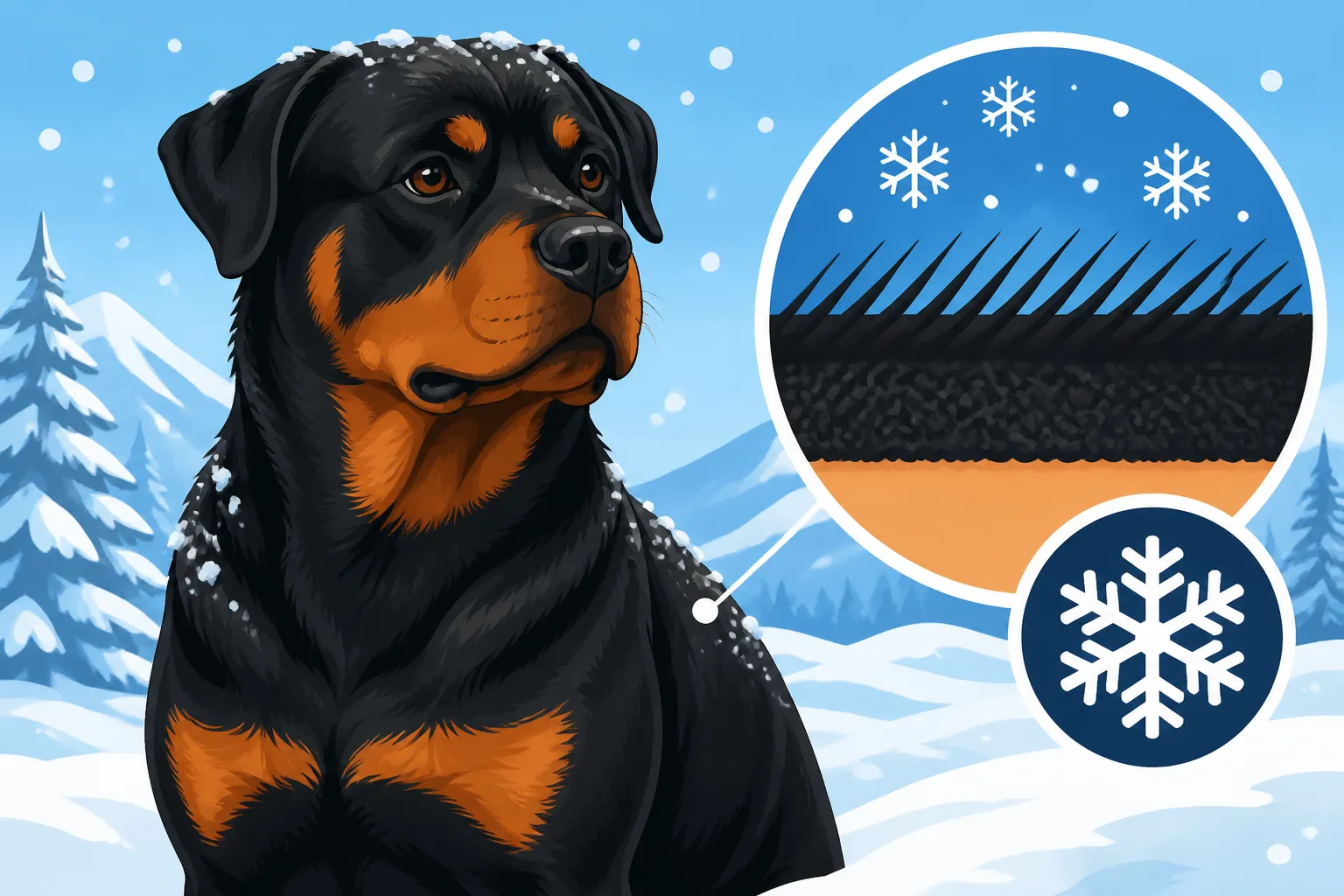
Rottweilers are what we call a "double-coated" breed. This isn't just a fancy term; it's a critical design feature that served their ancestors well when they were droving cattle through the Roman Empire and later, in the chilly butcher shops and markets of Rottweil, Germany. The outer coat, often called the guard coat, consists of longer, stiffer hairs. These hairs are designed to shed water and dirt, acting like a protective shield against the elements. Think of it as their heavy-duty, weather-resistant jacket.
Beneath this formidable outer layer lies the unsung hero: the undercoat. This is a softer, denser, and much finer layer of hair that acts as incredibly efficient insulation. It traps a layer of air close to your dog's skin, which then gets warmed by their body heat, creating a thermal barrier against the cold. The density of this undercoat can vary depending on individual genetics, climate, and even the time of year, as Rottweilers famously have a Rottweiler Undercoat Shedding Twice a Year. When winter comes, a healthy Rottweiler's undercoat should thicken up significantly, preparing them for colder temperatures.
How Undercoat Density Varies by Climate and Season
It's important to understand that not all Rottweilers develop the same thickness of undercoat, and even the same dog will have a different coat in July than in January. Dogs living in consistently cold climates tend to grow a much lusher, denser undercoat year-round, adapted to their environment. A Rottweiler who spends most of their time indoors in a temperate climate, or one from a breeding line historically kept in warmer regions, might not develop as thick an undercoat.
Furthermore, the seasonal "blowing" of the coat is a real thing. In autumn, as daylight hours shorten and temperatures drop, a Rottweiler's body signals its coat to thicken, shedding out the lighter summer undercoat and replacing it with a denser winter version. Conversely, in spring, they'll shed that heavy winter coat to prepare for warmer months. So, while a Rottweiler has an undercoat, its effectiveness in snow largely depends on how well-developed and conditioned it is for the specific winter conditions they're facing.
Factors That Influence Your Rottweiler's Cold Tolerance
While their natural coat is impressive, it's not the only piece of the puzzle when determining how well your Rottweiler will handle snow and cold. Several individual factors come into play, making each dog's tolerance unique. It's never a one-size-fits-all answer, even within the breed.
Age and Health Considerations
A robust, healthy adult Rottweiler typically has the best chance of thriving in cold weather thanks to their well-developed musculature, body fat, and efficient metabolism. However, puppies and senior Rottweilers are far more vulnerable. Puppies, especially those under six months, haven't yet fully developed their thermoregulation systems or their dense adult coat. Their smaller body mass means they lose heat much faster. Over-exercising a young Rottweiler in the cold can also be detrimental, especially given their Rottweiler Growth Plates Closing at Eighteen to Twenty-Four Months.
Similarly, older Rottweilers, generally those The Age at Which a Rottweiler Counts as Senior around seven years and beyond, often have compromised health or mobility. They might have a thinner coat due to age, struggle with conditions like arthritis that make moving in snow painful, or have underlying issues like thyroid disease that affect their ability to regulate body temperature. A senior Rottweiler may shiver more easily, move slower, and be less able to generate body heat through activity. It's crucial to be extra vigilant with these vulnerable age groups. Senior Rottweiler Care After the Age of Seven really emphasizes paying attention to their comfort in all conditions.
Body Condition and Activity Level
A Rottweiler at a healthy weight will generally cope better with cold than one who is either underweight or significantly overweight. While a little extra fat can provide some insulation, obesity puts a strain on their cardiovascular system and joints, making it harder for them to move and stay active enough to generate warmth. A dog that is too thin, lacking adequate body fat reserves, will struggle even more to maintain core body temperature. Rottweiler Obesity and the Load It Adds details the overall negative impact of excess weight, which includes reduced cold tolerance.
Activity level is also a huge factor. A Rottweiler actively running and playing in the snow will generate significantly more body heat than one standing still, waiting for you to finish your conversation. Think of a brisk walk versus a slow wander. The more a dog moves, the warmer their muscles keep them. However, sustained, high-intensity exercise in very cold conditions can also lead to exhaustion and a rapid drop in body temperature once they stop, especially if they are getting wet. Owners must balance providing enough activity to keep them warm with the risk of over-exertion or getting too cold once the activity ceases.
Environmental Conditions: Type of Snow, Wind Chill, and Duration
Not all snow is created equal when it comes to your Rottweiler's comfort. Dry, powdery snow is often less chilling than wet, slushy snow, which can quickly saturate their coat and strip away body heat. Wind chill is another major player; a seemingly mild temperature can feel much colder with a strong wind, penetrating their coat and dissipating their warmth more quickly.
The duration of exposure also matters immensely. A short romp in the snow for 15-20 minutes might be perfectly fine for a healthy adult Rottweiler, allowing them to enjoy themselves without getting too cold. However, leaving them out for an extended period, especially if they are inactive or the conditions are harsh (like a blizzard with high winds), can lead to hypothermia even with a thick undercoat. Consider a situation where you might grab a coffee and linger outside with a friend – your Rottweiler, standing patiently, will get colder much faster than if they were actively walking. Being mindful of these nuances in environmental conditions is key to ensuring your Rottweiler's comfort and safety.
Recognizing Signs of Cold Stress in Your Rottweiler
Even with a seemingly thick coat, your Rottweiler can still get too cold. It's vital for us as owners to be able to read their body language and understand the subtle (and not-so-subtle) cues that indicate they're uncomfortable or, worse, entering a dangerous state of hypothermia. Rottweilers are stoic animals, so sometimes the signs can be easy to miss if you're not looking carefully.
Subtle Behavioral Cues
Before outright shivering begins, you might notice more subtle changes in your Rottweiler's behavior. Are they walking with a slightly hunched back, tucking their tail tightly between their legs, or lifting their paws off the cold ground? Perhaps they are trying to stand on three legs, rotating which paw they hold up, or refusing to go further on a walk. This often indicates their paws are getting uncomfortably cold. They might seek shelter behind your legs or against a wall, trying to block the wind or find a warmer spot.
You may also notice them becoming less energetic or less interested in play than usual, preferring to conserve energy rather than expend it. Their movements might become stiff or hesitant, especially if they're dealing with joint issues that are exacerbated by the cold. While a slight shiver can be normal after a sudden temperature change, persistent shivering, especially when combined with other signs, is a clear warning that they are struggling to maintain body temperature.
Physical Indicators and Emergency Signs
Beyond behavior, there are clear physical signs that your Rottweiler is getting too cold. Their ears and paw pads might feel unusually cold to the touch. Their nose could be very dry and cold, or their gums might appear paler than usual. As hypothermia progresses, their movements will become more noticeably clumsy or uncoordinated. You might observe a slow or shallow breathing rate, a sign their body is shutting down to conserve energy.
In severe cases, a Rottweiler experiencing hypothermia might become lethargic, unresponsive, or even collapse. Their muscles might become rigid, and their eyes could appear glazed. If you see these severe signs, it's a critical emergency. You need to get them to a warm place immediately, wrap them in blankets, and contact your veterinarian without delay. Every minute counts in these situations. Understanding The Emergency Signs That Send a Rottweiler In is crucial for all owners.
Here's a quick guide to help you identify stages of cold stress:
| Sign Category | Mild Cold Stress (Act now!) | Moderate Cold Stress (Urgent action needed!) | Severe Cold Stress (Emergency – Vet immediately!) |
|---|---|---|---|
| Behavioral | Shivering (intermittent), seeking shelter, paw lifting, reluctance to move, hunched posture, tail tucked. | Persistent shivering, lethargy, decreased responsiveness, whining, trying to burrow. | Collapse, unresponsiveness, disorientation, rigid muscles, vocalizing in distress. |
| Physical | Cold ears/paws/nose, slight slowing of movement, mild stiffness. | Gums may be pale, breathing shallow, heart rate slower, visible muscle stiffness/rigidity. | Fixed, dilated pupils, very slow or absent breathing, undetectable pulse, unconsciousness. |
| Intervention | Bring inside, dry off, provide warm bed/blanket. | Warm environment, wrap in dry blankets/towels, contact vet, offer warm broth. | Immediate vet care. Gentle warming (no hot water bottles directly), monitor breathing/heartbeat. |
Providing Supplemental Warmth and Protection
When temperatures drop, and the snow falls, relying solely on your Rottweiler's undercoat might not be enough. Being proactive with supplemental warmth and protection can make all the difference in keeping them comfortable and safe.
The Role of Winter Gear: Coats and Boots
For many Rottweilers, especially those with less dense undercoats, seniors, puppies, or those living in truly frigid climates, a dog coat or jacket can be a game-changer. Look for coats that are waterproof or water-resistant on the outside to repel snow and wetness, and insulated on the inside to provide an extra layer of warmth. Pay attention to fit – it needs to cover their torso adequately without restricting movement. Brands like those found on Chewy or Amazon often offer a range of large breed coats that are specifically designed for dogs of a Rottweiler's stature. Don't feel silly putting a coat on your big, tough-looking dog; it's about their comfort and health, not fashion!
Paw protection is equally, if not more, important. Snow and ice can be abrasive, causing cracks and cuts on paw pads. Worse, de-icing salts and chemicals commonly used on sidewalks and roads can be incredibly irritating and even toxic if ingested when your dog licks their paws. Dog boots provide a crucial barrier against these hazards. It might take some getting used to – some dogs find boots awkward at first – but with patience and positive reinforcement, most Rottweilers can adapt. Again, online retailers like Chewy and Amazon have excellent options for durable, well-fitting boots for large breeds. Even a quick wipe down of paws with warm water after a walk can help remove salts and prevent irritation.
Nutritional Support for Cold Weather
Keeping warm burns calories, and your Rottweiler's body will be working harder in cold weather to maintain its core temperature. This means their nutritional needs might subtly increase, especially if they are spending more time outdoors or are very active in the cold. It's not about overfeeding, but ensuring they're receiving adequate calories from a high-quality, balanced diet.
If your Rottweiler is particularly active in winter, or if the cold is truly extreme, discussing a slight adjustment to their food portions with your vet might be beneficial. Ensure they have constant access to fresh, unfrozen water, as hydration is just as important in winter. Some owners even consider adding a bit of warm, low-sodium broth to their meals to encourage hydration and provide a little extra warmth. Companies like Ollie, known for fresh, human-grade dog food, could be an option if you're looking for nutrient-dense meals that might help support their energy levels in colder months.
Limiting Exposure and Providing Warm Resting Spots
Ultimately, the best defense against extreme cold is to limit prolonged exposure. Even with coats and boots, there's a limit to what any dog can safely endure. On extremely cold or stormy days, keep outdoor potty breaks brief and supervised. Engage in indoor games and training sessions to provide mental and physical stimulation without risking excessive cold exposure.
Inside the home, ensure your Rottweiler has a warm, draft-free place to rest. A comfortable, thick bed, perhaps elevated off a cold floor, can make a big difference. Consider placing their bed away from exterior doors or drafty windows. If you have an outdoor kennel, it absolutely needs to be insulated, off the ground, and protected from wind and snow, with plenty of warm bedding that stays dry. While their undercoat provides a good baseline of protection, responsible Rottweiler ownership means understanding its limitations and stepping in with supplemental care when winter truly bites. Rottweiler Winter Care and Cold Weather offers more detailed advice on managing your Rottweiler through the colder months.
Disclaimer
This article is for general informational purposes only and does not constitute professional advice. Laws, prices and regulations vary by location and change over time. Consult a qualified professional for guidance on your specific situation.