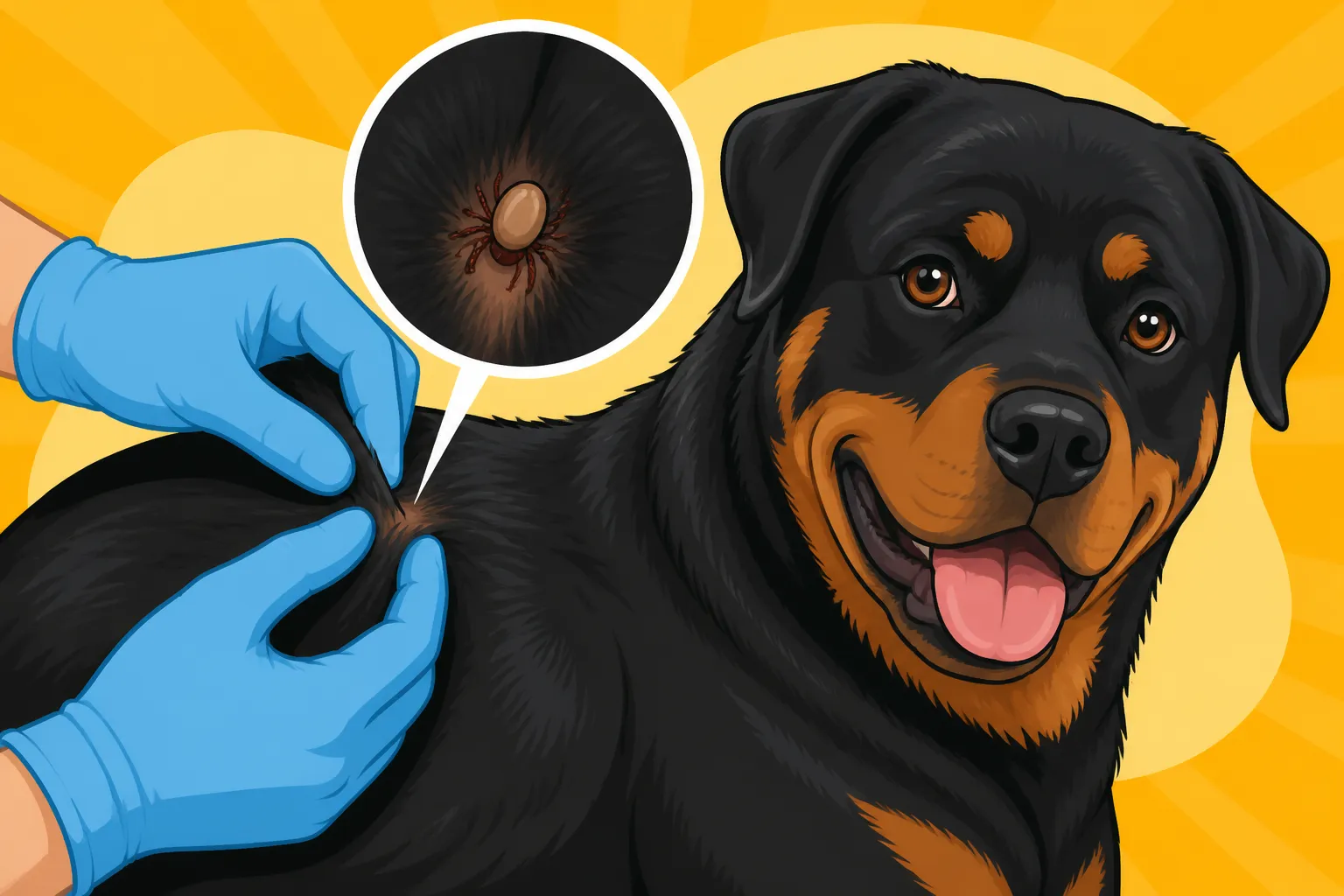
Checking a Rottweiler for Ticks in the Black Coat
Finding a tiny, eight-legged hitchhiker on your big, beautiful, black-coated Rottweiler can feel like searching for a needle in a haystack, especially when your dog just wants to snuggle after a romp in the woods. The frustration of missing one of those sneaky little pests, only to find it engorged days later, is something every Rottweiler owner can relate to. This guide is here to take the guesswork and anxiety out of regular tick checks, giving you a clear, systematic approach to protect your beloved companion from these common parasites.
The Unique Challenge of Ticks on a Black Rottweiler Coat
Let's be honest, those stunning black and rust coats are magnificent, but they can be a real pain when it comes to spotting something as small and dark as a tick. You're not alone if you've felt a wave of dread after a hike, knowing the meticulous search that lies ahead. It’s not just about the color; the sheer density of a Rottweiler's double coat, combined with their substantial size, provides ample hiding spots for ticks to latch on unnoticed.
Why a Dark Coat Hides Pests So Well
Imagine a tiny, dark brown or black tick, barely the size of a poppy seed, trying to blend into a vast expanse of sleek, dark fur. It's camouflage at its finest, from the tick's perspective! Even if you have a keen eye, the contrast simply isn't there, making visual detection incredibly difficult, particularly for unfed ticks. It's often only when they've had a chance to feed and swell that they become noticeable as small, greyish-blue bumps, and by then, they've already had a good meal at your Rottweiler's expense. This is why touch, rather than just sight, becomes your most crucial tool.
Beyond the color, Rottweilers possess a thick, dense double coat. This undercoat can be a haven for ticks, allowing them to burrow close to the skin, insulated from casual inspection. Running your hands over their fur might feel like a loving pat, but it can easily miss a tick nestled deep within. This requires a much more deliberate, systematic approach, parting the fur down to the skin, which can be time-consuming, especially with a large, active dog.
The Psychology of the Post-Adventure Check
That moment when your Rottweiler comes bounding in after a walk through tall grass or a sniff-fest in the bushes, tail wagging, is pure joy. Then reality sets in: the tick check. For many of us, it can feel like a daunting chore. You're tired, your dog is excited, and the thought of meticulously searching every inch of a hundred-plus-pound dog can feel overwhelming. It’s easy to rush, to do a quick pat-down, and hope for the best.
But here's the realistic truth: rushing can lead to missed ticks, and missed ticks can lead to problems. Beyond the immediate discomfort of a bite, ticks can transmit serious diseases like Lyme disease, Anaplasmosis, and Ehrlichiosis. The psychological burden of knowing you could miss one, and the potential health consequences, adds to the pressure. It’s completely normal to feel this way, but acknowledging it helps you prepare better, making the process less stressful for both you and your Rottweiler. Consistent, thorough checks are a non-negotiable part of responsible Rottweiler ownership, especially if your dog enjoys the great outdoors. How Far an Adult Rottweiler Should Walk is often through areas where ticks thrive, so it’s essential to be prepared.
Your Step-by-Step Guide to a Thorough Tick Check
Making tick checks a routine, even a game, can make all the difference. The goal is to be thorough without making it a dreaded event for your Rottweiler. Consistency and a systematic approach are key.
Gathering Your Supplies
Before you even start, have everything you need within arm's reach. This prevents you from having to break off mid-check, which can frustrate both you and your dog.
- Good Lighting: Natural daylight is ideal, but a bright flashlight or headlamp is indispensable for darker areas, particularly on a black coat.
- Tick Removal Tool: Forget tweezers; they often crush the tick or leave parts behind. Invest in a proper tick remover tool – there are several effective designs available, often found on sites like Amazon or Chewy. They're designed to gently slide under the tick and lever it out whole.
- Disposable Gloves: Ticks can carry diseases, and you want to avoid direct contact with them or their fluids.
- Antiseptic Wipes or Rubbing Alcohol: For cleaning the bite site after removal.
- Small Container with Alcohol: A small jar or zippered baggie with rubbing alcohol is perfect for safely disposing of and preserving any ticks you find. Preserving them allows your vet to identify the species if your dog later develops symptoms.
- Treats! Plenty of high-value treats to reward cooperation and make the experience positive.
- Comb or Brush: A fine-toothed comb can help part dense fur, making it easier to see and feel. Consider one of the specialized grooming and deshedding tools designed for thick coats that you might find on Chewy. Rottweiler Grooming and Shedding Supplies are useful for more than just aesthetics.
The Systematic Approach to Finding Ticks
The trick to not missing a tick is to have a consistent, head-to-tail method. Don't just randomly poke around. Make it a full-body scan.
- Start at the Head and Face: Begin by gently examining your Rottweiler's face, around their muzzle, under their chin, and particularly in and around their ears. Rottweilers have those lovely drop ears, which can create a warm, dark, protected haven for ticks. Lift the ear flap and inspect the inner surface carefully. Pay close attention to any small bumps or scabs. Rottweiler Ear Care Under a Drop Ear often involves checking for more than just wax buildup.
- Neck and Chest: Move down their neck, parting the fur section by section. Run your fingers against the grain of the fur, feeling for any small lumps. Ticks love the loose skin around the neck and chest.
- Front Legs and Armpits: Carefully examine each front leg, going all the way down to the paws. Don't forget those armpits – another prime hiding spot where skin folds and warmth are abundant. Check between their toes and paw pads, too; ticks can burrow there, especially if they've been running on rough terrain. Rottweiler Paw Pad Care on Rough Ground is about more than just preventing cuts.
- Back and Sides: Work your way along their back and down their sides. Again, use your fingertips to feel for any irregularities, and use your flashlight to help part the fur and get a good look at the skin.
- Hind Legs and Groin: Continue to the back legs, thoroughly checking the inner and outer thighs, and especially the groin area where ticks often congregate.
- Tail and Perianal Area: Lift their tail and check around the base and the perianal area. This is another common, often overlooked, spot.
- The "Underbelly": If your Rottweiler will tolerate it, gently roll them onto their back (or have them lie down) to check their belly. The skin is usually thinner here, making ticks slightly easier to spot, but it's still a favorite hangout.
As you go, talk to your dog calmly, offer praise, and give those treats. You want them to associate this routine with positive reinforcement, not discomfort or anxiety. Remember, your goal is to feel for tiny bumps as much as it is to see them.
Making It a Positive Experience
A Rottweiler is a powerful dog, and you need their cooperation for a thorough check. Start early with puppies, making it a positive grooming experience from day one. Rottweiler Puppy Training Through the First Year includes getting them used to handling.
- Short and Sweet: If your dog is new to this, start with shorter sessions and gradually increase the duration.
- Treats, Treats, Treats: High-value treats are your best friend. Every time you lift an ear, check a paw, or part some fur, offer a reward.
- Praise and Affection: Keep your voice calm and reassuring. Lavish them with praise throughout the process.
- Comfortable Setting: Choose a quiet, well-lit area where your Rottweiler feels relaxed, perhaps on their favorite bed or rug.
- Consistency: Do this after every outdoor adventure in a tick-prone area, or at least weekly during tick season, even if your dog is on preventative medication. This establishes a routine and helps your dog understand what's expected.
| Body Area to Check | Common Tick Hiding Spots | Action Steps for Inspection |
|---|---|---|
| Head & Face | Ears (inside/outside), eyelids, under chin, muzzle folds | Gently lift ear flaps, use flashlight, run fingers over facial folds. |
| Neck & Chest | Collar area, dewlap, front of chest, armpits | Part fur against grain, feel for small bumps, check loose skin. |
| Front Legs | Inner thighs, elbows, between toes, paw pads | Extend legs, thoroughly check all surfaces, spread toes apart. |
| Back & Sides | Along the spine, rib cage | Systematically part fur in sections, sweeping hands over areas. |
| Hind Legs | Groin, inner and outer thighs, behind knees, between toes | Lift legs, check all around joints and muscle groups, paw pads. |
| Tail & Rear | Base of tail, under tail, perianal area | Lift tail, inspect skin around the vent, feel up the tailbone. |
| Belly | Entire underside | Have dog lie down, check sparse fur areas and folds of skin. |
What to Do When You Discover a Tick
Finding a tick can be unnerving, but staying calm is important. Panicking can make your Rottweiler anxious, and rushing can lead to improper removal.
Safe Removal Techniques
The goal is to remove the entire tick, including its mouthparts, without crushing its body. Crushing can inject more disease-carrying fluids into your dog.
- Don Your Gloves: Protect yourself from potential pathogens.
- Part the Fur: Use your fingers to part your Rottweiler's fur around the tick so you have a clear view of where it's attached to the skin.
- Position the Tool: Take your tick removal tool and slide it underneath the tick, getting as close to your dog's skin as possible. Ensure the tick's body is nestled into the notch or loop of the tool.
- Steady, Upward Pull: With a tick key or similar tool, slowly and steadily lift straight upwards. Do not twist or jerk aggressively, as this can break off the mouthparts, leaving them embedded. If using a loop-style remover, gently twist in one direction until the tick releases. The key is smooth, consistent pressure.
- Verify Removal: Once the tick is off, check the bite site to ensure all mouthparts are gone. If any remain, it's generally best to leave them; your dog's body will usually expel them naturally, but contact your vet if you're concerned about infection.
- Dispose of the Tick: Place the removed tick in your container with rubbing alcohol. This will kill it and preserve it for identification if needed. Never try to flush a live tick down the toilet, as they can often survive.
After Removal Care and Monitoring
Once the tick is gone, your job isn't quite over.
- Clean the Bite Site: Use an antiseptic wipe or rubbing alcohol to clean the area where the tick was attached. This helps prevent secondary bacterial infections.
- Monitor the Area: Keep an eye on the bite site for the next few days. It's normal for a small red bump or a minor scab to form, but watch for signs of infection such as excessive redness, swelling, pus, or if it becomes hot to the touch. If you see any concerning changes or if your Rottweiler is bothering the spot incessantly, contact your veterinarian.
- Observe for Illness: Be vigilant for any signs of tick-borne illness in the weeks and months following a tick bite. Symptoms can be subtle and varied, including lethargy, loss of appetite, lameness, fever, or swollen joints. If you notice anything unusual, contact your vet immediately and inform them about the recent tick bite. This is crucial for early detection and treatment of conditions like those mentioned in Rottweiler Cancers Beyond the Bone, although not directly tick-related, emphasizes the importance of vigilance for health changes.
Proactive Steps to Minimize Tick Risk for Your Rottweiler
While thorough tick checks are paramount, a multi-pronged approach to tick prevention is always best. This means combining checks with preventative measures and good environmental management.
Understanding Preventative Treatments
Tick preventatives are an invaluable tool in your arsenal, significantly reducing the risk of ticks attaching and transmitting diseases. There's a wide range of options available, and the best choice for your Rottweiler will depend on their lifestyle, your local tick population, and your vet's recommendations.
- Oral Medications: These are typically given monthly and work by making your dog's blood toxic to ticks. When a tick bites, it ingests the medication and dies. This is often a favored option as it's not affected by bathing or swimming. Brands vary, but your vet will recommend one suitable for a dog the size of a Rottweiler. Rottweiler Preventive Medication Priced by Weight can give you an idea of cost, but speak to your vet for specifics.
- Topical Treatments: These are applied to your dog's skin, usually between the shoulder blades, and spread over the body to kill or repel ticks. They are typically reapplied monthly. Care needs to be taken with children and other pets, as the area should remain dry and untouched for a period after application.
- Tick Collars: Some collars release active ingredients that either repel or kill ticks. Their effectiveness can vary depending on the brand and how well they fit, but some are highly effective and last for several months. Ensure it's fitted correctly and not too loose or too tight.
Always discuss preventative options with your veterinarian. They can provide guidance based on your specific geographical location, your Rottweiler's health history, and any existing medical conditions. Never use over-the-counter products without veterinary consultation, as some can be ineffective or even harmful if used incorrectly on large breeds like Rottweilers.
Managing Your Environment
You can also make your yard less hospitable to ticks, thereby reducing exposure for your Rottweiler.
- Keep Grass Short: Ticks love tall grass and leaf litter. Regularly mow your lawn to discourage them.
- Clear Debris: Remove leaf piles, brush, and other garden debris where ticks can hide.
- Create Barriers: Consider creating a barrier of wood chips or gravel between your lawn and wooded areas. Ticks don't like to cross these dry, exposed zones.
- Avoid High-Risk Areas: During peak tick season, try to avoid walking your Rottweiler in tall grassy fields, dense brush, or heavily wooded areas if possible. Stick to cleared paths and trails. When you can't avoid them, ensure your tick prevention is up-to-date and perform a thorough check immediately after. Even a walk around the block can sometimes bring home a tick if your neighborhood has wildlife.
Regular Grooming as a First Line of Defense
While a dedicated tick check is essential, incorporating careful observation into your daily grooming routine can make a huge difference. Bathing a Rottweiler and How Often or simply brushing them can be an opportunity.
- Daily Brushing: Even though Rottweilers have a short coat, a daily brush with a good quality brush can help dislodge loose ticks before they have a chance to attach firmly. It also helps you get a good feel for their skin and any new lumps or bumps that weren't there before. You can find excellent brushes designed for dense coats on sites like Amazon or Chewy.
- Feeling for Lumps: Make it a habit to run your hands thoroughly over your Rottweiler every time you pet them. You're not just giving affection; you're also performing a mini-scan for anything unusual. This tactile check is particularly effective on a dark-coated dog, as your fingers will often detect a tick before your eyes do.
- Familiarity with Skin: The more you handle and groom your Rottweiler, the more familiar you become with their normal skin and body. This familiarity will help you quickly identify anything out of the ordinary, whether it's a tick, a hot spot, or another skin issue. Rottweiler Skin Allergies and Summer Hot Spots often start with small irritations, just like a tick bite can.
By combining diligent checks with effective preventatives and smart environmental management, you can significantly reduce the risk of ticks becoming a problem for your cherished Rottweiler. It's an investment of your time, but one that pays off in peace of mind and, most importantly, in the continued health and happiness of your best friend.
Disclaimer
This article is for general informational purposes only and does not constitute professional advice. Laws, prices and regulations vary by location and change over time. Consult a qualified professional for guidance on your specific situation.