Protein Levels That Suit a Growing Rottweiler
Oh, the world of feeding a growing Rottweiler! It can feel like walking a tightrope, can't it? You've got this magnificent, rapidly growing puppy, and all you want to do is fuel their development perfectly, but then you read conflicting advice, and suddenly, those dog food labels look like hieroglyphics. One minute it's "more protein is better for muscle!" and the next it's "too much protein is bad for joints!" It's enough to make any conscientious Rottweiler parent pull their hair out. But don't you worry, because we're going to cut through all that noise and get to the heart of understanding protein levels so you can feed your growing Rottie with confidence, knowing you're setting them up for a strong, healthy future.
Why Protein Matters So Much for Your Growing Rottweiler
Let's start with the absolute basics: why protein is such a big deal, especially for a large, robust breed like a Rottweiler. It's not just a buzzword on a dog food bag; it's fundamental to every single aspect of their development. Think of it as the bedrock upon which their impressive physique and robust health are built.
The Building Blocks of a Giant
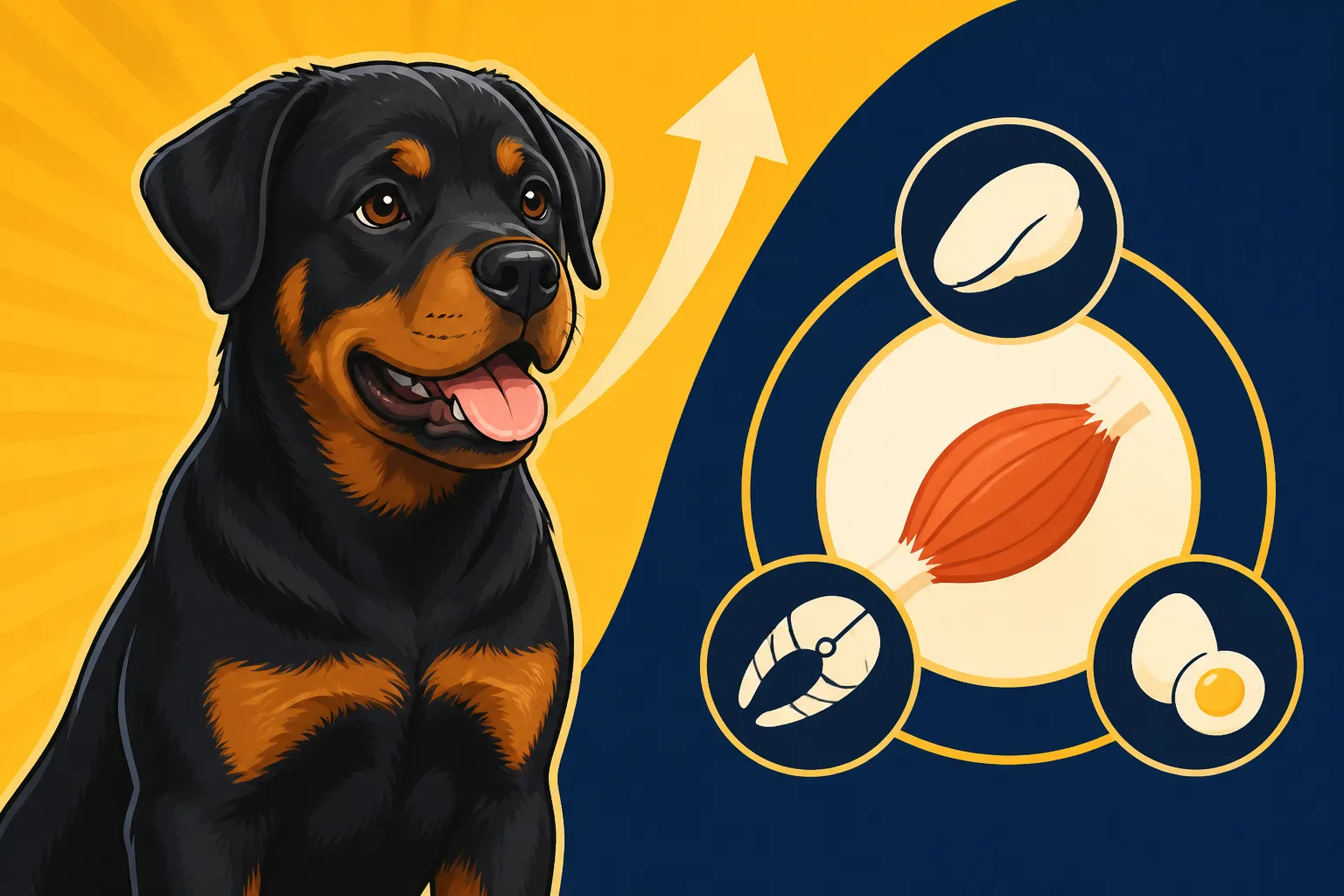
Your Rottweiler puppy isn't just growing; they're undergoing an incredible transformation from a tiny, clumsy fluffball into a powerful, athletic dog. This rapid development requires a constant supply of high-quality building materials, and that's exactly what protein provides. Every cell, every muscle fiber, every strand of their gorgeous black-and-rust coat relies on amino acids, which are the components of protein, for its formation and repair. Without adequate protein, their muscles wouldn't develop properly, their tissues wouldn't repair efficiently after a romp in the yard, and their entire growth trajectory could be compromised.
We often focus on the sheer size of a Rottweiler, and for good reason! They go from being relatively small puppies to weighing well over a hundred pounds in a relatively short period. This amplified growth means their demand for these essential building blocks is significantly higher than, say, a tiny terrier puppy. Getting it right during this crucial phase is paramount, ensuring their musculature is strong, dense, and ready to support their eventual adult weight and activity levels.
More Than Just Muscle: Enzymes, Hormones, and Immunity
While muscle development is certainly a significant role for protein, its importance extends far beyond just building brawn. Protein is absolutely critical for countless other biological processes happening inside your growing Rottweiler. For instance, enzymes, which are biological catalysts that drive nearly all chemical reactions in the body (think digestion, energy production, detoxification), are made of protein. Without sufficient protein, these vital enzymes can't do their job, leading to a cascade of internal inefficiencies.
Similarly, many hormones, which are chemical messengers that regulate growth, metabolism, and mood, are protein-based. A deficiency here can throw a puppy's delicate internal balance out of whack. Furthermore, and this is incredibly important for any developing animal, protein is a cornerstone of a robust immune system. Antibodies, which are the body's defenders against infections and diseases, are proteins. Ensuring your Rottweiler puppy receives optimal protein intake means you're helping them build a strong immune defense, making them more resilient to the bugs and environmental challenges they'll encounter as they explore the world. It’s all interconnected, and protein sits at the center of this intricate web of health.
Energy and Satiety for Active Pups
Anyone who has lived with a Rottweiler puppy knows they are bundles of boundless energy! From zoomies across the living room to intense play sessions in the yard, they're constantly on the go. While carbohydrates and fats are primary energy sources, protein also plays a role, especially in providing sustained energy. When carbs and fats aren't immediately available or in sufficient quantities, the body can turn to protein for fuel. This isn't its primary job, but it's a vital backup system.
Beyond just providing energy, protein is fantastic for promoting satiety, which means feeling full and satisfied after a meal. This is crucial for growing Rottweilers because it helps regulate their appetite. A puppy that feels genuinely satisfied after eating is less likely to beg constantly or exhibit food-related anxiety. This can prevent overeating, which is a major concern for large breed puppies as excess calories, not just protein, can contribute to rapid growth and developmental orthopedic diseases. By ensuring adequate protein, you're not just feeding their body; you're also helping to regulate their hunger cues and foster healthy eating habits that will serve them well into adulthood.
Understanding Protein Percentages on Dog Food Labels
So, you've grasped why protein is important. Now, let's tackle the confusing part: deciphering those dog food labels. It's not always as straightforward as "higher number equals better food," especially when you're talking about a rapidly growing, heavy-boned breed like a Rottweiler.
Crude Protein: What the Number Really Means
When you look at a dog food label, you'll almost always see a percentage listed for "Crude Protein." This term can be a bit misleading because "crude" doesn't mean low quality; it refers to the analytical method used to determine the minimum amount of protein in the food. It's an estimation based on the nitrogen content. So, if a label says "24% Crude Protein," it means there's at least 24% protein in that bag, but it could actually be slightly more.
What's really crucial here is understanding the difference between "as-fed" and "dry matter basis" percentages. The number on the bag is typically "as-fed," meaning it includes the moisture content. But foods vary wildly in moisture. Kibble is usually around 8-10% moisture, while wet food or fresh food can be 70-80% moisture. To truly compare the protein content between different types of food (or even different kibbles), you need to convert to a dry matter basis. You do this by subtracting the moisture percentage from 100, then dividing the crude protein by that dry matter percentage, and multiplying by 100. For example, if kibble is 24% crude protein and 10% moisture, it's actually 24 / 0.90 = 26.6% protein on a dry matter basis. This conversion is vital for an accurate comparison, otherwise, you might think a wet food has less protein when it actually has more per calorie.
The Importance of Protein Source Quality
It's not just about the percentage; it's about where that protein comes from. Not all protein sources are created equal, and the quality of the protein can significantly impact its digestibility and bioavailability – meaning how easily your Rottweiler's body can break it down and use it. High-quality protein sources, like whole meat (chicken, beef, lamb, fish) or meat meals (e.g., "chicken meal," which is concentrated chicken with moisture removed), provide a complete amino acid profile, meaning they contain all the essential amino acids your dog needs.
Ingredients lists are key here. Look for one or two named meat sources as the first ingredients. This indicates that the primary protein is coming from a high-quality animal source. Be wary of foods that list only generic "meat byproduct" or rely heavily on plant-based proteins (like corn gluten meal) as their main protein source. While plant proteins can contribute, they often don't provide the complete amino acid profile that animal proteins do, which is especially important for a rapidly growing puppy. Better quality protein sources lead to better absorption and utilization, ensuring your Rottweiler puppy gets the full nutritional benefit from every meal. You can often find reputable brands on sites like Chewy or Amazon that clearly list their protein sources.
Avoiding the "Too Much Protein" Myth for Large Breed Pups
This is a big one, and it causes a lot of anxiety for Rottweiler owners. For years, there was a prevalent myth that high protein levels caused rapid growth and developmental orthopedic diseases (like hip or elbow dysplasia) in large breed puppies. Thankfully, scientific research has largely debunked this. The real culprits for these issues are typically:
- Excessive calories: Leading to rapid weight gain, which puts undue stress on immature joints and bones.
- Imbalanced calcium and phosphorus: Specifically, too much calcium, or an incorrect calcium-to-phosphorus ratio, which can interfere with proper bone mineralization and lead to skeletal deformities. Why Calcium Supplements Damage a Rottweiler Puppy
So, while protein is essential, simply feeding a diet with a very high protein percentage isn't the primary danger. In fact, large breed puppy formulas often have protein levels that are perfectly appropriate, if not slightly higher than adult formulas, because of the intense muscle and tissue development happening. The critical factor is that the overall formula is balanced for large breed growth, taking into account not just protein, but also fat content (for calories), and most importantly, the precise levels and ratios of minerals like calcium and phosphorus. Don't let the fear of "too much protein" steer you away from a quality large breed puppy food designed for your Rottweiler.
Optimal Protein Ranges for Growing Rottweilers
Now that we've cleared up some myths, let's talk about what's actually recommended for your big puppy. Knowing the right ranges will give you a solid framework for choosing their food.
The Recommended Ranges for Large Breed Puppies
When you're looking at dog food specifically formulated for large breed puppies, you'll generally find that the protein content, on a dry matter basis, falls somewhere in the range of 22-28%. This isn't a hard and fast rule, but it's a good guideline. Protein Between Twenty-Two and Twenty-Six Percent Some formulas might be a little lower, some a little higher, but the key is that these foods are designed with the unique growth curve of giant breeds in mind. The Association of American Feed Control Officials (AAFCO) provides nutrient profiles for various life stages, including growth and reproduction. For "growth of large size dogs," their guidelines ensure that the food is not overly calorie-dense and maintains specific mineral balances, crucial for avoiding orthopedic problems.
These ranges are carefully crafted to support the development of strong muscles and healthy tissues without encouraging excessively fast growth. Rapid growth in large breeds can place immense stress on their developing bones and joints, making them more susceptible to conditions like hip and elbow dysplasia, as well as osteochondrosis (OCD). A well-formulated large breed puppy food aims for steady, controlled growth, which is ultimately much healthier for your Rottweiler.
Why Puppy Food is Different from All Life Stages or Adult Formulas
This is a point I cannot stress enough: large breed puppy food is not interchangeable with "all life stages" food or regular adult dog food. Why Adult Food Harms a Rottweiler Puppy There's a common misconception that all puppy food is the same, or that adult food is fine for a puppy as long as it's "good quality." This simply isn't true for a Rottweiler. The most critical difference isn't just the protein percentage, but the calcium and phosphorus levels and their ratio, along with the overall calorie density.
Large breed puppy formulas are specifically designed to have:
- Controlled Calcium Levels: Typically within a narrower, lower range than regular puppy foods (e.g., 1.0-1.5% on a dry matter basis) and a tightly controlled calcium-to-phosphorus ratio (around 1.1:1 to 1.5:1). Too much calcium can be just as detrimental as too little, leading to abnormal bone development. Calcium Percentages to Look For on a Rottweiler Bag
- Lower Calorie Density: They are formulated to support growth without causing excessive weight gain, which, as we discussed, is a primary risk factor for orthopedic issues.
- Appropriate Fat Levels: Providing necessary fatty acids for skin and coat health, and energy, but again, in a balanced way that doesn't oversupply calories.
Feeding an "all life stages" food or a regular adult formula that isn't specifically endorsed for large breed growth can put your Rottweiler puppy at risk. These foods often have higher calcium levels or an inappropriate calcium-to-phosphorus ratio, or they might be too calorie-dense, all of which can predispose your growing giant to irreversible skeletal problems. Stick to dedicated large breed puppy food until your vet advises otherwise, usually around the 18-24 month mark. The Month to Switch a Rottweiler to Adult Food
Monitoring Your Puppy's Body Condition
Even with the perfect food, monitoring your puppy's actual body condition is paramount. Every dog is an individual, and metabolic rates can vary. The feeding guidelines on the bag are just that—guidelines. Your puppy might need slightly more or less based on their activity level and individual metabolism.
You should be able to feel your Rottweiler puppy's ribs easily, but not necessarily see them. Their waist should be noticeable when viewed from above, and there should be a distinct "tuck-up" behind their rib cage when viewed from the side. A good way to remember it is: "Ribs felt, but not seen; waist seen, but not tucked in tightly like a sighthound." If your puppy looks round and barrel-like, or if you can't easily feel their ribs without pressing, they are likely overweight. Conversely, if their ribs are visibly prominent, they might be underweight.
If your puppy is gaining weight too quickly or appears to be getting chubby, the first adjustment should be to reduce the amount of food you're offering, not to switch to a lower-protein or different formula. Maintaining a lean body condition throughout their growth phase is one of the single most important things you can do to promote healthy joint development and prevent long-term orthopedic issues. Keeping a Rottweiler Puppy Lean on Purpose Regular vet checks are also essential for professional assessment of their growth and weight.
Practical Tips for Feeding Your Rottweiler Puppy
Choosing the right food is one thing; actually implementing a feeding plan that supports healthy growth is another. Here are some practical tips to make sure your Rottweiler puppy gets the very best.
Choosing the Right Food Brand and Formula
When you head to the pet store or browse online, the sheer number of dog food options can be overwhelming. For your Rottweiler puppy, the most important label to look for is "large breed puppy formula" or "for the growth of large size dogs." This ensures the food is formulated to meet the specific nutritional needs of breeds that will weigh 70 pounds or more as adults, with particular attention to controlled calcium and calorie levels.
Don't just grab the first bag you see. Take the time to read the ingredients list. As we discussed, you want to see a named meat source (like chicken, lamb, or beef) as the first ingredient, and ideally, another high-quality protein source among the top few ingredients. While you might consider Ollie for fresh food, always consult with your vet to ensure any fresh food recipe meets the stringent large breed puppy nutritional requirements, especially concerning calcium levels, as home-cooked or non-veterinarian-formulated fresh diets can inadvertently lead to imbalances. Many reputable brands offer excellent large breed puppy formulas, and you can conveniently find a wide selection of these on platforms like Chewy or Amazon, often with detailed ingredient breakdowns and customer reviews that can help inform your decision.
Once you've narrowed down your choices, it's always a good idea to chat with your veterinarian. They know your specific puppy and can offer tailored recommendations based on their breed, current health, and growth rate. They can also confirm that the chosen formula aligns with AAFCO's large breed growth nutrient profiles.
Transitioning Foods and Monitoring for Issues
Whenever you switch your Rottweiler puppy's food, whether it's from a breeder's food to your chosen brand, or from puppy food to adult food later on, do it slowly. A sudden change can easily upset their digestive system, leading to diarrhea, vomiting, or a decreased appetite. Aim for a gradual transition over 7 to 10 days.
Here's a typical transition schedule:
- Days 1-3: 75% old food, 25% new food
- Days 4-6: 50% old food, 50% new food
- Days 7-9: 25% old food, 75% new food
- Day 10 onwards: 100% new food
During this period, keep a close eye on your puppy. Watch for any changes in their stool consistency, frequency of bowel movements, appetite, energy levels, or general demeanor. A little softer stool might be normal during a transition, but persistent diarrhea, vomiting, or complete refusal to eat warrants a call to your vet. Their coat condition is another indicator; a dull, flaky coat could suggest a nutritional issue, though this would typically manifest over a longer period. Taking your time with food transitions minimizes stress on their system and helps you pinpoint any potential sensitivities.
The Role of Treats and Supplements
Treats are an indispensable part of puppy training, especially for a smart, food-motivated breed like a Rottweiler. However, they also contribute to your puppy's daily calorie and protein intake, and it's easy to overdo it. Be mindful of the quantity of treats you're giving, and ideally, choose healthy, low-calorie options. Many puppy training treats are tiny, which is perfect for multiple repetitions without adding too many extra calories. Think about breaking larger treats into smaller pieces. Remember that even small treats add up rapidly, and you'll want to factor them into your puppy's overall daily caloric budget to prevent unwanted weight gain. Treat Allowance for a Rottweiler in Daily Training
When it comes to supplements, especially for a large breed puppy, extreme caution is necessary. While the intention might be good (e.g., wanting to support joint health), indiscriminate supplementation can be detrimental. Specifically, never give a growing Rottweiler puppy calcium supplements unless specifically instructed by your veterinarian for a diagnosed medical condition. As discussed, excess calcium is a major cause of developmental orthopedic diseases. A properly formulated large breed puppy food already contains the correct balance of calcium and phosphorus. Similarly, avoid giving multiple vitamin supplements without veterinary guidance, as over-supplementation of fat-soluble vitamins can also cause problems.
If you're considering joint supplements like glucosamine or chondroitin, it's best to discuss this with your vet. Some vets may recommend starting these in large breeds even before they turn two, especially if there's a family history of joint issues, but always under professional guidance. Joint Supplements Started Before a Rottweiler Turns Two If you're using a fresh food service like Ollie, they typically provide balanced meals, but always confirm with your vet that the specific formula is appropriate for your large breed puppy's growth needs. Stick to high-quality food as the primary source of nutrition, and view treats as training aids, not significant meal components.
From Puppyhood to Adulthood: When to Adjust Protein
Your Rottweiler won't be a puppy forever, though sometimes it feels like they'll never stop growing! Knowing when and how to transition them to adult food is just as important as choosing their initial puppy diet.
When to Make the Switch to Adult Food
One of the unique aspects of Rottweilers is their prolonged growth period. Unlike smaller breeds that might reach maturity by 6-9 months, Rottweilers continue to grow and fill out significantly longer. Typically, it's recommended to keep your Rottweiler on a large breed puppy formula until they are between 18 to 24 months of age. The Month to Switch a Rottweiler to Adult Food Some larger males might even benefit from staying on it a little longer.
The reason for this extended puppy food phase is directly related to their skeletal development. Their growth plates, which are areas of cartilage at the ends of long bones where new bone is formed, remain open for a longer time compared to smaller breeds. These growth plates are vulnerable to injury and stress until they finally close, usually around 18-24 months. When Rottweiler Growth Plates Finally Close Prematurely switching to an adult food that might have an inappropriate calcium-to-phosphorus ratio or higher calorie density could potentially impact their still-developing skeletal system. Your veterinarian will be your best guide here, as they can assess your Rottweiler's individual growth rate, bone development, and overall body condition to recommend the ideal timing for the switch. Don't rush it; slow and steady wins the race for healthy growth. Rottweiler Growth Plates and Why They Close So Late
What Changes in Adult Formulas
When it's time to transition your Rottweiler to an adult maintenance formula, you'll notice some subtle but important differences in the nutritional profile compared to their large breed puppy food. Generally, adult foods are formulated for dogs that are no longer undergoing rapid growth, and therefore their needs shift from building large amounts of new tissue to maintaining existing muscle mass and energy levels.
Here are the typical changes:
- Slightly Lower Protein: While still providing ample protein for muscle maintenance, adult formulas might have protein percentages that are a few points lower than puppy formulas, as the intense demand for growth has subsided.
- Lower Fat Content: This translates to a lower overall calorie density. Adult Rottweilers are prone to weight gain if overfed, and obesity is a major factor in joint strain and other health issues. Lower fat helps manage calorie intake and maintain a lean body condition.
- Different Mineral Balance: The calcium and phosphorus levels will still be balanced, but the specific ratios might be slightly adjusted for maintenance rather than growth.
- Increased Fiber (sometimes): Some adult formulas might incorporate more fiber to aid digestion and promote satiety without adding excessive calories.
The goal of an adult formula is to provide complete and balanced nutrition for a mature dog's needs, preventing weight gain while supporting their overall health and activity.
Maintaining Optimal Weight and Muscle Mass
Even once your Rottweiler is on adult food, the journey to optimal health continues. Maintaining an ideal body weight and strong, healthy muscle mass is a lifelong commitment. An overweight Rottweiler puts immense stress on their joints, predisposing them to or exacerbating conditions like hip dysplasia, elbow dysplasia, and cruciate ligament tears. Rottweiler Hip Dysplasia and the OFA Grade Even a few extra pounds on a dog as heavy as a Rottweiler can have significant consequences over time.
Continue to monitor their body condition diligently. You should still be able to easily feel their ribs, and their waist should be visible. Feeling for Ribs Under a Rottweiler's Coat Regular exercise, appropriate for their age and joint health, is also critical. Daily walks, controlled play, and mental enrichment will help keep them lean and muscular. If you notice weight creep, consult your vet before making drastic changes. They can help you adjust feeding amounts, suggest specific low-calorie treats, or even recommend a prescription weight management diet if needed. Remember, an active, lean Rottweiler is generally a healthier and happier Rottweiler, with a better chance at a long and comfortable life.
Here's a quick overview of typical protein ranges for Rottweilers at different life stages:
| Life Stage | Recommended Protein Range (Dry Matter Basis) | Key Considerations |
|---|---|---|
| Large Breed Puppy | 22-28% | Controlled calcium/phosphorus, moderate calories, supports steady growth |
| Adult | 20-25% | Sufficient for muscle maintenance, prevents weight gain, balanced |
| Senior | 18-25%+ (often higher for muscle support) | Focus on digestibility, joint support, potentially higher for muscle loss |
Disclaimer
This article is for general informational purposes only and does not constitute professional advice. Laws, prices and regulations vary by location and change over time. Consult a qualified professional for guidance on your specific situation.