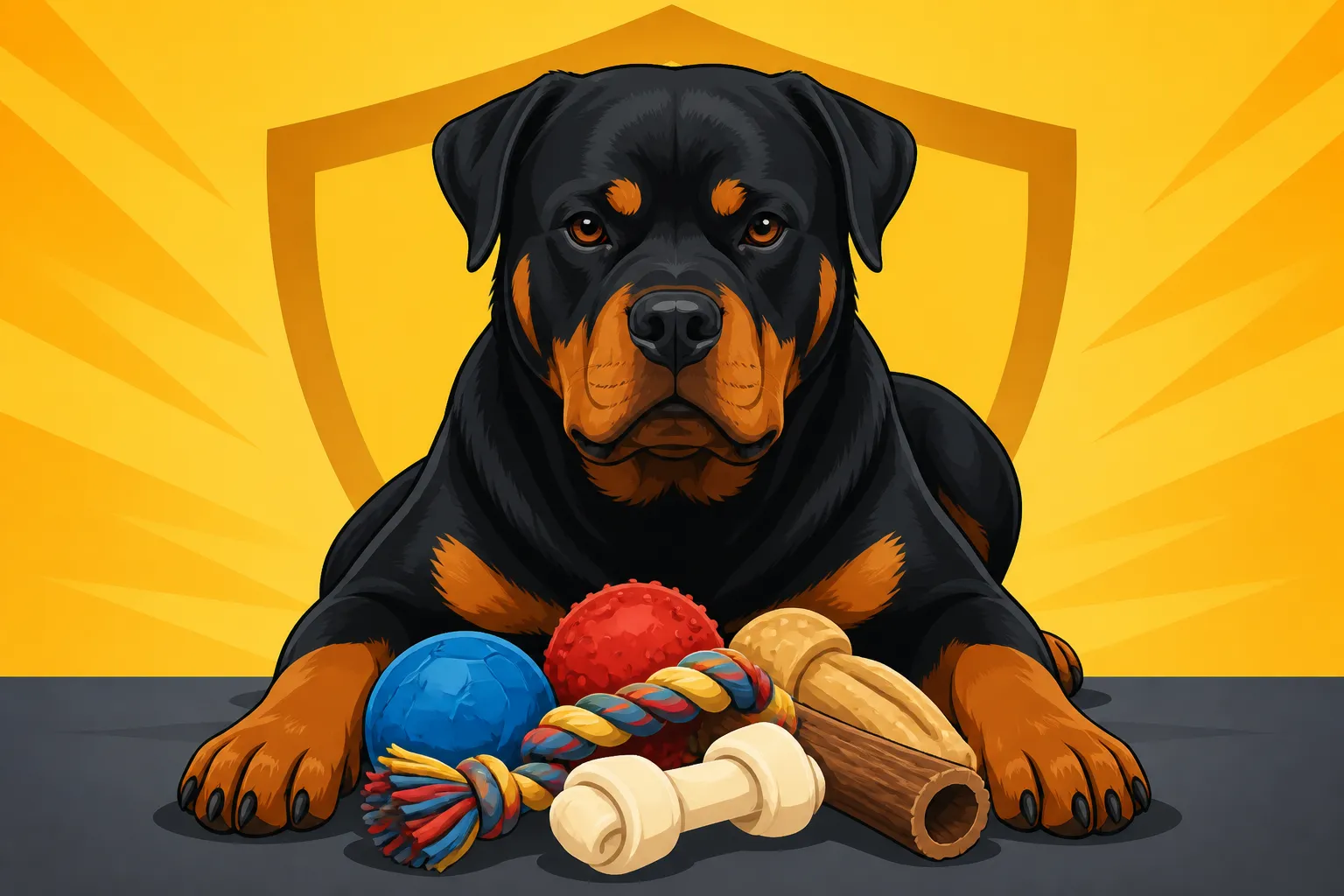
A Rottweiler Guarding Toys and Chews
It’s a frustrating, and sometimes scary, moment when your beloved Rottweiler, a dog you love and trust, suddenly stiffens, growls, or even snaps over a favorite squeaky toy or a particularly delicious chew. You feel confused, maybe a little hurt, and deeply concerned about what this behavior means for your household. This guide is here to help you understand why your Rottweiler might be guarding its toys and chews, how to recognize the subtle signs before they escalate, and practical steps you can take to manage and prevent this challenging behavior, ensuring peace and safety for everyone in your home.
Understanding Resource Guarding in Rottweilers
Resource guarding, also known as possession aggression, is a natural canine behavior where a dog protects items it values from perceived threats. For us humans, it can feel like a betrayal, but for a dog, it's often an instinctual drive to protect valuable resources.
What Resource Guarding Actually Is
At its core, resource guarding is your dog communicating, "This is mine, and I don't want you near it." This "resource" can be anything from a high-value chew, a favorite blanket, a food bowl, a prime napping spot on the couch, or even a person. When a dog guards, it’s not being "dominant" or "mean" in the human sense. Instead, it’s expressing an innate drive to retain something it perceives as important for its survival or well-being. Think about it from a wild canine perspective: a prime piece of meat or a safe den site is crucial, and protecting it means survival. Our domestic dogs still carry echoes of these instincts, even if their "resources" are now plush toys and rawhides.
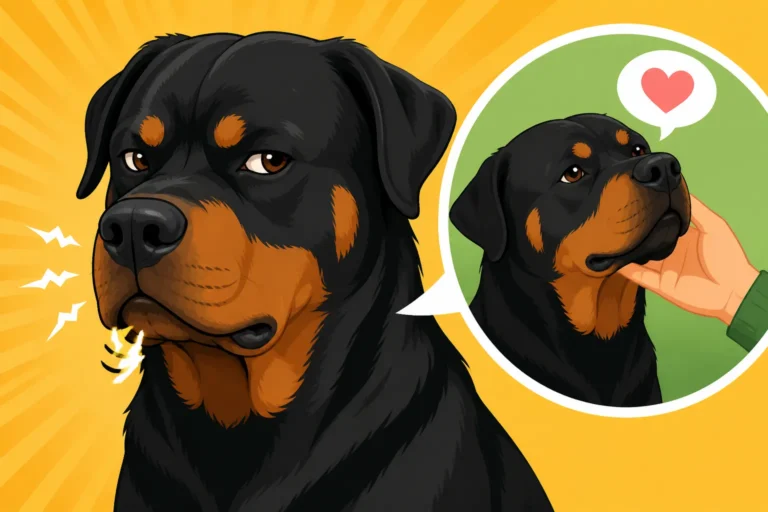
The intensity of resource guarding can vary greatly. Some dogs might offer a subtle stare, a slight stiffening of the body, or a low grumble when approached. Others might escalate quickly to growling, lunging, snapping, or even biting. It's not about malice; it's about perceived threat. The dog believes you are going to take its cherished item, and it’s trying to tell you, in the only way it knows how, to back off. Understanding this perspective is the first step toward compassionately addressing the behavior.
Why Rottweilers Are Prone to Guarding
Rottweilers, by their very nature and history, can be more predisposed to resource guarding than some other breeds. These magnificent dogs were originally bred as working dogs, driving cattle to market and guarding the butcher's money satchel strapped around their necks. Their historical roles demanded a dog that was self-assured, discerning, and protective of its charges and resources. This deep-seated instinct to guard and protect valuable items, whether it was livestock, money, or the family itself, is a hallmark of the breed's temperament.
While desirable in their traditional roles, these same traits can manifest as resource guarding in a modern home environment if not properly channeled and managed. A Rottweiler’s natural confidence and strong territorial instincts mean they can easily decide that a particular toy or chew is theirs and deserves protection, especially if they haven't been taught otherwise. Combine this genetic predisposition with a lack of early socialization, inconsistent training, or even past experiences where an item was taken away, and you have a recipe for potential guarding behavior. It's not a flaw in the breed; it's a characteristic that needs understanding and proactive management from day one. Rottweiler Temperament and That Self-Assured Aloofness touches on these inherent traits more deeply.
Recognizing the Early Signs of Toy and Chew Guarding
One of the most crucial aspects of managing resource guarding is being able to spot the subtle signals your Rottweiler gives before the situation escalates. Dogs rarely just "snap" without warning; they offer a whole spectrum of communication, if we only know how to read it.
Subtle Cues Before a Full-Blown Confrontation
Often, resource guarding starts with very subtle body language. Your Rottweiler might not growl or bare teeth right away. Instead, pay close attention to these quieter signals:
- Stiffening: The dog's body might become rigid, tense, or freeze as you approach the prized possession. Their muscles might visibly tighten.
- Hard Stare: They might fix you with an unblinking, hard stare. Their eyes may appear rounder or show the whites (often called "whale eye"). This is a clear warning sign.
- Head or Body Over the Item: Your Rottweiler might position its head or entire body over the toy or chew, trying to physically cover or shield it from you.
- Quick Licks or Chews: They might suddenly intensify their licking or chewing on the item as you get closer, almost as if trying to consume it faster or send a signal, "I'm still using this!"
- Subtle Growls or Muffles: Sometimes, the growl is so low it’s barely audible, almost like a rumbling in their chest. It might be accompanied by a slight curling of the lip that you could easily miss.
- Avoiding Eye Contact, Then Staring: A dog might briefly look away or duck its head as you approach, then snap its head up to give you that hard stare if you persist.
Recognizing these early warning signs is paramount. If you see these cues, it's your dog's way of saying, "I'm uncomfortable. Please create more space." Ignoring them can force your dog to escalate its communication, leading to more overt and potentially dangerous displays. Understanding Reading a Still Rottweiler That Is Not Relaxed can give you more insight into interpreting your dog's nuanced body language.
Escalation Ladder: From Freeze to Growl
If the subtle cues are missed or ignored, a Rottweiler's communication often escalates through a predictable ladder of behaviors. Think of it as your dog trying increasingly louder ways to tell you to back off:
- Freeze/Stiffening: As described above, the initial tension.
- Hard Stare/Whale Eye: Direct, unblinking eye contact as a warning.
- Low Growl/Muttering: Auditory warning, often accompanied by stiffening.
- Lip Curl/Teeth Baring: A more explicit visual warning, revealing incisors.
- Snapping in Air: A warning bite that doesn't make contact, often with a loud "pop" sound of jaws. This is a very clear "I mean business" signal.
- Lunge/Charge: Moving forward aggressively to create distance or intimidate.
- Contact Bite: The dog makes contact, either a quick nip or a sustained bite.
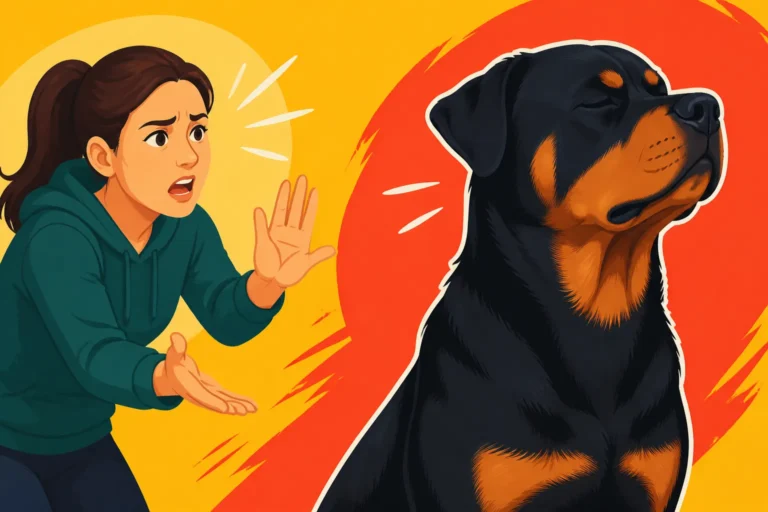
It's vital that owners understand that punishing any of these warning signs, especially a growl, can be incredibly dangerous. If you punish a growl, you teach your dog that growling is bad, not that guarding is bad. This can lead to a dog that goes straight to biting without any warning whatsoever, making them far more dangerous. Why You Should Never Punish a Rottweiler Growl explains this critical concept further. The goal isn't to suppress the communication, but to change the underlying emotional response that drives the guarding.
Table: Resource Guarding Escalation Signals
| Stage of Guarding | Subtle Cues (Early Warning) | Overt Cues (Escalated Warning) |
|---|---|---|
| Initial Discomfort | Freezing, stiffening, head over item | Low growl, hard stare, whale eye |
| Increased Threat | Intensified chewing, quick licks | Lip curl, bared teeth, snapping in air |
| Imminent Action | Lunging towards perceived threat | Contact bite (nip, puncture, sustained) |
| Underlying Emotion | Anxiety, fear of loss, territorial instinct | Fear, perceived need for self-defense, frustration |
Practical Strategies to Manage and Prevent Guarding
Addressing resource guarding requires patience, consistency, and a commitment to positive reinforcement. The goal is to change your Rottweiler's emotional association with you approaching its valued items from fear and possessiveness to anticipation and trust.
The Importance of the "Trade Up" Game
The "trade up" game is arguably the most powerful tool for managing and preventing resource guarding. The concept is simple: your Rottweiler learns that when you approach its prized possession, it means something even better is coming. Instead of taking, you give. This builds trust and teaches your dog that giving up an item leads to a superior reward.
Here's how to play the "trade up" game effectively:
- Start with low-value items: Begin with a toy your Rottweiler isn't overly attached to. You'll need high-value treats – think small pieces of cooked chicken, cheese, or hot dogs.
- Approach and Offer: Gently approach your dog while it has the low-value item. Before you even get close enough to touch the item, offer a high-value treat right next to its nose.
- The Exchange: As your dog drops the toy to take the treat, immediately pick up the toy. Then, immediately give the original toy back, or even a different, equally appealing toy. The key is to show that giving up the item leads to a reward and the return of a desired item.
- Repeat and Generalize: Practice this multiple times a day. Gradually increase the value of the items your dog is guarding, moving from a simple ball to a favorite squeaky toy, and eventually to a chew. Always use treats that are more valuable than the item being guarded.
- Practice with Real-Life Scenarios: Once your dog reliably trades low-value items, begin practicing with slightly higher-value items. Remember, the goal is to make your dog happy when you approach, not anxious. Always make sure you're offering something truly irresistible. Trading Up to Take Something From a Rottweiler provides a deeper dive into this crucial training technique.
This game should never involve punishment or force. If your Rottweiler shows any signs of guarding (stiffening, growling), you've moved too quickly or the treat wasn't high-value enough. Back up and make it easier for your dog to succeed. Consistency is key; everyone in the household needs to understand and practice this game.
Creating a Safe Space for Chewing and Play
Another effective strategy is to provide your Rottweiler with a designated, safe space where they can enjoy their chews and toys undisturbed. This reduces the perceived need to guard because they know their treasures are secure.
- Crates and Pens: A comfortable dog crate or an exercise pen can be an excellent "safe zone." When your Rottweiler is in its crate with a high-value chew, teach everyone in the household to leave them alone. This isn't about isolation; it's about respecting their space and reducing triggers for guarding. Just make sure the crate is adequately sized; The Crate Size a Hundred Twenty Pound Rottweiler Needs is a useful resource for determining the right dimensions.
- Designated Beds/Areas: A specific dog bed in a quiet corner of the room, or a dedicated rug, can serve the same purpose. Your Rottweiler learns that when they go to this spot with their item, they won't be bothered. This teaches them to relax and enjoy their possessions without constant vigilance.
- Supervised Play: When your Rottweiler has a new, exciting toy, especially one they might guard, consider supervising their play closely. Instead of letting them roam freely with it, encourage them to enjoy it in their safe space. If other pets or children are present, this is even more critical.
The point of a safe space is to eliminate the need for your Rottweiler to feel defensive. They learn that they don't have to guard because no one is going to challenge them for their items in that specific location. This builds security and reduces overall stress.
Managing Multiple Dogs and Resources
If you have more than one dog in your household, resource guarding can become a much more complex and potentially dangerous issue. It's not uncommon for dogs to guard against other dogs, even if they normally get along well.
- Separate Feeding and Chewing: This is non-negotiable. Always feed dogs in separate rooms, crates, or at a significant distance from each other. The same goes for high-value chews or long-lasting treats. Give each dog its own, and ensure they are physically separated enough that they cannot perceive a threat from the other. This completely removes the competition for resources.
- Supervised Play with Toys: When playing with toys, especially shared ones, supervision is crucial. If guarding behavior emerges between dogs, remove the guarded item immediately and temporarily separate them. Consider having multiple identical toys to reduce competition. If a certain toy consistently causes issues, remove it from circulation.
- Equal Distribution: Try to ensure all dogs receive equal attention, treats, and toys. If one dog consistently feels deprived, they might be more prone to guarding. Rotating toys and ensuring everyone gets a chance with favorite items can help.
- Enrichment for All: Provide plenty of enrichment that doesn't involve direct competition. Puzzle feeders, lick mats, and individual training sessions can keep all dogs mentally stimulated and reduce overall tension. There are many great options available on platforms like Amazon for Puzzle Feeders Built for a Rottweiler that can keep them engaged individually.
Managing resource guarding in a multi-dog household means you're constantly acting as a fair and observant referee, proactively preventing conflicts rather than reacting to them. Consistency in management is the biggest factor for success.
When to Seek Professional Help for Resource Guarding
While the strategies above can be highly effective, there are times when resource guarding escalates beyond what an owner can safely manage on their own. Knowing when to call in a professional is not a sign of failure, but responsible pet ownership.
Identifying Red Flags That Require a Professional Trainer
Certain situations with resource guarding unequivocally call for professional intervention. These are the red flags that indicate you need help:
- Aggression Towards Humans: If your Rottweiler has growled, snapped, or bitten a human over a resource, even if it was "just a warning," you absolutely need professional guidance. This is a serious safety concern that untrained individuals should not attempt to manage alone. The risk of injury is too high.
- Aggression Towards Children: Any display of aggression towards a child, no matter how minor, is a critical emergency. Children often don't understand canine body language and can inadvertently trigger guarding behavior. A professional can help create a safe environment and teach both dog and child how to interact safely. A Rottweiler Puppy That Will Outweigh the Children is a useful read on the dynamics of large dogs and small humans.
- Escalating Behavior: If the guarding behavior is becoming more frequent, more intense, or involves a wider range of items, it’s a sign that your current management isn't sufficient.
- Guarding You or Specific People: If your Rottweiler starts guarding a family member, preventing others from approaching that person, this is a complex form of guarding that requires expert help. A Rottweiler That Guards a Person is a specific scenario that needs careful intervention.
- Fear or Intimidation: If you, or other family members, are genuinely fearful of your dog because of its guarding behavior, it's time for professional assistance. Your safety and peace of mind are paramount.
Trying to "fix" serious guarding issues with punishment or ill-informed methods can backfire, making the problem worse and increasing the risk of bites. A professional can assess the specific triggers, the dog's temperament, and create a tailored, safe, and effective training plan.
Choosing the Right Professional for a Rottweiler
Not all dog trainers are created equal, and for a serious issue like resource guarding in a powerful breed like a Rottweiler, choosing the right professional is critical.
- Look for Certified Professionals: Seek out trainers with certifications from reputable organizations (e.g., CCPDT, KPA-CTP, IAABC). These certifications indicate a commitment to ethical, force-free, and science-based training methods. Avoid trainers who advocate for harsh corrections, intimidation, or "alpha" theory, as these methods can exacerbate guarding behavior and damage your relationship with your Rottweiler.
- Experience with Guarding and Large Breeds: Ask prospective trainers about their experience specifically with resource guarding and large, strong breeds like Rottweilers. Guarding behavior in a Chihuahua is different from guarding behavior in a 100-pound Rottweiler due to the potential for harm.
- Behaviorists vs. Trainers: For severe cases, especially those involving bites, a veterinary behaviorist (a veterinarian with specialized training in animal behavior) or a certified applied animal behaviorist (CAAB) might be more appropriate. They can rule out underlying medical conditions and may prescribe medication if anxiety or fear is a significant component.
- In-Home Consultations: A trainer who offers in-home consultations is often ideal, as they can observe your Rottweiler's behavior in its natural environment where the guarding typically occurs.
- Positive Reinforcement Focus: Ensure the professional uses positive reinforcement methods exclusively. The goal is to build trust and change your dog's emotional response, not to suppress symptoms through fear.
Platforms like BAXTER & Bella offer online resources and consultations, which can be a great starting point for understanding basic principles and getting initial guidance, but for serious, aggressive resource guarding, hands-on, in-person help is usually best. Don't hesitate to interview several professionals to find someone you trust and feel comfortable working with. Finding a Rottweiler-Experienced Trainer Near You can be a valuable first step in this process.
Preventing Resource Guarding in Rottweiler Puppies
The best way to deal with resource guarding is to prevent it from developing in the first place, especially with a Rottweiler puppy. Early intervention and consistent training from a young age can lay a strong foundation of trust and good manners.
Early Socialization and Handling
A well-socialized Rottweiler puppy is generally more confident and less likely to feel the need to guard. Exposure to a variety of positive experiences during their critical socialization window (up to 16 weeks) is vital.
- Introduce to Many Things: Expose your puppy to different sights, sounds, people (adults and calm children), and other friendly, vaccinated dogs. Positive exposure helps them view the world as safe and not something to be feared or guarded against. The Rottweiler Socialization Checklist by Week can guide you through this important period.
- Handling Exercises: Regularly handle your puppy all over its body – ears, paws, mouth, tail. Pair this handling with praise and high-value treats. This teaches them that human touch is pleasant and non-threatening, especially when you might need to take something from their mouth in an emergency.
- Touch and Treat: When your puppy is playing with a toy or chewing, gently touch the item, then immediately give a small, delicious treat. The idea is to create a positive association with your presence near their resources. This isn't about taking the item, but about making your proximity a good thing.
- Mouthing and Bite Inhibition: Teaching your Rottweiler puppy appropriate bite inhibition is also crucial. A puppy needs to learn how to control the pressure of its bite. This helps prevent serious injury if a guarding incident were to occur later, by teaching them that human skin is delicate. Teaching Bite Inhibition to a Rottweiler Puppy is a must-read for new owners.
These early experiences build confidence and trust, reducing the likelihood that your Rottweiler will feel threatened by your presence near its possessions.
Teaching Possession Is Okay, but Sharing is Better
The goal isn't to teach your Rottweiler that they can't own anything, but rather that you are not a threat to their possessions and that sharing or giving things up is rewarding.
- Constant "Trade Up" Practice: Start the "trade up" game from day one with your puppy. Make it a fun, routine part of their day. Every time they have a toy or chew, approach with an even better treat, let them swap, then give their original item back (or an identical one). This instills the belief that your hands bring good things, not deprivation.
- Drop It/Leave It Commands: Teach strong "drop it" and "leave it" commands early on. Practice with progressively more enticing items. Again, always reward heavily when they successfully perform the command. The goal is enthusiastic compliance, not forced obedience. These commands are invaluable safety tools.
- Plenty of Resources: Ensure your puppy has plenty of toys and chews, especially if you have multiple pets. Having an abundance of resources reduces perceived scarcity, which can be a driver for guarding. Rotate toys to keep them interesting, and consider durable options found on Amazon that stand up to a Rottweiler's powerful jaws, like those discussed in Rottweiler Chew Toys That Survive the Jaw.
- Supervised Meal Times: Even with puppies, practice making meal times a positive experience where you can approach without eliciting guarding. Gently toss a high-value treat into their bowl while they're eating, then walk away. They learn that your approach adds to their meal, rather than threatens it.
By proactively teaching these lessons, you are essentially "proofing" your Rottweiler against developing severe resource guarding. It's an ongoing process throughout Rottweiler Puppy Training Through the First Year, reinforcing these positive associations constantly.
Living Safely with a Resource Guarding Rottweiler
Even with the best training and management, if you have a Rottweiler with a history of resource guarding, especially towards humans, household management and safety protocols become paramount.
Household Management and Rule-Setting
Living with a resource-guarding Rottweiler means being consistently proactive and setting clear boundaries for both your dog and everyone in the household.
- No Access to High-Value Triggers: The simplest way to prevent guarding is to remove the triggers. If your Rottweiler guards specific chews, bones, or toys, those items should only be given in a secure, designated place (like their crate) where they will be left entirely undisturbed. Alternatively, avoid giving them altogether.
- Consistent Rules for Everyone: Every single person in the home must understand and adhere to the rules. If one person allows the dog to guard and another tries to enforce "no guarding," it creates confusion and erodes trust. Why Rottweiler Training Cannot Wait Until Six Months highlights the importance of consistency from the start.
- Supervise Interactions with Children: This is critical. Children should never be left unsupervised with a dog that has a history of resource guarding. Teach children to never approach a dog while it's eating, chewing, or sleeping. Explain that if they drop a toy, an adult needs to retrieve it, not them. Establish safe zones for your dog where they can be undisturbed by children.
- Controlled Mealtimes: Continue feeding meals and high-value treats in separate, secure locations. This eliminates competition and the opportunity for guarding.
- "Nothing in Life is Free" Approach: Consider implementing a "nothing in life is free" program (sometimes called NILIF). This means your Rottweiler must perform a simple command (like "sit" or "stay") for everything they want – food, going outside, a toy, attention. This establishes you as the benevolent provider of all good things, strengthening your leadership and their impulse control. Rottweiler Impulse Control Games offers more ideas along this line.
This level of management might seem like a lot of work, but it's about creating a predictable, safe environment where your Rottweiler feels secure and understands its place within the family structure without resorting to aggression.
Ensuring Safety for Children and Visitors
When living with a Rottweiler, especially one with guarding tendencies, the safety of children and visitors is your highest priority. Mistakes can happen quickly and have severe consequences.
- Education is Key: Educate everyone who interacts with your dog – especially children – about canine body language and safe interaction practices. Teach them to recognize the early warning signs of guarding (stiffening, hard stare) and to immediately back away and get an adult.
- Physical Barriers: Use baby gates or crates to create clear physical boundaries between your Rottweiler and children or visitors when needed. This allows your dog to relax in its safe space while ensuring others are not inadvertently put at risk.
- Management Over Confrontation: Never try to directly confront a guarding Rottweiler, especially if it's already escalated to growling or snapping. Your primary goal is to safely disengage and prevent escalation. If your dog is guarding an item, calmly leave the area and allow them to finish with it before retrieving it when they've moved on, or use a long line to gently guide them away from the item.
- "Emergency Drop" Command: Continue to reinforce a rock-solid "drop it" command. This command could be a lifesaver if your dog picks up something inappropriate or valuable, or if they are guarding an item from someone. Practice it daily with progressively more exciting items until it's reliable.
- Supervised Interactions: Always supervise interactions between your Rottweiler and children, and be present when visitors are in your home. This allows you to intervene early, manage the environment, and reinforce good behavior. Don't rely on your dog to "figure it out" or hope for the best.
The goal is to prevent any situation where your Rottweiler feels the need to guard against a human. By carefully managing the environment, educating those around your dog, and consistently applying positive reinforcement training, you can significantly reduce the risks associated with resource guarding and help your Rottweiler become a calm, confident, and trustworthy member of your family. Remember, Rottweiler Behavior Problems That Start Small can escalate if not addressed early and correctly.
Disclaimer
This article is for general informational purposes only and does not constitute professional advice. Laws, prices and regulations vary by location and change over time. Consult a qualified professional for guidance on your specific situation.