Bowl Guarding in a Rottweiler Bred to Guard
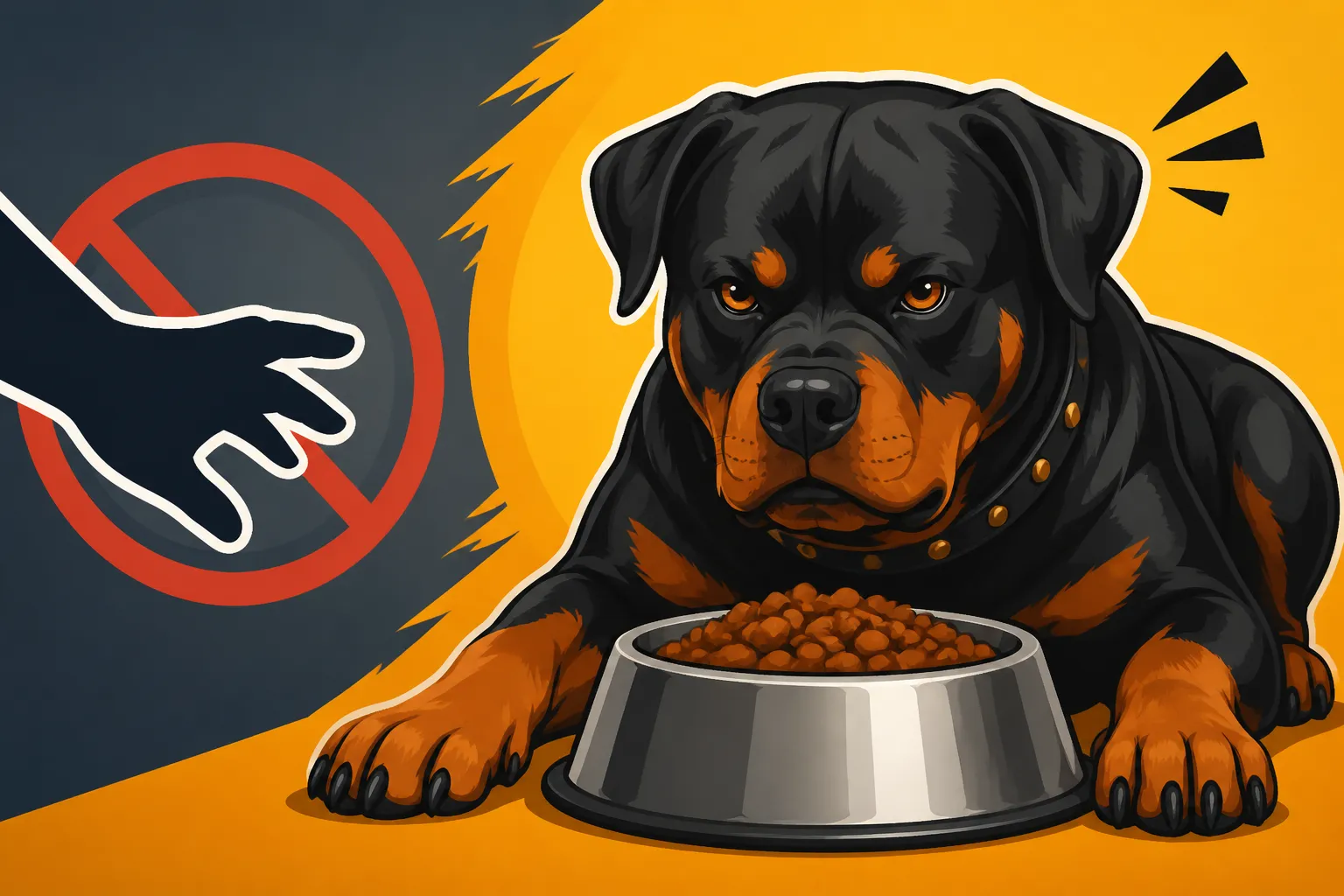
That heart-sinking feeling when your big, beloved Rottweiler stiffens over their food bowl, maybe even lets out a low growl, is unsettling for any dog owner. It’s natural to feel a mix of fear, confusion, and even a little betrayal when the dog you adore suddenly acts possessive over something as simple as dinner. This guide aims to pull back the curtain on why your Rottweiler might be guarding their bowl, helping you understand this behavior and providing practical, empathetic strategies to manage and prevent it, fostering a safer, more trusting relationship for everyone in your home.
Understanding Why Rottweilers Guard Resources
When a Rottweiler guards its food, it’s not simply being "naughty" or "dominant" in the way many people mistakenly perceive. This behavior is rooted in instinct and can be influenced by a complex interplay of genetics, early experiences, and environmental factors. Understanding these origins is the first step towards addressing the behavior with empathy and effectiveness.
The Instinctual Roots of Guarding Behavior
Rottweilers, as a breed, carry a strong historical legacy as guardians. They were originally bred in Rottweil, Germany, as drover dogs, protecting cattle and the butcher’s money on long journeys to market. This inherent guarding instinct is a core part of their genetic makeup. They are naturally predisposed to identify resources they deem valuable – food, territory, even their people – and to protect them.
It's crucial to understand that resource guarding is not necessarily an act of aggression in the malicious sense. It's a hardwired survival mechanism. In the wild, animals that successfully guard their food and other vital resources are more likely to survive and pass on their genes. Your Rottweiler isn't consciously trying to defy you; they're acting on a deep-seated impulse to protect what they perceive as essential for their well-being. This instinct, combined with their imposing size and strength, can make bowl guarding particularly alarming, but it doesn't change its fundamental nature as a protective, rather than purely aggressive, act.
Early Learning and Environmental Factors
While genetics play a role, a Rottweiler's environment and early experiences significantly shape how this guarding instinct manifests. Puppies, even within the same litter, might start exhibiting subtle guarding behaviors over a particularly prized chew or a comfortable sleeping spot. If a puppy grows up in an environment where food is scarce or competition is high, they might learn very quickly that they need to guard their meals to ensure they get enough. This can happen in large litters, at busy breeders, or even in rescue situations where a dog might have experienced hunger.
A dog adopted from a rescue, for instance, might come with a history of food insecurity. They may have had to fight for every meal, or gone without. This trauma can imprint deeply, making them highly protective of their food bowl even in a secure, loving home. Even in well-adjusted puppies, if humans consistently interrupt their meals, or other pets frequently try to steal food, a Rottweiler can develop guarding behaviors as a learned response to protect their perceived right to eat in peace. Understanding these potential historical triggers can help you approach the issue with more patience and a tailored strategy. Rottweiler Puppy Training Through the First Year is a great resource for laying foundational training.
Stress, Anxiety, and Underlying Triggers
Sometimes, resource guarding isn't just about food scarcity or instinct; it can be a symptom of underlying stress or anxiety. A Rottweiler who feels generally insecure in their environment might become more prone to guarding anything they perceive as valuable because it provides a sense of control or safety. Changes in routine, new people or pets in the home, or even loud noises can increase a dog's overall stress levels, making them more reactive to perceived threats to their resources.
Additionally, physical discomfort or pain can manifest as behavioral changes, including guarding. A dog in pain might be more irritable and less tolerant of perceived invasions of their space, especially when vulnerable, like when eating. Before embarking on any behavioral modification, it’s always a good idea to rule out medical causes with your veterinarian. A comprehensive check-up can ensure that there isn't an undiagnosed ailment contributing to your Rottweiler's guarding behavior. Stress can amplify natural tendencies, and a secure, predictable environment is vital for a Rottweiler's well-being.
Recognizing the Signs of Bowl Guarding
The ability to accurately read your Rottweiler's body language is paramount when dealing with bowl guarding. Dogs often give subtle cues long before they resort to overt growling or snapping. Learning to recognize these early warning signs can prevent escalation and help you intervene effectively and safely.
Subtle Cues and Escalating Body Language
Resource guarding often starts with very subtle signals that many owners might miss. When your Rottweiler is eating, watch for:
- Freezing or Stiffening: Their body might become rigid, and their tail, if present, might stop wagging or tuck slightly.
- Hunching Over Food: They might lower their head and body over the bowl, trying to shield it from view or access.
- Quick Glances: They might dart their eyes at you or another approaching pet, then quickly back to the food. This is often accompanied by a tightening of the facial muscles.
- Hard Stare: A prolonged, direct gaze at the approaching person or animal, often with pupils dilated.
- Lip Licks or Yawns (out of context): These can be displacement behaviors, indicating stress or discomfort with the situation.
If these subtle cues are ignored, the behavior can escalate. You might then see:
- Low Growl: A clear auditory warning that they are uncomfortable and want space. Why You Should Never Punish a Rottweiler Growl emphasizes the importance of not suppressing this warning.
- Snarl or Lip Curl: More overt visual displays of teeth, indicating a heightened threat response.
- Air Snap: A quick, open-mouthed snap that doesn't make contact, often a final warning before a bite.
- Bite: If all previous warnings are ignored, the dog may bite to protect the resource.
Recognizing this progression is vital. Intervening at the earliest, most subtle signs allows for redirection or disengagement without pushing your dog to their limit. For more on reading canine communication, consider our article Reading a Still Rottweiler That Is Not Relaxed.
Differentiating Guarding from Normal Eating Behavior
It's easy to mistake a focused eater for a guarding dog, especially with a breed as intense as a Rottweiler. A dog who is simply enjoying their meal will generally appear relaxed, even if they're eating quickly. Their body language will be loose, their tail might give a soft, slow wag, and they won't typically react with tension when you approach. They might pause, look up at you with soft eyes, and then resume eating. There’s no hard stare, no stiffening, and certainly no growl.
A guarding dog, however, will display that tension. Their movements become more deliberate and protective. They might eat faster when approached, as if trying to consume the resource before it can be taken. The key difference lies in the underlying emotional state: a relaxed dog is secure and unthreatened by your presence, while a guarding dog feels vulnerable and is actively communicating their need for space. If you're unsure, try a simple test: gently place an even higher value treat a little distance from their bowl. A relaxed dog might look up, approach the treat, and then return to their meal or alternate between them. A guarding dog might ignore the new treat, or take it but remain tense and wary over their original bowl, showing that the resource in the bowl is the perceived threat.
Here's a quick comparison table:
| Behavior Characteristic | Normal Eating | Bowl Guarding |
|---|---|---|
| Body Posture | Relaxed, loose, weight evenly distributed. | Stiff, hunched over food, body angled away from approach. |
| Tail Wag | Soft, slow wag, or neutral. | Still, tucked, or low and stiff. |
| Eye Contact | Soft, may look up at you, then back to food. | Hard stare, quick glances, dilated pupils. |
| Eating Speed | Consistent, comfortable pace. | May accelerate rapidly when approached, gulping. |
| Vocalizations | None (unless excited for food). | Low growl, snarl, lip curl. |
| Response to Approach | May pause, look up, continue eating calmly. | Freezes, stiffens, tenses, may escalate warnings. |
Safe and Effective Management Strategies
When you identify bowl guarding, the immediate priority is always safety. You need to manage the environment to prevent incidents while you work on changing your Rottweiler's emotional response to your presence around their food. Punishment is rarely effective and often exacerbates the problem, leading to a breakdown of trust and potentially more severe reactions.
Creating a Safe Feeding Environment
The simplest and most effective management strategy is to remove the triggers for guarding. Feed your Rottweiler in a location where they feel completely safe and undisturbed. This might mean:
- A Separate Room: Give them their meals in a quiet room, like a laundry room, den, or their crate, where other pets or children cannot bother them. Close the door if necessary.
- Designated Space: Establish a specific feeding spot, perhaps in a corner away from foot traffic, that is solely theirs during meal times.
- Consistent Routine: Feed at predictable times. This predictability can reduce anxiety and the feeling of needing to guard.
- Individual Feeding: If you have multiple pets, always feed them separately to eliminate competition. Even if your other pets don't guard, your Rottweiler might perceive them as a threat to their food.
By providing a peaceful, isolated eating experience, you’re telling your Rottweiler that their food is secure and no one will challenge them for it. This alone can significantly reduce the need for them to guard and lowers the overall stress around meal times. This environment sets the stage for trust-building exercises.
Avoiding Confrontation and Punishment
This is perhaps the most critical rule: never punish your Rottweiler for growling or guarding. When a dog growls, they are giving a warning. If you punish the growl, you teach them that warnings are unacceptable. This doesn't stop the underlying feeling of needing to guard; it just teaches them to skip the warning and go straight to a bite. Imagine if your smoke detector was punished for going off during a fire – you wouldn't know there was a fire until it was too late.
Instead of punishment, focus on positive reinforcement and changing their emotional association with your presence. This means avoiding direct confrontation, especially by reaching for their bowl or trying to take food away. Such actions confirm their fear that you are a threat to their resources. Your goal is to become a provider of good things, not a challenger. Any training should be done with patience, positive reinforcement, and never in a way that makes your Rottweiler feel threatened or pressured.
Using Management Tools
There are several tools that can help manage bowl guarding, especially by slowing down eating and reducing the perceived value of eating quickly:
- Slow Feeder Bowls: These bowls have ridges or obstacles that make dogs eat more slowly. This can reduce the frantic gulping often associated with guarding, as the dog realizes the food isn't going anywhere fast. Many options are available from retailers like Amazon.
- Puzzle Feeders: Similar to slow feeders, these require the dog to work for their food, dispensing it in smaller portions. This engages their brain and can turn mealtime into a positive enrichment activity, rather than a high-stakes competition.
- Scattering Food: Instead of feeding in a bowl, scatter your Rottweiler's kibble across a clean, designated area of the floor or lawn. This makes them hunt for each piece, slowing down consumption and making it difficult to guard a single "resource pile." It also changes the context from a single high-value item (the full bowl) to many small, less valuable pieces.
- High-Value Treat Dispensers: Sometimes, you might need to draw your dog away from a guarded item. Having a treat dispenser or a tube of squeeze cheese on hand for emergencies can be helpful for a safe "trade-up" without direct contact.
These tools are not a substitute for training, but they can significantly reduce the intensity of guarding behavior by changing the mechanics and context of mealtime, making it less of a trigger.
Step-by-Step Training to Reduce Resource Guarding
Once you've managed the environment to prevent incidents, you can begin systematic training to change your Rottweiler's emotional response to people approaching their food. The key is to build positive associations and prove that your presence near their bowl means good things happen.
The "Trade-Up" Game
This is a fundamental technique for teaching your Rottweiler that giving up a resource results in an even better reward. It builds trust and establishes you as a benevolent provider.
- Start with low-stakes items: Don't begin with their full meal. Practice with toys or chews that your Rottweiler isn't overly attached to.
- Offer a higher-value trade: Approach your Rottweiler and offer an incredibly delicious, irresistible treat (like cooked chicken, cheese, or hot dogs) right next to the item they have.
- Say "trade!" or "give!": As they take the treat, gently pick up the less-valuable item.
- Reward and return (sometimes): Give them the delicious treat, and sometimes give them back their original item (if it's not food). This teaches them that "trade" doesn't always mean "lose forever."
- Gradually increase value/proximity: As they get comfortable, you can move to slightly higher-value items.
- Progress to the food bowl (carefully): Once they reliably trade other items, you can introduce this concept to their meal. When they are eating, approach and toss a small, high-value treat into their bowl, or slightly away from it. Do NOT reach for the bowl. The goal is to make your approach associated with adding value, not taking it away. As they eat the treat, step back.
Repeat this many times over days and weeks. The goal is to build a strong positive association: "Human comes near my food, good things appear!" Trading Up to Take Something From a Rottweiler Safely provides more detailed guidance. You’ll be essentially rewiring their brain to see your approach as a positive event.
Approach and Retreat Drills
This exercise builds on the "trade-up" concept but focuses more on desensitization and counter-conditioning. It teaches your Rottweiler that your approach doesn't mean danger, but rather good things, and that you respect their space.
- Start at a distance: While your Rottweiler is eating, stand far enough away that they don't show any guarding signs.
- Toss a high-value treat: Gently toss a delicious treat (again, cooked chicken, cheese, etc.) towards their bowl, landing a little distance from it.
- Step away: As they eat the treat, immediately step back and increase your distance.
- Repeat, gradually decreasing distance: Over many sessions, slowly decrease the distance from which you toss the treat, but always retreat immediately after tossing. The pattern is "approach-toss-retreat."
- Never reach or hover: The crucial part is never to reach for the bowl or stand over them. Your approach must be brief and consistently followed by a retreat, signifying no threat.
This process, repeated consistently, teaches your Rottweiler that your presence near their food bowl is not a threat, but a source of even better food, and that you will respect their space. It breaks the old pattern of tension and fear, replacing it with anticipation and positive feelings. A great way to implement this is during their regular meals, turning a potential trigger into a training opportunity. You can find many types of quality training treats suitable for a Rottweiler on Amazon.
Professional Guidance and Online Resources
Sometimes, despite your best efforts, resource guarding can be deeply ingrained or severe, especially in adult Rottweilers with a history of neglect or trauma. In these cases, it is highly advisable to seek help from a certified professional dog trainer or a veterinary behaviorist. Look for someone who uses positive reinforcement methods and has experience with large, strong guardian breeds like Rottweilers. They can assess your dog's specific situation, identify subtle triggers you might be missing, and create a tailored training plan.
Online platforms and courses can also be incredibly valuable. Many offer structured programs that guide you through these exercises step-by-step. For instance, programs like those offered by BAXTER & Bella can provide comprehensive, accessible online training support for a variety of behavioral issues, including resource guarding. While not a substitute for in-person help for severe cases, these resources can be excellent for foundational training and ongoing support. Remember, a professional can provide an objective perspective and ensure safety for both you and your dog.
Preventing Resource Guarding in Puppies
The best way to deal with bowl guarding is to prevent it from ever developing. With a Rottweiler puppy, early, consistent, and positive experiences around food can build a strong foundation of trust and security, making them less likely to guard as they grow.
Early Socialization and Positive Associations
From the moment your Rottweiler puppy comes home, start building positive associations with people (especially children) being near their food bowl.
- Gentle handling during meals: When your puppy is eating, occasionally walk by and gently drop a high-value treat into their bowl or near it. The goal is for them to associate your approach with getting more food, not having food taken away.
- Practice with different people: Have all family members, including responsible children, participate in this positive interaction. Teach children how to approach calmly and toss a treat.
- Simulated interruptions: Occasionally, while your puppy is eating, gently pick up their bowl, drop in an extra special treat, and immediately give the bowl back. This teaches them that interruptions lead to better things, not loss. This builds immense trust.
- Exposure to normal household sounds: Feed your puppy in areas where normal household activity occurs, so they get used to people moving around while they eat, without feeling threatened.
The key is consistency and ensuring every interaction is positive and non-threatening. This consistent positive reinforcement during the critical socialization period can make a huge difference in preventing guarding behaviors. For a broader understanding of crucial early development, refer to What a Rottweiler Learns in Its First Eight Weeks Home and The Rottweiler Socialization Checklist by Week.
Consistent Training and Predictable Routines
Beyond specific food-related exercises, a strong foundation in general obedience and a predictable routine contribute significantly to a puppy's sense of security, which in turn reduces the likelihood of guarding.
- "Leave It" and "Drop It" commands: Teach these commands early and make them rock-solid using positive reinforcement. This gives you a safe way to ask your puppy to disengage from something, including food, if needed, without force or confrontation.
- Hand feeding: Occasionally, hand-feed some of your puppy's meals. This reinforces that food comes from your hand and builds a strong bond and trust.
- Predictable meal times: Feed your puppy at consistent times each day. This predictability reduces anxiety about when their next meal will come, diminishing the impulse to hoard or guard their current meal.
- Teach patience: Make your puppy wait briefly for their food. This teaches impulse control and reinforces that you are the provider. "Sit" before the bowl goes down, for example.
A well-socialized, well-trained Rottweiler puppy who trusts their family and has a predictable routine is much less likely to develop problematic resource guarding. They learn that resources are abundant and consistently provided by their trusted humans, rather than something they need to aggressively protect. Regular practice of Teaching a Rottweiler to Take Treats Gently can also be very beneficial.
Addressing Guarding Beyond the Bowl
While bowl guarding is a common manifestation of resource guarding, it's important to remember that this behavior can extend to other valuable items and even spaces or people. The underlying principles for managing and training remain similar, but the context shifts.
Guarding Toys and Chews
Many Rottweilers, especially those with a high prey drive or a strong possessive streak, might also guard their toys or chews. This can be particularly problematic with high-value items like bully sticks, raw bones, or favorite squeaky toys. The signs will be similar to bowl guarding: freezing, stiffening, growling, or snapping when someone approaches the item.
To address this, apply the same "trade-up" game you use for food. Always have a variety of truly high-value treats on hand. If your Rottweiler has a prized chew, approach them and toss a piece of cooked chicken near them. As they reach for the chicken, gently take the chew. Again, sometimes give the chew back after they've eaten the treat. The goal is to create a positive association: "Human takes my chew, but I get something even better, and sometimes I get my chew back!" This teaches them that giving up the item leads to a reward, not a loss. Also, avoid leaving high-value chews unsupervised, especially if multiple pets or children are present. Provide Rottweiler Chew Toys That Survive the Jaw that are appropriate for their size and chewing power, but manage them proactively.
Guarding Places or People
More complex forms of resource guarding involve guarding specific locations (like a favorite bed, a doorway, or a couch) or even guarding a particular person from other family members or visitors. This type of guarding is often rooted in insecurity, possessiveness, or a misunderstanding of their role within the family structure.
- Guarding Places: If your Rottweiler guards a specific spot, teach them to move away from it on cue (e.g., "off," "place"). Use positive reinforcement to reward them for leaving the guarded spot. Make sure the guarded area isn't where they are typically fed or given high-value items, as this can increase their territoriality over it. If they guard a doorway, teach a "wait" or "stay" command to control their movement and prevent them from blocking access.
- Guarding People: This is often the most challenging form of guarding and can be deeply rooted in a dog's bond with a specific individual, combined with a protective instinct. The dog might block others from approaching "their" person, growl if someone tries to pet them, or even nip. Addressing this requires careful management and often professional help. The guarded person needs to actively encourage positive interactions between the dog and others, making sure good things happen when others approach. For example, if the dog guards them from another family member, that family member should be the one delivering high-value treats or initiating play sessions with the dog. For deeper insight into this, see A Rottweiler That Guards a Person and consider seeking a certified professional behaviorist, as this can be a nuanced and potentially dangerous situation if not handled correctly.
In all forms of resource guarding, the consistent application of positive reinforcement, creating predictable routines, and building trust are paramount. Your Rottweiler needs to understand that you are the benevolent leader who provides all good things, and that they don't need to fear losing access to resources.
Disclaimer
This article is for general informational purposes only and does not constitute professional advice. Laws, prices and regulations vary by location and change over time. Consult a qualified professional for guidance on your specific situation.