A Rottweiler Puppy That Will Outweigh the Children
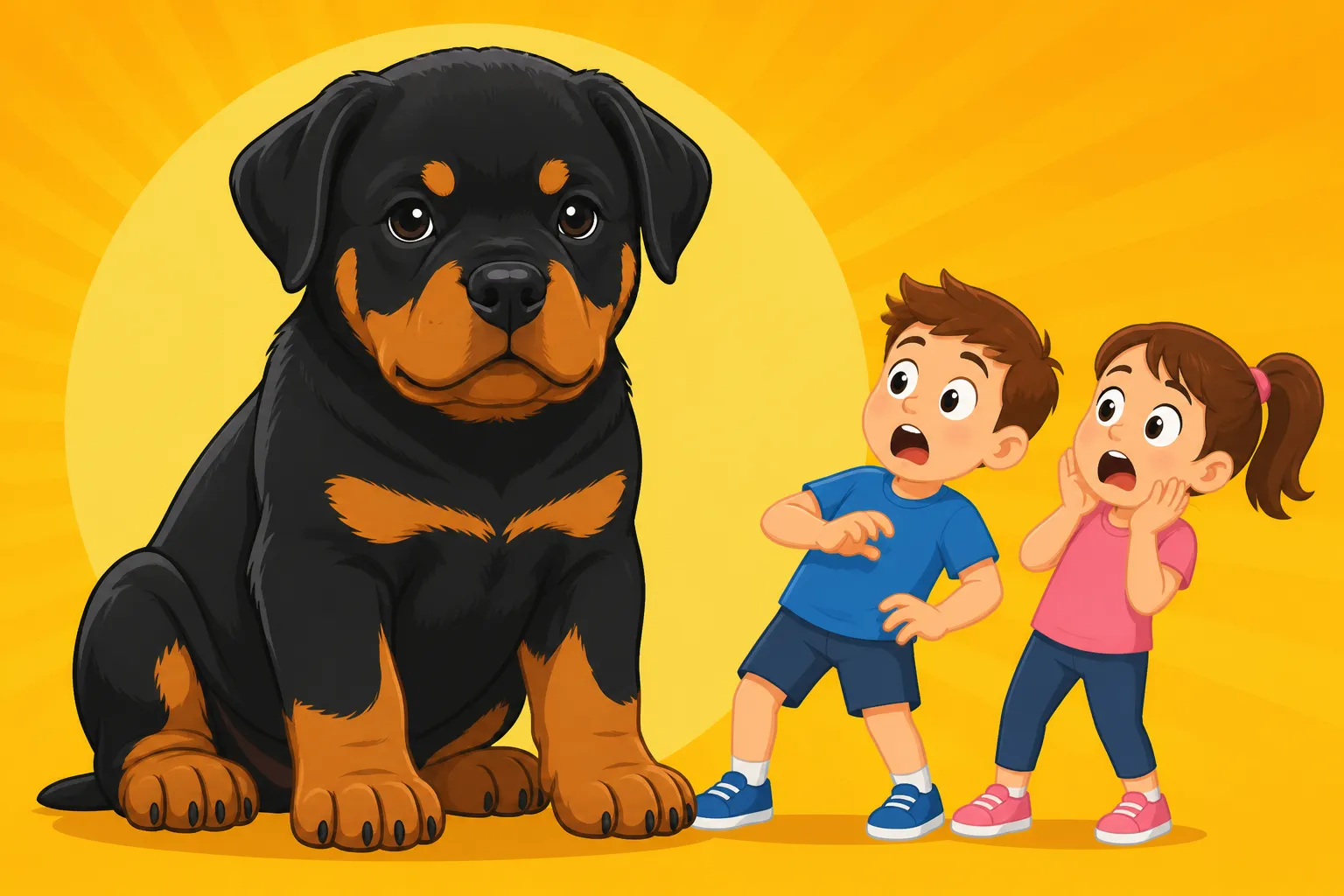
Bringing a Rottweiler puppy home is an exhilarating experience, filled with adorable moments and boundless energy. But for families with young children, that adorable fluffball comes with a distinct reality check: this tiny pup will soon be a formidable, powerful dog, easily outweighing and overpowering the kids in your household. It’s a challenge many new owners grapple with—how do you ensure safe, respectful, and joyful coexistence when your "little" dog grows into a hundred-pound loyal protector? This guide will walk you through the essential steps to manage this dynamic, ensuring harmony and safety for every member of your family.
Understanding the Rottweiler Growth Spurt and Its Implications
One of the biggest eye-openers for new Rottweiler owners, especially those with children, is just how fast and how large these dogs become. That sweet, clumsy puppy you brought home at eight weeks old, weighing maybe 15-20 pounds, will hit 50-60 pounds by four or five months, and can easily be over 80 pounds by its first birthday. By two years old, many males will settle in the 100-130 pound range, with females slightly less, but still substantial. This rapid growth means that the "puppy stage" where you can easily physically manage your dog is incredibly short-lived.
The Rapid Transformation from Puppy to Giant
Imagine a two-month-old Rottweiler puppy playing with a five-year-old child. They might be roughly the same height when sitting, and the puppy's playful nips, while sharp, are manageable. Fast forward a few months, and that same dog, now a gangly, adolescent 70-pound powerhouse, can accidentally knock a child over with a wag of its tail, or bowl them over during an enthusiastic greeting. Their sheer mass and developing strength mean that what was once a cute, clumsy interaction can quickly become a potentially dangerous one if not properly managed. It's not about malice; it's about physics and pure, unadulterated puppy exuberance in a large body. This is why it's absolutely crucial to start training and setting boundaries the moment that puppy steps foot in your home, long before it even approaches its adult size.
When you look at a growth chart for a Rottweiler, it's clear they are built for power and substance. Their bones and joints are developing for months, sometimes even up to two years, meaning that while they might look like an adult long before then, they're still physically vulnerable and mentally immature. This extended growth period requires careful consideration, not just in terms of diet and exercise to protect those Rottweiler Growth Plates and Why They Close So Late, but also in how they interact with the less sturdy members of your family. You're not just raising a pet; you're raising a companion that will soon be a force of nature, and that requires proactive guidance from day one to ensure everyone's safety and comfort.
Why Early Management with Children is Non-Negotiable
The window of opportunity to mold a Rottweiler's behavior is widest during puppyhood. By the time they reach six months, their habits, both good and bad, are already deeply ingrained. Waiting until your Rottweiler is a hulking adolescent to address jumping, nipping, or boundary issues when children are present is a recipe for disaster. At that point, you’re trying to stop a freight train rather than guide a small cart. This early management isn't just about preventing accidents; it's about establishing a clear hierarchy of safety and respect within the household. Your children need to feel safe and confident around the dog, and the dog needs to understand its place and the rules it must follow, especially concerning its interactions with the smallest members of the pack.
It’s often recommended that a Why a Rottweiler Must Be Trained Before It Grows is put in place, and this becomes even more critical when children are involved. Children, by nature, can be unpredictable, loud, and quick-moving—all things that can excite or inadvertently challenge a dog. By systematically teaching your Rottweiler proper manners from a young age, you're not only protecting your children, but you're also setting your dog up for success. It learns how to behave in a busy family environment, what behaviors are acceptable, and how to calmly exist alongside boisterous human toddlers and older kids. This foundational work pays dividends for the entire decade of your dog's life.
Laying the Foundation: Socialization and Early Training
Socialization and early training are the bedrock upon which a well-adjusted, family-friendly Rottweiler is built. Many people assume socialization just means exposing their puppy to other dogs, but it's so much more, especially when children are a factor. It's about teaching your puppy to be calm, confident, and accepting of all sorts of sights, sounds, people, and experiences, ensuring they don't develop fears or anxieties that could manifest as undesirable behaviors later on.
Crucial Socialization Experiences Beyond Just People
For a Rottweiler living with children, socialization must specifically include positive, structured exposure to children of various ages, sizes, and energy levels. It's not enough for your puppy to just see kids from a distance; they need controlled, positive interactions where they learn that children are not a threat, but also not an object for rough play. This means enrolling in a well-run puppy class that welcomes families and focuses on good manners, or arranging supervised playdates with children who understand how to interact appropriately with a puppy. Think about exposing your puppy to kids on bikes, kids running, kids with loud toys, and kids dressed in different outfits (hats, bulky jackets). The more varied, positive exposures your puppy has, the less likely they are to be startled or react defensively to novel situations involving children.
The critical window for Rottweiler Socialization Before Sixteen Weeks is something every owner, especially those with kids, needs to be aware of. During this sensitive period, a puppy's brain is highly receptive to new experiences, forming lasting impressions. Missing this window can make it much harder to introduce new things later on, potentially leading to fear or reactivity. Consider using structured online puppy courses, like those offered by BAXTER & Bella, which often provide guided socialization protocols that can be integrated into your daily routine. These resources can help you ensure your puppy is exposed to a wide range of stimuli in a safe and positive way, setting them up to be a confident and calm presence in a busy household. Remember, every positive interaction with a child, no matter how brief, adds to your puppy's emotional resilience.
Building a Shared Language Through Positive Reinforcement
Training is not just about teaching commands; it's about building a clear line of communication and trust between you and your Rottweiler. When children are in the picture, this shared language becomes even more vital. Simple commands like "sit," "stay," "down," and "off" (meaning all four paws on the floor) are not just party tricks; they are crucial safety cues. Imagine your Rottweiler, excited by a child's toy, about to jump. A reliable "off" command can prevent a child from being knocked over. Training should always be positive, rewarding desired behaviors with treats, praise, and gentle pets. This builds a strong bond and makes your Rottweiler eager to please, rather than fearful of correction.
Consistency is king, and everyone in the household, including older children, needs to be on board with the training rules. If one person allows jumping and another corrects it, your Rottweiler will get confused. Utilize tools like sturdy training treats (many excellent options can be found on Amazon) and clickers to mark good behavior clearly and immediately. Short, frequent training sessions are far more effective than long, infrequent ones. Teach your Rottweiler to "settle" on a mat or in their The Crate Size a Hundred Twenty Pound Rottweiler Needs when playtime with the kids gets too chaotic. This teaches them an "off switch" and provides them with a safe, calm space to retreat to, which is invaluable in a busy home. A well-trained Rottweiler understands boundaries and looks to you for direction, making them a much safer companion for children.
Cultivating Gentle Manners: Nipping, Mouthing, and Body Awareness
Puppies explore the world with their mouths, and Rottweilers, with their powerful jaws, are no exception. What starts as cute puppy nipping can become quite painful as those needle-sharp puppy teeth are replaced by adult teeth. Teaching bite inhibition—the understanding of how much pressure is too much—is paramount for any Rottweiler, but especially one living with children, who are more prone to accidental nips and scratches.
Teaching Soft Mouths and Stopping Play Biting
Rottweiler Puppy Play Biting With Children is a common, and sometimes frustrating, part of puppyhood. It's how they learn to gauge bite pressure with their littermates. When your puppy mouths or nips a child (or an adult) too hard, let out a sharp "ouch!" or "yip!" and immediately remove your attention. Walk away, turn your back, or briefly put the puppy in a "time-out" in their crate or a designated safe space. The message is clear: hard biting means the fun stops. Repeat this consistently, and your puppy will quickly learn that gentle mouths keep the play going. It’s also crucial to offer appropriate chew toys—again, Amazon has a vast selection of durable options—and redirect any mouthing onto these items. This not only saves your children's hands and clothing but also fulfills your Rottweiler's natural urge to chew.
It's equally important to teach your children how to respond if they get nipped. Their natural reaction might be to pull away quickly, which can actually trigger a puppy's chase instinct and make the nipping worse. Instead, teach them to go limp and let their hand go slack, then calmly withdraw their hand and walk away. This removes the "fun" from the interaction. You're not trying to punish the puppy for natural behavior, but rather to teach them acceptable ways to interact with human skin. Regularly practice Teaching a Rottweiler to Take Treats Gently from open palms, first with adults, then with older, supervised children. This reinforces the idea of a soft mouth around human hands, which is a key life skill for a large breed living with a family.
Encouraging Calmness Around Active Children
Children are inherently noisy and energetic, and a large, excitable dog can easily get swept up in that energy, leading to accidental knocks or overstimulation. It's crucial to actively encourage calmness in your Rottweiler when children are present. This means rewarding quiet, relaxed behavior. If your puppy is lying calmly while the kids play, casually drop a treat nearby. If they approach a child gently, reward that. Teach them that good things happen when they are calm around children, not when they are jumping or being boisterous. Rottweiler Impulse Control Games like "leave it" or "wait" are incredibly valuable here, teaching them self-control in exciting situations.
Consider designating "calm zones" for your Rottweiler, such as their crate or a dog bed in a quiet corner, where children are taught to leave them undisturbed. This provides your dog with a safe retreat when they feel overwhelmed or simply need a break. It's also important for parents to learn to Reading a Still Rottweiler That Is Not Relaxed, recognizing subtle signs of stress or discomfort in their dog's body language—like lip licking, yawning, or turning their head away—which indicate they might need a break from interaction. By teaching both your dog and your children to respect boundaries and encouraging a culture of calm, you can create a household where everyone feels secure and understood.
Navigating Playtime: Setting Boundaries and Ensuring Safety
Playtime is essential for a Rottweiler's physical and mental well-being, but when children are involved, it requires careful supervision and structure. What might be a fun, harmless game with an adult can quickly become overwhelming or dangerous for a smaller child. Establishing clear boundaries around play and interaction is paramount.
Supervised Interactions and Appropriate Games
All interactions between a Rottweiler puppy and children, especially young ones, should be closely supervised. This is not just for the children's safety but also for the dog's, ensuring that the children are interacting respectfully. Discourage roughhousing or tug-of-war games between children and the puppy, as these can inadvertently encourage competition or mouthiness. Instead, guide interactions towards calmer activities like gentle petting, teaching simple commands, or rolling a soft toy for the dog to retrieve. If the play gets too rambunctious, immediately intervene and separate them, or redirect the puppy to a solo chew toy.
When your Rottweiler is still growing, avoid high-impact games that involve excessive jumping or sharp turns, as these can be hard on developing joints. Instead, opt for controlled fetch in a safe, fenced area (away from children's play zones) or a structured walk. For children, teaching them how to calmly walk past the dog or how to offer a treat safely without fear is more valuable than letting them engage in chaotic play. Some families find it helpful to use baby gates, available from Amazon, to create physical barriers, allowing the puppy and children to be in the same general area but preventing direct, unsupervised contact. This "parallel play" can help the dog get used to the children's presence without the risk of overstimulation or accidental injury.
Preventing Resource Guarding and Possessive Behaviors
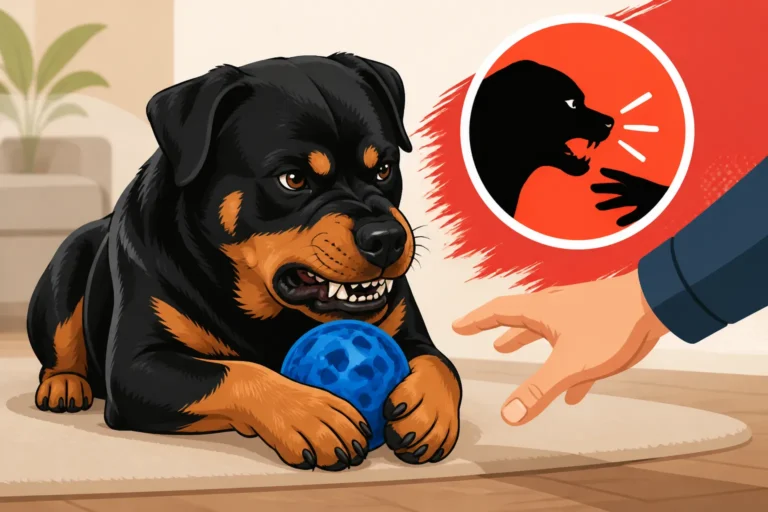
Rottweiler Resource Guarding at Home is a serious concern, particularly when children are present, as it can escalate from a mild warning to a bite if not addressed properly. Rottweilers, by their nature, have a guarding instinct, and while it's desirable for protecting their family, it must never be directed at family members, especially children, over food, toys, or even preferred resting spots. Start early by teaching your puppy that human hands near their food bowl or toys are a good thing. Practice "trading up," offering a high-value treat in exchange for a toy they are holding, then immediately giving the toy back. This teaches them that giving something up results in something better, not a loss.
Never allow children to disturb your Rottweiler while it's eating, sleeping, or chewing on a prized possession. This is a fundamental rule that all children must understand. Create a designated "safe zone" for your Rottweiler, like its crate, where it can eat or chew undisturbed. If your Rottweiler shows any signs of guarding—a stiff posture, a low growl, freezing over an item—immediately seek professional guidance from a certified positive reinforcement trainer or behaviorist. Addressing this issue early and effectively is crucial for preventing dangerous incidents and ensuring a safe environment for your children. Consistency, respect for the dog's boundaries, and proactive training are key to managing this natural but potentially problematic instinct.
Here's a quick guide to some key developmental milestones and associated management strategies:
| Age of Rottweiler Puppy | Typical Weight Range (approx.) | Key Challenge with Children | Recommended Management Strategy |
|---|---|---|---|
| 8-12 Weeks | 15-25 lbs | Sharp puppy teeth, nipping | Teach bite inhibition; redirect to toys. |
| 3-5 Months | 30-55 lbs | Exuberant jumping, gaining strength | Consistent "off" command; structured play. |
| 6-12 Months | 60-90 lbs | Adolescent energy, growing mass | Intense supervision; continued socialization. |
| 12-24 Months | 90-130 lbs (adult size) | Full strength, accidental knocks | Reinforce all training; teach children dog body language. |
Establishing Consistent Rules for Both Dog and Children
For a successful multi-species household, clear and consistent rules are not just for the dog; they are for everyone. Children need to understand how to behave around the family dog just as much as the dog needs to understand the family's rules. This unified approach prevents confusion for your Rottweiler and reinforces your role as the consistent leader.
The Importance of a Unified Front in Training
Consistency is the cornerstone of effective dog training, and it becomes even more critical in a household with children. If one parent allows the Rottweiler to jump on them while another corrects the behavior, the dog receives mixed signals. This confusion can lead to frustration for the dog and inconsistent behavior, which is a safety risk with a large, powerful breed. All adults and older, capable children must be on the same page regarding rules like "no jumping," "four paws on the floor for greetings," and "stay out of the kitchen." Holding brief family meetings to discuss and agree upon these rules can be incredibly helpful. You might even use a family-oriented online training program, such as those offered by BAXTER & Bella, which are designed to get everyone involved in the training process and reinforce consistent methods.
When everyone applies the same rules, your Rottweiler learns quickly what is expected of them and who is in charge. This isn't about dominance in an aggressive sense; it's about clear, benevolent leadership that provides structure and predictability. Children can also be taught simple commands to ask of the dog, like "sit" before receiving a pet, which empowers them and teaches the dog that children can also be sources of positive interaction and clear instructions. This unified approach builds respect and trust, creating a harmonious environment where your Rottweiler understands its place and the children feel secure in their interactions.
Creating Safe Zones and Respecting Personal Space
Every member of the family, including your Rottweiler, needs their own personal space and a designated safe zone where they can retreat and relax undisturbed. For your Rottweiler, this might be their crate, a special dog bed in a quiet room, or a fenced-off area of the yard. It's imperative that children are taught to respect these spaces and never bother the dog when it's in its "den." This prevents confrontations and gives your Rottweiler an essential escape valve from potentially overwhelming situations, especially in a busy household with active children. You can clearly mark these areas with physical barriers or verbal cues.
Conversely, children also need their own safe spaces where the dog is not allowed, such as their bedrooms or a playpen for toddlers. This teaches the dog boundaries and protects children's toys and personal items. By establishing clear rules about personal space and respecting boundaries on both sides, you foster a sense of security for everyone. For instance, teach your Rottweiler a solid "place" command to send them to their bed when guests (or excited children) arrive, or when dinner is being served. This kind of consistent training, supported by products from Amazon like sturdy dog beds or indoor gates, creates a structured home environment that promotes calm, respectful interactions between your growing Rottweiler and your beloved children.
Disclaimer
This article is for general informational purposes only and does not constitute professional advice. Laws, prices and regulations vary by location and change over time. Consult a qualified professional for guidance on your specific situation.