Teaching Bite Inhibition to a Rottweiler Puppy
Few things are as jarring as the razor-sharp teeth of a Rottweiler puppy, even when they're "just playing." While those needle-like nips might seem cute and harmless when your little land shark weighs 15 pounds, the reality is that without proper guidance, that playful mouthing can escalate into a serious problem when your Rottweiler reaches 100 pounds or more. This guide is here to walk you through the essential steps of teaching bite inhibition, ensuring your powerful puppy learns to use its mouth gently and safely.
Why Early Bite Inhibition Training Is Non-Negotiable for a Rottweiler
Let's be real: owning a Rottweiler means taking on a significant responsibility. These magnificent dogs are strong, intelligent, and possess an inherent guarding instinct. Because of their size and power, teaching them excellent bite inhibition from day one isn't just a good idea – it's absolutely crucial for their safety, your family's safety, and their acceptance in society.
The Raw Power Behind a Growing Rottweiler's Jaw
When you look at your adorable, clumsy Rottweiler puppy, it's easy to forget they are destined to become a formidable animal with incredible physical capabilities. Their jaws are designed for strength, and while puppy nips are often playful, they carry the potential for serious damage if the dog doesn't learn control. Think about it: a Rottweiler's bite force can be immense, and while we're not talking about deliberate aggression in a puppy, we are talking about the sheer potential of an adult dog that hasn't learned to moderate its pressure. It's a foundational skill, much like teaching a toddler not to hit. We aren't trying to stifle their natural instincts, but rather to teach them appropriate expression. You can delve more deeply into the implications of their strength by reading What 328 Pounds of Bite Pressure Actually Does.
As a responsible owner, it's your job to ensure that your Rottweiler understands the profound difference between mouthing a chew toy and making contact with human skin. This isn't just about preventing accidents; it's about safeguarding your dog's future. An adult Rottweiler with poor bite inhibition faces severe social and even legal consequences. It's a heavy burden, but one that dedicated Rottweiler owners embrace because they understand the breed.
Understanding "Bite Inhibition" Versus "Not Biting At All"
This is where a lot of new puppy owners get tripped up. When we talk about bite inhibition, we're not talking about eradicating your Rottweiler's natural instinct to use its mouth. Dogs explore the world with their mouths, they play with their mouths, and they communicate with their mouths. Trying to stop all mouthing is like trying to stop a child from talking. What we are doing is teaching them to control the intensity of their bite. We want them to understand that human skin is incredibly delicate and warrants the utmost gentleness, even in play.
Imagine your puppy gnawing on a tough bone. They can apply significant pressure without consequence. Now imagine that same puppy accidentally mouthing your hand with the same pressure. Ouch! Bite inhibition teaches them that when they feel skin, the rules change. It’s about building an internal mechanism for self-control, so that even if they were startled or accidentally made contact, their instinct would be to inhibit their bite strength dramatically. This foundational lesson, started in puppyhood, is what creates a "soft mouth" in an adult Rottweiler, allowing them to carry an egg without breaking it or take a treat without nipping.
The Critical Window: Why Delaying This Training is a Mistake
Rottweiler puppies grow at an astonishing rate. One day they're a tiny bundle of fluff, and the next they're a hulking adolescent with the strength of a small pony. The window for teaching effective bite inhibition is primarily in those crucial early months. What might be a tolerable, if annoying, nip from an 8-week-old puppy becomes genuinely painful and potentially dangerous from a 6-month-old Rottweiler. Waiting means you're trying to re-train a much stronger, more stubborn, and physically imposing animal. This is why many experienced Rottweiler owners will tell you Why Rottweiler Training Cannot Wait Until Six Months.
Puppies, like human children, have critical developmental periods where they are most receptive to learning certain social rules. For bite inhibition, this period overlaps significantly with their early weeks and months. During this time, their brains are wired to absorb information about appropriate social interactions. Missing this window means you'll be playing catch-up, and the stakes get higher the larger and stronger your dog becomes. Proactive, consistent training now saves a world of trouble (and potential injury) later.
Learning from the Pack: Mimicking Mother and Littermates
The best teachers of bite inhibition are often a puppy's own mother and littermates. They provide immediate, clear feedback that we, as human companions, need to learn how to replicate. Understanding this natural learning process is key to effectively communicating with your Rottweiler puppy.
How Puppies Learn "Too Hard" in Their First Weeks
If you've ever watched a litter of puppies play, you've seen the raw, uninhibited joy of puppy wrestling and tug-of-war. But you've also likely witnessed the immediate consequences of a bite that's too hard. One puppy clamps down a little too enthusiastically on a sibling, and the bitten puppy lets out a sharp, high-pitched yelp. What happens next? Often, the game stops, even if just for a moment. The offending puppy learns that too much pressure means the fun ends. This is their first, most vital lesson in bite inhibition.
The mother dog plays an equally critical role. She might intervene with a stern look, a low growl, or even a gentle but firm nip if a puppy is too rough or ignoring the signals of its siblings. This reinforces the understanding that there are boundaries, and pushing those boundaries has consequences. This constant feedback loop within the litter and from the mother is foundational. Puppies learn to modulate their bite pressure so they can continue to play and interact. If a puppy is separated from its litter too early, it might miss out on some of these crucial lessons, making your job as the human educator even more important.
The "Yelp and Withdraw" Method for Human Families
Since you can't join the puppy pile (and even if you could, you wouldn't want to get nipped!), you need to mimic this natural learning process. The "yelp and withdraw" method is the gold standard for teaching bite inhibition to puppies. Here's how it works:
- Exaggerated Yelp: The moment your puppy's teeth touch your skin with too much pressure, let out a sharp, high-pitched "YIP!" or "OUCH!" – similar to what another puppy would do. Make it sudden and dramatic. The goal is to startle the puppy, not scare it, and to clearly communicate that the bite was painful.
- Immediate Withdrawal: Crucially, follow the yelp with an immediate withdrawal of attention. This might mean pulling your hand away, standing up and turning your back, or even calmly leaving the room for 30 to 60 seconds. The play must stop. The puppy needs to connect the hard bite with the abrupt end of fun. If you stay and continue to interact, even to scold, you're still giving attention, which can be rewarding.
- Resume Play (if appropriate): After a short break and once your puppy is calm, you can re-engage. If the biting is gentle, great! If it's hard again, repeat the yelp and withdraw. The goal is to teach them: gentle mouth = play continues; hard mouth = play stops.
This method relies on consistency and repetition. It won't work perfectly the first time, or even the tenth. But over time, your Rottweiler puppy will begin to associate hard bites with the cessation of the fun interaction they desire.
Consistency Across All Interactions and Family Members
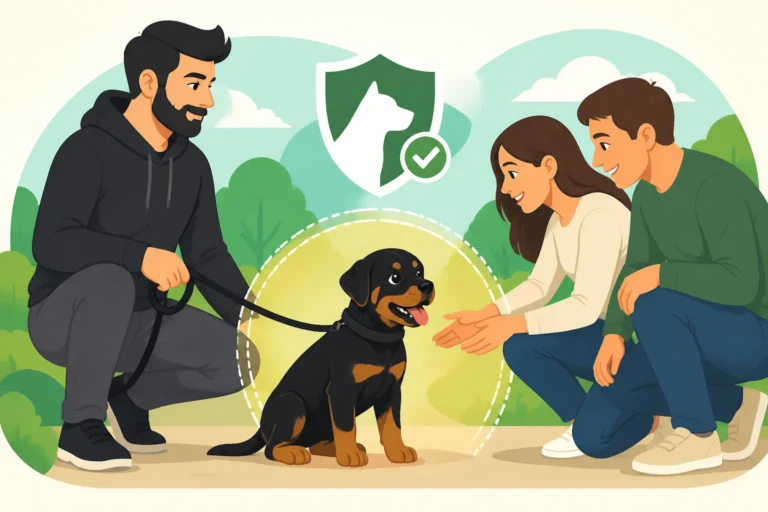
This cannot be stressed enough: for the "yelp and withdraw" method (and really, any training method) to be effective, every single person who interacts with your Rottweiler puppy must be absolutely consistent. If one family member lets the puppy nip playfully, while another immediately withdraws, the puppy receives mixed signals. They won't understand the rule, and their learning will be confused and delayed. This includes children; it's vital to teach them how to interact safely and consistently, as discussed in Rottweiler Puppy Play Biting With Children.
Before bringing your puppy home, have a family meeting. Discuss the "yelp and withdraw" rule and ensure everyone understands its importance and how to implement it correctly. Practice the "yelp" so everyone sounds similar. Agree on the "time-out" procedure if necessary (more on that below). Consistency provides clarity for your puppy, allowing them to quickly grasp what is acceptable and what is not. This united front is paramount, especially for a smart, powerful breed like the Rottweiler, who will quickly learn to exploit inconsistencies.
Practical Strategies for Managing Mouthy Behavior
Even with the "yelp and withdraw" method, a Rottweiler puppy can be persistent. You'll need an arsenal of practical strategies to help them understand and manage their mouthy tendencies. These techniques are about setting clear boundaries and guiding their natural instincts towards appropriate outlets.
Redirecting Nips to Appropriate Chew Toys
One of the most effective tools in your bite inhibition toolkit is redirection. Rottweilers are born to chew and mouth; it's part of their breed make-up and how they explore. The trick isn't to stop this natural behavior, but to direct it towards acceptable objects. As soon as your puppy tries to mouth your hands, feet, or clothing, immediately offer them a suitable chew toy. The timing here is critical: you want to intercept the bite before it gets hard on your skin, or immediately after a yelp, showing them what they should be biting instead.
Keep a variety of durable chew toys readily available in every room your puppy spends time in. When they approach you with a playful nip, swiftly replace your hand with a sturdy toy. Engaging toys that offer different textures and challenges are great. For example, a classic KONG toy stuffed with treats, a durable Nylabone, or one of the many robust options you can find on Amazon can provide appropriate chewing satisfaction. Make sure these toys are built to withstand the powerful jaws of a growing Rottweiler. For more insight into what kind of toys truly stand up, check out Rottweiler Chew Toys That Survive the Jaw. This practice teaches your puppy that chewing on toys is rewarding and allowed, while chewing on humans is not.
Managing Play Intensity and Over-Stimulation
Rottweiler puppies are enthusiastic players, and their energy can sometimes lead to over-excitement, which often manifests as frantic nipping and roughhousing. It's your job to teach them how to play politely and to recognize when they're getting too wound up. Think of it like managing a rambunctious toddler – sometimes they just need a break before things escalate.
Keep play sessions relatively short and sweet, especially in the early stages. Instead of one long, intense hour of play, opt for several shorter, 10-15 minute bursts throughout the day. Watch for signs that your puppy is becoming overstimulated: frantic, undirected biting, increased growling (not just play growls), jumping up aggressively, or difficulty responding to cues. When you see these signs, it's time to calmly end the play session. This means putting away the toys, standing still, or initiating a brief time-out. Ending play before the puppy gets completely wired teaches them to manage their arousal levels and associate play with controlled, enjoyable interactions rather than chaos.
Implementing Effective Time-Outs
When the yelp-and-withdraw method isn't quite cutting it, or your puppy is simply too over-aroused to respond to redirection, a brief time-out can be a very powerful tool. The purpose of a time-out isn't punishment in the traditional sense, but rather the removal of what the puppy desires most: your attention and the opportunity to play. It's a clear statement that overly rough or persistent nipping means the fun stops entirely.
Here’s how to do it:
- Calmly Initiate: When your puppy bites hard and doesn't respond to a yelp or redirection, calmly (no yelling or drama) pick them up (if small enough) or lead them to a designated "chill out" spot. This could be a crate, a playpen, or even a bathroom.
- Short Duration: The time-out should be very short – typically 30 seconds to a maximum of 1-2 minutes. The goal isn't to make them suffer, but to break the cycle of over-excitement and give them a moment to reset.
- Release When Calm: Crucially, only release your puppy from the time-out when they are quiet and calm. If they are still barking or whining, wait for a brief lull before opening the door. This teaches them that calm behavior leads to release and interaction.
- Resume Interaction: Once released, you can calmly resume normal interaction or play. If the nipping starts again, immediately repeat the time-out. Consistency is key here. Your puppy will quickly learn that "time-out" means "my biting was too much, and I lost attention."
Refining Mouth Manners: Beyond Basic Nipping
Bite inhibition isn't a one-and-done lesson; it evolves as your Rottweiler grows. Beyond the initial puppy nipping, you'll need to continue reinforcing gentle mouth manners in various situations, ensuring your powerful dog understands that human skin is always off-limits for anything but the gentlest touch.
Continuing the Training as Your Rottweiler Grows
Just because your Rottweiler has passed the tiny puppy stage doesn't mean you can stop reinforcing bite inhibition. In fact, as they transition through adolescence, they might "test" boundaries, including mouthing. This is a common phase where puppies, now much larger and stronger, might try behaviors they "should" know better than to do. This is precisely why When Rottweiler Mouthing Stops Being Cute is such an important milestone to have passed. A nip from an adolescent Rottweiler can be significantly more painful and carries more force, making consistent, calm correction even more vital.
Remember, a Rottweiler's growth plates close relatively late, often around 18-24 months. During this time, they are still physically developing, and their energy levels can be sky-high. Continued, consistent application of the "yelp and withdraw" and redirection methods is paramount. Don't assume they've learned it permanently just because they had a good stretch of gentle behavior. Revisit the rules regularly, especially during periods of high excitement or new situations. Your long-term consistency is what truly ingrains these lessons.
Teaching Gentle Treat-Taking
One of the most common situations where a dog might inadvertently nip a human is during treat time. An excited Rottweiler can be quite enthusiastic about food, and if not taught manners, they might snatch treats, potentially catching your fingers in the process. Teaching your Rottweiler to take treats gently is an essential extension of bite inhibition. It reinforces the idea of a "soft mouth" in a high-value situation.
Here’s an effective method, as explored in Teaching a Rottweiler to Take Treats Gently:
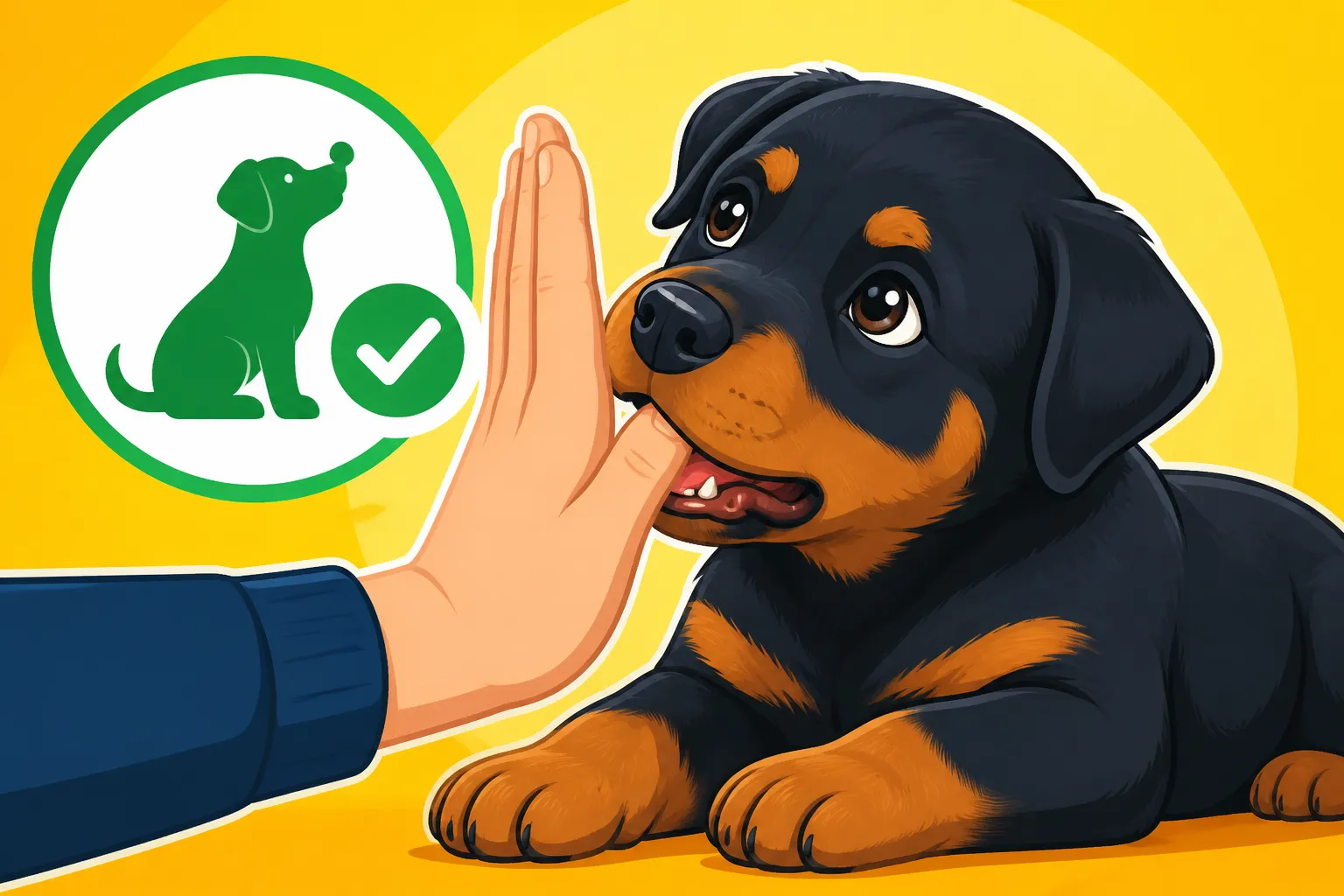
- Hold Treat in a Flat Palm: Present the treat in your open, flat palm. This makes it harder for the dog to snatch quickly and reduces the risk of nipping individual fingers.
- Close Hand if Mouth is Too Hard: If your puppy tries to grab the treat with too much force, or if their teeth make hard contact with your palm, immediately close your hand around the treat.
- Wait for Softness: Keep your hand closed until your puppy backs off slightly or tries again with a softer mouth. The moment you feel a gentle touch, or if they lick your hand, immediately open your palm and let them have the treat.
- Repeat and Refine: Repeat this process over and over. They will quickly learn that gentleness earns the treat, while a hard mouth makes the treat disappear. You can add a verbal cue like "gentle" or "soft" as they consistently demonstrate the desired behavior.
Addressing Accidental Nips During Rough Play
Even with the best training, sometimes during very exuberant play, an accidental nip can occur. Your Rottweiler might get a little too wound up, misjudge a tug toy, or accidentally connect with your hand or arm during a bouncy game. The key here is not to react with anger, but to immediately and clearly communicate that this level of play is unacceptable.
The moment an accidental nip that is too hard occurs, regardless of intent, stop the play immediately. Let out an exaggerated "Ouch!" and completely disengage. Stand up, turn your back, and walk away, or initiate a brief time-out. Do not continue to play, even if you think it was just an accident. This reinforces the absolute boundary: any hard contact with human skin means the fun stops. After a brief period of calm, you can resume play, but perhaps with a different toy or a lower intensity. If these accidental nips become a regular occurrence, it’s a sign that your play style needs adjustment, or that your dog is still struggling with impulse control, and you may need to revisit earlier training steps or seek professional advice.
Special Considerations for Rottweilers
Rottweilers, being the powerful and intelligent breed they are, come with their own unique set of considerations when it comes to training bite inhibition. Their inherent traits mean that certain aspects of this training need extra attention and a deep understanding of their nature.
Understanding Their Natural Strength and Jaw Power
It bears repeating: the Rottweiler is a dog bred for power, strength, and confidence. Their physical build, including their strong jaws, is a testament to their working heritage. This isn't a delicate toy breed; it's a dog that, even when playing, needs to be taught extreme self-control around humans. This inherent strength is precisely why early and thorough bite inhibition training is not merely a suggestion, but a fundamental requirement for responsible Rottweiler ownership. As we've discussed, What 328 Pounds of Bite Pressure Actually Does is a real statistic, and while we don't expect a pet Rottweiler to apply that kind of pressure, it underscores the need for them to learn moderation.
Because of this natural strength, you must choose chew toys and training aids that are robust enough to stand up to their powerful jaws. Flimsy toys will be destroyed in minutes and could pose a choking hazard. Always supervise your puppy with new toys. This breed needs outlets for their chewing instincts, and providing appropriate, durable options prevents them from finding inappropriate (and potentially damaging) alternatives. Your understanding and respect for their physical capabilities will guide your training choices.
Involving All Family Members, Especially Children
The entire household is part of your Rottweiler's "pack," and everyone needs to be on the same page regarding rules and training. This is especially true when children are involved. Children, by nature, can be unpredictable, loud, and prone to excited movements that might inadvertently encourage a puppy to nip. It’s not fair to expect a puppy to differentiate between an adult's hand and a child's hand if the rules for interaction aren't consistent. As mentioned earlier in Rottweiler Puppy Play Biting With Children, supervising all interactions between your puppy and children is non-negotiable.
Teach children how to interact respectfully and safely with the puppy. This includes:
- Never teasing or cornering the puppy.
- Understanding when the puppy needs space (e.g., when eating or sleeping).
- Learning to use the "yelp and withdraw" method if nipped.
- Always redirecting the puppy to a toy, not their own hands.
- Engaging in calm, structured play rather than roughhousing.
- Never leaving young children unsupervised with a Rottweiler puppy.
Consistency from every human member of the household is critical for the puppy to learn effectively and for everyone to stay safe.
When to Seek Professional Help
Sometimes, despite your best efforts, a Rottweiler puppy's nipping might feel overwhelming, or you might notice behaviors that seem concerning. This is not a sign of failure, but rather an indication that it's time to call in a professional. Early intervention is key, especially with a powerful breed. Don't wait until the problem escalates to dangerous levels.
Signs that you might need professional guidance include:
- Persistent, hard biting that doesn't respond to the "yelp and withdraw" or redirection methods.
- Growling or snapping that seems genuinely aggressive rather than playful.
- Resource guarding (growling over food, toys, or specific locations) combined with nipping.
- Your puppy seems to be genuinely trying to hurt you or other family members.
- You feel overwhelmed, frustrated, or fearful of your puppy's mouthy behavior.
A certified professional dog trainer or a veterinary behaviorist can assess your specific situation, identify underlying causes, and provide a tailored training plan. They can also offer invaluable guidance on socialization, which goes hand-in-hand with bite inhibition. Online resources like BAXTER & Bella can provide structured courses, or you can seek out local trainers experienced with large breeds. Attending Rottweiler Puppy Classes That Accept Rottweilers can also be a fantastic way to get expert guidance and supervised socialization opportunities. Investing in professional help early on is one of the best investments you can make in your Rottweiler's future and your family's peace of mind.
Common Mistakes to Avoid
In the enthusiasm and sometimes frustration of puppy training, it's easy to fall into common pitfalls that can actually hinder your Rottweiler's progress in learning bite inhibition. Being aware of these mistakes allows you to sidestep them and maintain a positive, effective training approach.
Punishing Puppy Nipping Incorrectly
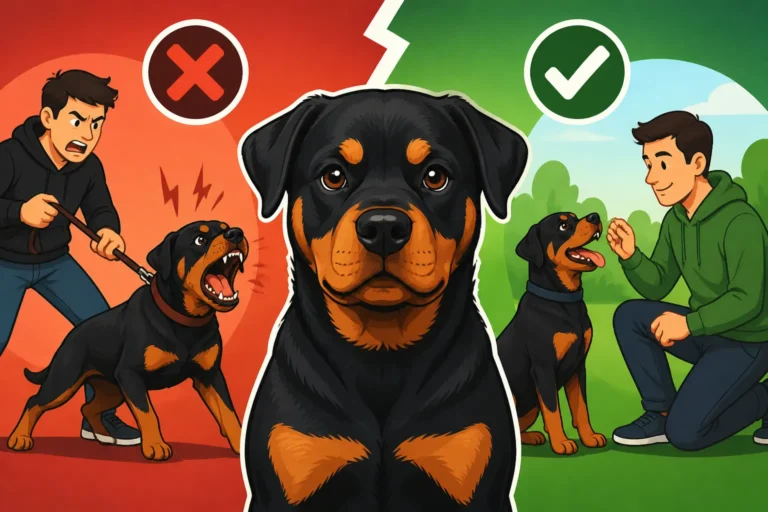
One of the biggest mistakes owners make is resorting to harsh punishment for puppy nipping. This can include hitting the puppy on the nose, yelling excessively, or using punitive tools like shock collars for mouthing. While your frustration is understandable, these methods are not only ineffective but can be actively detrimental. Physical punishment can teach your Rottweiler to fear your hands, which could lead to them biting harder in defense, or suppressing their warnings (like a growl) only to bite without warning later. Yelling often just escalates the puppy's excitement or creates anxiety, neither of which is conducive to learning.
Instead of trying to stop a behavior through fear, focus on teaching your puppy what to do instead. The "yelp and withdraw" and redirection methods are forms of negative punishment (removing something desirable, like attention or play) which are highly effective without causing fear or damage to your relationship. The goal is to build trust and clear communication, not to make your puppy afraid of you. A frightened Rottweiler is far more dangerous than a well-trained one.
Allowing Nipping Because It's "Just a Puppy"
Ah, the "but they're so cute when they do it!" trap. This is a classic mistake, particularly with large breed puppies like Rottweilers. While a tiny puppy nipping might seem endearing or harmless, allowing it to continue sets a dangerous precedent. That tiny nip from a 15-pound puppy will rapidly become a much more painful and potentially damaging nip from a 60-pound adolescent, and then an even more serious issue from a 100-pound adult. Rottweilers grow incredibly fast, and their strength increases exponentially with their size.
Every time you allow your puppy to nip you without consequence, you are inadvertently teaching them that it's acceptable. You're eroding the boundaries you're trying to establish. There's a strong argument to be made that Why Rottweiler Training Cannot Wait Until Six Months extends directly to bite inhibition. Don't wait until their adult teeth are in, or until they're stronger than you are, to implement consistent rules. Start immediately, be consistent, and never let them cross the "no teeth on skin" boundary, no matter how small or cute they are.
Not Providing Adequate Mental and Physical Stimulation
A bored Rottweiler puppy is a destructive Rottweiler puppy, and that destructiveness often manifests as excessive mouthing and nipping. These are highly intelligent, working dogs, and they need appropriate outlets for their energy, both physical and mental. If your puppy isn't getting enough exercise, mental challenges, or structured play, they will invent their own entertainment, which often involves chewing on inappropriate items or using your hands as chew toys.
Ensure your Rottweiler puppy gets regular, appropriate exercise. Remember that A Growing Rottweiler's Joints and Overexercise is a concern, so avoid forced, high-impact activities for young puppies, but provide plenty of opportunities for supervised play, short walks, and exploration. Mental stimulation is just as vital. Engage them with puzzle feeders (like those mentioned in Puzzle Feeders Built for a Rottweiler), training sessions that teach new commands, and interactive toys. A mentally and physically tired Rottweiler is much less likely to resort to frustrated nipping. Incorporating short, positive training sessions throughout the day not only reinforces good behavior but also provides that crucial mental engagement.
Understanding Chew Toy Types for Rottweiler Puppies
Choosing the right chew toys is a vital part of teaching bite inhibition and managing a Rottweiler puppy's natural chewing instincts. Not all chew toys are created equal, especially when you consider the powerful jaws of a growing Rottweiler. Here's a quick guide to help you choose wisely.
| Chew Toy Type | Description & Benefits | Considerations for Rottweilers |
|---|---|---|
| Rubber Chew Toys | Durable, flexible, often hollow for stuffing with treats (e.g., KONG). Good for mental stimulation and sustained chewing. | Excellent choice for Rottweilers. Look for extreme duty or power chewer versions. Ensure size is appropriate to prevent swallowing. Can be cleaned easily. Great for redirection and keeping them occupied, especially when you're busy. You can often find these from brands on Amazon. |
| Nylon Chew Toys | Very hard and long-lasting, designed to satisfy strong chewers without splintering. | Ideal for powerful jaws. Choose reputable brands that specifically market for "power chewers." Monitor for sharp edges that can develop with heavy chewing. Some Rottweilers find them too hard or lose interest if there's no immediate reward. |
| Dental Chews | Edible chews designed to help clean teeth and freshen breath. | While good for dental health, many are not designed for the sustained, powerful chewing of a Rottweiler. Opt for larger, harder versions that take longer to consume. Always supervise to ensure they are chewed, not swallowed whole, which can be a choking hazard or cause digestive upset. |
| Rope Toys | Good for tug-of-war and promoting interactive play. Can also help with dental hygiene. | Use with caution. While fun for tug, pieces of rope can be ingested, leading to blockages. Always supervise and discard immediately if fraying. Do not allow self-play or unsupervised chewing. Always ensure the rope is thick and tightly woven enough to withstand your Rottweiler's strength during supervised play. |
| Bully Sticks/Hides | Natural, edible chews. Provide long-lasting chewing satisfaction for many dogs. | Choose appropriate sizes and monitor closely. Some can be consumed quickly, and large pieces can be swallowed, posing a choking risk or causing digestive issues. Ensure they are from a reputable source for safety. Always supervise, especially as the stick gets smaller, and remove it before it becomes a hazard. |
| Interactive/Puzzle Toys | Designed to dispense treats or food, requiring the dog to problem-solve. Excellent for mental stimulation. | Fantastic for Rottweilers, who thrive on mental challenges. Look for robust designs that can withstand pawing, nudging, and potential chewing attempts to get to the treats. These are crucial for preventing boredom and channeling their intelligence constructively. The BAXTER & Bella program, for instance, often recommends these types of enrichment toys. |
Disclaimer
This article is for general informational purposes only and does not constitute professional advice. Laws, prices and regulations vary by location and change over time. Consult a qualified professional for guidance on your specific situation.