Why You Should Never Punish a Rottweiler Growl
It's a common, gut-level reaction when your big, powerful Rottweiler lets out a growl: you want it to stop immediately. You might instinctively reprimand them, thinking you're correcting a bad behavior or asserting dominance. But what many owners don't realize is that punishing a growl, especially in a breed as sensitive and intelligent as a Rottweiler, can actually be one of the most dangerous things you can do. This guide will help you understand why your Rottweiler growls and how to respond in a way that builds trust, prevents future problems, and keeps everyone safe.
Understanding the Rottweiler Growl: A Critical Signal
When your Rottweiler growls, it's not trying to be "bad" or defiant. Instead, it's communicating a very clear message, often one of discomfort, fear, or a boundary being crossed. For a dog that can reach over a hundred pounds and possess incredible strength, the growl is an invaluable warning system – think of it as a smoke detector. If you disable the smoke detector, you don't remove the fire hazard; you just eliminate your early warning.
More Than Just a Warning
A growl is a dog's way of saying, "I'm uncomfortable," "I'm scared," or "Please stop what you're doing, or I might have to escalate." It's an honest signal, and it's meant to prevent a bite. Imagine a scenario where your Rottweiler is resting with a prized chew toy, and a child approaches it. A low growl tells that child, "Hey, I really value this, give me space." If the growl is heeded, a confrontation is avoided. Without that growl, the dog has fewer options. The growl is part of a complex ladder of communication that dogs use, starting with subtle cues like lip licks, yawns, and averted gazes, moving up to stiffening, whale eye, and then finally, the growl.
Consider your Rottweiler's heritage; they were originally drover dogs and protectors. They were bred to be watchful and discerning, often showing a natural Rottweiler Aloofness and Why It Reads as Cold with strangers, preferring to assess a situation rather than rushing in with exuberance. This inherent caution means their communication, including a growl, is often very purposeful. It’s not a random outburst but a deliberate signal based on their perception of a threat or discomfort. Dismissing or punishing it means you're telling them their feelings don't matter and that their communication is unacceptable.
The Nuances of Rottweiler Communication
Not all growls are created equal, and understanding the context is key. A play growl during a vigorous tug-of-war is very different from a low, rumbling growl when someone reaches for their food bowl. A high-pitched, almost yelping growl might signal pain, while a deep, guttural growl usually indicates a serious warning. Rottweilers, being such powerful and often stoic dogs, might not display their discomfort as overtly as a smaller, more vocal breed. Their growl might be a crucial, later-stage signal that they've already tried more subtle communication, and it's been missed.
For instance, your Rottweiler might show Rottweiler Whale Eye and Other Warning Signs long before a growl. Their body might stiffen, their ears might pin back slightly, or they might turn their head away. If these earlier signals are ignored, the growl becomes their louder, clearer message. We, as their guardians, need to become fluent in all their communication, not just the ones we find convenient. Punishing a growl teaches them that this honest communication is not allowed, forcing them to jump straight to the next, more dangerous step on their communication ladder – a snap or a bite – without warning.
The Peril of Silencing a Growl
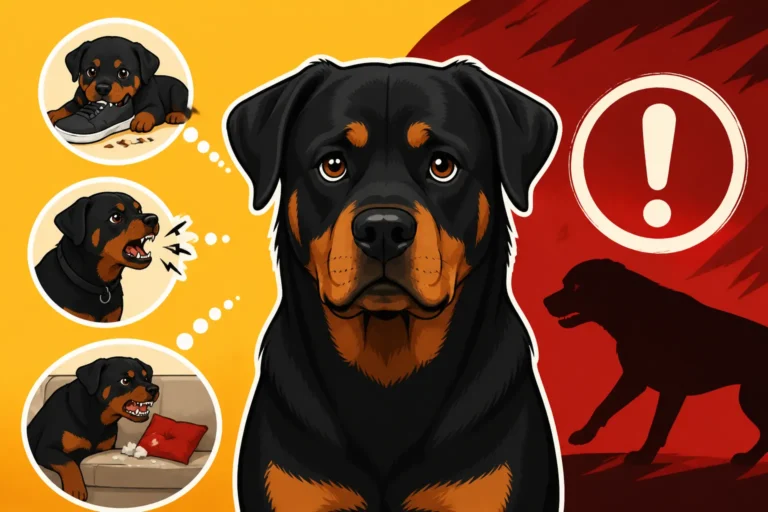
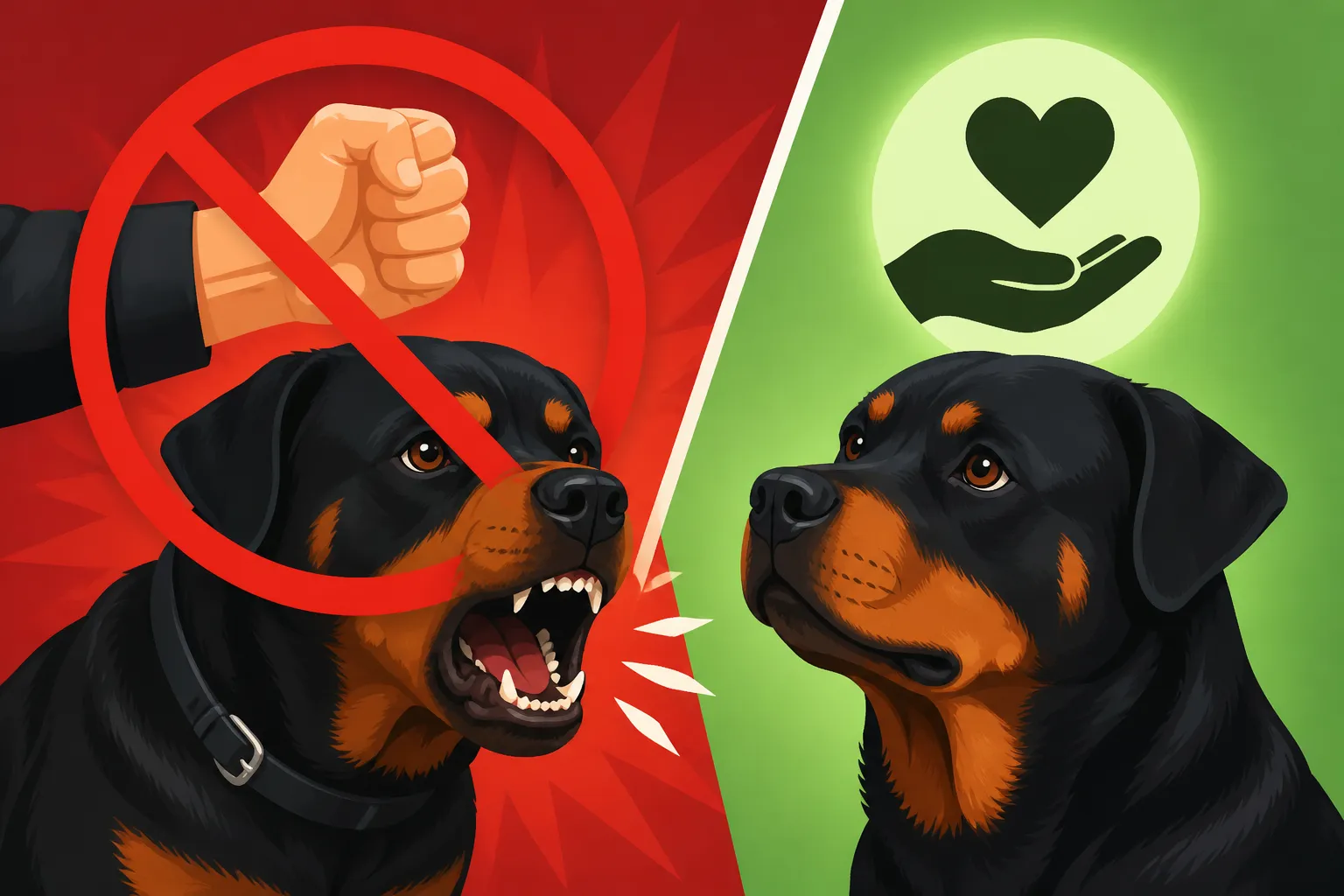
When you reprimand a growl, whether by yelling, yanking a leash, or physically correcting your Rottweiler, you're not addressing the underlying reason for the growl. Instead, you're teaching your dog that expressing their discomfort is unacceptable and will be met with further negativity. This has profound and often dangerous consequences.
Suppressing the Warning, Not the Cause
Imagine your Rottweiler is growling at a new, unfamiliar dog approaching too quickly on a walk. This might be a sign of Rottweiler Reactivity Toward Other Dogs. If you punish the growl, your Rottweiler doesn't learn to be comfortable with other dogs; they only learn that growling is bad. The next time they feel threatened, they might skip the growl altogether because they've been taught it leads to punishment. This creates the infamous "silent bite" scenario. The dog still feels the same level of anxiety or fear, but they no longer give you the crucial warning signal.
This is particularly critical with a large, strong breed like a Rottweiler. A bite from a Rottweiler can be incredibly serious, and having advance warning is paramount for safety. By punishing the growl, you remove your ability to intervene before a bite occurs. The discomfort or fear your Rottweiler feels doesn't magically disappear; it just gets bottled up. This can lead to what appears to be a "sudden" or "unprovoked" bite when, in reality, the dog had been trying to communicate their distress all along, only to be silenced.
The Erosion of Trust and Predictability
Consistent punishment for growling also deeply damages the bond of trust between you and your Rottweiler. Dogs learn to trust us when we listen to and respond appropriately to their needs. If their attempts to communicate their fear or discomfort are met with punishment, they learn that you are not a safe or reliable source of help. This can make them more anxious and less likely to seek your guidance in stressful situations.
Furthermore, it makes your Rottweiler's behavior less predictable. If you don't know when they're truly uncomfortable because they've learned not to growl, you can't manage situations effectively. This uncertainty can escalate Rottweiler Behavior Problems That Start Small into more severe issues. Instead of addressing the root cause – perhaps fear of strangers, resource guarding tendencies, or pain – you're simply putting a lid on the symptom. It's like having an engine light come on in your car and deciding to just put tape over the light instead of checking under the hood. The problem is still there, just hidden.
Effective Responses to a Rottweiler's Growl
So, if punishing a growl is off the table, what should you do? The key is to see the growl as valuable information and to act on it immediately by assessing the situation, creating space, and identifying the trigger.
Deciphering the Context: What is Your Rottweiler Telling You?
When your Rottweiler growls, your first step is to calmly observe and assess. What is happening in the environment? Who or what are they growling at? Are they guarding something, like their food bowl or a favorite toy (which could be a sign of Rottweiler Resource Guarding at Home)? Are they showing other signs of fear, like cowering, retreating, or a stiff body posture?
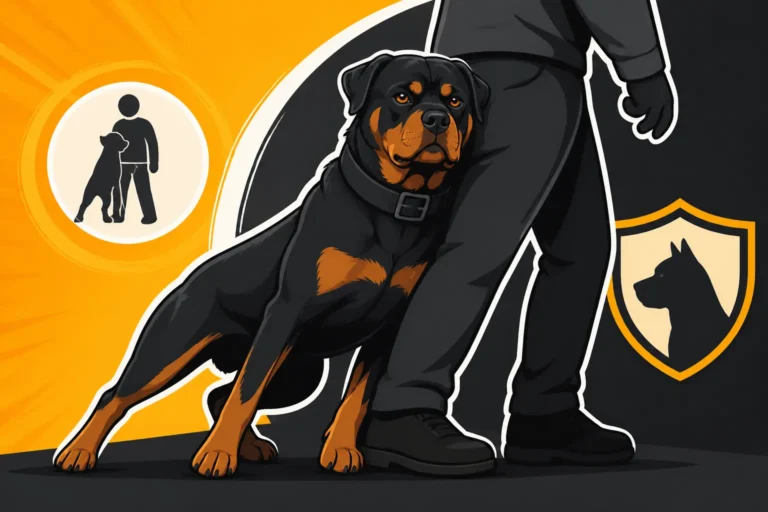
For example, if your Rottweiler growls when you approach their crate, they might be communicating a need for more personal space. Instead of scolding them, calmly remove yourself from the immediate vicinity. If they growl when a new person tries to pet them, gently step between your dog and the person, creating a barrier, and calmly say, "He needs some space right now." The goal is to acknowledge the growl, remove the trigger, and make your dog feel safe. This tells your Rottweiler, "I hear you, and I will help you."
| Growl Type | Possible Meaning | Appropriate Initial Response |
|---|---|---|
| Low, rumbling | Warning, "Stay away," resource guarding, fear | Create distance from trigger, identify cause, manage environment |
| High-pitched, yelping | Pain, fear, acute distress | Check for injury, remove from threat, assess environment |
| Short, sharp | Startle, surprise, sometimes playful or demanding | Observe body language for further cues, assess context |
| Deep, sustained | Serious threat assessment, preparing to defend | Immediately remove dog or trigger, seek safety, prevent escalation |
| Playful (often with bouncy body language) | Part of normal play, usually with other dogs/familiar people | Continue play if appropriate, supervise closely |
Creating Safety and Seeking Expert Guidance
Once you've identified the trigger, your immediate priority is to manage the environment to prevent further escalation. This might mean redirecting the dog to another room, putting them on a leash and moving away from the stimulus, or asking people to give them space. Never force your Rottweiler into a situation where they are growling. That's a recipe for disaster. If your dog growls when someone reaches for them, do not force the person to try again "to prove a point."
For persistent or concerning growling behavior, especially if it involves aggression or fear, professional help is invaluable. A certified professional dog trainer or a veterinary behaviorist can help you understand the root cause of the growling and develop a plan to address it using positive, humane methods. They can teach you counter-conditioning and desensitization techniques to change your Rottweiler's emotional response to triggers. Look for trainers who specialize in positive reinforcement and force-free methods. A great starting point for finding support and resources, even for building foundational skills, could be an online platform like BAXTER & Bella, which offers comprehensive programs that emphasize positive reinforcement. If you're looking for an in-person expert, don't hesitate to search for Finding a Rottweiler-Experienced Trainer Near You. Remember, addressing the underlying fear or discomfort, rather than suppressing the symptom, is the only way to create lasting change and a safer, happier dog.
Proactive Strategies for a Confident, Communicative Rottweiler
Prevention is always better than reaction, especially with a powerful breed. By building a strong foundation of trust and clear communication from puppyhood, you can minimize situations where your Rottweiler feels the need to growl out of fear or discomfort.
Building a Foundation Through Positive Reinforcement
Early and consistent positive reinforcement training is paramount for a Rottweiler. This means rewarding desired behaviors and making training a fun, engaging experience. Positive reinforcement helps your dog understand what you want them to do, rather than punishing them for what you don't. It builds confidence and teaches them that engaging with you is always a positive experience. This is especially important during crucial developmental stages, such as when your Rottweiler is a puppy learning Teaching a Rottweiler Puppy That Teeth Hurt or interacting with new environments.
Focus on teaching reliable cues like "leave it," "drop it," and a strong recall. These commands can be lifesavers in situations where your Rottweiler might otherwise feel the need to growl. If your dog growls over a dropped item, a reliable "leave it" or "drop it" can prevent a confrontational situation. High-value training treats and engaging Rottweiler Impulse Control Games can make learning these behaviors enjoyable and solidify their understanding. Using tools like a long line, easily found on Amazon, for recall practice in a safe, open area can provide valuable safety and training opportunities.
The Importance of Ongoing Training and Socialization
Socialization isn't just for puppies; it's an ongoing process throughout a Rottweiler's life. While Socializing a Rottweiler Puppy Properly before 16 weeks is critical, continued positive exposure to a variety of people, places, and appropriate dogs helps maintain their confidence and comfort. Ensure these experiences are always positive and never overwhelming. Forcing a nervous Rottweiler into a crowded dog park or demanding they interact with every stranger they meet can backfire dramatically. Instead, focus on controlled, positive interactions, allowing them to observe from a distance and approach on their own terms.
Regular training sessions, even short ones, keep your Rottweiler mentally stimulated and reinforce your bond. Consider activities like obedience classes, scent work, or even just working on Rottweiler Mental Work on a Rainy Day with puzzle toys. A well-exercised and mentally engaged Rottweiler is generally a calmer, more confident dog, less prone to anxiety-driven growling. If you anticipate situations where your Rottweiler might become overwhelmed or uncomfortable, proactive steps like Muzzle Training a Rottweiler Before You Need It can be a responsible safety measure, not a punishment. It allows your dog to remain safe while you continue to work on their underlying issues with a professional.
By listening to your Rottweiler's growls and responding with understanding and proactive training, you're fostering a safer environment for everyone and building a relationship based on mutual respect and clear communication.
Disclaimer
This article is for general informational purposes only and does not constitute professional advice. Laws, prices and regulations vary by location and change over time. Consult a qualified professional for guidance on your specific situation.