Why Rottweiler Training Cannot Wait Until Six Months
It's so easy to get caught up in the adorable fluffiness of a Rottweiler puppy and think, "Oh, they're just a baby, we'll get to serious training later." But that mindset is a serious pitfall that can lead to major challenges down the road. This guide is all about why delaying your Rottweiler's training until they're six months old – or even older – is a gamble you really don't want to take, and how to set your pup up for success from day one.
The Critical Window: Why Early Training is Non-Negotiable for Rottweilers
When you bring home a Rottweiler puppy, you're not just bringing home any dog; you're bringing home a rapidly growing, intelligent, and strong breed with a natural guarding instinct. The period from eight weeks to roughly sixteen weeks is often called the "critical socialization window," and for a Rottweiler, missing this window is like missing a crucial growth spurt for their minds and manners. What they learn, or don't learn, in these early months forms the bedrock of their adult behavior.
The Rapid Growth and Strength Factor
Let's be brutally honest: that little furball you bring home will soon be a formidable, powerful dog weighing upwards of a hundred pounds. Many Rottweilers will outgrow their owners in sheer mass and strength by the time they hit adolescence, well before six months of age. Imagine trying to teach a 100-pound dog not to pull on the leash when they've had months of practice dragging you around. It's a battle of wills and muscle that most people will lose, and it becomes a safety issue for both dog and human.
This isn't just about pulling on the leash, either. A playful nip from an eight-week-old puppy is cute; a full-strength bite from a six-month-old, 60-pound adolescent Rottweiler is a serious problem. Their bodies mature quickly, and with that comes incredible power. Establishing boundaries, teaching bite inhibition, and instilling good manners while they are still small and manageable is absolutely essential. You're building a foundation of respect and understanding when they're physically easier to guide. If you wait, you're trying to redirect a freight train that has already gained significant momentum.
Formative Socialization and Temperament Development
The early weeks are also paramount for shaping your Rottweiler's inherent temperament. Rottweilers are naturally reserved and often aloof with strangers; it’s a hallmark of the breed, not a flaw. But this natural caution can quickly become fear or aggression if they aren't properly socialized during their critical early development. The Rottweiler Socialization Checklist by Week is an invaluable tool for this. From the moment they arrive home, your puppy needs to experience a wide variety of sights, sounds, people, and appropriate dog encounters in a positive, controlled way.
Waiting until six months means a significant portion of this critical window has slammed shut. By then, they might have developed strong opinions about certain stimuli, perhaps becoming fearful of loud noises, wary of men with hats, or reactive to other dogs. Correcting these deeply ingrained fears or anxieties in a large, powerful adolescent dog is significantly harder, more time-consuming, and often more expensive than proactive, early socialization. Think of it like building a house: it’s far easier to pour a strong, level foundation than to try and shore up a shaky one after the walls are already up.
What Happens When Training is Delayed: The Domino Effect
The belief that you can just "wait until they're older" to train a Rottweiler often leads to a cascade of predictable problems that could have been avoided. These aren't just minor inconveniences; they can significantly impact your Rottweiler's quality of life and your ability to live harmoniously with them.
Managing an Untrained Adolescent Giant
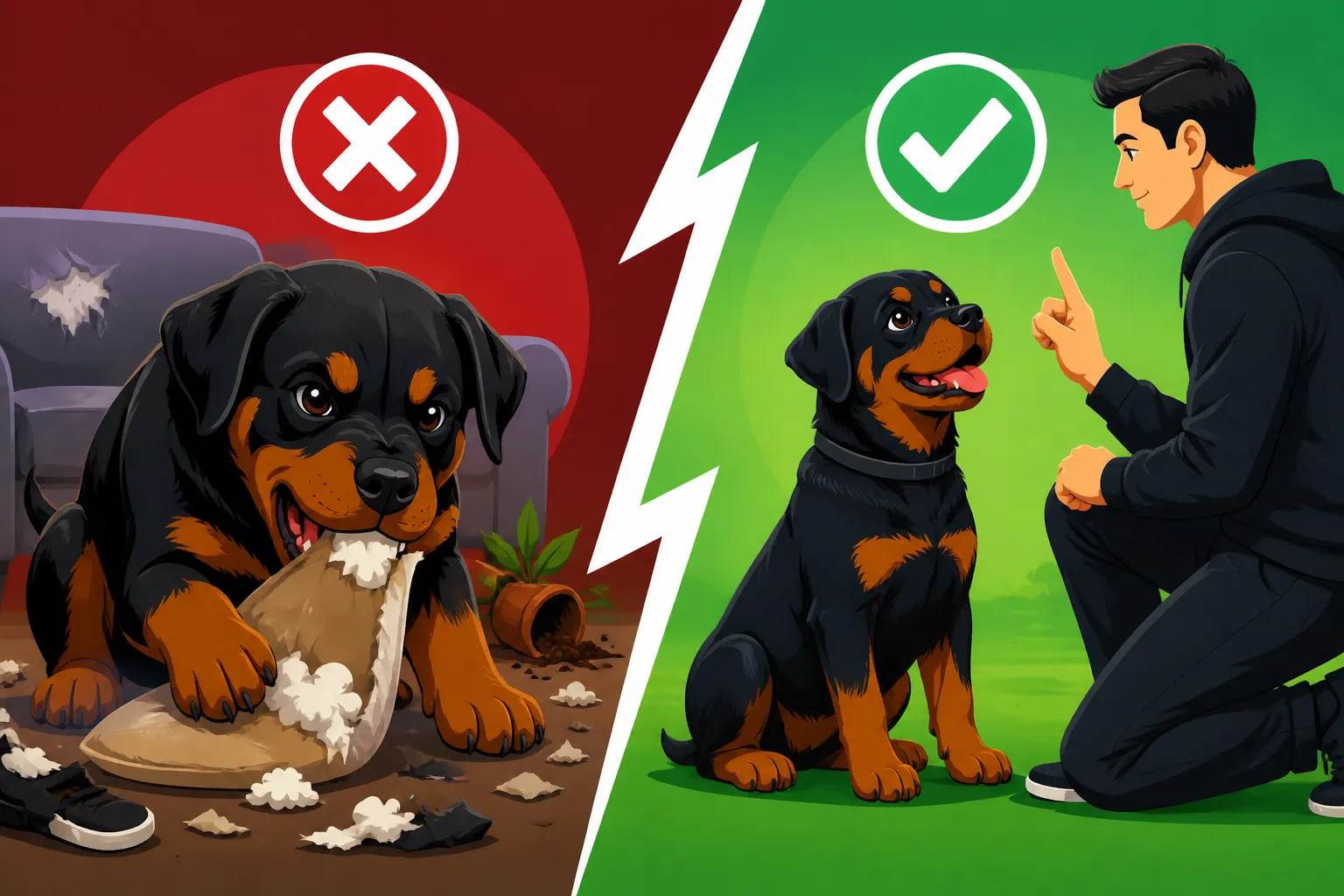
Imagine a one-year-old Rottweiler, weighing 90 or 100 pounds, who has never been taught to walk politely on a leash, greets guests by jumping on them, or views the sofa as their personal chewing mat. This isn't just a nuisance; it's a danger. A dog this size, especially one bred for strength and guarding, needs reliable obedience to be a safe member of society. Without it, walks become a struggle, visitors might be scared away, and even simple tasks like vet visits become incredibly stressful for everyone involved. Rottweiler Leash Pulling at Adult Weight is a very real challenge that arises from delayed training.
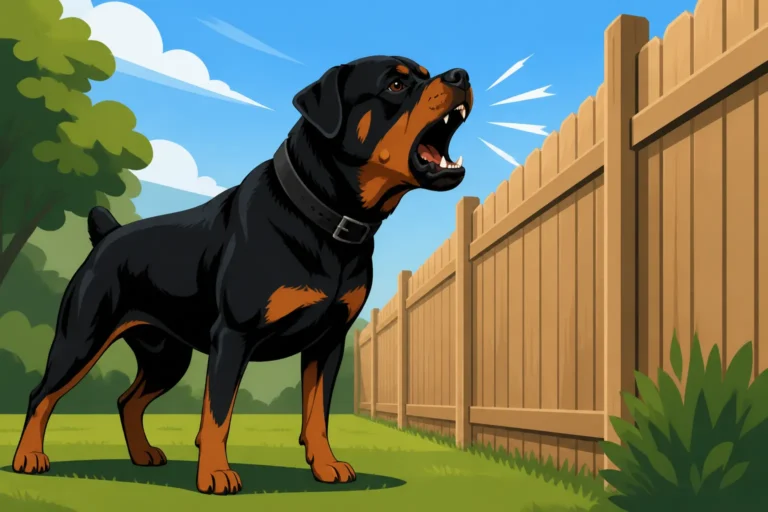
Delayed training means you're trying to teach impulse control and manners to a dog that's not only physically powerful but also often going through the "teenage" phase. Just like human teenagers, adolescent dogs can be prone to testing boundaries and can be more easily distracted. Their energy levels are often through the roof, and without proper outlets and clear communication established early on, that energy can manifest as destructive behavior, excessive barking, or even reactivity towards other dogs or people. You're essentially trying to manage a large, energetic toddler without having taught them basic rules.
Entrenched Undesirable Behaviors
Behaviors are like habits; the longer they're practiced, the harder they are to break. If a Rottweiler puppy is allowed to jump on people, mouth hands, or guard their toys without intervention, these behaviors become deeply ingrained. By six months, a behavior isn't just a phase; it's often a learned, reinforced pattern. Trying to extinguish these behaviors later often requires more intensive training, sometimes involving professional behaviorists, and can take months, if not years, to fully resolve.
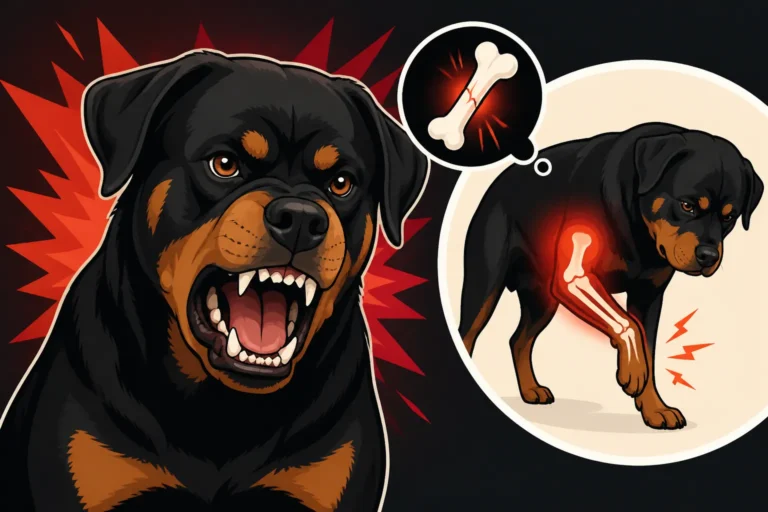
Consider resource guarding, a natural instinct for many breeds, including Rottweilers. If a puppy learns that growling or snapping when someone approaches their food bowl or a coveted chew works to keep people away, that behavior is likely to escalate as they mature. Teaching a puppy early on that hands near their food mean good things (like extra treats) or that trading up for a higher-value item is safe and rewarding is far more effective than trying to undo ingrained possessiveness in an adult dog. This is also true for things like house training; House Training a Rottweiler Puppy by Week shows how consistency from the start prevents accidents from becoming a habit.
Laying the Foundation: Starting Training from Day One
The good news is that puppies are sponges, and Rottweilers are no exception. They are eager to learn, and the sooner you start, the easier and more rewarding the process will be for both of you. Don't wait; start small, start positive, and be consistent.
Essential Early Lessons for Your Rottweiler Puppy
From the moment your Rottweiler puppy steps paw into your home, the learning begins. Even before formal obedience classes, you can start building critical life skills.
- Crate Training: Introduce the crate immediately as a safe, comfortable den. This helps with house training and provides a secure space. Crate Training a Rottweiler That Cries at Night covers this in detail. Make it a positive experience with treats and toys.
- House Training: Establish a consistent potty schedule. Take your puppy out frequently, especially after waking, eating, and playing. Reward successful outdoor potty breaks generously.
- Bite Inhibition: Rottweiler puppies can be mouthy. Teach them that human skin is sensitive. When they mouth too hard, yelp loudly, withdraw attention, and if needed, remove yourself from the interaction for a moment. This teaches them to moderate the pressure of their bite. Teaching a Rottweiler Puppy That Teeth Hurt is crucial.
- Socialization: Safely expose your puppy to a wide range of positive experiences. This includes different people (children, adults, people with hats/glasses), sounds (vacuum, traffic, distant sirens), surfaces (grass, pavement, carpet), and other friendly, vaccinated dogs. Always keep these experiences positive and avoid overwhelming your pup.
- Basic Cues: Start with simple commands like "sit," "stay," "come," and "down" using positive reinforcement (treats, praise, toys). Keep sessions short and fun. Online programs like BAXTER & Bella offer structured curricula that guide you through these early stages with video tutorials, which can be immensely helpful for busy owners. They break down complex concepts into manageable steps, perfect for a growing puppy and a new owner.
Tools and Resources for Early Success
Having the right tools can make a world of difference in your early training journey. These aren't just gadgets; they're aids to communication and safety.
| Training Aid | Purpose | Early Training Benefit |
|---|---|---|
| Crate | Safe den, house training, management | Prevents destructive chewing, aids potty training |
| Long Line/Leash | Recall practice, controlled exploration | Teaches boundaries, safe exploration before off-leash trust |
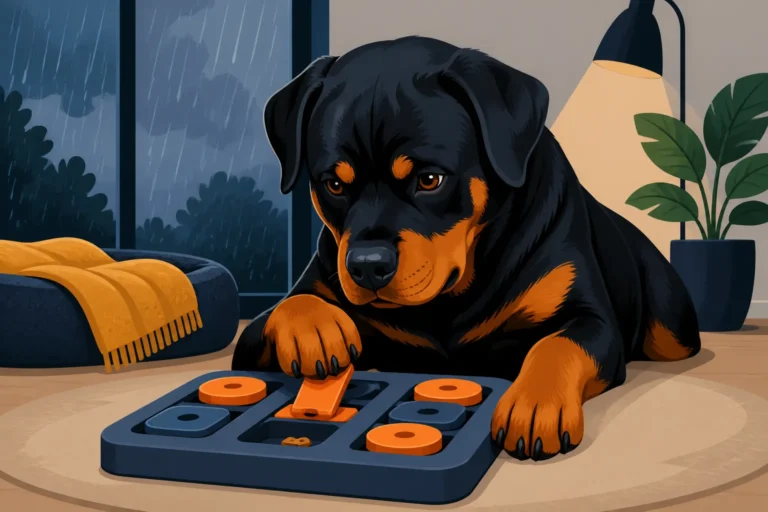
| Puzzle Toys | Mental enrichment, slow feeding | Keeps a smart Rottweiler mind engaged, prevents boredom |
| Durable Chews | Appropriate chewing outlet | Redirects chewing from furniture, satisfies natural urge |
| Head Halter/Front-Clip Harness | Leash control, prevents pulling | Easier to manage a strong puppy, teaches polite walking |
| High-Value Treats | Positive reinforcement, motivation | Makes training fun and rewarding, strengthens desired behaviors |
When choosing items like crates or harnesses, remember that your Rottweiler will grow fast. Invest in a sturdy, appropriately sized crate from a reputable brand on Amazon that will accommodate their adult size, often with a divider for puppy stages. Similarly, look for strong, durable leashes and harnesses. For those mouthy puppy phases, having a collection of sturdy chew toys, also readily available on Amazon, can be a lifesaver for your furniture and your hands. Consider durable rubber toys or strong rope chews designed for heavy chewers. Don't be afraid to utilize puppy classes in your area as well; Puppy Classes That Accept Rottweilers can provide invaluable structured socialization and guidance from experienced trainers.
Common Misconceptions and Proactive Measures
Understanding why early training is so crucial for Rottweilers often involves dispelling common myths and actively taking steps to prevent problems before they start.
Addressing the "They're Just a Puppy" Mindset
This is perhaps the most dangerous misconception. While they are indeed puppies, a Rottweiler puppy is already a powerful animal in miniature. Every interaction you have with them, every boundary you set or fail to set, is a training moment. Allowing a cute puppy to jump up on you will quickly lead to a 100-pound dog launching itself at guests. Letting a puppy "mouth" your hand without correction can develop into painful "play" bites as an adult.
The "just a puppy" mindset often leads to a lack of consistency and clear rules, which is precisely what a Rottweiler, with their strong will and intelligence, needs most. They thrive on structure and knowing what's expected of them. If you treat them like a fragile, untrained pet during these formative months, you're inadvertently teaching them that rules don't apply, or worse, that they can set their own rules. A Rottweiler Puppy That Will Outweigh the Children needs to understand its place in the household hierarchy and have solid manners long before that size difference becomes a safety concern. This isn't about crushing their spirit; it's about providing the clear, fair leadership that allows them to be confident, well-adjusted companions.
Consistency is Key: Beyond the Six-Month Mark
While the first six months are critical, training is absolutely an ongoing, lifelong process for a Rottweiler. What you establish in puppyhood needs to be maintained and built upon. If you start strong but then slack off, those well-learned behaviors can quickly erode. Rottweilers are smart, and they will test boundaries, especially during adolescence, which often hits around Rottweiler Adolescence at Eight Months.
Continue with short, fun training sessions daily. Reinforce known commands in different environments and with increasing distractions. Keep up with socialization, ensuring they remain confident and comfortable in various situations. Regular practice of Rottweiler Impulse Control Games can be incredibly beneficial for a breed that needs to learn to think before acting. Enrolling in advanced obedience classes or exploring canine sports like obedience, rally, or even scent work can provide ongoing mental stimulation and strengthen your bond. Remember, a well-trained Rottweiler isn't just a happier dog; they're a safer, more integrated member of your family and community.
Disclaimer
This article is for general informational purposes only and does not constitute professional advice. Laws, prices and regulations vary by location and change over time. Consult a qualified professional for guidance on your specific situation.