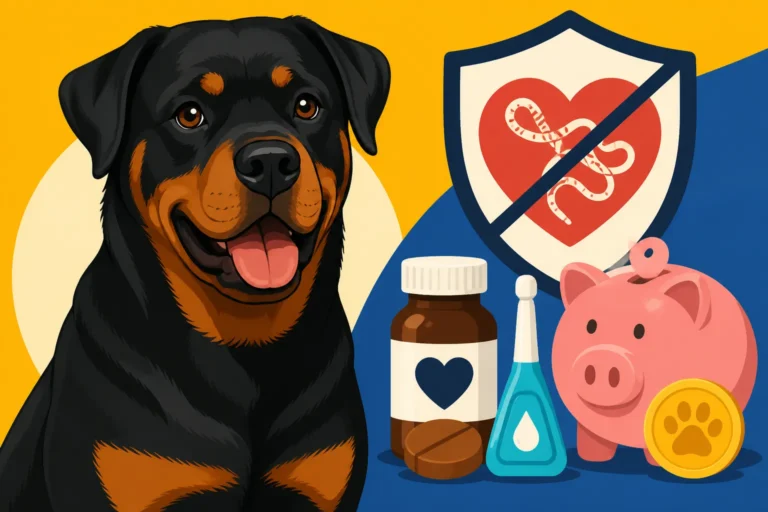
What Five OFA Clearances Cost a Rottweiler Breeder
It's an unfortunate truth that acquiring a Rottweiler puppy from a truly reputable breeder often comes with a price tag that can make many people pause. This initial cost isn't just about the puppy itself; it reflects years of responsible breeding practices, extensive health testing, and a deep commitment to the breed's future. For those wondering where all that money goes, this guide will meticulously break down the significant financial investment a breeder makes in obtaining the five essential Orthopedic Foundation for Animals (OFA) clearances for their Rottweilers, ultimately showing you what you're truly paying for.
Understanding the Foundation of Health Clearances for Rottweilers
When you're searching for a Rottweiler, you’ll hear the term "health clearances" mentioned repeatedly by ethical breeders. This isn't just fancy jargon; it's a cornerstone of responsible dog breeding, especially for a large, powerful breed like the Rottweiler, which is prone to certain inherited health conditions. The goal is simple: to breed healthier dogs, reduce the incidence of preventable diseases, and ensure that the puppies you welcome into your home have the best possible start.
Why Health Clearances Are Non-Negotiable for Responsible Breeding
Imagine bringing home a beautiful, bouncy Rottweiler puppy, only to discover a year or two later that it's suffering from a debilitating condition like severe hip dysplasia, a painful joint disease that can require extensive surgery or lifelong medication. This heartbreaking scenario is exactly what health clearances aim to prevent. Responsible breeders understand the moral imperative to minimize genetic diseases in their lines. They don't just breed for looks or temperament; they breed for health, investing heavily to ensure their breeding stock is free from inheritable conditions. This commitment means preventing suffering not just for the puppies they produce but also for the families who will love them. It's about protecting the breed's future, ensuring that Rottweilers continue to be robust, capable companions rather than dogs plagued by predictable health issues. The upfront investment in health testing is a small price to pay compared to the emotional and financial toll of dealing with a chronically ill dog.
The Orthopedic Foundation for Animals OFA and Its Vital Role
The Orthopedic Foundation for Animals, or OFA, is a not-for-profit organization dedicated to improving the health and well-being of companion animals through orthopedic and genetic disease research. For Rottweilers, OFA is essentially the gold standard for health certification. It provides a centralized database for canine health information, allowing breeders, veterinarians, and puppy buyers to access verifiable health records. When a breeder talks about OFA clearances, they mean that their breeding dogs have undergone specific diagnostic tests (like X-rays or cardiac exams) and that these results have been evaluated by a panel of independent veterinary specialists, who then issue a certification stating the dog's status regarding certain genetic diseases. This objective, third-party evaluation is what makes OFA certifications so trustworthy and indispensable in the responsible breeding community. It ensures transparency and accountability, making it much harder for unscrupulous breeders to cut corners or make false claims about their dogs' health.
The Five Critical OFA Clearances and Their Specific Financial Outlays
For Rottweilers, there are typically five core OFA health clearances that responsible breeders prioritize. Each of these tests targets a specific genetic predisposition common in the breed, and each comes with its own set of procedures and associated costs. These aren't just single, quick visits to the vet; many involve specialized equipment, expertise, and sometimes sedation, all contributing to the overall expense.
Decoding the Costs of OFA Hip Dysplasia Screening
Hip dysplasia is a malformation of the hip joint that can range from mild to severely debilitating, and it's unfortunately prevalent in large breeds like Rottweilers. To screen for this, a Rottweiler must be at least 24 months old. The process involves taking specialized X-rays of the dog's hips. These X-rays are then submitted to the OFA, where a panel of three veterinary radiologists independently evaluates them.
The cost for OFA hip screening can vary significantly. First, there's the veterinary fee for taking the X-rays. This often includes sedation or anesthesia, as the dog needs to be perfectly positioned for clear, diagnostic images. Depending on your vet clinic and geographical location, this might range from $200 to $500 or more. Some advanced clinics might even offer PennHIP evaluations, which offer a different methodology for assessing hip laxity, often at a higher price point (an additional $150-$300). On top of the vet fee, there's the OFA submission fee, which is usually around $40-$50 per evaluation. When you factor in the necessity for clear, well-positioned films, the sedation, and the submission fee, a single hip evaluation can easily run a breeder upwards of $250 to $550. Breeders strive for an excellent or good OFA grade, but even a fair grade still passes for the CHIC program, indicating a healthy hip structure that is unlikely to cause issues. You can learn more about Rottweiler Hip Dysplasia and the OFA Grade in a dedicated guide.
Expenses for OFA Elbow Dysplasia Evaluation
Similar to hip dysplasia, elbow dysplasia is another common and painful orthopedic condition in Rottweilers. This too requires the dog to be at least 24 months old for OFA certification. The procedure involves X-rays of the elbow joints, often taken during the same sedation session as the hip X-rays to minimize stress and cost. These films are then submitted to OFA for evaluation by radiologists who look for signs of abnormal bone growth or joint incongruity.
The veterinary costs for elbow X-rays are typically in a similar range to hips, often between $150 and $400, especially if done concurrently with hip X-rays. The OFA submission fee for elbow evaluations is also around $40-$50. Therefore, a breeder can expect to pay an additional $190 to $450 for elbow clearance. Combining hip and elbow X-rays during one sedated appointment is a common practice that offers some cost efficiency but still represents a substantial investment. These evaluations are crucial to adhering to the Rottweiler Hips and Elbows and the 24-Month Rule, a vital guideline for responsible breeding. For more specific details, you might want to look into Rottweiler Elbow X-Rays Taken at Twenty-Four Months.
Calculating the Cost of OFA Cardiac Clearances
Heart disease, particularly subaortic stenosis (SAS), is a significant concern in the Rottweiler breed. OFA cardiac clearance aims to identify dogs affected by or at risk of passing on these conditions. For breeding purposes, a simple stethoscope auscultation by a general practitioner vet is often insufficient. The gold standard requires a board-certified veterinary cardiologist to perform an echocardiogram. This advanced ultrasound of the heart allows the cardiologist to visualize heart structures and blood flow, accurately diagnosing conditions like SAS.
The cost for a full OFA cardiac evaluation by a certified cardiologist performing an echocardiogram can be quite steep. These specialist appointments typically range from $400 to $800, depending on the region and the complexity of the exam. There's also an OFA submission fee of around $15-$20 to register the results. So, for each breeding dog, a breeder is looking at a cost of $415 to $820 for a thorough cardiac clearance. This isn't a test to skip, as Rottweiler Heart Disease and Subaortic Stenosis can have severe consequences for affected puppies.
The Price Tag for OFA Eye Certification Exams
Rottweilers can be susceptible to various eye conditions, including entropion and ectropion, progressive retinal atrophy (PRA), and cataracts. OFA eye certification involves an examination by a board-certified veterinary ophthalmologist. Unlike orthopedic clearances which are often a one-time thing at 24 months, eye certifications need to be renewed regularly. The OFA recommends annual examinations for breeding dogs, though the certification is valid for one year. Some registries, including OFA for its CHIC program, require recertification every three years as per the Rottweiler Eye Certification and the Three Year Rule.
The cost for an annual eye exam by a specialist is typically between $100 and $200. The OFA submission fee is usually around $10-$15. Therefore, each annual eye exam adds another $110 to $215 to a breeder's expenses per dog. Over the lifespan of a breeding dog, these recurring costs can add up considerably, highlighting the continuous commitment required.
Understanding JLPP Genetic Testing Fees
Juvenile Laryngeal Paralysis & Polyneuropathy (JLPP) is a devastating genetic neurological disorder specific to Rottweilers. Unlike the other clearances which involve physical examinations and imaging, JLPP testing is a simple DNA test. It typically involves a cheek swab or blood sample that is sent to a specialized genetics lab. The test identifies if a dog is "Clear" (no copy of the gene mutation), a "Carrier" (one copy, not affected but can pass it on), or "Affected" (two copies, will develop the disease). Responsible breeders will ensure at least one parent of a litter is "Clear" to guarantee no affected puppies are produced.
The cost for a JLPP DNA test is generally the most affordable of the five core clearances, usually ranging from $50 to $100 per dog, depending on the lab and whether it's part of a larger genetic panel. The OFA registry fee for DNA test results is typically included or very minimal, around $15-$20. This crucial test is usually done once in a dog's lifetime. Understanding JLPP and the Rottweiler DNA Test is paramount, as is the knowledge that Why One Rottweiler Parent Must Test Clear is the golden rule for preventing this awful condition.
Beyond the Basics: Supplementary Health Testing Investments
While the five core OFA clearances are considered essential for Rottweiler breeding, truly dedicated and forward-thinking breeders often go above and beyond, investing in additional health tests and diagnostic procedures. These extra steps provide an even more comprehensive picture of their breeding stock's health, further reducing risks and contributing to the overall health of the breed.
Exploring Thyroid Panel and Other Genetic Disease Costs
Hypothyroidism, an underactive thyroid gland, can affect Rottweilers, leading to issues like weight gain, dull coats, and lethargy. While not as immediately life-threatening as some other conditions, it can significantly impact a dog's quality of life and breeding soundness. Responsible breeders will often include a full thyroid panel in their health screening. This involves a blood test to measure various thyroid hormone levels and typically costs between $100 and $250, depending on the specific panel ordered and the veterinary lab used. The OFA does offer a thyroid registry, which has a small submission fee of around $15-$20. Recognizing Thyroid Disease Behind a Rottweiler's Dull Coat can be key to early detection and management.
Beyond JLPP, as genetic testing becomes more advanced and affordable, breeders may also choose to run broader genetic panels that screen for other potential inherited conditions that might have a lower incidence in Rottweilers but are still worth monitoring. These comprehensive panels can range from $100 to $300, offering invaluable insights into a dog's genetic makeup and carrier status for a multitude of diseases. Services like those offered by various veterinary genetic labs provide these panels, giving breeders a holistic view of their dog's genetic health.
Why Additional Diagnostics Like X-Rays or Ultrasounds May Be Needed
Sometimes, a breeder's due diligence extends beyond standard screenings. If a veterinarian or specialist notes an unusual finding during a routine check-up, or if a dog exhibits any concerning symptoms, further diagnostic work may be necessary. This could involve additional X-rays to investigate specific areas of concern (like potential Osteosarcoma, the Cancer That Takes Most Rottweilers in an older dog or concerns about Rottweiler Growth Plates and Why They Close So Late in a young dog), ultrasound examinations of internal organs, or more in-depth blood work.
The costs for these additional diagnostics can vary wildly. A set of additional X-rays might be $150-$400, while an abdominal ultrasound can range from $300-$600. Specialist consultations, especially with internal medicine or orthopedic specialists, can also add hundreds of dollars to the bill. These unexpected but necessary expenses are part of a breeder's commitment to fully understanding their dog's health before making any breeding decisions, ensuring that only the healthiest individuals contribute to the next generation. These situations underscore the continuous financial readiness required by truly dedicated breeders.
The Cumulative Financial Picture for Responsible Breeders
When you start adding up all these individual costs for health clearances, it becomes clear that responsible breeding is far from a cheap endeavor. This isn't a one-time expense; it's an investment made in each potential breeding animal, often before they even produce their first litter.
Aggregating the Costs for a Single Breeding Rottweiler
Let's put some rough numbers together to illustrate the financial commitment for just one Rottweiler undergoing the five core OFA clearances, plus an optional thyroid panel.
| OFA Clearance Type | Estimated Vet/Specialist Fee | Estimated OFA Submission Fee | Estimated Total per Dog |
|---|---|---|---|
| Hips | $200 – $500 | $40 – $50 | $240 – $550 |
| Elbows | $150 – $400 | $40 – $50 | $190 – $450 |
| Cardiac (Echocardiogram) | $400 – $800 | $15 – $20 | $415 – $820 |
| Eyes (Annual Exam) | $100 – $200 | $10 – $15 | $110 – $215 |
| JLPP (DNA Test) | $50 – $100 | $15 – $20 | $65 – $120 |
| Subtotal for Core 5 | $900 – $2000 | $120 – $155 | $1020 – $2155 |
| Thyroid Panel (Optional) | $100 – $250 | $15 – $20 | $115 – $270 |
| Grand Total (min-max) | $1135 – $2425+ |
As you can see, for just one dog to receive these essential health clearances, a breeder is looking at an investment easily exceeding $1,000, and often approaching or surpassing $2,500. And remember, these are just the clearance costs. This doesn't include the cost of purchasing the breeding dog itself, routine veterinary care, high-quality food (brands like Chewy and Ollie offer excellent options for active dogs), training, showing, or any unexpected medical issues that might arise. A comprehensive approach ensures The Five Clearances a Rottweiler Breeder Must Have are in place, but the financial scale is truly significant.
How These Investments Influence What a Health-Tested Rottweiler Puppy Costs
It's natural for prospective puppy owners to experience a little sticker shock when they see the price of a well-bred Rottweiler puppy from a reputable kennel. However, once you understand the extensive financial outlay for health clearances, as well as the immense time and effort involved, the pricing starts to make much more sense. Breeders are not simply trying to make a quick profit; they are trying to sustain a responsible breeding program.
The cost of each puppy from a health-tested litter needs to help recoup a fraction of these significant investments. When a breeder has spent thousands of dollars on health clearances for both the sire and the dam, the price of their puppies reflects this commitment to quality and health. This is why you'll find that Why Health-Tested Rottweiler Parents Raise the Price is a fundamental economic reality. A breeder who offers puppies at a suspiciously low price likely has not invested in these critical health tests, which means you, the future owner, will bear the financial and emotional burden if genetic health problems emerge down the line. The initial higher cost is an investment in your puppy's future health and your peace of mind.
The Long-Term Value of Investing in Health-Tested Lines
Choosing a Rottweiler from health-tested lines isn't just about paying more upfront; it's about making a profoundly impactful decision that ripples through your dog's life and beyond. This investment protects your wallet, your heart, and the very future of the Rottweiler breed.
Mitigating Future Veterinary Expenses for Owners
The most tangible benefit for a puppy owner who chooses a health-tested Rottweiler is the significantly reduced likelihood of facing exorbitant veterinary bills later on. Imagine the cost of surgery for severe hip or elbow dysplasia, which can run into thousands of dollars per joint. Think about the lifelong management of heart disease or the devastating impact of JLPP. By purchasing a puppy from parents with clear OFA results, you are drastically minimizing your risk of encountering these costly and emotionally draining health crises.
While no breeder can guarantee a dog will never have any health issues (genetics are complex, and environmental factors play a role), the odds are heavily stacked in your favor. This proactive approach saves you money on potential surgeries, medications, and specialist visits. It also means less heartache and stress as you won't be navigating difficult decisions about expensive treatments for a young dog. In fact, many pet insurance providers, like Healthy Paws, look favorably upon well-bred dogs because they tend to have fewer inherited health problems, potentially impacting policy terms or overall claim experience. Investing in a healthy puppy is often the most cost-effective decision in the long run.
Contributing to the Future of the Breed
Beyond your individual dog and your own finances, choosing a Rottweiler from health-tested parents has a much broader, positive impact on the entire breed. Every time someone supports a responsible breeder who prioritizes health clearances, they are indirectly incentivizing these ethical practices. This collective action helps to gradually reduce the prevalence of genetic diseases within the Rottweiler gene pool.
By demanding proof of OFA clearances, you are sending a clear message to the breeding community: health matters. This supports breeders who dedicate themselves to maintaining breed standards, health, and temperament, rather than those who breed irresponsibly for quick profit. It helps preserve the integrity and robust nature of the Rottweiler for generations to come. When you feed your healthy Rottweiler high-quality nutrition from reputable suppliers like Chewy, or explore premium, fresh food options from services like Ollie, you're building on the strong foundation laid by your breeder, contributing to a long, vibrant life for your cherished companion. It's a powerful statement that good health starts long before a puppy is even born, with the careful, thoughtful decisions of dedicated breeders.
Disclaimer
The information provided in this article is for educational purposes only and should not be considered a substitute for professional veterinary advice. Always consult with a qualified veterinarian for any health concerns or before making any decisions related to your pet's health or treatment.