Why Some Rottweilers Now Keep Natural Tails
The typical image of a Rottweiler, for many years, has been a majestic dog with a characteristic short, docked tail. For those of us who grew up with or admired the breed, that look felt almost essential, defining their powerful silhouette. But if you've been paying attention lately, you'll have noticed a growing number of Rottweilers sporting their full, glorious natural tails, and it's prompting a lot of questions. This comprehensive guide will explore the deep-rooted historical reasons behind tail docking, delve into the ethical and practical considerations that are rapidly changing this tradition, and help you understand what this shift means for Rottweiler owners and enthusiasts in today's world. We'll look at everything from shifting breed standards to the practical implications of a natural tail, perhaps even finding discussions on these topics on pet-focused platforms like Chewy.
The Long History of Rottweiler Tail Docking
For generations, the image of a Rottweiler invariably included that distinctive short tail. This wasn't just a random choice; it was deeply ingrained in the breed's history and purpose. Understanding why it became so prevalent helps us appreciate the significance of the shift we're seeing today.
Tails as a Relic of Working Heritage
The historical reason for docking a Rottweiler's tail is often linked directly to their original working roles, particularly as drover dogs herding cattle and guarding livestock. Imagine a big, strong Rottweiler, a "Metzgerhund" or butcher's dog, working alongside farmers and butchers in medieval Germany, moving powerful animals through busy markets. A long, undocked tail could easily become a liability in such an environment. It could be stepped on by a cow, caught in a gate, or injured by a sudden kick, leading to painful injuries that, in a time before modern veterinary medicine, could become infected and debilitating. Docking was seen as a pragmatic way to prevent these occupational hazards, ensuring the dog remained healthy and able to perform its demanding duties.
This practice wasn't unique to Rottweilers; it was a common preventative measure across many working breeds. The goal was purely functional: to protect the dog from harm during its daily tasks. Owners wanted to keep their dogs healthy and capable of working without the risk of a severe tail injury. The procedure became so normalized and associated with a working dog's utility that it continued even as many Rottweilers transitioned from their intense droving roles to become more general-purpose farm dogs and later, beloved family companions. The tradition, once rooted in necessity, became an inherited part of the breed's identity.
Over time, this idea became deeply ingrained in the public consciousness and among breeders. People associated the docked tail with the strength, capability, and historical lineage of the Rottweiler. It was a visual cue that signaled the dog's heritage as a formidable working animal. You can trace this lineage through history, seeing how the Rottweiler developed from the Roman drover dogs into the powerful guardians we know today, as detailed in articles like The Rottweiler From Roman Cattle Drives to the AKC.
How Breed Standards Cemented the Docked Look
Once kennel clubs began to formalize breed standards in the late 19th and early 20th centuries, the docked tail found its way into the written description of what a Rottweiler "should" look like. For a long time, if a Rottweiler owner wanted to exhibit their dog in conformation shows, a short, docked tail wasn't just preferred; it was essentially a non-negotiable requirement to meet the breed's aesthetic guidelines. Judges were specifically looking for that particular silhouette, which had become synonymous with the breed's "correct" appearance.
This standardization created a powerful incentive for breeders. To produce dogs that could excel in the show ring and be considered prime examples of the breed, they consistently docked tails. This perpetuated a cycle where the visual identity of a Rottweiler was a docked Rottweiler, and any dog with a natural tail was often considered "incorrect" or "faulted" by the breed standard. This dynamic meant that even as the original practical reasons for docking diminished for most pet Rottweilers, the practice continued unabated, driven by the desire to conform to established expectations.
The official breed standards often included detailed descriptions of the desired length and set of the docked tail, further solidifying its status as an essential characteristic. This often left little to no room for the natural tail, effectively making it an undesirable trait in the eyes of many. The long-standing debate and evolution of this particular aspect of the breed can be explored further in Rottweiler Tail Docking and Where It Stands Now.
The Evolving Viewpoint: Embracing the Natural Tail
In recent decades, a significant shift has occurred in how we perceive tail docking. What was once accepted as a traditional or even necessary practice is now increasingly questioned and, in many places, outright condemned. This evolving viewpoint is driven by a combination of ethical concerns, scientific understanding, and changing legal landscapes.
Ethical and Animal Welfare Arguments Against Docking
In recent decades, there's been a significant shift in public perception and veterinary ethics regarding cosmetic tail docking. Many now view it as an unnecessary surgical procedure that inflicts pain and discomfort on puppies, often without anesthesia, and offers no proven health or behavioral benefit for dogs not actively engaged in their ancestral working roles. It's increasingly classified as an amputation performed purely for aesthetic reasons, raising serious ethical questions about animal welfare.
Animal welfare organizations, advocacy groups, and a growing number of dog owners argue vehemently that a dog's tail is a vital part of its anatomy, crucial for balance, movement, and, most importantly, communication. Removing it can severely impair a dog's ability to express itself clearly to other dogs and to humans. Imagine a dog trying to signal playfulness, fear, or deference without the full range of motion a natural tail provides; the signals become ambiguous, potentially leading to misunderstandings, strained social interactions, or even behavioral issues, a topic relevant to preventing Rottweiler Behavior Problems That Start Small.
The core argument against docking is straightforward: why subject a newborn puppy to a painful surgical procedure when there's no medical necessity? The potential benefits to the dog are non-existent, while the risks, though small, include infection, chronic pain, and even phantom limb sensation. This ethical standpoint is becoming more widespread, influencing breeders and owners alike to reconsider what's truly best for the dog.
Veterinary Professions Take a Stand
The veterinary community worldwide has largely moved to condemn cosmetic tail docking. Major veterinary associations, including the American Veterinary Medical Association (AVMA), the Canadian Veterinary Medical Association (CVMA), and the British Veterinary Association (BVA), have issued strong statements against the practice. They advocate for preserving the natural tail, as a healthier and more humane choice for dogs. Their stance is rooted in the principle of "do no harm" and the understanding that the tail plays a significant role in a dog's overall well-being.
Many veterinarians now refuse to perform tail docking on puppies unless there is a clear medical necessity, such as a severe injury, tumor, or congenital defect. This professional opposition means that breeders who still wish to dock tails often face challenges in finding licensed professionals to perform the procedure ethically, or they might resort to less reputable sources, which carries even greater risks for the puppies involved. The unified stance of the veterinary community has been a major driving force in changing public opinion and reducing the prevalence of docking. When your trusted vet tells you it's not good for your dog, perhaps recommending further reading on responsible pet care that you might find on Chewy's informational articles, it carries a lot of weight and helps educate owners on best practices.
This shift within the veterinary profession has brought the issue of cosmetic docking into the mainstream, forcing conversations about tradition versus welfare. It highlights a broader trend towards prioritizing the health and natural state of animals over outdated aesthetic preferences. The expertise and ethical guidelines of vets are now firmly on the side of the natural tail.
Legal Prohibitions and Changing Regulations
Beyond ethical debates and veterinary consensus, many countries and regions have outright banned cosmetic tail docking. This includes most of Europe, Australia, New Zealand, and several provinces in Canada. These bans are a direct reflection of a societal shift towards prioritizing animal welfare and recognizing cosmetic procedures as unacceptable. In these places, docking a dog's tail for non-medical reasons is a criminal offense, carrying fines or even imprisonment.
In jurisdictions where docking is illegal, breeders are legally obligated to leave tails natural. This has a direct and significant impact on the appearance of Rottweilers bred in those regions. As bloodlines are shared globally and dogs are imported and exported, the prevalence of natural-tailed Rottweilers has increased across the world, normalizing the look even in countries where docking remains legal. For example, the breeding rules in Germany, often governed by organizations like the ADRK, align with European animal welfare laws, leading to a strong emphasis on natural tails in German Rottweiler lines, a contrast often seen when comparing How German and American Rottweiler Type Diverged.
While tail docking remains legal in the United States, for instance, the increasing number of natural-tailed Rottweilers entering the country from abroad, or those bred by ethical domestic breeders choosing not to dock, contributes to the growing visibility and acceptance of the natural tail. This also puts pressure on American kennel clubs and breeders to reconsider their long-held traditions and adapt to global welfare standards, leading to ongoing discussions about updating breed standards to reflect these changes.
Understanding the Natural Rottweiler Tail
For those accustomed to the traditional docked appearance, a natural Rottweiler tail can look quite different, and its presence profoundly impacts how the dog moves, interacts, and communicates. It's a fundamental part of their anatomy, serving multiple crucial functions.
What an Undocked Tail Looks Like and How It's Carried
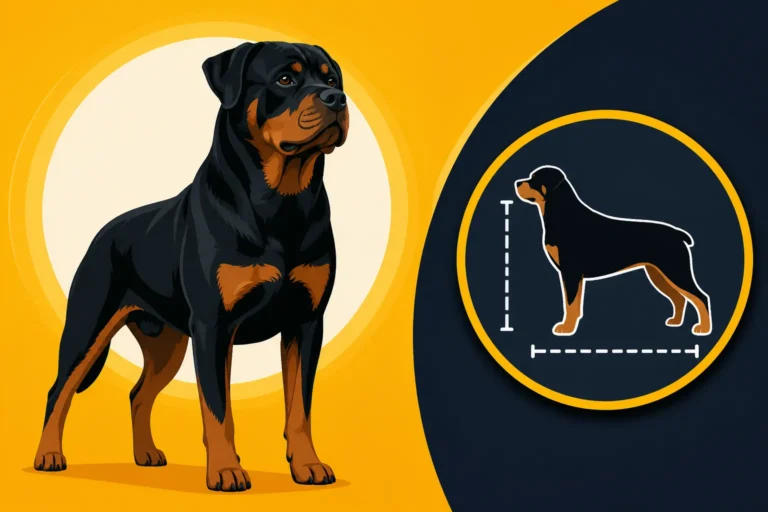
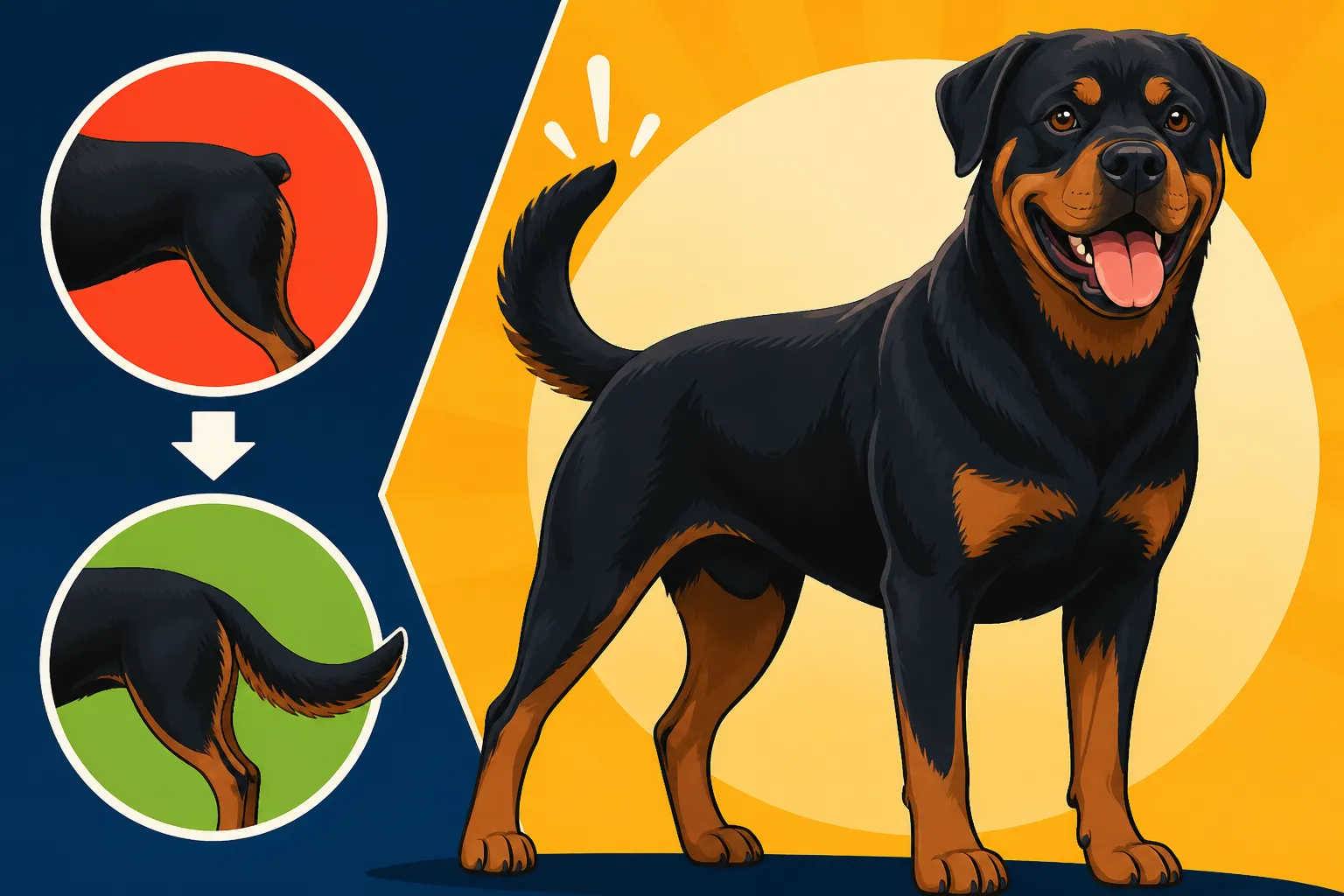
A natural Rottweiler tail is a magnificent sight to behold. Typically, it is thick at the base, strong, and tapers gradually to a fine point. It's a seamless extension of their powerful spine, often carried horizontally or slightly curved upwards when the dog is alert and engaged. Importantly, a correctly set natural tail should never curl tightly over the back; it maintains a more level or slightly elevated posture, reflecting the dog's confident carriage. The length generally reaches roughly to the hocks, which are the equivalent of the dog's "ankles."
Imagine a proud, confident Rottweiler with a tail wagging a full, sweeping arc, rather than just a stump wiggling. It’s an expressive and dynamic appendage! The tail is covered in the same short, black hair as the rest of their body, blending seamlessly into their muscular frame. The specific carriage can vary slightly from dog to dog, reflecting individual temperament and excitement levels, but the overall impression is one of strength, balance, and clear communication.
When relaxed, the tail might hang down in a gentle curve, often resting between their hocks. But watch what happens when a Rottweiler is excited or happy: that tail can go into full-on helicopter mode, a clear and unmistakable indicator of their joyful mood. For instance, a happy Rottweiler greeted at the door after you've been gone for hours will wag its entire body, and that long tail is central to that joyful expression, perhaps even knocking over a few of those heavy-duty Chewy dog bowls in its enthusiasm! This full range of motion is part of their natural Rottweiler Movement as Judges Assess It.
The Tail's Crucial Role in Communication and Balance
A dog's tail is far more than just a fleshy appendage; it's a critical tool for communication, both with other dogs and with humans. It acts like a visual semaphore, signaling a dog's emotions, intentions, and even its confidence level. The height at which the tail is carried, the speed of its wag, and the direction of its movement all convey different, nuanced messages. A low, tucked tail, for example, is a classic sign of fear, submission, or anxiety. Conversely, a high, stiffly carried tail might indicate alertness, dominance, or even aggression. A relaxed, mid-height wag generally means friendliness and contentment. Without the full range of motion that a natural tail provides, a Rottweiler's communication signals can be significantly diminished, making it harder for other dogs to interpret their intentions, potentially leading to social misunderstandings.
Beyond emotional expression, the tail plays a vital role in a large, muscular dog's physical capabilities. It serves as an essential counterbalance, particularly for a powerful and athletic breed like the Rottweiler. When they turn quickly, run at speed, or navigate uneven or challenging terrain, the tail acts like a rudder or a counterweight, helping them maintain stability and agility. This allows for those powerful, controlled movements that are characteristic of the breed. It's an integral part of their overall structure and biomechanics.
Consider a Rottweiler making a sudden pivot or bracing against an obstacle; the tail's counterweight helps prevent them from losing balance. This natural anatomical feature contributes significantly to their physical prowess and coordination. A Rottweiler’s confident stance and self-assured demeanor, as described in Rottweiler Temperament and That Self-Assured Aloofness, are visually underscored and physically supported by the presence of a natural tail, allowing their entire body language to be fully expressed.
Navigating the Natural Tail in the Rottweiler World
The increasing acceptance of natural tails has brought new considerations for prospective owners and existing enthusiasts. From finding a puppy to navigating conformation shows, understanding these changes is key.
Finding a Reputable Breeder with Natural-Tailed Puppies
If you're looking for a Rottweiler puppy with a natural tail, you'll find that the landscape of breeders is evolving. Many reputable breeders, especially those who adhere to European standards where docking is often banned, or those who prioritize health and ethical considerations, are now choosing to leave tails intact. These breeders are often dedicated to producing strong, healthy, and temperamentally sound dogs, and leaving the tail natural is simply a part of their responsible breeding philosophy. Don't be shy about asking breeders about their stance on tail docking. A responsible and ethical breeder will be transparent about their practices and able to explain their reasoning, whether they choose to dock or not. They should always prioritize the health, welfare, and long-term well-being of their puppies above all else. They will also readily provide all necessary health clearances for the parents, such as hip, elbow, heart, and eye certifications, which directly impacts What a Health-Tested Rottweiler Puppy Costs.
Look for breeders who openly embrace the natural tail and view it as part of the breed's complete anatomy. Some breeders even specifically advertise their litters as "natural-tailed" to attract buyers who share their ethical viewpoint and appreciate the complete, undocked look. This transparency is often a good sign of a breeder who is well-informed and committed to modern animal welfare standards. You might also find these breeders discussing their philosophy on platforms like Chewy's blog or forums dedicated to responsible dog ownership, or even stocking specific grooming tools for a full tail from their online store. These are the kinds of individuals who are driving positive change within the breed.
When you engage with a breeder, inquire about their breeding program's overall philosophy. A breeder who focuses on comprehensive health testing, proper socialization, and matching puppies to appropriate homes will also likely be thoughtful about their docking practices. The shift to natural tails is often part of a broader commitment to breeding healthier and happier Rottweilers, reflecting a move towards holistic well-being.
Show Ring and Registration Acceptance of Natural Tails
This is where the nuances of the natural tail can become a bit complex, depending on your geographic location and the specific kennel club you adhere to. In countries where tail docking is legally banned, natural tails are, of course, the established norm and are fully accepted in the show ring. For instance, the Fédération Cynologique Internationale (FCI), which governs many European kennel clubs, has breed standards that accommodate natural tails, meaning Rottweilers bred under FCI rules will display their full, elegant tails in competition.
In the United States, the American Kennel Club (AKC) standard has historically called for a docked tail, and while they do not mandate docking, a natural tail has traditionally been considered a fault in the conformation ring. This has created a challenge for owners and breeders in the US who wish to show their natural-tailed Rottweilers. However, there's a slow but growing movement and discussion within the AKC and other national clubs to acknowledge and accept natural tails without penalty. This reflects a broader trend to align with international welfare standards and to recognize the importance of the natural tail.
If you plan to show your Rottweiler in conformation events, it is absolutely crucial to check the specific breed standard and the most current regulations of the kennel club in your region or country. While conformation might present challenges in some areas, many owners are finding immense joy and success in registering their natural-tailed Rottweilers and participating in other exciting dog sports and activities. These include obedience, agility, rally, tracking, and therapy work, where the dog's ability, temperament, and partnership with its owner are paramount, rather than its tail appearance. Ensuring your Rottweiler meets all health clearances, such as those included in The Five Evaluations a Rottweiler Needs for CHIC, remains more important than a cosmetic tail, regardless of your competitive aspirations. Whether your Rottweiler has a docked or natural tail, ensuring their overall health and well-being, with quality food and suitable enrichment toys, readily available from retailers like Chewy, remains the top priority.
Docked Tail vs. Natural Tail: A Comparison
| Feature | Docked Tail | Natural Tail |
|---|---|---|
| Appearance | Very short, often just a few vertebrae long, stump-like | Long, thick at base, tapering, reaching roughly to hocks |
| Historical Basis | Prevention of injury in working dogs (herding/guarding) | Natural anatomy; no specific historical purpose for length |
| Current View | Increasingly seen as cosmetic and unethical by vets | Growing acceptance as natural, ethical, and functional |
| Communication | Limited ability to signal emotions and intentions | Full range of motion for clear communication |
| Balance | Potential slight impact on balance/agility, especially for quick turns | Integral for balance, especially during fast turns and movement |
| Legality | Banned in many countries (e.g., most of Europe, Australia, parts of Canada) | Legal everywhere |
| Show Acceptance | Traditionally required/preferred in AKC; accepted where legal (e.g., US) | Accepted where docking is banned (e.g., FCI); gaining acceptance in AKC |
Disclaimer
This article is for general informational purposes only and does not constitute professional advice. Laws, prices and regulations vary by location and change over time. Consult a qualified professional for guidance on your specific situation.