Rottweiler Tail Docking and Where It Stands Now
For generations, the image of a Rottweiler has included a short, stubby tail, a look achieved through a practice known as tail docking. However, what was once a routine procedure has become a subject of intense debate, leaving many prospective and current Rottweiler owners wondering about the tradition, the ethics, and the practicalities involved. This guide will delve into the history, the current controversies, and the future of Rottweiler tail docking, helping you understand this complex issue.
The Historical Roots of Rottweiler Tail Docking
To understand why Rottweilers traditionally have docked tails, we need to take a step back in time, to the breed's origins as working dogs in Germany. These weren't just companion animals; they were indispensable partners in a bustling, often rough-and-tumble, environment.
Function and Tradition in the Drover Dog
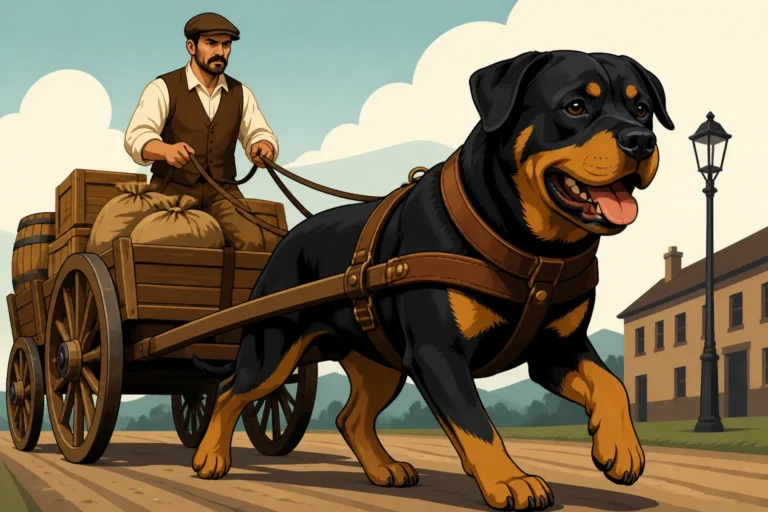
Originally, Rottweilers were known as "Rottweiler Metzgerhund," or "Butcher's Dogs of Rottweil." Their primary job was to herd cattle over long distances to market, protect livestock from predators and bandits, and guard the butcher's money satchel, often tied around their neck. This was a physically demanding and sometimes dangerous occupation. Imagine a powerful dog navigating herds of large, sometimes unruly cattle. A long, undocked tail could easily become a liability in such a scenario. It could be stepped on, caught in gates, or severely injured by a kick from a cow. Docking was believed to prevent these common working injuries, ensuring the dog remained sound and able to perform its duties.
Beyond the immediate physical protection, there was a strong tradition that developed. When a practice becomes deeply ingrained in a working culture for practical reasons, it often persists even when those reasons might evolve or diminish. It becomes part of the breed's identity, a visual marker of its heritage and purpose. This connection to the working history of the breed is a powerful force for many who advocate for the continuation of docking, viewing it as a link to the Rottweiler's robust, utilitarian past. The Roman Drover Dogs Behind the Rottweiler is a fascinating read if you're interested in the very earliest ancestors of this breed.
Early Rationales Beyond Working Roles
While protection from injury was the primary driver, other historical beliefs contributed to the practice of tail docking across many working breeds, not just Rottweilers. Some historical accounts suggest that docking was thought to prevent rabies, though this was entirely unfounded medically. Other theories linked docking to enhancing a dog's speed or preventing weakness in the back. These beliefs, though scientifically baseless, added layers to the tradition and were passed down through generations of dog breeders and owners.
Moreover, there was an aesthetic component that slowly began to take hold. As breeds became more formalized and distinct, certain appearances became synonymous with them. For the Rottweiler, the short, powerful body complemented by a docked tail became the iconic silhouette. It conveyed an image of strength, compactness, and readiness for work, fitting the breed's stoic and self-assured temperament. Even as the majority of Rottweilers transitioned from cattle drovers to family companions, the visual tradition of the docked tail remained a powerful aspect of their identity for many enthusiasts and breeders, reinforcing the perceived "correct" look of the breed.
The Modern Aesthetic and Breed Standards
The question of whether to dock a Rottweiler's tail today is often intertwined with how the breed is viewed in various parts of the world, particularly concerning breed standards set by kennel clubs. These standards dictate the ideal appearance and temperament of a breed, heavily influencing breeding practices.
The AKC and the Docked Tail
In the United States, the American Kennel Club (AKC) breed standard for the Rottweiler has historically described a docked tail as the norm. The standard specifies: "Tail: Customarily docked short, close to the body, leaving one or two vertebrae. The tail should appear to be a continuation of the topline, not set too high or too low. A puppy born without a tail or with a naturally short tail is to be judged as though it were docked." This phrasing acknowledges the customary practice and means that, in AKC conformation shows, a Rottweiler with a natural, long tail would be considered a fault. It's not an automatic disqualification, but it goes against the preferred aesthetic and can impact a dog's placement in the ring.
This stance reflects a long-standing tradition within American dog fancy, where historical working practices often translate into aesthetic requirements for show dogs. For breeders aiming to produce champions in the AKC system, docking tails has been a non-negotiable step to adhere to the standard. This isn't just about winning ribbons; it's about preserving what many American breeders consider the traditional and correct appearance of the Rottweiler, the image that has been upheld for decades. They see it as maintaining the integrity of the breed as it has been established and recognized.
European Standards and the Natural Tail
Across the Atlantic, particularly in Europe, the landscape of tail docking has shifted dramatically. The Fédération Cynologique Internationale (FCI), a global kennel organization that includes Germany (the breed's country of origin) and most European countries, explicitly requires Rottweilers to have natural, undocked tails. Their standard states: "Tail: In natural condition, level extension of the upper line; at rest may be hanging. It may be carried in working position higher. In some countries, it is still docked." This "in natural condition" clause means that dogs with docked tails are disqualified from FCI-sanctioned shows.
This difference isn't merely aesthetic; it's rooted in evolving ethical views on animal welfare and legislation. Many European countries have banned non-therapeutic tail docking entirely, viewing it as an unnecessary mutilation. As a result, European breeders and enthusiasts now celebrate the natural tail, appreciating its role in canine communication and overall expression. If you're looking at German Rottweiler Lines and the ADRK, you'll find that their breeding clubs strictly enforce the natural tail policy, seeing it as part of a healthier, more complete dog. This divergence highlights a significant cultural and ethical split in how the Rottweiler breed is presented and valued globally.
The Ethical and Welfare Debate Around Docking
The conversation around tail docking is far from simple, stirring strong opinions on both sides. It's not just about tradition versus modern views; it's deeply rooted in our understanding of animal welfare.
Arguments for Continuing the Practice
Proponents of tail docking often cite the historical rationale: preventing injury. While modern Rottweilers may not be herding cattle daily, they are still large, active dogs. Some owners and breeders argue that a long tail, especially on a powerful, boisterous dog, is vulnerable to "happy tail" syndrome – severe, repeated injuries caused by a vigorously wagging tail hitting hard surfaces. These injuries can be incredibly difficult to heal, often leading to repeated veterinary visits, bandaging, and even eventual amputation, which is a far more invasive procedure than puppy docking. They see docking as a preventive measure against future suffering and costly interventions.
Furthermore, many traditionalists argue that docking is an integral part of the Rottweiler's breed type and characteristic appearance. They believe the docked tail contributes to the powerful, compact silhouette that defines the breed. For them, a natural tail fundamentally alters the Rottweiler's "look" and moves away from the historical image that has been cultivated for generations. This aesthetic preference is often tied to the idea of preserving the breed's heritage, as seen in the AKC's emphasis on the traditional appearance. They feel that changing this aspect is akin to changing the breed itself, diminishing its distinct identity.
Arguments Against Routine Tail Docking
On the other side, the opposition to routine tail docking is strong and growing, primarily focusing on animal welfare and the understanding that tails serve vital functions for dogs. The procedure itself involves cutting through bone, muscle, and nerve tissue, typically performed on puppies when they are only a few days old, often without anesthesia. While proponents argue puppies have an underdeveloped nervous system and feel less pain, veterinary science increasingly refutes this, confirming that even very young puppies experience pain. They might not vocalize in the same way an adult dog would, but their physiological responses indicate distress.
Beyond the immediate pain of the procedure, a dog's tail is a crucial tool for communication. It's not just about wagging when happy; the height, speed, and direction of a tail wag convey a huge range of emotions and intentions to other dogs and to humans. A docked tail severely limits this expressive ability, making it harder for a Rottweiler to signal its mood, which can lead to misunderstandings with other dogs or even people. Imagine trying to read Rottweiler Tail Language After Docking – it's incredibly difficult! Furthermore, tails play a role in balance and agility, especially during running, jumping, and turning. Removing a portion of the tail can subtly affect a dog's gait and coordination, potentially increasing the risk of other injuries. The movement of Rottweiler Movement as Judges Assess It is certainly different with a natural tail.
Considering the Puppy's Experience
When we talk about tail docking, we're talking about a procedure typically done between 2 to 5 days of age. At this stage, a puppy is incredibly vulnerable. They are still developing their sense of smell, sight, and hearing, and their nervous system is rapidly maturing. The procedure involves crushing and severing the tail bones, usually with scissors or specialized clamps, without any pain relief. While some argue that puppies at this age don't "feel" it the same way an adult would, modern veterinary understanding is clear: they do feel pain. You can see physical reactions like crying, struggling, and changes in heart rate and breathing. This early traumatic experience could potentially have long-term behavioral implications, though this is harder to prove definitively.
Think about it from the puppy's perspective. They are tiny, completely reliant on their mother, and suddenly subjected to a painful procedure. Even if they don't consciously remember it, the stress and discomfort are real. This is why many animal welfare advocates and veterinary organizations push for the elimination of non-therapeutic tail docking. They believe that any procedure that causes pain and alters a dog's natural anatomy without a strong medical necessity should be avoided. The trend is moving towards embracing the natural look of the Rottweiler, celebrating their complete physical form, and prioritizing their comfort and ability to express themselves fully.
Legal and Veterinary Perspectives
The differing views on tail docking are not just philosophical; they are enshrined in law and professional guidelines across the globe, creating a complex patchwork of regulations.
Where Tail Docking is Restricted or Banned
The legal landscape regarding tail docking varies wildly. In many parts of Europe, including the United Kingdom, Sweden, Norway, and Germany, the practice of non-therapeutic tail docking is completely banned. These countries have implemented laws specifically prohibiting the procedure unless it is deemed medically necessary by a veterinarian (e.g., due to severe injury or disease). Breaches of these laws can result in significant fines and even imprisonment. The strong stance reflects a commitment to animal welfare and the belief that such cosmetic procedures are unnecessary and cause undue suffering.
Conversely, in the United States and Canada, the legal situation is less unified. While some states or provinces have restrictions or outright bans, many still permit the practice. This lack of a universal ban often means that breeders and owners in permissible areas continue the tradition without legal repercussions, relying on individual veterinary discretion or performing the procedure themselves (which is highly discouraged by veterinary associations due to welfare concerns). This creates a situation where the appearance of a Rottweiler can literally be determined by which side of a border it was born on, highlighting the deep divide in public and legislative opinion.
Veterinary Associations' Stance
Major veterinary organizations worldwide, such as the American Veterinary Medical Association (AVMA) and the British Veterinary Association (BVA), have taken strong positions against routine tail docking. The AVMA, for instance, states that it "opposes the docking of dog's tails" and encourages the elimination of the practice. They categorize it as a cosmetic procedure that provides no proven health benefit to the animal and causes unnecessary pain and suffering. They also highlight the loss of a vital communicative tool and potential negative impacts on balance.
These associations advocate for a shift in breed standards to reflect this welfare-oriented perspective. They educate the public and their members on the pain involved and the functional importance of a dog's tail. While they acknowledge historical reasons, their current stance is rooted in modern veterinary science and ethical animal care principles. If a veterinarian does perform a docking procedure, it is typically done under strict ethical guidelines, often with local anesthesia and pain management, although many vets simply refuse to perform it for cosmetic reasons, reserving it only for genuine medical necessity.
Finding a Veterinarian for Docking (or not)
Given the ethical and legal complexities, finding a veterinarian willing to perform cosmetic tail docking for a Rottweiler puppy can be challenging, even in areas where it's not explicitly illegal. Many veterinarians, guided by their professional organizations and personal ethics, will decline to perform the procedure. They often view it as an unnecessary surgical alteration that goes against their oath to promote animal welfare and prevent suffering. This means that if you are seeking a docked tail for your Rottweiler, you might find yourself needing to search for a vet who still offers the service, which is becoming increasingly rare.
On the flip side, if you decide to keep your Rottweiler's tail natural, you'll find overwhelming support from the veterinary community. Vets are happy to discuss the benefits of a natural tail, including its role in communication and balance, and offer advice on keeping it healthy. They can also discuss preventative measures for injuries, should that be a concern. It’s important to have an open conversation with your chosen veterinarian about your preferences and their stance, ensuring that any decision made prioritizes the health and well-being of your Rottweiler. Reputable vets and clinics, like those whose supplies you might find on Chewy, are increasingly focusing on comprehensive wellness that respects a dog's natural form.
Living with a Natural-Tailed Rottweiler
As the global trend shifts away from tail docking, more Rottweiler owners are embracing the natural tail. Living with a natural-tailed Rottweiler offers unique joys and responsibilities, particularly regarding their communication and physical care.
Tail Communication and Body Language
A natural, undocked Rottweiler tail is a magnificent thing, full of expression and invaluable for canine communication. It acts as a clear visual signal, conveying a wealth of information about your dog's mood, intentions, and reactions. A high, stiff wag might indicate excitement or alertness, while a low, tucked tail signifies submission or fear. A relaxed, gentle sway can mean contentment. When your Rottweiler meets another dog, the nuanced movements of its tail help facilitate interactions, allowing for clearer understanding and potentially reducing miscommunications that could lead to conflict. Think of it as a crucial part of their canine vocabulary.
Observing your Rottweiler's natural tail also helps you understand its internal state. For instance, a tail held stiffly and horizontally, combined with a still body, might indicate that your dog is intensely focused or wary of something, even if its face remains impassive. Learning to read these subtle cues, along with other body language signals, deepens your bond and helps you anticipate your dog's needs or potential reactions. It's a rich language that becomes fully available when the tail is intact, allowing you to appreciate the full spectrum of your Rottweiler's emotional life. Reading a Still Rottweiler That Is Not Relaxed goes into more detail about how Rottweilers communicate.
Practical Considerations for Natural Tails
While the benefits of a natural tail are numerous, there are a few practical considerations that owners should be aware of. The primary concern often cited is the potential for tail injury, colloquially known as "happy tail syndrome." A powerful Rottweiler with a long, strong tail can indeed wag it with enough force to injure the tip by repeatedly striking it against hard surfaces like walls, furniture, or crate bars. These injuries can be painful and notoriously difficult to heal, sometimes requiring extensive bandaging or even, in severe cases, partial amputation.
To mitigate this risk, owners can take preventative measures. Providing a soft, spacious crate, keeping a watchful eye during enthusiastic greetings, and ensuring clear spaces when your dog is excited can help. Some owners use protective wraps or sleeves on their dog's tail if they are prone to injury, particularly during recovery, though these are typically short-term solutions. Additionally, regular grooming and inspection of the tail for any cuts, abrasions, or dry skin can help catch issues early. Embrace the wag, but be mindful of its power! Just as you might pick up a tough chew toy or an extra-durable leash from a retailer like Chewy, you might also consider tail protection if your natural-tailed Rottweiler is particularly prone to injury.
Making an Informed Decision for Your Rottweiler
Ultimately, the decision regarding a Rottweiler's tail docking is deeply personal, often influenced by a blend of tradition, ethics, and practical concerns. It's a choice that reflects your values as a dog owner.
Weighing the Pros and Cons
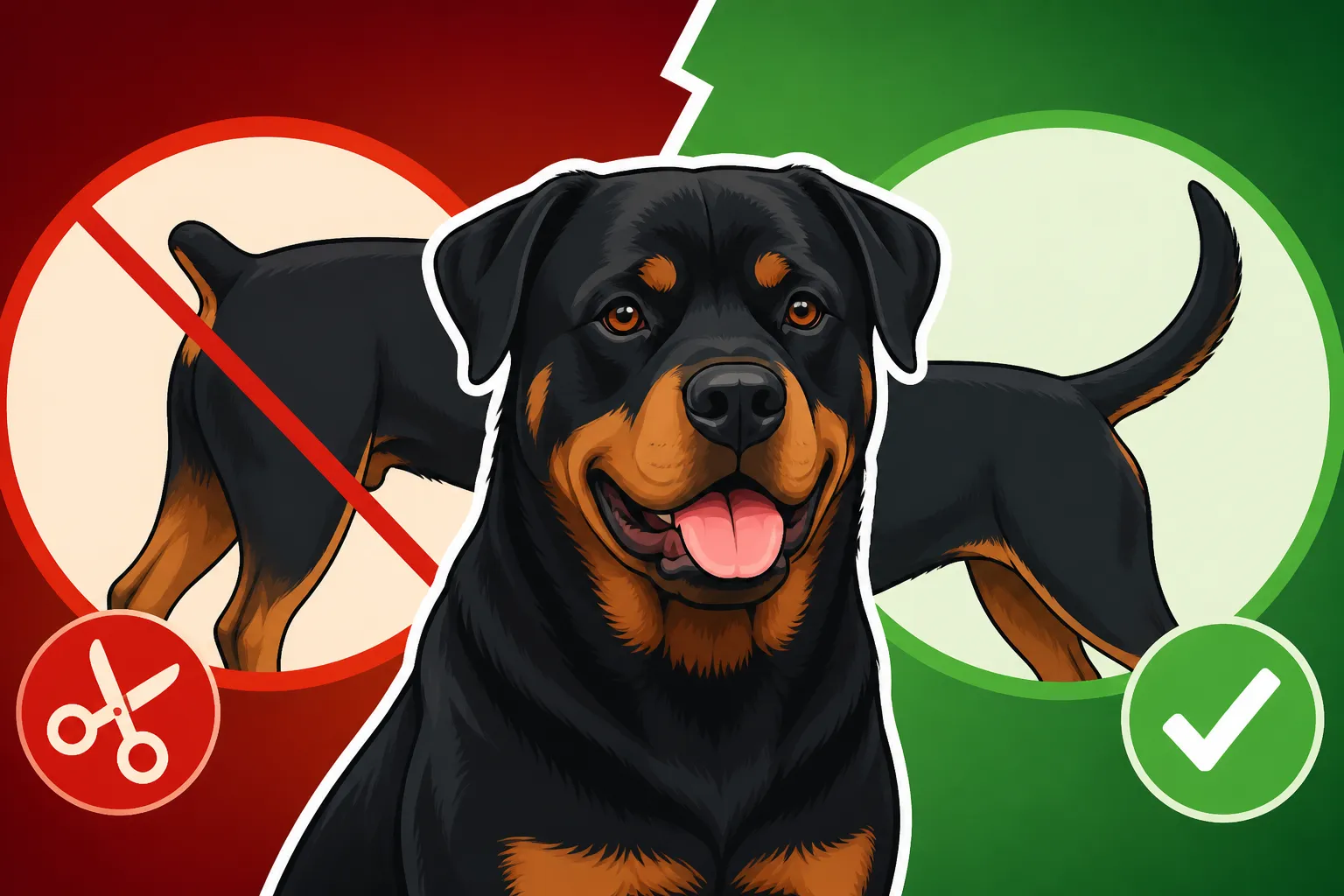
When faced with the choice, it's helpful to clearly outline the arguments for and against. On the side of docking, you have the traditional aesthetic, the belief in preventing "happy tail" injuries, and adherence to certain show standards (like the AKC). For many, the docked tail is simply "the Rottweiler look" they grew up with and appreciate. They might feel it connects their dog to the breed's historical role and gives it a distinct, powerful presence.
However, the arguments against docking are compelling and increasingly supported by veterinary science: the pain inflicted on a young puppy, the loss of crucial communication abilities, potential impact on balance, and the ethical concern over cosmetic surgery. Many owners find that a natural tail adds to their Rottweiler's expressiveness and allows for a fuller range of body language. They embrace the natural beauty and completeness of their dog, prioritizing welfare over a purely aesthetic preference. Whether Rottweiler Lifespan Has Improved at All shows a general trend towards better welfare, and this includes reducing unnecessary procedures.
Here's a simplified breakdown to help you consider:
| Feature | Tail Docking (Traditional) | Natural Tail (Increasingly Common) |
|---|---|---|
| Aesthetic | Compact, powerful, traditional silhouette. | Expressive, fluid, adds to overall balance. |
| Communication | Limited visual cues; can lead to misinterpretations. | Full range of body language; vital for dog-dog interaction. |
| Injury Risk | Believed to prevent "happy tail" injuries. | Potential for "happy tail" injury if vigorously wagged. |
| Pain | Performed on puppies, often without anesthesia, causes pain. | No pain from procedure. |
| Ethics | Considered by many as unnecessary cosmetic mutilation. | Promotes natural form and welfare. |
| Breed Standard | Required by some (e.g., AKC) for show conformation. | Required by many (e.g., FCI) for show conformation. |
| Legality | Banned or restricted in many countries. | Universally legal and encouraged in many places. |
Breeder Practices and Your Choices
Your decision will also be heavily influenced by your chosen breeder. Reputable breeders will be transparent about their practices and the local laws. In regions where docking is permitted and traditionally practiced, many breeders will have their puppies' tails docked by a veterinarian within the first few days of life, before they go to their new homes. If you specifically want a natural-tailed Rottweiler in such a region, you would need to find a breeder who either doesn't dock or is willing to keep a tail undocked for you, which might require a specific arrangement and an early commitment to a puppy. You'll need to discuss this with your breeder early in the process.
Conversely, if you are acquiring a Rottweiler from a region or a breeder who adheres to FCI standards or lives in a country where docking is banned, your puppy will almost certainly come with a natural tail. This reflects a broader shift towards celebrating the Rottweiler's natural form. When you're asking about Health Papers to Ask a Rottweiler Breeder For, don't hesitate to ask about their stance and practice on tail docking, as it speaks volumes about their philosophy on animal welfare. By engaging in open dialogue with breeders and understanding the global trends, you can make a choice that aligns with both your personal preferences and the best interests of your beloved Rottweiler.
Disclaimer
This article is for general informational purposes only and does not constitute professional advice. Laws, prices and regulations vary by location and change over time. Consult a qualified professional for guidance on your specific situation.