Rottweiler Movement as Judges Assess It
It’s a truly captivating sight to see a powerful Rottweiler stride with purpose, but understanding what makes a gait truly "correct" in the eyes of a judge can feel like decoding a secret language. Many owners, even experienced ones, find themselves puzzled by the subtle distinctions judges look for beyond simple forward motion. This comprehensive guide will pull back the curtain on the ideal Rottweiler movement, detailing the specific characteristics and nuances that are evaluated in the show ring, and how these reflect the breed's historical role and inherent soundness.
Understanding the Rottweiler's Purposeful Gait
The Rottweiler is, at its heart, a working dog. They weren't bred for dainty steps or flashy high-stepping; they were bred for endurance, power, and efficiency. This historical purpose is deeply ingrained in their physical structure and, by extension, in how they are expected to move. Judges aren't just looking for a pretty picture; they're looking for a dog built to do a job, whose movement reflects that capability.
The Historical Context of Rottweiler Movement
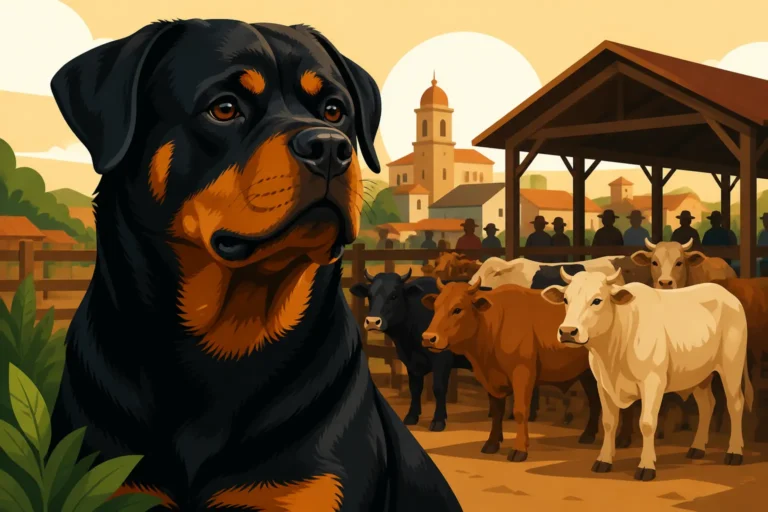
Imagine a time when the Rottweiler, or "Metzgerhund," as they were known, was driving cattle across vast distances or guarding a butcher's hard-earned money. These weren't tasks for a fragile or inefficient mover. Their work demanded a powerful, ground-covering trot that could be sustained for hours without tiring the dog. A Rottweiler needed to be able to shift weight, turn quickly, and maintain balance while herding large livestock or standing guard. This historical legacy informs every aspect of their movement today.
The breed's physical structure evolved to support this rigorous lifestyle. Strong bones, well-muscled hindquarters, and a deep chest were not just aesthetically pleasing but functionally necessary. Therefore, when a judge assesses movement, they are evaluating how well a dog's physical form enables this historical, purposeful gait. It’s a testament to the breed's heritage that its movement is still so tied to its original function, proving that form truly follows function. Understanding this background helps you appreciate why certain traits are prioritized.
General Principles of a Sound Rottweiler Gait
A sound Rottweiler gait is, first and foremost, efficient and effortless. The dog should move with a smooth, powerful trot that conveys strength and agility, not strain or awkwardness. It should appear balanced, with equal reach from the front and drive from the rear, carrying the body in a level, steady manner. Think of a well-oiled machine, where every part works in harmony. There should be no wasted motion, no frantic energy, just a consistent, rhythmic pattern of movement.
The Rottweiler's standard emphasizes a confident, calm demeanor, and this should be reflected in their movement. A sound dog doesn't fidget or shy; they move with purpose and self-assurance. Their back should remain strong and level, not rolling or dipping, which would indicate weakness or discomfort. Ultimately, the judge is looking for a dog that could still perform its historical duties without falter, showcasing robust health and correct conformation. This "soundness" is paramount, setting the stage for all other evaluations.
Key Elements of Rottweiler Movement in the Show Ring
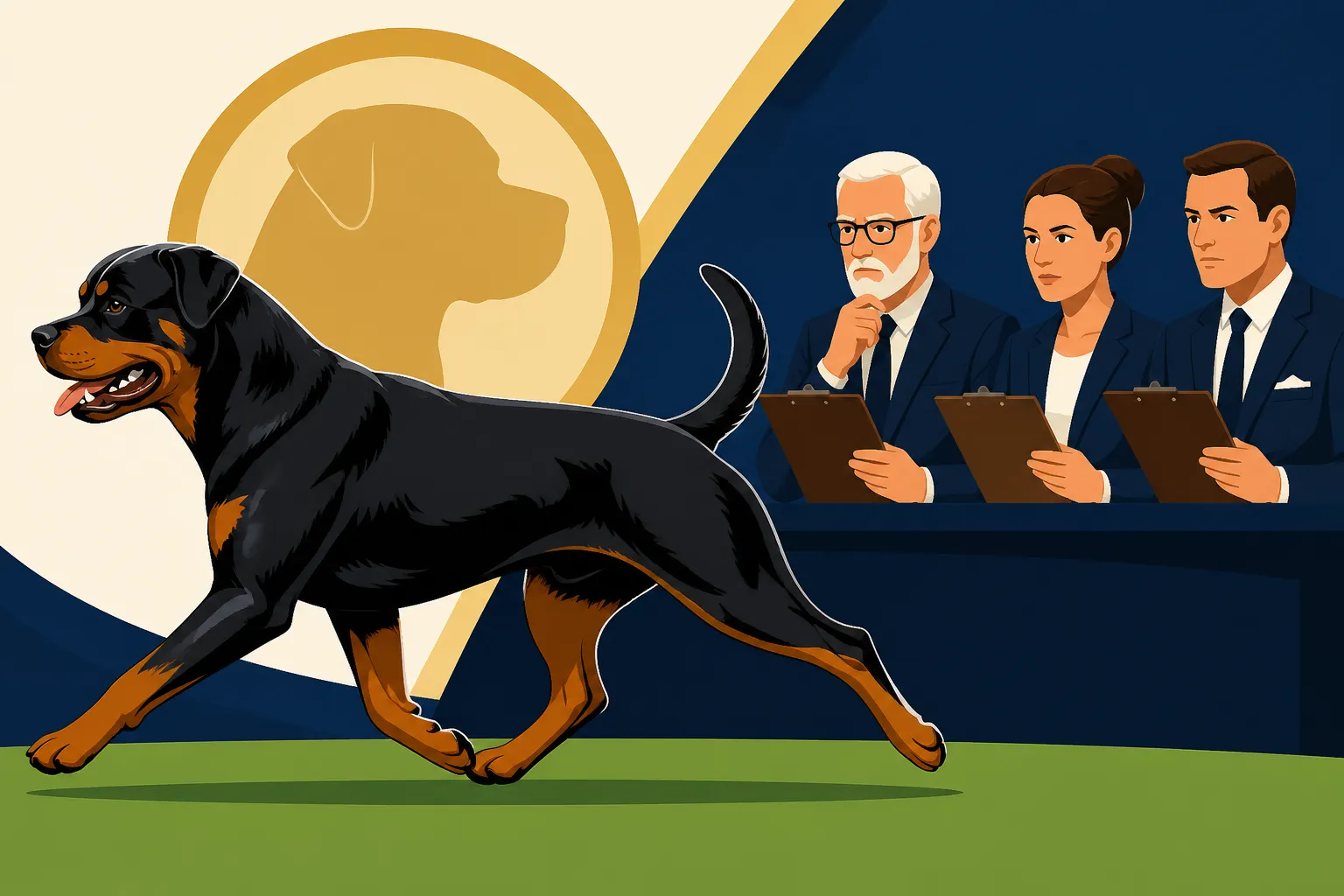
When a judge asks a handler to "gait" their Rottweiler, they are observing a multitude of factors, each contributing to the overall picture of correct breed type and functional soundness. It's a comprehensive assessment, often done from multiple angles to catch every nuance.
Reach and Drive: The Mechanics of Powerful Movement
"Reach" refers to the forward extension of the front legs, while "drive" describes the powerful propulsion generated by the hind legs. In an ideal Rottweiler gait, these two forces are in perfect balance. The front legs should extend smoothly, with the elbow joint moving freely, allowing the foot to land ahead of the dog's nose. This isn't a high-stepping action, but a ground-covering stride that conserves energy.
Simultaneously, the hindquarters should provide strong, elastic propulsion. The rear legs should extend well back behind the body, pushing the dog forward with power, yet without a "cow-hocked" or overly wide stance. The hocks should exhibit strong flexion, providing that springy drive. The combination of excellent reach and powerful drive results in a truly efficient, tireless trot that covers ground effortlessly. Without both, the movement quickly becomes unbalanced or less efficient, which judges will quickly note.
Topline and Tail Carriage: How These Contribute to the Overall Picture
The topline, which is the line from the dog's withers (shoulders) to the base of the tail, should remain firm and level while moving. A strong, stable topline indicates good musculature and a sound skeletal structure. Any dip, sway, or roaching (arching) in the topline during movement suggests a weakness that detracts from the dog's overall soundness and ability to work. A firm topline is critical for transferring power from the hindquarters to the front.
Tail carriage, even for Rottweilers with docked tails, is also observed. A naturally carried tail, whether docked or undocked, should follow the curve of the back or be carried slightly above it, but never curled tightly over the back or tucked between the legs in fear. While a Rottweiler's tail may be docked for show purposes, the underlying temperament and how the dog would carry a natural tail are still important considerations for judges. The tail is often a good indicator of a dog's confidence and overall well-being.
Foot Placement and Tracking: What Judges Look For From Different Angles
Judges meticulously watch how a Rottweiler places its feet and how its legs track from various perspectives: coming toward them, going away, and from the side. When viewed from the front, the legs should move in a straight line, parallel to each other, with the feet neither toeing in nor toeing out. As the speed increases, the legs will naturally converge slightly towards a center line beneath the body, a phenomenon known as single tracking. This is perfectly normal and efficient.
From the rear, the hind legs should also track straight and parallel, with hocks moving cleanly without turning in or out. Again, single tracking is expected at speed. From the side, the smooth, coordinated dance of reach and drive becomes clear, along with the firm topline. Any crossing over, crabbing (moving sideways), or paddling (front feet swinging out like paddles) is a fault. A quick check of durable training leashes and collars, perhaps from Chewy, can help ensure your dog's equipment isn't hindering natural movement during practice.
Common Faults and Imperfections
Even the most beautiful Rottweiler can have its overall impression diminished by structural flaws that impact its movement. Judges are trained to spot these imperfections, which often indicate underlying issues that compromise the dog's ability to perform its function efficiently and without pain.
Specific Gait Faults
There's a whole vocabulary for describing incorrect movement, and understanding it can help you identify areas for improvement in your own dog. For example, "crabbing" or "sidewinding" occurs when a dog moves with its body at an angle to the direction of travel, often due to an imbalance in rear drive. "Pacing" is when both legs on the same side move forward at the same time, resulting in a rolling motion. This is an inefficient gait for a working dog.
Other faults include "paddling," where the front feet swing out wide, or "weaving," where the front feet cross over. "Hackneying" involves high, exaggerated knee action, typically seen in breeds like the Hackney Pony, but undesirable in a ground-covering Rottweiler. All these faults suggest a lack of coordination, incorrect angulation, or structural weakness. It’s not just about aesthetics; these gaits are less efficient and can put undue stress on joints over time.
Structural Issues That Impede Movement
Many gait faults stem directly from structural imperfections that might not be immediately obvious when a dog is standing still. For instance, incorrect angulation of the shoulder or stifle joints can severely limit proper reach and drive. A dog with insufficient rear angulation may have a "stilted" gait, lacking the powerful push-off from the hindquarters. Conversely, over-angulation can lead to a loss of efficiency and an overly long, weak back.
Conditions like Rottweiler Hip Dysplasia and the OFA Grade or Rottweiler Elbow Dysplasia and Front Leg Lameness are classic examples of structural problems that overtly manifest as movement issues. A dog suffering from joint pain will often try to compensate, resulting in an uneven or reluctant gait. Rottweiler Growth Plates and Why They Close So Late also reminds us that improper exercise during growth can set the stage for later structural problems. Even Rottweiler Obesity and the Load It Adds can visibly impact a dog's stride, making it heavy and sluggish, putting excess strain on joints.
Training and Conditioning for Optimal Movement
Achieving optimal movement in the show ring isn't solely about genetics; it's also about careful conditioning and consistent training. A well-conditioned Rottweiler will present its natural abilities more effectively, and thoughtful training can refine their presentation.
Exercises to Enhance Strength and Coordination
To promote the powerful, efficient movement judges seek, a Rottweiler needs a balanced exercise regimen that builds strength, endurance, and coordination. Regular, consistent walks and controlled trotting on varied terrain are fundamental. Activities like swimming are excellent for building muscle without putting excessive strain on joints, especially beneficial during development or for older dogs. Engaging in structured play that encourages natural movement, like chasing a ball in a large, open field, can also be helpful, provided it's done safely.
Short, controlled bursts of trotting on a straight line, followed by walking, help a dog learn to maintain a consistent, rhythmic gait. Incorporate exercises that work the core and hindquarters, such as walking up gentle inclines or doing "stacking" drills that teach the dog to hold its position with confidence. Remember, the goal is balanced muscle development that supports a strong, level topline and powerful, coordinated limbs. It's about Building Adult Rottweiler Fitness Safely to ensure longevity and optimal performance. For specialized equipment like long lines or durable toys for these exercises, you can often find a wide selection at online retailers such as Chewy.
Preparing for the Show Ring: Practice and Presentation
Practice makes perfect, especially when it comes to presenting a Rottweiler's movement in the show ring. Begin by teaching your dog to gait on a loose lead at a consistent, moderate trot. This allows the judge to see their natural movement without interference. Practice gaiting in straight lines, turning smoothly, and stacking (standing still in a show pose) confidently. These basic skills are the foundation.
Work on handler-dog communication so your Rottweiler responds to your subtle cues and maintains eye contact, projecting that calm, self-assured demeanor. It’s not just the dog's movement being judged, but the overall picture presented by the team. Regularly practice in an environment that mimics a show ring, perhaps even with a friend acting as a "mock judge," to desensitize your dog to the atmosphere. Remember, proper nutrition also plays a crucial role in coat health and overall vitality, which contribute to a dog's presentation. Feeding a high-quality food, which you can easily source from places like Chewy, is a key part of this preparation.
Comparing Ideal Movement to Common Faults
Understanding the specific traits that define ideal Rottweiler movement, as well as the common faults, can significantly improve your ability to assess a dog's gait. Here's a quick comparison to help you visualize what judges are looking for and what they try to avoid.
| Characteristic | Ideal Rottweiler Movement | Common Faults to Avoid |
|---|---|---|
| Overall Impression | Smooth, powerful, efficient, balanced, effortless | Awkward, stilted, weak, unbalanced, lacking coordination |
| Reach (Front) | Good forward extension, foot landing ahead of nose, free elbow | Short-strided, high-stepping, paddling (feet swing out), weaving |
| Drive (Rear) | Strong, elastic propulsion, well-extended back, hocks flex | Stilted, weak push-off, cow-hocked (hocks turn in), sickled hocks |
| Topline | Firm, level, stable during movement, strong back | Dipping, roaching (arching), rolling, weak, unstable |
| Foot Placement | Straight, parallel, converging to centerline at speed | Toeing in/out, crossing over, crabbing (sidewinding), frantic |
| Balance | Equal reach and drive, well-coordinated, rhythmic | Unbalanced, choppy, uneven, favoring one side |
| Endurance | Capable of sustained, tireless trot | Tires quickly, shows strain, breaks gait easily |
By studying this table, you can begin to see how different elements combine to create either a desirable, functional gait or one that indicates structural issues or inefficiency. A judge is constantly evaluating these factors to determine how closely a dog aligns with the breed standard.
The Importance of Holistic Health for Movement
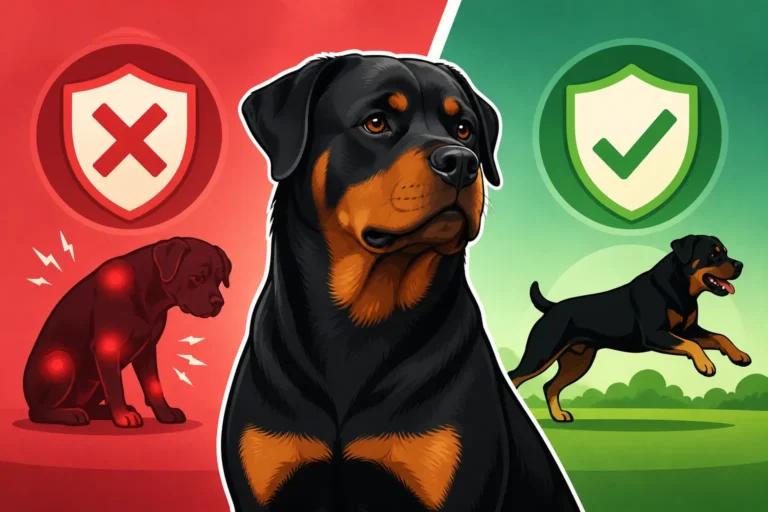
It’s impossible to talk about optimal movement without considering the overall health of a Rottweiler. A dog's ability to move correctly is a direct reflection of its physical well-being. This includes everything from proper nutrition during puppyhood to diligent preventative care throughout its life. Ignoring health can severely impact a dog's gait, making it difficult for them to move freely and comfortably, let alone excel in the show ring.
For instance, ensuring your Rottweiler puppy receives the right Rottweiler Calcium Limits and Why Supplements Hurt is crucial for proper bone development. Over-supplementing calcium can lead to developmental bone diseases that cause lifelong lameness and affect movement. Similarly, routine vet check-ups are essential for catching issues early. Rottweiler Dental Disease and Cracked Teeth, while seemingly unrelated, can cause enough pain to alter a dog's posture and gait. Everything is interconnected when it comes to a large, powerful breed like the Rottweiler. A healthy dog is a happy dog, and a happy dog moves with confidence and grace.
Disclaimer
This article is for general informational purposes only and does not constitute professional advice. Laws, prices and regulations vary by location and change over time. Consult a qualified professional for guidance on your specific situation.