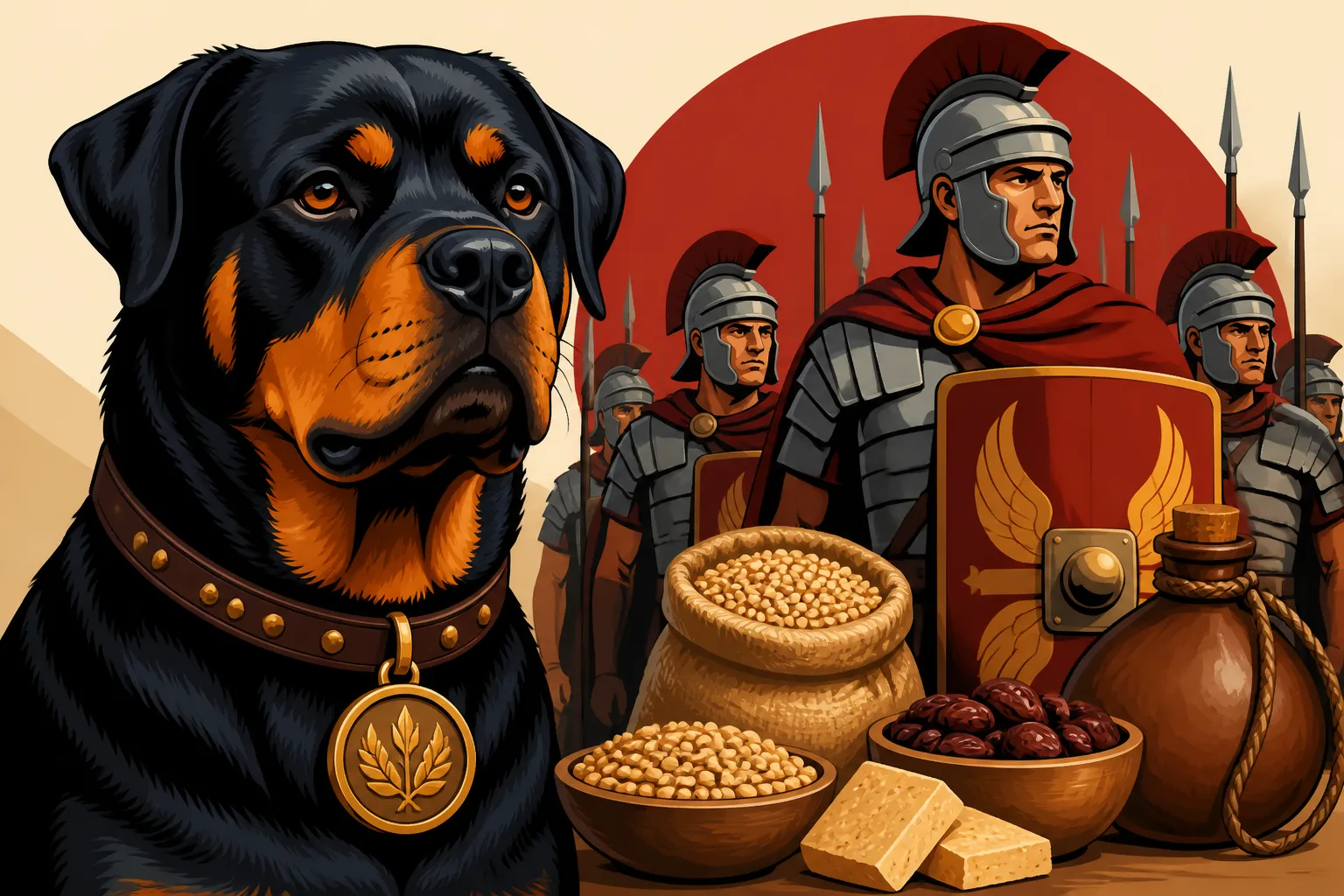
What the Romans Fed Their Armies on the March
It’s fascinating, isn’t it, to think about the deep roots of our beloved Rottweilers? We often get caught up in their modern-day care, but sometimes, a question pops into our heads that takes us back thousands of years: what did the Roman legions, and by extension, the dogs that traveled with them, eat on their long, grueling marches? It's a question about survival, logistics, and the very foundation of how these incredible working dogs were sustained, and understanding it can offer a unique perspective on their enduring hardiness. This guide will delve into the historical diet of the Roman army and its accompanying drover dogs, giving you a glimpse into the ancient past that shaped our Rottweilers.
The Roman Legionary's Sustenance on Campaign: More Than Just Hardtack
When we imagine Roman soldiers marching across vast landscapes, a lot of us picture them enduring on some sort of bland, dry military biscuit. And while rations certainly weren't gourmet dining, the reality was a bit more varied and surprisingly systematic for its time. The Roman army understood that a well-fed soldier was a fighting soldier, and hunger could quickly undermine morale and effectiveness. Their diet was designed for sustenance, portability, and energy for demanding physical labor and combat.
The cornerstone of the Roman soldier's diet was grain, primarily wheat, which was issued in its raw form. Each legionary was expected to grind it themselves using small hand mills, then bake it into bread or make a coarse porridge. This wasn't just a preference; it was incredibly practical. Grain is shelf-stable, relatively easy to transport in bulk, and provides complex carbohydrates for sustained energy. Imagine the daily ritual in a marching camp: setting up a temporary oven, grinding wheat, and baking flatbreads. It was a constant, necessary chore, a far cry from simply opening a MRE. Along with wheat, barley was sometimes issued, especially in leaner times or for punishment rations, as it was considered less desirable.
Beyond the grains, legumes like lentils, beans, and chickpeas were common additions. These provided much-needed protein and fiber, rounding out the carbohydrate-heavy diet. Vegetables, when available, were also consumed, though fresh produce was often a luxury dependent on local foraging or specific campaigns. Dried fruits, nuts, and even a form of hard cheese could be part of the ration if logistics allowed. Salt was crucial, not just for flavoring, but for electrolyte balance, especially in hot climates or during intense physical exertion. The Roman army was a master of logistics, and feeding an army of thousands, along with their animals and camp followers, was an immense undertaking, a complex dance of supply lines and local procurement.
Provisioning the Auxiliary Corps: Logistics and Local Sourcing
Feeding a legion wasn't just about handing out a daily allowance of grain. It involved an intricate logistical network that stretched across the vast Roman Empire. Supply lines were meticulously maintained, with granaries and supply depots strategically placed along major routes and near permanent encampments. However, when an army was on the move, especially through hostile or undeveloped territory, relying solely on fixed supply lines was impossible. This is where local sourcing became vital, and it’s also where the drover dogs, the direct ancestors of our modern The Roman Drover Dogs Behind the Rottweiler, truly earned their keep.
As the legions advanced, they would requisition food from the local populace, sometimes paying, sometimes simply taking. This included grains, of course, but also livestock: cattle, sheep, and goats. Herds of these animals would be driven along with the marching army, providing a mobile, fresh source of meat and sometimes dairy. This system minimized the need for preserved meats, which were heavier and less palatable, though cured meats and fish were also part of the diet when fresh options weren't possible. The presence of live animals meant that the army effectively brought its pantry with it, slaughtered on demand.
Guarding and moving these valuable herds was the job of specialized drover dogs. These powerful, intelligent animals were indispensable. They kept the livestock together, deterred rustlers, and protected the animals from predators that might see a slow-moving herd as an easy meal. Imagine the chaos if thousands of sheep or cattle scattered during a march, or if a rogue wolf pack descended upon them at night. These dogs, the sturdy, confident ancestors of our Rottweilers, were the four-legged insurance policy for the army's protein supply. Their presence was not a luxury; it was a necessity for the army's ability to provision itself, especially far from established Roman infrastructure.
The Drover Dogs' Table Scraps and Sustenance: How the Ancient Rottweilers Ate
Now, what about those incredible drover dogs themselves? While the legionaries had their standard rations, the dogs certainly weren't getting their own measured portions of finely ground wheat. Their diet would have been much more opportunistic, reflecting their working role and the realities of ancient military life. Primarily, these dogs would have subsisted on the by-products and scraps from the army's table and the livestock they guarded.
When cattle or other animals were slaughtered for the troops, there would be entrails, less desirable cuts of meat, bones, and other offal. These would have been readily available to the drover dogs. This was a diet rich in protein and fat, perfectly suited to large, active working dogs. They weren't being fed kibble from a bag; they were getting a raw, natural diet that was the closest equivalent to what their wild canine ancestors would have consumed. This diet would have given them the immense strength and stamina needed for their demanding tasks, like Rottweiler Carting and Draft Work or simply keeping a stubborn cow moving.
It's also safe to assume that these dogs would have supplemented their diet through foraging, much like the soldiers. Small game, rodents, or anything edible found in the surrounding landscape would have been fair game. They were survivors, adapted to harsh conditions and expected to contribute to the overall survival of the contingent. The bond between the Roman drovers and their dogs was undoubtedly strong, built on mutual reliance. The dogs protected the valuable food source, and in return, they were fed from that same source. This wasn't just about scraps; it was an integral part of their diet and their role in the Roman military machine, solidifying the hardy, resilient nature we still see in our modern Rottweilers today. While they didn't have special large-breed puppy food like what you'd find on Chewy today, their diet was remarkably fit for purpose.
Here's a simplified look at the dietary components for a Roman legionary versus a drover dog:
| Dietary Component | Roman Legionary (Human) | Drover Dog (Rottweiler Ancestor) |
|---|---|---|
| Primary Carbs | Wheat (bread, porridge), barley | Minimal direct grain consumption; some via scraps or foraged plants |
| Primary Protein | Legumes (lentils, beans), fresh/cured meat, cheese | Meat scraps, offal (entrails, organs), bones from slaughtered livestock |
| Fats | Some from meat/cheese, olive oil (when available) | Abundant from fatty meat scraps, marrow in bones |
| Vitamins/Minerals | Vegetables, dried fruit (seasonal), salt | Offal (especially liver, kidneys), small prey, foraged plants, bones |
| Water Source | Rivers, streams, wells | Same as humans, natural sources |
| Feeding Frequency | Likely 1-2 main meals, often self-prepared | Opportunistic, fed scraps after human meals or livestock slaughter |
| Preparation | Grinding, baking, boiling, foraging | Primarily raw, scavenging |
Ancient Lessons for Modern Rottweiler Nutrition: A Balanced Approach
Looking back at how the Roman drover dogs were sustained offers some interesting insights, even though our modern Rottweilers live very different lives. While we're not asking our dogs to herd cattle across ancient Germania, the core principles of feeding a large, active, powerful dog remain. The ancient drover dogs thrived on a diet rich in protein and fat, essential for their physical demands. They were lean, strong, and constantly on the move.
Today, we have the luxury of scientifically formulated dog foods designed specifically for large breeds and their unique needs. Brands you can find on sites like Chewy offer a wide range of options, from kibble to fresh-frozen meals, all carefully balanced to provide complete nutrition. For instance, growing Rottweiler puppies need specific calcium and phosphorus ratios to support their massive bone growth without causing developmental issues, a delicate balance far removed from ancient diets where problems like Rottweiler Growth Plates and Why They Close So Late were simply part of nature's lottery. It's why Rottweiler Calcium Limits and Why Supplements Hurt is such a crucial topic for modern owners.
The biggest takeaway from the Roman era might be the importance of "real" food for these working animals. While our dogs don't subsist on raw offal anymore, ensuring they get high-quality protein and a balanced diet from a reputable source is paramount. A hundred-pound Rottweiler needs a substantial amount of food to maintain its health and energy, and choosing a diet that supports its muscling, joint health, and overall vitality is key. This could mean a premium large-breed kibble or a carefully managed fresh-food diet, always avoiding What a Rottweiler Should Never Be Fed from our own tables. Just as the Roman army wouldn't compromise on feeding its soldiers, we shouldn't compromise on feeding our Rottweilers, who carry the legacy of those powerful ancient working dogs in their very genes. The convenience and quality offered by modern pet retailers like Chewy make it easier than ever to ensure our dogs get the best possible nutrition.
Disclaimer
This article is for general informational purposes only and does not constitute professional advice. Laws, prices and regulations vary by location and change over time. Consult a qualified professional for guidance on your specific situation.