Why the Town of Rottweil Carries That Name
It's a question many Rottweiler owners and enthusiasts ponder: why is this magnificent breed named "Rottweiler"? It's not just a fancy, made-up name; it's a direct nod to its origins, a powerful historical connection that speaks volumes about the breed's purpose, development, and enduring legacy. This guide will take a deep dive into the fascinating history that links the Rottweiler directly to the ancient German town of Rottweil, revealing how its environment and needs shaped the dog we know and love today.
The Roman Legacy and the Birth of a Town
To understand why the town of Rottweil gave its name to this powerful dog, we have to journey back nearly two millennia, to the height of the Roman Empire. The story of the Rottweiler isn't just about a dog; it's about the intersection of human expansion, trade, and the indispensable role that working dogs played in ancient societies.
Roman Legions and Their Canine Companions
Imagine Roman legions marching across vast European landscapes, needing to feed thousands of soldiers. They didn't have refrigerated trucks or pre-packaged MREs. Their solution? Driving herds of cattle with them. And to manage these massive, often unruly, livestock, they relied on powerful, intelligent dogs. These were the ancestors of many modern mastiff-type breeds, robust canines perfectly suited for the arduous task of droving.
As the Roman Empire expanded into Germanic territories, particularly around what is now southwestern Germany, they established garrisons and settlements. These Roman outposts were strategic points, and with the soldiers came their culture, their infrastructure, and, crucially, their working dogs. The region around the upper Neckar River was one such area where the Romans had a significant presence, bringing with them the very blueprint for the dogs that would eventually become the Rottweiler. These dogs weren't just pets; they were essential members of the legion, responsible for securing a vital food supply. You can learn more about How Roman Legions Used Their Drover Dogs by exploring their methods of managing livestock on long campaigns. The specific type of dog they brought, often large and resilient, laid the genetic groundwork for the future breed, hinting at Which Roman Dog Type the Rottweiler Descends From.
From Roman Outpost to Medieval Market
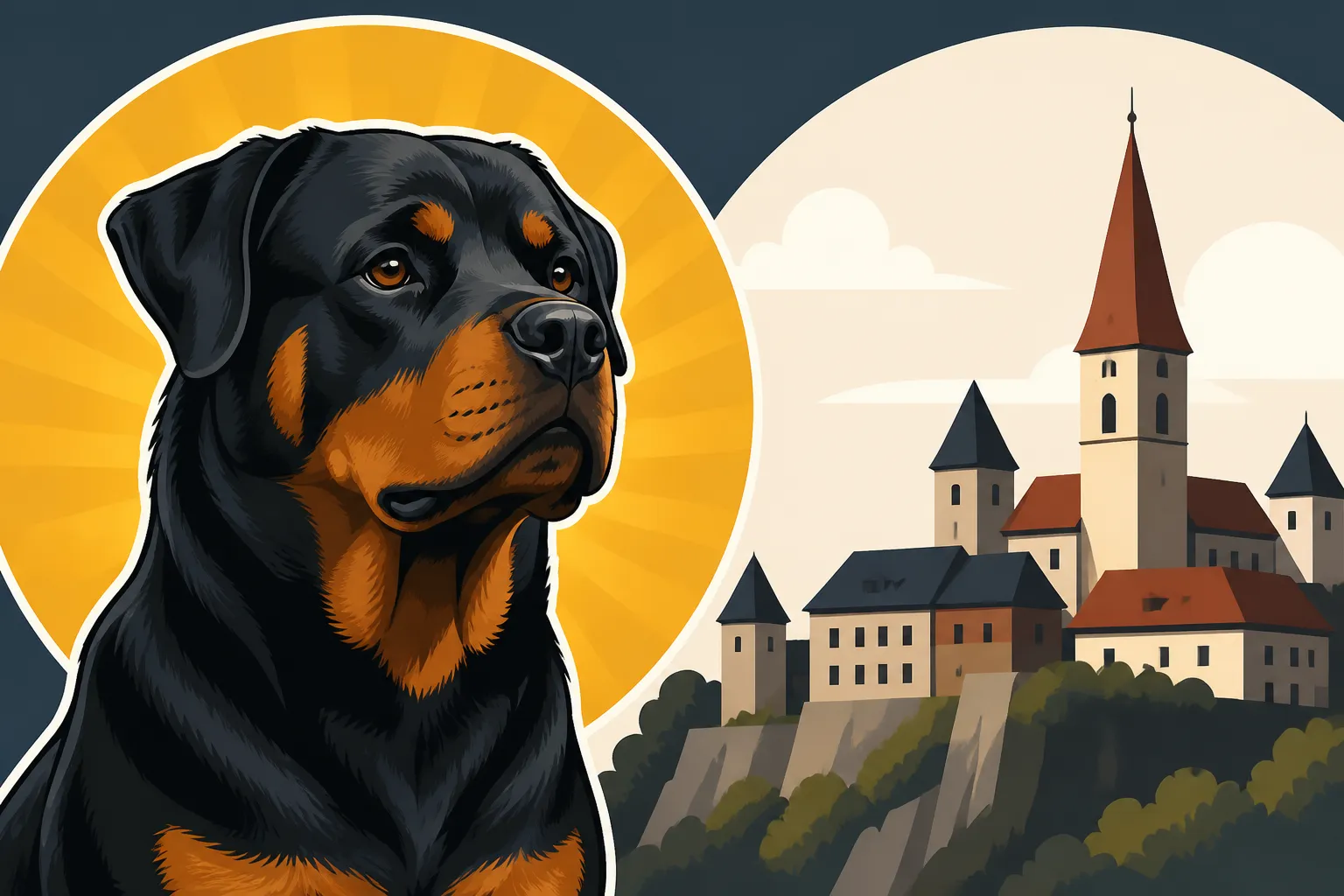
Over centuries, as the Roman Empire eventually retreated, its influence on the landscape and its people remained. The area where a significant Roman villa and baths once stood slowly transitioned from a military outpost into a permanent civilian settlement. This settlement, strategically located at the crossroads of ancient trade routes and blessed with fertile lands, began to flourish. It was officially recognized as a municipality in the late 8th century, growing into a thriving medieval town.
This town, which eventually took the name Rottweil, became a vital economic center in the region. Its location made it a natural gathering point for merchants and traders, particularly those dealing in livestock. The land around it was perfect for raising cattle, and the town itself developed robust markets. It was at this crucial juncture, where historical Roman canine ancestry met the burgeoning needs of a medieval economy, that the stage was set for the Rottweiler to truly emerge. The exact timing of When Roman Dogs First Reached the Rottweil Area aligns perfectly with the establishment of these early Roman settlements.
Rottweil: A Bustling Hub of Cattle and Commerce
The name "Rottweiler" isn't just about a place; it's about the function these dogs performed within that place. The town of Rottweil's economic engine was intimately tied to the cattle trade, and this created a perfect niche for a working dog with specific skills and temperament.
The Cattle Market and the Butcher's Trade
Fast forward to the Middle Ages, and Rottweil had cemented its reputation as one of the most important cattle towns in Europe. Imagine a bustling market day: hundreds, if not thousands, of head of cattle being driven in from surrounding farms, bellowing, jostling, and creating a chaotic scene that needed firm control. This was where the descendants of those Roman drover dogs truly shone. They were indispensable for keeping the herds together, guiding them through crowded streets, and preventing stampedes.
The town’s prosperity was largely due to this thriving trade, with butchers (Metzger in German) being central to its economy. These butchers weren't just carving meat; they were often buying entire herds, driving them to slaughter, and then selling the product. Their livelihood depended on the efficient and safe handling of livestock, both alive and, eventually, as cuts of meat. The sheer volume of livestock that passed through the town meant that reliable, strong, and intelligent dogs were not a luxury but a necessity for everyday operations. It's fascinating to consider What Was Traded in Rottweil's Cattle Market and how this commerce shaped the demand for a specific type of dog.
The Butcher's Dog: More Than Just a Drover
The dogs of Rottweil evolved to become uniquely suited to the butchers' multifaceted needs. They weren't merely herders. These "Metzgerhunds" – literally "butcher dogs" – had a range of responsibilities that made them invaluable to their human partners. First and foremost, they were expert drovers, capable of moving large herds of cattle over significant distances with authority and precision. A good Metzgerhund could control a stubborn steer or round up stragglers, making the butcher's job far easier and safer.
But their duties extended far beyond the fields. Once the cattle were sold and the butcher had made their earnings, these dogs had another critical role: guarding. Imagine a butcher walking home from a busy market day, pockets heavy with gold and silver coins – a tempting target for bandits. The Metzgerhund would often have a money pouch tied around its neck, a testament to its protective instincts and fearsome presence. This was a dog you didn't mess with. They were also responsible for protecting the butcher's stalls, equipment, and even their families. To understand the full scope of their work, it helps to consider What a Metzgerhund Did in a Day's Work, which painted a picture of a dog indispensable to daily commerce. This vigilance and loyalty are characteristics that still resonate in the breed's temperament today. When you consider How a Rottweiler Guarded a Butcher's Takings, you get a true sense of the trust placed in these animals. The demand for sturdy, large breed food, available at a reputable retailer like Chewy, would have been immense for these hardworking dogs.
Forging an Identity: The Rottweiler Metzgerhund
The deep integration of these dogs into the daily lives and livelihoods of the Rottweil butchers was so complete that their name became synonymous with their function and their place of origin.
The Name That Defined a Job
It was this profound, indispensable working relationship that led to the dogs becoming known as "Rottweiler Metzgerhund," or "Rottweil Butcher Dogs." The name wasn't arbitrary; it was descriptive. It immediately told you where the dog came from and what its primary job was. These dogs embodied the spirit of the town's trade: strong, reliable, and protective. They were essentially the town's four-legged security force and transportation aid, all rolled into one powerful package.
Not only did they drive and guard, but these powerful dogs also served as draught animals. Before the advent of motorized vehicles, or even widespread use of horses for short-haul delivery, Rottweilers would pull small carts laden with butchered meat from the shop to individual customers or other markets. This task required immense strength, stamina, and a willingness to work, further solidifying their "butcher's dog" identity. The sight of a Rottweiler pulling a cart of meat through the cobbled streets would have been common, a clear demonstration of Rottweilers Pulling Meat Carts Through Town. Their very existence was intertwined with the economic fabric of Rottweil, making the name a badge of honor and identity. Finding heavy-duty, robust toys and training equipment for such a physically demanding role would have been a necessity, much like modern owners seek out durable products on platforms like Chewy today.
Near Extinction and Resurgence
However, as society progressed, the need for drover dogs and cart-pulling canines dwindled. The late 19th century brought railways and other forms of transport, making cattle drives and meat carts largely obsolete. Many traditional working breeds, including the Rottweiler, faced the real threat of extinction. Their numbers plummeted dramatically, and for a time, it seemed the Rottweiler Metzgerhund might fade into history, its name a mere whisper from the past.
But the breed was too valuable, its characteristics too impressive, to be lost entirely. A small group of dedicated fanciers and enthusiasts recognized the inherent qualities of these dogs – their intelligence, courage, and loyalty – and worked tirelessly to revive them in the early 20th century. Organizations dedicated to the breed's preservation were formed, particularly in Germany, ensuring that the "Rottweiler" name, though shortened from its original "Metzgerhund," would endure. Their efforts were crucial, and understanding The Fanciers Who Rebuilt the Rottweiler in 1901 provides insight into this critical period of the breed's history. These revivalists championed the breed, emphasizing its working heritage, and ensuring its survival for future generations.
The Enduring Connection: Why the Name Matters Today
Even though the Rottweiler no longer actively herds cattle or pulls meat carts in the same way, the name "Rottweiler" continues to echo its rich history and defines much of what we appreciate about the breed today.
A Name Etched in History
The very name "Rottweiler" is a constant, powerful reminder of the breed's working-class roots and its specific geographic origin. It's not just a fancy label; it's a historical anchor that grounds the breed in a specific time and place. When you hear "Rottweiler," you're implicitly connecting to the bustling cattle markets, the diligent butchers, and the robust Roman drover dogs that shaped its development. This historical context is vital for understanding the breed's inherent traits: its strength, its natural guarding instincts, its calm self-assurance, and its impressive physical presence.
This deep historical connection means that the breed's original purpose is always part of its identity. It's why Rottweilers thrive on having a job to do, why they are so protective of their families, and why they often exhibit an aloofness towards strangers – traits honed over centuries of working closely with their human partners in a busy, potentially dangerous, environment. When considering a dog of this magnitude, investing in proper training tools, quality food for large breeds, and durable equipment, all easily sourced from a comprehensive pet supplier like Chewy, becomes paramount.
Preserving the Legacy
Today, breed clubs and organizations worldwide, such as the Allgemeiner Deutscher Rottweiler-Klub (ADRK) in Germany and the American Kennel Club (AKC) in the United States, meticulously maintain the Rottweiler breed standard. This standard doesn't just describe physical appearance; it also outlines the desired temperament, which directly reflects its historical role. Traits like "calm, confident, and courageous" aren't arbitrary; they are the hallmarks of a dog that could reliably manage cattle, guard property, and protect its owner in the demanding environment of old Rottweil.
By adhering to these standards, breeders aim to produce Rottweilers that honor their heritage. They look for sound structure, stable temperament, and the innate intelligence that made the Metzgerhund so effective. The name "Rottweiler" therefore isn't just a label; it's a promise – a promise to uphold the qualities that made the dogs of Rottweil legendary. The dedication of The German Clubs That Set the Rottweiler Standard ensures that the modern Rottweiler remains true to its historic blueprint.
| Aspect | Historical Rottweiler (Metzgerhund) | Modern Rottweiler | Connection to Rottweil Town |
|---|---|---|---|
| Primary Role | Cattle drover, butcher's guard, cart puller | Companion, guardian, working dog (police, therapy) | Named for its historical workplace |
| Key Traits | Strength, courage, intelligence, protectiveness | Confidence, loyalty, trainability, protective instinct | Traits bred for tasks in Rottweil |
| Economic Value | Indispensable to butchers' livelihood | Highly valued companion and working animal | Directly tied to the town's commerce |
| Physical Build | Robust, powerful, agile | Strong, muscular, substantial bone | Designed for strenuous work in the region |
| Geographic Origin | Rottweil, Germany | Originated in Rottweil, bred globally today | The very name reflects its birthplace |
Understanding the origins of the Rottweiler's name deepens our appreciation for this magnificent breed. It tells a story of survival, adaptability, and an unbreakable bond between humans and dogs, forged in the ancient heart of a German town.
Disclaimer
This article is for general informational purposes only and does not constitute professional advice. Laws, prices and regulations vary by location and change over time. Consult a qualified professional for guidance on your specific situation.