How German and American Rottweiler Type Diverged
It can be incredibly confusing when you start looking into Rottweilers and suddenly hear terms like "German Rottweiler" or "American Rottweiler." You might wonder if they're different breeds, or perhaps just different looks, and what that even means for you as a prospective owner. This guide is here to untangle the history and nuances, explaining how the breed, while unified in its origins, developed different focuses and appearances based on the kennel clubs and breeding philosophies in various regions.
The Shared Ancestry of All Rottweilers
Before we dive into the distinctions, it's crucial to remember that every Rottweiler, whether bred in Stuttgart or Sacramento, shares the same deep, rich history. Their lineage traces back to formidable dogs accompanying Roman legions, tasked with driving and guarding cattle. These were robust, powerful canines, essential for feeding an army on the move across vast European territories.
From Roman Drover Dogs to Butcher's Helpers
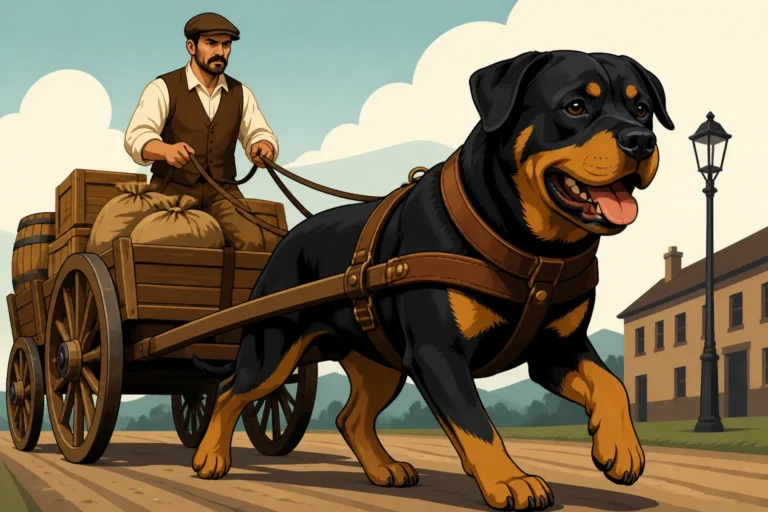
As the Roman Empire expanded, these ancestral dogs settled in various regions. One such area was the town of Rottweil in what is now Germany. Here, over centuries, they evolved into the "Metzgerhund" – the butcher's dog. Their job was vital: they guarded cattle, drove them to market, and famously, even carried the butcher's money home in a pouch around their neck, protecting it from bandits. This was a dog bred for utility, strength, intelligence, and an unwavering protective instinct. Their resilience and dedication made them indispensable working partners. You can learn more about The Roman Drover Dogs Behind the Rottweiler.
The Early 20th Century Revival
By the late 19th century, with the advent of railways, the need for cattle-driving dogs diminished, and the Rottweiler faced extinction. In fact, by 1900, there were reportedly very few Rottweilers left. Thankfully, a dedicated group of enthusiasts in Germany recognized the breed's incredible value and initiated efforts to revive it. This led to the formation of early breed clubs and the establishment of the first breed standards, aiming to preserve the Rottweiler's original traits as a powerful, intelligent, and courageous working dog. This concerted effort laid the groundwork for all Rottweilers we know today, regardless of their current geographical "type."
The Influence of Breeding Philosophies and Kennel Clubs
The primary reason for the divergence between "German" and "American" Rottweiler types lies not in their fundamental breed, but in the differing philosophies and regulations of the kennel clubs that govern their breeding in each region. These governing bodies set the standards and often dictate the priorities for breeding programs, which over generations, can lead to subtle but noticeable differences.
The ADRK and the German Standard
In Germany, the primary governing body for the Rottweiler is the Allgemeiner Deutscher Rottweiler-Klub, or ADRK. This club is renowned for its incredibly strict and comprehensive breeding regulations. The ADRK emphasizes preserving the Rottweiler as a working dog, maintaining its inherent utility and robust health above all else. For a Rottweiler to be approved for breeding under ADRK rules, it must undergo rigorous evaluations that go far beyond a simple veterinary check-up.
These evaluations include stringent health clearances for Rottweiler Hips and Elbows and the 24-Month Rule, heart, and eyes, as well as mandatory temperament tests and working aptitude tests. Dogs must demonstrate stable nerves, courage, and a strong working drive. They are often evaluated for tasks like Schutzhund (now IGP), which involves tracking, obedience, and protection work. The focus is always on producing dogs that are physically sound, mentally stable, and capable of performing the tasks the breed was historically known for. This meticulous approach means that "German lines" often refer to dogs whose ancestors have successfully passed these demanding ADRK requirements, leading to a strong emphasis on consistent temperament and working ability.
The AKC and the American Approach
In the United States, the American Kennel Club (AKC) is the governing body for most purebred dogs, including the Rottweiler. While the AKC does have a breed standard for the Rottweiler, and certainly promotes responsible breeding, its approach differs from the ADRK in significant ways. The AKC standard focuses heavily on physical conformation – how closely a dog's appearance matches the ideal look for the breed, particularly for the show ring.
While health clearances are strongly recommended by the AKC and responsible breeders adhere to them, they are not always a mandatory prerequisite for registration or breeding as they are with the ADRK. Similarly, while temperament is mentioned in the standard, there isn't a mandatory working title or temperament test requirement for a dog to be bred or registered. This has led to some American breeders prioritizing aesthetics and certain show ring traits, and perhaps a slightly less intense focus on working drive, compared to their German counterparts. This doesn't mean American-bred Rottweilers aren't excellent family companions or working dogs, but the systemic emphasis is simply different.
Divergence in Physical Characteristics
Over generations of breeding under these different philosophies, certain subtle physical distinctions have emerged between what are colloquially known as "German type" and "American type" Rottweilers. It's important to stress these are often generalizations, and a well-bred Rottweiler, regardless of its origin, should still conform to the overall breed standard.
Head and Body Type
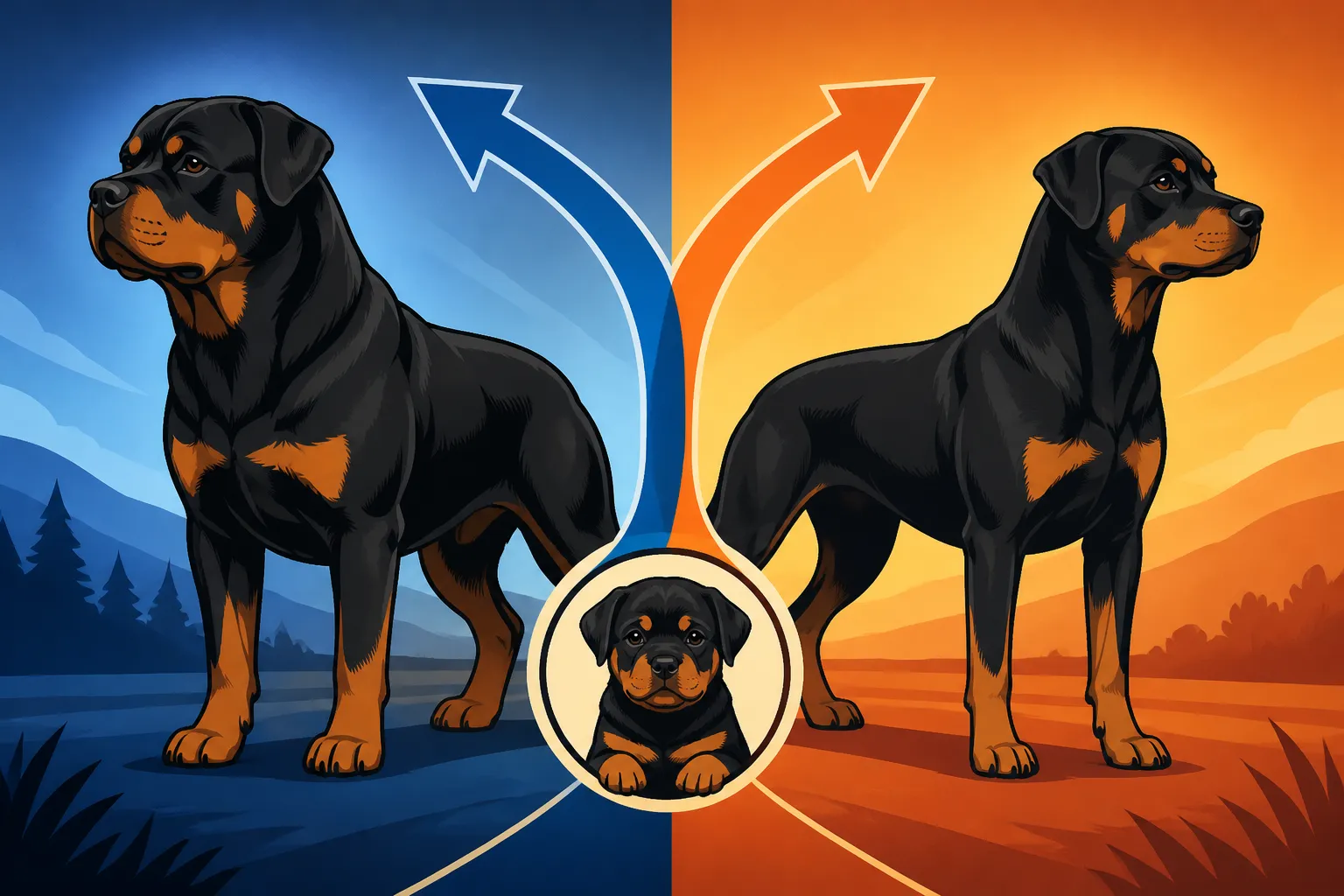
Many people observe that "German type" Rottweilers often exhibit a slightly blockier head, with a broader skull and a more pronounced stop (the indentation between the eyes). They are generally perceived as having a more compact, robust, and substantial build, with deeper chests and heavier bone. This "powerful" look is often a direct result of the ADRK's emphasis on utility and strength.
On the other hand, "American type" Rottweilers, especially those bred heavily for the conformation show ring, might sometimes present a slightly more refined or elegant head, though still strong and proportionate. Their overall body structure might be seen as slightly less "massive" or compact by comparison, perhaps with a touch more length in body to height. However, the AKC standard still calls for a powerful dog, and many American lines certainly fit that description. It's truly a matter of subtle emphasis rather than drastic difference.
Tail Docking Differences
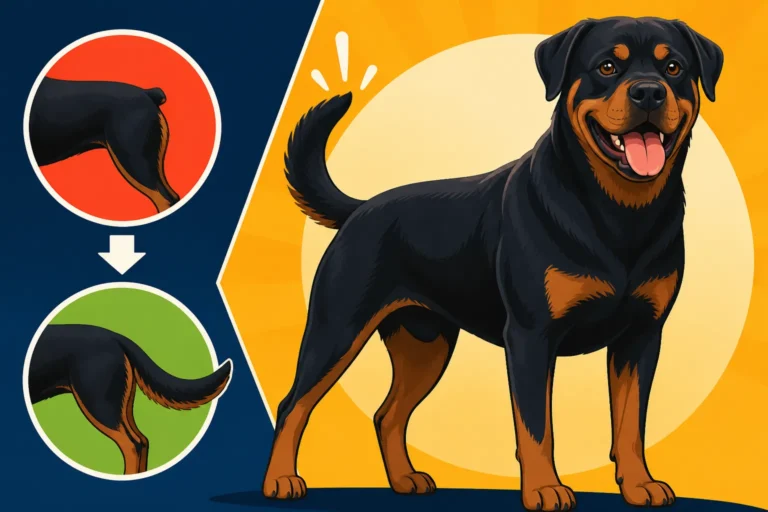
One of the most visually striking divergences used to be in tail docking. Historically, Rottweilers in both Germany and the United States had their tails docked shortly after birth. This practice originated from the breed's working past, where a long tail could be easily injured while herding cattle or engaged in protection work.
However, many European countries, including Germany, have since banned cosmetic tail docking. As a result, Rottweilers bred in Germany will now almost universally have natural, undocked tails. The ADRK standard now explicitly calls for a natural tail. In the United States, tail docking is still permitted and is often the preference for Rottweilers destined for the conformation show ring, though it is not mandatory. Therefore, you'll frequently see American-bred Rottweilers with docked tails, while those with natural tails are more indicative of European or specifically German lineage, or breeders who choose to align with that practice. The conversation around Rottweiler Tail Docking and Where It Stands Now is ongoing.
Overall Size and Substance
While the breed standards in both countries specify ideal height and weight ranges, there's a common perception that "German type" Rottweilers are generally larger, heavier, and more substantial than their "American type" counterparts. This isn't always strictly true, as individual dogs vary greatly, and both standards call for a powerful dog.
However, the German emphasis on robustness and bone, combined with stringent health and working tests, often leads to dogs that consistently hit the upper end of the weight and substance scales. In America, while many breeders aim for this ideal, the broader genetic pool and diverse breeding goals (some focusing more on agility, others strictly on show lines) might produce a wider range of sizes, including some that are lighter-boned or a bit leaner. The key is that a truly well-bred Rottweiler should always be a powerful, substantial animal, regardless of its country of origin.
Divergence in Temperament and Working Aptitude
Perhaps even more important than physical appearance, the different breeding philosophies have also influenced the perceived temperament and working aptitude of German versus American lines. It's crucial to understand that all Rottweilers are bred to be courageous, intelligent, and devoted, but the intensity of certain traits can vary.
Emphasis on Working Ability in Germany
As discussed, the ADRK demands that breeding stock pass rigorous working tests. This means that German Rottweilers are consistently selected for strong nerves, high trainability, pronounced working drive, and an unwavering protective instinct. They are expected to be serious dogs, capable of complex tasks and demonstrating clear confidence and assertiveness. This doesn't mean they aren't loving family companions – quite the opposite – but their inherent drive to work and their stable, confident nature under pressure are paramount.
Many owners who seek out "German lines" are specifically looking for a dog with this inherent drive and intensity, suitable for competitive dog sports like IGP (Schutzhund), obedience, or even professional protection work. These dogs thrive when given a job to do and require owners who are committed to extensive training and mental stimulation. Proper Rottweiler Puppy Training Through the First Year is vital for any Rottweiler, but especially for those with strong working drives.
American Focus on Companionship and Show Ring
In the US, while many reputable breeders certainly aim for sound temperament, the lack of mandatory working titles for breeding stock means that the selection pressure for intense working drive isn't as universal. American lines often produce dogs that are wonderful family companions, adaptable to various lifestyles, and still possess the breed's characteristic loyalty and protective nature. Their temperament is generally described as stable, confident, and perhaps a bit more laid-back or social than some of the high-drive German lines, especially those bred purely for competitive work.
For many families, an "American type" Rottweiler, particularly from a breeder who prioritizes stable temperament, can be an excellent choice. They still require consistent training and socialization – Socializing a Rottweiler Puppy Properly is non-negotiable for any Rottweiler – but might not possess the same inherent need for intense working tasks. The focus is often on an agreeable temperament for the show ring and life as a beloved pet.
Health Considerations and Breeding Practices
Health is paramount for any Rottweiler, regardless of its origin. Unfortunately, both "types" can be prone to certain genetic health issues common in large breeds. However, the approach to mitigating these risks through breeding practices can highlight another key divergence.
German Health Clearances
The ADRK's breeding program is notoriously strict when it comes to health clearances. All breeding animals must be certified free of hip and elbow dysplasia, undergoing official evaluations by qualified veterinarians. They also require certifications for eye health (Rottweiler Eye Certification and the Three Year Rule) and cardiac health (often including echocardiograms for Rottweiler Heart Disease and Subaortic Stenosis). Furthermore, for many years, the ADRK has required mandatory testing for Juvenile Laryngeal Paralysis & Polyneuropathy (JLPP), a severe genetic neurological condition, ensuring that no affected puppies are produced. This rigorous screening helps to systematically reduce the incidence of these conditions within the German Rottweiler population.
This structured approach gives prospective owners a high degree of confidence that a "German line" Rottweiler comes from generations of health-tested parents. Understanding The Five Clearances a Rottweiler Breeder Must Have is crucial when seeking a puppy.
American Health Clearances and Breeder Responsibility
In the United States, reputable AKC breeders follow the recommendations of organizations like the Orthopedic Foundation for Animals (OFA) and the Canine Health Information Center (CHIC) for health testing. These recommendations include evaluations for hips, elbows, heart, and eyes. Many responsible American breeders also perform JLPP testing and other screenings. However, unlike the ADRK, these health clearances are not universally mandated by the AKC for a dog to be registered or bred.
This means that while excellent, health-focused American breeders exist and actively test their dogs, there are also breeders who may not adhere to these recommendations. Therefore, when looking for an "American type" Rottweiler, it becomes even more critical for the prospective owner to thoroughly vet breeders and specifically ask for proof of all relevant health clearances on both parents. You need to be your own advocate and understand what Rottweiler Hip Dysplasia and the OFA Grade actually means on paper. This is where resources like Chewy, offering supplements and specialized diets, come in handy for managing the long-term health of your dog, but nothing replaces good breeding.
What It Means for Prospective Owners Today
Navigating the world of "German" versus "American" Rottweilers can feel like walking through a minefield of conflicting opinions and marketing jargon. Ultimately, the most important thing is to understand what these distinctions truly mean for you and your future dog.
Understanding "German Line" vs. "American Line" Designations
Today, the terms "German line" or "American line" are often used as marketing tools. A "German line" Rottweiler in the US usually means a dog whose pedigree traces back to ADRK-registered dogs, adhering to their stringent breeding standards. It doesn't necessarily mean the dog was born in Germany, but rather that its lineage reflects that breeding philosophy. Similarly, an "American line" dog implies a lineage largely bred within the AKC framework.
However, the waters can be murky. Some breeders might use the "German line" label without actually adhering to all the ADRK standards themselves, or without importing dogs that have genuinely earned ADRK working titles. It's vital not to rely solely on the label, but to dig deeper into the actual pedigree and, more importantly, the breeder's own practices and the health and temperament of their specific dogs. The health records are worth Reading a Rottweiler DNA Panel Line by Line to understand lineage and genetic health.
Choosing a Responsible Breeder
Regardless of whether you are drawn to the "German type" for its working drive or the "American type" for its potential adaptability, your absolute priority must be to find a responsible and ethical breeder. A responsible breeder, whether their lines are predominantly German or American, will:
- Perform all recommended health clearances: They will provide verifiable proof of hip, elbow, heart, eye, and JLPP certifications for both parents. Don't take their word for it; ask to see the official paperwork.
- Prioritize temperament: They will openly discuss the temperament of their breeding dogs and puppies, aiming to produce dogs that are stable, confident, and well-socialized.
- Offer transparent contracts and guarantees: They will have a clear contract, often including a health guarantee, and be available for support throughout your dog's life.
- Be knowledgeable and open: They will gladly answer all your questions, show you where the puppies are raised, and introduce you to the mother (and ideally, the father if he is on site).
- Match puppies to homes: They will assess your lifestyle and goals to help you choose the puppy whose temperament is the best fit for your family.
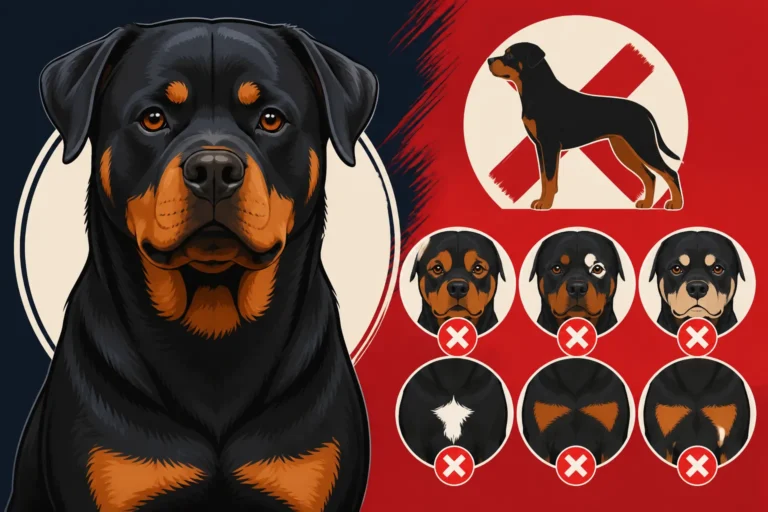
- Avoid "designer" or "rare" colors: A responsible Rottweiler breeder will only breed the standard black and rust coat color, recognizing that other colors are faults and can sometimes indicate questionable breeding practices.
Ultimately, the goal is to acquire a healthy, well-tempered Rottweiler from sound lineage. Focus on the quality of the individual breeder and their dogs, rather than getting too caught up in labels. Both Germany and America have exceptional Rottweilers, and both have individuals who don't breed to the highest standards. Do your homework, ask the right questions, and be patient to find the right canine companion for you. When it comes to everyday care, whether it's quality food for Feeding an Adult Rottweiler at a Hundred Twenty Pounds or sturdy gear, reputable online stores like Chewy can be a great resource for owners of all Rottweiler types.
| Feature | "German Type" Rottweiler (ADRK Influence) | "American Type" Rottweiler (AKC Influence) |
|---|---|---|
| Breeding Focus | Strong emphasis on working ability, health, and temperament; utility first. | Strong emphasis on physical conformation (show ring); companionship and temperament also key. |
| Health Testing | Mandatory, comprehensive health clearances for breeding stock (hips, elbows, heart, eyes, JLPP). | Highly recommended, but not always mandatory for AKC registration; responsible breeders adhere strictly. |
| Temperament | Typically high working drive, strong nerves, very trainable, confident, assertive. | Generally stable, confident, often adaptable family companions; working drive varies by line. |
| Physical Build | Often perceived as blockier heads, broader skulls, more compact, robust, heavier bone. | Can be slightly more refined or elegant in head; body build may be less massive/compact, though still powerful. |
| Tail | Natural, undocked tail (due to European bans on cosmetic docking). | Typically docked (traditional in the US show ring); natural tails are becoming more common among pet owners. |
| Breeding Stock Requirements | Mandatory working titles, temperament tests, ZTP (breeding suitability test). | No mandatory working titles or temperament tests for AKC registration/breeding. |
Disclaimer
This article is for general informational purposes only and does not constitute professional advice. Laws, prices and regulations vary by location and change over time. Consult a qualified professional for guidance on your specific situation.