Rottweiler Tail Docking and the Modern Argument
The sight of a Rottweiler often brings to mind that iconic, short, stubby tail. It’s a look many have grown up with, ingrained in our understanding of the breed. But these days, you’re just as likely to see a magnificent Rottweiler trotting by with a long, elegant tail held high, a beautiful plume that speaks volumes. This shift isn't just about aesthetics; it's a reflection of a deep and ongoing discussion among breeders, vets, and owners about tradition, animal welfare, and what's truly best for our beloved dogs. If you're pondering the history, ethics, or practicalities of Rottweiler tail docking, or simply curious about why this practice is changing, you're in the right place. We're going to dive deep into the modern argument, exploring all sides of this nuanced topic.
The Historical Roots of Rottweiler Tail Docking
To understand why Rottweilers traditionally had docked tails, we have to journey back in time, to their origins as working dogs. These weren't just pets; they were integral members of the community, performing tough jobs that shaped their physical traits and care.
The Butcher's Dog and Practicality
Imagine a Rottweiler's ancestors, the "Metzgerhund" or "butcher's dog" of Rottweil, Germany. These powerful dogs were literally the muscle of the cattle drives, guarding herds, protecting money, and even pulling carts laden with meat. Their lives were hard, physical, and often dangerous. In this demanding environment, a long tail could be a serious liability. It could get caught in gates, stepped on by a cow, or even grabbed by a thief, leading to painful injuries that would sideline a valuable working dog.
Think about it: a quick, painful tail injury could easily become infected in an era without modern veterinary medicine. Docking the tail, usually within the first few days of a puppy's life, was seen as a preventive measure, a way to safeguard the dog's ability to perform its essential duties and protect its overall health in a very practical, if somewhat brutal, way. It was done without anesthesia, a stark reminder of how far veterinary care and our understanding of pain have come. This wasn't about fashion; it was about function and survival in a rough-and-tumble world.
Tradition and Breed Standard
Over generations, this practical amputation became deeply embedded in the Rottweiler's identity. As the breed gained recognition and formal standards were developed, the docked tail became a defining characteristic. Major kennel clubs and breed associations, including the American Kennel Club (AKC), wrote the docked tail into their breed standards. For decades, if you wanted to show a Rottweiler or breed according to accepted norms, a docked tail was simply a given.
This created a powerful tradition. Breeders continued the practice because it was "what a Rottweiler looked like," and judges expected it in the show ring. The tradition was so strong that even as the practical reasons for docking dwindled (most Rottweilers are now companions, not cattle drovers), the aesthetic and historical arguments remained. It became a point of pride and identification for many enthusiasts, a link to the breed's storied past. For many, a Rottweiler just didn't look "right" without that short, powerful stub.
The Modern Debate: Welfare, Ethics, and Function
Fast forward to today, and the conversation around tail docking is far more complex and often passionate. The modern world offers new perspectives and scientific understanding that challenge long-held traditions.
Arguments for Docking
Despite the shift in public opinion, some still advocate for tail docking. The most common arguments often center on tradition and a perceived reduction in injury. Proponents will point to the historical context, suggesting that a docked tail is part of the breed's heritage and contributes to the "correct" Rottweiler silhouette. They might argue that the short tail reduces the risk of "happy tail syndrome," where an exuberantly wagging long tail repeatedly bangs against hard surfaces, causing chronic injury that is difficult to heal. This can be a real problem for dogs with very strong, thick tails.
Another, less common argument, can be cleanliness, especially for dogs in certain working environments or those with very loose stools, where a long tail might become soiled. However, with modern grooming products readily available at places like Chewy, this is less of a concern than it once was. Ultimately, for many, the argument boils down to maintaining the breed's traditional appearance as outlined in their specific national breed standard, believing it preserves the integrity of the Rottweiler as it has been known for generations.
Arguments Against Docking
The arguments against tail docking are numerous and largely driven by animal welfare concerns and scientific understanding of canine anatomy and behavior. First and foremost, docking is an amputation. It's a painful surgical procedure performed on puppies, often without adequate pain relief in some practices, at a highly vulnerable stage of development. The argument that puppies don't feel pain as intensely as adults has been widely debunked by veterinary science. We now know that puppies absolutely feel pain, and performing such a procedure purely for cosmetic reasons is seen by many as unethical.
Beyond the immediate pain, a tail is not just an appendage; it's a crucial part of a dog's anatomy and communication system. Rottweilers, like all dogs, use their tails to express a wide range of emotions and intentions – from happiness and excitement to fear, submission, or curiosity. A docked tail severely limits this ability, making it harder for other dogs and humans to read their signals. This can lead to misunderstandings in dog-dog interactions, potentially increasing the risk of conflict. Furthermore, the tail acts as a counterbalance, aiding in agility, balance, and stability, especially during fast turns or complex movements. Removing it can subtly impact a dog's natural gait and athleticism. Many vets now stand firmly against the practice, advocating for natural tails as a matter of canine welfare, a position often echoed by veterinary associations worldwide.
Veterinary Stance and Legal Changes
The tide has turned significantly in the veterinary community. Organizations like the American Veterinary Medical Association (AVMA) have expressed concerns about cosmetic tail docking, stating that it offers no proven health benefits and causes unnecessary pain. Many individual veterinarians refuse to perform the procedure unless there is a genuine medical necessity (e.g., severe injury or tumor). This stance reflects a broader shift in ethical considerations regarding animal procedures.
In many parts of the world, tail docking is now illegal, or heavily restricted, unless performed by a veterinarian for medical reasons. Countries across Europe, Australia, and parts of Canada have banned the practice. This has led to a fascinating divergence in breed standards. In countries where docking is prohibited, Rottweiler breed clubs have updated their standards to reflect the natural tail, and judges evaluate dogs with long tails in the show ring. This global movement highlights a growing consensus that cosmetic surgery on animals, particularly painful ones with no medical benefit, is outdated and inhumane. If you're considering a Rottweiler, it's wise to be aware of the laws in your specific region and the ethical positions of veterinary professionals.
Embracing the Natural Tail: A New Standard?
With the increasing awareness of animal welfare and changing legal landscapes, the natural tail is making a strong comeback, and it's something many new Rottweiler owners are embracing.
The Undocked Rottweiler Appearance
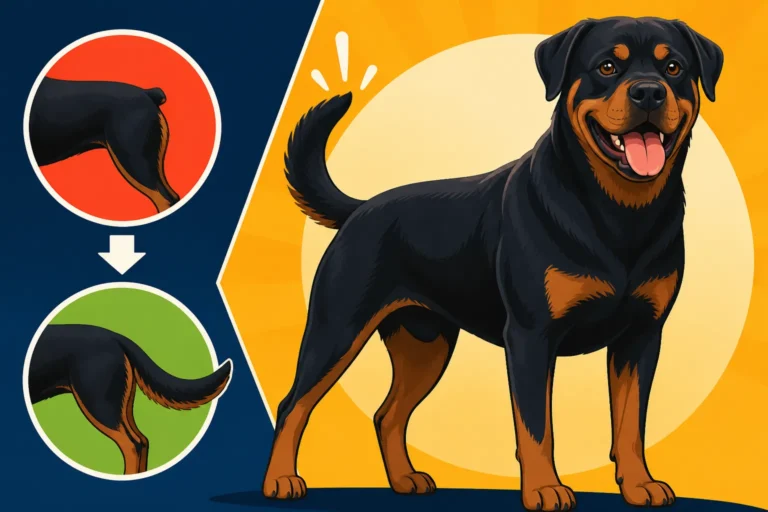
An undocked Rottweiler truly presents a different picture, one that is becoming increasingly admired. Instead of a short stump, they carry a long, strong tail that usually reaches the hocks (the joint on the back leg that looks like an ankle) or even longer. This tail is a continuation of their powerful spine, tapering to a fine point. It's often carried in a slight curve or saber-like fashion when relaxed, but it can be held high and wagging enthusiastically when happy, or tucked low when feeling insecure.
The movement of a natural tail is incredibly expressive. You can tell so much about a Rottweiler's mood, intent, and level of engagement just by observing its tail. From a slow, purposeful wag that indicates curiosity to a rapid, whole-body wiggle of pure joy, the natural tail adds a rich layer to their communication. For those who appreciate the complete, unadulterated form of the breed, the undocked tail is not just acceptable, but preferred, offering a fuller picture of the majestic Rottweiler.
Here's a quick comparison of the two appearances:
| Feature | Traditional Docked Tail Rottweiler | Natural Tail Rottweiler |
|---|---|---|
| Length | Short, typically 1-2 inches (often appears as a stub) | Long, reaching to the hocks or beyond |
| Shape | Blunt, thick at the base | Tapered, saber-like, or curved |
| Expression/Communication | Limited visual cues; relies on body language, ears, eyes | Full range of visual cues; expressive body language |
| Balance/Agility Aid | Minimal contribution | Significant aid for balance and turning |
| Aesthetic Preference | Traditional, "classic" appearance | Increasingly accepted, "complete" appearance |
Training and Management of a Natural Tail
Living with a natural-tailed Rottweiler is generally no different than living with any other dog, but there are a few practical considerations. When it comes to Rottweiler Puppy Training Through the First Year, it's important to include gentle tail handling as part of their socialization. This helps them get used to having their tail touched for grooming or vet exams, and teaches them appropriate play so they don't injure their own tail or another dog's.
For those concerned about "happy tail" injuries, preventive measures can be taken. Ensure your Rottweiler has enough space to wag freely without constantly hitting walls or furniture. Providing sturdy, appropriate toys from stores like Chewy can help redirect exuberant energy, and offering soft, comfortable beds can prevent pressure sores on other parts of the body if they're particularly enthusiastic tail-waggers indoors. Regular grooming, including checking the tail for any mats or debris, especially after outdoor adventures, is also wise, though a Rottweiler's short coat typically makes this a minor task. You might want to consider Grooming a Rottweiler That Sheds More Than It Looks to keep their coat healthy and clean, which includes the tail area.
Ultimately, the natural tail is part of a complete, healthy Rottweiler. Understanding its function and embracing its beauty is a step towards a more welfare-focused approach to the breed. It also allows us to appreciate the Rottweiler's full range of expression, strengthening the bond we share with these incredible dogs.
Rottweiler Temperament and That Self-Assured Aloofness
The Rottweiler Standard and Its Rust Markings
Rottweiler Growth Plates and Why They Close So Late
What a Health-Tested Rottweiler Puppy Costs
Rottweiler Hip Dysplasia and the OFA Grade
Training a Rottweiler Before It Outweighs You
The Crate Size a Hundred Twenty Pound Rottweiler Needs
Rottweiler Play Style With Smaller Dogs
Rottweiler Owners Turned Down by Landlords
Disclaimer
This article is for general informational purposes only and does not constitute professional advice. Laws, prices and regulations vary by location and change over time. Consult a qualified professional for guidance on your specific situation.