The Rottweiler From Roman Cattle Drives to the AKC
It's easy to look at a majestic Rottweiler today, with their calm, powerful presence, and assume they've always been the beloved family guardians we know. But the truth is, this breed has a fascinating, sometimes challenging, history, shaped by centuries of hard work, near extinction, and determined enthusiasts. If you've ever wondered how these impressive dogs came to be, and what roles they played through time, you're in for a treat, because we're about to explore the rich lineage that transformed them from ancient drover dogs to the cherished companions recognized by the AKC.
The Ancient Roots: Roman Drover Dogs
Imagine Roman legions marching across Europe, establishing new settlements and supply lines. They didn't just bring soldiers and supplies; they brought their livestock, too. And where there are livestock on the move, there are often powerful, protective dogs to manage and guard them. This is where the Rottweiler's story truly begins, deep in the heart of the Roman Empire.
Tracing the Ancestry Back to the Legions
The ancestors of the modern Rottweiler were likely sturdy, mastiff-type dogs used by the Roman army to drive and guard cattle as they traversed vast distances. These dogs were essential for feeding the legions, keeping the herds together on long, dusty routes, and protecting them from predators and thieves alike. They were bred for endurance, strength, and an innate protective instinct, traits that still resonate strongly in the Rottweiler we know today. Their presence was less about fancy pedigrees and more about practical, demanding work in harsh conditions. The Roman Drover Dogs Behind the Rottweiler gives us a deeper look into this fascinating origin.
These early dogs weren't a single, uniform breed as we understand it now. Instead, they were a type, selected for their utility and ability to perform a specific, crucial job for the Roman military. Think of them as the original working dogs, hardy and adaptable, capable of facing down a wolf or keeping a stubborn bull in line. They needed to be intelligent enough to follow commands but also independent enough to make decisions when immediate threats arose, making them invaluable assets to the marching armies.
Their physical characteristics would have been robust: strong jaws, muscular bodies, and a formidable presence that deterred any would-be cattle rustler. These were not dainty dogs; they were built for the rigors of the road and the demands of large livestock. The legacy of these Roman drover dogs is etched into the Rottweiler's very DNA, underpinning their strength, courage, and protective nature.
The Journey to Rottweil
As the Roman Empire expanded and eventually retreated, some of these dogs were left behind in the regions where legions had settled. One such area was a prosperous market town in what is now southern Germany, known as Rottweil. This town became a crucial hub for the cattle trade, and it's here that the Roman drover dogs found their new, specialized purpose, beginning the true lineage of the Rottweiler. How the Rottweiler's Ancestors Reached Germany paints a picture of this transition.
Over centuries, these dogs interbred with local breeds, but always, the selection favored those with the strong working drive and protective instincts necessary for managing cattle. The town of Rottweil, with its bustling cattle markets and meatpacking industry, provided the perfect environment for these dogs to evolve into what would become the "Rottweiler Metzgerhund," or "Butcher's Dog of Rottweil." The demands of the local economy shaped them, reinforcing the traits that made them indispensable.
The isolated nature of the trade in Rottweil meant that a distinct type of dog began to emerge, one perfectly suited to the specific needs of the local butchers and cattle dealers. They needed dogs that could not only drive livestock to market but also guard the butcher's money pouches and stalls. This lineage became a local treasure, a breed developed purely out of necessity and utility in a specific geographical context.
The Metzgerhund Era: Butcher's Dogs of Rottweil
The name "Rottweiler Metzgerhund" isn't just a historical curiosity; it perfectly describes the heart of the breed's purpose for centuries. These dogs were the silent, steadfast partners of the butchers and cattle drovers in the town of Rottweil, performing tasks that were essential to their livelihoods.
A Working Dog's Day
A Rottweiler Metzgerhund's day was filled with demanding physical and mental work. Their primary role was to drive cattle from outlying farms to the market in Rottweil, sometimes over considerable distances. Imagine trying to move a herd of large, stubborn cattle through rough terrain and busy streets without the aid of modern transport. It required immense strength, stamina, and a dog with an unshakeable presence. These dogs were literally "herding" in a very physical sense, often bumping and body-blocking cattle to steer them.
Once at the market, their duties didn't end. The dogs were then tasked with guarding the butcher's stall and, famously, protecting the money pouch containing the day's earnings. This pouch was often tied around the dog's neck, a testament to the absolute trust their owners placed in their loyalty and deterrent power. Why Butchers Called the Rottweiler a Metzgerhund delves into this incredible bond. This dual role of drover and guardian cemented their reputation as intelligent, reliable, and fiercely protective companions.
Beyond driving and guarding, these dogs also performed draft work, pulling small carts laden with butchered meat or other goods. Their powerful build and steady temperament made them ideal for this kind of work, further embedding them into the daily economic life of Rottweil. They were truly multipurpose working dogs, indispensable to the butchers and merchants who relied on them for security and labor.
The Bank Account on Four Legs
The image of a Rottweiler with a money pouch around its neck isn't just charming; it speaks volumes about the value these dogs held. In an era before secure banking and easy transportation, carrying large sums of cash made individuals vulnerable to robbery. A large, formidable Rottweiler, known for its protective instincts, was the ultimate deterrent. The money wasn't just safe; it was practically untouchable when guarded by one of these dedicated dogs.
This tradition highlights the deep trust and respect between the butchers and their dogs. It wasn't just about training; it was about an inherent loyalty and a keen understanding of their role. The dogs were not just pets; they were integral members of the business, responsible for safeguarding the very profits that sustained their owners' families. This level of responsibility required a dog with stable nerves, intelligence, and an unwavering commitment to its charge.
The "bank account on four legs" wasn't just a physical guardian; it was a symbol of the butcher's prosperity and security. This unique practice undoubtedly helped solidify the Rottweiler's reputation for steadfast loyalty and protective prowess, characteristics that remain cherished by breed enthusiasts today.
The Decline and Near Disappearance
The 19th century brought significant changes that almost spelled the end for the Rottweiler. The advent of railways made cattle droving obsolete; instead of dogs moving herds over land, cattle could be transported quickly and efficiently by train. This eliminated the Rottweiler's primary job, and with no clear alternative, their numbers began to dwindle dramatically. The 1800s Ban That Put Rottweilers Out of Work explores this critical period in their history.
As their usefulness in the cattle trade faded, many Rottweilers were no longer needed. The breed, once so essential to the local economy of Rottweil, faced a crisis. Without their traditional roles, there was less incentive to breed them, and fewer people saw the need for such large, powerful dogs. By the turn of the 20th century, the Rottweiler was on the brink of extinction, with very few purebred individuals left.
It's a stark reminder of how quickly a breed's fortunes can change when its original purpose disappears. The dogs were still magnificent, but the world had moved on, seemingly leaving the Metzgerhund behind. This period was a dark chapter, but it also laid the groundwork for a dedicated revival by enthusiasts who saw the inherent value and potential in these incredible dogs.
The Rottweiler's Revival and Early Recognition
Just when it seemed the Rottweiler might fade into history, a group of dedicated individuals recognized the immense potential and noble qualities of the breed. They understood that beyond cattle driving, these dogs possessed traits that were invaluable in other capacities.
Rescuing a Breed from Oblivion
Around 1900, a few German dog fanciers began to take notice of the dwindling Rottweiler population. They saw the inherent intelligence, strength, and stable temperament that had once made them so vital and believed these qualities could be redirected to new roles. This marked the beginning of a conscious effort to save the breed from extinction, moving them from a purely working dog status to one of a recognized breed with a standard.
These early enthusiasts formed clubs, such as the Deutscher Rottweiler-Klub (DRK) and later the Allgemeiner Deutscher Rottweiler-Klub (ADRK), with the goal of preserving and promoting the breed. They scoured the remaining population for suitable breeding stock, focusing on maintaining the essential working characteristics while establishing a consistent physical type. It was a painstaking process, requiring dedication and foresight to rebuild the genetic lines. The Fanciers Who Rebuilt the Rottweiler in 1901 details these crucial efforts.
This period was characterized by a shift in perspective: the Rottweiler was no longer just a butcher's tool but a noble breed with a rich history and a promising future. The groundwork laid by these determined individuals ensured that the Rottweiler would not only survive but thrive in the modern world.
Setting the Standard in Germany
With the formation of breed clubs came the necessity of establishing a formal breed standard. This standard defined the ideal physical characteristics – everything from head shape and coat color to overall size and proportion – as well as the desired temperament. The goal was to ensure uniformity and preserve the core traits that made a Rottweiler a Rottweiler. This consistency was crucial for breeding healthy dogs and for gaining wider acceptance in the dog fancy world.
The German standard, particularly that set by the ADRK, emphasized a strong, substantial dog with a confident and calm demeanor, suitable for a range of working roles beyond cattle. They valued dogs that were self-assured, fearless, and always ready to serve, but not overly aggressive or nervous. This focus on temperament was, and remains, paramount for a powerful working breed like the Rottweiler.
These early standards also played a vital role in identifying suitable breeding pairs, moving away from purely utilitarian breeding to a more selective process aimed at genetic health and conformity to type. This structured approach ensured the breed's integrity and quality as it began its journey toward international recognition.
Crossing the Atlantic
As the Rottweiler slowly regained its footing in Germany, its reputation began to spread. It wasn't long before individuals in other countries, including the United States, took notice of this impressive working dog. The first Rottweilers are believed to have arrived in America in the late 1920s, with official recognition following a few years later. The Decade Rottweilers Started Arriving in America gives us insight into this transatlantic migration.
These early imports were often brought over by individuals who recognized their potential as versatile working dogs, capable of protection, companionship, and even police work. They weren't an instant sensation, but rather a slow, steady introduction to American dog enthusiasts who appreciated their intelligence and formidable presence. The breed slowly gained a following among those who valued a dog with a strong work ethic and unwavering loyalty.
The arrival of Rottweilers in America marked a new chapter, one that would see the breed adapt to new environments and roles, eventually becoming one of the most recognized and admired dogs in the country. This expansion beyond its German homeland was crucial for its long-term survival and global appeal.
The Rottweiler in the AKC: A Working Group Star
The journey from Roman drover dog to beloved family companion culminates in the breed's formal recognition by major kennel clubs. In the United States, this meant earning a spot within the prestigious American Kennel Club (AKC), solidifying its place among the most respected breeds.
The Official Welcome
The American Kennel Club officially recognized the Rottweiler in 1931, placing it in the Working Group. This was a monumental step, marking its transition from a niche working dog to a recognized breed with a defined place in the American dog world. This recognition opened doors for Rottweilers to compete in conformation shows, obedience trials, and other dog sports, showcasing their versatility and intelligence. The Rottweiler Inside the AKC Working Group explains the significance of this designation.
Being part of the Working Group signifies that the Rottweiler was historically bred to perform specific tasks for humans, often large-scale and demanding jobs. This heritage is evident in their physical build and mental fortitude. It differentiates them from toy breeds, hounds, or terriers, reinforcing their identity as a dog built for purpose and performance.
This official welcome meant more than just a listing in a book. It provided a framework for responsible breeding, established breed standards that all Rottweilers would be judged against, and fostered a growing community of fanciers dedicated to the breed's future. It was the formal acknowledgement of centuries of development and dedication.
Defining the Breed Standard in America
While the AKC standard is rooted in the German origins, it's a living document that defines the ideal Rottweiler for American breeders and judges. This standard outlines everything from the correct proportions and gait to the desired temperament. For males, the standard calls for a height between 24-27 inches at the shoulder and a powerful, substantial build. Rottweiler Height and Weight for Males elaborates on these physical requirements.
The emphasis is on a well-balanced, athletic dog, powerful without being clumsy, and confident without being aggressive. The head, for example, is described as broad between the ears, with a strong, well-developed muzzle. The eyes should be dark brown, almond-shaped, and give an intelligent expression. Every aspect is detailed to guide breeders in producing dogs that truly embody the essence of the Rottweiler.
Maintaining a consistent breed standard is critical for preserving the breed's health, temperament, and unique characteristics. It acts as a blueprint, ensuring that despite geographic distances, a Rottweiler in California shares fundamental traits with one in New York, connecting them all to their German ancestors.
The Rise in Popularity
After its AKC recognition, the Rottweiler's popularity steadily grew, particularly in the latter half of the 20th century. Their impressive appearance, combined with their reputation for loyalty and protection, resonated with many people seeking a capable guardian and devoted family member. By the 1980s and 90s, the Rottweiler was a common sight, often ranking among the top ten most popular breeds in the United States.
However, with this surge in popularity came challenges. The demand for Rottweilers sometimes outpaced responsible breeding practices, leading to some individuals being bred without proper health clearances or temperament evaluations. This led to a mixed bag of temperaments and health issues, which unfortunately, at times, gave the breed an unfair reputation.
Despite these challenges, the breed's fundamental qualities – intelligence, courage, and a deep bond with its family – continued to shine through. Responsible breeders and owners worked hard to educate the public and showcase the true nature of a well-bred and well-socialized Rottweiler, ensuring its continued place as a respected and cherished breed.
Key Physical Characteristics of the Modern Rottweiler
There's no mistaking a Rottweiler once you've seen one. Their powerful build and distinctive markings are hallmarks of the breed, instantly recognizable and deeply rooted in their history as working dogs.
Size, Substance, and Structure
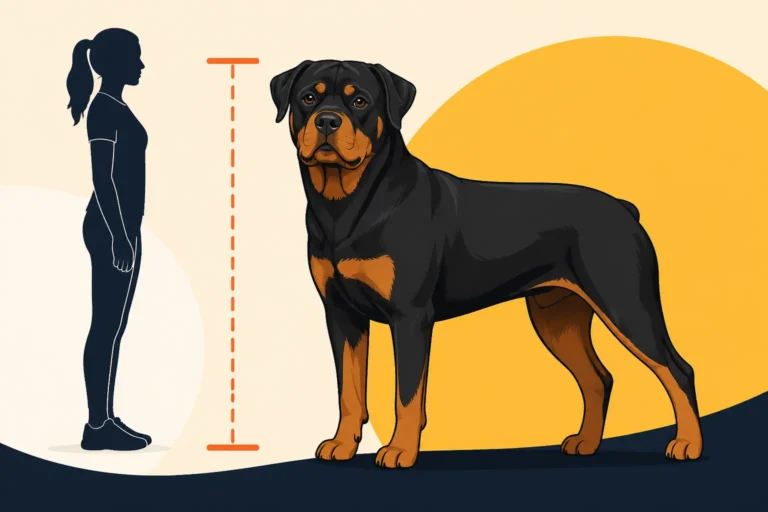
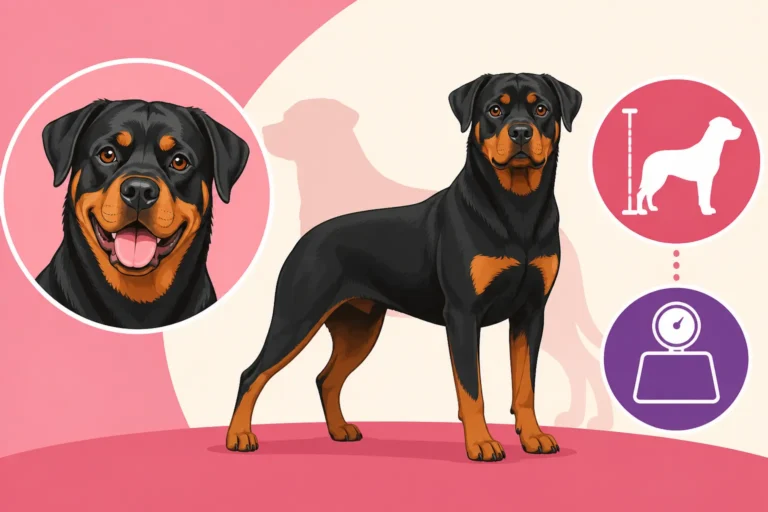
The Rottweiler is a dog of impressive size and substance. Males typically stand between 24 to 27 inches at the shoulder and possess a robust, muscular build, often weighing significantly more than females. Females are slightly smaller, usually between 22 to 25 inches, but still retain that characteristic powerful structure. This substantial build isn't just for show; it's a direct inheritance from their droving and guarding ancestors, designed for strength and endurance.
Their body is compactly built, often described as being longer than it is tall, giving them a rectangular profile. This balanced structure contributes to their powerful and agile movement, despite their size. They should move with a confident, ground-covering trot, reflecting their history of long marches with cattle. Any signs of clumsiness or weakness in movement are considered faults in the breed standard.
A well-conditioned Rottweiler should look like an athlete, not just a large dog. You should be able to feel their ribs without seeing them, and they should have a discernible waist. This focus on physical condition is crucial not just for showing but also for the overall health and longevity of these large, active dogs.
The Distinctive Black and Rust Coat
One of the most defining features of the Rottweiler is its striking black and rust coat. The body is a deep, lustrous black, with clearly defined rust or mahogany markings that appear on specific areas: above each eye, on the cheeks, on either side of the muzzle, on the throat, on the chest (two triangles), on the legs (front of forelegs and inner rear legs), and beneath the tail. This pattern is not just beautiful; it's a strict part of the breed standard. The Black and Rust Rottweiler Coat details these specific markings.
The coat itself is medium length, coarse, and dense, with an undercoat present, especially in cooler climates. This double coat provides protection against various weather conditions, a practical necessity for a dog that historically spent much of its time outdoors. While it's a short coat, Rottweilers do shed, sometimes quite a bit, especially when blowing their undercoat.
Any deviation from this black and rust pattern, such as white markings or different colored points, is considered a fault and would disqualify a Rottweiler from conformation showing. This strict adherence to coat color and markings emphasizes the importance of maintaining the breed's pure and traditional appearance.
That Powerful Head and Expression
A Rottweiler's head is arguably its most expressive and iconic feature. It's broad between the ears, with a well-developed muzzle that is strong and proportionate to the skull. The stop (the area between the eyes where the forehead meets the muzzle) is distinct. Their eyes should be medium-sized, almond-shaped, and dark brown, conveying an intelligent, confident, and observant expression.
The ears are medium-sized, triangular, and carried drooping close to the head, set wide apart. When alert, the ears should draw attention to the broad skull. The overall impression of the head should be one of substance and power, yet without being coarse or overly bulky. It's a look that speaks to their unwavering focus and inherent seriousness.
This powerful head, combined with their dark, intelligent eyes, gives the Rottweiler its characteristic self-assured and sometimes seemingly aloof expression. It's a face that commands respect and embodies the breed's deep-seated confidence and watchful nature.
Understanding the Rottweiler Temperament
Beyond their impressive physical appearance, the Rottweiler's temperament is what truly defines them. They are renowned for their loyalty, intelligence, and protective instincts, but understanding the nuances of their personality is key to a harmonious relationship.
The Confident and Calm Demeanor
A well-bred Rottweiler should exude an air of calm confidence. They are self-assured dogs, not typically prone to nervousness or excessive excitability. This inherent steadiness is a hallmark of the breed, a trait that served them well in their working past and makes them excellent companions today. They often assess situations before reacting, preferring to observe rather than rush in headfirst. The Calm Confidence a Rottweiler Standard Asks For underscores this crucial aspect of their personality.
This calm demeanor should not be mistaken for sluggishness or indifference. Beneath their composed exterior lies a highly intelligent and alert mind. They are always aware of their surroundings, and their watchful nature makes them excellent guardians. They process information, and when a response is required, they act with purpose and conviction.
Living with a Rottweiler means appreciating this quiet confidence. They don't always need to be the center of attention or demand constant reassurance. They are comfortable in their own skin, and this self-possession is a significant part of their appeal for many owners who seek a steadfast and reliable companion.
Aloofness vs. Aggression
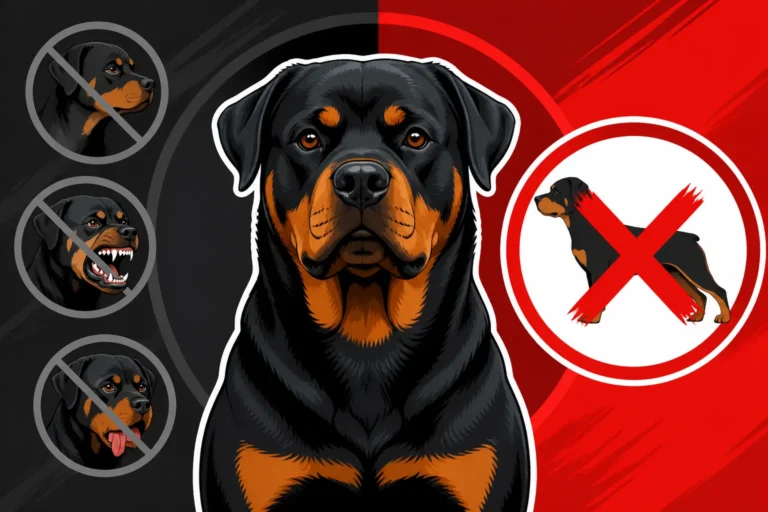
One of the most misunderstood aspects of the Rottweiler temperament is their natural aloofness toward strangers. Unlike some other breeds that greet everyone with effusive enthusiasm, a Rottweiler typically maintains a reserved distance when encountering new people. This isn't aggression; it's a cautious evaluation. They are discerning, taking their time to assess whether a newcomer poses any threat or if they are genuinely benign.
This "wait-and-see" approach is an integral part of their protective nature. They are not quick to befriend, but once they accept someone, their loyalty is profound. Unfortunately, this aloofness can sometimes be misinterpreted as unfriendliness or even aggression, especially by those unfamiliar with the breed. It's crucial for owners to understand this trait and manage interactions appropriately, always ensuring their Rottweiler feels secure and comfortable.
Proper socialization from a young age is paramount to ensure that a Rottweiler's natural aloofness doesn't tip into shyness or unwarranted suspicion. Exposing them to a variety of people, places, and situations in a positive way helps them learn to differentiate between genuine threats and everyday occurrences, maintaining their calm confidence without becoming overly reactive. They might not jump for joy at every new person, but they should certainly tolerate them politely.
Family Life and Instincts
Within their family, Rottweilers are known for being deeply loyal, affectionate, and even goofy. They often form incredibly strong bonds with their human companions, enjoying close physical contact – from leaning into you for pets to following you from room to room. Many Rottweiler owners describe them as "velcro dogs," despite their imposing size, simply wanting to be near their people.
Their protective instincts are ever-present, making them natural guardians of their home and family. They take their role seriously, often observing goings-on outside the house with a keen eye. This instinct is what makes them excellent deterrents, but it also means owners must be committed to consistent training and clear boundaries to ensure these protective tendencies are channeled appropriately and don't become problematic.
Rottweilers thrive on being part of the family unit. They are intelligent and eager to please those they trust, making them highly trainable. They excel when given a job to do, whether it's competitive obedience, therapy work, or simply being a well-behaved family member. Providing mental stimulation and clear leadership is key to a happy and well-adjusted Rottweiler.
Rottweilers at Work Today
While the cattle drives of old are largely gone, the Rottweiler's innate working drive and versatility mean they continue to excel in a wide array of demanding and important jobs in the modern world. Their intelligence, strength, and stable temperament make them highly adaptable.
Beyond Cattle: Police and Military Roles
The traits that made Rottweilers excellent cattle drovers – strength, courage, trainability, and an intimidating presence – also make them superb candidates for police and military work. For decades, Rottweilers have served as police K9s, excelling in roles such as patrol, apprehension, detection (drugs, explosives), and search and rescue. Their powerful bite force and unwavering loyalty to their handlers make them incredibly effective in these high-stakes environments.
In military applications, Rottweilers have been utilized for guarding, patrol, and even as messengers in past conflicts. Their robust health and ability to withstand challenging conditions are significant assets. These roles demand a dog with exceptional nerve, intense focus, and the ability to work under immense pressure, qualities for which the Rottweiler is uniquely suited.
The training for these working roles is rigorous and extensive, honing their natural instincts into highly disciplined and specialized skills. A Rottweiler working in law enforcement or the military is a testament to the breed's extraordinary capabilities and enduring work ethic.
Therapy and Service Animals
It might surprise some, given their imposing appearance, but Rottweilers also make incredibly effective therapy and service animals. Their calm demeanor, intelligence, and deep loyalty enable them to provide crucial support to people in need. As therapy dogs, they visit hospitals, nursing homes, and schools, offering comfort and companionship with their gentle presence. Rottweilers Working as Therapy Dogs in Hospitals demonstrates their capacity for gentle interaction.
For individuals with disabilities, Rottweilers can be trained as service animals, performing tasks that assist with mobility, provide stability, alert to medical conditions, or retrieve items. Their strength makes them particularly suited for bracing or stability work. The key to their success in these roles lies in their stable temperament, trainability, and their profound bond with their human partners.
These roles require a different kind of "work" than apprehension or patrol, emphasizing patience, empathy, and unwavering focus on their person. A Rottweiler that can seamlessly transition from a powerful guardian to a gentle comforter truly showcases the incredible breadth of their temperament and their innate desire to serve. When well-socialized and trained, they offer a tremendous gift of support.
Modern Canine Sports
Beyond their formal working roles, many Rottweilers and their owners find great joy and fulfillment in various canine sports. These activities provide an outlet for their intelligence, athleticism, and desire to work, strengthening the bond between dog and handler. Obedience and Rally competitions, for example, highlight their trainability and precision, with Rottweilers often excelling due to their focus and willingness to please.
Agility, while often associated with lighter, faster breeds, can also be enjoyed by Rottweilers, especially when courses are designed with their size and strength in mind. It's an excellent way to keep them physically and mentally fit. Another sport deeply connected to their history is carting or draft work, where they pull weighted carts, showcasing their original "Metzgerhund" strength in a competitive setting.
Protection sports like Schutzhund (now called IGP) also remain popular for Rottweilers, demonstrating their inherent protective instincts under strict control and discipline. These sports demand high levels of physical fitness, mental sharpness, and a strong partnership between dog and handler, allowing Rottweilers to truly shine in modern working capacities.
German vs. American Rottweilers: A Subtle Divide
It's common to hear distinctions made between "German Rottweilers" and "American Rottweilers." While all Rottweilers share the same fundamental breed standard, subtle differences in breeding philosophy and emphasis have led to perceived variations between dogs from these two lines.
Different Breeding Philosophies
In Germany, breeding is largely overseen by the Allgemeiner Deutscher Rottweiler-Klub (ADRK), which maintains very strict breeding regulations. These regulations prioritize working ability, requiring breeding dogs to pass specific temperament tests (like the ZTP, or breed suitability test), endurance tests, and acquire working titles. Health clearances for hips and elbows are mandatory and rigorously assessed. The emphasis is on maintaining the Rottweiler as a true working dog, with temperament and utility as primary concerns. How German and American Rottweiler Type Diverged explains these distinctions.
In the United States, while the AKC also has a breed standard and encourages health clearances, the overall breeding landscape is less centralized and less stringent regarding mandatory working titles for breeding. This has sometimes led to a greater focus on conformation (show ring appearance) over working ability in some lines, though many American breeders are just as dedicated to working titles and health. As such, some "American type" Rottweilers might appear slightly different in build or carry a slightly different temperament compared to their German counterparts, perhaps being a bit heavier or less intensely driven for work, though this is a generalization.
These differences are not about one being "better" than the other, but rather reflecting slightly different priorities and cultural approaches to dog breeding. Both strive to produce healthy, well-tempered Rottweilers, but the paths to achieving that can vary.
Health and Longevity Considerations
When comparing German and American lines, some people will claim one is healthier or lives longer than the other. The truth is, health and longevity are complex issues influenced by many factors, including genetics, environment, and individual care, regardless of geographical origin. Both lines face similar health concerns common to the breed, such as Rottweiler Hips and Elbows and the 24-Month Rule for hip and elbow dysplasia, heart conditions like Subaortic Stenosis, and certain cancers.
However, the rigorous breeding standards in Germany, which often include mandatory health screenings and working evaluations, are designed to minimize the risk of passing on genetic diseases and poor temperaments. This strong emphasis on proven health and working ability before breeding can, in theory, lead to a more consistently healthy and sound population. Responsible breeders in both countries utilize health clearances like OFA and PennHIP, as well as genetic tests for conditions like JLPP and the RAB3GAP1 Gene in Rottweilers.
Ultimately, whether you choose a Rottweiler from German or American lines, the most critical factor for health and longevity is choosing a responsible breeder. A good breeder, regardless of their location or line, will prioritize health testing, temperament, and ethical breeding practices. They'll be transparent about their dogs' health records and happy to answer all your questions, and might even tell you where to find good quality food like Chewy stocks, to keep your future Rottie in top shape.
| Feature | German Rottweiler (General Tendencies) | American Rottweiler (General Tendencies) |
|---|---|---|
| Breeding Focus | Strong emphasis on working ability, temperament tests, strict health rules. | Can lean more towards conformation (show ring) in some lines; working tests encouraged, but often not mandatory. |
| Temperament | Often described as very keen, high drive, confident, calm and protective. | Confident, protective, but possibly a bit more mellow or family-oriented depending on lines. |
| Physical Build | Can be slightly leaner, more athletic build due to working requirements. | May sometimes appear slightly heavier or broader, though still powerful. |
| Registry/Club | ADRK (Allgemeiner Deutscher Rottweiler-Klub) is dominant. | AKC (American Kennel Club) is dominant. |
| Health Clearances | Mandatory and very strictly enforced for breeding stock. | Highly encouraged and widely used by responsible breeders, but not always uniformly mandatory. |
Remember, these are general tendencies and excellent, healthy, well-tempered Rottweilers are found in both lines. The individual dog and its specific lineage are far more important than a broad "German vs. American" label. A good breeder, regardless of their preferred lines, will put the health and future of their dogs first.
Disclaimer
This article is for general informational purposes only and does not constitute professional advice. Laws, prices and regulations vary by location and change over time. Consult a qualified professional for guidance on your specific situation.