Why a Rottweiler Is Longer Than It Is Tall
Many people, especially those new to the breed, look at a Rottweiler and instantly notice their robust build, but they might not realize one of the most defining characteristics of their structure: they're typically longer than they are tall. This isn't just a quirky visual trait; it's a deliberate feature rooted in their history and function, and understanding it helps you appreciate the true design of this magnificent working dog. This guide will explore the breed standard that dictates these proportions, delve into the historical reasons behind it, and explain why this build is so integral to the Rottweiler's identity and capabilities.
The Breed Standard's Ideal Proportions
When we talk about a Rottweiler's build, the breed standard is our blueprint. It outlines the ideal physical characteristics, ensuring that Rottweilers retain the traits necessary for their historical work and overall health. The length-to-height ratio is a critical component of this standard, often catching prospective owners by surprise if they're used to more squarely built breeds.
Understanding the "Longer Than Tall" Ratio
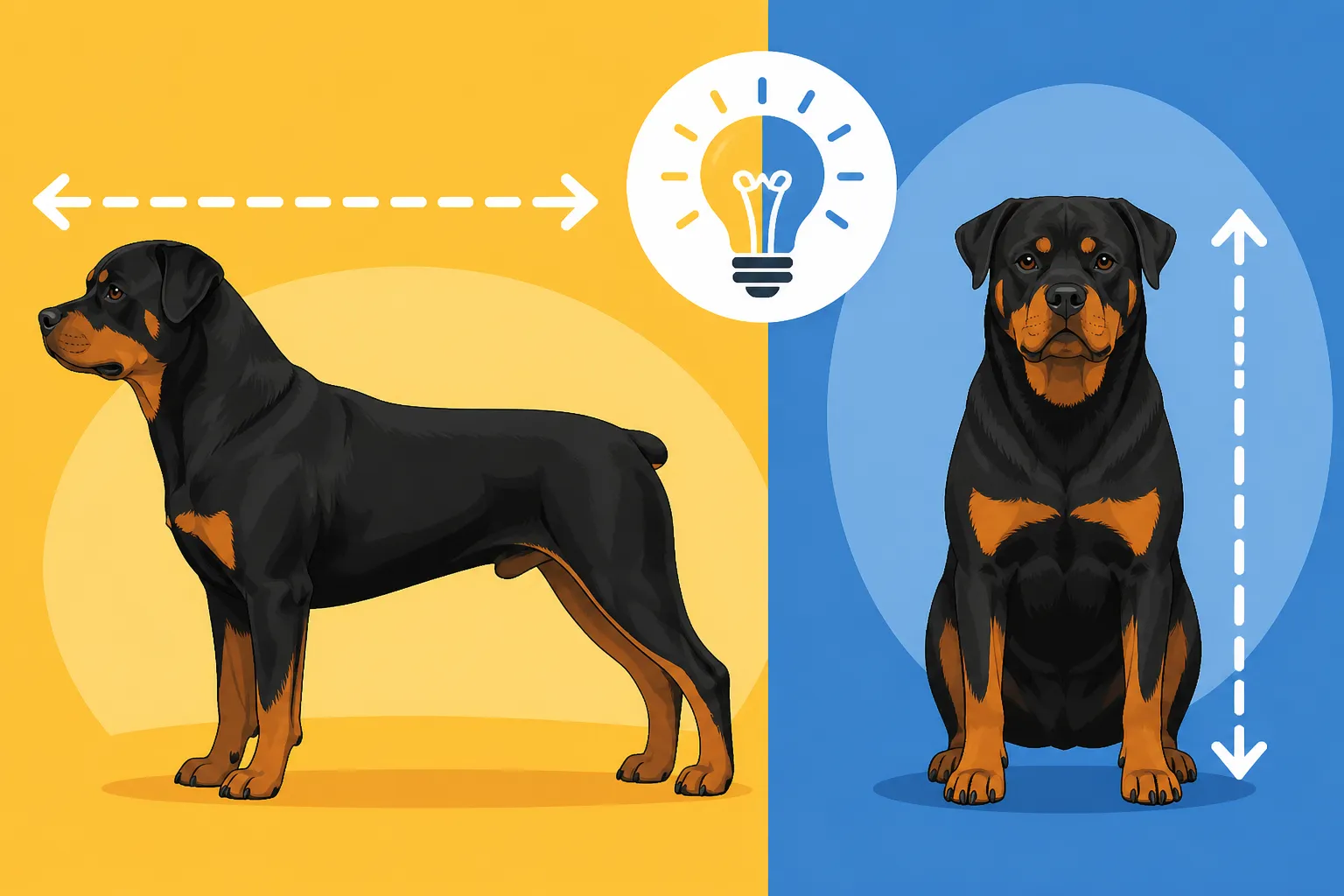
The official breed standards for Rottweilers, whether from the AKC or the FCI (the international kennel club federation), explicitly state that a Rottweiler should be longer than it is tall. Specifically, the length of the body, measured from the prosternum (the breastbone) to the rear-most projection of the rump, should ideally exceed the height at the highest point of the shoulder (the withers). While specific percentages can vary slightly between standards or individual interpretations, a common guideline suggests that the body length should be approximately 10-15% greater than the height. So, if your male Rottweiler stands 26 inches tall at the shoulder, you'd expect his body length to be around 28 to 30 inches. This isn't just about appearance; it's about functionality.
This subtle elongation provides several advantages, especially for a dog originally bred for strenuous physical tasks. A slightly longer body allows for greater reach and drive from the hindquarters, which translates into powerful, efficient movement. Imagine a long-distance runner needing an economical gait – the Rottweiler's proportions are designed for endurance and stability rather than short bursts of speed or sharp turns. It's a structure built for sustained effort, giving them a lower center of gravity and more overall stability. This also impacts how their major joints are aligned, contributing to their powerful yet balanced stride.
Why a Rectangular Frame Matters
The concept of a "rectangular frame" is directly tied to the longer-than-tall ratio. A Rottweiler is not meant to be a square dog, where height and length are roughly equal. Instead, their silhouette should ideally fit within a rectangle. This rectangular shape isn't just for show ring aesthetics; it's a direct reflection of their original purpose as herding and guarding dogs. A longer back allows for more flexibility and a smoother, more ground-covering trot, which was essential when moving cattle for miles.
Think of it this way: a compact, square dog might be excellent at sudden, agile changes of direction, perfect for quick prey drive or dog sports. A longer-bodied dog, like the Rottweiler, excels at powerful, sustained forward motion. This body type also distributes weight more evenly, reducing concussive impact on individual joints over extended periods of work. Breeders strive to achieve this balance, knowing that deviations too far in either direction—too square or excessively long—can impact not only movement but also long-term health. Finding supplies that fit this rectangular build can sometimes be a challenge, but many pet retailers like Chewy offer specialized beds and crates for large, rectangular breeds, ensuring proper support and comfort.
Historical Purpose and Its Influence on Structure
To truly understand why the Rottweiler is longer than it is tall, we need to take a trip back in time to their origins. These weren't dogs bred for dainty parlor life; they were working animals through and through, and their physical form was perfectly adapted to their demanding jobs.
The Roman Drover Dogs
The ancestors of today's Rottweiler trace their lineage back to the powerful Roman drover dogs that accompanied legions across Europe. These formidable dogs were vital to the Roman war machine, helping to herd and protect the cattle that fed the troops on their long marches. Imagine the sheer distances covered, the varied terrain, and the constant need to control large, often unruly, livestock. These dogs weren't just following; they were actively managing the herd, sometimes for days on end.
A longer body, coupled with strong bone and muscle, was crucial for this role. It gave them the endurance to trot alongside cattle for hours without tiring, and the strength to turn a wayward steer with a determined shoulder bump. Their body structure allowed for a powerful, reaching gait, enabling them to cover ground efficiently while maintaining stability. The Roman legacy is palpable in the modern Rottweiler, from their deep chest designed for lung capacity to their strong hindquarters that provide the necessary propulsion. Understanding the role of The Roman Drover Dogs Behind the Rottweiler sheds light on these foundational traits.
The Metzgerhund's Demanding Work
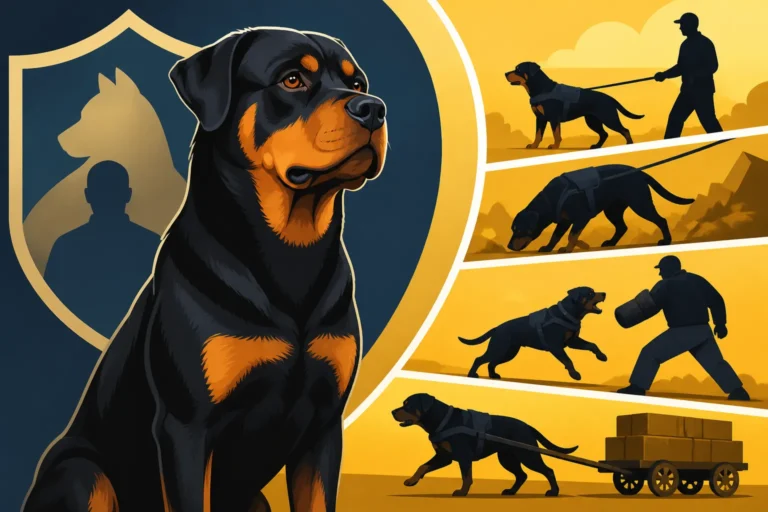
Centuries later, in the German town of Rottweil, these dogs found a new, yet equally demanding, purpose. They became known as "Metzgerhund," or "butcher's dog," and their duties expanded beyond simple droving. Rottweilers were essential to the local butchers, herding cattle to market, guarding their masters' money pouches against bandits, and even pulling carts laden with meat. This was a rugged life, requiring immense strength, stamina, and a certain kind of physical architecture.
The longer body provided a distinct advantage for carting. A longer back allows for a more effective distribution of the load when pulling, acting as a natural lever for power and stability. It prevents the dog from becoming too "bunched up" under the strain, enabling them to maintain a powerful, forward-driving gait. Furthermore, a longer frame made them more imposing and intimidating when guarding, creating a larger perceived presence. The tasks a What a Metzgerhund Did in a Day's Work performed directly shaped the breed's conformation, cementing the longer-than-tall ratio as a functional necessity, not just an aesthetic choice. This historical context underlines why modern breeders continue to prioritize these proportions in their lines.
Functional Advantages of the Longer Body
The fact that the Rottweiler's breed standard explicitly calls for them to be longer than they are tall isn't an arbitrary decision. This particular body type offers several distinct advantages that directly contribute to the breed's capability as a powerful working dog, influencing everything from their movement to their overall physical resilience.
Enhanced Agility and Balance
While a Rottweiler might not be the most agile dog in terms of quick, darting movements like a Border Collie, their longer body contributes to a different kind of agility and balance crucial for their original work. When herding cattle, these dogs needed to maneuver around large, often unpredictable animals. A slightly elongated frame provides a longer base of support, giving them exceptional stability, especially when engaging with or bumping against livestock. This lower, more stable profile makes them less prone to being knocked off balance.
Imagine a Rottweiler needing to pivot quickly to cut off a stray cow or brace against a charging bull. The extended body length allows for a broader distribution of momentum and a more controlled shift of weight. It's about powerful, grounded movement rather than light-footed skipping. This solid, balanced foundation is what allows them to confidently navigate varied terrain and handle the physical demands of large animal interaction without faltering. This aspect is vital when considering activities like Rottweiler Droving Instinct and Bumping, where their physical structure is put to the test.
Efficient and Powerful Movement
The longer-than-tall structure is fundamentally designed for efficiency and power in motion. A slightly longer back, combined with well-angulated hindquarters, enables a more extended reach and powerful drive. When a Rottweiler trots or runs, its limbs can extend further, covering more ground with each stride. This translates into an economical gait that conserves energy over long distances – a critical trait for a dog expected to work all day.
The powerful propulsion comes from those strong hindquarters, which are able to push off effectively thanks to the leverage provided by the longer body. This doesn't mean they are built for extreme speed, but rather for sustained, strong forward motion. Their movement should be smooth, effortless, and powerful, allowing them to carry their substantial weight with grace and endurance. When judges assess Rottweiler Movement as Judges Assess It, they are looking for precisely this type of efficient, ground-covering gait, which is a direct consequence of their proportion. This functional design is also why choosing the right gear is important; for example, a well-fitting harness from Chewy can ensure comfort and proper weight distribution during walks, complementing their natural powerful movement.
| Characteristic | Square-Built Dog (e.g., Boxer) | Rectangular-Built Dog (Rottweiler) |
|---|---|---|
| Length vs. Height | Roughly equal | Length > Height (approx. 10-15% longer) |
| Center of Gravity | Higher, allows for quick turns | Lower, for stability and power |
| Primary Movement | Agility, quick bursts, tight turns | Endurance, powerful trot, ground-covering |
| Historical Role | Hunting, dog sports | Droving, guarding, carting |
| Weight Distribution | More concentrated | More evenly distributed along spine |
Health Considerations and the Importance of Balance
While the longer-than-tall proportion is a hallmark of the Rottweiler breed, it's crucial to remember that "longer" doesn't mean "excessively long" or "unbalanced." Like any structural characteristic, moderation and correct balance are key to ensuring the dog's long-term health and well-being. When the proportions deviate too far from the ideal, it can introduce unique health challenges for this powerful breed.
Impact on Spinal and Joint Health
An extreme deviation towards an overly long back can place undue stress on the Rottweiler's spine. A very long, weak back can lead to conditions like spondylosis or intervertebral disc disease (IVDD) later in life, especially given the breed's substantial weight. The spine acts as a bridge, and if that bridge is too long for its support structures, it becomes vulnerable. Similarly, if the dog is too short in body, it can lead to a "cramped" appearance and limit the powerful reach and drive from the hindquarters, forcing unnatural angles on joints.
Maintaining the correct balance, where the length is proportionate to the height and overall bone structure, is paramount. This ensures that the weight is properly distributed and that the natural shock absorbers of the spine and joints can function optimally. Responsible breeders pay close attention to the Rottweiler Growth Plates Closing at Eighteen to Twenty-Four Months and overall development, ensuring puppies mature with sound structure. Over-exercising a young Rottweiler, especially with activities that involve repetitive jumping or twisting, can put excessive strain on an 아직 developing skeletal system, potentially exacerbating any structural weaknesses that might become more pronounced in an overly long back.
The Role of Responsible Breeding
Responsible breeders understand the importance of maintaining the correct breed standard for proportions, not just for aesthetics but for health. They select breeding dogs with sound, balanced structures that reflect the ideal longer-than-tall ratio without exaggeration. This includes evaluating the parents' hip and elbow scores through certifications like OFA. A dog with excellent hip conformation will be better equipped to handle the demands placed on its hindquarters by a powerful, slightly elongated body. You'll often hear discussions about Rottweiler Hip Dysplasia and the OFA Grade in this context, as structural integrity directly impacts these health clearances.
A breeder dedicated to the breed's health will prioritize a balanced dog that moves fluidly and without strain, rather than chasing extremes in size or length. They will look at the whole picture: angulation, bone structure, muscle mass, and how they all come together to create a functional, healthy Rottweiler. This holistic approach helps to mitigate potential issues associated with their powerful build and ensures the breed continues to thrive.
Evaluating Proportions in Your Rottweiler
For owners and aspiring owners, knowing how to observe and evaluate your Rottweiler's proportions can be incredibly helpful. It allows you to appreciate the finer points of their structure, understand how they move, and identify potential areas of concern that might warrant a vet visit. It's not about being a show judge, but about understanding your dog's unique physical makeup.
What to Look For in a Well-Proportioned Rottweiler
When you look at a well-proportioned Rottweiler, several things should stand out, all contributing to that "longer than tall" ideal. First, observe them from the side. You should see a strong, level topline that extends from a well-laid-back shoulder to a powerful, well-muscled croup. The length from the prosternum to the rear of the thigh should clearly exceed the height at the withers. This isn't a massive difference, usually a subtle elongation, creating that characteristic rectangular profile.
Their gait should reflect this balance. A well-proportioned Rottweiler will move with powerful, even strides, exhibiting excellent reach in the front and strong drive from the rear. There should be no signs of "crabbing" (moving sideways) or a short, choppy gait. The chest should be deep and broad, reaching at least to the elbows, supporting good lung and heart capacity. You'll find good examples of these traits described in Rottweiler Size Under the AKC Standard. Even in a young pup, you can start to observe these characteristics, though their full adult form won't be apparent until they're fully grown, usually around 18-24 months.
How to Measure Your Rottweiler
While you don't need to get out a tape measure daily, knowing how to measure your Rottweiler can be a fun and insightful exercise. For height, use a measuring stick or level against a wall, measuring from the floor to the top of their shoulder (the withers). Ensure they are standing squarely, not slouched or stretching. For length, measure from the point of their prosternum (the most forward part of their chest) to the rear-most point of their rump, at the base of the tail. Again, ensure they are standing in a relaxed, natural position.
Once you have these two measurements, you can calculate the ratio. For example, if your Rottweiler is 25 inches tall and 28 inches long, the length is 112% of the height (28/25 = 1.12), which falls nicely within the desired longer-than-tall range. Regular measurements over time can also help you track their growth, especially important for monitoring their development during their long growth period where Rottweiler Growth Plates and Why They Close So Late means their bones are still developing. Knowing these figures can also help when purchasing large-breed specific items, such as large orthopedic dog beds from Chewy, ensuring a comfortable fit for their unique dimensions.
Comparing Rottweiler Proportions to Other Breeds
When you spend most of your time around Rottweilers, their unique proportions become second nature. However, for those looking at the breed for the first time or comparing them to other dogs, it's helpful to see how their "longer than tall" build stands out against other popular breeds, especially those often mistaken for or compared to Rottweilers.
Rottweilers Versus Square-Built Breeds
Many dog breeds are described as "square-built," meaning their height at the withers is approximately equal to their body length. Breeds like the Boxer, Doberman Pinscher, or even some terriers often fall into this category. These dogs are typically bred for agility, quick turns, and explosive bursts of speed. Their compact, square frames allow for tight maneuvers, making them excellent in dog sports that require rapid changes of direction.
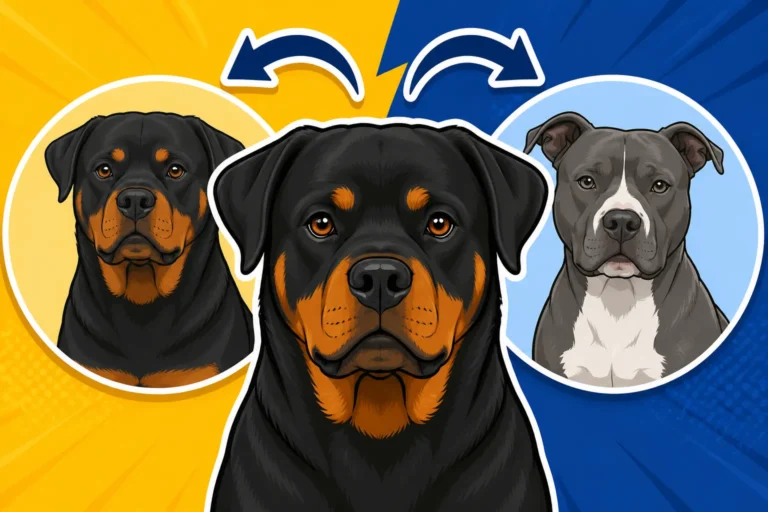
The Rottweiler's longer body, in contrast, prioritizes power, stability, and endurance over rapid, high-impact turns. While a Rottweiler can certainly be agile, its strength lies in its grounded, powerful stride and ability to maintain momentum. This difference in primary function is directly reflected in their skeletal architecture. A Doberman, for instance, might appear more "elegant" or "athletic" in a sprint due to its square, lean build, whereas a Rottweiler projects an image of solid, unshakeable power, built for the long haul. Understanding these fundamental differences helps appreciate why Rottweilers Against Dobermans and German Shepherds have distinct structural needs and capabilities.
Rottweilers and Other Large Working Breeds
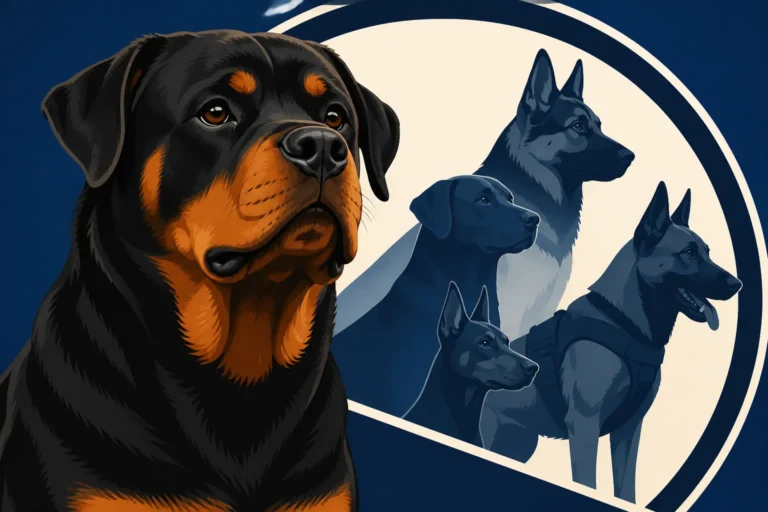
When compared to other large working breeds, the Rottweiler's longer proportion still holds its own, though the nuances differ. German Shepherds, for example, are also often longer than tall, but their length is frequently accompanied by a more pronounced angulation in the hindquarters and a slightly sloping topline, emphasizing their agility and ground-covering trot as herding dogs. Great Danes, while massive, tend to have a more nearly square build, highlighting their role as formidable guardians with immense vertical presence.
Even within the broader "Mastiff-type" group, the Rottweiler distinguishes itself. Breeds like the Bullmastiff or Cane Corso, while sharing some ancestral ties to the Rottweiler and displaying powerful builds, often have slightly different ratios or a more massive, less rectangular overall appearance. The Rottweiler’s specific blend of length, depth, and bone structure creates a unique silhouette that speaks to its history as a drover and guard dog – a balanced, powerful rectangle designed for efficiency and unwavering presence. It’s this carefully balanced design that ensures they can comfortably carry their weight, whether they are a working dog or a beloved family companion, making the choice of sturdy gear, like durable toys and feeding bowls from Chewy, a practical necessity.
Disclaimer
This article is for general informational purposes only and does not constitute professional advice. Laws, prices and regulations vary by location and change over time. Consult a qualified professional for guidance on your specific situation.