Why a Rottweiler Gets Mistaken for a Pit Bull
It's incredibly frustrating when your majestic Rottweiler, a dog with a rich history and a very distinct appearance, is constantly mistaken for a "Pit Bull." This widespread misunderstanding isn't just a minor annoyance; it carries real-world consequences for owners and perpetuates unfair stereotypes for both Rottweilers and the various breeds commonly lumped under the "Pit Bull" label. This guide aims to clear up that confusion by detailing the unique characteristics of the Rottweiler and explaining why these two distinct types of dogs often get mixed up.
Understanding the Confusion: A Tale of Two Reputations
The first step to untangling this common misidentification is to acknowledge the unfortunate reality that both Rottweilers and the collection of breeds known as "Pit Bulls" have been subject to decades of negative press and misrepresentation. This shared burden of a perceived "dangerous dog" reputation often leads the public to lump them together, creating a generalized image of a powerful, short-coated, intimidating canine.
The Shared Stigma and Misinformation
For far too long, both Rottweilers and "Pit Bulls" have been unfairly targeted by sensationalist media reports and uninformed public opinion. These narratives often paint them as inherently aggressive or dangerous, ignoring the vast majority of well-adjusted, loving family dogs within both groups. This kind of misinformation fosters a climate of fear, where people are more likely to see a "scary dog" rather than discern individual breed characteristics. When someone encounters a large, muscular dog with a short coat and isn't familiar with breed specifics, their existing biases, often fueled by these negative stereotypes, can lead them to quickly categorize the dog incorrectly. It's a knee-jerk reaction born out of societal fear rather than actual knowledge.
This shared stigma also has very practical implications, affecting everything from housing opportunities to insurance coverage. Many communities and landlords operate under breed-specific legislation (BSL) or restrictions that target these very breeds, and an incorrect identification can subject a perfectly well-behaved Rottweiler (or a Pit Bull type, for that matter) to unfair discrimination. Imagine being told you can't live in an apartment because your Rottweiler is "a Pit Bull," despite clear breed differences. It's a disheartening reality many responsible owners face.
Superficial Visual Cues
While Rottweilers and Pit Bull types are indeed distinct breeds or groups of breeds, there are some very broad, superficial visual cues that can contribute to initial confusion, especially for the untrained eye. Both are generally medium to large-sized dogs, known for their muscular builds and powerful physiques. They both tend to have short, dense coats, which immediately sets them apart from long-haired breeds or those with scruffy textures.
Additionally, both often possess strong, blocky-looking heads and powerful jaws, giving them an impression of strength and robustness. When someone only has a fleeting glance or isn't closely observing the finer details of head shape, ear set (if undocked), or coat markings, these general shared characteristics can lead to a quick, but incorrect, assumption. It's like mistaking a bear for a gorilla because both are large, powerful, and dark-colored, ignoring the hundreds of unique features that make them entirely different animals.
The Rottweiler's Unique Blueprint
To truly understand why a Rottweiler is its own distinct entity, we need to dive into the specifics of its appearance, temperament, and historical purpose. These aren't just arbitrary traits; they are the result of centuries of selective breeding for a particular set of jobs.
The Iconic Black and Rust
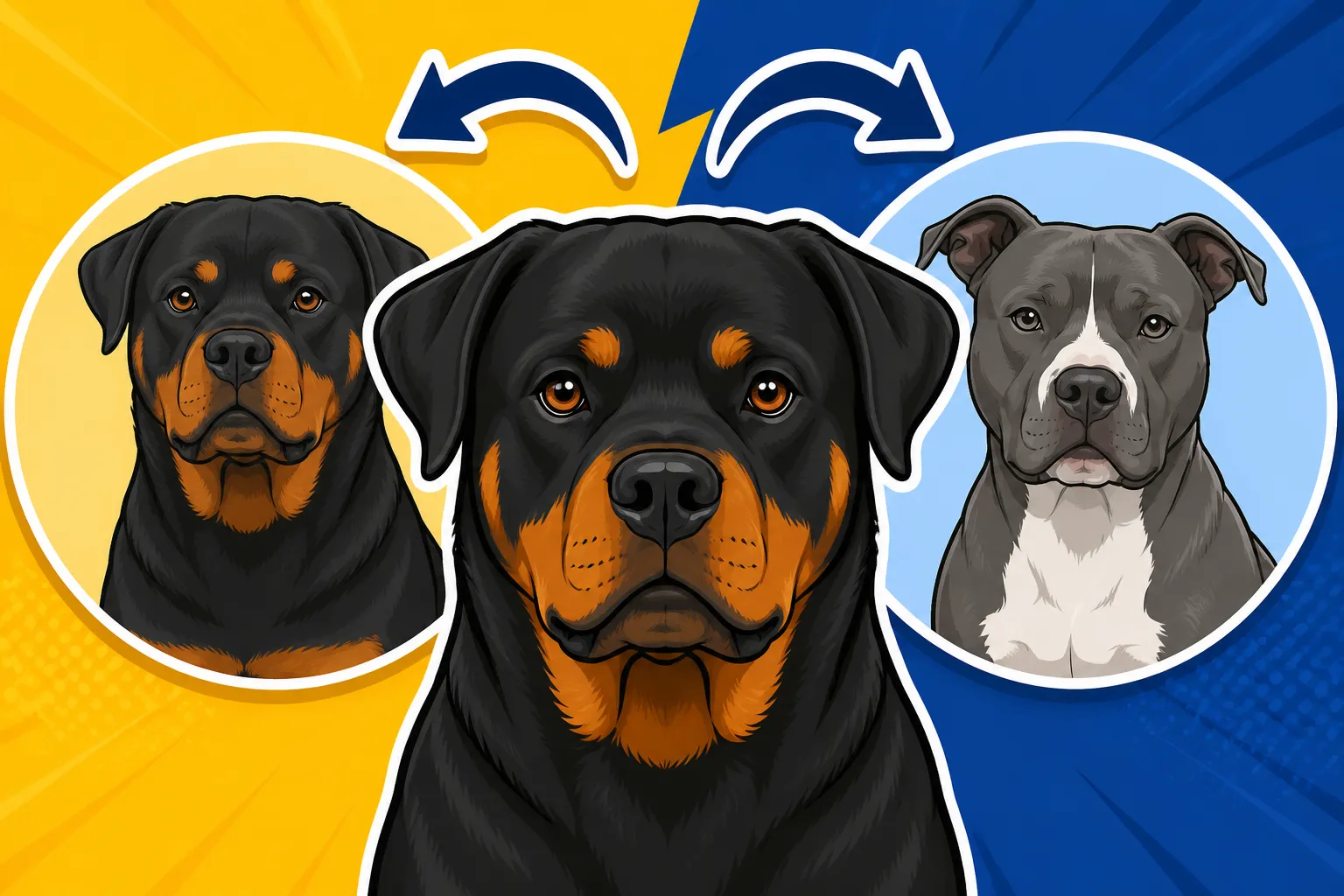
Perhaps the most immediately recognizable feature of a Rottweiler is its distinctive coat. The breed standard calls for a short, coarse, dense black coat with very specific rust (or mahogany) colored markings. These markings are not haphazard splashes of color; they appear in precise locations:
- Muzzle: A distinct tan or rust "thumbprint" on each cheek, and a strip over the bridge of the nose, often extending down the throat.
- Chest: Two distinct rust triangles on the chest, almost like a bow tie.
- Legs: Markings on the lower portion of all four legs, usually tapering upwards.
- Eyes: Rust spots above each eye, giving the impression of "eyebrows."
- Under Tail: A rust-colored patch underneath the base of the tail.
This pattern is a hallmark of the breed and is remarkably consistent. You won't find solid black Rottweilers, nor will you find ones with brindle, merle, or piebald markings; those would be disqualifying faults in the breed ring and indicate a mix or non-standard genetics. This uniform coloration stands in stark contrast to the incredibly diverse range of colors and patterns seen across the various "Pit Bull" breeds, which can be solid, brindle, fawn, blue, red, or even merle. The precision of the Rottweiler's markings is a key identifier.
A Head and Muzzle Unlike Any Other
A closer look at a Rottweiler's head reveals further distinctions. Rottweilers have a broad skull between the ears, with a well-developed stop (the indentation where the muzzle meets the skull). Their muzzles are strong, deep, and proportionate to the skull, rather than appearing extremely wide or stubby. The overall impression is one of substantial power and noble dignity. The lips are typically black and tight, and the jaws are strong with a scissor bite, where the outer side of the lower incisors just touches the inner side of the upper incisors.
Their ears are medium-sized, set high, and carried drooping close to the head. Their eyes are almond-shaped and dark brown, conveying a calm and intelligent expression. While "Pit Bull" types also have strong jaws, their head shapes can vary significantly depending on the specific breed. For example, the American Pit Bull Terrier often has a slightly more refined head, while the American Staffordshire Terrier might have a broader, squarer head. The overall facial structure, including the depth of the muzzle and the specific placement of the stop, truly sets the Rottweiler apart. You can learn more about The Rottweiler Head Under the Standard to appreciate these details.
The Powerhouse Build and Proportions
Rottweilers are known for their powerful, athletic, and robust build. The breed standard specifies that they should be longer than they are tall, giving them a distinct rectangular appearance rather than a square or compact one. A mature male Rottweiler typically stands between 24 and 27 inches at the shoulder and can weigh anywhere from 95 to 135 pounds, with females slightly smaller. Their chest is deep and broad, providing ample lung capacity and contributing to their powerful silhouette. Their legs are straight and strong, designed for endurance and power rather than explosive speed.
This substantial, rectangular physique is a direct reflection of their original purpose as working dogs, capable of herding large cattle over long distances and guarding valuable property. While Pit Bull types are also muscular and powerful, they generally exhibit a more compact, often square-proportioned body, with a greater emphasis on agility and explosive strength. Their size range is also incredibly varied, with some Staffordshire Bull Terriers being quite small (around 24-38 pounds) and American Bullies potentially much heavier and broader. Understanding Why a Rottweiler Is Longer Than It Is Tall further emphasizes their unique physical design.
The Rottweiler's Temperament and History
Beyond physical appearance, the heart of any breed lies in its temperament and the historical purpose for which it was developed. These aspects are where the Rottweiler truly diverges from the "Pit Bull" types.
A History Rooted in Droving and Guarding
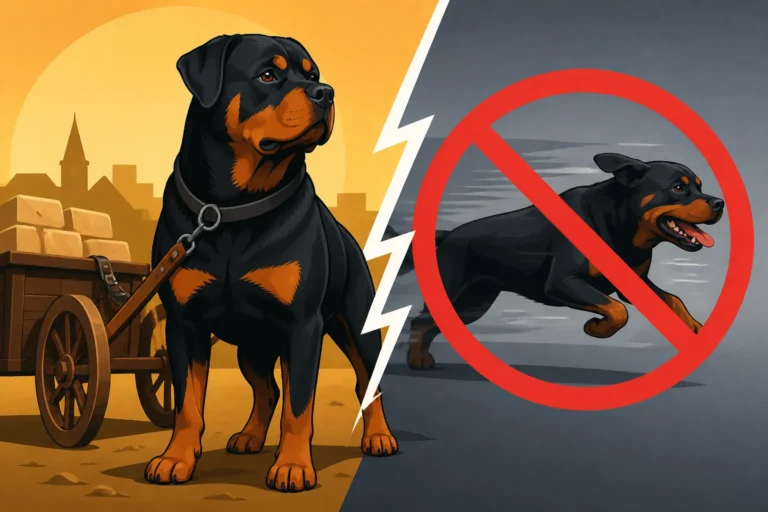
The Rottweiler's lineage traces back to the Roman Empire, where their ancestors were mastiff-type dogs used by Roman legions to drive and guard cattle. When the Romans marched through Europe, some of these dogs settled in what is now Rottweil, Germany. Here, over centuries, they were refined into the "Metzgerhund" or Butcher's Dog. Their job was vital: driving cattle to market, protecting butchers' money satchels from bandits, and even pulling carts laden with meat. What Rottweil Made the Metzgerhund Do is a fascinating dive into their origins.
This demanding work required a dog that was strong, intelligent, fearless, and utterly reliable. They needed to be able to make decisions independently, assess threats, and remain composed under pressure. This deep-seated history as guardians and drovers directly shaped the Rottweiler's inherent temperament: self-assured, protective, and requiring a strong, consistent leader. They weren't bred for fighting other animals; they were bred for work, partnership, and protection of their human family and livestock. Their job was to deter, not to engage in combat without reason.
Reserved, Confident, and Loyal
A well-bred and properly socialized Rottweiler is characterized by a calm, confident, and self-assured demeanor. They are typically reserved with strangers, often choosing to observe rather than enthusiastically greet every newcomer. This Rottweiler Aloofness and Why It Reads as Cold is frequently misunderstood as aggression or unfriendliness, but it's actually a sign of their watchful and discerning nature. They don't give their trust freely, but once earned, their loyalty to their family is unwavering and profound.
Within their family, Rottweilers are deeply affectionate, often displaying a surprisingly goofy and gentle side. They are known for "leaning" their weight into their loved ones, a subtle display of affection and trust. They thrive on having a "job" to do, whether it's formal obedience, canine sports, or simply being a watchful companion. Their intelligence means they learn quickly, but their strong will requires consistent and fair training. They are not prone to frantic energy but possess a calm resilience. Learning about The Calm Confidence a Rottweiler Standard Asks For provides valuable insight into the breed's ideal psychological makeup.
The Importance of Socialization and Training
Given their size, strength, and protective instincts, early and ongoing socialization and training are absolutely non-negotiable for a Rottweiler. A Rottweiler puppy needs to be exposed to a wide variety of sights, sounds, people, and other dogs in a positive and controlled manner before they reach 16 weeks of age. This foundational work helps them grow into confident, well-adjusted adults who can discern real threats from everyday occurrences. Without proper socialization, their natural reserve can unfortunately morph into fear or reactivity.
Training must begin the moment a Rottweiler puppy enters your home and continue throughout their lives. Basic obedience commands like sit, stay, come, and leash manners are crucial, especially when you consider that an adult Rottweiler can easily outweigh a small adult human. A firm, fair, and consistent approach using positive reinforcement methods is most effective. Training a Rottweiler Before It Outweighs You is a mantra every prospective Rottweiler owner should live by. Investing in professional training or group classes, available through various pet retailers like Chewy's associated services or local trainers, can be incredibly beneficial. It's about building a strong partnership and ensuring your Rottweiler understands their role and expectations in the human world. Socializing a Rottweiler Puppy Properly ensures they develop into balanced companions.
Unpacking "Pit Bull": A Family of Breeds
The term "Pit Bull" is perhaps one of the most misunderstood labels in the canine world, and its misuse is a primary reason for the confusion with breeds like the Rottweiler. It's essential to understand that "Pit Bull" is not a single breed, but rather a catch-all term for several distinct breeds and their mixes.
More Than One Breed Under One Name
When people say "Pit Bull," they are typically referring to one or more of the following breeds:
- American Pit Bull Terrier (APBT): The original breed often associated with the "Pit Bull" name, known for its athleticism and game nature.
- American Staffordshire Terrier (AmStaff): A closely related breed, slightly larger and more substantial than the APBT, bred for conformation showing.
- Staffordshire Bull Terrier (Staffy): A smaller, more compact breed, often called a "nanny dog" for its good nature with children.
- American Bully: A newer breed, developed from Pit Bull type dogs, characterized by a more massive, broad, and compact build.
Beyond these, many mixed-breed dogs that share some physical traits with these breeds are also casually labeled "Pit Bulls." This wide variation means there isn't a single "Pit Bull" look or temperament, making it even harder for the public to accurately distinguish them from other breeds, including Rottweilers.
Diverse Appearances and Temperaments
Because "Pit Bull" encompasses multiple breeds, their physical appearances can be quite diverse. While they generally share a muscular, athletic build and short coat, the range of colors, patterns, and body proportions is vast. You'll see solid colors, brindles, piebalds, and every shade imaginable. Their heads can vary from more refined to very broad and powerful. They also tend to be more compact and less rectangular in body shape than a Rottweiler, with a springy, agile gait.
Temperamentally, these breeds also show a range, though many individuals are known for being exceptionally friendly, eager to please, and highly social with people. Their historical roots are complex, initially involved in cruel blood sports but also quickly developing into beloved family companions. Responsible breeders have long focused on breeding for stable, friendly temperaments. The common perception of them as inherently aggressive is a gross generalization that ignores the individual variation and the strong human-loving nature many possess.
The Tangled Web of Misidentification Consequences
The casual misidentification of a Rottweiler as a "Pit Bull" might seem harmless, but it has profound and often devastating consequences for both the dogs and their human families. It's more than just a matter of semantics; it impacts lives and perpetuates cycles of misunderstanding.
Real-World Hurdles for Owners
The most immediate and tangible consequence of misidentification is the struggle owners face with breed-specific policies. Many residential complexes, particularly apartments and rental homes, have blanket bans or severe restrictions on "Pit Bull" breeds. If your Rottweiler is mistakenly identified as one, you could face eviction, be denied housing, or struggle to find a place to live. Renting With a Rottweiler and the Breed Clause is a harsh reality for many.
Similarly, homeowner and renter insurance carriers are notorious for breed restrictions. While Rottweilers themselves are often on these lists, being mistaken for a "Pit Bull" can complicate matters further, potentially leading to denied coverage, exorbitant premiums, or the necessity of purchasing expensive umbrella policies. This adds immense stress and financial burden to responsible pet ownership. Imagine the panic if your insurer drops you because they incorrectly classify your beloved Rottweiler based on a neighbor's assumption. Understanding Homeowners Insurance When You Own a Rottweiler becomes critically important.
Fueling Misinformation and Fear
Every instance of misidentification, whether intentional or accidental, feeds into the broader narrative that there's a large, amorphous group of "dangerous dogs" that are indistinguishable from each other. This narrative makes it harder for the public to educate themselves about responsible dog ownership and breed-specific traits. It also creates an atmosphere of fear, where innocent dogs are viewed with suspicion and their owners are ostracized.
When the media reports a dog bite incident, and an animal is vaguely identified as a "Rottweiler-Pit Bull mix" or simply a "Pit Bull" when it's clearly a Rottweiler, it further blurs the lines and reinforces negative stereotypes for both types of dogs. This lack of accurate reporting and understanding is a disservice to all breeds and makes it incredibly difficult to advocate for fair treatment and breed education. The perpetuation of these myths can even impact local legislation, leading to more restrictive ordinances that penalize responsible owners.
Championing Clarity Through Education
Ultimately, addressing the issue of why a Rottweiler gets mistaken for a Pit Bull comes down to education and advocacy. As Rottweiler owners, we have a responsibility to be ambassadors for our breed. This means not only understanding our dogs' unique characteristics but also being prepared to politely and factually educate others. Carry photos, know your breed standard, and explain the historical context and temperament traits that define a Rottweiler.
Supporting organizations that promote responsible dog ownership and fight breed-specific discrimination is also vital. The more people understand that "Pit Bull" is a type, not a single breed, and that Rottweilers have their own distinct heritage and appearance, the closer we get to a world where dogs are judged by their individual behavior, not by their appearance or a misapplied label. Let's champion clarity and work towards a future where every dog, Rottweiler or Pit Bull type, gets the fair assessment they deserve.
| Feature | Rottweiler | "Pit Bull" Type (General) |
|---|---|---|
| Coat Color | Black with specific rust/mahogany markings (cheeks, chest, muzzle, legs, under tail) | Wide variety of colors and patterns (solid, brindle, fawn, merle, piebald) |
| Body Shape | Rectangular, longer than tall, substantial, powerful | Often more compact, square, agile, very muscular |
| Head Shape | Broad skull, distinct stop, deep, strong muzzle | Varied, often broader, wider-set jaws, less defined stop in some breeds |
| Ear Set | Medium-sized, set high, carried drooping close to head | Often rose or half-prick, can be cropped in some regions |
| Original Purpose | Cattle droving, guarding, cart pulling | Bull-baiting, dogfighting (historical), later companion/farm dog |
| Temperament | Reserved with strangers, self-assured, calm, loyal, protective, desire to work | Can be very friendly with strangers, eager to please, social (varies by breed/individual) |
| Size (Male) | 24-27 inches, 95-135 lbs | 17-21 inches, 30-85 lbs (highly variable by breed) |
Disclaimer
This article is for general informational purposes only and does not constitute professional advice. Laws, prices and regulations vary by location and change over time. Consult a qualified professional for guidance on your specific situation.