The Rottweiler Droving Instinct and Bumping
Anyone who has spent time with a Rottweiler knows that distinct nudge, that firm push, or the subtle body block that feels like an insistence more than a gentle touch. It can be endearing, even amusing, but when your hundred-plus-pound dog is consistently "bumping" you or guests, it quickly becomes a safety concern, especially with small children or older family members. This comprehensive guide will delve into the historical roots of this unique Rottweiler behavior, explain why they do it, and, most importantly, provide actionable strategies to manage and redirect it so you can enjoy your big, lovable drover dog without the constant jostling.
What is the Droving Instinct?
The droving instinct in Rottweilers isn't just a quirky habit; it's a deep-seated behavioral trait ingrained in their very history. Before they were beloved family companions or formidable guard dogs, Rottweilers were the original "butcher's dogs," or Metzgerhunds, from the town of Rottweil in Germany. Their primary job wasn't to nip at heels like a Border Collie, but to move large, often stubborn, livestock – think cattle, not sheep. This required a different approach, one that relied on presence, body pressure, and a powerful, physical assertiveness.
Historical Roots: From Cattle Herders to Companions
Imagine a lone butcher, perhaps a bit smaller than the massive cattle he needed to guide to market, sometimes over long distances. He needed a dog that wasn't afraid to get in there, lean its weight, and physically compel a several-hundred-pound animal to move in the desired direction. This wasn't about speed or intricate herding patterns; it was about brute force, determination, and clever use of their imposing physique. The Rottweiler's broad chest, substantial bone, and sheer mass were perfectly suited for this demanding task. They were the cattle drivers, the living fences, the muscle that made the herd go where it needed to go. It's truly fascinating to consider how these historical roles have shaped the dogs we welcome into our homes today, even centuries later.
The legacy of this droving past is why you see such an innate desire in many Rottweilers to control movement, to keep their "flock" (which is often you, your family, or even other pets) together. They weren't just working alongside humans; they were integral partners in a physically demanding job that required courage and a strong will. Their ancestors were highly valued for their ability to manage unruly cattle, a task that demanded not only strength but also a certain amount of intelligence and initiative. This rich history underscores why understanding their instincts is paramount to effective training and living together harmoniously. You can learn more about their journey in The Rottweiler From Roman Cattle Drives to the AKC.
Understanding the Drive: More Than Just Herding Sheep
When we talk about "herding" in dogs, most people picture a sleek Border Collie gracefully circling sheep. The Rottweiler's droving instinct is a different beast entirely. It’s less about wide circles and intricate maneuvers, and more about direct intervention, guiding, and body language that says, "You go this way." This drive isn't always overt; it can manifest as subtle repositioning, walking between two people to separate them, or placing themselves strategically to block a path. It’s their way of maintaining order, of fulfilling that ancient programming to keep things where they "belong."
This drive often comes with a strong territorial component, extending their need for order to their immediate environment and the people within it. They perceive their family as their charge, a flock to be managed and protected. This deep-seated trait explains why some Rottweilers are so sensitive to perceived disorder or why they might try to "herd" children playing in the yard. It's not malice; it's instinct. Recognizing this underlying motivation helps us reframe the behavior from an annoyance to a communication of their inherent nature.
How It Manifests: Subtle Nudges to Full-Body Blocks
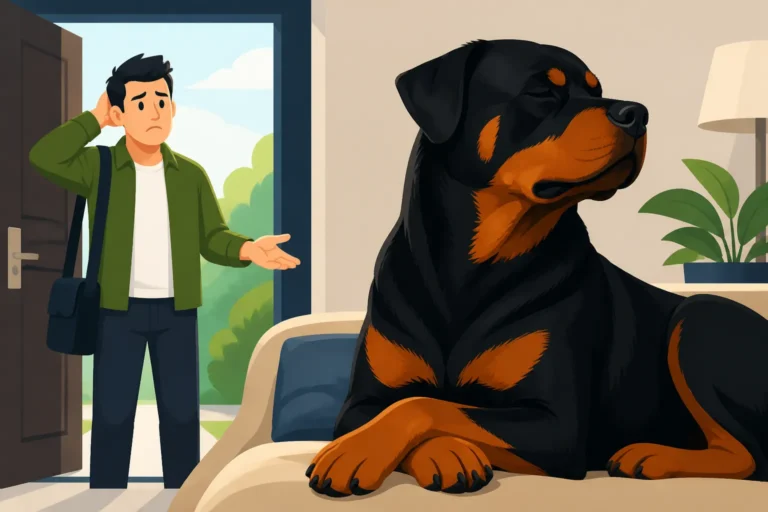
The droving instinct can show up in many forms. Sometimes it's a polite, almost imperceptible nudge with their nose or shoulder if you're standing too close to the edge of the sidewalk. Other times, it's a full-on "Rottweiler lean" or body block, planting themselves firmly in your path to stop you from going into another room or out the front door. They might gently (or not so gently) push you away from the kitchen counter or try to funnel you and your visitors into a specific area of the house.
Consider the scenario where you're chatting with a friend at the front door, and your Rottweiler steadily inserts itself between you, pushing subtly. This isn't necessarily a sign of aggression or jealousy; it's often their instinct to keep the "herd" – you and your guest – contained or to move the "intruder" (your friend) away from your property. Similarly, a Rottweiler might "herd" children who are running by subtly bumping into them, attempting to change their direction or slow them down. It’s a powerful, non-verbal form of communication, and one that requires careful understanding from the human end of the leash.
Why Do Rottweilers "Bump" People?
The act of "bumping" in a Rottweiler is a fascinating blend of instinct, learned behavior, and communication. It's rarely a random act and almost always serves a purpose in their mind, even if that purpose isn't immediately clear to us. Understanding the underlying reasons can help you address the behavior more effectively.
Communication and Attention Seeking
One of the most common reasons a Rottweiler bumps is to communicate. They might be trying to tell you something: "I want attention," "Let's go for a walk," "I need to go outside," or even "Please don't ignore me when I'm this big and majestic!" Since they can't verbally express these desires, they resort to physical cues. A firm nudge or a lean can be incredibly effective at getting a human's attention, especially if it works once or twice. If you respond to a bump by looking down, speaking to them, or, worst of all, petting them, you've just inadvertently reinforced the behavior.
Think of it like this: your Rottweiler bumps your hand off your laptop, and you sigh and give them a pat. To them, that's a success! They got your attention, and possibly a reward (the pat). This is where consistency in how you react becomes crucial. While it's tempting to acknowledge their presence, it's important to differentiate between desired and undesired methods of seeking interaction. They need to learn that polite requests, like sitting quietly or bringing a toy, earn attention, while physical imposition does not.
Reinforced Behavior: When Owners Accidentally Encourage It
As mentioned, much of a Rottweiler's "bumping" behavior, especially when directed at people, can be traced back to accidental reinforcement. It starts subtly: a puppy leans into your leg, and you think it's cute and scratch behind its ears. That tiny lean, when performed by a rapidly growing Rottweiler, quickly escalates into a full-body block or a forceful shove. We often reward the very behaviors we later find problematic because they were endearing when the dog was small.
Consider the scenario where your Rottweiler nudges your hand for pets, and you immediately provide them. Or they bump your leg on the way to the kitchen, and you share a piece of food. These seemingly small interactions accumulate, building a strong association in your dog's mind: "Bumping gets me what I want." Breaking this cycle requires a conscious effort to stop rewarding the behavior and start rewarding alternative, more polite actions. It's not about being harsh; it's about being clear and consistent.
Instinct in Action: Moving the "Herd"
Beyond simple communication and learned reinforcement, the core droving instinct plays a significant role in bumping. For a Rottweiler, you are part of their herd, and sometimes, the herd needs to be moved. If you're walking too slowly, they might nudge you along. If you're standing in a doorway, they might try to push you through it. If a group of people is dispersing, they might try to gather them back together with body pressure.
This instinct isn't about aggression; it's about control and order from their perspective. They are trying to fulfill their historical role, even if the "cattle" are now your children. A Rottweiler might patrol the perimeter of your yard, then nudge you back inside if you linger too long, seeing it as their duty to keep the most important members of their family unit safe and contained. This is particularly noticeable in environments with lots of moving parts, like a busy park or a family gathering, where their innate desire to manage movement kicks in.
Managing the Droving Instinct in Daily Life
Living with a large, powerful dog with a strong droving instinct requires proactive management and consistent boundaries. You can't simply eradicate an instinct, but you can certainly shape how it's expressed and ensure it doesn't become a nuisance or a safety hazard.
Environmental Management: Setting Up for Success
One of the easiest ways to manage bumping is to manage the environment. If your Rottweiler tends to body block you in narrow hallways, try to avoid those situations or teach a strong "move" or "wait" cue. If they bump guests coming through the door, keep them on a leash or behind a baby gate when visitors arrive until they are calm and under control. A sturdy crate, like those found on Amazon, can also be a fantastic tool for managing space and behavior when you can't give your full attention, providing them a safe, quiet den while preventing unwanted bumping.
Consider how your living space might inadvertently encourage or exacerbate bumping. Is there a common pathway where your dog always intercepts you? Are there situations where they feel the need to "herd" naturally? By being mindful of these triggers, you can either avoid them or actively manage them. For instance, if your dog tends to bump you while you're preparing food in the kitchen, consider a boundary gate or teaching them to lie on a mat just outside the cooking zone. This proactive approach sets both you and your Rottweiler up for success.
Consistent Rules and Boundaries
This cannot be stressed enough: consistency is king when training a Rottweiler, especially one with strong instincts. Every family member needs to be on board with the rules regarding bumping. If one person allows it and another corrects it, your Rottweiler will become confused and continue to try the behavior. Decide as a household that bumping is not allowed, regardless of the intention, and stick to it.
Establish clear rules: no leaning, no nudging, no pushing people with their bodies. Instead of reacting to a bump, ignore it completely, or turn your back. Only reward polite attention-seeking behaviors, such as sitting patiently or offering a toy. This consistency across all interactions is what helps your Rottweiler understand what's acceptable and what's not. Remember, these intelligent dogs are always testing boundaries, and if they find a loophole, they will exploit it. This is similar to the principles behind Training a Rottweiler Before It Outweighs You.
Redirecting Energy with Appropriate Outlets
A Rottweiler with an unfulfilled droving instinct and excess energy is far more likely to resort to bumping. Providing appropriate physical and mental outlets is crucial. While Rottweilers aren't endurance runners, they thrive on structured walks, mental challenges, and play that engages their minds. Think about ways to give them a "job."
Activities like obedience training, Rottweiler Carting and Draft Work, or even just hide-and-seek with toys can be fantastic ways to channel their drive. Puzzle toys, especially those durable ones found on Amazon, can keep their minds engaged, reducing the likelihood of them seeking out less desirable forms of "work" like herding you around the house. Regular, moderate exercise is key, but don't forget the mental stimulation. A tired Rottweiler is often a well-behaved Rottweiler, but a mentally stimulated Rottweiler is a truly content one.
Training to Redirect Bumping Behavior
Direct training is essential to help your Rottweiler understand that bumping is not an acceptable way to interact or communicate. The goal isn't to suppress their instinct but to redirect it into polite, controlled behaviors.
Teaching "Place" and "Stay"
Two commands that are invaluable for managing a bumping Rottweiler are "Place" and "Stay." "Place" teaches your dog to go to a designated spot (like a dog bed or mat) and remain there until released. This is incredibly useful when guests arrive, during meal times, or when you need a moment of peace without being jostled. "Stay" complements this by teaching them to remain in a chosen position (sit, down, stand) for extended periods, regardless of distractions.
Start training these commands in a low-distraction environment, rewarding heavily for success. Use high-value treats and praise. Gradually increase the duration and add distractions. Online training platforms, such as those offered by BAXTER & Bella, often have excellent step-by-step guides for teaching these foundational commands, providing the kind of structured learning that Rottweilers excel at. The ability to send your Rottweiler to a "place" prevents them from inserting themselves into situations where bumping might occur.
Loose Leash Walking: Preventing the Bump While Moving
Bumping often occurs on walks when your Rottweiler gets excited or tries to "herd" you. Mastering loose leash walking is vital. A dog that pulls or surges ahead is more likely to use its body to influence your movement. Teach your Rottweiler to walk politely beside you, maintaining a loose leash. If they start to lean or bump, stop immediately. Wait for them to relax and return to your side before resuming the walk. This teaches them that bumping stops forward progress, while polite walking earns it.
Head halters or front-clip harnesses, often available on Amazon in robust sizes for Rottweilers, can be very effective tools for managing a strong puller and preventing incidental bumping on walks. They redirect the dog's momentum towards you, making it harder for them to pull or lean with their full body weight. Remember, the goal is control and communication, not punishment. Consistency in your leash handling and reactions is key to success in Rottweiler Leash Manners at a Hundred Pounds.
Using Positive Reinforcement Effectively
Positive reinforcement is the most humane and effective way to train a Rottweiler. Instead of punishing bumping, focus on rewarding the behaviors you do want to see. When your Rottweiler approaches politely, sits for attention, or refrains from bumping when you enter a room, lavish them with praise, treats, or a favorite toy. This helps them understand what earns them rewards and attention.
Create opportunities for them to offer desired behaviors. For instance, if you anticipate your Rottweiler will bump you when you open the refrigerator, ask for a "sit" or "down" first, and reward them for holding that position. This proactive approach prevents the unwanted behavior from occurring and strengthens the desired alternative. Positive reinforcement builds trust and a strong bond, making your Rottweiler more eager to work with you. You'll find many resources on Teaching a Rottweiler to Take Treats Gently that are applicable to this overall approach.
Here's a quick comparison of behaviors and responses:
| Behavior | Owner Response (Discourage) | Owner Response (Encourage) |
|---|---|---|
| Bumping/Nudging | Turn away, ignore, step into them (gently), remove attention | Reward "sit," "down," or quiet presence |
| Leaning into guests | Leash dog, send to "Place," create physical barrier | Reward polite greeting (no jumping/bumping) |
| Herding children | Supervise closely, redirect dog to a toy/game | Reward calm interaction with children |
| Blocking pathways | Use "Move" or "Wait" cue, walk around them | Reward moving out of the way on command |
| Sitting politely for attention | Engage, praise, treat, play | Ignore until polite |
When Bumping Becomes a Problem (and How to Address It)
While often an innocent expression of instinct, bumping can escalate. It's important to recognize when this behavior crosses the line from quirky to problematic and how to intervene effectively.
Recognizing Unacceptable Bumping
Bumping moves from a minor annoyance to a serious problem when it becomes forceful, persistent, or is used to physically intimidate. If your Rottweiler is causing people to lose their balance, knocking items out of hands, or using their body to prevent someone from moving, it's time for more serious intervention. This is especially true if the bumping is accompanied by other concerning behaviors, such as growling, stiff body language, or a hard stare.
Another red flag is when the bumping behavior is specifically directed at vulnerable individuals, such as small children or the elderly. A hundred-pound dog, even acting playfully, can easily injure someone fragile. If you've tried consistent training and management but the behavior persists or worsens, it's a clear sign that you need external help. Ignoring these escalating signs can lead to accidents and damage the dog's reputation, and ultimately, your relationship with your Rottweiler.
Consulting a Professional Trainer or Behaviorist
If your efforts to manage and redirect bumping are not yielding results, or if the behavior is becoming concerning, it is absolutely critical to consult a professional. Look for a certified professional dog trainer (CPDT-KA) or a certified applied animal behaviorist (CAAB) who has experience with large breeds and strong working drives. These professionals can assess your dog's specific situation, identify underlying triggers, and develop a tailored training plan.
They can teach you advanced techniques, help you understand your dog's body language more deeply, and ensure you're not inadvertently reinforcing the problem. Sometimes, what seems like a simple behavior problem has deeper roots in anxiety, over-arousal, or a lack of clear leadership from the human end. A professional can provide an objective perspective and the expertise to guide you through complex behavioral challenges. Finding a good trainer is critical, as discussed in Finding a Rottweiler-Experienced Trainer Near You.
Safety Concerns, Especially with Children and the Elderly
The sheer size and strength of a Rottweiler mean that bumping, even when well-intentioned, poses a significant safety risk. A playful nudge that might be tolerable from a small terrier can be dangerous from a 120-pound dog. Children are particularly vulnerable; they can easily be knocked over, and a fall, especially on a hard surface, can result in serious injury. The elderly, too, often have reduced balance and more fragile bones, making them susceptible to injury from a strong bump.
For households with children, it's imperative to teach both the dog and the children how to interact safely. Never leave a large dog unsupervised with small children. Teach children to respect the dog's space and not to encourage rough physical play that involves pushing or bumping. Similarly, ensure that elderly family members are aware of the dog's tendencies and have strategies to avoid being jostled, such as being seated when the dog is excited or having the dog on a leash when they are moving through common areas. This focus on safety aligns with advice often given in Rottweilers and Toddlers Under the Same Roof.
Living Harmoniously with a Drover Dog
Embracing your Rottweiler's droving instinct doesn't mean letting them run roughshod over your household. It means understanding their nature, providing appropriate outlets, and setting clear, consistent boundaries so that their ancient drives can coexist peacefully with modern family life.
Embracing Their Nature While Setting Limits
The key to harmonious living is acceptance and proactive management. Your Rottweiler isn't "bad" for having a droving instinct; it's part of what makes them who they are. Instead of fighting against it, find ways to work with it. Can they "herd" a large, durable ball around the yard? Can they engage in a structured game of fetch where they retrieve and bring items to a designated spot? By channeling their natural drive into acceptable activities, you satisfy their intrinsic needs.
At the same time, maintaining firm limits is non-negotiable. Your home is not a cattle pasture, and your family members are not livestock. Bumping people is not an allowed behavior. This dual approach – fulfilling instinct while enforcing boundaries – creates a respectful and cooperative relationship. It's about providing an appropriate framework for their natural behaviors to flourish without causing problems. This balance is crucial for a breed as powerful and intelligent as the Rottweiler, and it requires consistent effort from all family members.
Providing Mental and Physical Enrichment
A bored Rottweiler is a destructive or problematic Rottweiler. Because of their history as working dogs, Rottweilers need both physical exercise and mental stimulation to thrive. Simply letting them out in the yard isn't enough. Daily walks, playtime, and training sessions are vital. But don't underestimate the power of mental enrichment.
Interactive toys, like those from KONG or other durable brands found on Amazon, stuffed with treats or peanut butter, can keep them occupied for extended periods. Scent work, where they use their noses to find hidden treats or toys, is incredibly mentally stimulating. Obedience training classes, whether in-person or online through platforms like BAXTER & Bella, offer structured mental exercise that strengthens your bond and improves communication. Regular engagement prevents the restless energy that often fuels unwanted behaviors like excessive bumping or Rottweiler Separation Anxiety in the First Month.
The Bond Formed Through Understanding
Ultimately, understanding and managing your Rottweiler's droving instinct deepens the bond you share. When you take the time to learn about their history, their natural drives, and why they behave the way they do, you develop a profound appreciation for their unique characteristics. This understanding fosters patience and empathy, transforming potential frustrations into opportunities for connection and training.
A Rottweiler who feels understood, whose instincts are acknowledged and appropriately channeled, and who knows what is expected of them, is a secure, confident, and well-adjusted companion. It’s a partnership built on mutual respect, clear communication, and a shared journey of growth. Embracing their "Metzgerhund" heritage, while ensuring they are polite and safe members of your family, is the essence of responsible Rottweiler ownership. Their tendency to lean and bump, when managed correctly, becomes just another endearing quirk of a truly magnificent breed.
Disclaimer
This article is for general informational purposes only and does not constitute professional advice. Laws, prices and regulations vary by location and change over time. Consult a qualified professional for guidance on your specific situation.