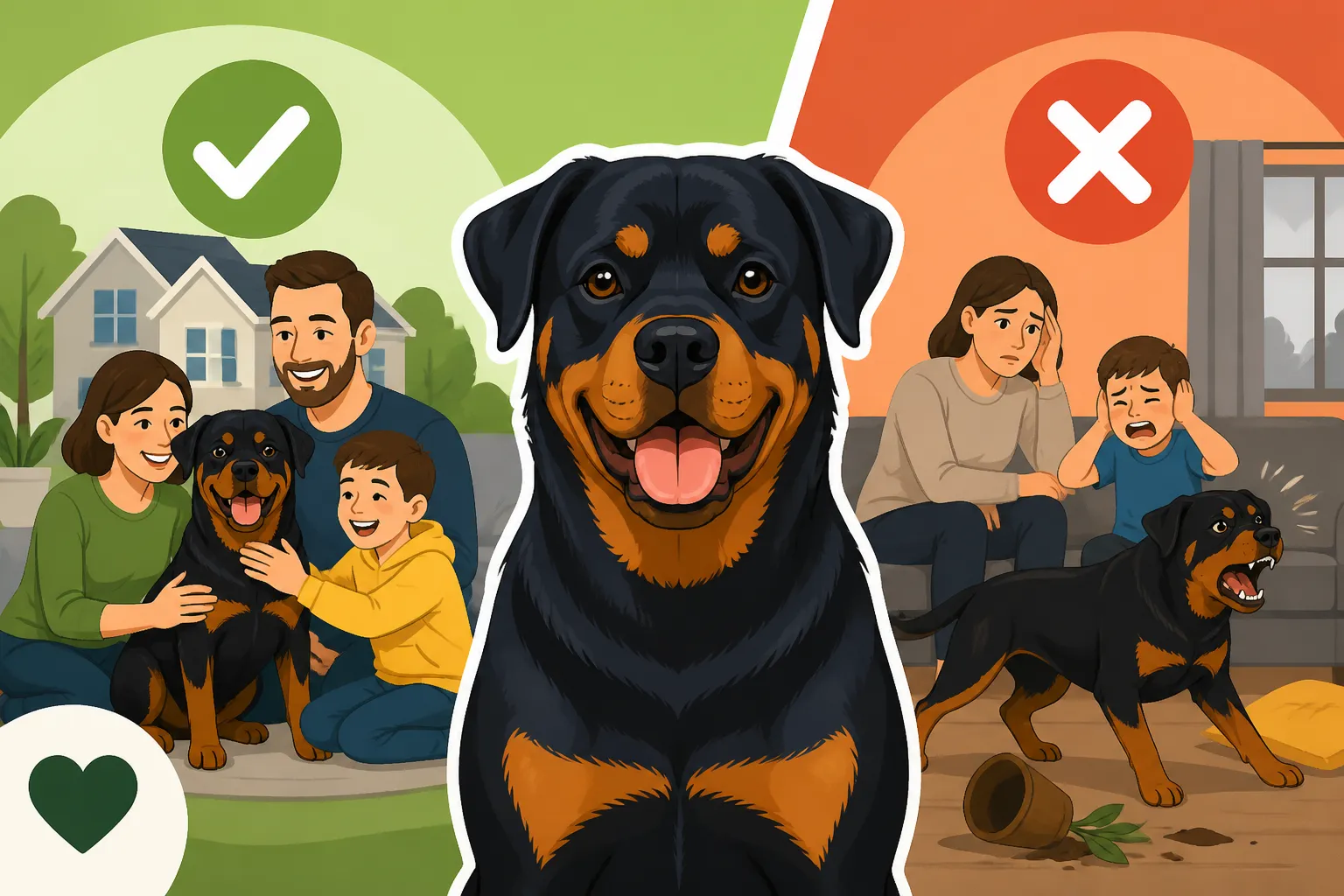
Whether a Rottweiler Suits the Household You Have
Bringing a Rottweiler into your home is a huge decision, one that goes far beyond simply falling in love with those soulful brown eyes and that imposing stature. Many people are drawn to the breed for their strength and loyalty, but often don't fully consider the immense commitment involved. This comprehensive guide will walk you through every aspect of Rottweiler ownership, helping you honestly assess whether this incredible, demanding breed truly suits your household and lifestyle.
Understanding the Rottweiler's Core Temperament and Needs
Before you even think about leash sizes or food bowls, you need to deeply understand the fundamental nature of a Rottweiler. These aren't just big dogs; they carry a profound history and inherent traits that shape their entire being.
The 'Wait-and-See' Nature: How Rottweilers Approach Strangers
One of the most defining characteristics of the Rottweiler temperament is their inherent aloofness. This isn't rudeness, nor is it aggression, but rather a profound sense of self-possession and discernment. A well-bred and properly socialized Rottweiler won't typically rush to greet every new person they meet with tail-wags and sloppy kisses. Instead, they take a moment. They observe, they assess, they wait and see. This can often be misinterpreted by strangers, who might perceive it as coldness or even unfriendliness.
It's crucial for prospective owners to understand that this "wait-and-see" approach is a breed trait, not a flaw to be corrected. While some dog breeds, like Golden Retrievers or Labradors, are famously effusive with everyone, a Rottweiler's trust is earned, not freely given. This means when you have guests over, your Rottweiler will likely acknowledge them calmly, perhaps with a brief sniff, and then retreat to observe from a distance. For families who entertain frequently or expect their dog to be the life of every party, this trait can be a point of friction if not understood and respected. It's about respecting their space and allowing them to make their own judgments, rather than forcing them into interactions they might not be comfortable with.
This inherent wariness can be a double-edged sword. It means they are naturally discerning about who they accept, which can be a valuable trait for a guardian breed. However, it also means that without careful, consistent, and positive socialization, this natural aloofness can tip into suspicion or fear, leading to undesirable behaviors. Owners must be prepared to manage interactions, advocate for their dog's space, and educate others about their dog's calm, observant nature.
The Drive to Work and Protect: More Than Just a Pet
The Rottweiler's history is deeply rooted in work. They were originally developed in Germany as cattle-driving and guard dogs, literally protecting butchers' money pouches tied around their necks. This heritage isn't just a fun fact; it's ingrained in their DNA and manifests as a powerful drive for purpose and a natural instinct to protect their family and territory. They aren't content to just be couch potatoes, though they certainly enjoy their downtime with their loved ones.
This drive means a Rottweiler thrives when given a job to do. This "job" doesn't have to be herding cattle or guarding property in a literal sense, but it does mean they need consistent mental and physical engagement. Without an outlet for their intelligence and innate guarding instincts, they can become bored, destructive, or develop problematic behaviors as they try to create their own jobs. Imagine a highly intelligent, powerful animal with nothing to focus on – it's a recipe for trouble.
For a household, this translates into a need for structured training, problem-solving games, and consistent routine. Simply throwing a ball in the backyard isn't enough to satisfy a Rottweiler's need for mental stimulation. They excel in obedience, tracking, carting, and even therapy work, all of which require focused attention and a clear purpose. Their protective instincts, while comforting to a family, must be carefully shaped through socialization and training to ensure they are appropriate and controlled, rather than reactive or overly aggressive. Understanding and respecting this deeply rooted working drive is paramount to having a happy, well-adjusted Rottweiler.
Living Spaces and Environment: Size, Fencing, and Urban Life
A Rottweiler is a substantial dog, and their physical presence dictates certain requirements for their living environment. It's not just about having enough square footage; it's about creating a safe, functional, and comfortable space for a large, powerful animal.
Accommodating a Large, Powerful Dog Indoors
Let's be blunt: Rottweilers are big. Male Rottweilers can easily weigh over a hundred pounds, and even females are typically in the 80 to 100-pound range. This isn't a dog that comfortably squeezes under a coffee table or disappears behind the sofa. Their sheer mass and bone structure mean they take up significant space. When they get excited, or simply turn around in a small room, things can get knocked over. A sweeping tail can clear a coffee table in seconds, and a playful bump can send an unsuspecting human off balance.
Indoors, a Rottweiler needs dedicated space for their giant dog bed – and trust me, you'll want a durable one they can't immediately shred. They need room to stretch out and relax without being constantly underfoot. While they can be remarkably calm and well-mannered indoors once trained and exercised, their size is a constant factor. Furniture needs to be sturdy, and precious breakables should be out of tail-swatting range. Imagine a rambunctious Rottweiler puppy growing into its clumsy adolescent phase in a cramped apartment; it requires a level of patience and management that not every household can provide. Even walking through a narrow hallway with a Rottweiler can feel like navigating a tightrope if they haven't learned polite indoor manners.
While a Rottweiler can absolutely thrive in an urban environment or an apartment, it requires an even greater commitment from the owner to provide sufficient outdoor exercise and mental stimulation. They can't just run around in a small yard for their exercise; they need purposeful walks, training sessions, and opportunities to explore. For those living in smaller spaces, having easy access to parks, dog-friendly walking trails, or even a safe, large public space for training is crucial.
The Importance of a Secure Yard and Property
A secure yard is not just a nice-to-have for a Rottweiler; it's a non-negotiable safety feature. These are intelligent, athletic, and naturally territorial dogs. A flimsy chain-link fence or a low picket fence is an open invitation for trouble. We're talking about a minimum of a six-foot-tall, sturdy fence, preferably solid or privacy fencing, that they cannot jump, climb, or dig under. Digging prevention is key, as many Rottweilers will try to excavate an escape route if they are bored or catch an interesting scent.
Even with a secure fence, a Rottweiler should never be left unsupervised in the yard for extended periods. This isn't merely about preventing escapes, but also about managing their natural guarding instincts. A bored or unsupervised Rottweiler can easily become a "fence fighter," barking aggressively at passersby or developing barrier frustration, which can escalate into more serious reactivity. Their purpose is to protect, and if left to their own devices, they will interpret every squirrel, leaf, or distant sound as a potential threat to their territory. This can lead to nuisance barking, stress for the dog, and potential issues with neighbors.
Consider the Fencing Requirements That Apply to a Rottweiler in your area, as some jurisdictions have specific rules for large or guardian breeds. A well-fenced yard provides a safe space for controlled playtime and potty breaks, but it is not a substitute for walks, training, or direct interaction with their human family. If your property isn't adequately secured, or if you plan to leave your dog alone in the yard, a Rottweiler is likely not the right fit for your home. Their safety and the safety of others depend on a secure environment and responsible supervision.
Time Commitment: Training, Socialization, and Exercise
The idea that a Rottweiler is a "low-maintenance" dog because of its short coat is a dangerous myth. These dogs demand a significant investment of time, energy, and consistency, especially in their formative years.
The Non-Negotiable Need for Early and Ongoing Training
Let's be absolutely clear: you must train a Rottweiler, and you must start early. A Rottweiler puppy at 8 weeks old is adorable and manageable, but at 8 months, that same puppy can be a 70-pound wrecking ball with a mind of its own if not properly guided. By the time they hit their full adult weight of 100+ pounds, an untrained Rottweiler is not just an inconvenience; it's a potential danger to themselves and others. Their strength and determination mean that once they decide to do something, you need to have a clear way to communicate and redirect them.
Early training is critical for establishing boundaries, teaching basic obedience, and building a strong foundation of trust and respect. This includes everything from house-training and crate training to teaching polite greetings and leash manners. Rottweiler Puppy Training Through the First Year should be a structured, positive experience that continues well into adolescence and even adulthood. These are intelligent dogs who enjoy learning, but they also have a strong will. Consistency, patience, and positive reinforcement are key. If you are not prepared for daily training sessions, weekly classes, or even hiring a professional trainer, a Rottweiler will quickly become overwhelming.
The consequences of inadequate training for a powerful breed like the Rottweiler can be severe. A dog that pulls on the leash at 110 pounds is impossible for most people to control. A dog that jumps on guests can accidentally injure them. A dog that doesn't respect boundaries can become pushy or even territorial. Investing the time in proper training isn't just about having a well-behaved pet; it's about ensuring your Rottweiler's safety, your family's safety, and the peace of mind of everyone they encounter.
Socialization Beyond Puppyhood: Exposure, Not Overwhelm
Socialization for a Rottweiler is not a one-and-done event; it's a continuous, lifelong process. While the critical window for puppy socialization (typically 8-16 weeks) is incredibly important for exposing them to a wide variety of sights, sounds, people, and experiences, it doesn't stop there. For a Rottweiler, socialization means controlled, positive exposures that help them develop confidence and appropriate responses, rather than becoming fearful or overly reactive.
This means continuing to expose your adult Rottweiler to new environments, people, and well-behaved dogs in a calm, structured way. Think of trips to a quiet park for a walk, visits to a pet-friendly store like Chewy for a new durable toy, or supervised interactions with trusted friends and their dogs. The goal is to build a dog that is secure and unfazed by novel situations, not necessarily one that wants to play with every dog or person it meets. Remember their "wait-and-see" nature; socialization helps them process new information calmly, rather than reacting out of fear or overstimulation.
It's equally important to avoid situations that could set your Rottweiler up for failure. Dog parks, especially crowded ones, can be incredibly risky for a large, powerful breed like a Rottweiler. Not all dogs understand or appreciate a Rottweiler's play style, which can sometimes be more physical or intimidating. Rottweiler Dog Park Risks at Adult Size are real, and responsible owners prioritize quality interactions over quantity. Overwhelming a naturally discerning dog with too many uncontrolled interactions can actually be detrimental, making them more reactive or withdrawn. Responsible socialization is about building a secure, confident companion who understands the world around them without feeling the need to constantly be on guard.
Exercise Needs: Quality Over Quantity
When people think of exercise for a large dog, they often picture endless running or hours in a backyard. While Rottweilers are sturdy and have good stamina, their exercise needs are more about quality and appropriate engagement than sheer mileage. A Rottweiler needs regular physical activity to maintain muscle tone and overall health, but equally important is mental stimulation to keep their intelligent minds sharp.
For a growing Rottweiler puppy, too much strenuous physical exercise, especially activities involving repetitive jumping or long runs, can be detrimental to their developing joints and growth plates. Their bones continue to grow and solidify until they are nearly two years old. Instead, short, structured walks, controlled playtime, and mental games are far more beneficial. As adults, daily walks (at least 30-60 minutes, often more), playtime, and opportunities for purposeful activity are essential. This could involve hiking, swimming, or engaging in dog sports like obedience, rally, or carting. Building Adult Rottweiler Fitness Safely means understanding their physical capabilities and limitations.
Mental exercise is just as crucial. Puzzle toys, training sessions, scent work, and learning new commands provide an outlet for their intelligence and help prevent boredom. A physically tired Rottweiler who is also mentally stimulated is a happy, calm Rottweiler. A dog that only gets physical exercise without mental engagement can still be restless and prone to mischief. If your lifestyle doesn't allow for consistent daily walks and dedicated time for mental enrichment, a Rottweiler's needs might not be met, leading to frustration for both you and your dog.
Family Dynamics: Children, Other Pets, and First-Time Owners
Bringing any dog into a family requires careful consideration of existing dynamics, but with a Rottweiler, these considerations are amplified due to their size, strength, and protective instincts.
Rottweilers and Children: Supervision is Key
The question of Rottweilers and children is one that often brings strong opinions, and it's essential to approach it with realism and responsibility. A well-bred, well-socialized, and well-trained Rottweiler can be a devoted and gentle family member, often forming incredibly strong bonds with children. However, their sheer size and power mean that strict supervision is non-negotiable, especially with young children.
An excited Rottweiler, even one playing gently, can accidentally knock over a toddler. A playful puppy nip, which is part of normal puppy behavior, can feel much more intense from a large breed puppy. It's not about malice; it's about physics and natural dog behavior. Therefore, it's crucial to teach children how to interact respectfully with the dog – no pulling ears, no climbing on them, no disturbing them while they eat or sleep. Equally important is teaching the dog appropriate manners around children, such as not jumping and taking treats gently.
Every interaction between a Rottweiler and a child should be supervised by a responsible adult. This isn't just for the child's safety, but for the dog's as well, preventing situations where the dog might be provoked or feel overwhelmed. A household with very young or boisterous children who cannot yet understand boundaries might struggle to provide the consistent management a Rottweiler requires. For families with children, selecting a puppy from a breeder who specifically raises their puppies in a family environment, exposing them gently to children, is a strong starting point. Never rely solely on the dog's "good nature"; always provide structure, education, and constant oversight.
Coexisting with Other Pets: Prey Drive and Pack Dynamics
Introducing a Rottweiler into a household with other pets, especially smaller animals like cats or tiny dogs, requires careful planning and often a significant amount of management. Rottweilers were bred to be powerful drovers and guardians, and some lines retain a strong prey drive, which can be challenging when faced with a scurrying cat or a small rodent.
While many Rottweilers can learn to coexist peacefully with cats or smaller dogs, particularly if raised with them from puppyhood, it's never a guarantee. Introductions must be slow, controlled, and always supervised. Separate feeding areas are often necessary to prevent Bowl Guarding in a Rottweiler Bred to Guard, and dogs should not be left unsupervised together until a solid, trustworthy relationship has been established over a long period. Consider Whether Rottweilers Live Well With Cats and understand the potential challenges before you commit.
With other dogs, especially those of a similar size or guarding breed, same-sex aggression can sometimes be an issue, particularly between two intact males or two dominant females. This isn't unique to Rottweilers but is a factor to consider given their strength and assertive nature. If you already have a strong-willed dog, adding a Rottweiler requires careful assessment of personalities and a commitment to ongoing management and training to ensure a harmonious multi-dog household. Never assume that two dogs will simply "work it out"; you, as the owner, must be the consistent leader and mediator.
Are You a First-Time Owner?: Self-Reflection on Experience
This is perhaps one of the most critical questions to ask yourself: Whether a First-Time Owner Can Handle a Rottweiler. While it's not impossible for a first-time dog owner to successfully raise a Rottweiler, it requires an extraordinary level of dedication, a willingness to learn, and an honest assessment of your own capabilities. Rottweilers are not an "easy" breed. They are intelligent, powerful, and have a strong will. They need an owner who is confident, consistent, and committed to their training and socialization for the dog's entire life.
A first-time owner might underestimate the sheer physical strength of an adult Rottweiler, the importance of consistent training, or the nuances of their temperament. They might not recognize early signs of resource guarding or reactivity, allowing small issues to escalate into bigger problems. The ideal Rottweiler owner is experienced with large breeds, understands dog behavior, and is not afraid to seek professional help when needed. They are calm, assertive leaders who can provide clear boundaries and consistent expectations.
If you are a first-time owner considering a Rottweiler, it's absolutely vital to do your homework. Seek out reputable breeders who are willing to mentor you, enroll in puppy classes and advanced obedience, and consider working with a professional trainer who has experience with guardian breeds. Be prepared to dedicate a significant amount of time and effort, especially during the first two years of the dog's life. If you're looking for a dog that requires minimal training or management, a Rottweiler is likely not the right choice.
Financial Commitment: Beyond the Puppy Price
The cost of owning a Rottweiler extends far beyond the initial purchase price of a puppy. These are large dogs with specific needs, and being financially prepared is just as important as being emotionally and time-committed.
High Costs of Feeding a Large Breed
Feeding a Rottweiler is a significant ongoing expense. These dogs, especially when fully grown and active, consume a substantial amount of food. A typical adult Rottweiler can easily eat 4-6 cups of high-quality large-breed kibble per day, sometimes more depending on their activity level and metabolism. Multiply that by 30 days a month, and you're looking at a hefty grocery bill. It's not just about quantity; it's about quality. Feeding a premium large-breed specific formula is crucial for their growth and overall health, especially to support their joints.
Consider the detailed needs of Feeding an Adult Rottweiler at a Hundred Twenty Pounds. Cheap, low-quality food might save you money in the short term, but it can lead to health issues down the line, ultimately costing more in vet bills. Many Rottweiler owners find that buying food in bulk from retailers like Chewy helps manage costs and ensures a consistent supply of their preferred brand. However, even with bulk purchases, the sheer volume means this will be one of your largest recurring expenses.
Don't forget the cost of treats! Rottweilers are intelligent and often food-motivated, making treats an invaluable tool for training. But a 100-pound dog needs more than a tiny biscuit to feel rewarded, so your treat budget will also reflect their size. If your budget is tight and you find yourself struggling to afford high-quality food, it's a clear sign that a Rottweiler's nutritional needs might be beyond your financial comfort zone.
Veterinary Care, Insurance, and Emergency Funds
Rottweilers, like all large breeds, are prone to certain health conditions, and treating these conditions can be incredibly expensive. Common issues include hip and elbow dysplasia, Bloat in a Rottweiler and the Hours That Matter, various cancers (especially Osteosarcoma, the Cancer That Takes Most Rottweilers), and heart conditions like subaortic stenosis. Routine preventive care, vaccinations, parasite prevention, and annual check-ups are just the baseline.
A single emergency, such as bloat surgery or an unexpected injury, can easily run into thousands of dollars. Rottweiler Surgery Costs From Bloat to Bone Cancer can be astronomical. This is where pet insurance becomes a serious consideration. While monthly premiums for a large breed can be substantial, it can be a lifesaver when a major health crisis strikes. If pet insurance isn't an option, then a dedicated emergency fund specifically for your Rottweiler's health needs is absolutely essential. Many owners set aside a separate savings account just for this purpose.
Imagine facing a sudden bloat emergency, which requires immediate surgery, and not having the funds. It's a heartbreaking situation no pet owner wants to be in. Being proactive about their health, through a good diet, appropriate exercise, and regular vet visits, can mitigate some risks, but emergencies are, by definition, unexpected. Ensure you have a clear plan for how you'll cover potentially high veterinary expenses throughout your Rottweiler's life.
Training, Equipment, and Unexpected Expenses
Beyond food and vet bills, a Rottweiler requires a range of equipment and services that add up. High-quality, durable collars, harnesses, and leashes are a must for a dog of their size and strength – flimsy gear simply won't cut it. A large, sturdy crate is an important training tool and a safe den, but these can be quite expensive. Chew toys need to be robust enough to withstand powerful jaws, and let's face it, even the toughest toys from Chewy will eventually be demolished.
Professional training is a wise investment, especially for first-time owners or those navigating specific behavioral challenges. Obedience classes, private sessions, or even a board-and-train program can incur significant costs, but they pay dividends in a well-behaved dog. Grooming supplies, like sturdy brushes for their seasonal shedding, nail clippers or grinders, and ear cleaning solutions, are also part of the budget.
Then there are the unexpected expenses: a torn leash, a destroyed dog bed, a broken fence panel from an overzealous game of chase. While not common, a Rottweiler, if left bored or anxious, can cause significant property damage inside the home. Furthermore, if you travel, boarding a large breed like a Rottweiler can be more expensive and challenging, as not all facilities are equipped or willing to take them. All these factors contribute to the overall The Lifetime Cost of One Rottweiler, which is a significant financial commitment over their 8-10 year average lifespan.
Lifestyle Match: Active, Calm, or Constantly Traveling?
Your daily routine, activity level, and how much time you spend at home are critical factors in determining if a Rottweiler will thrive in your household. These dogs are deeply connected to their families and need consistent presence and engagement.
Active Lifestyles: Partners in Adventure
If you lead an active lifestyle and are looking for a loyal companion to share your adventures, a Rottweiler could be an excellent match. They are sturdy, athletic dogs who can happily accompany you on long walks, hikes, or even participate in structured dog sports. They aren't marathon runners, but they have good stamina for consistent, moderate activity.
Imagine crisp morning walks through a local park, exploring new hiking trails on the weekends (Hiking With an Adult Rottweiler is a great way to bond!), or engaging in obedience or rally training where their intelligence can shine. A Rottweiler thrives with an owner who enjoys being outdoors and actively involving their dog in their life. This isn't just about physical activity; it's about shared experiences and mental stimulation that strengthen your bond. They love having a "job" to do, whether it's carrying a backpack on a hike or learning a complex obedience routine.
The key here is structured activity. While they enjoy a romp in the yard, it shouldn't replace purposeful exercise with their human. They need the mental engagement of exploring new scents, seeing new sights, and learning new things. If your idea of an active lifestyle is occasional weekend warrior status with long stretches of sedentary weekdays, a Rottweiler might become restless. They need daily opportunities to burn off energy and use their minds.
Calm Households: A Rottweiler's Need for Routine
Can a Rottweiler suit a calmer household? Absolutely, but with caveats. A well-exercised and mentally stimulated Rottweiler can be a wonderfully calm, quiet, and dignified presence indoors. They are not typically hyperactive house dogs, and once their needs are met, they are often content to nap at your feet or calmly observe the goings-on. However, "calm" does not mean "lazy" for the owner.
The crucial element for a Rottweiler in a calm household is consistent routine and ensuring their needs for exercise and mental engagement are still met daily, even if your personal activity level is lower. This might mean dedicating specific times each day for walks, training sessions, and puzzle toy play, even if you're not personally jogging five miles. You might need to hire a dog walker, enroll them in doggy daycare a few times a week (if they are well-socialized and the daycare is Rottweiler-friendly), or spend dedicated time in the backyard playing structured games.
The benefit of a calm household is often a predictable environment, which Rottweilers, with their preference for routine and stability, often appreciate. They thrive on knowing what to expect and when. However, if "calm" translates to a lack of physical or mental outlets, even in a quiet home, a Rottweiler will quickly become bored, restless, and potentially destructive. They possess a deep intelligence and a need for purpose, and a quiet home still needs to provide those essential outlets.
Travel, Work Schedules, and Time Alone
Rottweilers are deeply devoted to their families and thrive on companionship. They are generally not dogs that do well when left alone for long periods, day after day. If your work schedule involves very long hours away from home, or if you travel frequently, a Rottweiler might struggle. They can develop separation anxiety, boredom-related destructive behaviors, or excessive barking if they don't get enough human interaction and stimulation.
Consider Hours Alone Before a Rottweiler Starts Patrolling. While some adult Rottweilers can tolerate 6-8 hours alone if well-exercised beforehand, consistently pushing those limits or leaving them alone for 10+ hours regularly is unfair to the dog. This is especially true for puppies and adolescents who need more frequent potty breaks and interaction. If you have a demanding job, you'll need to factor in the cost and logistics of a trusted dog walker, doggy daycare, or a pet sitter to break up their day.
Frequent travel also presents challenges. While some Rottweilers are excellent travel companions, finding dog-friendly accommodations that accept large breeds (especially Rottweilers) can be difficult. Boarding facilities may also have breed restrictions or charge higher rates for large dogs. It's not fair to acquire a Rottweiler if they will spend a significant portion of their lives being shuffled between different caregivers or left alone. They crave stability and connection with their core family unit. Your lifestyle should ideally provide a consistent presence and sufficient time for engagement.
Legal and Social Considerations: Breed Restrictions and Public Perception
This is a tough one, but it's crucial to address. Rottweilers, despite their potential for loyalty and gentleness, often face negative stereotypes and legal challenges that owners must be prepared to navigate.
Navigating Breed-Specific Legislation and Homeowners Insurance
One of the most frustrating realities of Rottweiler ownership is the prevalence of breed-specific legislation (BSL) and breed restrictions. Many cities, counties, and even entire states have laws that restrict or outright ban Rottweilers. This can make finding a place to live incredibly challenging, whether you're renting or buying in a homeowners association (HOA). Landlord Breed Clauses That Name Rottweilers are common, making it difficult to secure housing. Before even considering a Rottweiler, you must research the local laws and regulations in your current and any potential future locations.
Equally challenging is homeowners insurance. Many insurance carriers have "breed lists" of dogs they consider high-risk, and Rottweilers almost always appear on these lists. This can result in higher premiums, outright denial of coverage, or requirements to add an expensive rider or umbrella policy. Homeowners Insurance When You Own a Rottweiler can be a maze of denials and increased costs. Some owners find they have to switch insurance companies multiple times or opt for less comprehensive policies just to secure coverage.
These restrictions are often based on outdated statistics and fear rather than individual dog temperament, but they are a very real part of owning a Rottweiler. You need to be prepared for these challenges and proactively research your options before bringing a Rottweiler home. It's a sad reality, but one that responsible owners must face head-on.
Public Perception and Responsible Ownership
Beyond legal restrictions, you will encounter significant public perception issues when you own a Rottweiler. Due to sensationalized media stories and irresponsible breeding in the past, Rottweilers are often unfairly stereotyped as inherently aggressive or dangerous. You may face wary glances, people crossing the street, or even outright fear from strangers.
As a Rottweiler owner, you become an ambassador for the breed. This means your dog's behavior, especially in public, needs to be impeccable. A well-trained, well-socialized Rottweiler, walking calmly on a leash, ignoring distractions, and behaving politely, does more to change minds than any argument ever could. This is why excellent training and socialization are not just about your dog's manners but also about combating negative stereotypes.
You must be prepared to handle these perceptions with patience and grace. You cannot change everyone's mind, but you can demonstrate through responsible ownership that Rottweilers, in the right hands, are loving, loyal, and well-mannered companions. This responsibility is a heavy one, and it means being constantly vigilant about your dog's behavior and your own interactions with the public.
Advocating for Your Rottweiler in the Community
Part of being a responsible Rottweiler owner is also being an advocate. This means not only ensuring your dog is well-behaved but also being prepared to politely educate people about the breed. Sharing positive experiences, allowing supervised, appropriate interactions (if your dog is comfortable), and demonstrating their true temperament can help chip away at the misconceptions.
Consider enrolling your Rottweiler in Canine Good Citizen (CGC) programs. A CGC title proves that your dog has good manners and is a reliable member of the community. It can even sometimes help with insurance or housing discussions, although results vary. Participating in dog sports like obedience or therapy work (if your dog has the right temperament) further showcases the breed's intelligence and gentle nature.
Being an advocate means being proactive, not defensive. It means understanding that while your Rottweiler is a beloved family member, the breed as a whole carries a stigma. By being an exemplary owner, you contribute to a positive change in how Rottweilers are viewed, one polite walk, one calm interaction, and one well-mannered dog at a time. This level of commitment to breed reputation is a unique aspect of Rottweiler ownership.
The Rewards: Why a Rottweiler Might Be Your Perfect Match
After covering all the challenges, it's easy to wonder why anyone would choose a Rottweiler. But for the right household, the rewards are immeasurable, and the bond forged is unlike any other.
Unwavering Loyalty and Devotion
For those who earn a Rottweiler's trust and respect, the devotion they offer is profound and unwavering. Once they accept you as their family, they become deeply bonded and incredibly loyal. This isn't a superficial affection; it's a deep, protective love that runs to their core. They will be your shadow, your confidant, and your steadfast companion through thick and thin.
This loyalty often manifests in unique ways. They might lean their heavy bodies into you for comfort, follow you from room to room just to be near, or offer a gentle head nudge as a sign of affection. Their protective instinct, when properly channeled, translates into a quiet confidence that their family is safe under their watchful eye. There’s a profound comfort in knowing you have such a devoted guardian by your side. They are truly family dogs, thriving on inclusion and interaction with their chosen people.
Many Rottweiler owners describe an almost intuitive connection with their dogs. They seem to anticipate your moods, offer comfort when you're down, and celebrate with quiet joy when you're happy. This deep, reciprocal bond is the primary reason why so many people, despite the challenges, remain fiercely dedicated to the breed. The love of a Rottweiler is a truly special gift.
Intelligence and Trainability
Beneath that imposing exterior lies a highly intelligent and eager-to-please mind. Rottweilers are incredibly trainable and thrive on mental stimulation. They pick up new commands quickly and enjoy the process of learning and problem-solving with their owners. This intelligence means they can excel in a wide variety of activities, from advanced obedience and rally to tracking, carting, and even search and rescue.
Their trainability makes them incredibly satisfying partners. When you commit to consistent training, you'll be amazed at what your Rottweiler can learn. They enjoy having a purpose and working alongside their human, making them excellent candidates for various dog sports and working roles. This isn't a breed you can bore easily; their minds need to be engaged as much as their bodies. This makes daily training sessions, puzzle toys, and learning new tricks not just chores, but enjoyable bonding experiences.
A well-trained Rottweiler is a joy to live with. Their ability to understand and respond to commands means they can be trusted in more situations, making life easier and more enjoyable for both dog and owner. The satisfaction of working with such an intelligent and willing partner is one of the greatest rewards of Rottweiler ownership.
A Confident and Calming Presence
A well-bred, well-socialized, and well-trained Rottweiler possesses a remarkable sense of confident calmness. Unlike some breeds that might be prone to anxiety or nervous energy, a mature Rottweiler often exudes an air of quiet self-assurance. They are watchful, but not overtly anxious; alert, but not reactive. This inherent stability can be incredibly calming to a household.
They become a grounding presence, often observing the family with a peaceful dignity. Their "wait-and-see" temperament, which can seem aloof to strangers, translates into a thoughtful and deliberate approach to life within their family unit. They aren't prone to frantic bursts of energy indoors (once their exercise needs are met), preferring to settle nearby and simply be with their people.
This confident, serene demeanor, combined with their unwavering loyalty, provides a unique sense of security and peace. Knowing you have such a steadfast, self-assured companion, who is also an intelligent and devoted guardian, can be incredibly reassuring. For those who appreciate a strong, silent type of canine companion, the Rottweiler's calm confidence is one of their most endearing and valuable traits.
Household Suitability Matrix for Rottweilers
To help you decide if a Rottweiler is truly a good fit, here's a matrix summarizing suitability based on various household characteristics:
| Household Characteristic | Rottweiler Suitability | Key Considerations |
|---|---|---|
| Active & Experienced Family | High | Ideal. Ready for daily structured exercise (walks, Hiking With an Adult Rottweiler), consistent training, and socialization. Understands large-breed needs and is committed to lifelong learning. Children are older and respectful, or parents are vigilant with supervision. |
| Calm, Routine-Oriented Home | Moderate-High | Requires owner dedication to meeting exercise & mental stimulation needs outside the home (e.g., dedicated walks, training, puzzle feeders from Chewy, dog walker). Appreciates predictable schedule. May struggle if "calm" means "no activity." |
| First-Time Dog Owner | Moderate-Low | Possible, but demands extraordinary commitment to education, training, and professional guidance. Must be assertive, consistent, and willing to learn quickly about large, powerful breeds. High risk of overwhelming owner if unprepared. Whether a First-Time Owner Can Handle a Rottweiler depends entirely on the individual's dedication. |
| Apartment/Small Space | Moderate | Viable if owner commits to extensive daily outdoor exercise, training, and mental enrichment. No access to private yard means more work. Must manage indoor space for a large dog. Local breed restrictions must be checked thoroughly. |
| House with Secure Yard | High | Provides safe space for potty breaks and supervised play, but not a substitute for walks or interaction. Fencing Requirements That Apply to a Rottweiler are critical (6ft solid fence). Must prevent unsupervised "guarding" at fence line. |
| Multi-Dog Household | Moderate | Requires careful introductions and management, especially with same-sex dogs or very small breeds. Potential for Same-Sex Aggression Between Rottweilers or prey drive issues. Separate feeding recommended. Lifelong supervision needed. |
| Household with Cats/Small Pets | Moderate-Low | Risky due to potential prey drive. Can work if raised together from puppyhood with constant supervision and management. Whether Rottweilers Live Well With Cats depends on individual dog and environment. Separate living spaces often required initially. |
| Long Work Hours/Frequent Travel | Low | Rottweilers thrive on companionship. Prone to separation anxiety and destructive behavior if left alone excessively. Requires consistent dog walkers/sitters or doggy daycare. Frequent travel is highly disruptive. Consider Hours Alone Before a Rottweiler Starts Patrolling. |
| Budget-Conscious Owner | Low | High costs for quality food (Feeding an Adult Rottweiler at a Hundred Twenty Pounds), vet care (Rottweiler Surgery Costs From Bloat to Bone Cancer), training, and durable equipment. Pet insurance or a substantial emergency fund is essential. Not an inexpensive breed to own. |
| In an Area with BSL/Breed Restrictions | Very Low | Significant legal and social hurdles. Difficult to secure housing, insurance (Homeowners Insurance When You Own a Rottweiler), or participate in community activities. Requires immense commitment to advocacy and adherence to strict local rules. |
| Seeking a Guard Dog First | Moderate-High | Rottweilers have natural guarding instincts, but these must be shaped by professional training and extensive socialization. An untrained guard dog is a liability. Their primary role should be companion, with protection as a secondary, well-controlled trait. |
| Seeking a Playful, Highly Social Dog | Low | While playful with family, Rottweilers are naturally aloof with strangers and not typically "everyone's friend." Rottweiler Dog Park Risks at Adult Size are high. If you want a dog that loves strangers instantly, this isn't the breed. |
Disclaimer
This article is for general informational purposes only and does not constitute professional advice. Laws, prices and regulations vary by location and change over time. Consult a qualified professional for guidance on your specific situation.