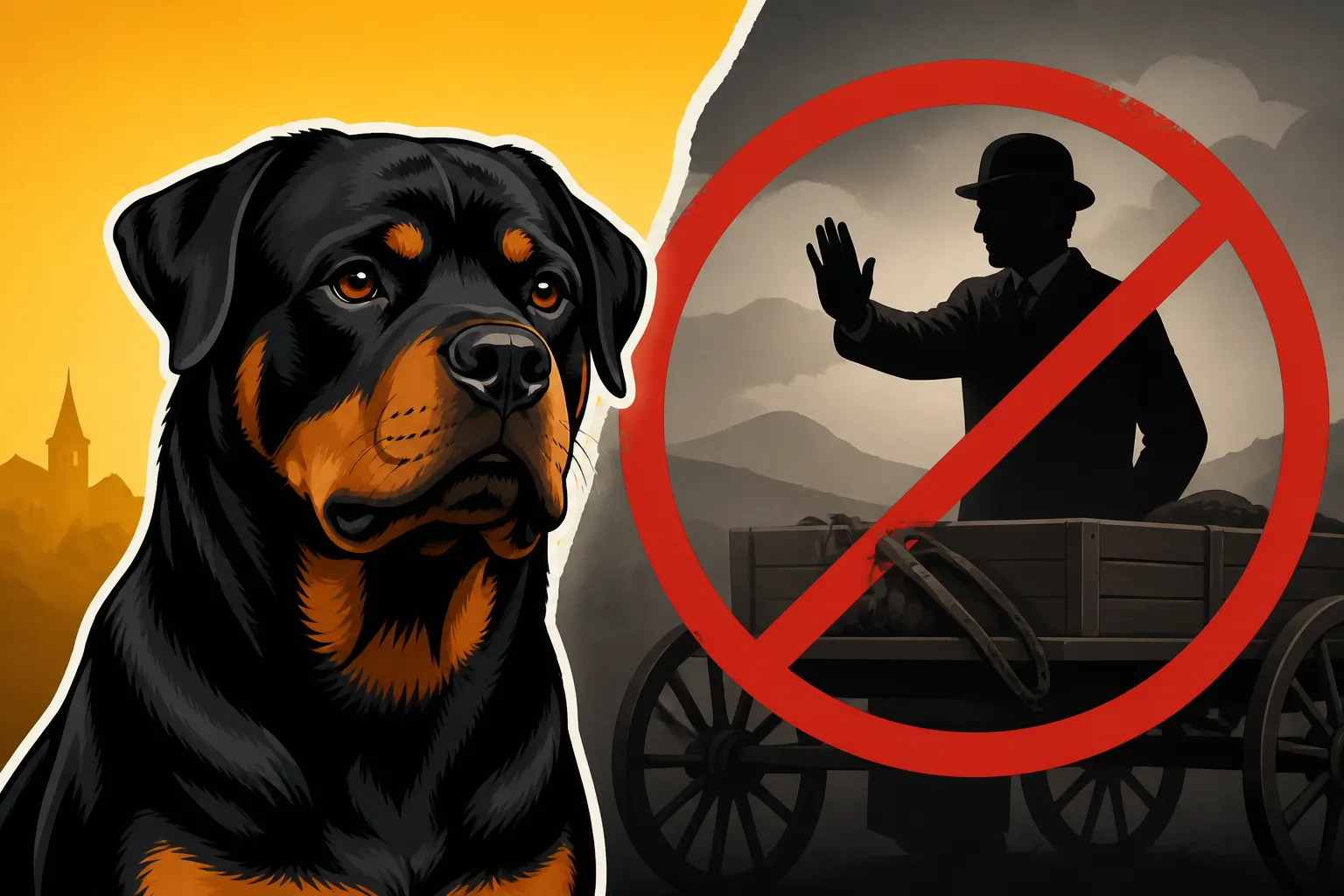
The 1800s Ban That Put Rottweilers Out of Work
Imagine a world where your beloved Rottweiler, bred for generations to perform a vital job, suddenly finds that job obsolete, even illegal. It’s a gut-wrenching thought for any dedicated owner, and yet, this is precisely the fate that befell the majestic Rottweiler in the late 19th century. This guide explores the historical shifts and legislative changes that stripped the Rottweiler of its traditional role, pushing the breed to the brink of extinction before its eventual resurgence.
The Ancient Heritage of the Rottweiler: More Than Just a Butcher's Dog
Long before they were known as the "Butcher's Dog" of Rottweil, the ancestors of our modern Rottweiler were traversing continents with Roman legions. These formidable dogs weren't just camp followers; they were essential working partners, responsible for driving cattle that fed the Roman armies as they marched across Europe. Think about the logistics involved: thousands of soldiers needing daily sustenance, and these dogs were the four-legged logistics experts, herding large livestock over vast distances, through unfamiliar terrain, and in all sorts of weather. Their intelligence, strength, and unwavering dedication were honed over centuries of this demanding work.
From Roman Drover to Regional Guardian
When the Roman Empire eventually receded, many of these dogs remained behind in the areas where legions had settled. The region around what would become the town of Rottweil, nestled in the heart of Germany, was one such place. Here, these dogs continued their legacy, adapting their skills to the local needs. They weren't just herding; they were guarding, protecting the herds from predators and thieves, often in isolated rural settings where human oversight was limited. This period cemented their reputation as reliable, protective companions, deeply ingrained in the agricultural life of the communities they served. Their role was critical to the survival and prosperity of farming families, providing both labor and security.
The Rottweiler's Job Before the Railways Arrived
Before the advent of modern transportation, towns like Rottweil thrived as bustling cattle markets. Butchers, traders, and farmers would gather, and the Rottweiler was indispensable. Not only did these dogs continue to drive cattle to market, but they also performed another crucial task: guarding the butcher's hard-earned money. Imagine a busy market day, pockets full of cash from sales, and the potential for theft. The Rottweiler, often with money pouches tied around its neck, would stand as a silent, formidable deterrent. Their imposing presence and renowned loyalty made them the perfect living safe. Furthermore, their strength was harnessed for carting, pulling heavy loads of meat and other goods through the streets, demonstrating their versatility and sheer physical power. This was a breed truly integrated into the economic fabric of the region, vital for its commerce and safety. Rottweilers Pulling Carts Before the Railways gives you a deeper look into this fascinating aspect of their history.
The Rise of New Technology and Shifting Economics
The 19th century brought rapid and dramatic changes across Europe, largely fueled by the Industrial Revolution. This era of steam, iron, and machinery fundamentally altered transportation, commerce, and the very structure of daily life. For breeds like the Rottweiler, whose existence was intertwined with traditional ways of working, these changes posed an existential threat. The world was moving faster, and the old methods were quickly becoming outdated.
The Iron Horse Replaces Four-Legged Drovers
The most significant technological advancement impacting the Rottweiler's traditional role was the expansion of the railway system. Suddenly, livestock, goods, and people could be transported over vast distances with unprecedented speed and efficiency. A journey that once took days or weeks of arduous cattle droving could now be accomplished in hours. This meant that the need for drover dogs, like the Rottweiler, diminished rapidly. Farmers and butchers no longer needed to walk their herds to market; they could load them onto trains. The economic incentive to keep large, powerful dogs for droving evaporated, as the cost and effort of maintaining such a dog began to outweigh the benefits of its labor. It was a classic case of technology rendering a traditional job obsolete, much like how many other professions changed with industrialization.
Economic Pressure and Changing Livelihoods
As the railways became the primary mode of transport, the traditional cattle markets also began to change. Large, centralized slaughterhouses became more efficient, further reducing the need for local butchers to drive their own herds. The demand for dogs that could guard money pouches or pull carts laden with meat also declined as more secure methods of banking and mechanized transport became available. People’s livelihoods shifted, and with that, so did the practical utility of their working dogs. Keeping a large dog like a Rottweiler, which required significant food and care, became a luxury or a hobby rather than a necessity for many. This economic pressure was a powerful force driving the decline of the breed, as families chose smaller, less demanding dogs or simply ceased to keep dogs for work altogether.
The Legislative Axe: Bans on Cattle Driving
The nail in the coffin for the Rottweiler's traditional occupation wasn't just economic or technological; it was also legislative. Governments, driven by concerns over public health, sanitation, and safety in rapidly growing urban centers, began to enact laws that directly targeted the practice of cattle droving. These bans, though well-intentioned, removed the very foundation of the Rottweiler's purpose.
Public Health and Safety Concerns
As cities grew, the sight and smell of large herds of cattle being driven through crowded streets became increasingly problematic. Imagine the chaos, the potential for accidents, the mess left behind, and the spread of disease in densely populated areas. Public health initiatives gained traction, leading to regulations aimed at improving urban living conditions. Driving livestock through main thoroughfares was seen as unsanitary and dangerous. The focus shifted to containing livestock in designated areas, often at the outskirts of towns, or moving them directly to slaughterhouses via rail. These laws made the presence of drover dogs in urban environments, once a common sight, an unacceptable one. The welfare of the public, quite rightly, became a priority over ancient traditions.
The Cattle Droving Prohibition Act
While specific dates and names might vary slightly across different regions of Germany, the general sentiment culminated in widespread prohibitions on cattle droving in the late 19th century. These acts effectively criminalized the very activity that Rottweilers had been bred for over centuries. Without the legal ability to drive cattle, the Rottweiler's primary job ceased to exist. Their value as a working dog plummeted, and with it, their numbers. This wasn't a gradual fade; it was a legislative decree that cut the legs out from under their traditional purpose. It was a swift, decisive blow that left many Rottweilers without a "job," leading to a dramatic decline in their population. Understanding When Cattle Droving Was Finally Made Illegal provides crucial insight into this period.
| Aspect | Before the 1800s Bans | After the 1800s Bans |
|---|---|---|
| Primary Role | Cattle droving, guarding money, pulling butcher carts | No legal droving, reduced guarding/carting needs |
| Economic Value | Highly valuable, essential for trade and livelihood | Greatly diminished, seen as a burden for many |
| Population Trend | Widespread and integrated into community life | Drastic decline, near extinction |
| Living Environment | Often rural, active outdoor work, bustling market towns | Less defined role, some kept as personal guardians or pets |
| Future Outlook | Secure, integral part of society | Uncertain, requiring human intervention for survival |
The Brink of Extinction and a Hopeful Revival
The combination of technological advancement, economic shifts, and outright legal bans on cattle droving pushed the Rottweiler breed to the very edge of oblivion. By the turn of the 20th century, the magnificent Metzgerhund was a rarity, its numbers so critically low that its future was severely in doubt. It's a sobering thought, that a breed so powerful and historically significant could almost vanish from the face of the earth.
A Scramble for Survival: Few Rottweilers Left
Imagine the year 1900. If you wanted to find a purebred Rottweiler, you would have been hard-pressed. There were only a handful of individuals left, scattered remnants of what was once a thriving and indispensable working breed. Farmers and butchers, no longer needing their services, had either phased them out or crossbred them, losing the distinct traits that made the Rottweiler unique. The lack of a clear purpose led to a general apathy towards breeding and preserving them. This period represents the darkest chapter in the Rottweiler's history, a stark reminder of how quickly a breed can disappear when its functional role in society is removed. It truly highlights How Few Rottweilers Were Left by 1900.
The Fanciers Who Saw Their Worth
Fortunately, a small group of dedicated enthusiasts and breed fanciers recognized the immense value and potential of the Rottweiler. They saw beyond the immediate lack of a traditional job and appreciated the breed's inherent qualities: its intelligence, courage, unwavering loyalty, and formidable presence. These individuals understood that the Rottweiler possessed an incredible genetic legacy that deserved to be preserved. They began the arduous task of seeking out the remaining purebred specimens, meticulously documenting their lineage, and initiating careful breeding programs to revive the dwindling population. This was a true labor of love, driven by passion and a deep respect for the breed's historical significance.
Rebuilding the Breed: New Purpose, Old Spirit
The revival of the Rottweiler was a slow and deliberate process. It required not only careful breeding but also the foresight to find new roles where their incredible attributes could be put to good use. Early breed clubs, such as the Deutscher Rottweiler-Klub (DRK) and the Internationaler Rottweiler Klub (IRK), formed in the early 1900s, played a crucial role in establishing breed standards and promoting their utility in new capacities. Police and military work, for example, quickly emerged as ideal opportunities for the Rottweiler's strength, intelligence, and protective instincts. They also found a place as personal guardians and companions, their steadfast loyalty making them cherished family members. The efforts of these fanciers ensured that the breed's inherent spirit and working drive would not be lost, even as their traditional jobs faded into history. The Fanciers Who Rebuilt the Rottweiler in 1901 details the dedicated individuals who made this happen.
Rottweilers in Modern Roles: A Legacy Reimagined
The Rottweiler's journey from drover to near-extinction and back is a testament to the resilience of the breed and the dedication of its human admirers. Today, the Rottweiler thrives globally, not as a cattle driver, but in a myriad of modern roles that speak to its adaptability, intelligence, and enduring working spirit. The breed's inherent traits, once vital for rural commerce, now find expression in a vastly different world.
Law Enforcement and Military Service
The Rottweiler's natural protective instincts, imposing presence, and trainability make them excellent candidates for police and military K9 units. They excel in tasks requiring strength, focus, and an unwavering commitment to their handler. Their courage is invaluable in apprehending suspects, searching for narcotics or explosives, and providing security. These dogs undergo rigorous training, honing their natural abilities into highly specialized skills. When you see a police Rottweiler, you're looking at a direct descendant of those ancient drover dogs, their guarding instincts repurposed for public safety. This new calling provides a critical job where their traits are not only valued but essential. Which Police Forces Still Run Rottweilers might surprise you with the number of departments that rely on them.
Therapy and Service Work: Gentle Giants
Perhaps one of the most heartwarming transformations in the Rottweiler's modern roles is their increasing presence in therapy and service work. Despite their tough exterior and formidable reputation, well-bred and properly socialized Rottweilers possess a deep well of empathy and a calm, stable temperament. Their stoic demeanor and gentle nature can be incredibly comforting in hospitals, nursing homes, and schools. They provide emotional support, a steady presence for individuals with disabilities, and a non-judgmental friend. This role showcases their softer side, proving that true strength often comes with a profound capacity for tenderness. The same loyalty they showed to their butchers is now offered to those in need of comfort and assistance. Rottweilers Working as Therapy Dogs in Hospitals explores this beautiful aspect of their character.
Companion and Family Guardian
For the vast majority of Rottweilers today, their primary role is that of a cherished family companion and guardian. They bond deeply with their human families, displaying a loyalty and protectiveness that harks back to their Metzgerhund days. They are known for their "wait and see" temperament when meeting strangers, assessing new situations before offering their trust. This natural discernment makes them excellent home guardians, always alert but rarely overly reactive without cause. Providing a Rottweiler with a comfortable, durable bed – perhaps one you picked up from a place like Chewy – gives them a dedicated spot in the home to fulfill their guardian duties, even if that duty is just to protect the kids' nap time. They thrive on being part of the family, participating in daily activities, and receiving consistent training and socialization. For those looking for a steadfast and devoted canine family member, the Rottweiler's historical journey has equipped them with all the right qualities. They are living proof that a strong breed can adapt and redefine its purpose, becoming even more beloved in the process. Whether a Rottweiler Suits the Household You Have can help you determine if this amazing breed is right for you.
Disclaimer
This article is for general informational purposes only and does not constitute professional advice. Laws, prices and regulations vary by location and change over time. Consult a qualified professional for guidance on your specific situation.